


Search results
Search for "HRTEM" in Full Text gives 225 result(s) in Beilstein Journal of Nanotechnology. Showing first 200.
AgCl-doped CdSe quantum dots with near-IR photoluminescence
Beilstein J. Nanotechnol. 2017, 8, 1156–1166, doi:10.3762/bjnano.8.117
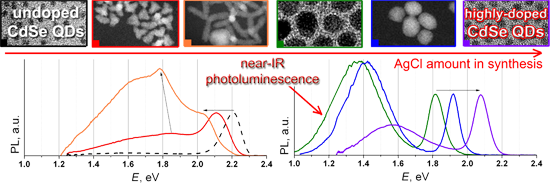
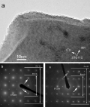
- -resolution TEM (HRTEM) image (Figure 2a). In previous investigations similar CdSe TPs exhibited all WZ reflexes in their XRD pattern [27]. TEM investigation of the samples also revealed the presence of large NPs with sizes of tens of nanometres and irregular shape, i.e., large ellipsoidal particles (EPs
- nucleation energy in the presence of more AgCl precursor during synthesis. Bearing in mind the large size and fraction of EPs in the samples (Table 2), we attributed the rather narrow and intense diffraction peaks of sample AgCl_10 to the hexagonal WZ structure of these particles (Figure 1d). HRTEM images of
- these particles and the corresponding FT patterns (Figure 2b) confirm this assumption. In samples AgCl_12 to AgCl_40, the WZ reflections become broader because the size of EPs decreases (Table 2 and Figure 1e,f). The structure of AgCl_40 was also confirmed by HRTEM (Figure 2c). In order to investigate


Hierarchically structured nanoporous carbon tubes for high pressure carbon dioxide adsorption
Beilstein J. Nanotechnol. 2017, 8, 1135–1144, doi:10.3762/bjnano.8.115
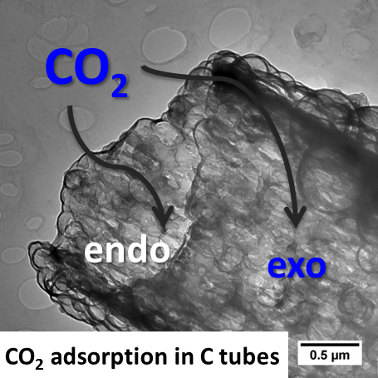
- using an aluminum sample holder. High-resolution transmission microscopy (HRTEM) analysis was performed on lacey carbon copper grids (300 mesh) at a G2F20 (Tecnai) at the ERC-Jülich in Germany. IR measurements were performed on a Nicolet 6700 spectrometer with an ATR Smart Performer unit from Thermo


High photocatalytic activity of Fe2O3/TiO2 nanocomposites prepared by photodeposition for degradation of 2,4-dichlorophenoxyacetic acid
Beilstein J. Nanotechnol. 2017, 8, 915–926, doi:10.3762/bjnano.8.93
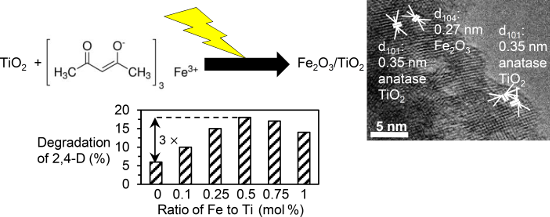
- nanocomposites synthesized by the impregnation method, further detailed investigations were carried out on nanocomposites synthesized by the photodeposition method. Transmission electron microscopy (TEM) and high-resolution TEM (HRTEM) images of both unmodified TiO2 (NT) and Fe2O3(0.5)/TiO2 (PD) are shown in
- Figure 4. As shown in Figure 4a, the TiO2 (NT) sample has spherical particles with a diameter of 7–9 nm. This result agreed well with the crystallite size calculated by the Scherrer equation previously discussed. The HRTEM image of the TiO2 (NT) sample displayed in Figure 4b shows a lattice fringe
- spacing of 0.35 nm attributed to the anatase TiO2(101) crystal plane. Figure 4d shows a HRTEM image of Fe2O3(0.5)/TiO2 (PD). It was evident that the deposition of Fe did not change the morphology of the TiO2. Since the lattice fringe spacing of 0.27 nm related to the Fe2O3(104) crystal plane was observed


Investigation of growth dynamics of carbon nanotubes
Beilstein J. Nanotechnol. 2017, 8, 826–856, doi:10.3762/bjnano.8.85
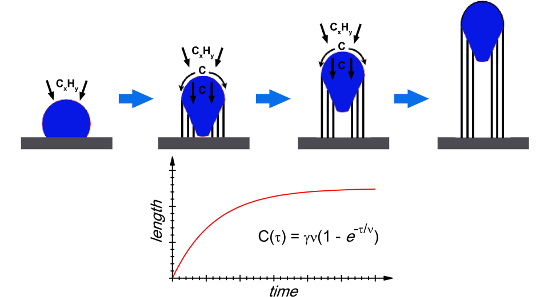
- also the rate-limiting step of the growth. The authors of [43] applied the surface diffusion model to explain fast growth rates of SWCNTs in the thermal CVD process at temperatures as low as 600 °C. In [41], Helveg with co-authors performed the first time-resolved in situ HRTEM studies on the formation
- in the fast Fourier transform (FFT) of Figure 3b to {111} planes, with the face-centered cubic (fcc) Ni lattice oriented close to the [110] axis. Figure 3c,d show ex situ HRTEM images of SWCNTs. Figure 3c presents an individual hemispherically capped SWCNT at a more progressed stage of growth. It is
- using C2H2 as carbon source and iron carbide catalyst. Figure 5a shows in situ HRTEM micrographs of the growth process of individual SWCNT. Before the nucleation of SWCNT, the catalyst nanoparticle shows in every snapshot different facets (e.g., t = 8.05 and 16.45 s). Various carbon cages jut out from


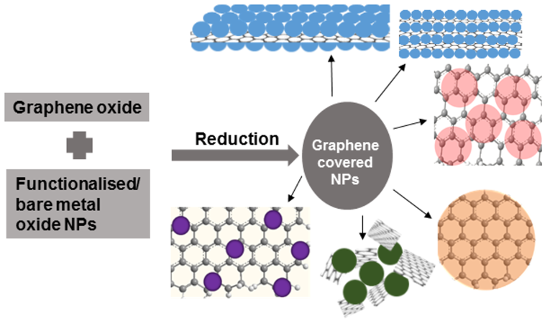
Synthesis of graphene–transition metal oxide hybrid nanoparticles and their application in various fields
Beilstein J. Nanotechnol. 2017, 8, 688–714, doi:10.3762/bjnano.8.74






Carbon nanotube-wrapped Fe2O3 anode with improved performance for lithium-ion batteries
Beilstein J. Nanotechnol. 2017, 8, 649–656, doi:10.3762/bjnano.8.69
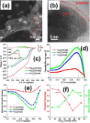
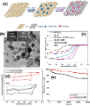
- distributed over the COOH-MWCNT frameworks. The structure of the as-prepared Fe2O3/COOH-MWCNT composite material was further examined by TEM and HRTEM. The results are presented in Figure 2. It can be seen in Figure 2a that Fe2O3 particles with a size of around 200 nm are evenly distributed between COOH
- -MWCNTs, which is in good agreement with the SEM result. Figure 2b shows a HRTEM image of the composites. There is an obvious secondary structure in which smaller Fe2O3 nanoparticles are formed on larger Fe2O3 nanoparticles. Figure 2c shows a HRTEM image and a selected area electron diffraction pattern of
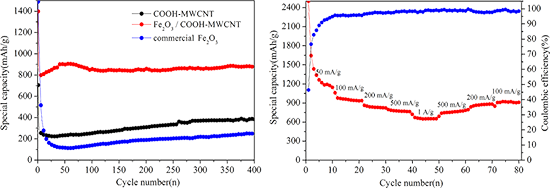
- composites: (a) XRD patterns; (b) SEM image; (c) and (d) energy-dispersive X-ray analysis (EDX). Fe2O3/COOH-MWCNT composites: (a) and (b) HRTEM; (c) HRTEM and selected area electron diffraction patterns of TEM. TG curve of Fe2O3/COOH-MWCNT composites. Electrochemical performance of the electrodes: (a


Formation and shape-control of hierarchical cobalt nanostructures using quaternary ammonium salts in aqueous media
Beilstein J. Nanotechnol. 2017, 8, 494–505, doi:10.3762/bjnano.8.53
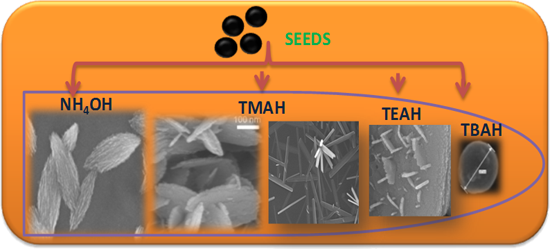
- -resolution transmission electron microscopy (HRTEM), and field emission gun scanning electron microscopy (FEGSEM). FEGTEM investigations were carried out by using a JEOL, JEM2100F operated at 200 kV, and the HRTEM was carried out using a JEM 2100 with a LaB6 filament operated at 200 kV. A JEOL JSM-7600F
- FEGTEM and HRTEM, in normal modes of operation, allow access only to lateral size and shape of nanostructures limiting the information about the third-dimension which may thereby create a false impression about the shape of the nanostructures. For example, in Figure 3m, the nanoplates could be
- growth of highly anisotropic nanostructures without the aid of complex microscopy accessories. The importance of the combined interpretation of FEGTEM/HRTEM and FEGSEM micrographs is also emphasized. The method proposed is simple and the results should be useful for designing a controlled synthesis of


Performance of colloidal CdS sensitized solar cells with ZnO nanorods/nanoparticles
Beilstein J. Nanotechnol. 2017, 8, 210–221, doi:10.3762/bjnano.8.23
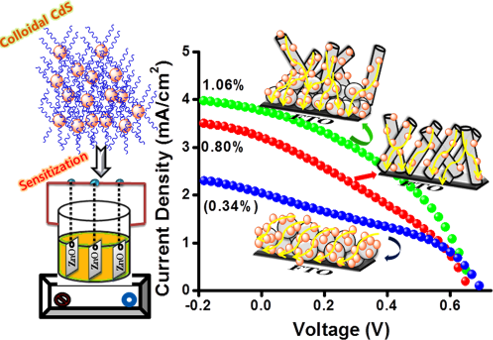
- crystallites was calculated to be ≈5.2 nm using the Scherrer equation. The bright field image of the synthesized powder indicated the finer and porous nature of the synthesized CdS nanoparticles (Figure 1b). The high resolution TEM (HRTEM) image shows the (111) and (311) crystalline planes with d values of
- ) Bright field transmission electron microscope image of the NPs. (c) HRTEM image highlighting the inter-planar distance of the cubic crystal planes (Inset: corresponding FFT pattern). (d) SAED pattern from image in (b). (a) and (b) show the FT-IR and Raman spectrum, respectively, of the synthesized CdS


Cubic chemically ordered FeRh and FeCo nanomagnets prepared by mass-selected low-energy cluster-beam deposition: a comparative study
Beilstein J. Nanotechnol. 2016, 7, 1850–1860, doi:10.3762/bjnano.7.177
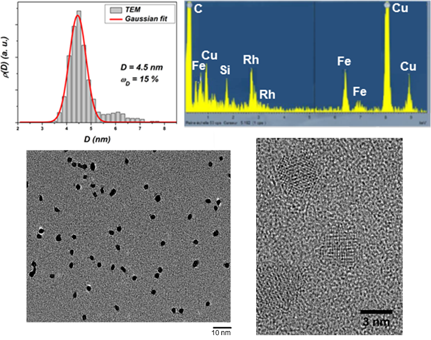
- ) as shown in Figure 3c. In all cases, the EDX analysis showed no sign of oxidation of the nanoparticles and a roughly equiatomic composition for both FeRh and FeCo cluster samples conserved after 2 h annealing at 500 °C under ultra-high vacuum (UHV) conditions [10][11]. High-resolution TEM (HRTEM
- ) structure is the equilibrium bulk structure for equimolar FeCo alloys, it was not possible to distinguish a chemical ordering by HRTEM for annealed NPs because the electron density contrast between iron and cobalt is too low. Generally, conventional diffraction measurements are used to determine the degree
- observations (b) and corresponding EDX analysis (c) of annealed mass-selected FeRh nanoparticles with an average diameter of 4.5 nm. HRTEM images for annealed FeRh nanoparticles with 2 nm in diameter (d). HRTEM images for as-prepared (a) and annealed (b) FeRh nanoparticles with their respective FFT


In situ formation of reduced graphene oxide structures in ceria by combined sol–gel and solvothermal processing
Beilstein J. Nanotechnol. 2016, 7, 1815–1821, doi:10.3762/bjnano.7.174
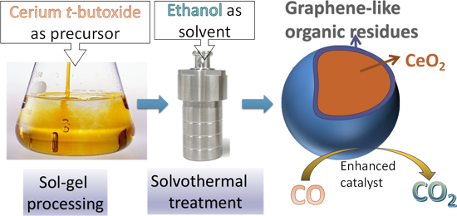
- (XRD) measurements were performed on a Philips X'Pert diffractometer using Cu Kα radiation (λ = 1.5406 Å). High-resolution transmission electron micrographs (HRTEM) were recorded on a TECNAI F20 operated at 200 kV. Before the measurements, the samples were ultrasonically dispersed in EtOH for 30 min
- –CeO2 composites with different proportions of added rGO (c–f) after solvothermal treatment in ethanol. Morphologies of rGO(0)–CeO2 (a1: TEM, a2: HRTEM) and rGO(0.05)–CeO2 (b1: TEM, b2: HRTEM). N2 adsorption–desorption isotherms (left) and pore size distributions (right) for CeO2 with rGO-like organic




Role of RGO support and irradiation source on the photocatalytic activity of CdS–ZnO semiconductor nanostructures
Beilstein J. Nanotechnol. 2016, 7, 1684–1697, doi:10.3762/bjnano.7.161
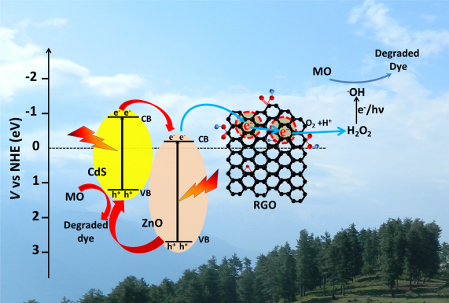
- characterized using a field-emission scanning electron microscope (FESEM) JFEI Nova Nano SEM-450 and a high resolution transmission electron microscope (HRTEM) FEI Tecnai G2 20 S-twin microscope operating at 200 kV. Energy dispersive X-ray spectroscopy (EDAX) was obtained using the same HRTEM instrument. X-ray




Effect of triple junctions on deformation twinning in a nanostructured Cu–Zn alloy: A statistical study using transmission Kikuchi diffraction
Beilstein J. Nanotechnol. 2016, 7, 1501–1506, doi:10.3762/bjnano.7.143
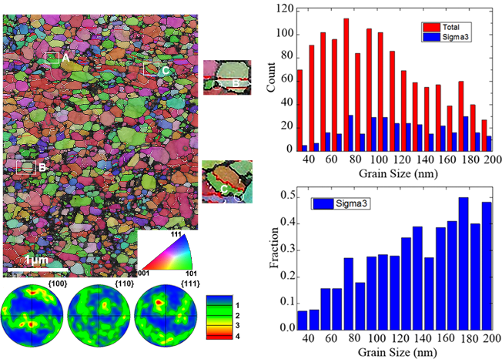
- nanocrystalline materials. Up to now, there has been no solid experimental study to verify this issue largely due to technical difficulties. So far, high-resolution transmission electron microscopy (HRTEM) has achieved great success in revealing the atomic-level details of deformation/growth twins, including
- formation mechanisms [14][19][20][21][22], interactions with dislocations [11][23][24][25][26] and macroscopic strain [10][25][27], due to its extraordinary spatial resolution. However, reliable statistical analysis based on extensive data still seems a grand challenge for HRTEM studies on twinning [28][29
- ]. It is time consuming and sometimes impractical to examine twins in a massive number of grains, as each grain needs tilting into a specific zone axis under HRTEM to observe the twin. For example, to observe a twin in a face-centered cubic (fcc) grain, observation along the <110> zone axis on the


Nanostructured germanium deposited on heated substrates with enhanced photoelectric properties
Beilstein J. Nanotechnol. 2016, 7, 1492–1500, doi:10.3762/bjnano.7.142
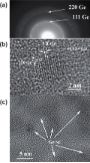
- transmission electron microscopy (HRTEM) investigations of the Ge:SiO2 thin films deposited on Si substrates at 500 °C are presented. Selected area electron diffraction (SAED) (Figure 2a) and HRTEM (Figure 2b) demonstrate the <112> orientation of Ge-nps. The HRTEM image in Figure 2c shows the spatial
- distribution of the Ge-nps in the oxide matrix. The main reflections measured on the central part of the SAED pattern correspond to cubic Ge(111) and cubic Ge(220) (ICSD no. 79-0001) confirming the existence of the crystalline phase. HRTEM images are used to estimate the average size of Ge-nps (around 5 nm in
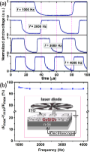
- combining a mechanical chopper (Stanford, SR540) and a digital oscilloscope (LeCroy, WaveJet 500 MHz) with a reference photodetector (Thorlabs, PDA10CS-EC). X-ray diffractograms of Ge:SiO2 thin films deposited at 300, 400 and 500 °C. HRTEM images of the Ge:SiO2 thin film co-deposited on a Si substrate at




Polystyrene-block-poly(ethylene oxide) copolymers as templates for stacked, spherical large-mesopore silica coatings: dependence of silica pore size on the PS/PEO ratio
Beilstein J. Nanotechnol. 2016, 7, 1454–1460, doi:10.3762/bjnano.7.137
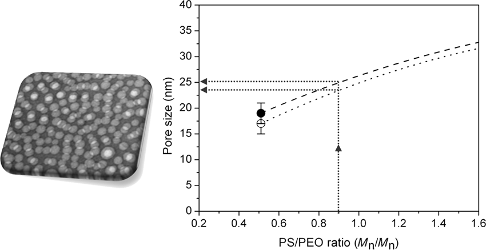
- copolymers with different size and block lengths (i.e., PS117-b-PEO543, PS183-b-PEO145, PS308-b-PEO250, and PS567-b-PEO704) were selected. HRTEM micrographs showing the mesoporous silica films prepared by soft templating of the four PS-b-PEO copolymers are reported in Figure 1 (95TEOS/5PS-b-PEO) and Figure 2
- (93TEOS/7PS-b-PEO). Moreover, a fifth block copolymer (PS120-b-PEO318) was taken as a validation sample and HRTEM micrographs of both formulations (i.e., 95/5 and 93/7) are reported in Figure 3. Additionally, the average pore sizes calculated for each mesoporous silica film are collected in Table 1
- characterization High-resolution transmission electron microscopy (HRTEM) was used to evaluate the pore size and morphology of mesoporous silica films after the removal of the polymer templates. Micrographs were obtained by using a JEOL 2010 instrument (300 kV) equipped with a LaB6 filament. For the specimen


Deformation-driven catalysis of nanocrystallization in amorphous Al alloys
Beilstein J. Nanotechnol. 2016, 7, 1428–1433, doi:10.3762/bjnano.7.134
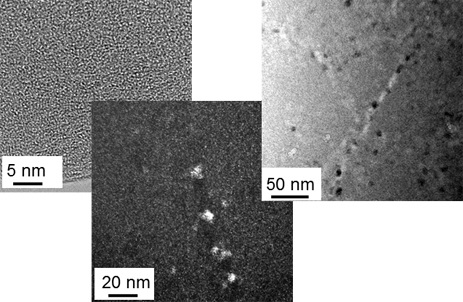
- and matrix in Al-based amorphous alloys [42], it can therefore be concluded that the nanocrystals in Figure 6 that are observed after the annealing at 210 °C developed in the matrix and not in shear bands. The combination of HRTEM, DF-TEM, XRD, and DSC results provides strong evidence that cold


Microwave synthesis of high-quality and uniform 4 nm ZnFe2O4 nanocrystals for application in energy storage and nanomagnetics
Beilstein J. Nanotechnol. 2016, 7, 1350–1360, doi:10.3762/bjnano.7.126
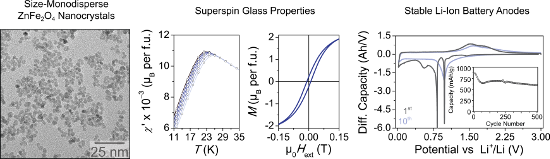
- shape of the ZFO nanoparticles was investigated by means of transmission electron microscopy (TEM). The low-magnification bright-field TEM image in Figure 1a shows that they are spherical in shape with a narrow size distribution around 4 nm. Both high-resolution TEM (HRTEM, Figure 1b) and selected-area
- conclude that the particles are of good quality and thus hold promise for application in various fields of nanotechnology. Electron microscopy of as-prepared ZFO nanoparticles. (a) Bright-field TEM image. (b) HRTEM image and (c) SAED pattern demonstrating the crystallinity. Note that only the most intense


High performance Ce-doped ZnO nanorods for sunlight-driven photocatalysis
Beilstein J. Nanotechnol. 2016, 7, 1338–1349, doi:10.3762/bjnano.7.125
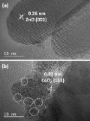
- some irregular cylindrical structures developed. The high crystallinity of the particles is further evident from the HRTEM image (Figure 6) and from the selected area electron diffraction (SAED) patterns shown in the insets of Figure 5. The bright and clear diffraction spots belong to the single
- crystal ZnO rods. From the HRTEM image (Figure 6a), one can clearly observe the crystal planes of ZnO. The interplanar spacing of ZnO is of ca. 0.26 nm, corresponding well to the (002) plane of ZnO. For 5, 7 and 10% doping in Ce, the ZnO rods were found to coexist with a significantly reduced population
- of small ellipsoidal CeO2 particles with an average diameter of ca. 5 nm deposited at the surface of the rods (Figure 6b), forming CeO2/ZnO:Ce heterostructures. The analysis of the interplanar distance calculated from the HRTEM image shows the (111) plane of cubic ceria. The BET surface area of pure







Fabrication and characterization of branched carbon nanostructures
Beilstein J. Nanotechnol. 2016, 7, 1260–1266, doi:10.3762/bjnano.7.116
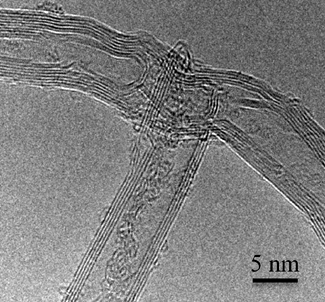
- MWCNTs, namely Baytubes©. Other workers have shown using high resolution transmission electron microscopy (HRTEM) that Baytubes© are parallel-walled in long closed sections and that they are strong and relatively pure [27]. They form around a catalyst and are supplied as loosely agglomerated pellets
- , which results in the introduction of defects that later act as the “unzipping” points. The procedure has the additional benefit of cleaning the tubes as substantiated from the Raman (Figure 2d) and HRTEM data (Figure 3) confirming the absence of carbon impurities or residual catalyst material. The
- (Renishaw inVia), TEM (Tecnai F20 ST at 200 kV), HRTEM (Jeol ARM at 120 kV), SEM (Zeiss Ultra-Plus at 5 kV), SEM (Zeiss Leo 1530 at 10 kV with Oxford X-Max 50 EDX ) and helium ion microscopy (HeIM, Zeiss Orion at 30 kV). a) SEM overview of a Baytubes agglomerated pellet; b, c) SEM details of the MWCNTs; d


Tunable longitudinal modes in extended silver nanoparticle assemblies
Beilstein J. Nanotechnol. 2016, 7, 1219–1228, doi:10.3762/bjnano.7.113
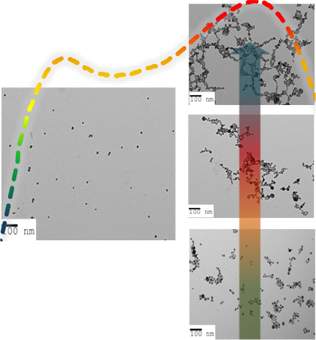
- . Figure 4 presents a HRTEM image for two nanoparticles interacting through their [111] facets. The image reveals two major facets of nanoparticles under study, [111] and [200], with predominance of the former. A HRTEM image showing the [200] facet spacings is presented in Figure S5 (Supporting Information
- nanoparticle facets were determined after HRTEM imaging using the lattice constant of silver (0.408 nm). The as-prepared samples were freshly plated on 200 mesh carbon-coated copper grids (Canemco-Marivac, Lakefield, QC) with a carbon film thickness ranging between 30 and 50 nm for 5 min before wicking using
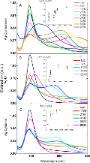
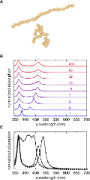
- the stronger coupling. TEM micrographs of AgNPs modified by increasing ratios r of DTT and cysteamine ligands. Images show typical aggregates formed at the given ligand ratio. HRTEM image of AgNPs ensembles. The distance shown in the image corresponds to 10 × d. Here, d is the inter-planar distance


Fast diffusion of silver in TiO2 nanotube arrays
Beilstein J. Nanotechnol. 2016, 7, 1129–1140, doi:10.3762/bjnano.7.105
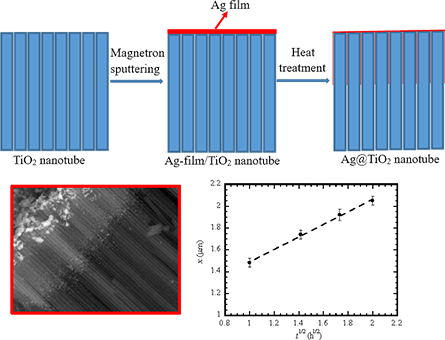
- treatment. From the HRTEM (high-resolution TEM) analysis shown in Figure 3c, a width of 3.52 Å between neighboring lattice fringes is observed in agreement with the (101) lattice spacing of anatase TiO2 [30][31]. This result reveals the highly crystalline nature of the TiO2 nanotubes in accord with the SAED
- . This result suggests that Ag was not oxidized during the heat treatment. The (111), (200), (220) and (311) crystal planes of cubic Ag are observed, in good accord with the XRD analysis. The HRTEM image shown in Figure 7c depicts the characteristic lattice fringe of 3.52 Å for TiO2 nanotubes and 2.36 Å
- image of the pure TiO2 nanotubes, (b) SAED pattern showing the presence of TiO2 nanocrystals, and (c) HRTEM image of a pure TiO2 nanotube. XRD patterns of TiO2 nanotube arrays with Ag nanofilm heat treated at three different temperatures for different periods of time. SEM images of the TiO2 nanotube


Multiwalled carbon nanotube hybrids as MRI contrast agents
Beilstein J. Nanotechnol. 2016, 7, 1086–1103, doi:10.3762/bjnano.7.102
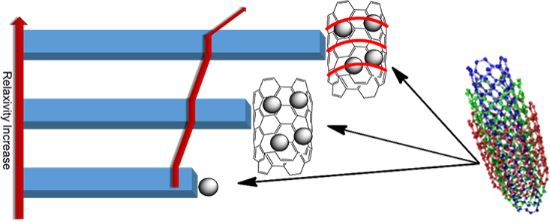
- polyelectrolytes could also be observed in the TEM images [33]. High resolution TEM (HRTEM) and X-ray diffraction (XRD) revealed the crystalline structure of the nanoparticles and enabled qualitative identification of the elements (e.g., lanthanides and silicon in EuGdLa/SiO2/PAH/MWCNT#Chen) and their structural



Photocurrent generation in carbon nanotube/cubic-phase HfO2 nanoparticle hybrid nanocomposites
Beilstein J. Nanotechnol. 2016, 7, 1075–1085, doi:10.3762/bjnano.7.101
- the point-to-point resolution was ≈1 Å in STEM mode. High resolution transmission electron microscopy (HRTEM) carried out on the same microscope at 200 kV provided a point-to-point resolution of 2.4 Å. Electron energy loss spectroscopy (EELS) was acquired in STEM mode with an Enfinium spectrometer at
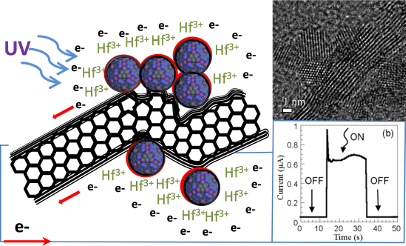
- at buckled edges of the MWCNT, (f) wall of the nanotube showing defects and irregularities to which nanoparticles are attached, (g) HRTEM images of randomly oriented agglomerates, (h) <110>-oriented, and (i) <001>-oriented nanoparticles indicated by arrows and all attached to curved regions of the


Microscopic characterization of Fe nanoparticles formed on SrTiO3(001) and SrTiO3(110) surfaces
Beilstein J. Nanotechnol. 2016, 7, 817–824, doi:10.3762/bjnano.7.73
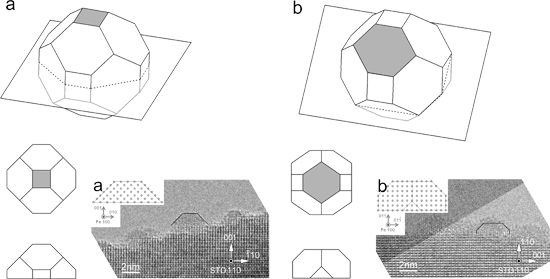
- ). Some of these structures are aligned along the or the directions of STO and presumably have OR2 orientation. Other nanoparticles just have irregular shapes and are thought to exhibit multiple orientations. HRTEM observation in a profile-view mode disclosed nanoparticles of major and of other


High-resolution noncontact AFM and Kelvin probe force microscopy investigations of self-assembled photovoltaic donor–acceptor dyads
Beilstein J. Nanotechnol. 2016, 7, 799–808, doi:10.3762/bjnano.7.71
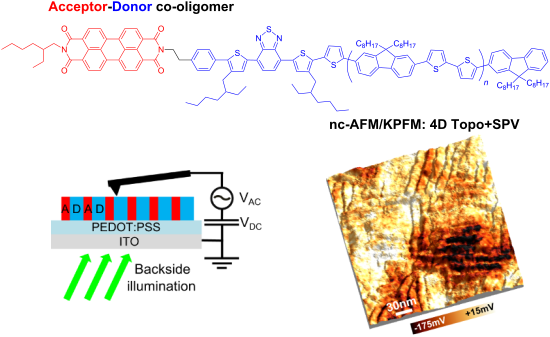
- beam was blanked with a shutter and a nearby area was selected to record the HRTEM image. Image treatment was performed by using the AnalySIS software (Soft Imaging System). Results and Discussion Surface morphology Figure 4a,b shows the surface morphology of AD1 and AD3 films after in situ annealing


Facile synthesis of water-soluble carbon nano-onions under alkaline conditions
Beilstein J. Nanotechnol. 2016, 7, 758–766, doi:10.3762/bjnano.7.67
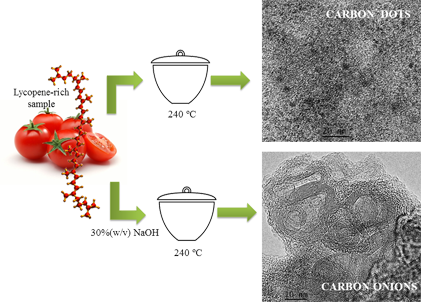
- leaves (acer saccharum), under the same temperature and alkaline conditions did not produce carbon onions. XRD, FTIR, HRTEM, UV–vis spectroscopy, and photoluminescence analyses were performed to characterize the as-synthesized carbon nanomaterials. Preliminary tests demonstrate a capability of the
- characteristics of these structures the formation mechanism of C-onions is proposed. Finally, a preliminary test on the use of such C-onions as sensing materials for metal ions is outlined. Results and Discussion In Figure 1a the HRTEM image reveals that the tomato C-dots synthetized by conventional carbonization
- are mostly spherical, with diameters well below 1 nm as also can be observed for C-dots from tree leaves (Figure 1c). In Figure 1b, the HRTEM image shows that C-dots from carrots are also spherical but with diameters around 5 nm. When using a NaOH 30% (w/v) media the C-NPs exhibited a different





