Search results
Search for "UV–vis spectroscopy" in Full Text gives 165 result(s) in Beilstein Journal of Nanotechnology.
Selective porous gates made from colloidal silica nanoparticles
Beilstein J. Nanotechnol. 2015, 6, 2105–2112, doi:10.3762/bjnano.6.215
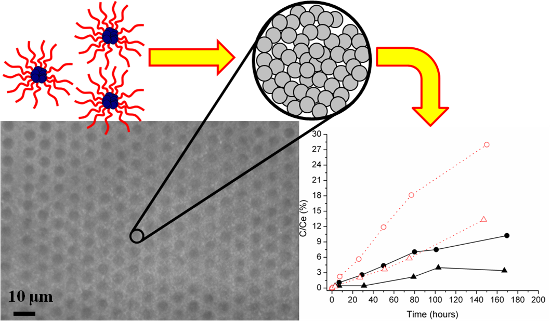
- range 1–2 nm, probably due to intraparticle voids generated from the elimination of poly(ethylene-oxide) moieties during the calcination step [41]. Transport testing of the functional coating UV–vis spectroscopy was used to study the diffusion of two positively charged chemical probes (i.e., MB and
- Aquamarijn Micro Filtration BV (Zutphen, Netherlands), having on top a Si3N4 membrane (5 mm × 5 mm × 0.6 mm) with macropores arranged in a hexagonal setting and diameter of 5 μm. Supporting Information Supporting Information File 144: External calibration curves performed by UV–vis spectroscopy


A facile method for the preparation of bifunctional Mn:ZnS/ZnS/Fe3O4 magnetic and fluorescent nanocrystals
Beilstein J. Nanotechnol. 2015, 6, 1743–1751, doi:10.3762/bjnano.6.178
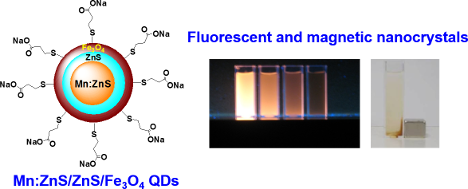
- heterostructures were characterized by X-ray diffraction (XRD), dynamic light scattering (DLS), transmission electron microscopy (TEM), UV–vis spectroscopy and photoluminescence (PL) spectroscopy. The PL spectra of Mn:ZnS/ZnS/Fe3O4 quantum dots (QDs) showed marked visible emission around 584 nm related to the 4T1




Synthesis, characterization and in vitro biocompatibility study of Au/TMC/Fe3O4 nanocomposites as a promising, nontoxic system for biomedical applications
Beilstein J. Nanotechnol. 2015, 6, 1677–1689, doi:10.3762/bjnano.6.170
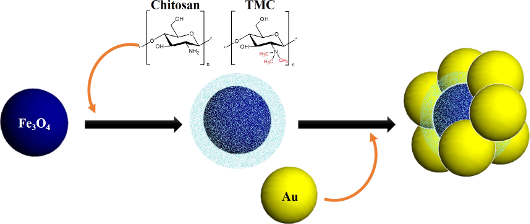
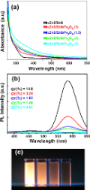
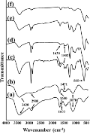
- ) TMC, (c) chitosan/Fe3O4, (d) TMC/Fe3O4, (e) Au/chitosan/Fe3O4, and (f) Au/TMC/Fe3O4. UV–vis spectroscopy of Au nanoparticles as a function of (a) Au nanoparticle concentration and (b) reaction time. TEM images of (a) Au/TMC/Fe3O4 and (c) Au/chitosan/Fe3O4 with respective particle size distributions (b




Synthesis, characterization and in vitro effects of 7 nm alloyed silver–gold nanoparticles
Beilstein J. Nanotechnol. 2015, 6, 1212–1220, doi:10.3762/bjnano.6.124
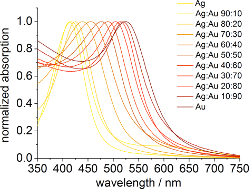
- important factor for subsequent in vitro experiments) was carried out by multiple ultracentrifugation steps. Characterization by transmission electron microscopy (TEM), differential centrifugal sedimentation (DCS), dynamic light scattering (DLS), UV–vis spectroscopy and atomic absorption spectroscopy (AAS
- scattering was monitored at a fixed angle of 173° in backward scattering mode. The primary data were derived from the correlation function of the scattered intensity as a number-weighed size distribution. UV–vis spectroscopy was performed with a Varian Cary 300 instrument. Suprasil® cuvettes with a sample
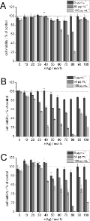
- /Au nanoparticles and pure Ag and Au nanoparticles. Overview of the absorption maxima in UV–vis spectroscopy of PVP-functionalized Ag/Au nanoparticles as function of the experimentally determined silver molar content (Table 2). The viability of HeLa cells after incubation with alloyed nanoparticles


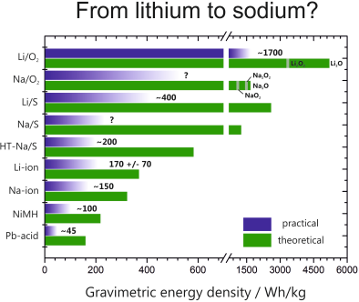
From lithium to sodium: cell chemistry of room temperature sodium–air and sodium–sulfur batteries
Beilstein J. Nanotechnol. 2015, 6, 1016–1055, doi:10.3762/bjnano.6.105


Morphology control of zinc oxide films via polysaccharide-mediated, low temperature, chemical bath deposition
Beilstein J. Nanotechnol. 2015, 6, 799–808, doi:10.3762/bjnano.6.83
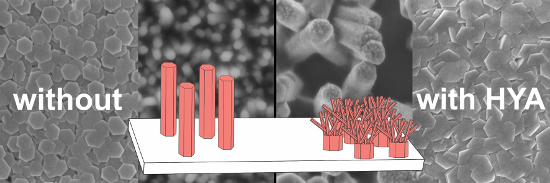
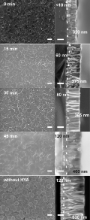
- CBD steps, HYA was added at different time intervals in order to optimize the quality of the resulting films. The properties of the films were studied by means of field emitting scanning electron microscopy (FE-SEM), X-ray diffraction (XRD), UV–vis spectroscopy and electrical conductivity measurements




Tm-doped TiO2 and Tm2Ti2O7 pyrochlore nanoparticles: enhancing the photocatalytic activity of rutile with a pyrochlore phase
Beilstein J. Nanotechnol. 2015, 6, 605–616, doi:10.3762/bjnano.6.62
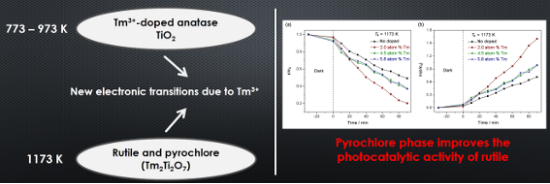
- spectroscopy and UV–vis spectroscopy. For the samples annealed at 773 and 973 K, anatase phase TiO2 was obtained, predominantly internally doped with Tm3+. ICP–AES showed that a doping concentration of up to 5.8 atom % was obtained without reducing the crystallinity of the samples. The presence of Tm3+ was
- confirmed by X-ray photoelectron spectroscopy and UV–vis spectroscopy: the incorporation of Tm3+ was confirmed by the generation of new absorption bands that could be assigned to Tm3+ transitions. Furthermore, when the samples were annealed at 1173 K, a pyrochlore phase (Tm2Ti2O7) mixed with TiO2 was
- study the optical properties of the samples and to determine the band gap energy, UV–vis spectroscopy in diffuse reflectance (DR–UV–vis) mode was used. The custom-built system was composed of: (i) an integrating sphere (Spectra Tech), (ii) a spectrometer (USB2000+, Ocean Optics), and (iii) a xenon lamp


Novel ZnO:Ag nanocomposites induce significant oxidative stress in human fibroblast malignant melanoma (Ht144) cells
Beilstein J. Nanotechnol. 2015, 6, 570–582, doi:10.3762/bjnano.6.59
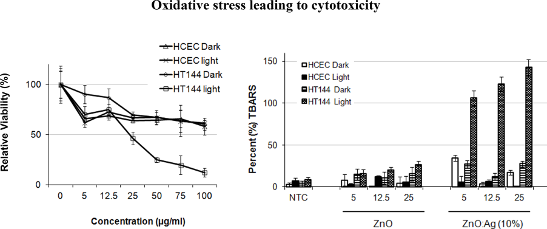
- performing assays, we dialyzed our ZnO:Ag nanocomposite suspensions with Spectra Por 6 (mw cutoff 25000) Spectrum® dialysis membrane for 4 h against deionized water. Characterization of nanocomposite The nanocomposites were characterized by SEM, XRD, Rutherford back scattering, UV–vis spectroscopy and DRS




Silica micro/nanospheres for theranostics: from bimodal MRI and fluorescent imaging probes to cancer therapy
Beilstein J. Nanotechnol. 2015, 6, 546–558, doi:10.3762/bjnano.6.57

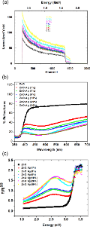
- was then amine-functionalized through APS treatment for bioconjugation with FITC-IgG by using glutaraldehyde as linker. The characterization of the prepared NPs was carried out through XRD, UV–vis spectroscopy and PL emission spectra, VSM, TEM and SEM. The fluorescence spectra of mercaptosuccinic-acid
- –vis spectroscopy. The decrease in the absorbance band at 400 nm suggested the successful photogeneration of singlet oxygen. The biocompatibility of these nanocomposites was studied by incubating these nanocomposites with human hepatocyte cells (QSG-7701) for 24 h. The results indicated that even after
- 2.5 nm. When the hybrid nanocomposite material was excited at 488 nm, it exhibited only one emission peak at 520 nm corresponding to fluorescein. The effectiveness of these nanocomposites to generate singlet oxygen (1O2) upon light irradiation was studied using 1,3-diphenylisobenzofuran (DPBF) by UV


Raman spectroscopy as a tool to investigate the structure and electronic properties of carbon-atom wires
Beilstein J. Nanotechnol. 2015, 6, 480–491, doi:10.3762/bjnano.6.49
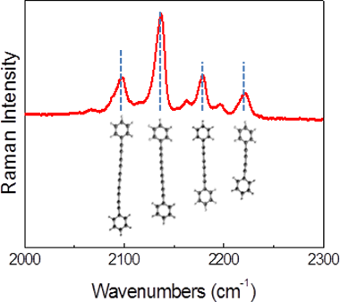
- described in detail in [64]. When the discharge is operated in methanol it is possible to obtain polyynes with an even number of carbon atoms (6 ≤ C ≤ 16) terminated by one hydrogen atom on each side. The size distribution obtained from HPLC complemented with UV–vis spectroscopy is reported in Figure 4


Release behaviour and toxicity evaluation of levodopa from carboxylated single-walled carbon nanotubes
Beilstein J. Nanotechnol. 2015, 6, 243–253, doi:10.3762/bjnano.6.23
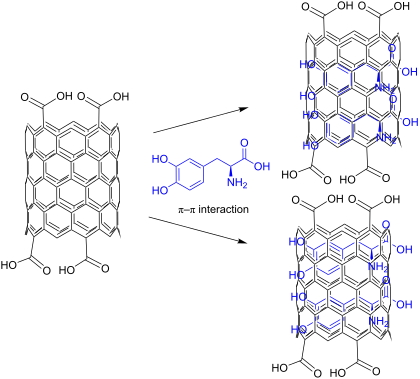
- materials characterization methods including Fourier transform infrared spectroscopy, Raman spectroscopy, elemental analysis, UV–vis spectroscopy and scanning electron microscopy. The results showed that SWCNT–COOH were able to form supramolecular complexes with LD via a π–π stacking interaction and
- ≈38.2% as determined by UV–vis spectroscopy. Fourier transform infrared spectra indicated that the LD was successfully conjugated to SWCNT–COOH, and this was further supported by both the CHNS elemental analysis and Raman spectroscopy study. The drug release study shows that the release of LD from SWCNT
- allowed to cool to room temperature for another 30 min. This ensured that the LD was fully dissolved in deionized water. After that, the solution was scanned in range of 200–600 nm to determine the maximum absorption wavelength, λmax, of LD (as referenced to a blank reagent) by UV–vis spectroscopy. The




Mechanical properties of MDCK II cells exposed to gold nanorods
Beilstein J. Nanotechnol. 2015, 6, 223–231, doi:10.3762/bjnano.6.21
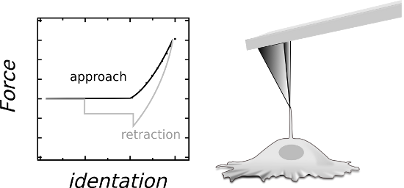
- of gold nanorods were obtained from UV–vis spectroscopy using their optical extinction value at 400 nm and a molar extinction coefficient of 1.1 × 10⁹ Lmol−1cm−1 assuming the aforementioned particle size found by TEM. In order to replace the CTAB, functionalized polyethylene glycol thiols (X-PEG-SH


Increasing throughput of AFM-based single cell adhesion measurements through multisubstrate surfaces
Beilstein J. Nanotechnol. 2015, 6, 157–166, doi:10.3762/bjnano.6.15
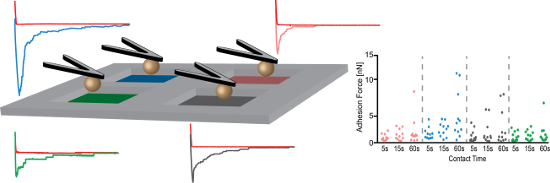
- replaced after characterizing 4 cells on each coating. If a cell showed morphological changes during the experiments, it was discarded. Adhesion forces were extracted from force–distance curves using JPK data processing software. Fluorescence microscopy and UV–vis spectroscopy Fluorescence microscopy was


Synthesis of boron nitride nanotubes and their applications
Beilstein J. Nanotechnol. 2015, 6, 84–102, doi:10.3762/bjnano.6.9
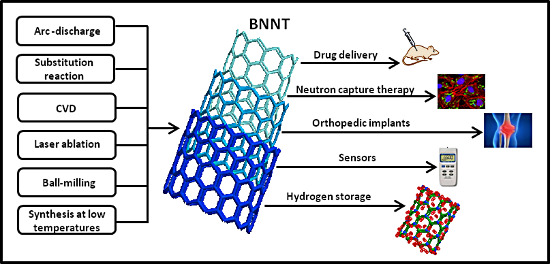
- normal MRC-5 fibroblast lung cells were investigated [76]. The hemolytic activity of the pure BNNTs was investigated by UV–vis spectroscopy and the results showed no significant hemolysis of cells that were exposed to the BNNTs. The metabolic activity of the BNNT-exposed cells using an MTT assay was




Synthesis and characterization of fluorescence-labelled silica core-shell and noble metal-decorated ceria nanoparticles
Beilstein J. Nanotechnol. 2014, 5, 2413–2423, doi:10.3762/bjnano.5.251
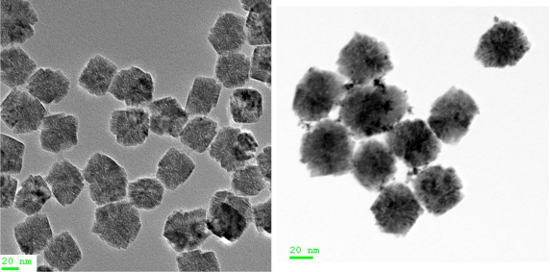
- the amount of dye molecules at the surface is sufficiently high to be detectable by UV–vis spectroscopy, one can in principle use absorption for photometric determination. The problem with this approach is the strong light scattering by the NP which overlays the absorption. We therefore developed a


Inorganic Janus particles for biomedical applications
Beilstein J. Nanotechnol. 2014, 5, 2346–2362, doi:10.3762/bjnano.5.244
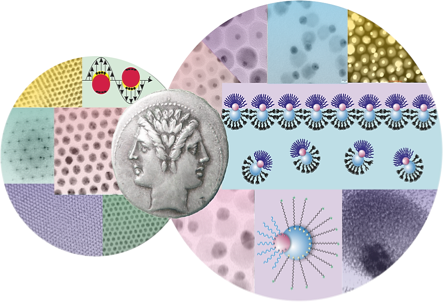
- oxide domains of the heterodimer nanoparticles were adjusted by a precise control of the precursor ratio, the number of seed particles, and the heating profile. Optical characteristics of Au@MOx Janus particles Figure 10 shows the dependence of the absorption maximum measured by UV–vis spectroscopy from
- size dependency of absorption maximum of Au@MnO nanoparticles determined by UV–vis spectroscopy in comparison to pristine Au nanoparticles. UV–vis spectra of Au (solid), Au@MnO (dashed), and Au@Fe3O4 (dotted) nanoparticles normalized to the absorption at 800 nm. Schematic representation of the


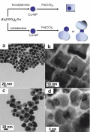


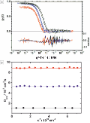


Influence of stabilising agents and pH on the size of SnO2 nanoparticles
Beilstein J. Nanotechnol. 2014, 5, 2192–2201, doi:10.3762/bjnano.5.228
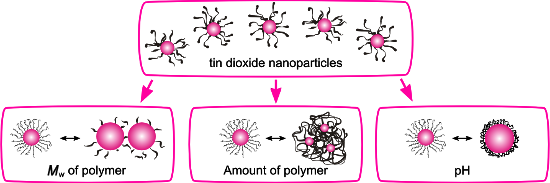
- concentration was changed, while the amount of other components was held constant. Characterisation of SnO2 nanoparticles UV–vis spectroscopy: Spectroscopic studies were performed using an Evolution 201 UV–vis spectrophotometer from Thermo Scientific. The studies were performed at 23 °C in quartz cuvettes


Carbon nano-onions (multi-layer fullerenes): chemistry and applications
Beilstein J. Nanotechnol. 2014, 5, 1980–1998, doi:10.3762/bjnano.5.207
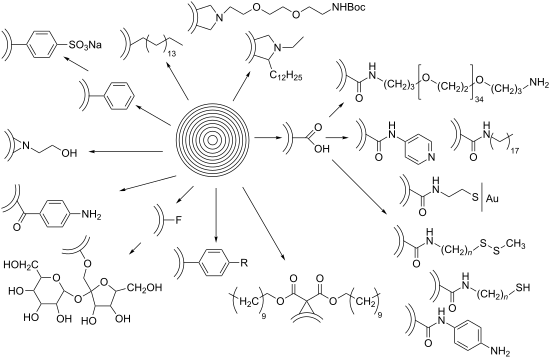
- ) and H2. The successful fluorination led to an increase of the mass of the CNO material and the fluorinated CNOs (F-CNO) were well soluble in ethanol and other alcohols as well as in DMF. Characterization of the F-CNOs was carried out by a multitude of techniques such as FTIR, Raman and UV–vis
- spectroscopy, SEM/EDX, XRD, XPS, TGA and TEM. In addition, the authors reported that the fluorination of the F-CNOs was reversible upon treatment with hydrazine, which interestingly led also to a regeneration of the “broken” graphene layers of the CNO. Some years later, based on the F-CNO material, the same


Imaging the intracellular degradation of biodegradable polymer nanoparticles
Beilstein J. Nanotechnol. 2014, 5, 1905–1917, doi:10.3762/bjnano.5.201
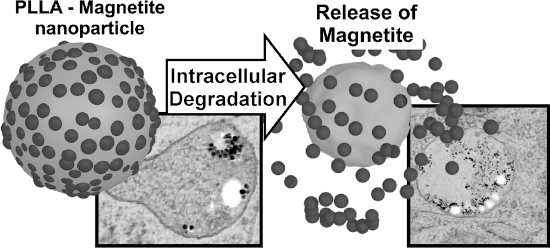
- achieved and applied on a copper grid (3.05, 300 mesh, Agar Scientific, U.K.). The sections were observed in a Zeiss EM 912 transmission electron microscope with a tungsten filament at an acceleration voltage of 120 kV. Micrographs were taken via a Cantega Olympus slow scan CCD camera. UV−visible (UV−vis
- ) spectroscopy A Lambda 25 (Perkin-Elmer) UV−vis spectrometer was used to monitor the formation of the FeCl(H2O)52+ complex upon addition of HCl to magnetite particles. The FeCl(H2O)52+ complex shows a characteristic absorption band at 340 nm. The cell was filled with 3 mL of diluted HCl (28 wt %) for background


In vitro and in vivo interactions of selected nanoparticles with rodent serum proteins and their consequences in biokinetics
Beilstein J. Nanotechnol. 2014, 5, 1699–1711, doi:10.3762/bjnano.5.180
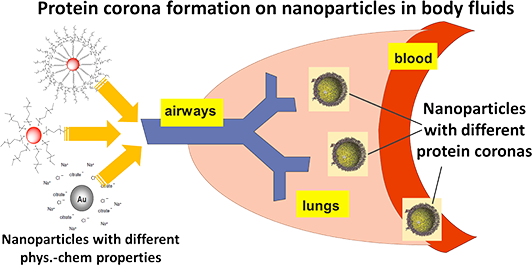
- previous physicochemical characterizations [8], all AuNP used in these experiments were thoroughly characterized through TEM (size distribution), UV–vis spectroscopy (absorbance), dynamic light scattering (DLS, hydrodynamic diameter), differential centrifugal sedimentation (DCS) and atomic force microscopy


The influence of molecular mobility on the properties of networks of gold nanoparticles and organic ligands
Beilstein J. Nanotechnol. 2014, 5, 1664–1674, doi:10.3762/bjnano.5.177
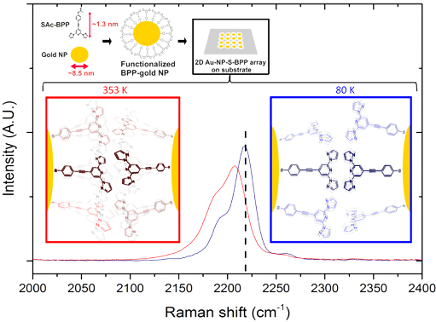
- volume. UV–vis spectroscopy Ultraviolet-visible (UV–vis) spectroscopy is performed to gain insight into the optical properties of these molecule–gold nanoparticle arrays, and specifically to investigate the influence of the S-BPP molecules on the effective dielectric constant. Metal nanoparticles exhibit
- . This is also confirmed experimentally from UV–vis spectroscopy of a C8–gold nanoparticle dispersion and a S-BPP–gold nanoparticle dispersion (both in chloroform), in which effectively f = 0. In Figure S9 (see Supporting Information File 1) we show that the SPR peak of the S-BPP-covered gold
- . Second, UV–vis spectroscopy indicates that εm (and also εeff which incorporates f) is actually higher for Au-NP–S-BPP networks than for alkanethiol networks (see Table 1). This should thus lead to a lower charging energy for S-BPP than for octanethiol networks and hence to linear I–V-curves at room




Growth evolution and phase transition from chalcocite to digenite in nanocrystalline copper sulfide: Morphological, optical and electrical properties
Beilstein J. Nanotechnol. 2014, 5, 1542–1552, doi:10.3762/bjnano.5.166
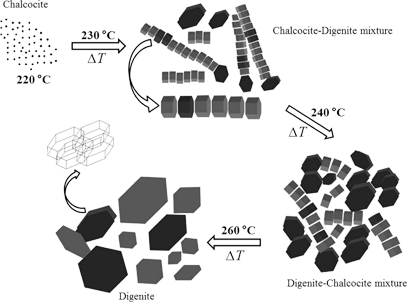
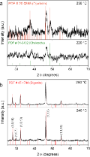
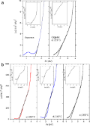
- ), electrically by the four-points-probe technique, by UV–vis spectroscopy (Thermo Scientific Genesys 10S UV–vis spectrophotometer in the range of 200 to 1100 nm) in order to determine, the structural phase, the electrical resistance and optical absorbance spectra, respectively. The photoresponse measurements




Current state of laser synthesis of metal and alloy nanoparticles as ligand-free reference materials for nano-toxicological assays
Beilstein J. Nanotechnol. 2014, 5, 1523–1541, doi:10.3762/bjnano.5.165
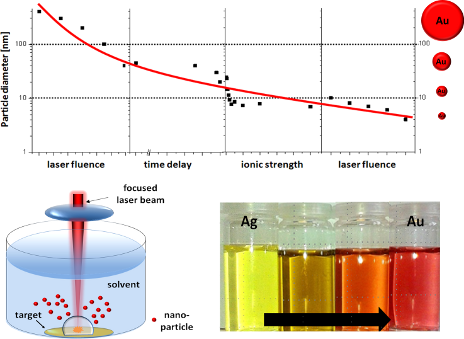
- opposing forces, namely steric stabilization by albumin and destabilization by screening of surface charges at higher salinities. In this context aggregation tendencies evaluated using UV–vis spectroscopy, allow to compare the portion of gold interband absorbance (380 nm) to the scattering of aggregates in
- scale [29], which were verified by UV–vis spectroscopy as well as TEM-EDX [28][29][139]. In the UV–vis spectrum, laser-fabricated AuAg alloy nanoparticles only show one SPR extinction maximum [140][141], which linearly shifts with the elemental composition [28][29][35][139] as illustrated in Figure 11


Protein-coated pH-responsive gold nanoparticles: Microwave-assisted synthesis and surface charge-dependent anticancer activity
Beilstein J. Nanotechnol. 2014, 5, 1452–1462, doi:10.3762/bjnano.5.158
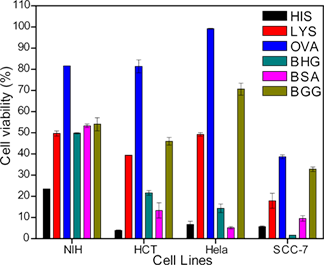
- reactions. To standardize the microwave reaction conditions, several experiments were conducted in which the irradiation power, temperature and time were varied, and the products were analyzed by UV–vis spectroscopy. A microwave power of 250 W and a temperature of 120 °C were found to be optimum conditions
- observed after the reaction for all of the proteins except trypsin (TRY) and glucose oxidase (GOX). The AuNPs formed in the presence of the different proteins were characterized by UV–vis spectroscopy (Figure 1). The addition of Ag ions played an important role in the formation of the AuNPs, which is


Controlling mechanical properties of bio-inspired hydrogels by modulating nano-scale, inter-polymeric junctions
Beilstein J. Nanotechnol. 2014, 5, 887–894, doi:10.3762/bjnano.5.101
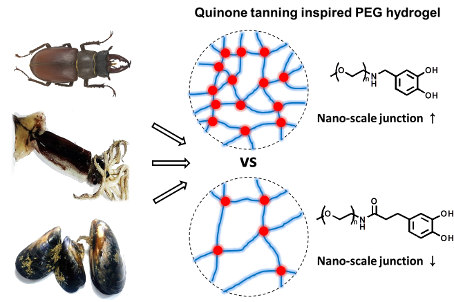
- catechol was confirmed by UV–vis spectroscopy at 280 nm. The UV–vis intensity of catechol modified polymer was calculated to the contents of catechol by using the standard curve made by the known concentration of dopamine solution versus the UV–vis intensity, demonstrating that all terminal amine groups