Search results
Search for "additive" in Full Text gives 147 result(s) in Beilstein Journal of Nanotechnology.
Probing viscoelastic surfaces with bimodal tapping-mode atomic force microscopy: Underlying physics and observables for a standard linear solid model
Beilstein J. Nanotechnol. 2014, 5, 1649–1663, doi:10.3762/bjnano.5.176
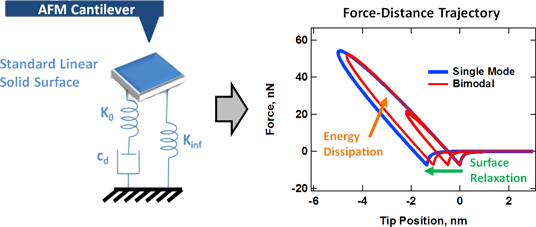
- not replace that of the first eigenfrequency, but rather their effects are additive. The effect of the low-frequency oscillation on the surface is always present to the same degree. Therefore, the average surface relaxation distance (distance between the approach and retract tip–sample force minima in
- compares the trends in dissipated energy as a function of A2 for the three cases analyzed in Figures 5–7. It shows that the trend for the real case lies in between the results of the prescribed trajectories with constant penetration and the prescribed trajectories of additive penetration for the two


Ionic liquid-assisted formation of cellulose/calcium phosphate hybrid materials
Beilstein J. Nanotechnol. 2014, 5, 1553–1568, doi:10.3762/bjnano.5.167
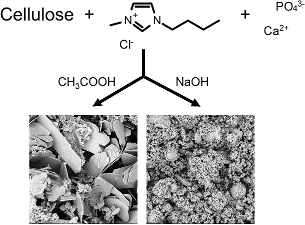
- (methanol, 48 h). The purified products were dried at 40 °C for 24 h in a vacuum oven. Samples are labeled CPXy, where X = NaOH or GAA (glacial acetic acid) indicates the additive and y = 24 or 48 indicates the reaction time, 24 or 48 h. For example, CPNaOH24 is a sample grown in the presence of NaOH for 24
- . 57–83%). Both EA and TGA therefore indicate that the mineralization in the presence of GAA is more effective in the sense that the fraction of inorganic is higher with the GAA additive than with NaOH. Both TGA and EA also show that, not surprisingly, the organic content in the hybrid materials
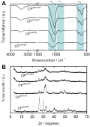
- on sample architecture, crystal phase, crystal organization, and sample homogeneity. SEM (Figures 2, 4, 5) and TEM (Figure 6) show that the additive, GAA vs NaOH, has a dramatic influence on the sample morphology. In the presence of GAA very uniform and highly organized nanoscale hybrid materials are


Liquid fuel cells
Beilstein J. Nanotechnol. 2014, 5, 1399–1418, doi:10.3762/bjnano.5.153
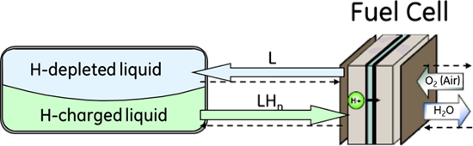
- towards hydrolysis turned out to be more efficient catalysts than platinum. Thiourea, a known hydrogen evolution inhibitor, was also used as an additive to increase the coulombic efficiency [181]. Nanoporous gold electrodes prepared by extracting Ag from an AgAu alloy catalyze the oxidation of AB at a

The protein corona protects against size- and dose-dependent toxicity of amorphous silica nanoparticles
Beilstein J. Nanotechnol. 2014, 5, 1380–1392, doi:10.3762/bjnano.5.151
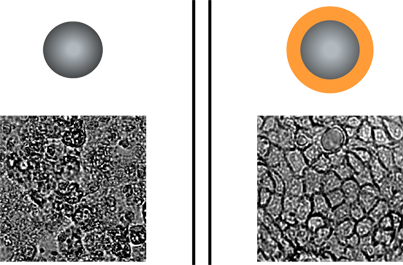
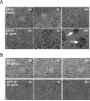
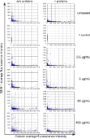
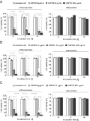
- and drug carriers [10][15]. Amorphous silica is registered as a food additive within the EU, named also E551, and therefore it is already widely used in various consumer products [9][10][15]. The assessment of amorphous silica being non-toxic is mostly based on the testing of micrometer-sized bulk




The study of surface wetting, nanobubbles and boundary slip with an applied voltage: A review
Beilstein J. Nanotechnol. 2014, 5, 1042–1065, doi:10.3762/bjnano.5.117
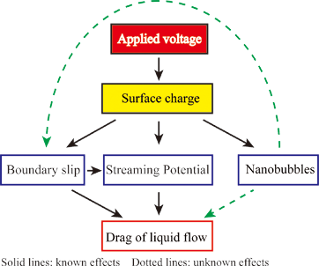
- coating and DI water. The interface of the layers will have a tendency to be electrostatically charged. When the applied voltage has an opposite polarity, the charging is additive. As a result, there will be a discharge current [77] which may lead to a damage of the brittle PS coating. To avoid the damage
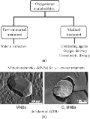


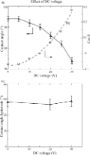


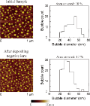






Extracellular biosynthesis of gadolinium oxide (Gd2O3) nanoparticles, their biodistribution and bioconjugation with the chemically modified anticancer drug taxol
Beilstein J. Nanotechnol. 2014, 5, 249–257, doi:10.3762/bjnano.5.27

- convertor [2][3], as additives in UO2 fuel rods for nuclear reactors [2], and as an additive in ZrO2 to enhance its toughness [3][4]. Gd2O3 has several potential applications in biomedicine, too. For example, it is used in magnetic resonance imaging, since it exhibits superparamagnetism and involves T1


Constant-distance mode SECM as a tool to visualize local electrocatalytic activity of oxygen reduction catalysts
Beilstein J. Nanotechnol. 2014, 5, 141–151, doi:10.3762/bjnano.5.14
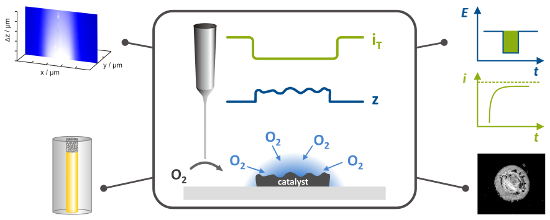
- recessed electrodes have already been reported [33][34] and a further miniaturization of the modified surface area is therefore possible. Furthermore, immobilization of the catalyst powder within the cavity of the recessed microelectrode allows for avoiding any binder additive such as, e.g., Nafion that is




Optimization of solution-processed oligothiophene:fullerene based organic solar cells by using solvent additives
Beilstein J. Nanotechnol. 2013, 4, 680–689, doi:10.3762/bjnano.4.77
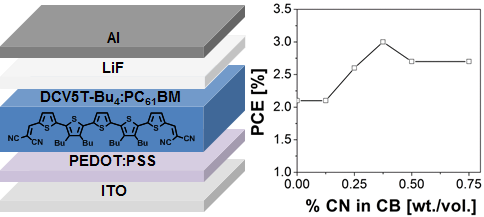
- conversion efficiencies up to 3.0% and external quantum efficiencies up to 40% were obtained through the use of 1-chloronaphthalene as solvent additive in the fabrication of the photovoltaic devices. Furthermore, atomic force microscopy investigations of the photoactive layer gave insight into the
- ]. This work further investigates the effect of a solvent additive on active layer film formation and relates the findings to the solar cell performance [30]. Experimental Materials and methods: Tetrahydrofuran (THF, Merck) was dried under reflux over sodium/benzophenone (Merck) and distilled
- )) [21]. In order to investigate the effect of a solvent additive on the photovoltaic performance, a series of devices was made by varying the amount of 1-chloronaphthalene (CN) in CB from 0.125 to 0.75% wt./vol. All results are shown in Table 2 and the J–V curve for the best performing device (0.375% CN


Structural and electronic properties of oligo- and polythiophenes modified by substituents
Beilstein J. Nanotechnol. 2012, 3, 909–919, doi:10.3762/bjnano.3.101
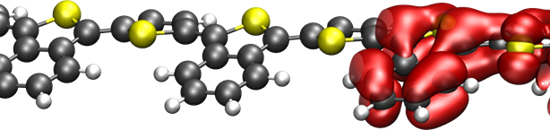
- that the band gap of the vinyl-bridged polymer with an annulated phenyl ring is even further decreased to 0.25 eV. Obviously, the effects of adding π-extending substituents and including vinyl bridges are roughly additive and can be combined in order to tailor the band gap. Influence of doping on the





Characterization and properties of micro- and nanowires of controlled size, composition, and geometry fabricated by electrodeposition and ion-track technology
Beilstein J. Nanotechnol. 2012, 3, 860–883, doi:10.3762/bjnano.3.97
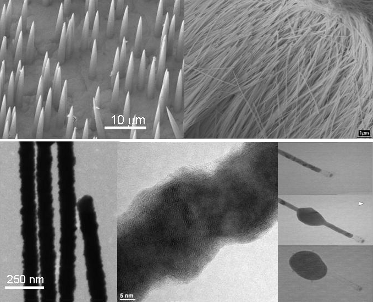
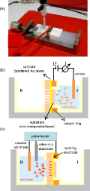
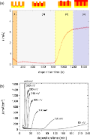
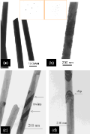
- containing Zn(NO3), Co(NO3), nitric acid, and polyvinylpyrrolidone (PVP) as an additive, 300 nm diameter Zn1−xCoxO nanowires with x ranging from 0.01 to 0.05 were grown [94]. The synthesis and properties of semiconducting CdTe and CdS nanowires are being investigated for their potential in photodetector and








Effect of spherical Au nanoparticles on nanofriction and wear reduction in dry and liquid environments
Beilstein J. Nanotechnol. 2012, 3, 759–772, doi:10.3762/bjnano.3.85
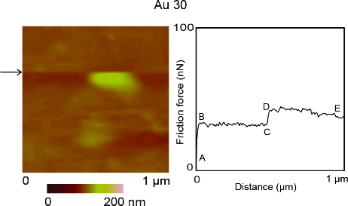
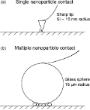
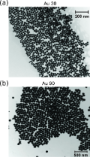
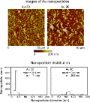
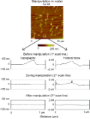
- nanoparticles prove to be a good potential lubricant as it lowers the coefficient of friction and minimizes wear. Further studies with other nano-objects under dry conditions and as an additive to water or other low-viscosity liquids could open up the possibilities for new types of hybrid lubricants. Such



Directed deposition of silicon nanowires using neopentasilane as precursor and gold as catalyst
Beilstein J. Nanotechnol. 2012, 3, 535–545, doi:10.3762/bjnano.3.62
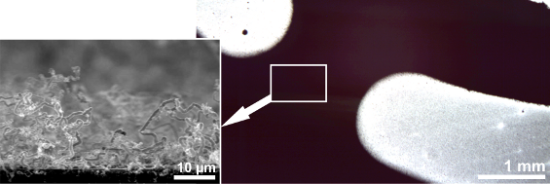
- deposition of polymer films is microcontact printing [47], which is generally considered advantageous since it is an “additive” method. In this particular case the need for dichloromethane or a similar solvent makes this process unsuitable due to the well-known swelling of the stamp material with these


FTIR nanobiosensors for Escherichia coli detection
Beilstein J. Nanotechnol. 2012, 3, 485–492, doi:10.3762/bjnano.3.55
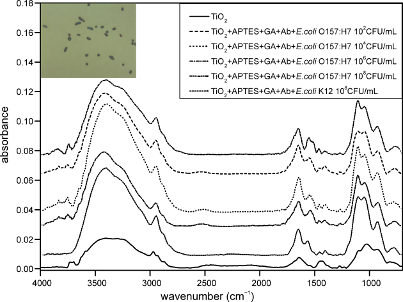
- , and carbohydrates, and their mid-infrared (MIR) spectra can be used for the identification and structural characterization of different pathogens and subspecies [27]. MIR spectra are additive and sensitive, and allow the fingerprinting and quantification of the pathogen of interest, transforming the


Conducting composite materials from the biopolymer kappa-carrageenan and carbon nanotubes
Beilstein J. Nanotechnol. 2012, 3, 415–427, doi:10.3762/bjnano.3.48
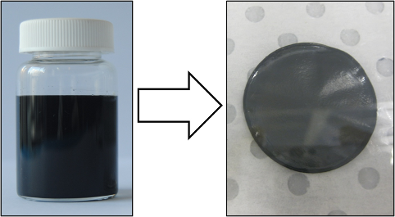
- commonly referred to as E407 (European Union specification) as well as being approved by the US Food and Drug Administration as a direct food additive [40]. Recent demonstrations of other applications include their use in drug delivery for the inhibition of viral infections [41][42]. Glycerin (or glycerol


Pulse-response measurement of frequency-resolved water dynamics on a hydrophilic surface using a Q-damped atomic force microscopy cantilever
Beilstein J. Nanotechnol. 2012, 3, 260–266, doi:10.3762/bjnano.3.29
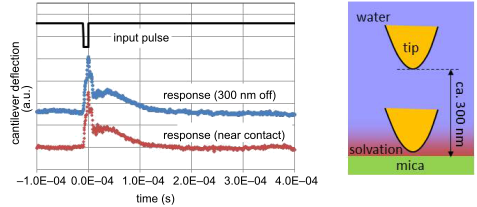
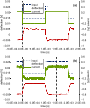
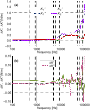
- compliances and were inverted to complex elasticities and as, where i = 1,2, as shown in Figure 7a. Since elasticities of parallel mechanical elements are additive, the stiffness of the hydrated water interacting with the probe can be derived as shown in Figure 7b. The above mentioned response of the




Modeling noncontact atomic force microscopy resolution on corrugated surfaces
Beilstein J. Nanotechnol. 2012, 3, 230–237, doi:10.3762/bjnano.3.26
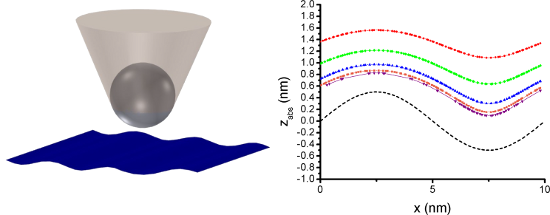
- and a quasi-one-dimensional corrugated surface. The following sections develop the calculation on the assumption that interactions are pairwise additive, beginning with a Lennard-Jones interaction between two atoms [24]. The formalism here closely follows that of [11], in which a detailed analytical


Direct-write polymer nanolithography in ultra-high vacuum
Beilstein J. Nanotechnol. 2012, 3, 52–56, doi:10.3762/bjnano.3.6
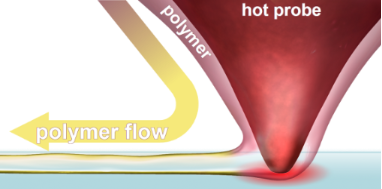
- , whereas deposition onto vacuum reconstructed silicon yielded polymer chains aligned along the surface. Keywords: additive lithography; polymer; scanning probe lithography; ultra high vacuum; Introduction The deposition of materials in vacuum is the foundational technology for creating modern electronic
- vacuum (UHV), to be used effectively. While the suite of established vacuum deposition technologies is vast and capable of highly precise deposition, there are relatively few methods to perform additive lithography in a single deposition step. Additive lithography deposits only the material that is
- needed for the intended device in the correct position. This is in contrast to the standard practice where an entire film is generated, the great majority of this film is then removed. In addition to the benefit of reduced material cost, additive techniques have further benefits, including the ability to


When “small” terms matter: Coupled interference features in the transport properties of cross-conjugated molecules
Beilstein J. Nanotechnol. 2011, 2, 862–871, doi:10.3762/bjnano.2.95
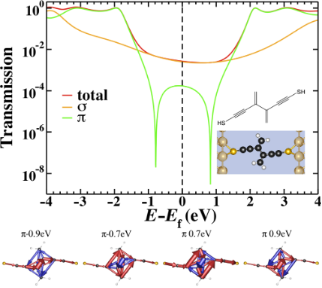
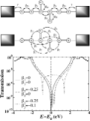
- features in the elastic transport may be obscured by inelastic (phonon-assisted) contributions [48]. Although the exact magnitude of the inelastic component in acyclic cross-conjugated molecules is not known, the contribution to the transport will simply be additive, as it is in the case of the σ-system




Template-assisted formation of microsized nanocrystalline CeO2 tubes and their catalytic performance in the carboxylation of methanol
Beilstein J. Nanotechnol. 2011, 2, 776–784, doi:10.3762/bjnano.2.86
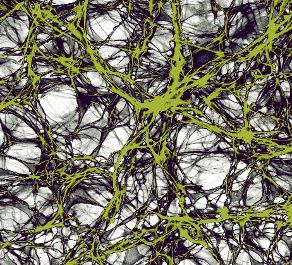
- additive. Keywords: activation of CO2; ceria; electrospinning; exotemplating; nanotubes; Introduction Ceria, CeO2, is known as a semiconducting ceramic material with unique electronic properties, exhibiting a broad range of functional properties with potential for application in various areas [1][2][3
- hierarchically structured ceria material. After a final calcination step at 350 °C, the morphology of the ceria material changed considerably compared to the ceria material obtained by the previously described procedure without Pluronic P123® additive. Again, ceria tubes of microscopic size were obtained with
- of methanol was studied: DMC is known as a green chemical and alternative to toxic and corrosive reagents, e.g., replacing phosgene or dimethyl sulfate (as a starting material for organic synthesis by carbonylation or methylation), as well as being an octane booster in gasoline and additive to


Approaches to nanostructure control and functionalizations of polymer@silica hybrid nanograss generated by biomimetic silica mineralization on a self-assembled polyamine layer
Beilstein J. Nanotechnol. 2011, 2, 760–773, doi:10.3762/bjnano.2.84
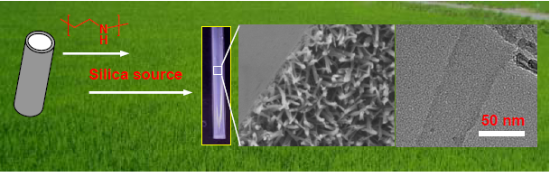
- temperature. The scale bars are 10 μm (a and d), 400 nm (b, c and e) and 500 nm (f). SEM images of LPEI@silica nanograss formed by using methanol as additive to control the LPEI self-assembly on the substrate surface. The self-assembled LPEI matrix was prepared from 4.0 wt % LPEI solutions in pure water (a–c


Intermolecular vs molecule–substrate interactions: A combined STM and theoretical study of supramolecular phases on graphene/Ru(0001)
Beilstein J. Nanotechnol. 2011, 2, 365–373, doi:10.3762/bjnano.2.42
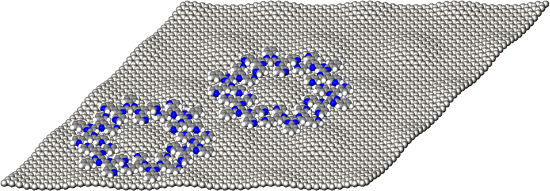
- theoretical study [39]. These surfaces coordinates were then kept fixed in the subsequent relaxation of adsorbed PTCDA and BTP molecules. The interactions between molecule–graphene and molecule–Ru were treated as being additive. For the modelling of the molecule–graphene interactions, a single molecule was


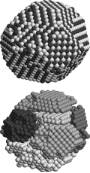
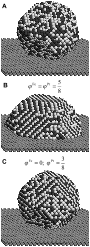
Kinetic lattice Monte-Carlo simulations on the ordering kinetics of free and supported FePt L10-nanoparticles
Beilstein J. Nanotechnol. 2011, 2, 40–46, doi:10.3762/bjnano.2.5
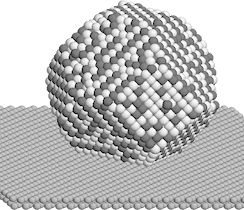
- independent directions. Therefore, the degree of order reported in [18] corresponds to the additive LRO parameter plotted in Figure 1 and an excellent agreement between the simulations and the experiments can be observed. Given the simplicity of the model and the uncertainties in the parameters ν0, Emig as