


Search results
Search for "alloy" in Full Text gives 216 result(s) in Beilstein Journal of Nanotechnology. Showing first 200.
Investigation of growth dynamics of carbon nanotubes
Beilstein J. Nanotechnol. 2017, 8, 826–856, doi:10.3762/bjnano.8.85
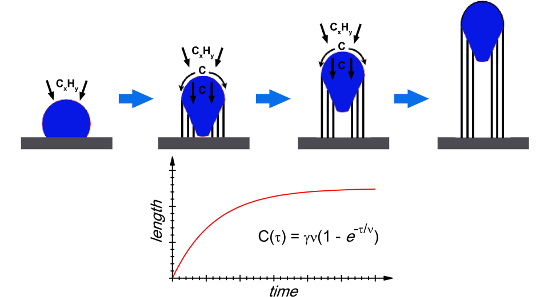
- Si whiskers, the initial condition was the formation of a liquid droplet of the alloy of Si with Au impurity on a Si wafer. The liquid Au–Si alloy acted as a preferred sink for the deposition of Si atoms from the vapor that was obtained as a result of the thermally-induced decomposition of gaseous
- SiCl4. As soon as the liquid alloy particle was supersaturated, the growth of the whisker started. It occurred by the precipitation of Si atoms from the droplet at the interface between solid Si and liquid alloy. As a result, the alloy droplet was displaced from the Si substrate crystal to the tip of
- [116], CoMn [117], Ni [118], Fe [119][120], CoPt [121], CoxMg1−xO [122], CoSO4 [123], WCo alloy [124][125] and Mo2C [126]. SiO2 or MgO were used as catalyst support. The synthesis was conducted using different carbon precursors: CO [105][106][107][108][112][113][114][115][117][118][119][122][123


Diffusion and surface alloying of gradient nanostructured metals
Beilstein J. Nanotechnol. 2017, 8, 547–560, doi:10.3762/bjnano.8.59
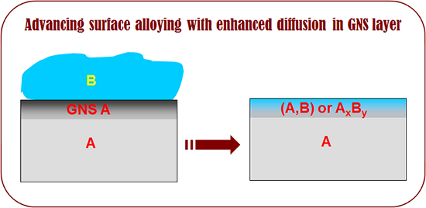
- activation enthalpy were measured in the nanostructured Cu synthesized by IGC [14][15][16]. And a comparable diffusivity with that of conventional grain boundaries (GBs) was revealed in a nanostructured γ-Fe–Ni alloy prepared by ball milling with subsequent sintering (BMS), while inter-agglomerate boundaries
- CG sample. The diffusion coefficients along some ultra-fast channels (together with some conventional GBs) in an UFG Cu–Zr alloy sample prepared via SPD were found to be ≈103 times higher than those along GBs in a high-purity CG Cu sample [21]. In order to differentiate these ultra-fast diffusion
- nonequilibrium GBs after SPD processing has been supported by strain mapping results in a SPD Pd–Ag alloy, in which the GB thickness (with evident strain) is determined to be ≈1.5 nm and is markedly larger than the thickness of relaxed GBs (≈0.5 nm) [24]. In addition, the higher energy of nonequilibrium GBs as




Modeling of the growth of GaAs–AlGaAs core–shell nanowires
Beilstein J. Nanotechnol. 2017, 8, 506–513, doi:10.3762/bjnano.8.54
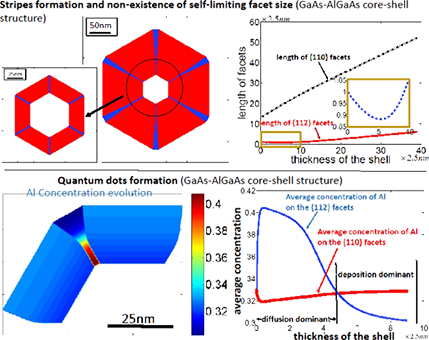
- Figure 7b). It is obvious that a model assuming pure materials cannot address the mechanisms leading to the non-homogeneous distribution of Al in the shell. A two-dimensional fully faceted model [8] was developed for the growth of the shell with an AxB1−x (AlxGa1−xAs) alloy on a hexagonal core. Surface
- here un > 0, the advancing surface leaves behind material with composition CA determined by the equilibrium with the surface layer, (1/δ)∂γ/∂ξA = dgα/dCA[8][14][16][17]. In experiments, and γ0 ≈ 1 J/m2, Γ0 ≈ 1018/m2, ρ0 ≈ 1028/m3 and T ≈ 1000 K. Usually, the alloy used in the deposition flux in the


Self-assembly of silicon nanowires studied by advanced transmission electron microscopy
Beilstein J. Nanotechnol. 2017, 8, 440–445, doi:10.3762/bjnano.8.47
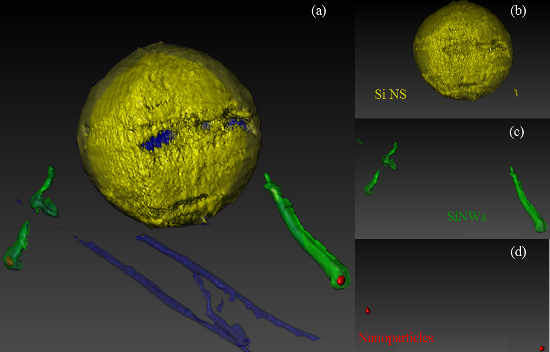
- sensitivity of our EDX measurements (i.e., less than 1 atom %). Calculations based on the ZAF method [11] applied to our STEM-EDX analyses revealed that the nanoparticle at the tip was comprised of 7 atom % Fe and 14 atom % Si. Thus, we can infer that the nanoparticles are composed of a FeSi2 alloy. This
- result is in agreement with that previously reported in [12], where we demonstrated using high-resolution TEM imaging that the interplanar distance in the nanoparticle is compatible with a FeSi2 alloy. Such a composition corresponds to the most stable Fe–Si-based alloy at high temperature (≈10,000 K


Electron energy relaxation under terahertz excitation in (Cd1−xZnx)3As2 Dirac semimetals
Beilstein J. Nanotechnol. 2017, 8, 167–171, doi:10.3762/bjnano.8.17
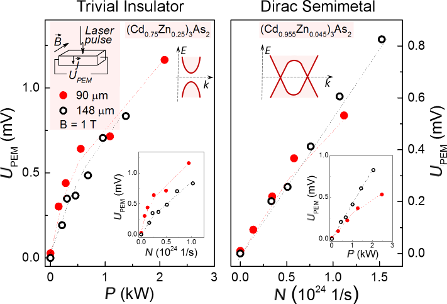
- thermalization time is strongly enhanced in the Dirac semimetals (Cd1−xZnx)3As2, which is an indirect confirmation for formation of spin-polarized highly conductive electron states at their surface. Dependence of the PEM effect amplitude on the magnetic field B applied for (Cd1−xZnx)3As2 samples for alloy


Grazing-incidence optical magnetic recording with super-resolution
Beilstein J. Nanotechnol. 2017, 8, 28–37, doi:10.3762/bjnano.8.4
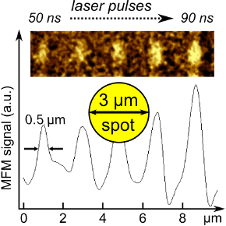
- Figure 2a, although the actual layer structure is much more complex, e.g., the recording layer consists of SiO2-embedded CoCrPt grains, the seed layer stack contains multiple layers, and the soft underlayer consists of a Fe-rich alloy. Superconducting quantum interference device (SQUID) magnetometry was


Annealing-induced recovery of indents in thin Au(Fe) bilayer films
Beilstein J. Nanotechnol. 2016, 7, 2088–2099, doi:10.3762/bjnano.7.199
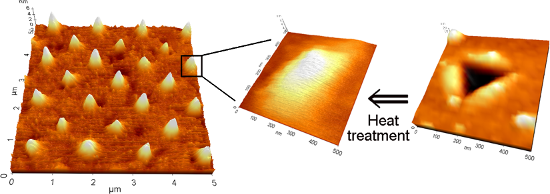
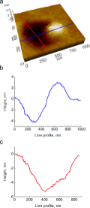
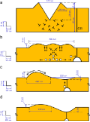
- dislocations climb, surface diffusion, and grain boundary diffusion. It is interesting that reversible formation/annihilation of hillocks at the indented sites upon heating/cooling was demonstrated in bulk and thin film samples of shape memory NiTi alloy [28]. This was achieved by planarizing the as-produced





Ferromagnetic behaviour of ZnO: the role of grain boundaries
Beilstein J. Nanotechnol. 2016, 7, 1936–1947, doi:10.3762/bjnano.7.185
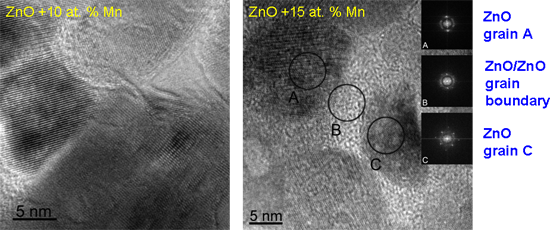
- from such an amorphous intergranular area. It is easy to see that the amount of amorphous phase in ZnO/ZnO GBs increases with increasing manganese content. Thus, in the alloy with 10 atom % Mn the amorphous layers are visible between crystalline ZnO nanograins. In the alloy with 15 atom % Mn the


Cubic chemically ordered FeRh and FeCo nanomagnets prepared by mass-selected low-energy cluster-beam deposition: a comparative study
Beilstein J. Nanotechnol. 2016, 7, 1850–1860, doi:10.3762/bjnano.7.177
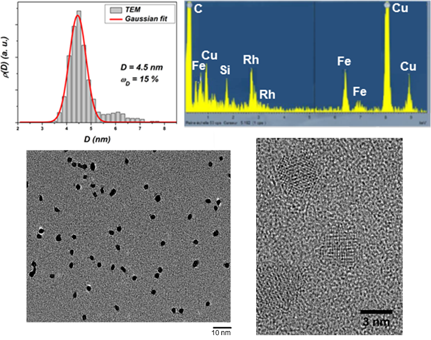
- moment for the FeCo soft alloy. In this paper, we present the magnetic and structural properties of nanoparticles of less than 5 nm diameter embedded in an inert carbon matrix prepared by mass-selected low-energy cluster-beam deposition technique. We obtained a CsCl-type (B2) chemically ordered phase for
- (100) and (012) are clearly visible on the FFT of Figure 4b for annealed FeRh (ΔZFeRh = 19). While in the case of FeCo alloy, the secondary minima are negligible due to the small value of the atomic contrast (ΔZFeCo = 1). Because the nuclear scattering factors for iron and cobalt differ considerably
- , neutron diffraction is generally preferred over X-ray diffraction to determine the degree of long-range order in FeCo alloy [14]. However, neutron diffraction is not applicable for the low quantities of matter in our samples. Moreover, at finite size we also have to take into account the shape factor that


A new approach to grain boundary engineering for nanocrystalline materials
Beilstein J. Nanotechnol. 2016, 7, 1829–1849, doi:10.3762/bjnano.7.176
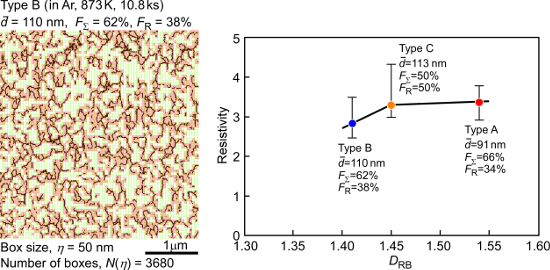
- brittleness was already demonstrated for BCC materials with high-stacking fault energy, such as in the very early work of the present author on Fe–6.5 mass % Si alloy with excellent soft magnetic properties but severe brittleness. Ductile, high performance Fe–6.5 mass % Si ribbon material was successfully
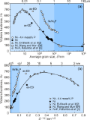
- relationship between the Vickers hardness and the average grain size for pure nickel (Ni) and nickel–phosphorus (Ni–P) alloy specimens produced by electrodeposition and subsequent annealing. The data obtained from our recent investigation are shown together with those for pure Ni [62][64] and Ni–1.2 mass % P
- alloy [3] reported by other researchers. The state of the supersaturated solid solution in as-electrodeposited Ni–4.4 mass % P alloy specimens was confirmed, although the Ni–P phase diagram [65] indicates that the solubility limit of phosphorus into nickel matrix is 0.17 mass %. Accordingly, the Ni3P








Properties of Ni and Ni–Fe nanowires electrochemically deposited into a porous alumina template
Beilstein J. Nanotechnol. 2016, 7, 1709–1717, doi:10.3762/bjnano.7.163
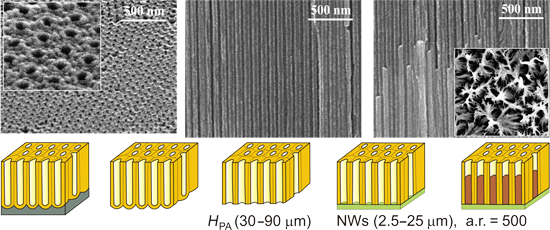
- reported that under identical conditions of electrochemical deposition the primary orientation of crystallites (texture) for alloy films (Ni–Fe coating) and single-component films (Ni) will be different as a result of significant grain refinement and increasing Fe content in the range from 1 to 25% [41
- ]. The texturing (primary orientation) is caused by a higher binding energy between the co-deposited atoms than between the atoms of a film and a substrate surface [42]. In the alloy case, the co-deposited atoms are different, and the surface area on which they are deposited is limited (bottom of a pore
- the metal with the matrix material of the pores and the formation of a non-ferromagnetic alloy. Similar effect was observed for Ni deposited into porous silicon templates [43][46]. The Curie temperature, TC, for the fabricated composites was defined according to the Curie–Weiss law, notably, the


Analysis of self-heating of thermally assisted spin-transfer torque magnetic random access memory
Beilstein J. Nanotechnol. 2016, 7, 1676–1683, doi:10.3762/bjnano.7.160
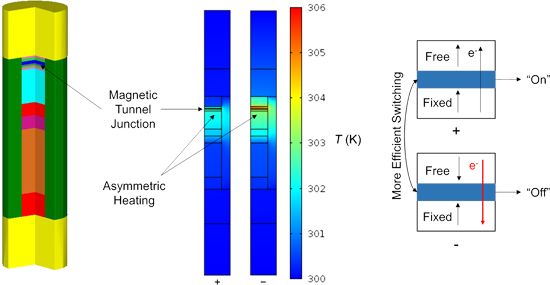
- | [0.25 Pd | 0.8 Co] × 10 | 4 Ru | 4 TaN | 20 Cu | 7 Ru | contact, where the numbers before the alloy composition of each layer represent the thickness of that layer in nanometers. The radius of the cylindrical material stack is 10 nm. The passivation layer surrounding the stack is 5 nm thick. In the
- temperature was sufficiently low so as to not cause crystallization [7] on the MgO–CoFeB interface, leaving the CoFeB completely amorphous. The Pd–Co layers are treated as an alloy due to the large number of sub-nanometer thick layers. The temperature-dependent materials properties of the PdCo alloy were





Development of adsorptive membranes by confinement of activated biochar into electrospun nanofibers
Beilstein J. Nanotechnol. 2016, 7, 1556–1563, doi:10.3762/bjnano.7.149
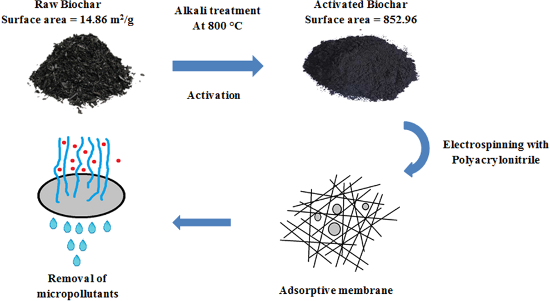
- with a thin layer of gold–palladium alloy using a SPI Module sputter coater. Fourier transform infrared-attenuated total reflectance (FTIR-ATR) spectra were recorded on a Nicolet iS50 spectrometer (Thermo Scientific, USA) at 0.04 cm−1 resolution and in the range of 400–4000 cm−1. Brunauer–Emmett–Teller




Effect of triple junctions on deformation twinning in a nanostructured Cu–Zn alloy: A statistical study using transmission Kikuchi diffraction
Beilstein J. Nanotechnol. 2016, 7, 1501–1506, doi:10.3762/bjnano.7.143
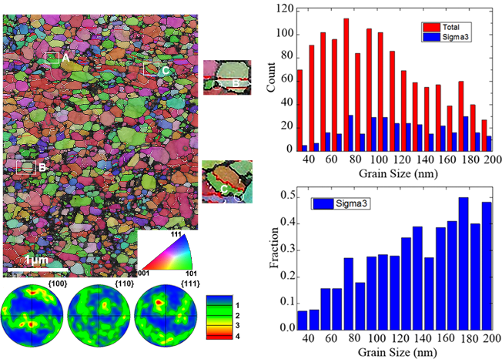
- this work, we investigated deformation twinning in a nanostructured Cu–Zn alloy using TKD. Two kinds of twinning phenomena were statistically studied using large TKD data sets: 1) their connections with triple junctions, and 2) the effect of grain size on deformation twinning. Figure 1 shows a typical
- TEM image of the HPT Cu–Zn alloy, revealing equiaxed ultrafine and nanocrystalline grains. Most grain boundaries are not well defined and the interiors of most grains are “messy”, especially in large grains. Those are typical microstructures in highly deformed samples with a high density of entangled
- processed by high-strain torsion [33][34]. Figure 2a presents a typical TKD orientation map of the HPT-processed Cu–Zn alloy. The orientation map is coded by the inverse pole figure coloring scheme as demonstrated in the inset, in which grains with {001}, {101}, {111} planes parallel to the sample disk



Deformation-driven catalysis of nanocrystallization in amorphous Al alloys
Beilstein J. Nanotechnol. 2016, 7, 1428–1433, doi:10.3762/bjnano.7.134
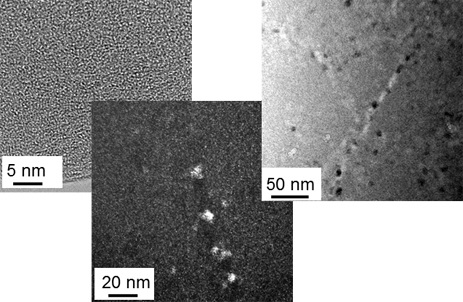
- bands and even promotes nanocrystal formation in those regions upon annealing. Melt-spun amorphous Al88Y7Fe5 alloy was intensely cold rolled. Microcalorimeter measurements at 60 °C indicated a slight but observable growth of nanocrystals in shear bands over the annealing time of 10 days. When the cold
- crystallization temperature of undeformed ribbons. Keywords: amorphous alloy; annealing; cold-rolling; nanocrystal; shear-band; Findings Crystallization reactions in metallic glasses have been extensively studied due to the beneficial effect of nanocrystal dispersions on mechanical [1][2][3][4] and magnetic
- transition temperature. Examples of deformation-induced crystallization reactions include Fe-based amorphous alloys [12][13][14][15][16], amorphous Ni–P alloy [17], bulk amorphous Zr and Cu–Zr alloys, and amorphous Al alloys [18][19][20][21][22]. The deformation techniques used so far include bending [23


Dealloying of gold–copper alloy nanowires: From hillocks to ring-shaped nanopores
Beilstein J. Nanotechnol. 2016, 7, 1361–1367, doi:10.3762/bjnano.7.127
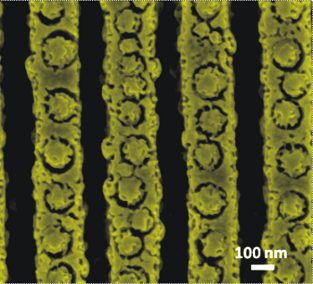
- for several metals and alloys including gold, copper, silver, gold–copper and gold–silver. We demonstrate that applying an electrochemical dealloying process to the gold–copper alloy nanowire arrays allows for transforming the hillocks into ring-like shaped nanopores. The resulting porous gold
- dealloying process to Au–Cu alloy nanowires, one can synthesize nanoporous nanowires with a special morphology (Figure 1c) that cannot be obtained when dealloying Au–Cu nanowires with a smooth surface. Results and Discussion There are several factors that influence the nodular growth including the
- , determined from statistical evaluation of plan-view SEM images of the nanowires (Supporting Information File 1, Figure S1), are almost constant for any metal (about 125 nm). The transmission electron microscopy (TEM) cross-section images of the Au–Cu alloy nanowires show that the hillocks exhibit the same




The self-similarity theory of high pressure torsion
Beilstein J. Nanotechnol. 2016, 7, 1267–1277, doi:10.3762/bjnano.7.117
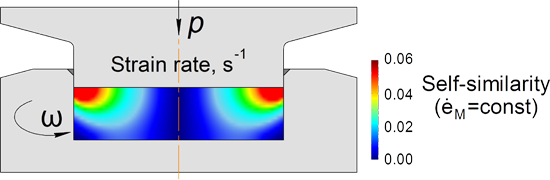
- Yan Beygelzimer Roman Kulagin Laszlo S. Toth Yulia Ivanisenko Laboratory of Excellence on Design of Alloy Metals for low-mAss Structures (DAMAS), Université de Lorraine, Île du Saulcy, Metz, F-57045, France Donetsk Institute for Physics and Engineering named after O.O. Galkin, National Academy of


In situ characterization of hydrogen absorption in nanoporous palladium produced by dealloying
Beilstein J. Nanotechnol. 2016, 7, 1197–1201, doi:10.3762/bjnano.7.110
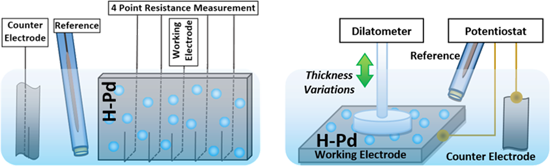
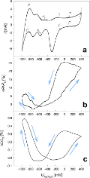
- dealloying, an electrochemical etching process that removes the less noble component from a master alloy. The volume and electrical resistance of np-Pd are investigated in situ upon electrochemical hydrogen loading and unloading. These properties clearly vary upon hydrogen ad- and absorption. During cyclic
- and catalysis [2]. One attractive method to produce nanostructured metals with macroscopic dimensions is dealloying, an (electro-)chemical process, which removes the less noble component from an alloy by selective etching [3]. Nanoporous palladium (np-Pd) produced by free corrosion [4] as well as
- potential-assisted dealloying [5] has been studied recently with regards to actuation upon electrochemical hydrogenation [4] as well as hydrogen solubility from the gas phase [6]. In the present study np-Pd is produced by electrochemically dealloying a Co–Pd master alloy and investigated upon

Customized MFM probes with high lateral resolution
Beilstein J. Nanotechnol. 2016, 7, 1068–1074, doi:10.3762/bjnano.7.100
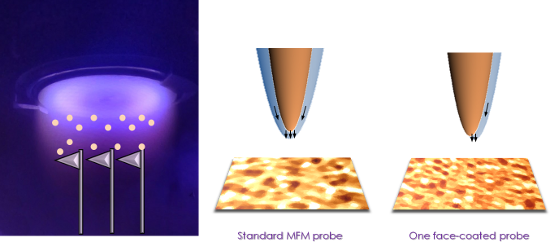
- ); AFM probes; high-resolution microscopy; magnetic force microscopy (MFM); magnetic materials; Introduction Conventional MFM probes consist of pyramidal Si or SiN tips with a ferromagnetic thin film coating (generally a CoCr alloy) mounted on a cantilever with resonance frequency and spring constant of
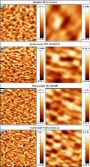
- , respectively). For these experiments, a high density hard disk with perpendicular anisotropy was used, based on a CoCrPt alloy and courtesy of Toshiba. The domain size is approximately 25 nm. Three pristine probes of each type were chosen and standard MFM images were measured with analogous parameters


Role of solvents in the electronic transport properties of single-molecule junctions
Beilstein J. Nanotechnol. 2016, 7, 1055–1067, doi:10.3762/bjnano.7.99
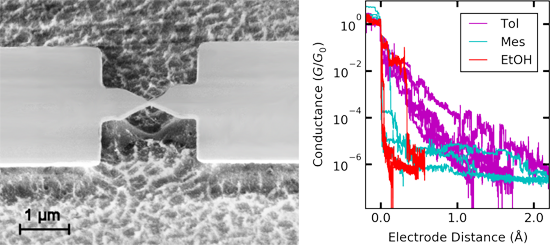
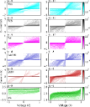
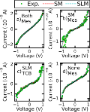
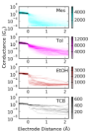
- sodium/potassium alloy under inert gas atmosphere. TCB was dried over P4O10 and distilled under nitrogen inert gas atmosphere. Device fabrication As described in [11] the spin-coating of polyimide (2 μm in thickness) is performed on a softly polished bronze wafer (200 μm in thickness), and then the wafer





Advanced atomic force microscopy techniques III
Beilstein J. Nanotechnol. 2016, 7, 1052–1054, doi:10.3762/bjnano.7.98

- Eva Roblegg and co-workers [20]. The local elastic stiffness and damping of individual phases in a titanium alloys was measured by using atomic force acoustic microscopy (AFAM) and mapping of contact-resonance spectra [21]. Another alloy, namely a Pt containing metallic glass, was characterized by AFM
Thickness dependence of the triplet spin-valve effect in superconductor–ferromagnet–ferromagnet heterostructures
Beilstein J. Nanotechnol. 2016, 7, 957–969, doi:10.3762/bjnano.7.88
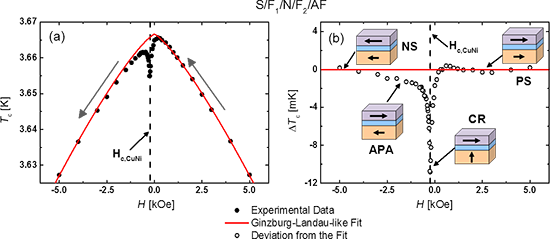
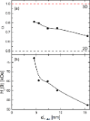
- the Cu41Ni59 alloy layer. (a) Dimensionality parameter α and (b) the (fictive) upper critical field at zero temperature, Hc(0), as obtained by fitting Equation 2 to the experimental data, as a function of the thickness of the Cu41Ni59 layer. The solid lines are guide to the eye, the dashed ones in (a





Reconstitution of the membrane protein OmpF into biomimetic block copolymer–phospholipid hybrid membranes
Beilstein J. Nanotechnol. 2016, 7, 881–892, doi:10.3762/bjnano.7.80
- ]. Solvent and monomers were purified prior to use. Toluene was stirred over Na–K alloy and benzophenone. Isoprene and ethylene oxide were purified in a two-step procedure: First, the monomers were stirred over calcium hydride for 1 h at −70 °C (dry ice–ethanol mixture), then transferred to a second flask



Orientation of FePt nanoparticles on top of a-SiO2/Si(001), MgO(001) and sapphire(0001): effect of thermal treatments and influence of substrate and particle size
Beilstein J. Nanotechnol. 2016, 7, 591–604, doi:10.3762/bjnano.7.52
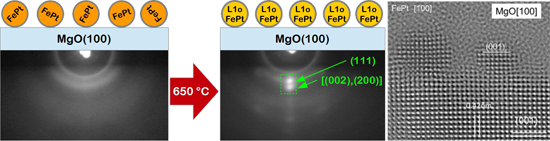
- (MAE), which promises application for next-generation magnetic data storage [3][4][5], improved fabrication processes of FePt alloy films and nanoparticles (NPs) with approximately equiatomic composition are a prerequisite in pursuit of optimized functionality. Additional attractiveness of this


In situ observation of deformation processes in nanocrystalline face-centered cubic metals
Beilstein J. Nanotechnol. 2016, 7, 572–580, doi:10.3762/bjnano.7.50
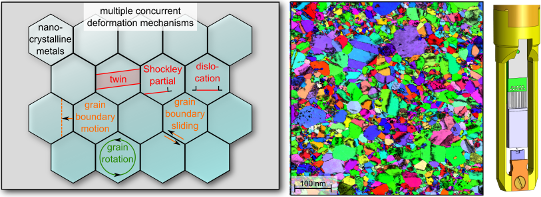
- investigated here. No significantly different behavior (within the statistical limitations) was observed for the different alloy systems, although molecular dynamics simulations suggest different dislocation and stacking fault densities with increasing strain as well as different grain boundary migration
- behavior for different alloy compositions [28][48]. In situ XRD studies also showed evidence on the concentration-dependent deformation behavior in the Pd–Au alloy [49]. Despite the good grain statistics of ACOM-TEM in comparison to HRTEM, synchrotron-based in situ XRD studies offer better temporal
- resolution in comparison to ACOM-TEM with far better grain statistics. Both good statistics and temporal resolution are necessary to reveal small differences in the deformation mechanism with the alloy content. With ACOM-TEM, the multiple concurrent mechanisms in all alloy systems are apparent. The twin





