Search results
Search for "barrier" in Full Text gives 559 result(s) in Beilstein Journal of Nanotechnology. Showing first 200.
Experimental and theoretical study of field-dependent spin splitting at ferromagnetic insulator–superconductor interfaces
Beilstein J. Nanotechnol. 2022, 13, 682–688, doi:10.3762/bjnano.13.60
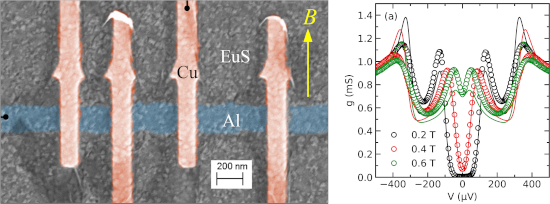
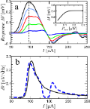
- , indicating a defect-free tunnel barrier. Spin splitting of the density of states is clearly visible. The observed splitting greatly exceeds the expected splitting due to the Zeeman energy εZ = μBB (which is about 35 μeV at B = 0.6 T). The solid lines in Figure 5a are fits with our model. We have included
- with help of the top normal contact (N), which is separated by an insulating barrier (I). (b) Circuit diagram to represent the FI–S bilayer in the quantum circuit theory. The superconductor is represented by the node, the Δ-source term, the εTh-leakage term, and its normal-state conductance G. The



Fabrication and testing of polymer microneedles for transdermal drug delivery
Beilstein J. Nanotechnol. 2022, 13, 629–640, doi:10.3762/bjnano.13.55
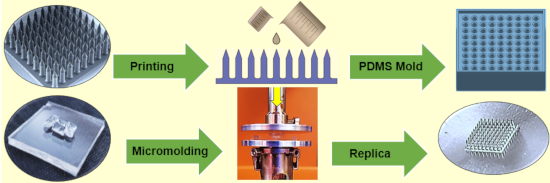
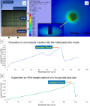
- the MN before skin rupture. Several methods are used to estimate these critical loads and their associated stresses, including theoretical analysis, experimental investigations, and FEA simulations [21]. For example, due to the skin’s SC barrier, the normal (vertical) insertion of MN patches on the



Approaching microwave photon sensitivity with Al Josephson junctions
Beilstein J. Nanotechnol. 2022, 13, 582–589, doi:10.3762/bjnano.13.50
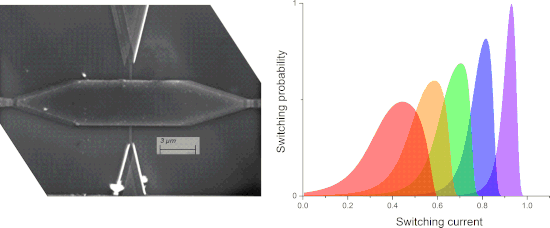
- rate. Therefore, its value is underestimated in dc measurements. The upper limit is given by the BCS expression 1.75kTc/(eRN) [29], which depends on the critical temperature of the electrodes and the normal resistance of the tunnel barrier only. This maximum possible critical current is difficult to
- damping values [48][49]: The used notations are the following: i = Ibias/Ic is the dimensionless bias current with the bias current Ibias and the critical current Ic, is the potential barrier height, γ = IT/Ic is the noise intensity, and IT = 2ekT/ℏ is the fluctuational current which can be calculated as
- , the probability of switching due to the absorption of 3 photons is 0.002. In Figure 2b the barrier height is compared with the energy of one photon. The potential profile is calculated for the critical current of 8.586 μA. Photon frequency and energy are, respectively, 10 GHz and 6.8 × 10⁻²⁴ J. The


Ciprofloxacin-loaded dissolving polymeric microneedles as a potential therapeutic for the treatment of S. aureus skin infections
Beilstein J. Nanotechnol. 2022, 13, 517–527, doi:10.3762/bjnano.13.43
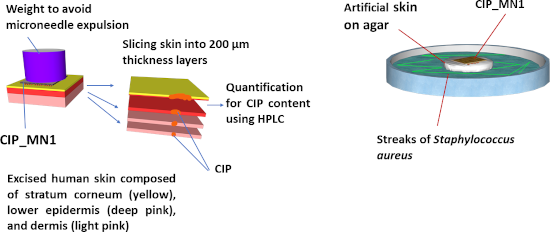
- , 19392, Jordan 10.3762/bjnano.13.43 Abstract Microneedles have been widely studied for many topical and transdermal therapeutics due to their ability to painlessly puncture the skin, thereby bypassing the stratum corneum, the main skin barrier. In this study, ciprofloxacin (CIP) was loaded into
- STSI [17]. Therefore, a proper delivery system that can evade the barrier properties of the skin is essential to be effective in the treatment of cellulitis and other skin infections. In this work, the potential of dissolving polymeric microneedles loaded with ciprofloxacin for the treatment of S
- Parafilm and an agarose-based skin model. Parafilm has been utilized to test the insertion properties of polymeric microneedles [20]. Parafilm-M is mainly composed of paraffin waxes and polyalkene (polyolefin) [21] and, thus, presumably similar in hydrophobicity to the stratum corneum, the main barrier of


Design and characterization of polymeric microneedles containing extracts of Brazilian green propolis
Beilstein J. Nanotechnol. 2022, 13, 503–516, doi:10.3762/bjnano.13.42
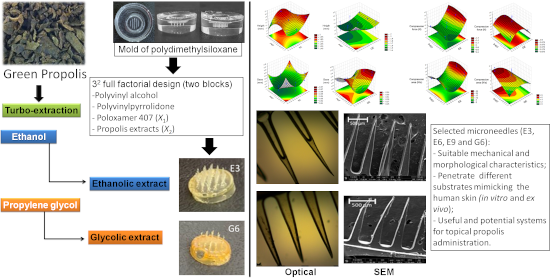
- Abstract Microneedles (MNs) are a means to break the protective skin barrier in a minimally invasive way. By creating temporary micropores, they make biologically active agents available in the skin layers. Propolis (PRP) is a gum resin with a complex chemical composition, produced by bees Apis mellifera L
- gastrointestinal one. Despite the great therapeutic potential, the use of this pathway is limited by the low permeation of molecules through the stratum corneum, the outermost layer of the skin, which works as a barrier, blocking the transport of drugs through the subcutaneous tissue. To overcome this difficulty


Ethosomal (−)-epigallocatechin-3-gallate as a novel approach to enhance antioxidant, anti-collagenase and anti-elastase effects
Beilstein J. Nanotechnol. 2022, 13, 491–502, doi:10.3762/bjnano.13.41
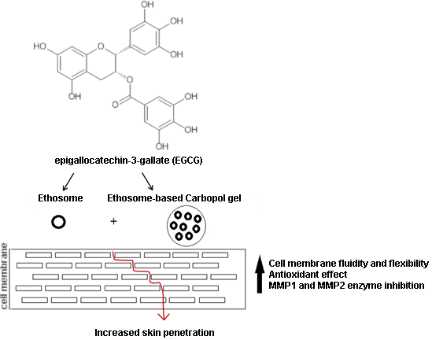
- many drugs. The stratum corneum in the epidermis, which is the top layer of the skin consisting of three layers, acts as an important barrier against penetration into the skin [9][16]. To overcome penetration limitations, various techniques such as penetration enhancers, phonophoresis, electroporation



Zinc oxide nanostructures for fluorescence and Raman signal enhancement: a review
Beilstein J. Nanotechnol. 2022, 13, 472–490, doi:10.3762/bjnano.13.40
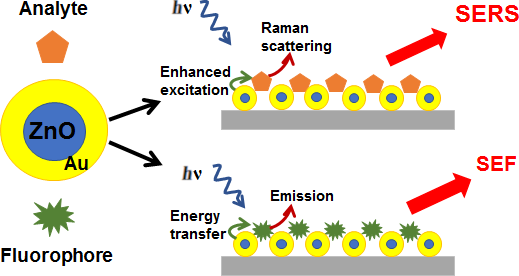
- occurred from Ag and Au NPs to ZnO NRs. The 3D hybrid structures improve the surface-to-volume ratio, yielding a higher SERS activity. Moreover, the formation of “hotspots” and the Shottky barrier at the interface between ZnO NRs and the decorated Au NPs increases the SERS activity. Furthermore, limits of


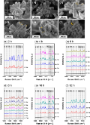


Alcohol-perturbed self-assembly of the tobacco mosaic virus coat protein
Beilstein J. Nanotechnol. 2022, 13, 355–362, doi:10.3762/bjnano.13.30
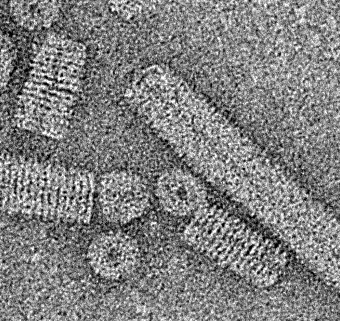
- rods. This could be the result of increased hydrophobic interaction strength, as determined by Lee and co-workers [33]. If disks interact with each other too strongly in the initial non-helical conformation, the energy barrier to rearrange into a helical conformation may become prohibitive. Potential


Controllable two- and three-state magnetization switching in single-layer epitaxial Pd1−xFex films and an epitaxial Pd0.92Fe0.08/Ag/Pd0.96Fe0.04 heterostructure
Beilstein J. Nanotechnol. 2022, 13, 334–343, doi:10.3762/bjnano.13.28
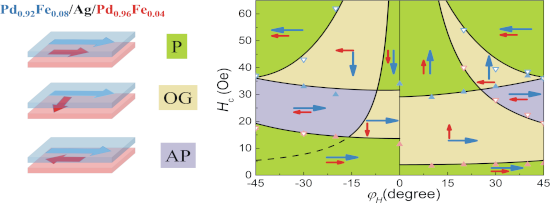
- reversal, since the volume of the material is divided into two fractions that rotate their moments in opposite directions. In addition, at the field strengths of the second jump in magnetization, the height of the barrier for the coherent rotation also becomes insignificant. Therefore, in this range of


A broadband detector based on series YBCO grain boundary Josephson junctions
Beilstein J. Nanotechnol. 2022, 13, 325–333, doi:10.3762/bjnano.13.27
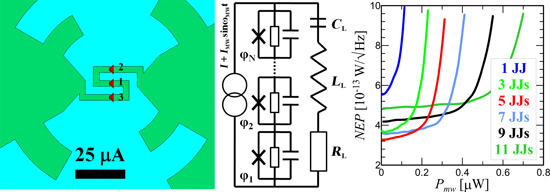
- , respectively [36][37]. For a Josephson junction having a non-hysteretic IVC, the output voltage spectrum at a fixed bias current is defined as [38]: where Rd is the differential resistance; and depend on the nature of the junction barrier. For the considered structures, SI = 10−12 was chosen as a typical



The effect of metal surface nanomorphology on the output performance of a TENG
Beilstein J. Nanotechnol. 2022, 13, 298–312, doi:10.3762/bjnano.13.25
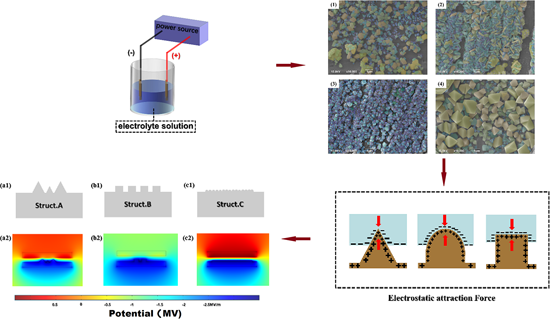
- barrier of electron transfer, thus, enabling electron flow from insulator to metal (vice versa) or from an insulator to another insulator. TENGs are miniaturized and portable. They generate current by collecting tiny amounts of energy and supply power for microelectronic devices and sensors. Wind energy




Relationship between corrosion and nanoscale friction on a metallic glass
Beilstein J. Nanotechnol. 2022, 13, 236–244, doi:10.3762/bjnano.13.18
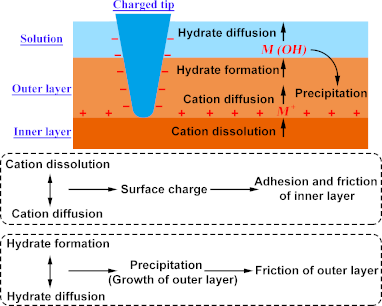
- films form on most metal surfaces and act as a barrier to the corrosive environment, thus impeding further corrosion. The corrosion properties of MGs, for example, the ability to passivate and to remain in the passive state in corrosive aqueous solutions, have been addressed in many studies using
- electrochemical methods, often combined with surface analytical techniques [13][14][15]. Wang et al. [13] reported that the passive oxide films are grown as a double layer structure on MGs with a corrosion product layer underlying an inner barrier layer in NaCl and Na2SO4 solutions. Since most metals and alloys


Impact of device design on the electronic and optoelectronic properties of integrated Ru-terpyridine complexes
Beilstein J. Nanotechnol. 2022, 13, 219–229, doi:10.3762/bjnano.13.16
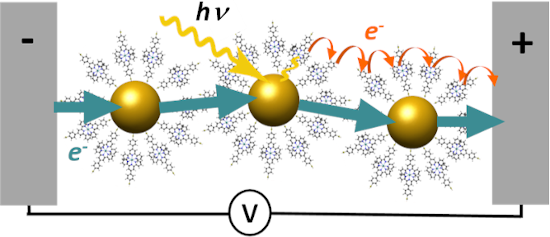
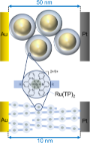
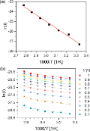
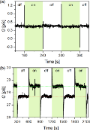
- , verified by temperature-dependent conductance measurements. Next we discuss the impact of this finding on the electrical switching ability of few-Ru(MPTP)2–AuNP compared to single-Ru(MPTP)2–AuNP devices. The recently reported ideal single-AuNP devices are described as double-barrier tunnel junctions [15


Engineered titania nanomaterials in advanced clinical applications
Beilstein J. Nanotechnol. 2022, 13, 201–218, doi:10.3762/bjnano.13.15
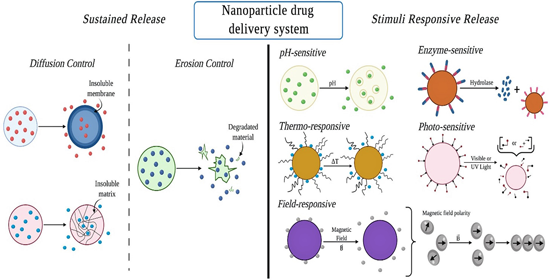
- small size of nanomaterials enables them to permeate through biological barriers in the body, such as the blood–brain barrier, the pulmonary system, and through the tight junction of endothelial cells of the skin. The main goal of loading drugs on nanomaterials is the delivery to specific target cells


Piezoelectric nanogenerator for bio-mechanical strain measurement
Beilstein J. Nanotechnol. 2022, 13, 192–200, doi:10.3762/bjnano.13.14
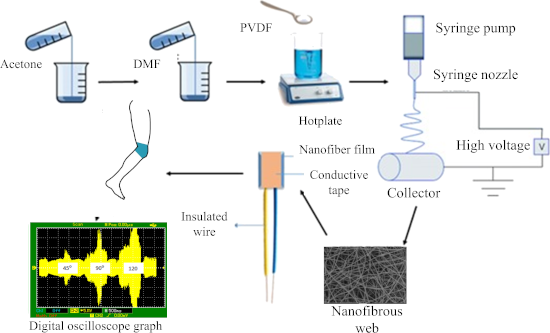
- last couple of years. Textile-based sensors, being flexible, are easy to fit in a garment and create no barrier to the wearer. Nowadays, wearable sensors based on conductive threads and conductive polymers are capable of measuring vital signs of the human body [4][5]. Tognetti et al. [6] designed and


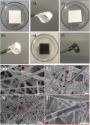
A comprehensive review on electrospun nanohybrid membranes for wastewater treatment
Beilstein J. Nanotechnol. 2022, 13, 137–159, doi:10.3762/bjnano.13.10




Heating ability of elongated magnetic nanoparticles
Beilstein J. Nanotechnol. 2021, 12, 1404–1412, doi:10.3762/bjnano.12.104
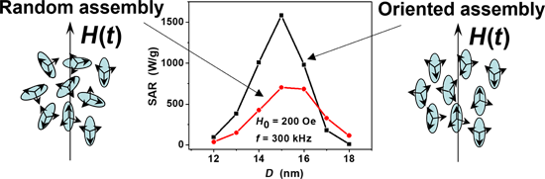
- anisotropy constant, Kef ≈ KSh, determines the characteristic value of the reduced energy barrier between potential wells. The latter is equal in order of magnitude to σ = KefV/kBT, where kB is the Boltzmann constant and T is the absolute temperature. The dynamics of the unit magnetization vector of a
- superparamagnetic nanoparticle substantially depends on the value of the reduced energy barrier [18]. At a large value of the reduced energy barrier, σ ≫ 1, the probability of a nanoparticle magnetization reversal in an ac magnetic field of moderate amplitude, H0 ≪ Hk, where Hk = 2Kef/Ms is the particle anisotropy
- optimal diameters occurs, since with an increased value of Kef, the height of the reduced energy barrier changes rapidly with a relatively small change in the particle volume. Note that earlier [30] a similar behavior of SAR was revealed for dilute randomly oriented assemblies of spherical iron oxide


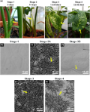
Polarity in cuticular ridge development and insect attachment on leaf surfaces of Schismatoglottis calyptrata (Araceae)
Beilstein J. Nanotechnol. 2021, 12, 1326–1338, doi:10.3762/bjnano.12.98
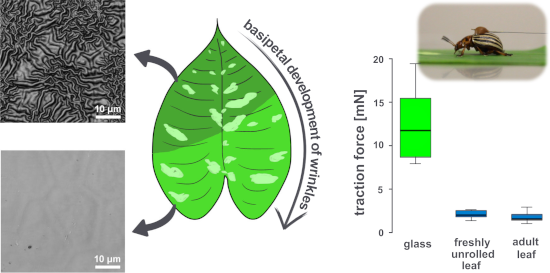
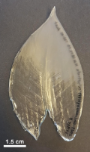
- .12.98 Abstract The plant cuticle is a multifunctional barrier that separates the organs of the plant from the surrounding environment. Cuticular ridges are microscale wrinkle-like cuticular protrusions that occur on many flower and leaf surfaces. These microscopic ridges can help against pest insects by




Nonmonotonous temperature dependence of Shapiro steps in YBCO grain boundary junctions
Beilstein J. Nanotechnol. 2021, 12, 1279–1285, doi:10.3762/bjnano.12.95
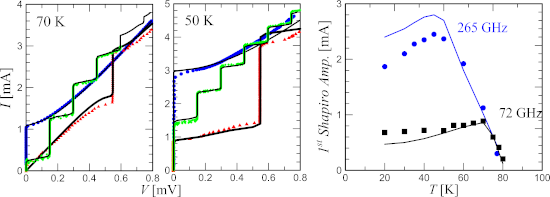
- thickness with the junction barrier thickness t = 1.5 nm and the London penetration depth λL = 250–150 nm [38]. It can be seen from the figure that, for nitrogen temperatures, the Josephson junction can generally be considered as a short JJ. With the decrease in the temperature, its characteristic dimension
- account the non-uniform distribution of currents flowing through the barrier, which is typical for bicrystal junctions [28][42][43]. However, if the junction length is of the order of the kink size and there is no external magnetic field, the long junction dynamics is close to that of a short one [39] and


Morphology-driven gas sensing by fabricated fractals: A review
Beilstein J. Nanotechnol. 2021, 12, 1187–1208, doi:10.3762/bjnano.12.88
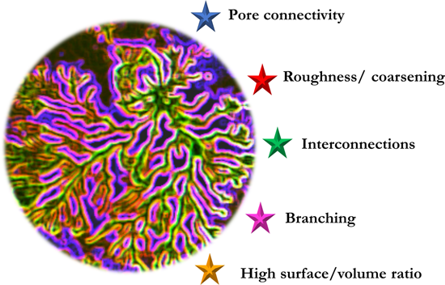
- resulting in more interaction sites at which analyte and sensor can interact. The authors termed the mechanism “random tunneling junction network”. Here, electron transport across the fractal structures is assumed to occur via tunneling. Different fractal dimensions lead to different Schottky barrier
- heights across the film surface with few locations having a small barrier height depending upon fractal dimension and geometry. Such locations serve as sites with improved sensitivity and respond to the gas faster than other locations that have higher Schottky barrier heights. The gas sensing measurements
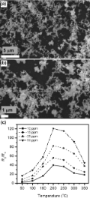
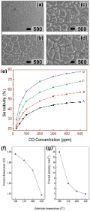
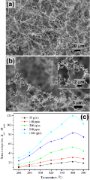
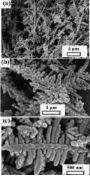
- were composed of many well aligned nanorods. The variations in potential barrier height at the contacts of the nanorods gave excellent gas sensing results towards hydrogen sulfide (H2S). The sensitivity response of the ZnO dendrite sensor at room temperature and the variation in sensitivity at










First-principles study of the structural, optoelectronic and thermophysical properties of the π-SnSe for thermoelectric applications
Beilstein J. Nanotechnol. 2021, 12, 1101–1114, doi:10.3762/bjnano.12.82
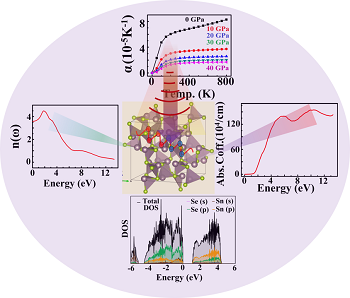
- hierarchical architecture [2][11][12] as well as through nanostructuring [13][14][15]), retaining the hole mobility [16][17], and by improving the value of the Seebeck coefficient (by tuning the band structure [18] along with a large conduction (valence) band convergence [19][20], electron energy barrier


Assessment of the optical and electrical properties of light-emitting diodes containing carbon-based nanostructures and plasmonic nanoparticles: a review
Beilstein J. Nanotechnol. 2021, 12, 1078–1092, doi:10.3762/bjnano.12.80
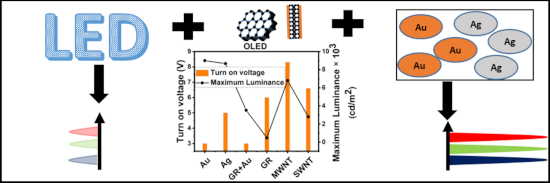
- should be injected from the low-work-function metal cathode surface. Therefore, HTL should possess excellent charge mobility and maintain morphological stability. Moreover, it should have an appropriate highest occupied molecular level (HOMO), ensuring a low energy barrier for hole injection from the
- , therefore, reduces the hole injection barrier, which in turn creates a more efficient transfer to the HTL. In the device configuration of Figure 6a, a graphene oxide–Au nanocomposite HIL inserted between ITO and NPB was used to enhance the EL of Alq3-based OLED [51]. The correlation between the wavelength
- difference between the Fermi level of the cathode material and the LUMO level of the adjacent material in which electrons have to be transported. Therefore, decreasing the energy barrier between the cathode and the adjacent layer can increase the electron injection efficiency and, hence, the device


Use of nanosystems to improve the anticancer effects of curcumin
Beilstein J. Nanotechnol. 2021, 12, 1047–1062, doi:10.3762/bjnano.12.78
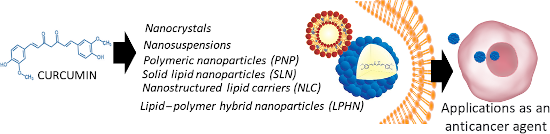
- , which yielded a dual targeting structure that was able to cross the blood–brain barrier, a significant obstacle when treating brain tumors. Similarly, an improved internalization of CUR-loaded MNP was also observed in HPAF-II and Panc-1 human pancreatic cancer cell lines (54.06% and 53.86%, respectively


Progress and innovation of nanostructured sulfur cathodes and metal-free anodes for room-temperature Na–S batteries
Beilstein J. Nanotechnol. 2021, 12, 995–1020, doi:10.3762/bjnano.12.75
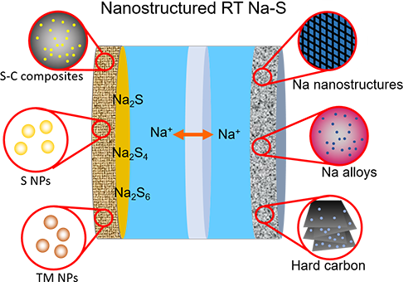
- important challenges are Na dendrite formation, capacity fading, low electrochemical utilization of sulfur, large size and mass of sodium ions, and poor understanding of the formation of discharge products [18]. In addition, replacing metal Na anodes with safer materials is another critical barrier to
- –Nafion membrane. Using this barrier, the capacity retention could be improved to 250 mAh·g−1 after 100 cycles. In spite of the improvement, the capacity value is still low because of the low Na+ diffusivity through the membrane and the insulating nature of Al2O3. Another approach to stable catholytes is




A Au/CuNiCoS4/p-Si photodiode: electrical and morphological characterization
Beilstein J. Nanotechnol. 2021, 12, 984–994, doi:10.3762/bjnano.12.74
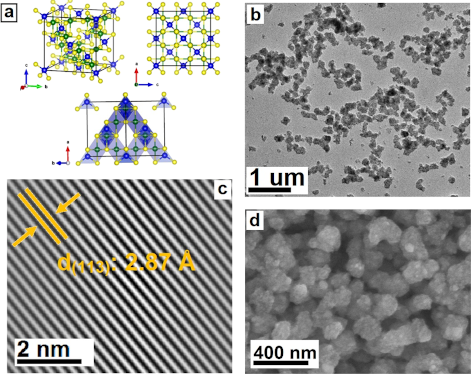
- in a high-vacuum coating unit. Thus, the Au/CuNiCoS4/p-Si photodiode device was fabricated. The schematic illustration of the photodiode device and a band diagram of the junctions, with bandgaps and energy levels is shown in Figure 1. The device has a barrier at the interfacial layer between Au and p
- -Si. The interfacial layer might increase the barrier height between the Au and p-Si. Characterization XRD patterns of the thiospinel CuNiCoS4 nanocrystals were recorded with a Bruker D8 diffractometer, Cu Kα radiation (λ = 0.15418 nm). A FEI TALOS F200S tunneling electron microscope (TEM) was used to
- its good response to increasing illumination power densities [8]. The diode parameters, such as ideality factor (n), series resistance (Rs), and barrier height (ϕb), of the fabricated Au/CuNiCoS4/p-Si device provide information to understand electrical characteristics. These parameters can be