Search results
Search for "batteries" in Full Text gives 185 result(s) in Beilstein Journal of Nanotechnology.
A top-down approach for fabricating three-dimensional closed hollow nanostructures with permeable thin metal walls
Beilstein J. Nanotechnol. 2017, 8, 1231–1237, doi:10.3762/bjnano.8.124
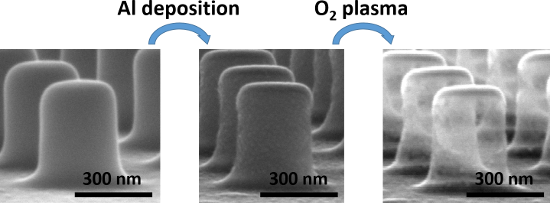
- as artificial cells [2], controlled transport and delivery of chemical agents (e.g., pharmaceutical drugs) [3], catalysis [4], lithium batteries [5] and confined reaction compartments (nanoreactors) [1]. Most fabrication methods of nanocages are based on bottom-up techniques, mainly colloidal and sol


Structural properties and thermal stability of cobalt- and chromium-doped α-MnO2 nanorods
Beilstein J. Nanotechnol. 2017, 8, 1032–1042, doi:10.3762/bjnano.8.104
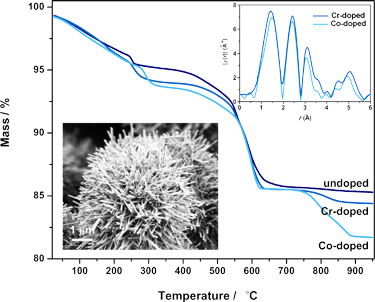
- can be used as a cathode-active material for rechargeable lithium batteries [8], an electrode material for supercapacitors [9][10], and shows excellent catalytic activity for the selective oxidation of benzyl alcohols [11][12]. The catalytic properties are related to the redox cycling of various
- Co2+ have been published. It seems that doping with cobalt allows for the preparation of materials with enhanced characteristics. In an attempt to modify α-MnO2 as cathode for high energy density lithium batteries, nanostructured MnO2, doped with 2 atom % Co, was synthesized [20]. In Co-doped
- dopant so drastically affects the physical properties of the MnO2 matrix. Because of economic reasons MnO2 is one of the most attractive cathodes for rechargable lithium batteries. Since Mn is the tenth-most abundant element in the Earth crust, lithiated MnO2 cathodes would cost around 1% of LiCoO2, the


First examples of organosilica-based ionogels: synthesis and electrochemical behavior
Beilstein J. Nanotechnol. 2017, 8, 736–751, doi:10.3762/bjnano.8.77

- molecular solvents, ILs often offer improved safety of a device by way of their low vapor pressure and low flammability [8]. As a result, ILs have been investigated as advanced electrolytes to replace traditional aqueous or organic electrolytes in batteries and fuel cells [5][6][7]. Among others, ILs are
- material without specific optical properties is desired, such as batteries or fuel cells. The IL used in the current study (Scheme 1) is a new IL based on a related example published earlier [25]. The difference between the two ILs is the chain length of the sulfonated side chain attached to the
- flexible IGs that may be interesting as membrane materials in electrochemical devices such as sensors, batteries, or fuel cells. Conclusion The current article is the first account on organosilica host materials for ionogel fabrication. Compared to pure silica host materials, organosilica hosts offer many










Vapor deposition routes to conformal polymer thin films
Beilstein J. Nanotechnol. 2017, 8, 723–735, doi:10.3762/bjnano.8.76
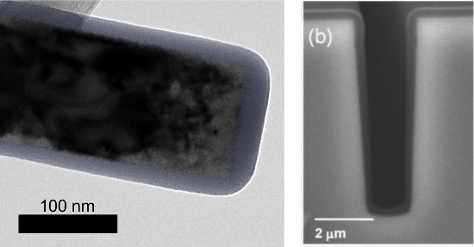
- times the Young’s Modulus of a bare CNT sheet [40]. Emerging applications for ultrathin polymer films on nanostructured high aspect ratio structures include various energy storage devices and soft electronics. For instance, silicon based anodes are of interest for lithium ion batteries since Li–Si
- . Gleason and coworkers, having previously shown pV4D4 as potential solid electrolyte, are exploring the Si nanowire assembly in Figure 8a as a route toward anodes for micro lithium ion batteries [39]. Figure 9e shows a corresponding, conformal pV4D4 coating on a lithium spinel oxide particle, a material
- that can be used as a cathode for micro lithium ion batteries. Composite electrodes for supercapacitors have been developed by forming pseudo-capacitive, conjugated polymer thin films on various electrodes such as vertically aligned CNTs, aligned graphene flakes, and nano-porous anodized alumina (NAA


Synthesis of graphene–transition metal oxide hybrid nanoparticles and their application in various fields
Beilstein J. Nanotechnol. 2017, 8, 688–714, doi:10.3762/bjnano.8.74
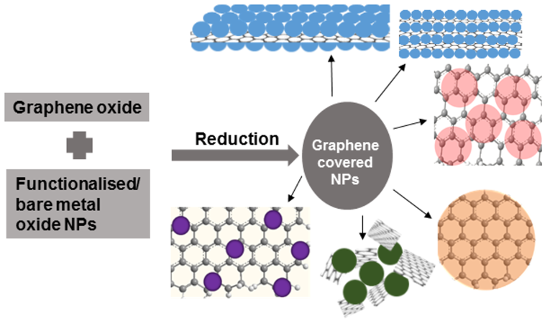
- ) and therefore offers the possibility to fabricate a large variety of graphene–transition metal oxide (TMO) NP hybrids. These hybrid materials are promising alternatives to reduce the drawbacks of using only TMO NPs in various applications, such as anode materials in lithium ion batteries (LIBs
- as a high-performance electrochemical capacitor [108], shows enhanced optical response [109], and represents highly durable electrodes for Li and Na ion batteries [110]. Yang et al. have prepared VO2–graphene architectures by using graphene as a substrate for the in situ growth of VO2 ribbons (Figure
- rechargeable Li batteries [115][116]. Kim et al. have introduced the use of VO2–graphene hybrid materials for the fabrication of thermochromic films for energy saving windows. VO2 crystals have been prepared on graphene and the graphene-supported VO2 is easily transferred to a plastic substrate which enables








Carbon nanotube-wrapped Fe2O3 anode with improved performance for lithium-ion batteries
Beilstein J. Nanotechnol. 2017, 8, 649–656, doi:10.3762/bjnano.8.69
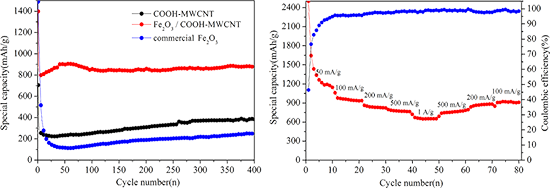
- material of lithium-ion batteries (LIBs) because they offer high theoretical capacities, and are environmentally friendly and widely available. However, the low electronic conductivity and severe irreversible lithium storage have hindered a practical application. Herein, we employed ethanolamine as
- precursor to prepare Fe2O3/COOH-MWCNT composites through a simple hydrothermal synthesis. When these composites were used as electrode material in lithium-ion batteries, a reversible capacity of 711.2 mAh·g−1 at a current density of 500 mA·g−1 after 400 cycles was obtained. The result indicated that Fe2O3
- /COOH-MWCNT composite is a potential anode material for lithium-ion batteries. Keywords: anode material; carbon nanotubes; hydrothermal synthesis method; lithium-ion batteries; Introduction The depletion of non-renewable energy resources such as coal, petrol and natural gas has led to the urgent need


Role of oxygen in wetting of copper nanoparticles on silicon surfaces at elevated temperature
Beilstein J. Nanotechnol. 2017, 8, 425–433, doi:10.3762/bjnano.8.45
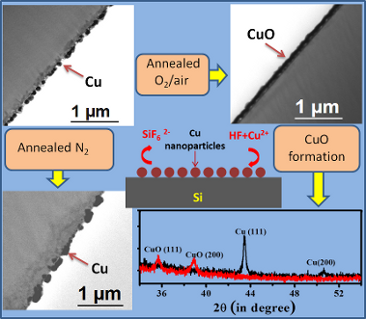
- recent years, several CuO nanostructure syntheses and their applications have been reported. Different shaped CuO nanostructures such as nanowires, nanoplatelets, nanorods, and nanoflowers have been employed as the anode material for lithium ion batteries [4][5][6][7], and improved performance has also


Photocatalysis applications of some hybrid polymeric composites incorporating TiO2 nanoparticles and their combinations with SiO2/Fe2O3
Beilstein J. Nanotechnol. 2017, 8, 272–286, doi:10.3762/bjnano.8.30
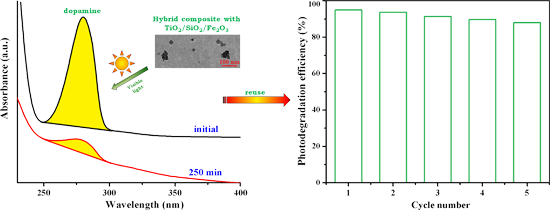
- , Li-ion batteries, sensors, photodynamic cancer therapy or in biomaterials [1][2][3][4][5][6][7]. Since 1972, when Fujishima and Honda published their seminal work [8], much work has been focused on investigating the photocatalytic properties of TiO2 [9]. Titanium dioxide catalysts proved to be better


Phosphorus-doped silicon nanorod anodes for high power lithium-ion batteries
Beilstein J. Nanotechnol. 2017, 8, 222–228, doi:10.3762/bjnano.8.24
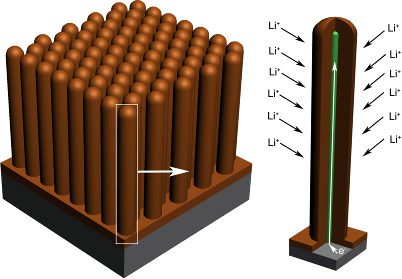
- were fabricated on CuO nanorods for application in high power lithium-ion batteries. Since the conductivity of lithiated CuO is significantly better than that of CuO, after the first discharge, the voltage cut-off window was then set to the range covering only the discharge–charge range of Si. Thus
- . Keywords: in situ reduction; lithium-ion battery; silicon anode; silicon nanorods; Introduction As one of the most popular secondary power sources, lithium-ion batteries (LIBs) are widely used in portable personal electronics, electrical vehicles and grid energy storage because of their high energy and


Effect of nanostructured carbon coatings on the electrochemical performance of Li1.4Ni0.5Mn0.5O2+x-based cathode materials
Beilstein J. Nanotechnol. 2016, 7, 1960–1970, doi:10.3762/bjnano.7.187
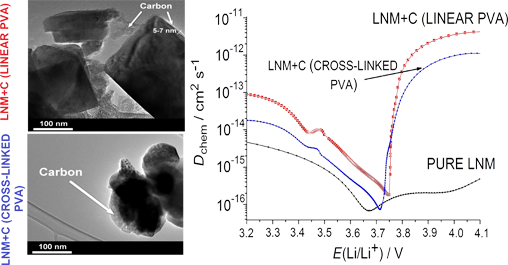
- materials; Li-ion batteries; nanocomposites; nanostructures; Introduction LiNi0.5Mn0.5O2-based electrode materials [1] were proposed as a less expensive alternative to LiCoO2 for high energy density Li-ion batteries containing less toxic elements than cobalt. The reasonable combination of their


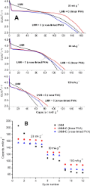


In situ formation of reduced graphene oxide structures in ceria by combined sol–gel and solvothermal processing
Beilstein J. Nanotechnol. 2016, 7, 1815–1821, doi:10.3762/bjnano.7.174
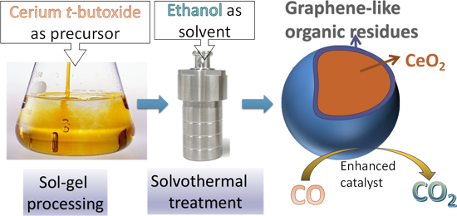
- batteries) [1][2][3][4][5][6][7] or (photo-)catalysts [8][9][10][11][12][13][14][15][16]. The property enhancements are mainly due to the charge transfer between graphene and CeO2. For the preparation of graphene–CeO2 composites external graphene oxide (GO) is usually added to the ceria precursor or pre
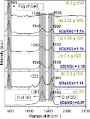





Nanostructured germanium deposited on heated substrates with enhanced photoelectric properties
Beilstein J. Nanotechnol. 2016, 7, 1492–1500, doi:10.3762/bjnano.7.142
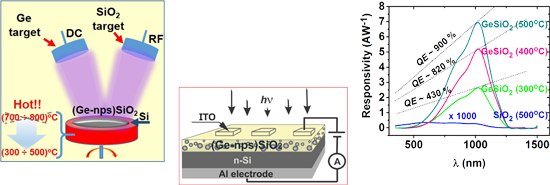
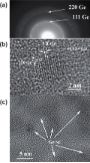
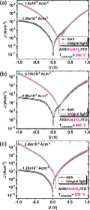
- be fully described only through Ge-nps size. Ge-nps embedded in different dielectric matrices (e.g., SiO2, Si3N4 or HfO2) have been already used for fabrication of high-efficiency photodetectors [15], multilayer memory devices [16] and other applications as solar photoconversion cells [17], batteries




Microwave synthesis of high-quality and uniform 4 nm ZnFe2O4 nanocrystals for application in energy storage and nanomagnetics
Beilstein J. Nanotechnol. 2016, 7, 1350–1360, doi:10.3762/bjnano.7.126
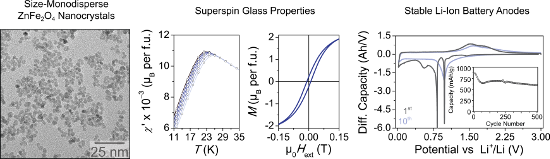
- galvanostatic charge–discharge tests and ex situ X-ray absorption near edge structure spectroscopy, the as-prepared zinc ferrite nanocrystals can be used as a high-capacity anode material for Li-ion batteries, showing little capacity fade – after activation – over hundreds of cycles. Overall, in addition to the
- further corroborated by density functional theory calculations [51][52]. As mentioned above, spinel ferrites can, in principle, be used as negative electrode materials in rechargeable Li-ion batteries. However, they have been shown to undergo conversion at low potential and these electrochemical reactions
- energy efficiency. And this is why ZFO and other spinel ferrites are not used in commercial secondary batteries, despite high theoretical specific capacities. Nevertheless, because nanomaterials are known to better resist stresses, it was worthwhile testing the 4 nm diameter ZFO nanocrystals in Li half


Improved lithium-ion battery anode capacity with a network of easily fabricated spindle-like carbon nanofibers
Beilstein J. Nanotechnol. 2016, 7, 1289–1295, doi:10.3762/bjnano.7.120
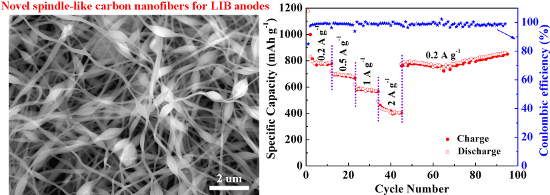
- into the amorphous carbon matrix. When directly used as a binder-free anode for lithium-ion batteries, the network showed excellent electrochemical performance with high capacity, good rate capacity and reliable cycling stability. Under a current density of 0.2 A g−1, it delivered a high reversible
- capacity of 875.5 mAh g−1 after 200 cycles and 1005.5 mAh g−1 after 250 cycles with a significant coulombic efficiency of 99.5%. Keywords: carbon nanofiber network; electrospinning; lithium-ion battery; manganese oxide; nitrogen modification; Introduction Lithium-ion batteries (LIBs) have been identified
- voltammetry curves, (b) galvanostatic discharge–charge profiles, (c) rate capacity, and (d, e) cycling performance of the network of spindle-like carbon nanofibers anchored with MnO and N. Lithium storage performance of some comparable MnO–C-composite-based anodes for lithium-ion batteries (LIBs


Fabrication and characterization of branched carbon nanostructures
Beilstein J. Nanotechnol. 2016, 7, 1260–1266, doi:10.3762/bjnano.7.116
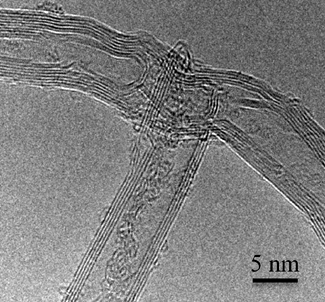
- be also potential usage for energy conversion, e.g., in supercapacitors, solar cells and Li-ion batteries. However, the limited availability of b-MWCNTs has, to date, restricted their use in such technological applications. Herein, we report an inexpensive and simple method to fabricate large amounts
- design, development and production of supercapacitors, solar cells and Li-ion batteries. The first experimental observation of branched carbon nanotubes appears to have been in 1995, when after using an arc-discharge method L-, Y- and T-shaped MWCNTs were produced [18]. Subsequently, branched CNTs have


Mesoporous hollow carbon spheres for lithium–sulfur batteries: distribution of sulfur and electrochemical performance
Beilstein J. Nanotechnol. 2016, 7, 1229–1240, doi:10.3762/bjnano.7.114
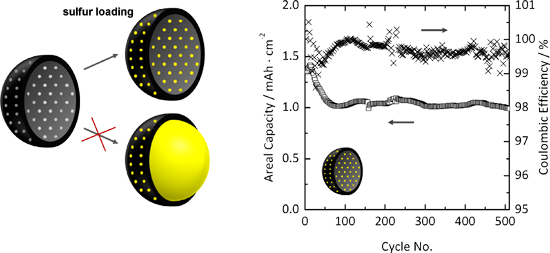
- the use in lithium–sulfur batteries because of the large internal void offering space for sulfur and polysulfide storage and confinement. However, there is an ongoing discussion whether the cavity is accessible for sulfur. Yet no valid proof of cavity filling has been presented, mostly due to
- mass of sulfur over 500 cycles. Keywords: carbon/sulfur composites; cycling stability; distribution of sulfur in pores; hollow carbon spheres; lithium–sulfur batteries; Introduction In the past 20 years, rechargeable lithium–ion batteries have proven to be superior energy storage devices and have
- impregnation method. This is an important result as the analysis of HCS/sulfur composites is usually carried out by EDX measurements during which sulfur can redistribute due to the vacuum applied. Although the cavity of the HCS remains empty during sulfur loading, batteries using HCS/sulfur composite with 61


Manufacturing and investigation of physical properties of polyacrylonitrile nanofibre composites with SiO2, TiO2 and Bi2O3 nanoparticles
Beilstein J. Nanotechnol. 2016, 7, 1141–1155, doi:10.3762/bjnano.7.106
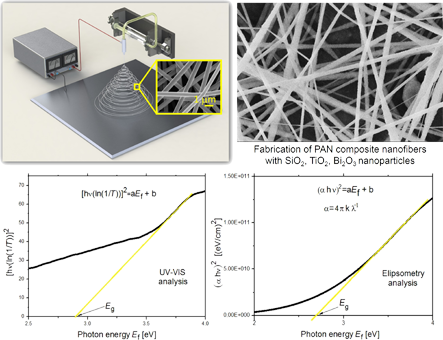
- batteries [21][22][23][24]. Studies on nanofibre composite mats of PAN/TiO2 have shown large photocatalytic efficiency under ultraviolet light and the potential use of these mats as catalyst in the decomposition of phenol, airborne aromatic compounds and methylene blue [25][26][27][28]. However, PAN/Bi2O3
- obtained composite mats, reinforced with silicon oxide, are a promising starting material that can be used to produce carbon anodes, which are used in lithium-ion batteries, after their subsequent treatment by carbonisation and chemical removal of the reinforcing phases in order to increase the porosity of



Facile synthesis of water-soluble carbon nano-onions under alkaline conditions
Beilstein J. Nanotechnol. 2016, 7, 758–766, doi:10.3762/bjnano.7.67
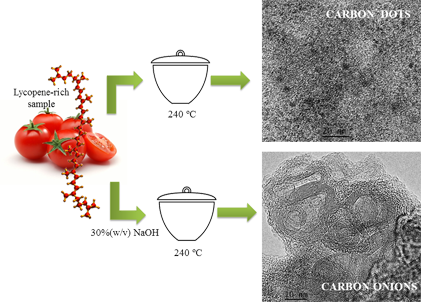
- attracted attention for batteries and supercapacitors, as active materials and/or dispersible conductive additives [12][13]. Usually C-onions are obtained by using sophisticated technologies, such as vacuum annealing of nano-diamond precursors [14][15], nano-diamond annealing in inert gases [16], arc


Unraveling the neurotoxicity of titanium dioxide nanoparticles: focusing on molecular mechanisms
Beilstein J. Nanotechnol. 2016, 7, 645–654, doi:10.3762/bjnano.7.57
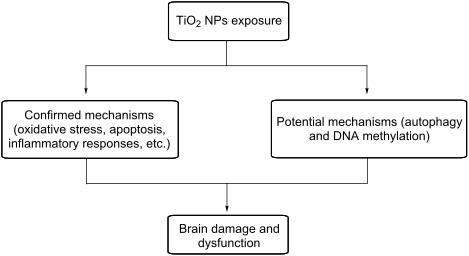
- characteristics [1] including antibacterial, ultraviolet-absorbing, photocatalytic, and self-cleaning properties [2]. Thus, TiO2 NPs are widely used in cosmetics, sun screens, ceramics, paints, packaging, lithium batteries, the food industry, and in medical applications [3]. However, the rapid development of
Novel roles for well-known players: from tobacco mosaic virus pests to enzymatically active assemblies
Beilstein J. Nanotechnol. 2016, 7, 613–629, doi:10.3762/bjnano.7.54
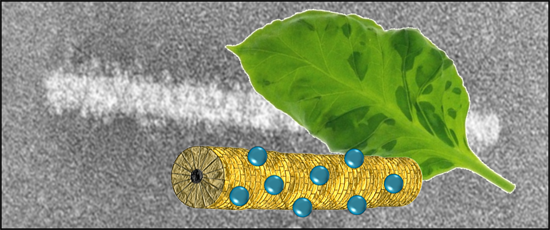
- , batteries, photoelectrochemical cells or environmental remediation [63][93][94][95][96][97][98][99][100][101][102][103][104][105][106][107][108][109][110][111][112][113], as scaffolds for the display of reporter dyes, nanoparticles or contrast agents such as gadolinium complexes, for light harvesting


Synthesis and applications of carbon nanomaterials for energy generation and storage
Beilstein J. Nanotechnol. 2016, 7, 149–196, doi:10.3762/bjnano.7.17
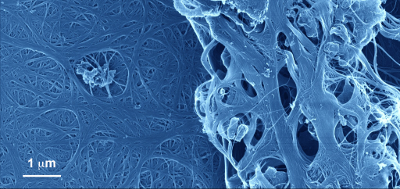
- challenge over the next few years will not just be to produce electricity in a safe and clean way but also how to store the energy produced using technologies more efficient and more environmentally friendly than chemical batteries [13]. Creating small-scale energy storage technologies combined with smart
- cell devices and electrochemical capacitors, also called supercapacitors, based on carbon nanostructures could allow for the fabrication of devices in the near future that could be more efficient and cheaper to produce than conventional silicon solar cells and chemical batteries [16][17]. The potential

















Surfactant-controlled composition and crystal structure of manganese(II) sulfide nanocrystals prepared by solvothermal synthesis
Beilstein J. Nanotechnol. 2015, 6, 2319–2329, doi:10.3762/bjnano.6.238

- ), ≈100 K (β-MnS), and 154 K (α-MnS) [6]. The interesting physical properties and the rich polymorphism prompted research on MnS nanocrystals (NCs) in view of applications as photoluminescent components [7], photoreduction catalysts [8], anode materials in lithium-ion batteries [9], and supercapacitor



Plasma fluorination of vertically aligned carbon nanotubes: functionalization and thermal stability
Beilstein J. Nanotechnol. 2015, 6, 2263–2271, doi:10.3762/bjnano.6.232
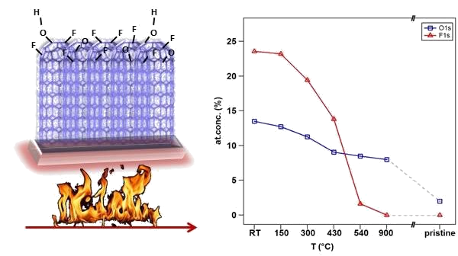
- precursor for several reactions (the introduction of polar groups has been successfully adopted to initiate subsequent functionalization [7][8][9][10]) and a solution for profitably implementing the carbon-based nanomaterials in several applications, such as gas sensors, batteries and polymeric switches [11



Metal hydrides: an innovative and challenging conversion reaction anode for lithium-ion batteries
Beilstein J. Nanotechnol. 2015, 6, 1821–1839, doi:10.3762/bjnano.6.186
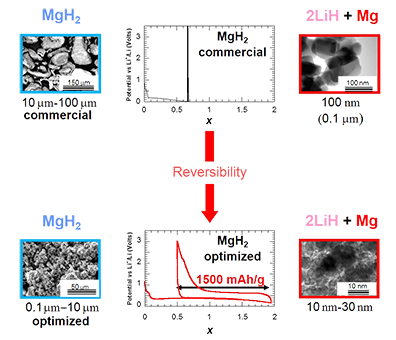
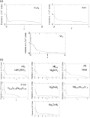
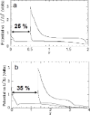
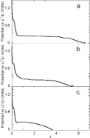
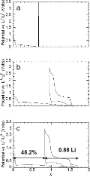
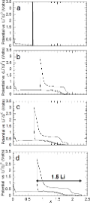
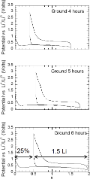
- .6.186 Abstract The state of the art of conversion reactions of metal hydrides (MH) with lithium is presented and discussed in this review with regard to the use of these hydrides as anode materials for lithium-ion batteries. A focus on the gravimetric and volumetric storage capacities for different
- which share the knowledge of both hydrogen-storage and lithium-anode communities. Keywords: conversion reaction; lithium-ion batteries; metal hydrides; Review Introduction To satisfy the continuously raising need for energy is now a key priority worldwide. The challenge is to obtain environmentally
- electricity on demand. With regard to this, lithium-ion (Li-ion) batteries can present an attractive solution, provided that they exhibit sufficient potential and gravimetric/volumetric capacities. Graphite, which is usually used as negative electrode with an intercalation reaction of lithium, is not suitable











Radiation losses in the microwave Ku band in magneto-electric nanocomposites
Beilstein J. Nanotechnol. 2015, 6, 1700–1707, doi:10.3762/bjnano.6.173
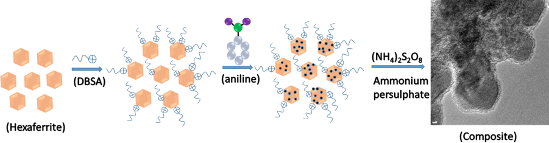
- great potential for other applications such as rechargeable batteries. The extensive use of electrical equipment, producing microwave, has created a new problem named electromagnetic interference (EMI), which is not good for device health. So, an effective material is required to reduce the