Search results
Search for "carbon" in Full Text gives 1261 result(s) in Beilstein Journal of Nanotechnology. Showing first 200.
Green synthesis of carbon dot structures from Rheum Ribes and Schottky diode fabrication
Beilstein J. Nanotechnol. 2024, 15, 1369–1375, doi:10.3762/bjnano.15.110
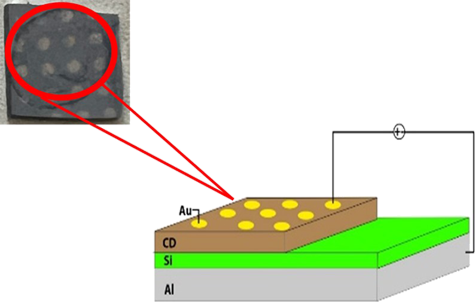
- , Turkey 10.3762/bjnano.15.110 Abstract In this study, we aimed to synthesize new carbon dot structures (CDs) in a single step by using the plant Rheum Ribes for the first time and to contribute to the studies in the field of diode fabrication by using the new CDs. The CDs were obtained by hydrothermal
- behavior. The results obtained from this study showed that CDs can be applied in the field of electronics, apart from sensor studies, which are common application areas. Keywords: carbon dot (CD) structures; green synthesis; Rheum Ribes plant; Schottky diode; Introduction One of the most current types of
- nanostructures are carbon dot structures (CDs). These structures have recently become a common field of study because of their properties including chemical stability, water solubility, and easy synthesis and functionalization. Carbon dots, were first discovered by Xu and his working group [1] while purifying




Nanoarchitectonics with cetrimonium bromide on metal nanoparticles for linker-free detection of toxic metal ions and catalytic degradation of 4-nitrophenol
Beilstein J. Nanotechnol. 2024, 15, 1312–1332, doi:10.3762/bjnano.15.106
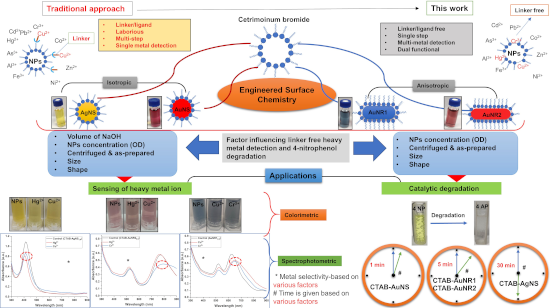
- anisotropic metal nanoparticles using zeta cuvettes (DTS0012). The precise size and morphology of CTAB-AgNS, CTAB-AuNS, CTAB-AuNR1, and CTAB-AuNR2 were observed under a transmission electron microscope (TEM, 120 kV; FEI Tecnai). The nanoparticles were placed onto 200-mesh carbon-coated copper grids. The




Interaction of graphene oxide with tannic acid: computational modeling and toxicity mitigation in C. elegans
Beilstein J. Nanotechnol. 2024, 15, 1297–1311, doi:10.3762/bjnano.15.105

- modeling, including reactive classical molecular dynamics and ab initio calculations, we reveal that TA preferentially binds to the most reactive sites on GO surfaces via the oxygen-containing groups or the carbon matrix; van der Waals interaction forces dominate the binding energy. TA exhibits a dose
- composition analyzed by X-ray photoelectron spectroscopy (XPS) is 68% of carbon and 32% of oxygen. The functional groups and bonds of carbon are distributed among epoxy/hydroxy (C–O) (52%), carboxyl/esters (C=O) (9.4%), and π–π* (4.2%) moieties, besides graphitic/aromatic carbon (C sp2) (5.7%) and aliphatic
- carbon (C sp3) (28%). The properties of this material are in accordance with other GO samples used for nanotoxicology and environmental applications. In this work, we characterized the material after interaction with the moderately hard reconstituted water defined by the U.S. Environmental Protection


Mn-doped ZnO nanopowders prepared by sol–gel and microwave-assisted sol–gel methods and their photocatalytic properties
Beilstein J. Nanotechnol. 2024, 15, 1283–1296, doi:10.3762/bjnano.15.104
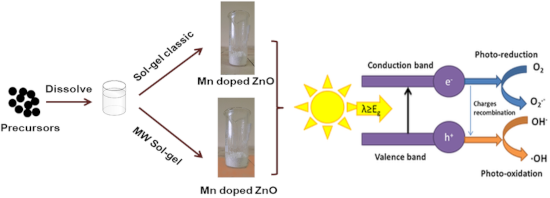
- morphologies and the compositions of the calcined samples were evaluated by scanning electron microscopy (SEM-EDS), using a FEI Quanta 3D FEG instrument equipped with the Octane Elect EDS system. The powder samples were placed on double-sided carbon tape and recorded without coating at accelerating voltages of


New design of operational MEMS bridges for measurements of properties of FEBID-based nanostructures
Beilstein J. Nanotechnol. 2024, 15, 1273–1282, doi:10.3762/bjnano.15.103
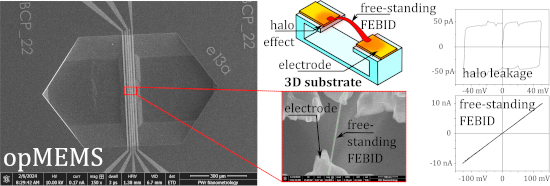
- of the nanostructures into larger devices remains one of the major challenges, especially when non-silicon materials (such as carbon nanotubes or multimaterial nanowires) are used [8][9][10]. Among the fabrication methods, particle beam-based methods offer the greatest versatility for rapid


Functional morphology of cleaning devices in the damselfly Ischnura elegans (Odonata, Coenagrionidae)
Beilstein J. Nanotechnol. 2024, 15, 1260–1272, doi:10.3762/bjnano.15.102

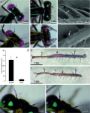
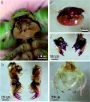
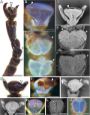
- males and eleven females with carbon dioxide, dissected their forelegs and observed them under a stereomicroscope Leica MZ6 (Leica Microsystem GmbH, Wetzlar, Germany). To obtain semithin sections, the tibiae of six insects were dissected under the stereomicroscope. Samples were then fixed for 3 h in 2.5
- efficiency We evaluated particle removal efficiency in experiments with intact and ablated insects, with their foretibial grooming structures artificially removed. To prepare ablated insects, they were anesthetized with carbon dioxide for 60 s, and the tibial grooming structures of the forelegs were


Dual-functionalized architecture enables stable and tumor cell-specific SiO2NPs in complex biological fluids
Beilstein J. Nanotechnol. 2024, 15, 1238–1252, doi:10.3762/bjnano.15.100
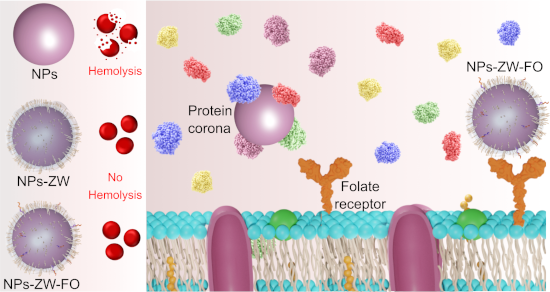
- at 100 °C and the percentages of carbon, nitrogen, and hydrogen were obtained. It is noteworthy that only the nitrogen percentages were considered for the calculations. The elemental composition of the NP surface was obtained using a K-Alpha XPS (Thermo Fisher Scientific) which operates with Al Kα X


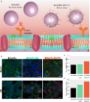
AI-assisted models to predict chemotherapy drugs modified with C60 fullerene derivatives
Beilstein J. Nanotechnol. 2024, 15, 1170–1188, doi:10.3762/bjnano.15.95
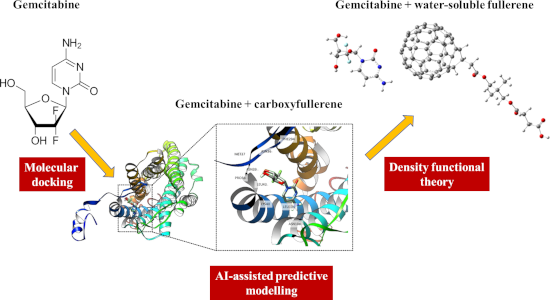
- in pharmacy and medicine is carbon-based nanomaterials because of their physicochemical, mechanical, electrical, thermal, and optical properties [19][20], as well as their capacity to modify existing drugs. Fullerene derivatives have been proposed recently, particularly those obtained from fullerene
- the carbonyl group is the more nucleophilic center, whereas there are two positive-density regions near the carbonyl group and in the C–C bond next to the amine-substituted carbon atom. Both pharmaceutical agents are susceptible to interaction with fullerenes to form a force dispersion complex as it


Quantum-to-classical modeling of monolayer Ge2Se2 and its application in photovoltaic devices
Beilstein J. Nanotechnol. 2024, 15, 1153–1169, doi:10.3762/bjnano.15.94
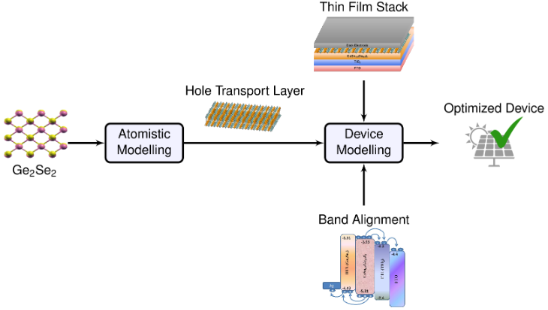
- , a large number of materials have been reported as ETLs/HTL materials, such as carbon [15], copper iodide [16], CuSbS2, NiO, CuSCN [17], ZnO, and CdS [18]. These materials promote efficient extraction of charge carriers and suppress recombination between the perovskite film and the electrodes. But in




Introducing third-generation periodic table descriptors for nano-qRASTR modeling of zebrafish toxicity of metal oxide nanoparticles
Beilstein J. Nanotechnol. 2024, 15, 1142–1152, doi:10.3762/bjnano.15.93
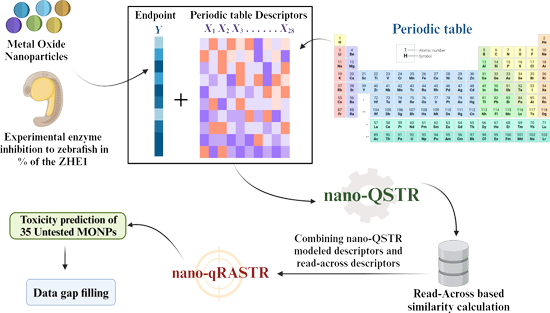
- range of substances that can be categorized as carbon-based, metal oxides, semiconductors, polymers, clays, emulsions, or metals [2]. Metal oxide nanoparticles (MONPs) are metallic oxides that exist within the nanoscale range and can be intentionally created or occur naturally [3]. Under the rapid


Photocatalytic methane oxidation over a TiO2/SiNWs p–n junction catalyst at room temperature
Beilstein J. Nanotechnol. 2024, 15, 1132–1141, doi:10.3762/bjnano.15.92
- industrial chemicals and energy. However, CH4 is a major precursor for tropospheric ozone, causing severe air pollution. Because of its rising atmospheric concentration, CH4 poses a global warming potential approximately thirty fold larger than that of carbon dioxide (CO2) [1][2][3]. Therefore, it is a
- challenging mission to eliminate CH4 from the atmosphere. Conventionally, CH4 activation is carried out at high temperatures (>650 °C) via thermal methane conversion to value-added products. However, combustion of CH4 for energy production usually generates great amounts of carbon dioxide as well as coke
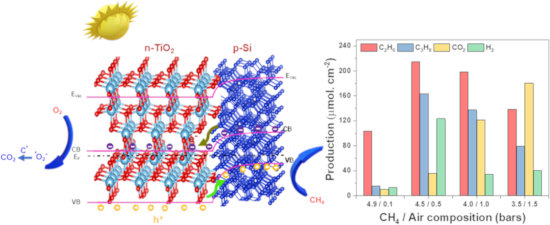
- activity of TiO2/SiNWs sample under aerobic conditions is described in Figure 5. In a batch reactor, the photocatalytic CH4 oxidation progresses as a function of irradiation time. Besides ethane (C2H6), carbon dioxide (CO2) was detected as a by-product. Moreover, propane (C3H8) and H2 were observed as


Local work function on graphene nanoribbons
Beilstein J. Nanotechnol. 2024, 15, 1125–1131, doi:10.3762/bjnano.15.91
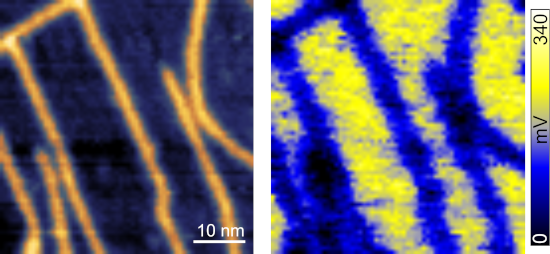
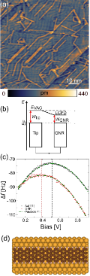
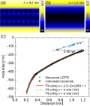
- b. The LCPD maps are derived from where zsurf is given by the z coordinate of the uppermost carbon atom of the GNR. s is varied from 0.17 to 1.2 nm. Additional details about the density functional theory (DFT) calculations performed in this work are given in Supporting Information File 1. Results

![[Graphic 1]](/bjnano/content/inline/2190-4286-15-91-i4.svg?max-width=637&scale=1.18182)
Direct electron beam writing of silver using a β-diketonate precursor: first insights
Beilstein J. Nanotechnol. 2024, 15, 1117–1124, doi:10.3762/bjnano.15.90

- fabrication of nano-optical components, where the actual geometry in combination with the material composition governs the optical response of the device [13]. However, typically a dominant carbon portion is present in the deposit due to the use of organometallic precursors [9][14], which poses practical
- that was found in the deposit, despite the large number of carbon atoms in the ligands, was attributed to the thermodynamically favorable release of CO2 upon ligand cleavage [31]. All successfully tested silver carboxylates exhibit a generally high reactivity and sensitivity upon electron beam impact
- . Compared to the typically obtained granular structure of metallic nanoparticles in a carbonaceous matrix, the deposit composition and chemistry evolution are unexpected. The resulting deposit exhibits a carbon-rich body with a surface decorated with silver nanoparticles and an interfacial layer of


Unveiling the potential of alginate-based nanomaterials in sensing technology and smart delivery applications
Beilstein J. Nanotechnol. 2024, 15, 1077–1104, doi:10.3762/bjnano.15.88

- include conductive polymers, enzymes, carbon nanotubes, and molecularly imprinted polymers (MIPs). MIPs function similarly to enzymes, producing polymeric cross-linked active sites for certain analytes. MIPs were initially used in optical sensing, but they have lately been examined in electrochemical


Effect of wavelength and liquid on formation of Ag, Au, Ag/Au nanoparticles via picosecond laser ablation and SERS-based detection of DMMP
Beilstein J. Nanotechnol. 2024, 15, 1054–1069, doi:10.3762/bjnano.15.86

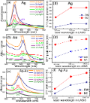
- acoustic wave (SAW) sensors, microelectromechanical systems (MEMS), carbon nanotubes, and chemiresistive sensors. SERS-active substrates encounter obstacles in translation toward practical applications, primarily due to the difficulty of sample collection. As a result, there is a persistent need for


Interface properties of nanostructured carbon-coated biological implants: an overview
Beilstein J. Nanotechnol. 2024, 15, 1041–1053, doi:10.3762/bjnano.15.85
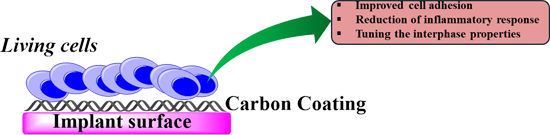
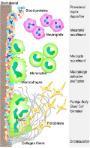
- can be achieved through several processes. Among them, the production of specialized coatings based on carbon-based materials stands very promising. The use of carbon coatings allows one to simultaneously fine-tune tribological, mechanical, and chemical properties. Here, we review applications of
- nanostructured carbon coatings (nanodiamonds, carbon nanotubes, and graphene-related materials) for the improvement of the overall properties of medical implants. We are focusing on biological interactions, improved corrosion resistance, and overall mechanical properties, trying to provide a complete overview
- within the field. Keywords: biocompatibility; carbon nanotubes; coatings; graphene; nanodiamonds; surfaces; Introduction For centuries, the simple manipulation of natural resources has represented the only available strategy for the realization of artifacts, buildings, and innovations, until the



Bolometric IR photoresponse based on a 3D micro-nano integrated CNT architecture
Beilstein J. Nanotechnol. 2024, 15, 1030–1040, doi:10.3762/bjnano.15.84
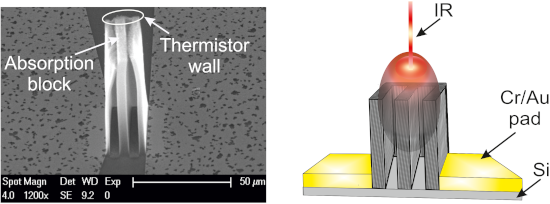
- Anorganische und Physikalische Chemie, Technical University of Darmstadt, 64287 Darmstadt, Germany 10.3762/bjnano.15.84 Abstract A new 3D micro-nano integrated M-shaped carbon nanotube (CNT) architecture was designed and fabricated. It is based on vertically aligned carbon nanotube arrays composed of low
- for non-cryogenic IR microbolometer technology, carbon nanotubes (CNTs) have emerged as highly promising candidates [2] with broadband blackbody absorption [3], high resistance perpendicular to the CNT orientation [4], low lateral thermal conductivity [5], a high temperature coefficient of resistance
- nanoparticles at ≈750 °C. Finally, the samples were synthesized by water-assisted chemical vapor deposition (CVD) at 800 °C, similar to the CVD process presented in [13][14], to achieve a crystalline graphitic nature of the carbon nanotubes. Argon was used as the carrier gas and ethylene as the carbon source. A


Can neutral clusters: a two-step G0W0 and DFT benchmark
Beilstein J. Nanotechnol. 2024, 15, 1010–1016, doi:10.3762/bjnano.15.82
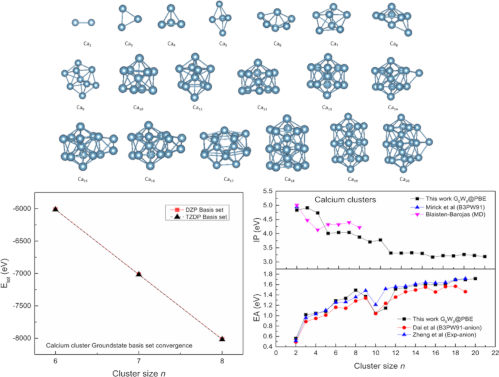
- ; density functional theory; G0W0 approximation; ionization potentials; magic clusters; Introduction Calcium metal has a closed shell structure and belongs to the group IIA alkaline-earth metals [1]. It has been widely used in carbon-chemical engineering (coating fullerene in hydrogen storage), optics, and


Atomistic insights into the morphological dynamics of gold and platinum nanoparticles: MD simulations in vacuum and aqueous media
Beilstein J. Nanotechnol. 2024, 15, 995–1009, doi:10.3762/bjnano.15.81
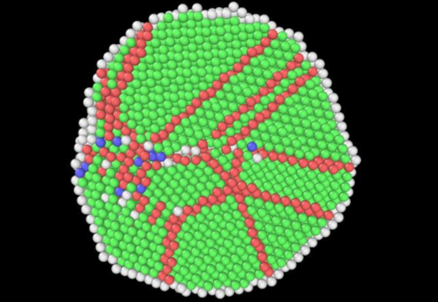
- high heating and cooling rates compared to the experimental ones, it has been shown to yield representative structures that are in good agreement with the ones observed via X-ray diffraction for a number of nanomaterials such as CuO NPs [62], TiO2 NPs [63], as well as carbon [64] and Ag [65


Identification of structural features of surface modifiers in engineered nanostructured metal oxides regarding cell uptake through ML-based classification
Beilstein J. Nanotechnol. 2024, 15, 909–924, doi:10.3762/bjnano.15.75

- model of 109 surface modifiers. As seen in Figure 3, uptake-promoting and uptake-impairing fingerprints can be matched into fewer structural features/fingerprint groups, as explained below. A long aliphatic carbon chain of the surface modifiers in ENMOs is highly beneficial for improved uptake in the
- Bayesian analysis, it was also identified that certain favorable fingerprints (UPh 2 and UPh 14 fingerprints in Figure 4) include a double-bonded carbon in the structure for better cellular uptake. The descriptor maxHBd indicates the maximum E-States for (strong) hydrogen bond donors [55] and contributes


Water-assisted purification during electron beam-induced deposition of platinum and gold
Beilstein J. Nanotechnol. 2024, 15, 884–896, doi:10.3762/bjnano.15.73
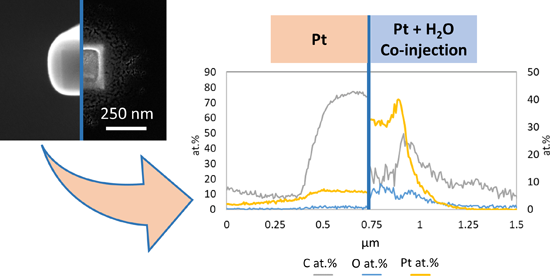
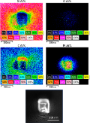
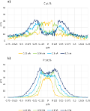
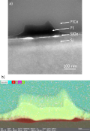
- precursor MeCpPtMe3. As a water precursor MgSO4·7H2O was used. The purification during deposition led to a decrease of the carbon-to-gold ratio (in atom %) from 2.8 to 0.5 and a decrease of the carbon-to-platinum ratio (in atom %) from 6–7 to 0.2. The purification was done in a regular scanning electron
- ligands are removed. However, in most cases, a large amount of the carbon from the organic ligands is incorporated in the deposits. The removal of the carbonaceous material and, hence, the increase of metallic content of FEBID structures is ultimately important for the performance of the obtained
- structures in applications such as nanoprobes and sensors [4][5][6], or for the fabrication of superconductors [7][8][9][10] and plasmonic devices [11][12][13]. A lower carbon content can be achieved by means of precursor design [14], variation of deposition conditions [15], or post-deposition purification





The effect of age on the attachment ability of stick insects (Phasmatodea)
Beilstein J. Nanotechnol. 2024, 15, 867–883, doi:10.3762/bjnano.15.72

- carbon dioxide for 10–15 s before being connected to the force transducer by a string of fishing line (0.18 mm) at the mesothorax at the estimated center of mass [33][48]. The animals were allowed to recover for some minutes until they were responding to being lifted off the substrate with leg movements


A review on the structural characterization of nanomaterials for nano-QSAR models
Beilstein J. Nanotechnol. 2024, 15, 854–866, doi:10.3762/bjnano.15.71

- , which can be classified according to their chemical composition in inorganic, carbon-based, organic, and composite NMs (Figure 4). In organic molecules, a wide range of descriptors are obtained from the topology of the molecule, arising from the rich variety of structural motifs that can be found and
- abundant families among the carbon-based NMs are nanotubes and fullerenes; they are also considered inorganic and have a simple chemical composition (mostly carbon). Hence, classical organic molecular descriptors are not commonly found in the core composition, although they are potentially applicable to
- , the nanoform identification of certain materials, such as pristine carbon nanoforms, does not really describe the composition (pure carbon) but the nanostructure (shape and composition of nanotubes or fullerenes) [40]. Otherwise, the single-formula representation of the chemical composition of a


Intermixing of MoS2 and WS2 photocatalysts toward methylene blue photodegradation
Beilstein J. Nanotechnol. 2024, 15, 817–829, doi:10.3762/bjnano.15.68
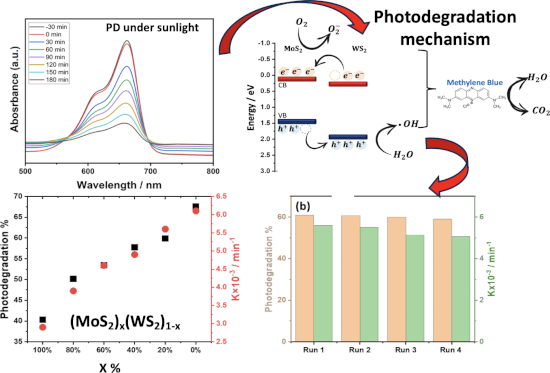
- additional peaks observed in all XRD diagrams at ≈37° and ≈69° positions are due to the silicon substrate. The X-ray photoelectron spectroscopy (XPS) survey scans and high-resolution scans for all samples are presented in Figure 3a–j. All XPS analyses were first calibrated using the C 1s peak of carbon at
- considered samples. The specimens were prepared by drop casting a solution of the exfoliated samples on lacey carbon transmission electron microscopy (TEM) grids. Additionally, agglomeration of the flakes can be usually observed as well, which could be due to the effect of the solvent used for drop casting
- microscope (Cs-corrected Titan, Thermo Fisher Scientific). Thin carbon-coated Cu mesh grids were used to prepare TEM samples by the drop-casting method. The surface chemical bonding states and composition of the samples were determined with a scanning XPS microprobe (PHI VersaProbe III, Physical Electronics


Synthesis of silver–palladium Janus nanoparticles using co-sputtering of independent sources: experimental and theorical study
Beilstein J. Nanotechnol. 2024, 15, 808–816, doi:10.3762/bjnano.15.67
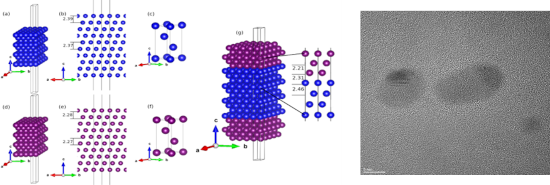
- % purity; the sputtered atoms traveled to the second chamber, where a shower of Pd atoms was generated on the second magnetron from a palladium target with 99.99% purity. The BNPs generated by condensation passed through a quadrupole mass filter for size selection and were finally deposited on holey carbon