Search results
Search for "cells" in Full Text gives 1104 result(s) in Beilstein Journal of Nanotechnology. Showing first 200.
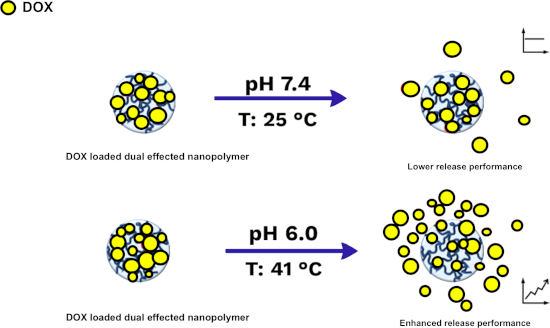
Synthesis, characterization and anticancer effect of doxorubicin-loaded dual stimuli-responsive smart nanopolymers
Beilstein J. Nanotechnol. 2024, 15, 1189–1196, doi:10.3762/bjnano.15.96
- physiological functions. They can effectively transport therapeutic agents to targeted cells or specific intracellular regions through passive targeting or ligand-based strategies [9][10][11]. The use of certain polymers could potentially enable sustained drug levels for controlled release and extended
- the HeLa cancer cell line (CCL-2 ATCC). Cells were grown in full DMEM with stable glutamine, 4.5 g/L glucose (Life Technologies, Paisley, U.K.), 10% FBS (Life Technologies, Paisley, U.K.), 100 U/mL penicillin, and 0.1 mg/mL streptomycin (Millipore-Sigma, Burlington, MA, United States) at 37 °C in a
- ). Cytotoxicity test Cell viability was assessed using 3-(4,5-dimethylthiazol-2-yl)-2,5-diphenyltetrazolium bromide (MTT). The method is based on the ability of NADPH-dependent cellular oxidoreductase in living, metabolically active cells to reduce MTT to water-insoluble crystals of formazan. Cells were seeded


AI-assisted models to predict chemotherapy drugs modified with C60 fullerene derivatives
Beilstein J. Nanotechnol. 2024, 15, 1170–1188, doi:10.3762/bjnano.15.95
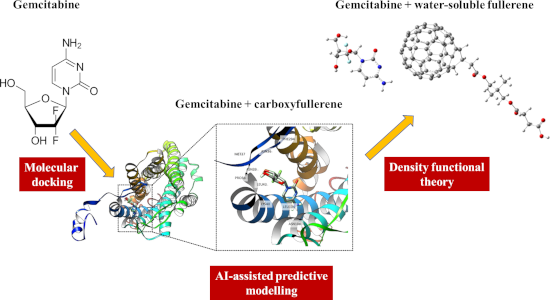
- ][17]. This G-protein is targeted because studies show a possible positive effect on inhibiting the metastasis of cervical cancer cells [18]. However, more clinical and preclinical studies on CXCR7 and its co-player CXCR4 are required since alterations have been detected in diseases such as cancer


Quantum-to-classical modeling of monolayer Ge2Se2 and its application in photovoltaic devices
Beilstein J. Nanotechnol. 2024, 15, 1153–1169, doi:10.3762/bjnano.15.94
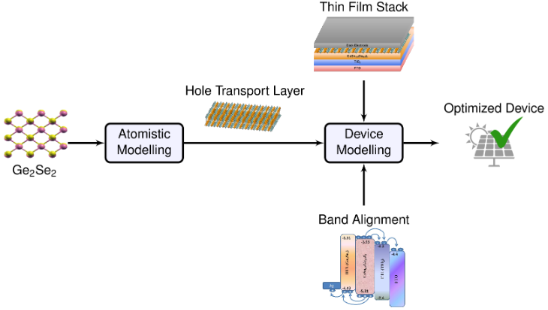
- 2004, the unique properties of two-dimensional materials have sparked intense research interest regarding their use as alternative materials in various photonic applications. Transition metal dichalcogenide monolayers have been proposed as transport layers in photovoltaic cells, but the promising
- optoelectronic devices, including next-generation solar cells. The hybrid quantum-to-macroscopic methodology presented here applies to broader classes of 2D and 3D materials and structures, showing a path to the computational design of future photovoltaic materials. Keywords: 2D materials; density functional
- theory; hole transport layer; optical properties; solar cells; Introduction Reducing fossil fuels and their harmful environmental impact requires improvements in green, sustainable energy sources. Among the various sources of green energy generation, solar energy has been identified as the most




Introducing third-generation periodic table descriptors for nano-qRASTR modeling of zebrafish toxicity of metal oxide nanoparticles
Beilstein J. Nanotechnol. 2024, 15, 1142–1152, doi:10.3762/bjnano.15.93
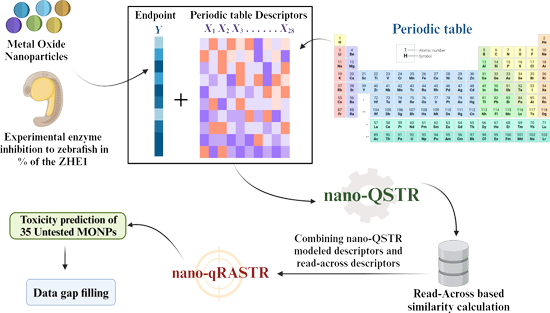
- strong antibacterial, antifungal, antidiabetic, antioxidant, anticancer, and photocatalytic activities [7][8][9]. Besides the medical field, they are also commonly used in commercial products such as fuel cells and plastics, and environmental applications such as analysis, sensing, remediation, and
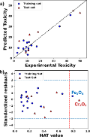
- , affecting not only individual cells but also developmental processes. The implications for zebrafish embryos include potential deformities, impaired development, and mortality. Employing zebrafish as a biological model facilitates the evaluation of toxicity, offering an integrative perspective on the


Recent updates in applications of nanomedicine for the treatment of hepatic fibrosis
Beilstein J. Nanotechnol. 2024, 15, 1105–1116, doi:10.3762/bjnano.15.89
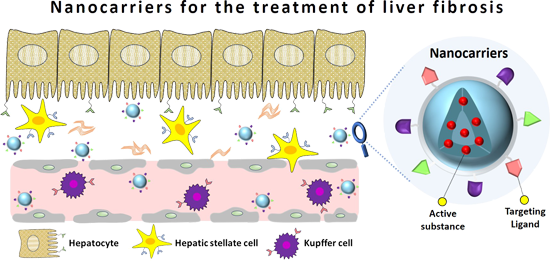
- accumulation selectively through specific binding to receptors overexpressed by cancer cells (left panel of Figure 1), resulting in enhanced therapeutic activity and reduced systemic toxicity. Globally, there are around 15 approved cancer drug nanoformulations for clinical use, and 80 candidates for novel
- to the trans-differentiation of hepatic stellate cells (HSCs) into collagen-producing myofibroblasts, resulting in the progressive accumulation of extracellular matrix (ECM) protein [12]. The condition may be caused by various etiologies, including viral hepatitis infection, alcohol abuse, and
- interactions The accumulation of any type of NPs in the liver is generally accomplished because of the central role of the liver itself as a main metabolic and excretory organ in the body. The presence of fenestrations in the layers of liver sinusoidal endothelial cells (LSECs) and the absence of the


Unveiling the potential of alginate-based nanomaterials in sensing technology and smart delivery applications
Beilstein J. Nanotechnol. 2024, 15, 1077–1104, doi:10.3762/bjnano.15.88
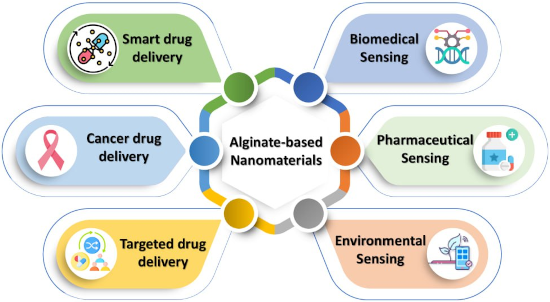
- discussed, including drug delivery and environmental sensing applications for humidity, heavy metals, and hydrogen peroxide. Moreover, biomedical sensing applications of alginate-based nanoparticles regarding various analytes such as glucose, cancer cells, pharmaceutical drugs, and human motion will also be
- example, it is possible to deliver medications to cancer cells with little side effects and minimum damage to healthy cells. As a result, DDSs can improve patient compliance and adherence to medications [39]. Furthermore, smart drug delivery can also increase the bioavailability of drugs, which refers to
- advantages of using biopolymeric nanoparticles Nanoparticle systems offer several advantages in drug delivery [41][47]. One of the major advantages of nanoparticle-based DDSs is that they can protect drugs and ensure the delivery of drugs to targeted cells or tissue [48]. By encapsulating drugs within


Interface properties of nanostructured carbon-coated biological implants: an overview
Beilstein J. Nanotechnol. 2024, 15, 1041–1053, doi:10.3762/bjnano.15.85
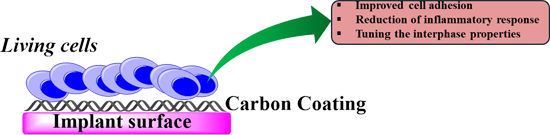
- environments represented by implant–tissue interfaces [18] through the tuning of different parameters (i.e., surface roughness and potential as well as hydrophobicity). Cells and biomolecules can selectively adhere to or be repelled from artificial implanted surfaces, triggering several metabolic pathways of
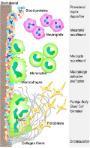
- pro-inflammatory to anti-inflammatory phenotypes. The final step in the immune system response involves the formation of foreign-body giant cells on the implant surface. Increased cytokine levels trigger the release of pro-fibrogenic factors and recruiting fibroblasts. Fibroblasts induce the
- NDs by CVD at 400 °C and observed good proliferation of osteogenic cells on a bone implant, even better than on a commonly used surface. They suggested that the osteoblast proliferation was mainly due to the surface morphology and the good match between cells and surface potentials. Carbon-based



Entry of nanoparticles into cells and tissues: status and challenges
Beilstein J. Nanotechnol. 2024, 15, 1017–1029, doi:10.3762/bjnano.15.83
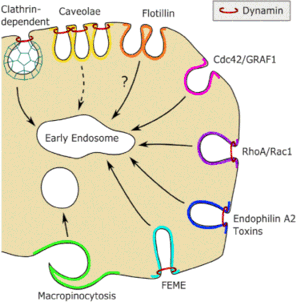
- , University of Oslo, 0316 Oslo, Norway 10.3762/bjnano.15.83 Abstract In this article we discuss how nanoparticles (NPs) of different compositions may interact with and be internalized by cells, and the consequences of that for cellular functions. A large number of NPs are made with the intention to improve
- ) are important tools to diagnose and treat diseases, and have proven useful in basic mechanistic studies of cells and animals. Thus, knowledge about cellular uptake, intracellular transport, and metabolism of NPs in cells, as well as their biodistribution, degradation, and excretion following
- of new types of NPs, there is a knowledge gap when it comes to our understanding of the interaction of NPs with both cells and tissues. However, it is well known that NP properties, such as surface charge, size, and the material they are composed of can affect cellular uptake, biodistribution, and


Atomistic insights into the morphological dynamics of gold and platinum nanoparticles: MD simulations in vacuum and aqueous media
Beilstein J. Nanotechnol. 2024, 15, 995–1009, doi:10.3762/bjnano.15.81
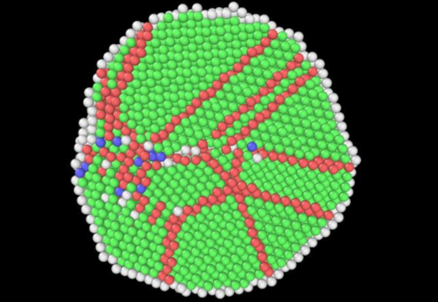
- category of engineered NPs is comprised of metal and metal oxide NPs, which rank among the highest in production volume. They have already found widespread applications in technological advancements such as photovoltaics, catalysis, gas sensors, fuel cells, and adsorbents [7][8]. This prevalence is


Recent progress on field-effect transistor-based biosensors: device perspective
Beilstein J. Nanotechnol. 2024, 15, 977–994, doi:10.3762/bjnano.15.80
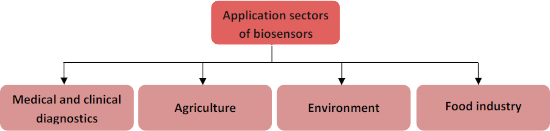
- biosensor. 4 Summary and future research works FET-based biosensors have been designed and developed to achieve higher performance and improved sensitivity in detecting various types of species, such as viruses, cancer cells, proteins, DNA, glucose, and nucleic acids. The latest emerging 3D and 2D FET-based




Therapeutic effect of F127-folate@PLGA/CHL/IR780 nanoparticles on folate receptor-expressing cancer cells
Beilstein J. Nanotechnol. 2024, 15, 954–964, doi:10.3762/bjnano.15.78
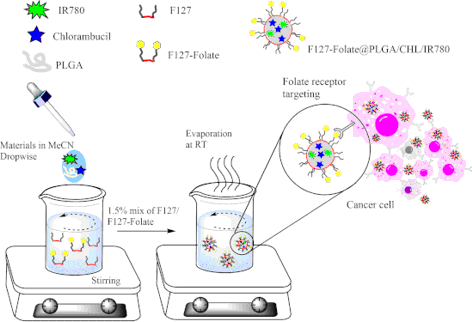
- chemotherapeutic agent chlorambucil (CHL) and the imaging agent IR780. The approach in this study incorporates Pluronic F127-folate onto the PLGA nanoparticles, which enables targeted delivery to folate receptor-expressing cancer cells. The F127-folate@PLGA/CHL/IR780 nanoparticles were formulated using a
- nanoprecipitation technique, resulting in small size, high homogeneity, and negative surface charge. Importantly, the folate-targeted nanoparticles demonstrated enhanced uptake and cytotoxicity in folate receptor-positive cancer cell lines (MCF-7 and HepG-2) compared to folate receptor-negative cells (HEK 293
- ). Additionally, the F127-folate@PLGA/CHL/IR780 nanoparticles exhibited a lower IC50 value against cancer cells than non-targeted F127@PLGA/CHL/IR780 nanoparticles. These findings suggest that the developed F127-folate@PLGA/CHL/IR780 nanoparticles hold promise as a theragnostic system for targeted cancer therapy



Electrospun nanofibers: building blocks for the repair of bone tissue
Beilstein J. Nanotechnol. 2024, 15, 941–953, doi:10.3762/bjnano.15.77
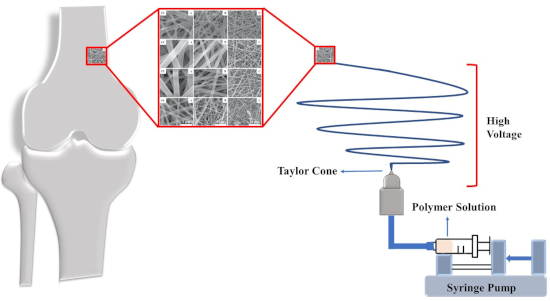
- deficiencies of bone tissue by the harmonious operation of osteoblasts, osteocytes, osteoclasts, and bone lining cells. Various materials can be used to both trigger the bone healing process and to provide mechanical support to damaged bone. Nanofiber scaffolds are at the forefront of these types of systems
- delivery systems [1][2][3][4][5]. Because of the structural properties of nanofibers, which enable cell growth and proliferation, their use in tissue engineering, especially regarding bone tissue, is quite common [2]. Nanofiber scaffolds may carry active substances such as cells for tissue repair
- of calcium and phosphate and the protection of bone marrow are among the characteristics of bone tissue [9][10]. Bone tissue, which is a special form of connective tissue, consists of cells, fibers, and extracellular matrix; histologically, it can be divided into two bone types, namely, woven bone


Identification of structural features of surface modifiers in engineered nanostructured metal oxides regarding cell uptake through ML-based classification
Beilstein J. Nanotechnol. 2024, 15, 909–924, doi:10.3762/bjnano.15.75
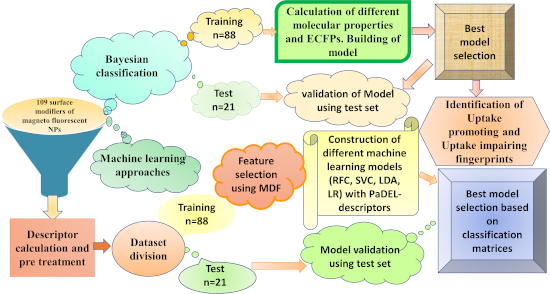
- significantly contribute to the cellular uptake of ENMOs in multiple cell types, including pancreatic cancer cells (PaCa2), human endothelial cells (HUVEC), and human macrophage cells (U937). The best models have been identified for each cell type and analyzed to detect the structural fingerprints/features
- or passive transport across the cell membrane [12]. Excessive absorption by normal cells enables metal oxide nanoparticles to engage with various subcellular organelles, initiating diverse signaling pathways to generate a stress response within cells. This results in the production of free radicals
- . Ultimately, this cascade leads to damage to cellular organelles and the demise of the cell [13][14][15]. ENMOs have also been explored for potential diagnostic applications, particularly in targeting cancer cells [16][17]. To create target-specific NPs, researchers synthesized magnetofluorescent NPs with an


The effect of age on the attachment ability of stick insects (Phasmatodea)
Beilstein J. Nanotechnol. 2024, 15, 867–883, doi:10.3762/bjnano.15.72

- of tissues, for example, exocrine cells within the arolium [81], could potentially also influence fluid production within the arolium. These exocrine cells produce adhesive secretions that play different roles in adhesive systems [11][40][85]. In stick insects, such fluids consist of a watery and a


A review on the structural characterization of nanomaterials for nano-QSAR models
Beilstein J. Nanotechnol. 2024, 15, 854–866, doi:10.3762/bjnano.15.71
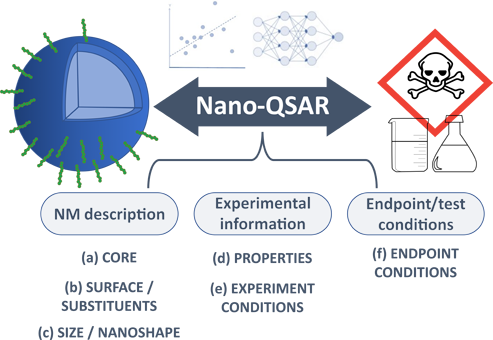
- ]. Additionally, focusing on the role of the NM as contrast agent in magnetic resonance imaging, the authors added the specific property of cellular internalization of iron, measured as the amount of iron inside the cells [25]. Zhang et al. [79] created a predictive model that uses regression trees to predict the
- conditions in E. coli and in HaCaT cells in a multi-target QSTR model [88]. Conclusion In this review we have analyzed in depth the descriptors used in the literature in QSAR and related in silico prediction models for NMs. Our review highlights that the high degree of variability in the NM properties is a


Synthesis of silver–palladium Janus nanoparticles using co-sputtering of independent sources: experimental and theorical study
Beilstein J. Nanotechnol. 2024, 15, 808–816, doi:10.3762/bjnano.15.67
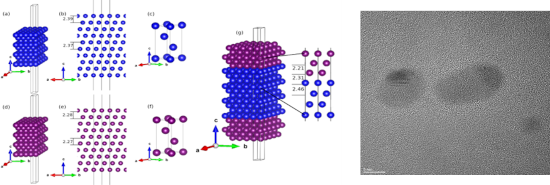
- ) interplanar distance is reported in the Experimental section, we computed the Ag and Pd (111) surface models. The Ag(111) (Figure 6a,b) and Pd(111) (Figure 6d,e) surfaces were modeled in a hexagonal lattice, with a slab thickness equivalent to three unit cells (approximately 2 nm). All models considered




Electrospun polysuccinimide scaffolds containing different salts as potential wound dressing material
Beilstein J. Nanotechnol. 2024, 15, 781–796, doi:10.3762/bjnano.15.65
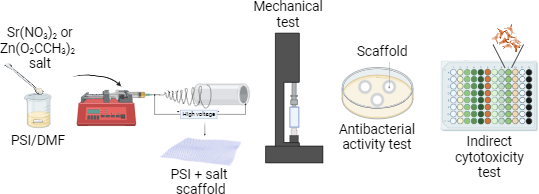
- potential cytotoxicity of the scaffolds on human tumorous and healthy cells. Except for the ones containing zinc acetate salt, the scaffolds are not cytotoxic to either tumor or healthy cells. Keywords: antibacterial activity; electrospinning; polysuccinimide; scaffold; wound dressing; Introduction
- , and fibers can be produced with uniform diameters in a controlled way [13][14]. Electrospun fibers are similar to macromolecule networks (e.g., collagen, fibrinogen, elastin) around the cells, which are called extracellular matrix (ECM). The ECM has fiber diameters in the size range of 50–500 nm and
- of streptomycin. The medium for the 155BR cells contained 15% of fetal bovine serum, 1% of non-essential amino acids, 2 mM of ʟ-glutamine, 100 IU/mL of penicillin, and 100 µg/mL of streptomycin in DMEM. Cytotoxicity tests Indirect cytotoxicity tests were based on a previous publications of our



Effect of repeating hydrothermal growth processes and rapid thermal annealing on CuO thin film properties
Beilstein J. Nanotechnol. 2024, 15, 743–754, doi:10.3762/bjnano.15.62
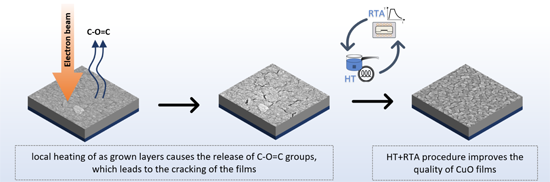
- -cleaning [1], anti-corrosion [2], and antibacterial [3] coatings. Like other CuO nanostructures, thin films also show potential for applications in photovoltaic cells [4][5], lithium-ion batteries [6], supercapacitors [7], gas sensors [8], and biosensors [9]. Furthermore, the literature reports their




Level set simulation of focused ion beam sputtering of a multilayer substrate
Beilstein J. Nanotechnol. 2024, 15, 733–742, doi:10.3762/bjnano.15.61
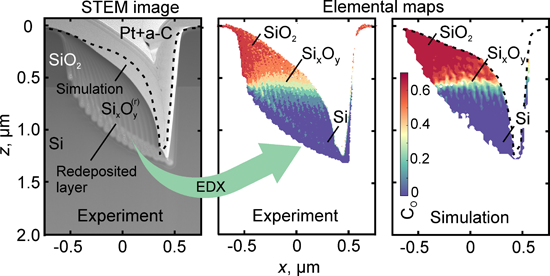
- %, the values of the parameters were taken into account, and the cell was marked as containing redeposited material. If in the subsequent calculations the fraction of the redeposited material in the cells dropped below 50%, these cells were marked as containing no redeposited material. The set of the
- cells with the redeposited oxygen and silicon atoms was employed in the following section where the simulation results were compared with the experimental data. The concentration of the oxygen atoms CO in the redeposited material stemming from the sputtering of the SiO2 layer was determined as . For

![[Graphic 55]](/bjnano/content/inline/2190-4286-15-61-i68.svg?max-width=637&scale=1.18182)


Simultaneous electrochemical determination of uric acid and hypoxanthine at a TiO2/graphene quantum dot-modified electrode
Beilstein J. Nanotechnol. 2024, 15, 719–732, doi:10.3762/bjnano.15.60
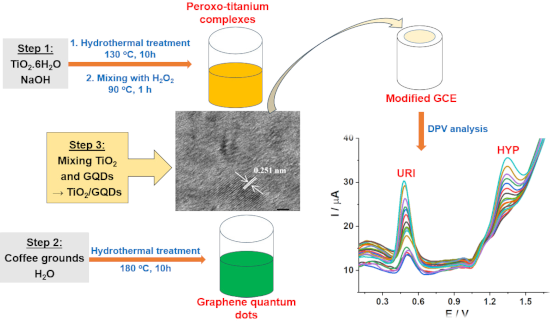
- electrochemistry, combining GQDs with semiconductors, especially TiO2, has been of interest. For example, GQDs have been successfully introduced into TiO2 [17] to enhance its photocatalytic activity. John Peter et al. reported TiO2/GQDs as anodes for enhancing the short-circuit current in solar cells [18]. The


Functional fibrillar interfaces: Biological hair as inspiration across scales
Beilstein J. Nanotechnol. 2024, 15, 664–677, doi:10.3762/bjnano.15.55
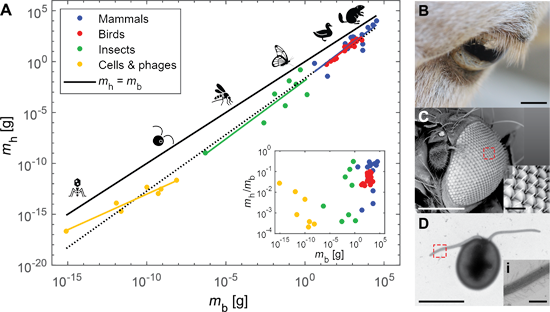
- structures must not be internally active. Obviously, this excludes organisms’ slender body parts, such as elephant trunks, the legs of mammals and insects, and the cilia and flagella of eukaryotic microorganisms. As a side note, flagella of eukaryotic cells (e.g., algae, protists, and sperms) and prokaryotic
- cells (bacteria) should not be confused. Eukaryotic flagella are essentially the same organelles as cilia, consisting of a well-organized microtubular backbone and orchestrated internal protein motors, whereas bacterial flagella are simply passive, stiff filaments. The passive nature of the hairs does
- same phylogenetic class, order, family, genus, and species [8]. However, hair mass deviates slightly from isometry, and it appears that larger organisms are more “hairy”. First, the exponent for power-law fits increases with size, as evidenced by comparing the fits for cells and phages, insects


Comparative analysis of the ultrastructure and adhesive secretion pathways of different smooth attachment pads of the stick insect Medauroidea extradentata (Phasmatodea)
Beilstein J. Nanotechnol. 2024, 15, 612–630, doi:10.3762/bjnano.15.52
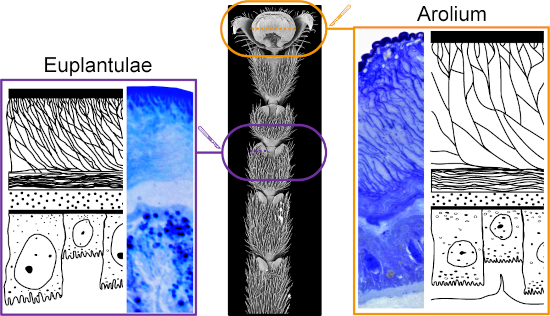
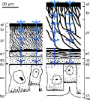
- delineate a potential pathway for adhesive secretions, originating from exocrine epidermal cells and traversing various layers before reaching the surface. Within the attachment pad, the fluid may influence the viscoelastic properties of the pad and control the attachment/detachment process. Understanding
- differences between the tarsal frictional pads (euplantulae) and the pretarsal adhesion pads (arolia)? (2) Where is the adhesive secretion produced and stored? (3) How many different types of exocrine cells producing pad secretions do exist? (4) How is the adhesive secretion transported from the production
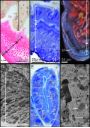
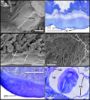
- cuticle (Figure 2D). Internally, the main part of the arolium consists of a large epithelium, recognizable by the light hue of the toluidine blue staining. The epithelium mainly consists of exocrine cells (ex) which display a large surface area towards the hemolymph due to irregular protrusions (Figure 2B





AFM-IR investigation of thin PECVD SiOx films on a polypropylene substrate in the surface-sensitive mode
Beilstein J. Nanotechnol. 2024, 15, 603–611, doi:10.3762/bjnano.15.51
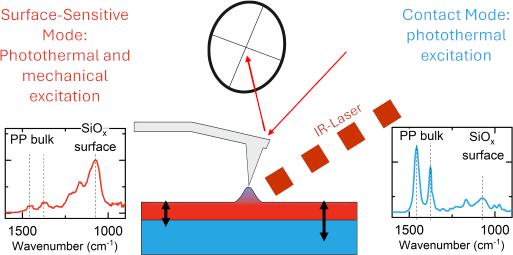
- nanoscale resolution of AFM-IR down to 10 nm [3]. Nowadays, the limit of the spatial resolution is given by the apex of the AFM tip. One of the first AFM-IR demonstrations was reported in 2005 by Dazzi et al. [4], who presented AFM-IR spectra of single bacterial cells. Further on, this technique became more


Radiofrequency enhances drug release from responsive nanoflowers for hepatocellular carcinoma therapy
Beilstein J. Nanotechnol. 2024, 15, 569–579, doi:10.3762/bjnano.15.49
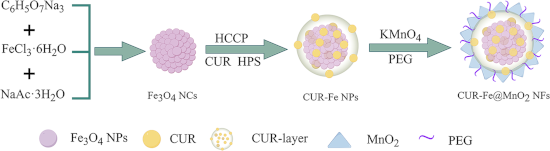
- suppressor gene [14]. Curcumin can also curtail HCC angiogenesis by decreasing the expression of vascular endothelial growth factors (VEGFs) [15]. Furthermore, CUR has the potential to inhibit HCC by reducing the number of myeloid-derived suppressor cells (MDSCs) and interfering with angiogenesis by
- ). The special structure of nanoflowers improves the stability and efficiency of the surface reaction [24]. Furthermore, prior research has verified that radiofrequency (RF) hyperthermia can significantly improve the sensitivity of cancer cells to chemotherapy at approximately 42 °C [25][26][27
- ]. Radiofrequency-induced hyperthermia has been confirmed to augment the permeability of the plasma membrane, facilitating the entry of drugs into tumor cells to kill them [28][29]. In this study, we present the synthesis of an intelligent TME-responsive nanomaterial, superparamagnetic ferric oxide nanoclusters


Directed growth of quinacridone chains on the vicinal Ag(35 1 1) surface
Beilstein J. Nanotechnol. 2024, 15, 556–568, doi:10.3762/bjnano.15.48
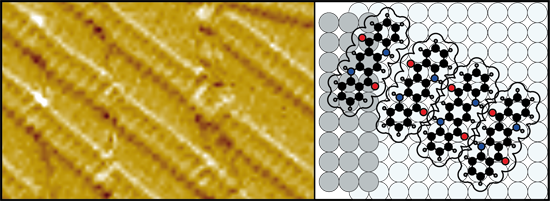
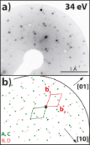
- is very similar to the one in panel (a). However, it is missing two sets of spots corresponding to orientations B and D. (d) Schematic drawing of the observed LEED pattern in panel (c) containing all the observed spots and the corresponding unit cells. Both LEED images were measured under an in-phase