


Search results
Search for "development" in Full Text gives 1358 result(s) in Beilstein Journal of Nanotechnology. Showing first 200.
ReactorAFM/STM – dynamic reactions on surfaces at elevated temperature and atmospheric pressure
Beilstein J. Nanotechnol. 2025, 16, 397–406, doi:10.3762/bjnano.16.30
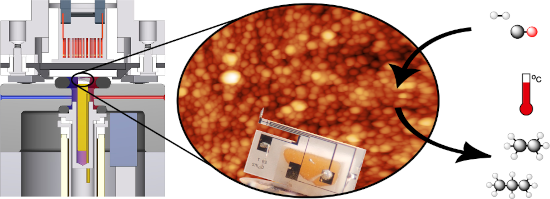
- these techniques are photon-based [4][5][6][7][8][9]. Even though they provide valuable insights, the development of surface-sensitive techniques that can image the catalyst at the atomic scale under high-pressure and high-temperature conditions remains crucial. In attempting to close the pressure gap
- AFM/STM reactor is the possibility to observe the structural and electronic properties of the surface at high gas pressures and temperatures, independent of its conductivity. The extension from STM-only and AFM-only to the combined AFM/STM reactor is an ongoing development of the existing ReactorSTM


Engineered PEG–PCL nanoparticles enable sensitive and selective detection of sodium dodecyl sulfate: a qualitative and quantitative analysis
Beilstein J. Nanotechnol. 2025, 16, 385–396, doi:10.3762/bjnano.16.29
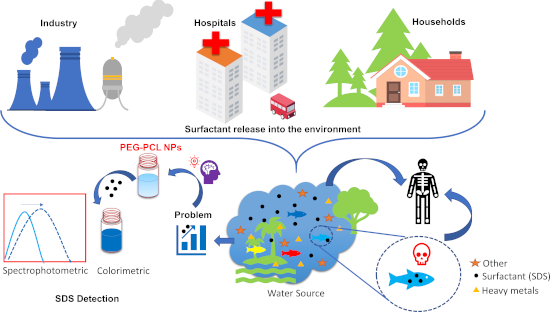
- , 190, 12, and 4 h of exposure, respectively [6]. The sub-lethal chronic effects of SDS were observed on the survival, metabolic processes, and development of juvenile Centropomus parallelus specimens exposed to the compound at three distinct salinity levels [7]. In vitro studies on bovine lenses at an
- absence of the Bradford reagent. This confirmed that both PEG–PCL NPs and the Bradford reagents need to be added to the ratio for the optical sensor development. PEG–PCL NPs and the Bradford reagent ratio was 2:3, giving maximum optical absorbance (Figure 4a). Similar results were obtained via


Development of a mucoadhesive drug delivery system and its interaction with gastric cells
Beilstein J. Nanotechnol. 2025, 16, 371–384, doi:10.3762/bjnano.16.28

- effective in overcoming these obstacles, particularly regarding drugs that are designed for the treatment of local gastric diseases [3]. The solution to this is the development of gastroretentive drug delivery systems. These are designed to increase the drug residence time in the upper part of the
- system. The reason for choosing this peptide as a model drug was that there is ongoing research for the use of peptide-based therapeutics for the treatment of diseases; however, development of oral peptide therapy is quite challenging because of the high acidity in the stomach and the presence of the
- development of this assay was inspired by a study performed by Sarparanta and colleagues [79]. AGS cells were seeded on separate 12-well plates at two concentrations (6 × 10⁴ and 1.2 × 10⁵ cells/well) to analyze the increase in mucoadhesion with increasing cell concentrations. Next day, the medium was


Tailoring of physical properties of RF-sputtered ZnTe films: role of substrate temperature
Beilstein J. Nanotechnol. 2025, 16, 333–348, doi:10.3762/bjnano.16.25
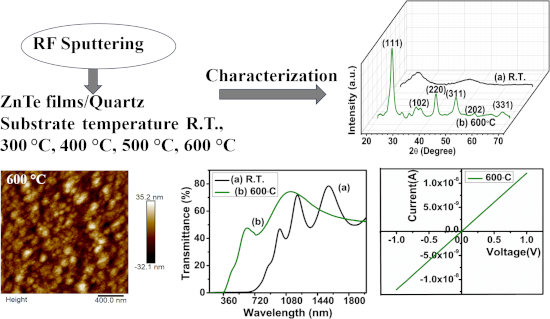
- substrate, which ultimately lead to the development of stress and strain within the film. At a substrate temperature of 600 °C, the lattice constant value is the same as in the bulk material. The strain in films occurs due to lattice mismatch between film and bulk. The microstrain in films was calculated
- accelerator and related characterization facilities at Kurukshetra University. The authors are also thankful to the Ministry of Human Resource and Development (MHRD), New Delhi for RUSA 2.0 grants to the Center for Advanced Material Research (CAMR), Kurukshetra University.




Graphene oxide–chloroquine conjugate induces DNA damage in A549 lung cancer cells through autophagy modulation
Beilstein J. Nanotechnol. 2025, 16, 316–332, doi:10.3762/bjnano.16.24
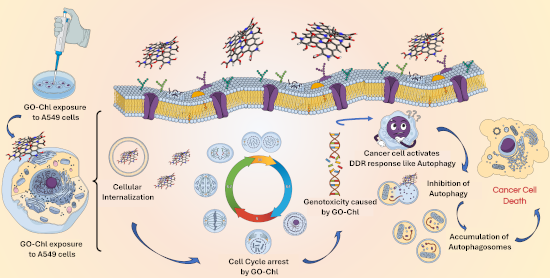
- .16.24 Abstract Autophagy is a highly regulated catabolic process by which unnecessary, dysfunctional, or damaged proteins and other cellular components are degraded and recycled to promote cellular differentiation, survival, and development. In response to endogenous or exogenous stresses, cancer cells



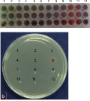
Fabrication and evaluation of BerNPs regarding the growth and development of Streptococcus mutans
Beilstein J. Nanotechnol. 2025, 16, 308–315, doi:10.3762/bjnano.16.23
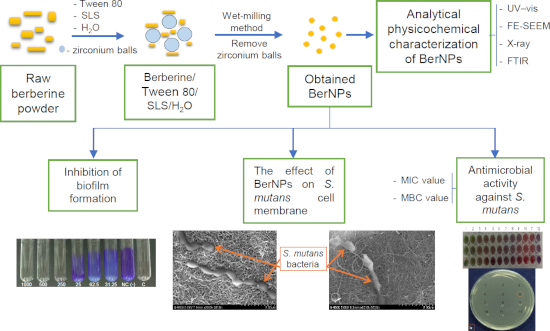
- materials with novel properties. The development of substances and methods with enhanced water dispersibility and bioavailability from materials such as berberine and curcumin is a current trend. Several studies on the nanofabrication of berberine aimed at improving its bioavailability and evaluating its
- ranging from 12.5 to 25.0 µg/mL [31]. However, there is limited research on the activity of BerNPs against S. mutans, a primary pathogen responsible for dental caries. This study aims to provide additional information on the potential and applications of BerNPs in the development of oral care products
- , and ldh, thereby preventing biofilm development [40]. Conclusion In this study, BerNPs were fabricated using ball milling with zirconium balls. Analysis through FE-SEM, UV–vis, XRD, and FTIR revealed that the nanoparticles predominantly exhibited a crystalline structure, with an average size of 40–65




Enhancing mechanical properties of chitosan/PVA electrospun nanofibers: a comprehensive review
Beilstein J. Nanotechnol. 2025, 16, 286–307, doi:10.3762/bjnano.16.22

- directions are proposed to overcome these obstacles and further enhance the mechanical properties of chitosan/PVA electrospun nanofibers, guiding their development for practical applications. Keywords: biomaterials; chitosan; electrospun nanofiber; mechanical properties; polyvinyl alcohol; Introduction In
- nanocomposites have been produced through the substantial utilization of nanoparticles. The development of fibrous nanocomposites or bio-nanocomposites, where the matrix and/or fillers are biomaterials, has been advanced in recent years by introducing nanoscale materials into electrospun fibers in the form of


Emerging strategies in the sustainable removal of antibiotics using semiconductor-based photocatalysts
Beilstein J. Nanotechnol. 2025, 16, 264–285, doi:10.3762/bjnano.16.21
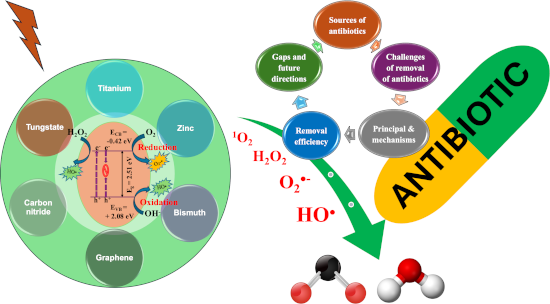
- continuous presence of antibiotics in natural environments can contribute to the development of antibiotic-resistant bacteria (ARBs) and their resistance genes (ARGs), hastening the spread of antibiotic resistance [9][10]. Several studies have reported that this situation poses significant risks to human
- enable localized surface plasmonic resonance (LSPR). The second strategy focuses on the development of heterojunctions between two semiconductors that is activated by visible light [65][66]. These heterojunctions should have bandgaps and energy levels that match the valence and conduction bands
- efficiency in comparison to α-Bi2O3. Nevertheless, the inherent instability of β-Bi2O3 presents a formidable obstacle in the development of uncomplicated techniques for producing pure β-Bi2O3, particularly at the nanoscale. The photocatalytic efficiency of Bi2O3 is inadequate for decomposing antibiotics



Synthesis and the impact of hydroxyapatite nanoparticles on the viability and activity of rhizobacteria
Beilstein J. Nanotechnol. 2025, 16, 216–228, doi:10.3762/bjnano.16.17
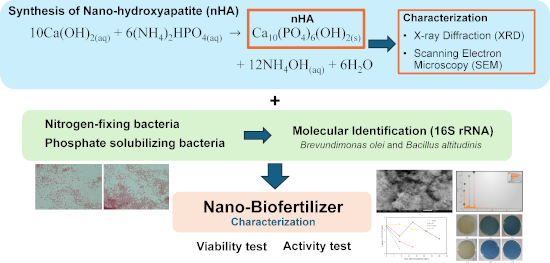
- maintain their viability over time [4]. Consequently, the characteristics of the carrier material used to transport rhizobacteria are critical in determining their survival and successful colonization within both soil and root systems. This, in turn, contributes to the development of biofertilizers as a
- application and storage [7]. Nanomaterials have gained significant attention in the development of rhizobacterial carrier materials, as their effective utilization can provide protective benefits to plants, assist in nutrient absorption, and, when in gel form, significantly improve water management efficiency


Recent advances in photothermal nanomaterials for ophthalmic applications
Beilstein J. Nanotechnol. 2025, 16, 195–215, doi:10.3762/bjnano.16.16
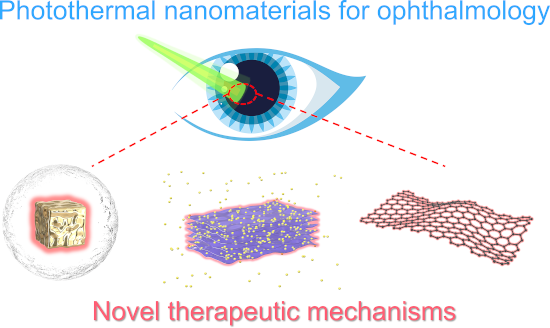
- treatment technologies. This underscores an urgent need for more advanced therapeutic approaches to effectively halt or even reverse the progression of eye diseases. The rapid advancement of nanotechnology offers promising pathways for the development of novel ophthalmic therapies. Notably, photothermal
- treatments pose significant barriers [5]. The evolution of nanotechnology has catalyzed the development of novel therapeutic technologies, with a plethora of nanomaterials exhibiting significant potential for nanotherapeutic applications [6][7][8]. Among these, photothermal nanomaterials hold promise in
- photothermal conversion and tunability of light absorption of these materials simplify the therapeutic light source, broadening their applicability [17][18]. Furthermore, the customizable nature of these nanomaterials allows for the development of personalized treatment plans, tailored to individual patient


Probing the potential of rare earth elements in the development of new anticancer drugs: single molecule studies
Beilstein J. Nanotechnol. 2025, 16, 187–194, doi:10.3762/bjnano.16.15

- , Minas Gerais, Brazil Departamento de Ciências Naturais, Universidade Federal do Acre, Rio Branco, Acre, Brazil 10.3762/bjnano.16.15 Abstract We use optical tweezers and atomic force microscopy to investigate the potential of rare earth elements to be used as anticancer agents in the development of new
- what occurs with classical DNA condensing agents such as polycations and depletants. Keywords: DNA; optical tweezers; rare earth elements; single molecule force spectroscopy; Introduction The development of new drugs to treat human diseases is a field of singular importance that usually involves
- side effects related to these therapies. Actually, both aspects depend on the development of new drugs and/or drug carriers that can improve the selectivity of these anticancer agents to reach their specific targets inside tumor cells [3][4][5]. Although commonly used in a number of technological


A review of metal-organic frameworks and polymers in mixed matrix membranes for CO2 capture
Beilstein J. Nanotechnol. 2025, 16, 155–186, doi:10.3762/bjnano.16.14
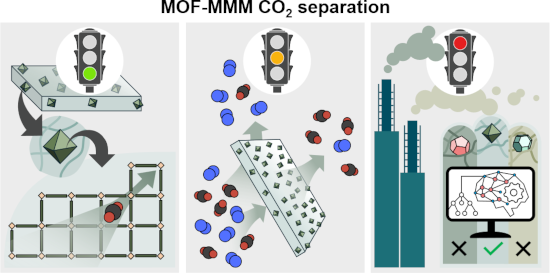
- membranes. To address this challenge, the development of mixed matrix membranes (MMMs) is a promising strategy. MMMs are obtained by carefully integrating porous nano-fillers into polymeric matrices, enabling the simultaneous enhancement of selectivity and permeability. In particular, metal-organic
- opportunities encountered in the development and fabrication of MOF-based MMMs for CO2 capture. An account of current trends in the field is given, while gaps and further areas of investigation are identified and highlighted. Specifically, the review intends to convey a broad yet comprehensive understanding of
- of their outstanding gas adsorption capabilities [30][45]. The topic of MOF-based gas separation and CO2 capture has been extensively addressed in comprehensive reviews [26][46][47][48][49]. A succinct account of MOF development for CO2 capture is proposed in the next paragraphs to better understand




Clays enhanced with niobium: potential in wastewater treatment and reuse as pigment with antibacterial activity
Beilstein J. Nanotechnol. 2025, 16, 141–154, doi:10.3762/bjnano.16.13
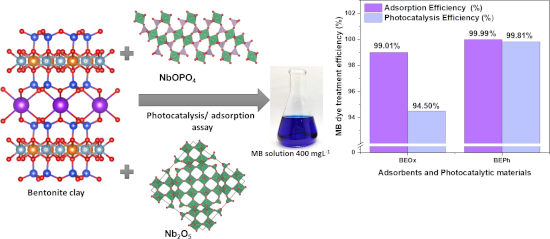
- purifying water contaminated with dyes necessitating the development of cost-effective technologies for their removal from industrial effluents. Adsorption emerges as a widely used method for pollutant removal from wastewater due to its design simplicity, operational ease, and relatively straightforward
- ) demonstrate significant antibacterial activity against the Gram-negative bacteria Proteus mirabilis, highlighting the influence of the dye in the assay outcomes. The implications of this work extend to the development of a novel hybrid pigment. This pigment, synthesized from abundant natural clays of the



TiO2 immobilized on 2D mordenite: effect of hydrolysis conditions on structural, textural, and optical characteristics of the nanocomposites
Beilstein J. Nanotechnol. 2025, 16, 128–140, doi:10.3762/bjnano.16.12
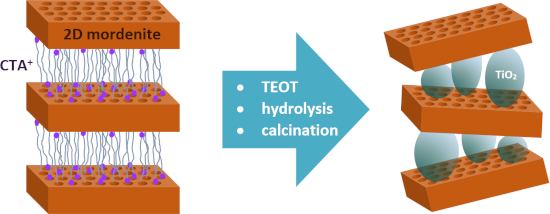
- SiO2 opens up a wide range of opportunities for the development of new materials for specific applications. Experimental The synthesis of nanocomposites was carried out similarly to the method first proposed in [49] and used previously in [5][50] for the insertion of SiO2 nanopillars. The latter



Comparison of organic and inorganic hole transport layers in double perovskite material-based solar cell
Beilstein J. Nanotechnol. 2025, 16, 119–127, doi:10.3762/bjnano.16.11
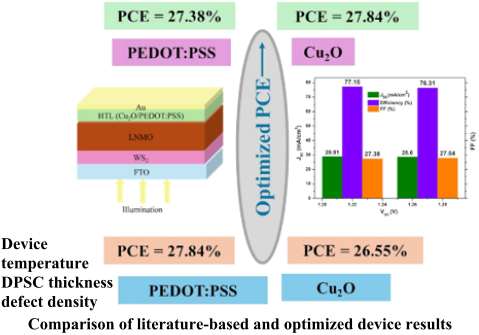
- their applicability to practical device development. Conclusion Solar energy is one of the most promising renewable energy sources. It is one of those energy sources creating no harmful emissions. PSCs are a new generation in the photovoltaic industry. Here, a La2NiMnO6 (LNMO)-based DPSC is simulated


Nanocarriers and macrophage interaction: from a potential hurdle to an alternative therapeutic strategy
Beilstein J. Nanotechnol. 2025, 16, 97–118, doi:10.3762/bjnano.16.10
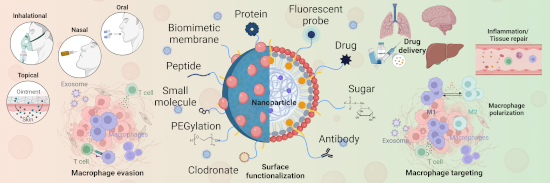
- .16.10 Abstract In the coming decades, the development of nanocarriers (NCs) for targeted drug delivery will mark a significant advance in the field of pharmacology. NCs can improve drug solubility, ensure precise distribution, and enable passage across biological barriers. Despite these potential
- nanomedicine landscape, the design and development of nanocarriers (NCs) for precise drug delivery are a pivotal innovation. NCs address significant pharmacological challenges, such as enhancing drug solubility, ensuring specific distribution, and facilitating the crossing of biological barriers [1]. Tailoring
- Hepatocellular carcinoma (HCC): HCC is the most common type of primary liver cancer and represents a significant global health burden [96]. The development of HCC is a complex, multistep process that involves genetic mutations, epigenetic alterations, and changes in the liver microenvironment. The prognosis for


Modeling and simulation of carbon-nanocomposite-based gas sensors
Beilstein J. Nanotechnol. 2025, 16, 90–96, doi:10.3762/bjnano.16.9
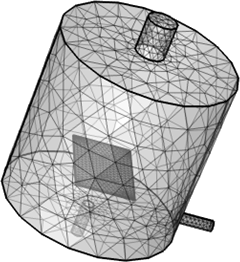
- development of these sensors, it becomes imperative to establish a mathematical model for economically predicting their behavior. The simulation using COMSOL Multiphysics is performed to obtain the surface coverage of the sensor by introducing carbon monoxide gas through a Gaussian pulse feed inlet at
- disciplines, leading to the development of materials with unprecedented properties. Among these materials, carbon nanocomposites have gathered significant attention because of their exceptional electrical, mechanical, and thermal characteristics. These nanocomposites typically consist of carbon-based
- nanomaterials, such as carbon nanotubes (CNTs), graphene, and carbon black, embedded within a polymer matrix [1]. The distinctive properties of carbon nanocomposites have positioned them as promising candidates for various applications, particularly in the development of advanced sensors. The small amounts of



Characterization of ZnO nanoparticles synthesized using probiotic Lactiplantibacillus plantarum GP258
Beilstein J. Nanotechnol. 2025, 16, 78–89, doi:10.3762/bjnano.16.8
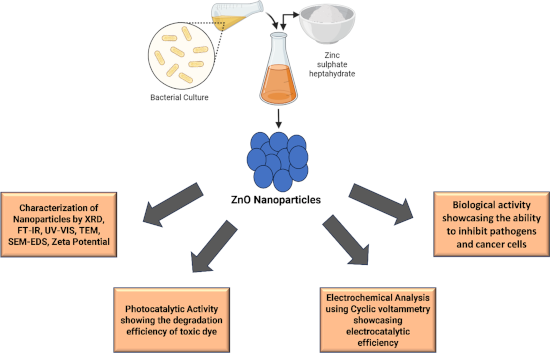
- applications. Keywords: anticancer; green synthesis; lactic acid bacteria; nanoparticles; zinc oxide; Introduction Nanotechnology has revolutionized various fields through its remarkable development and the unique properties exhibited by nanoparticles (NPs) at the mesoscopic level. Dimension, form, surface
- 0.1 M ZnSO4·7H2O was added, and the flask was heated to 80 °C for 10 min. The continuous process of transformation could be confirmed by the development of white precipitate at the bottom of the flask. After that, the flask was incubated for a further 12 h at 37 °C to ensure complete particle



Instance maps as an organising concept for complex experimental workflows as demonstrated for (nano)material safety research
Beilstein J. Nanotechnol. 2025, 16, 57–77, doi:10.3762/bjnano.16.7

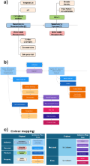
- immunotoxicity assessment using cell lines and primary cellular models, to (v) the use of the instance map approach for the coordination of materials and data flows in complex multipartner collaborative projects and for the demonstration of case studies. Finally, areas for future development of the instance map
- is sufficient as metadata about a nanomaterial’s toxicity study to enable reuse of the resulting data. Notably these standard tests, as developed by the Organisation for Economic Cooperation and Development (OECD) are usually quite broad, as they are globally agreed upon. Thus, they allow users some
- chemicals are currently being revised for the use with nanomaterials [26]. Development of the instance map concept The complexity and transformability of nanomaterials also has consequences for the databases used to organise and store nanomaterial characterisation and (eco)toxicity data. Databases needed to


Advanced atomic force microscopy techniques V
Beilstein J. Nanotechnol. 2025, 16, 54–56, doi:10.3762/bjnano.16.6

- cantilever eigenmode, which is particularly relevant when generating the time-periodic potential by optical or electrical pumping. With this development, the authors could present the detection of modulated components that are below the detection limit of other KPFM measurement modes. Da Lisca et al
Theoretical study of the electronic and optical properties of a composite formed by the zeolite NaA and a magnetite cluster
Beilstein J. Nanotechnol. 2025, 16, 44–53, doi:10.3762/bjnano.16.5
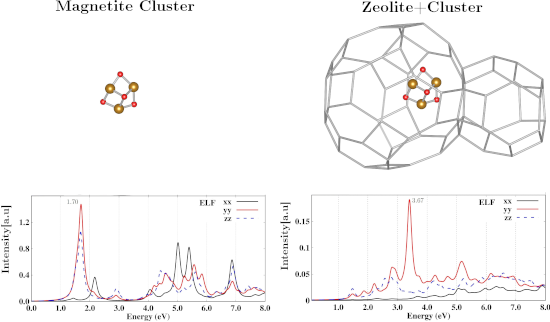
- development of nanotechnology and the emergence of composite zeolite materials have opened up unprecedented opportunities for their application in nanomedicine [47]. The unique properties of magnetic nanoparticles allow them to be used for targeted drug delivery and visualization of internal organs [48
- cluster using DFT calculations and compares them to those in the case where the cluster is embedded within the NaA zeolite. Our work aims to provide insights into the structural and electronic properties of these systems, paving the way for future experimental investigations and the development of novel




A nanocarrier containing carboxylic and histamine groups with dual action: acetylcholine hydrolysis and antidote atropine delivery
Beilstein J. Nanotechnol. 2025, 16, 11–24, doi:10.3762/bjnano.16.2

- of acetylcholine lead to serious disturbances in the functioning of the nervous system, including death. The need for rapid administration of an antidote to restore esterase activity is critical, but practical implementation of this is often difficult. One promising solution may be the development of
- diverse receptors and sensors, notably for ACh [23][24][25][26][27]. Here, we report the development of a new nanocarrier that can both carry Atr and act as a synthetic esterase to degrade excess ACh. The nanocarrier was synthesized via microemulsion polycondensation of phenylboronic acid with
- . Results and Discussion Synthesis of the nanocarrier p(Hist-CA) For the development of the Atr nanocarrier, two resorcinarenes were selected, namely, one with carboxylate groups (CA-RA, Scheme 1) and the other with hydroxy and imidazole groups (Hist-RA, Scheme 1). CA-RA was obtained according to [29]. Hist


Mechanistic insights into endosomal escape by sodium oleate-modified liposomes
Beilstein J. Nanotechnol. 2024, 15, 1667–1685, doi:10.3762/bjnano.15.131
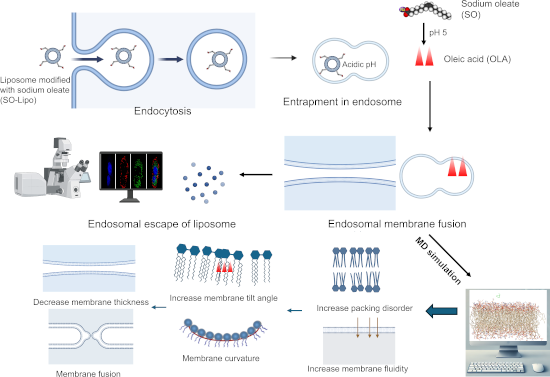
- limitations of current endosomal escape strategies, innovative approaches are urgently needed. Unraveling the mechanisms underpinning endosomal escape is pivotal for the development of novel, safe, and effective agents capable of overcoming these formidable barriers. Recent studies have highlighted the
- escape efficacy of SO with Aurein 1.2 (AUR), a well-established endosomal escape peptide known for its efficacy both in vitro and in vivo, serving as a positive control [12]. Our findings have the potential to significantly advance the development of safer and more effective liposomal drug delivery
- residues in endosomal environments. This protonation significantly enhances peptide–membrane interactions, suggesting a pathway for designing safer, more effective endosomal escape peptides. These insights not only expand our understanding of endosomal escape but also open avenues for the development of




Attempts to preserve and visualize protein corona on the surface of biological nanoparticles in blood serum using photomodification
Beilstein J. Nanotechnol. 2024, 15, 1654–1666, doi:10.3762/bjnano.15.130

- photomodified samples. Apparently, a number of bio-NPs have surface properties that prevent PACL from binding to them. Given the huge variety of bio-NPs with different surface structures, this fact is not surprising, but it deserves attention. In further development of the photomodification method, it will



Heterogeneous reactions in a HFCVD reactor: simulation using a 2D model
Beilstein J. Nanotechnol. 2024, 15, 1627–1638, doi:10.3762/bjnano.15.128
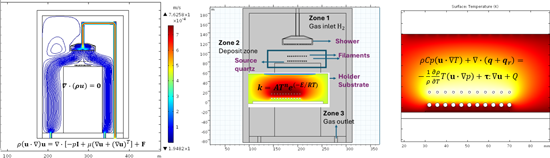
- ; chemical reactions; flow dynamics; HFCVD; hot filament chemical vapor deposition; SiOx films; Introduction The growth of materials such as non-stoichiometric silicon oxide (SiOx) is an important step in semiconductor devices development. Control of deposition parameters determines the success of the





