Search results
Search for "electrode" in Full Text gives 612 result(s) in Beilstein Journal of Nanotechnology. Showing first 200.
Progress and innovation of nanostructured sulfur cathodes and metal-free anodes for room-temperature Na–S batteries
Beilstein J. Nanotechnol. 2021, 12, 995–1020, doi:10.3762/bjnano.12.75
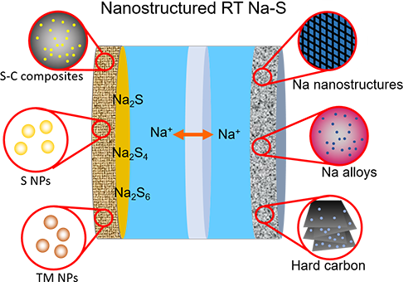
- phenomenon caused by the migration of long-chain sodium polysulfides (Na2Sn) to the anode, facilitated by their high solubility in carbonate- and ether-based electrolytes [21]. At the anode, Na2Sn is further reduced to insoluble short-chain sodium polysulfides, which precipitate and passivate the electrode
- rather large (up to 170%) and may damage the cathode and lead to capacity loss [4]. Nanoscaling the cathode compounds and the concomitant introduction of porosity is a widely investigated strategy to mitigate the emerging mechanical tension and to prevent electrode failure [18][24]. Unlike sodium-ion
- because both Na2S8 and the reduction products, Na2Sn (4 < n < 8), show higher electrical conductivity than elemental sulfur and sodium sulfide Na2S and faster reaction kinetics with Na+ [42]. Therefore, by employing the S/Na2Sn redox couple as cathode, the electrode conductivity is enhanced, which




Uniform arrays of gold nanoelectrodes with tuneable recess depth
Beilstein J. Nanotechnol. 2021, 12, 957–964, doi:10.3762/bjnano.12.72
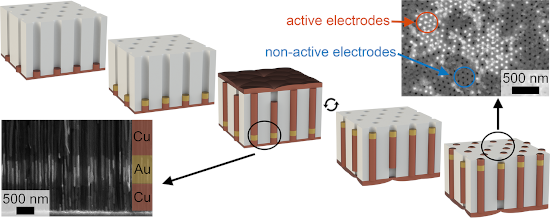
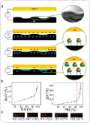
- pathways to further improve the recessed nanoelectrode arrays based on anodic alumina templates are discussed. Keywords: anodic alumina; gold; nanoelectrode array; recessed electrode; templated electrodeposition; Introduction A nanoelectrode array (NEA) is a set of regularly arranged isolated metal
- alternative approach includes bulk electrode structuring by deposition or etching techniques using self-assembled arrays of colloidal nanoparticles [15], liquid crystals [16], or track-etched membranes [17][18][19] as template or mask, respectively. Among porous templates, anodic aluminium oxide (AAO) allows
- current density is associated with the charging of the electric double layer, a decrease in the concentration of electroactive species near the electrode surface, and an increase in the diffusion layer thickness. Stage II corresponds to the growth of Cu segments inside the AAO at near constant current


Molecular assemblies on surfaces: towards physical and electronic decoupling of organic molecules
Beilstein J. Nanotechnol. 2021, 12, 950–956, doi:10.3762/bjnano.12.71

- such vertical tunneling through the interfacial layers can be undesirable since it prevents the current from flowing across electrode–molecule–electrode junctions [43] or leads to the charging of physisorbed molecules on top of such layers [18]. Hence, ultrathin insulating layers are often not
The role of deep eutectic solvents and carrageenan in synthesizing biocompatible anisotropic metal nanoparticles
Beilstein J. Nanotechnol. 2021, 12, 924–938, doi:10.3762/bjnano.12.69

- surface coating with nanoparticles through electrodeposition. A general electrodeposition setup consists of three electrodes, that is cathode, anode, and a reference electrode [78]. The solvation property and the conductivity of DESs also play a critical role in determining the physical structure, yield


In situ transport characterization of magnetic states in Nb/Co superconductor/ferromagnet heterostructures
Beilstein J. Nanotechnol. 2021, 12, 913–923, doi:10.3762/bjnano.12.68
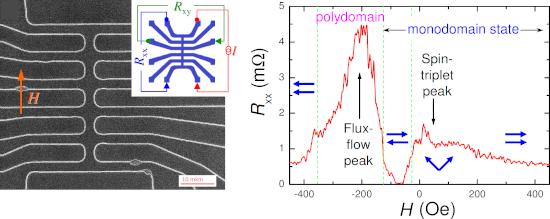
- the whole electrode is measured in a four-probe manner using two separate wires bonded to each contact pad. Results Figure 1d shows Rxx(T) dependencies, normalized by the normal state resistance Rn (T ≥ Tc), for microbridges at S1 (blue) and S2 (red) MLs at H = 0. Resistances are measured with Iac


9.1% efficient zinc oxide/silicon solar cells on a 50 μm thick Si absorber
Beilstein J. Nanotechnol. 2021, 12, 766–774, doi:10.3762/bjnano.12.60
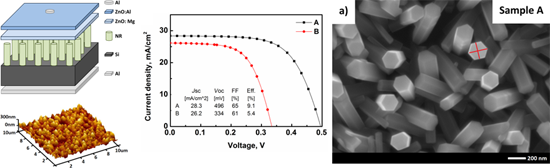
- , during the production process, chemicals that are harmful for the environment and for human life are used. For example, hydrofluoric acid is used to texture the top electrode to improve light harvesting. In this work, and also in recent ones, we report a way to obtain 3D textures on the top electrode by
- , allowing us to construct a 3D top electrode and to improve light collection/harvesting in cells with such electrodes. Figure 3 shows cross sections of the studied photovoltaic structures. The cell labeled as sample A contains ZnONR grown via the hydrothermal method. On the nanorods, an MZO film was
- of Zn, Mg, and O in the ZnMgO films. These concentrations were (52.0 ± 0.5)%, (46.6 ± 0.5)%, and (1.4 ± 0.5)% for zinc, oxygen, and magnesium, respectively. Aluminium-doped zinc oxide films were grown on top of the samples A and B as a transparent top electrode. Comparison of the cross sections


Recent progress in actuation technologies of micro/nanorobots
Beilstein J. Nanotechnol. 2021, 12, 756–765, doi:10.3762/bjnano.12.59
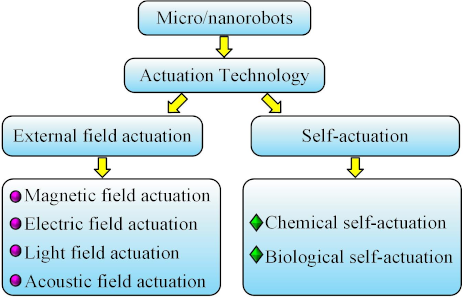
- electrolyte spherical micro/nanorobots constrained by hydrodynamics can be polarized along the center line of the electrode, and the movement speed can be controlled. In addition, the micro/nanorobots moving in the same direction move in single file, while the micro/nanorobots moving in the opposite direction


Nanogenerator-based self-powered sensors for data collection
Beilstein J. Nanotechnol. 2021, 12, 680–693, doi:10.3762/bjnano.12.54
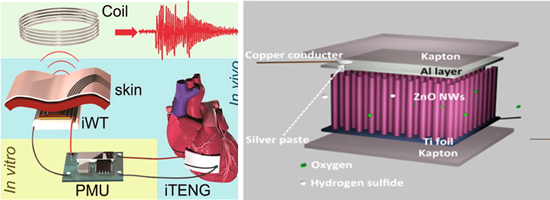
- -electrode mode, the contact-sliding mode, and the freestanding-triboelectric-layer mode [2][65]. TENGs can be made of many different materials with low manufacturing cost, environmental friendliness, and low maintenance cost. TENG-based sensors can collect multidimensional and large-scale data, which are a
- approximately 100%) TENG (WP-TENG) based on a poly(3,4-ethylenedioxythiophene):poly(4-styrenesulfonate) (PEDOT:PSS) electrode and installed the WP-TENG-based self-powered motion sensor at different positions of a human arm. The WP-TENG was placed on the skin above the muscles of the arm, as shown in Figure 2a
- signals, the researchers proposed a single-electrode TENG (SE-TENG) as an intelligent neuromorphic sensor using reduced graphene oxide [90]. Reduced graphene oxide can act as electronic trap, and the output information of the sensor contains real-time stimulation information and information about previous




Stability and activity of platinum nanoparticles in the oxygen electroreduction reaction: is size or uniformity of primary importance?
Beilstein J. Nanotechnol. 2021, 12, 593–606, doi:10.3762/bjnano.12.49
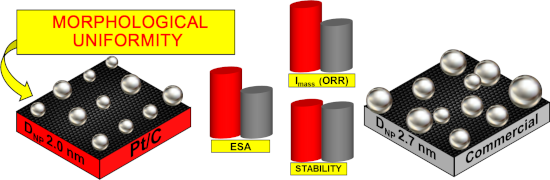
- friendliness, low operating temperature, and high adaptability of specific characteristics [1][2][3]. The key components of PEMFC membrane–electrode assemblies (MEA) are the proton-exchange polymer membrane and porous electrode layers, in which current-forming reactions of oxygen electroreduction (ORR) and
- hydrogen oxidation or an organic reducing agent oxidation (e.g. methanol) occur [4][5]. The need to carry out high-rate electrode reactions requires electrocatalysts (i.e., platinum nanoparticles – NPs – or its alloys), deposited mainly onto nano/microparticles of carbon supports, which are currently the
- were plotted to determine the size of at least 400 randomly selected particles in the TEM images in different regions of the sample. Electrochemical investigation Electrochemical measurements were performed in a three-electrode cell on a VersaSTAT3 potentiostat using a rotating disk electrode (RDE



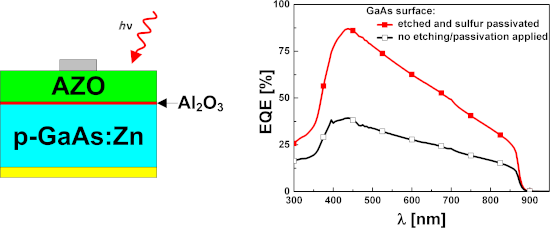
Impact of GaAs(100) surface preparation on EQE of AZO/Al2O3/p-GaAs photovoltaic structures
Beilstein J. Nanotechnol. 2021, 12, 578–592, doi:10.3762/bjnano.12.48
- a 3D top electrode, 14% of efficiency was reached [2]. Consequently, we also turned out our attention towards gallium arsenide as a substrate/absorber for solar cells. The first results of the experiments made us aware of the potential and possible fields for improvement of ZnO/GaAs-based structures




Properties of graphene deposited on GaN nanowires: influence of nanowire roughness, self-induced nanogating and defects
Beilstein J. Nanotechnol. 2021, 12, 566–577, doi:10.3762/bjnano.12.47
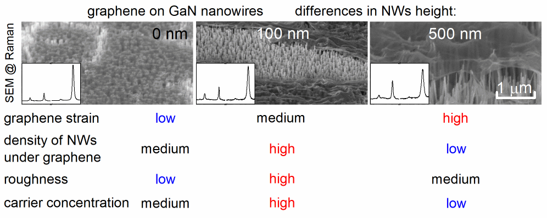
- absorption [9]. However, the interaction between corrugated nanowire substrate and graphene could substantially increase the scattering of carriers in a graphene electrode and decrease its conductivity. Therefore, detailed studies of the interaction between nanowire substrate and graphene are crucial to gain




Simulation of gas sensing with a triboelectric nanogenerator
Beilstein J. Nanotechnol. 2021, 12, 507–516, doi:10.3762/bjnano.12.41
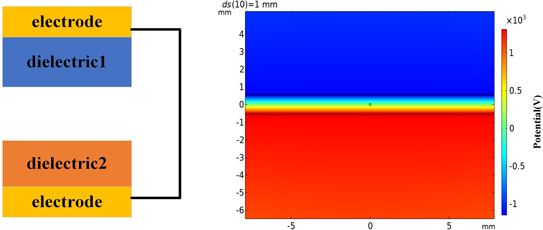
- can also be used as sensors [22]. TENGs, originally proposed by Prof. Zhongling Wang [23], are microgenerators that convert mechanical energy into electrical energy based on the triboelectric effect [24]. In most TENG simulations, a triboelectric polymer material is in direct contact with an electrode
- ], single electrode mode [32][33][34], and independent layer mode [35]. In order to explain the charge transfer process between two friction materials in contact, various models have been proposed and explored, such as electron cloud model [36][37][38], ion transfer model [39], and material transfer model
- charge flow of a TENG is shown in Figure 1. When the two triboelectric materials contact each other, different charges are generated on the surface. When they are separated, the induced electrons of the upper surface electrode will flow to the lower surface electrode, forming a current flow. When the two



Surface-enhanced Raman scattering of water in aqueous dispersions of silver nanoparticles
Beilstein J. Nanotechnol. 2021, 12, 497–506, doi:10.3762/bjnano.12.40
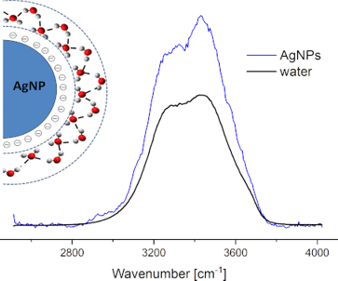
- selective enhancement of Raman signals from the samples. Previous studies showed that the RRE in liquid water directly corresponds to its supramolecular structure. It was also reported that the electric-field-induced orientation of water molecules on the electrode surface results in the surface-enhanced


Boosting of photocatalytic hydrogen evolution via chlorine doping of polymeric carbon nitride
Beilstein J. Nanotechnol. 2021, 12, 473–484, doi:10.3762/bjnano.12.38
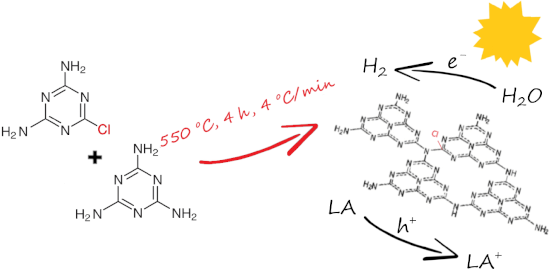
- the EIS spectrum is related to the charge-transfer resistance at the electrode–electrolyte interface [71]. The EIS arc radius of Cl-PCN is smaller than that of PCN. Its impedance is reduced compared to PCN, indicating that Cl doping decreased the charge-transfer resistance of polymeric carbon nitride
- potentiostat in a three-electrode test cell with a platinum wire as the counter electrode and the saturated calomel electrode (SCE) as the reference. The working electrode was a fluorine-doped tin oxide (FTO) glass with the analyzed material drop-casted from a 0.2% ethanol/Nafion solution. A 0.5 M sodium


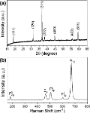
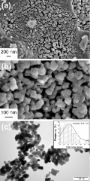
Solution combustion synthesis of a nanometer-scale Co3O4 anode material for Li-ion batteries
Beilstein J. Nanotechnol. 2021, 12, 424–431, doi:10.3762/bjnano.12.34
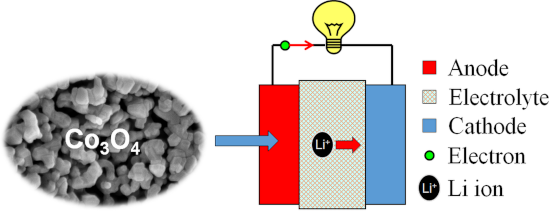
- potential next-generation anodes. Among them, transition metal oxides (TMOs) have attracted particular attention because their capacities are significantly greater than those of carbonaceous electrode materials. Also, most of the TMOs are relatively inexpensive and easily accessible due to their high
- , the lithium storage reactions associated with TMO electrodes are accompanied with large volume changes during lithiation–delithiation processes [1][2][3][4][6], but their volume variations are less significant [1]. This may lead to electrode pulverization and subsequent detachment of active materials
- from the current collector. Besides that, the Co3O4 electrode material suffers from low ionic and electronic conductivity, which influences its relatively slow charge/discharge rate [2][4]. In order to overcome the aforementioned drawbacks, some strategies have been proposed. One of them is related to


A stretchable triboelectric nanogenerator made of silver-coated glass microspheres for human motion energy harvesting and self-powered sensing applications
Beilstein J. Nanotechnol. 2021, 12, 402–412, doi:10.3762/bjnano.12.32
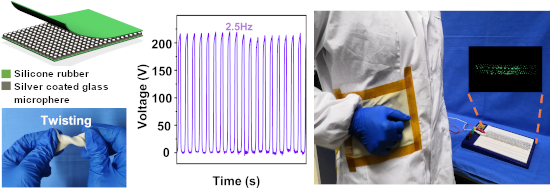
- sustainable electricity. However, there is a need for improvement regarding the output performance and the complex fabrication of TENG devices. Here, a triboelectric nanogenerator in single-electrode mode is fabricated by a simple strategy, which involves a sandwich structure of silicone rubber and silver
- motion energy; silver-coated glass microsphere; single-electrode mode; triboelectric nanogenerator; wearable; Introduction Traditional batteries cannot provide a durable and reliable power supply for small portable electronic devices, personalized healthcare, and Internet-of-Things (IoT) devices [1][2
- stretchability of the TENG devices, which is adverse regarding wearables. Therefore, further investigations to enhance the stretchability of TENGs by innovative design are still required. In this work, we developed a single-electrode mode, stretchable triboelectric nanogenerator (S-TENG) using a simple strategy



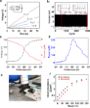


Intracranial recording in patients with aphasia using nanomaterial-based flexible electronics: promises and challenges
Beilstein J. Nanotechnol. 2021, 12, 330–342, doi:10.3762/bjnano.12.27
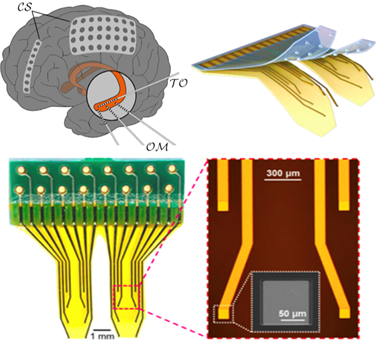
- covering almost the whole brain. The application of novel nanomaterials has the potential to overcome the limitations of conventional electrode arrays. IEEG electrode arrays electroplated with nanoparticles could lower impedance and allow for a closer contact with cortical cells, thereby providing more
- accurate recordings of cortical activity [6]. Preclinical tests using animals (rats or primates) have shown that nanomaterial-based electronics could boost the spatiotemporal accuracy and resolution of brain imaging signals [7]. In general, iEEG electrode arrays made of nanomaterials are thinner, lighter
- , and more flexible and sensitive; these characteristics lead to higher spatial and temporal resolution than that of conventional electrode arrays [6][7]. These features make them less harmful to brain tissue [6], indicating their potential application in the human brain. In this review, we first


The nanomorphology of cell surfaces of adhered osteoblasts
Beilstein J. Nanotechnol. 2021, 12, 242–256, doi:10.3762/bjnano.12.20
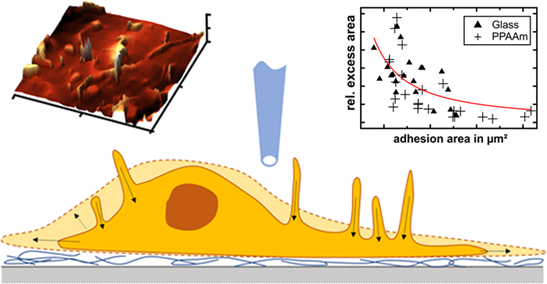
- measurement of I–V characteristics [21]. The bias voltage applied between pipette and bath electrode was approximately 100 mV. Both electrodes were non-polarizable (Ag/AgCl). For SICM topography measurements the nanopipette approached the surface until the setpoint of 0.98 nA (corresponding to an ion current


TiOx/Pt3Ti(111) surface-directed formation of electronically responsive supramolecular assemblies of tungsten oxide clusters
Beilstein J. Nanotechnol. 2021, 12, 203–212, doi:10.3762/bjnano.12.16

- of electronic devices appealing for the implementation in conceptually new data storage cells [1]. Specifically, resistive memories [2] based on the change of the electrical properties of a transition metal oxide thin layer, integrated in a simple electrode setup as a function of an externally
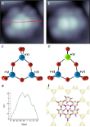
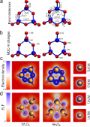
- , theory-supported STM measurements at liquid nitrogen temperatures have been selected as an ideal characterization technique. This is due to the fact that it not only allows high-resolution imaging on the nanoscale, but the STM tip may also act as a charge-injecting or depleting electrode for the



Toward graphene textiles in wearable eye tracking systems for human–machine interaction
Beilstein J. Nanotechnol. 2021, 12, 180–189, doi:10.3762/bjnano.12.14
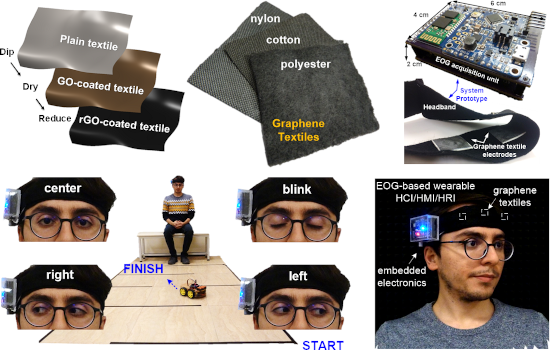
- creates a more positive charge in the electrode that the cornea is approaching [8]. The biopotentials resulting from eye activity, which are in fact waveforms that relate the dipole fluctuations to the type of eye movement, are referred to as electrooculograms; while the specific technique for recording
- technologies. Materials and Methods Synthesis of graphene textiles and electrode preparation The developed process to synthesize conductive graphene textiles is based on a low-cost and scalable, three-step approach in which conformal layers of graphene were formed on various fabrics including nylon, polyester
- this way, “passive” graphene textile electrodes were formed, which can be directly used to capture surface biopotentials without further modification. Conductivity measurements showed resistance values of the textiles between 1 and 10 kΩ and skin-electrode impedance values from 87.5 kΩ (at 10 Hz) to


Paper-based triboelectric nanogenerators and their applications: a review
Beilstein J. Nanotechnol. 2021, 12, 151–171, doi:10.3762/bjnano.12.12
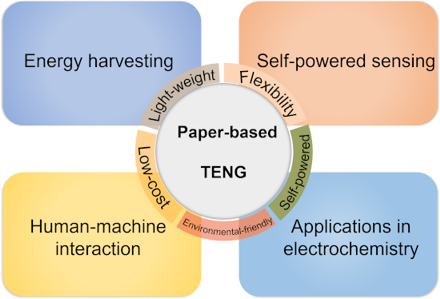
- contact–separation mode [30][31][32], lateral-sliding mode [33][34][35], single-electrode mode [36][37], and freestanding triboelectric-layer mode [38]. As an advanced and durable energy source, TENGs have shown promising and significant features that are applied to power units in the micro- and nanoscale
- polarization direction, TENGs can have four working modes [87], including vertical contact–separation (CS) mode, in-plane lateral-sliding (LS) mode, single-electrode (SE) mode, and freestanding triboelectric-layer (FT) mode, as shown in Figure 2a. In the vertical CS mode, a stack of two dielectric films is
- plated with a metal electrode at the back surface of each layer. When the two dielectric films are vertically separated and periodically contacted due to the application of external forces, a small air gap is formed in the middle and a potential difference is induced between the two electrodes, which can






A review on the green and sustainable synthesis of silver nanoparticles and one-dimensional silver nanostructures
Beilstein J. Nanotechnol. 2021, 12, 102–136, doi:10.3762/bjnano.12.9
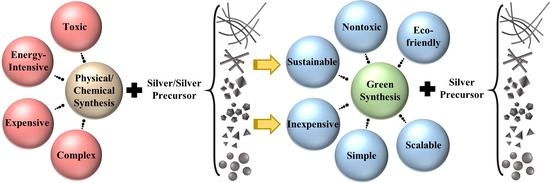
- anode, and an electron exchange takes place in the plasma region where silver ions are reduced [129]. In the case of silver electrodes, silver will be melted and vaporized from the electrode ends, and as a result, nanoparticles are formed from the silver condensates [131]. Tien et al. [227] synthesized


Fusion of purple membranes triggered by immobilization on carbon nanomembranes
Beilstein J. Nanotechnol. 2021, 12, 93–101, doi:10.3762/bjnano.12.8
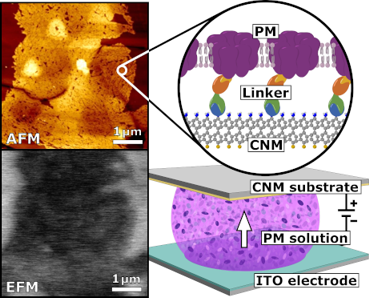
- deposited patches primarily prefer uncovered areas. In addition, the PM gets well oriented in an electric field according to its surface charge. Initially, a drop of 5 µL WT PM suspension was attached to the substrate only and was not in contact with the opposite electrode. While the plate distance was kept
- . An electric field between the substrate and an ITO electrode has been used for the controlled deposition of genetically modified c-His PM from a suspension. The best results were achieved after the incubation of 40 µL c-His PM suspension of OD 0.02 at 5 V for 3 min and a DPR time of 5 min at a


Numerical analysis of vibration modes of a qPlus sensor with a long tip
Beilstein J. Nanotechnol. 2021, 12, 82–92, doi:10.3762/bjnano.12.7
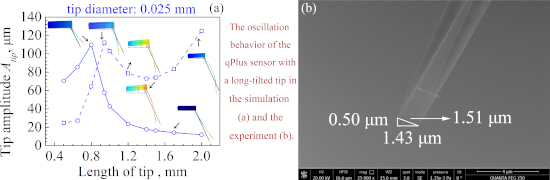
- = 687 µm, and thickness τ = 121 µm, are used in the finite element model. The arrangement of the gold electrodes on the tuning fork is the same as in reality. One electrode pair is grounded and the other is set to a virtual ground. The calculated mechanical eigenfrequency of the bare tuning fork is






ZnO and MXenes as electrode materials for supercapacitor devices
Beilstein J. Nanotechnol. 2021, 12, 49–57, doi:10.3762/bjnano.12.4
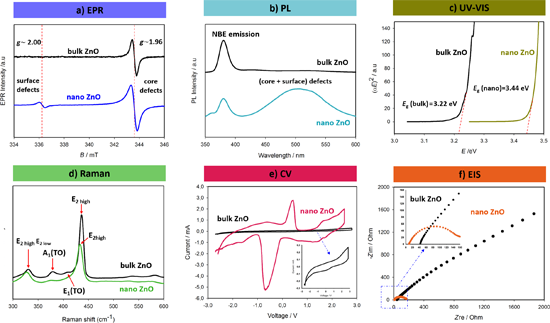
- Supercapacitor devices are interesting owing to their broad range of applicability from wearable electronics to energy storage in electric vehicles. One of the key parameters that affect the efficiency of supercapacitor devices is selecting the ideal electrode material for a specific application. Regarding this
- , recently developed metal oxides, specifically nanostructured ZnO, and MXenes with their defect structures, size effects, as well as optical and electronic properties have been presented as electrode material in supercapacitor devices. The discussion of MXenes along with ZnO, although different in chemistry
- materials; electrodes; MXenes; supercapacitors; zinc oxide (ZnO); Introduction In this article, the past, the present, and the prospects of ZnO and MXenes are discussed in terms of their usage as electrode materials in supercapacitor devices. Recently, supercapacitors gained a lot of attention due to their