


Search results
Search for "energy conversion" in Full Text gives 133 result(s) in Beilstein Journal of Nanotechnology.
Ellipsometry and XPS comparative studies of thermal and plasma enhanced atomic layer deposited Al2O3-films
Beilstein J. Nanotechnol. 2013, 4, 732–742, doi:10.3762/bjnano.4.83
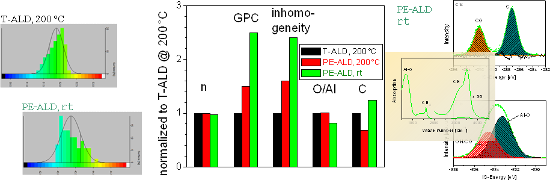
- solar energy conversion systems like dye sensitized solar cells [11][12] and water splitting devices [13] or lithium ion batteries [14]. Here, in particular the excellent conformability of ALD growth over high surface area materials and its uniformity and self-termination [15] were beneficially applied


A nano-graphite cold cathode for an energy-efficient cathodoluminescent light source
Beilstein J. Nanotechnol. 2013, 4, 493–500, doi:10.3762/bjnano.4.58
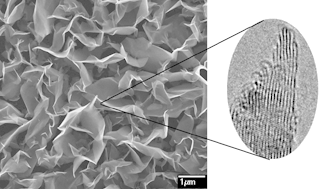
- as ineffective. The other 95% of the energy are transformed into heat, which cannot be considered as waste in many countries where electricity is used for house heating practically every day. In the “energy efficient” fluorescent and LED lamps the energy conversion ratio is about 10%, so that there


Synthesis and thermoelectric properties of Re3As6.6In0.4 with Ir3Ge7 crystal structure
Beilstein J. Nanotechnol. 2013, 4, 446–452, doi:10.3762/bjnano.4.52
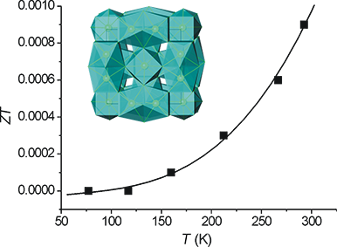
- . Keywords: band-structure calculations; energy conversion; Ir3Ge7 type; solid solution; thermoelectric material; Introduction Thermoelectric materials with good efficiency are highly awaited by modern power engineering. Utilizing either the Seebeck or Peltier effects, it is possible to produce electricity


Near-field effects and energy transfer in hybrid metal-oxide nanostructures
Beilstein J. Nanotechnol. 2013, 4, 306–317, doi:10.3762/bjnano.4.34
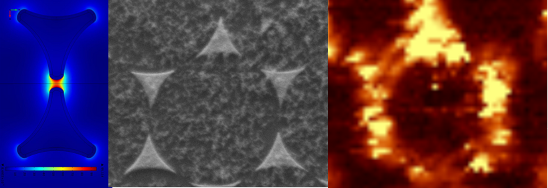
- supplying sufficient energy to present and future generations lies in techniques for using renewable energies, such as wind, water and direct sunlight. Direct conversion of sunlight by photovoltaics is an extremely attractive method of energy conversion, since the “final product” is supplied already in a
- ]. Nanotechnology holds great promises for the development of new devices in the field of advanced energy conversion. This became very apparent with the development of the dye-sensitized solar cells by M. Grätzel [2] more than 20 years ago. Other than conventional semiconductor photovoltaic cells, which depend on a
- , it is clear that the realization of nanotechnology-based approaches to efficient solar-energy conversion depends on a thorough understanding of the individual steps of the energy-transfer processes involved. As already mentioned, these include the absorption process itself, which may be modified by








Reduced electron recombination of dye-sensitized solar cells based on TiO2 spheres consisting of ultrathin nanosheets with [001] facet exposed
Beilstein J. Nanotechnol. 2012, 3, 378–387, doi:10.3762/bjnano.3.44
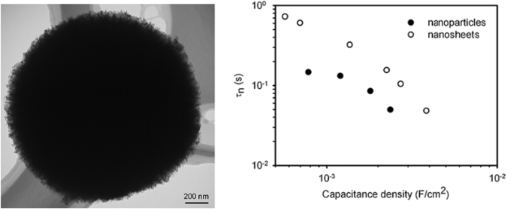
- [001] facet exposed, were assembled and characterized in terms of the device performance, the kinetics of electron transport and back reaction. It was found that the TiO2-spheres-based DSCs generated an energy conversion efficiency of 7.57%, which is comparable to the conventional TiO2 nanoparticles
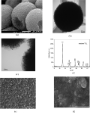


Structural, electronic and photovoltaic characterization of multiwalled carbon nanotubes grown directly on stainless steel
Beilstein J. Nanotechnol. 2012, 3, 360–367, doi:10.3762/bjnano.3.42
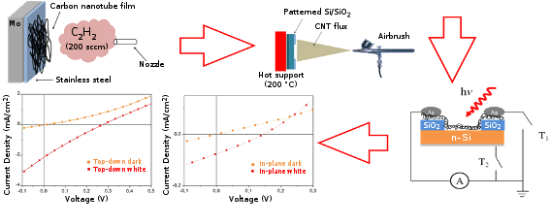
- ability of MWCNTs to serve as an energy-conversion material [9][10]. In this paper, we build up a simple photovoltaic device based on MWCNT–Si Schottky heterojunction. Photovoltaic measurements for the in-plane and top-down geometries of the device were performed. In particular, we find that the top-down
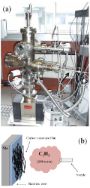


Nanophotonics, nano-optics and nanospectroscopy
Beilstein J. Nanotechnol. 2011, 2, 499–500, doi:10.3762/bjnano.2.53

- applications can be imagined, e.g., in materials sciences in the pursuit of efficient photovoltaic energy conversion; in the engineering sciences as quantum devices functioning as switches that truly operate at the quantum limit with single photons; or in the life sciences as local optical sensors to observe
Plasmonic nanostructures fabricated using nanosphere-lithography, soft-lithography and plasma etching
Beilstein J. Nanotechnol. 2011, 2, 448–458, doi:10.3762/bjnano.2.49

- also enhance scattering at their resonances. This effect has been exploited in solar cells, for example, enhanced scattering by arrays of silver nanoparticles permits a thickness reduction of Si solar cells without compromising the intrinsic energy conversion efficiency [44][45][46]. Applications of


Other Beilstein-Institut Open Science Activities



