


Search results
Search for "friction" in Full Text gives 202 result(s) in Beilstein Journal of Nanotechnology. Showing first 200.
Tight junction between endothelial cells: the interaction between nanoparticles and blood vessels
Beilstein J. Nanotechnol. 2016, 7, 675–684, doi:10.3762/bjnano.7.60
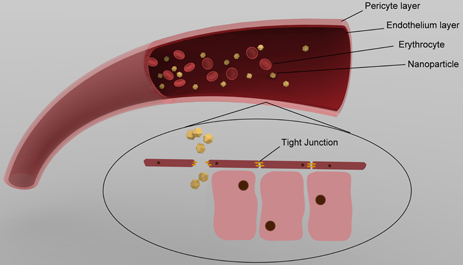
- material and shows its influence on blood vessels when blood flows in parallel through the vessel. In the field of angiology, shear stress is embodied in the index of endothelial shear stress, which originates from the friction of flowing blood and is proportionally determined by the viscosity of blood and

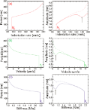
Correlative infrared nanospectroscopic and nanomechanical imaging of block copolymer microdomains
Beilstein J. Nanotechnol. 2016, 7, 605–612, doi:10.3762/bjnano.7.53
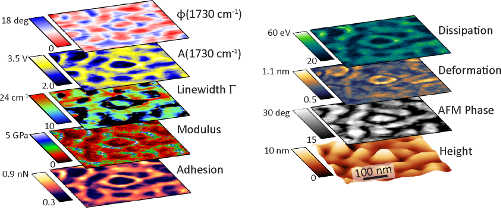
- important complimentary information on heterogeneous material systems [9]. By measuring the force on a scanning probe tip as it interacts with the sample, material properties including friction, adhesion, deformation, modulus, and dissipation can be quantified and mapped over nanoscale distances [10][11][12
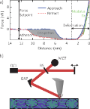
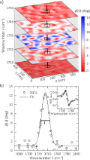
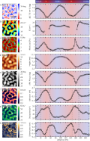


![[Graphic 9]](/bjnano/content/inline/2190-4286-7-53-i10.png?max-width=637&scale=1.18182) (1730 ...
(1730 ...
Charge and heat transport in soft nanosystems in the presence of time-dependent perturbations
Beilstein J. Nanotechnol. 2016, 7, 439–464, doi:10.3762/bjnano.7.39
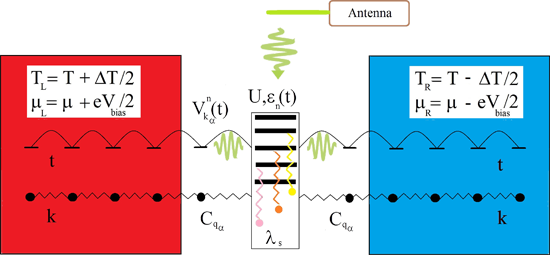
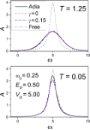
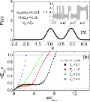
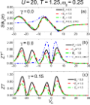
- on the Keldysh contour. The semiclassical approach naturally includes the effect of a noise term that stems form the quantum charge fluctuations induced by the fast time scales of the electronic system. The friction and the noise strengths depend by construction on the displacement of the oscillator
- included the effect of the forcing antenna in our adiabatic scheme showing that the resulting Langevin equation for the vibrational mode is modified by a periodic forcing term. Moreover, the generalized force term, the friction and the noise strengths become functions that depend on the oscillator
- -dependent memory-friction kernel of the oscillator [80]. In the regime for all the modes, can be approximated as real and independent of frequency, providing the damping rate . [80] If not specified, we consider the symmetric configuration: γL = γR = γ/2. In this review, we assume that the electronic and






Rigid multipodal platforms for metal surfaces
Beilstein J. Nanotechnol. 2016, 7, 374–405, doi:10.3762/bjnano.7.34











Molecular machines operating on the nanoscale: from classical to quantum
Beilstein J. Nanotechnol. 2016, 7, 328–350, doi:10.3762/bjnano.7.31
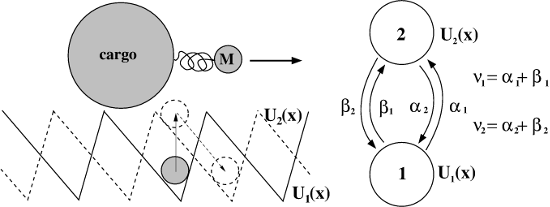
- considered and discussed to highlight generic physical features. This work examines some common fallacies that continue to plague the literature. In particular, the erroneous beliefs that one should minimize friction and lower the temperature for high performance of Brownian machines, and that the
- ; nanoscale friction and thermal noise; quantum effects; thermodynamic efficiency; Introduction A myriad of minuscule molecular nanomotors (not visible in standard, classical, optical microscopes) operate in living cells and perform various tasks. These utilize metabolic energy, for example, the energy
- . Review Fluctuation–dissipation theorem, the role of thermal fluctuations Motion in any dissipative environment is necessarily related to the dissipation of energy. Particles experience a frictional force, which in the simplest case of Stokes friction is linearly proportional to the particle velocity with

![[Graphic 40]](/bjnano/content/inline/2190-4286-7-31-i86.png?max-width=637&scale=1.18182) with depth ε. Bias Δμ < 0 per one rotation tur...
with depth ε. Bias Δμ < 0 per one rotation tur...

![[Graphic 48]](/bjnano/content/inline/2190-4286-7-31-i94.png?max-width=637&scale=1.18182) , for the most asymmetric sawtooth mod...
, for the most asymmetric sawtooth mod...


Current-induced runaway vibrations in dehydrogenated graphene nanoribbons
Beilstein J. Nanotechnol. 2016, 7, 68–74, doi:10.3762/bjnano.7.8
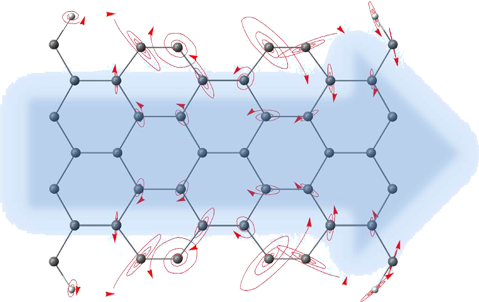
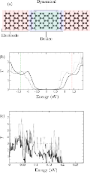
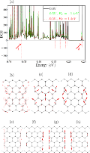
- to the four forces Here, FR, NC, RN, BP represent the electronic friction, nonconservative force, renormalization of the atomic potential, and Berry-phase-induced pseudo-magnetic force, respectively [12]. Run-away modes In order to analyze the influence of the current we define the nonequilibrium
- frequency-dependent. Thus, to analyze a specific runaway mode giving rise to a negative peak in Figure 2a (see below), we evaluate the self-energy at the negative peak frequency ω0 as given below in Equation 10, Thus, the dynamical matrix is renormalized by and the friction originates from . Solving
Negative differential electrical resistance of a rotational organic nanomotor
Beilstein J. Nanotechnol. 2015, 6, 2332–2337, doi:10.3762/bjnano.6.240
- nanotubes [27][28] with very low interwall friction [29][30][31][32][33][34] lead to novel electrical properties [35][36][37][38][39][40]. These examples illustrate how an electric field can induce motion and also how a motion-induced change of geometry can affect electrical properties. In what follows, our


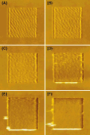
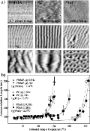
Nanoscale rippling on polymer surfaces induced by AFM manipulation
Beilstein J. Nanotechnol. 2015, 6, 2278–2289, doi:10.3762/bjnano.6.234
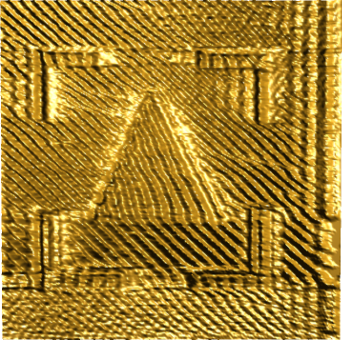
- mound, so on and so forth. In order to form a continuous front, the positions of the mounds formed along adjacent lines need to be correlated and in phase. Notwithstanding the experimental differences, according to Aoike et al. [51], the friction coefficients measured in the macroscale and nanoscale




Nonconservative current-driven dynamics: beyond the nanoscale
Beilstein J. Nanotechnol. 2015, 6, 2140–2147, doi:10.3762/bjnano.6.219
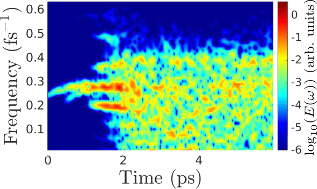
- reducing the current and by populating modes in nearby frequency, leading to a dynamical steady state in which nonconservative forces are counter-balanced by the electronic friction. The waterwheel effect can be described by an appropriate effective nonequilibrium dynamical response matrix. We show that
- relaxed geometry and use them with zero initial displacements and velocities to set the coefficients {Aj} and {Bj}. We do not include the friction forces here, but we cut the imaginary parts of the frequencies by a factor of 5 to stretch out the growth of the amplitudes in time. Figure 5 shows the
- responds and is suppressed by the atomic motion. The system eventually settles at a dynamical steady state, where the velocity-dependent friction forces balance out (on average) the driving NC forces. This interpretation is supported by the fact that balancing these forces leads to analytical predictions




Lower nanometer-scale size limit for the deformation of a metallic glass by shear transformations revealed by quantitative AFM indentation
Beilstein J. Nanotechnol. 2015, 6, 1721–1732, doi:10.3762/bjnano.6.176
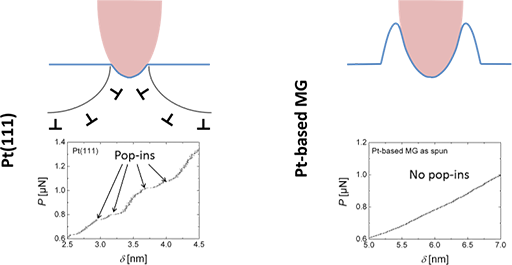
- highly concentrated around the AFM indenter. In a recent study, we have compared the nano-scale wear of Pt(111) and Pt57.5Cu14.7Ni5.3P22.5 metallic glass by AFM scratching in UHV. The friction forces measured during reciprocal scratching with a diamond-coated silicon tip were found to be four times



Improved atomic force microscopy cantilever performance by partial reflective coating
Beilstein J. Nanotechnol. 2015, 6, 1450–1456, doi:10.3762/bjnano.6.150
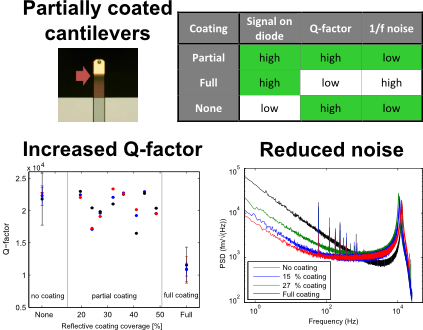
- Sosale et al. [8], derived a quantitative theory of how the internal material friction of a partial coating effects the Q-factor of a microcantilever: with ξ the normalized length (l/L), (ξ) the natural mode shape of the cantilever, E the Young’s modulus and hf, hs being the coating film thickness and


Probing fibronectin–antibody interactions using AFM force spectroscopy and lateral force microscopy
Beilstein J. Nanotechnol. 2015, 6, 1164–1175, doi:10.3762/bjnano.6.118
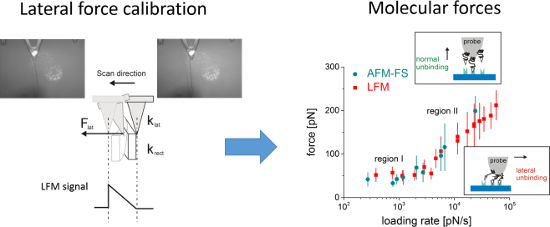
- perpendicular (normal) to the surface and a relative position on a sample. In the AFM-FS measurement, force curves are recorded point-by-point, requiring a precise but tedious and very time consuming procedure. Lateral force microscopy (LFM), also called friction force microscopy (FFM) is another operational
- -functionalized) cantilever. As shown in Figure 2, the fibronectin molecules had a regular globular shape and were uniformly distributed over the entire scanned area. The FN height ranged from 0.5 to 3.5 nm with a mean value of 2.4 ± 0.9 nm. Dependence of friction force on normal load The frictional interaction
- between surfaces observed on the macroscale is typically modelled using Amonton’s law, where a frictional force is linearly dependent on a load force. The proportionality factor is the constant friction coefficient. To verify whether any friction force is observed between the FN-coated surface and the FN



Stiffness of sphere–plate contacts at MHz frequencies: dependence on normal load, oscillation amplitude, and ambient medium
Beilstein J. Nanotechnol. 2015, 6, 845–856, doi:10.3762/bjnano.6.87
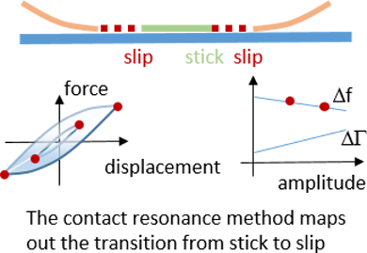
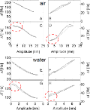
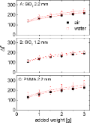
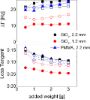
- . The apparent contact stiffness at large amplitude depends linearly on the amplitude, as predicted by the Cattaneo–Mindlin model. This finding is remarkable insofar, as the Cattaneo–Mindlin model assumes Coulomb friction inside the sliding region. Coulomb friction is typically viewed as a macroscopic
- concept, related to surface roughness. An alternative model (formulated by Savkoor), which assumes a constant frictional stress in the sliding zone independent of the normal pressure, is inconsistent with the experimental data. The apparent friction coefficients slightly increase with normal force, which
- stress. Cattaneo and Mindlin assumed that the frictional stress in the sliding zone, σ, is proportional to the normal pressure, p, as in Coulomb friction (Figure 1C). The ratio of σ and p is the friction coefficient, µ. From the Cattaneo–Mindlin (CM) model, one can derive predictions for the width of the




Stick–slip behaviour on Au(111) with adsorption of copper and sulfate
Beilstein J. Nanotechnol. 2015, 6, 820–830, doi:10.3762/bjnano.6.85
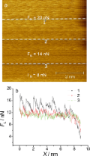
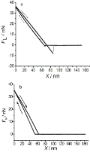
- Nikolay Podgaynyy Sabine Wezisla Christoph Molls Shahid Iqbal Helmut Baltruschat Institute of Physical and Theoretical Chemistry, University of Bonn, Roemerstrasse 164, D-53117 Bonn, Germany 10.3762/bjnano.6.85 Abstract Several transitions in the friction coefficient with increasing load are
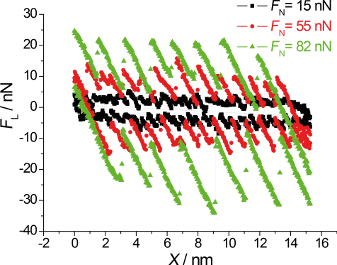
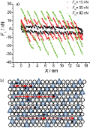
- found on Au(111) in sulfuric acid electrolyte containing Cu ions when a monolayer (or submonolayer) of Cu is adsorbed. At the corresponding normal loads, a transition to double or multiple slips in stick–slip friction is observed. The stick length in this case corresponds to multiples of the lattice
- distance of the adsorbed sulfate, which is adsorbed in a √3 × √7 superstructure on the copper monolayer. Stick–slip behaviour for the copper monolayer as well as for 2/3 coverage can be observed at FN ≥ 15 nN. At this normal load, a change from a small to a large friction coefficient occurs. This leads to





Mapping of elasticity and damping in an α + β titanium alloy through atomic force acoustic microscopy
Beilstein J. Nanotechnol. 2015, 6, 767–776, doi:10.3762/bjnano.6.79
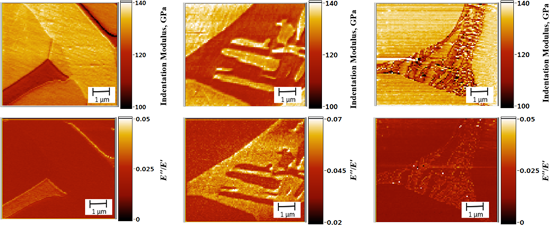
- cantilever model must be taken into account [8], and this has been applied recently to metallic glasses by Wagner et al. [24]. They have successfully demonstrated a quantitative approach to determine the local internal friction or loss at a nanometer scale, using the evaluation procedure of the cantilevers
- different temperatures. In order to effectively obtain the contribution of local internal friction Qloc−1 from the sample, the load of the cantilever onto the sample was chosen to be about 1200 nN for all the measurements. Caron et al. [2] have observed that a background damping in the material related to
- spectra were analyzed using software specifically developed in LabVIEW to obtain the maps of the indentation modulus and damping (i.e., local internal friction). The indentation modulus of the individual phases obtained by AFAM measurements was used to estimate the average modulus of the specimens, using


Entropy effects in the collective dynamic behavior of alkyl monolayers tethered to Si(111)
Beilstein J. Nanotechnol. 2015, 6, 583–594, doi:10.3762/bjnano.6.60
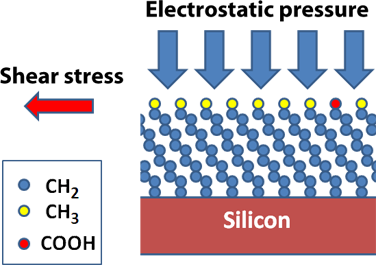
- surface chemistry, surface energy, biocompatibility, friction, corrosion, liquid chromatography, interfacial interactions and electronic transport [1][2][3][4][5][6]. More recent studies have been focused on the functionalization of nanostructures. However, in spite of a large number of experimental and
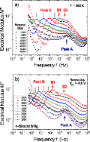
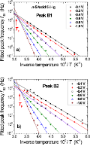
- vibration), is expected to decrease with increasing n-alkyl chain length. Since entropic contributions in the cooperative backbone mobility of tethered molecular layers also appear in the friction dissipation processes (coupling between external shear and internal molecular modes of relaxation) [24], a




Exploiting the hierarchical morphology of single-walled and multi-walled carbon nanotube films for highly hydrophobic coatings
Beilstein J. Nanotechnol. 2015, 6, 353–360, doi:10.3762/bjnano.6.34
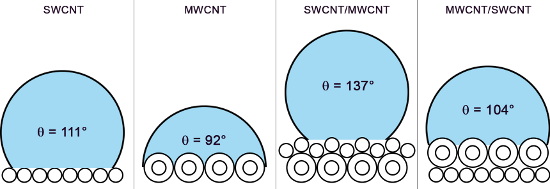
- ], anti-fouling [47], anti-fogging [48], low-friction coatings [5], adsorption [30], lubrication [22], dispersion [44], and self-assembly [49]. Experimental Fabrication of carbon nanotube films Highly pure SWCNT powder (Sigma-Aldrich, assay >90%, diameter: 0.7–0.9 nm) and MWCNT powder (Nanocyl, NC7000


Aquatic versus terrestrial attachment: Water makes a difference
Beilstein J. Nanotechnol. 2014, 5, 2424–2439, doi:10.3762/bjnano.5.252
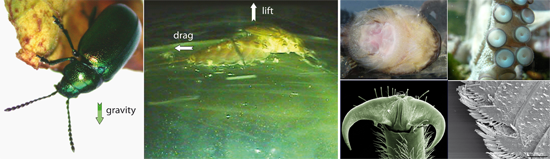
- are of higher importance in an aquatic environment. Depending on the flow conditions, flow forces can reach much higher values than gravity and vary in magnitude and direction. For many of the attachment mechanisms (adhesion including glue, friction, suction and mechanical principles such as hook
- pressure difference at vacuum conditions can be ameliorated under water, due to the increasing pressure with water depth. Keywords: adhesion; biofilm; friction; hooks; suction; Introduction Attachment in animals, plants and microorganisms serves a variety of functions: the interconnection of body parts
- , friction drag (or skin friction) and pressure drag (or form drag), which both depend on shape and fluid parameters but in quite different ways [4]. Friction drag is caused by friction of the water flowing over the surface of the animal body. It varies directly with the viscosity of the fluid [4] and the


Modeling viscoelasticity through spring–dashpot models in intermittent-contact atomic force microscopy
Beilstein J. Nanotechnol. 2014, 5, 2149–2163, doi:10.3762/bjnano.5.224
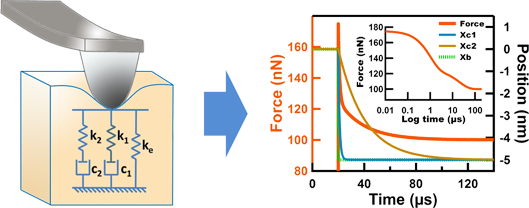
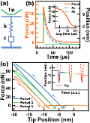
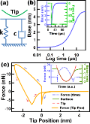
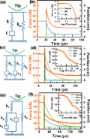
- dynamic method and has been the subject of thorough studies [2][3][4][5][6]. In tapping mode AFM damage or wear of the tip and surface are reduced with respect to contact-mode AFM due to lower friction and lateral forces, which makes it more applicable for imaging soft samples, such as polymers and
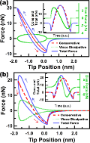
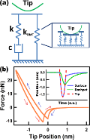
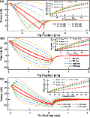


Nanomanipulation and environmental nanotechnology
Beilstein J. Nanotechnol. 2014, 5, 2079–2080, doi:10.3762/bjnano.5.216

- different substrates. In this way, adhesion and friction can be precisely quantified in different environments. Although very few experiments of this kind have been reported so far, the potential of these techniques is enormous. This Thematic Series is a compilation of papers which provide a wide variety of
- understanding of friction and adhesive forces on the nanoscale. Last but not least, we would like to mention that this Thematic Series was partially inspired by the “Advanced Materials Science Networking (AMASING)” workshop organized by Prof. Gianaurelio Cuniberti in Da Nang, Vietnam, in March 2013. This was
Dissipation signals due to lateral tip oscillations in FM-AFM
Beilstein J. Nanotechnol. 2014, 5, 2048–2057, doi:10.3762/bjnano.5.213
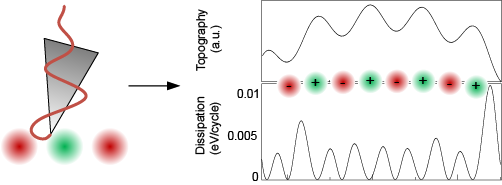
- the surface, see Figure 1. In analogy to Equation 1 the effective dynamics for the x-coordinate is given by For the lateral excitations we include a viscous friction term with the coefficient γ, because these losses are not compensated like they are in the bending mode. Commonly, γ is expressed by the


Carbon nano-onions (multi-layer fullerenes): chemistry and applications
Beilstein J. Nanotechnol. 2014, 5, 1980–1998, doi:10.3762/bjnano.5.207
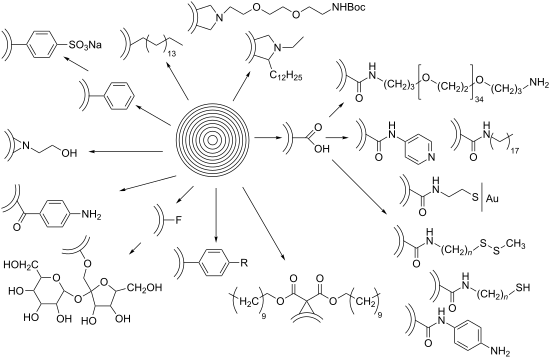
- widely studied and have shown promising results as lubricants. In 2002, Cabioc’h et al. reported that CNOs incorporated in silver layers significantly reduced wear, while the friction coefficient is largely unaffected by their presence [74]. Further studies investigated the use of CNOs as a solid state
- ][78][79][80]. Mechanisms by which CNOs can reduce friction and wear were investigated in greater detail in 2009 by Martin and collaborators in a combined experimental and computational study [81]. Computer simulations suggest that the lubrication of CNOs between two surfaces is caused by rolling


Carbon-based smart nanomaterials in biomedicine and neuroengineering
Beilstein J. Nanotechnol. 2014, 5, 1849–1863, doi:10.3762/bjnano.5.196
- stimulation and functional scaffolds for tissue engineering). Nanodiamonds (NDs): As a result of the complete sp3 hybridisation of its carbon atoms and its characteristic tetrahedral configuration, diamond shows interesting and peculiar properties such as an extreme hardness, low friction coefficient, high


Mechanical properties of sol–gel derived SiO2 nanotubes
Beilstein J. Nanotechnol. 2014, 5, 1808–1814, doi:10.3762/bjnano.5.191
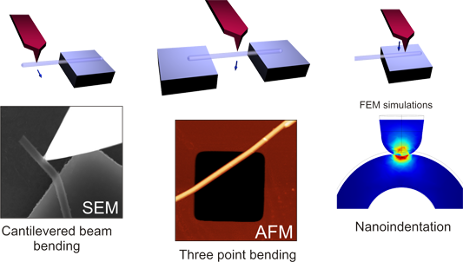
- study the general flexural behavior of SiO2 NTs. Standard contact AFM cantilevers (ATEC-CONT) were used as the sharp probes. No special procedures were needed for fastening the NTs to the substrate. The static friction between the NT and the substrate was high enough to keep the adhered part of the NT


Equilibrium states and stability of pre-tensioned adhesive tapes
Beilstein J. Nanotechnol. 2014, 5, 1725–1731, doi:10.3762/bjnano.5.182
- theoretical investigations about rough contact mechanics [25][26][27][28][29], the role of roughness in this kind of systems is not yet well understood. Furthermore, viscoelasticity, which entails prominent effects in terms of friction and contact anisotropy [30][31], has not yet been included in analytical
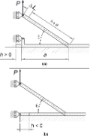

![[Graphic 5]](/bjnano/content/inline/2190-4286-5-182-i14.png?max-width=637&scale=1.18182) as a function of the peeling angle θeq at equilibrium (a); the tot...
as a function of the peeling angle θeq at equilibrium (a); the tot...


![[Graphic 11]](/bjnano/content/inline/2190-4286-5-182-i20.png?max-width=637&scale=1.18182) as a function of the peeling angle θeq at equilibrium, for differen...
as a function of the peeling angle θeq at equilibrium, for differen...



