Search results
Search for "gas phase" in Full Text gives 228 result(s) in Beilstein Journal of Nanotechnology. Showing first 200.
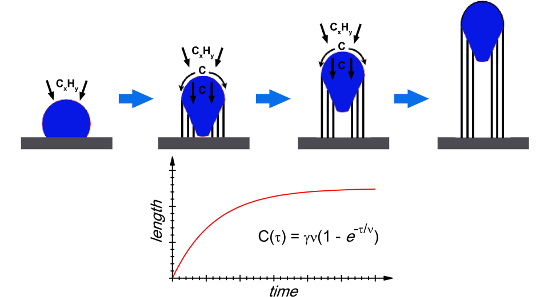
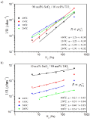
Investigation of growth dynamics of carbon nanotubes
Beilstein J. Nanotechnol. 2017, 8, 826–856, doi:10.3762/bjnano.8.85


Surface improvement of organic photoresists using a near-field-dependent etching method
Beilstein J. Nanotechnol. 2017, 8, 784–788, doi:10.3762/bjnano.8.81
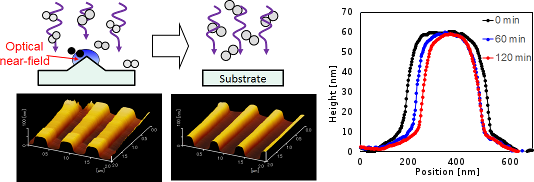
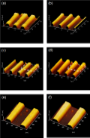
- effective in producing atomically flat surfaces in various materials, including GaN [9], glass [10] and even diamond [11] and has shown to be effective on both flat and patterned surfaces. According to theory, the etching effect originates from radical gas-phase components. More precisely, ambient O2


Modeling adsorption of brominated, chlorinated and mixed bromo/chloro-dibenzo-p-dioxins on C60 fullerene using Nano-QSPR
Beilstein J. Nanotechnol. 2017, 8, 752–761, doi:10.3762/bjnano.8.78
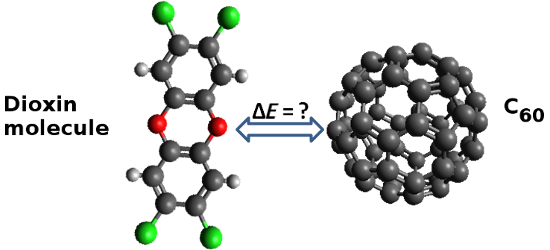
- congeners, we observed slightly positive Eads values in calculations and in predictions as well. Please note that all of the calculations were performed at the standard 298.15 K temperature in gas phase. More importantly, the M06-2X functional is one of the best and it is recommended for modeling of weak
- (comparable to the sum of single molecule energies for calculations in a gas phase (at 298.15 K)) may seem doubtful according to Hess’s law (Equation 2). Additionally, it should be highlighted that all of the PXDD@C60 materials are considered to be thermodynamically stable systems, and all of the Hessian



Vapor deposition routes to conformal polymer thin films
Beilstein J. Nanotechnol. 2017, 8, 723–735, doi:10.3762/bjnano.8.76
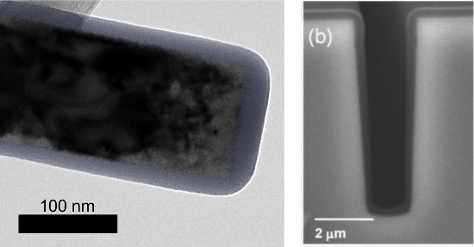
- polymer film. As seen in Figure 2b, gas phase monomers containing a reactive bond first adsorb on the substrate near room temperature. An initiator, such as di-tert-butyl peroxide is thermally cleaved by a hot filament (≈250 °C) and the resulting radicals collide with surface adsorbed monomers to initiate
- reducing R results in a reduced Γ. In order to develop process optimization strategies for deposition process having more than one gas phase reactant, it is important to determine which species has the Γ which controls the degree of conformality. Parlyene CVD During parylene CVD, the adsorption of a single
- coefficient of both initiator radicals is independent of filament temperature. Since the filament temperature determines the fraction of initiators cleaved to radicals, the sticking probability of the initiator radicals is independent of their gas phase concentration. This study confirms that volatile


Graphene functionalised by laser-ablated V2O5 for a highly sensitive NH3 sensor
Beilstein J. Nanotechnol. 2017, 8, 571–578, doi:10.3762/bjnano.8.61
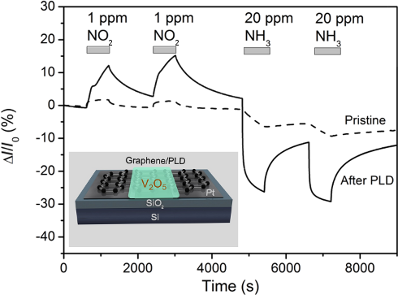
- ≈20 nm in diameter from the laser-deposited nanostructured material can be distinguished in the image. It is well known that gas phase species created by laser ablation of solids have a wide distribution of kinetic energy [17]. A considerable fraction of particles can have sufficient energy (≈100 eV


Thin SnOx films for surface plasmon resonance enhanced ellipsometric gas sensing (SPREE)
Beilstein J. Nanotechnol. 2017, 8, 522–529, doi:10.3762/bjnano.8.56
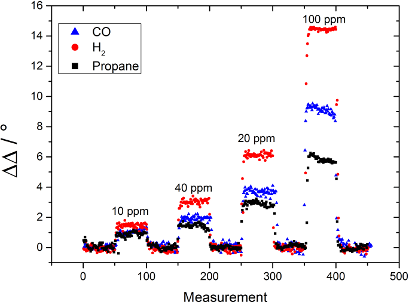
- molecules on the surface and because the refracive index of the gas phase rises with the rising pressure. Results and Discussion Pressure dependence As described above, the gas experiments show a pressure dependence, which changes the Δ response. By changing the relative pressure inside the gas tube, a
- to the pressure which is in agreement with both explanations. Supposedly, a combination of both mechanisms occurs when the total pressure of the gas phase is changed. To achieve the linearity and sensitivity shown in the following gas measurement section, it is necessary to keep the pressure constant


Tailoring bifunctional hybrid organic–inorganic nanoadsorbents by the choice of functional layer composition probed by adsorption of Cu2+ ions
Beilstein J. Nanotechnol. 2017, 8, 334–347, doi:10.3762/bjnano.8.36
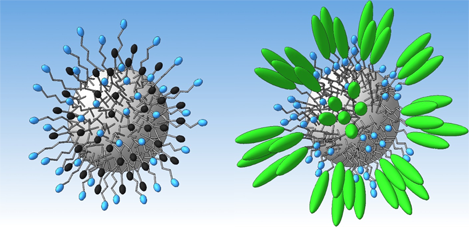
- help in NMR experiments and adsorption from the gas phase experiments, respectively.


Selective photodissociation of tailored molecular tags as a tool for quantum optics
Beilstein J. Nanotechnol. 2017, 8, 325–333, doi:10.3762/bjnano.8.35
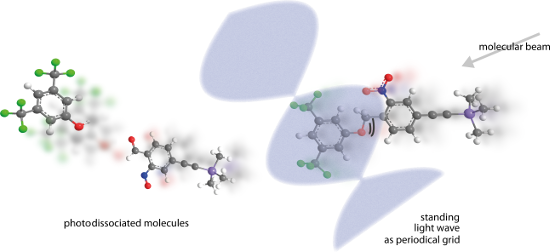
- yet generally scalable to covalently bound organic molecules. In particular, large biomolecules – which are interesting candidates for quantum-interference experiments and gas-phase metrology [7] – often neither ionize nor dissociate upon absorption of a single photon, not even at 7.9 eV photon energy
- has been demonstrated with the trimeric model compound 1 while the here presented preliminary gas-phase photocleavage experiments have been performed with the monomeric building block 4, which displayed favourable photodissociation features compared to 1. Interestingly we find that photoactivated
- pathways in the gas-phase. For future applications in molecule interferometry with complex biomolecules, it will be important that beam depletion is possible at a wavelength which is not absorbed by the untagged molecule. Otherwise the photon would be dissipated without triggering any action. Our labels


Colorimetric gas detection by the varying thickness of a thin film of ultrasmall PTSA-coated TiO2 nanoparticles on a Si substrate
Beilstein J. Nanotechnol. 2017, 8, 229–236, doi:10.3762/bjnano.8.25
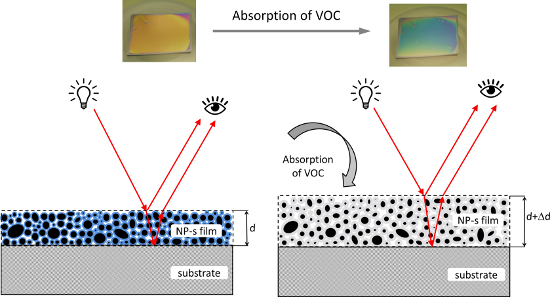
- in the gas phase was first optimized with Gaussian 09 [22] using the density functional theory (DFT)-based exchange and correlation functional Perdew–Burke–Ernzerhof (PBE) [23][24], and cc-pvtz basis sets [25][26][27][28]. The optimized geometry was then used to calculate the XPS spectra. These were


Nanocrystalline TiO2/SnO2 heterostructures for gas sensing
Beilstein J. Nanotechnol. 2017, 8, 108–122, doi:10.3762/bjnano.8.12
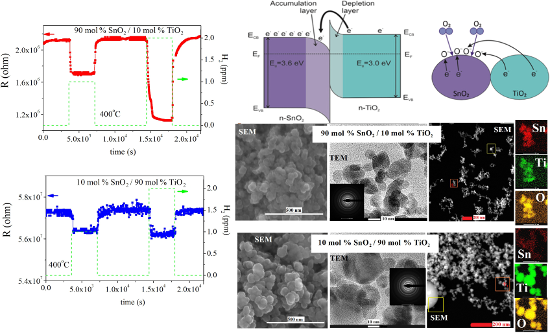
- heterostructures at lower temperatures. As one discusses the interaction between the gas phase and the semiconducting sensor, the two-step mechanism described in the Introduction section has to be taken into account. The second step given in a general form by Equation 2 is the surface reduction, which appears upon




Diffusion of dilute gas in arrays of randomly distributed, vertically aligned, high-aspect-ratio cylinders
Beilstein J. Nanotechnol. 2017, 8, 64–73, doi:10.3762/bjnano.8.7
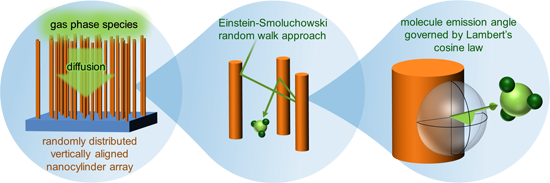
- potential fields of applications such as photovoltaics [7], photocatalysis [8], organic electronics [9] and supercapacitors [10]. Surface functionalisation and nanoengineering of high-aspect-ratio nanocylinder arrays often involve the exposure of the structures to gas-phase chemicals, for instance, during
- ALD [14]. Arrays of nanocylinders are also used in gas sensing systems [15][16]. The increasing interest in surface functionalisation via gas phase techniques as well as gas sensing applications with high-aspect-ratio nanocylinder arrays has raised the need for the fundamental understanding and
- rate J by definition from gas kinetic theory: where ΔNm refers to a number of molecules in an arbitrary volume within the nanocylinder array, ΔA is the area of nanocylinder walls in the given volume, n is the number volume density of molecules in the gas phase, whereas ΔVv is the void volume between


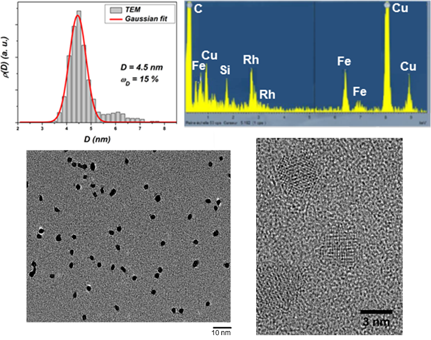
Cubic chemically ordered FeRh and FeCo nanomagnets prepared by mass-selected low-energy cluster-beam deposition: a comparative study
Beilstein J. Nanotechnol. 2016, 7, 1850–1860, doi:10.3762/bjnano.7.177
- correlation between morphology and magnetism has also been predicted from theoretical density functional theory calculations in agreement with experiments on FeRh nanoparticles prepared by co-sputtering [8]. In addition, for FeCo nanoparticles generated in the gas phase by means of an arc cluster ion source
- affinity with the environment affects their intrinsic magnetic properties compared to their bulk counterparts. Results Synthesis and structure The clusters are synthetized in the gas phase in the low-energy cluster-beam deposition (LECBD) regime. Briefly, a pulsed laser beam is focused on a mixed


Precise in situ etch depth control of multilayered III−V semiconductor samples with reflectance anisotropy spectroscopy (RAS) equipment
Beilstein J. Nanotechnol. 2016, 7, 1783–1793, doi:10.3762/bjnano.7.171
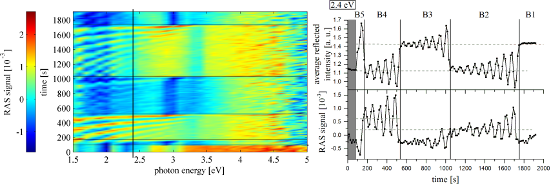
- increase with decreasing structure size, in situ monitoring is gaining importance. There are various approaches to monitor and control the etch depth during dry-etching: With methods based on gas-phase analysis such as mass spectrometry of the residual gas [12] or optical gas-phase analysis such as optical


Nano- and microstructured materials for in vitro studies of the physiology of vascular cells
Beilstein J. Nanotechnol. 2016, 7, 1620–1641, doi:10.3762/bjnano.7.155
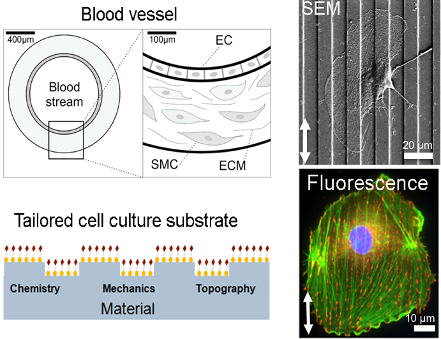
- focused-ion beam nanolithography it is also possible to deposit materials. The desired material to deposit is in the gas phase and it is let to adsorb on the surface. Afterwards, the ion beam decomposes the adsorbed molecules into a volatile component and a non-volatile component. The non-volatile



Three-gradient regular solution model for simple liquids wetting complex surface topologies
Beilstein J. Nanotechnol. 2016, 7, 1377–1396, doi:10.3762/bjnano.7.129



![[Graphic 10]](/bjnano/content/inline/2190-4286-7-129-i31.png?max-width=637&scale=1.18182) and standard deviation as a function of the cavity diameter d (in...
and standard deviation as a function of the cavity diameter d (in...

![[Graphic 20]](/bjnano/content/inline/2190-4286-7-129-i41.png?max-width=637&scale=1.18182) and the corresponding fluctuations (measured along the x-direction) indica...
and the corresponding fluctuations (measured along the x-direction) indica...

![[Graphic 28]](/bjnano/content/inline/2190-4286-7-129-i49.png?max-width=637&scale=1.18182) and the corresponding standard deviation as measure of variation in the ...
and the corresponding standard deviation as measure of variation in the ...

![[Graphic 39]](/bjnano/content/inline/2190-4286-7-129-i60.png?max-width=637&scale=1.18182) and standard deviation as function of cut-off fraction c for fixed ...
and standard deviation as function of cut-off fraction c for fixed ...
Viability and proliferation of endothelial cells upon exposure to GaN nanoparticles
Beilstein J. Nanotechnol. 2016, 7, 1330–1337, doi:10.3762/bjnano.7.124
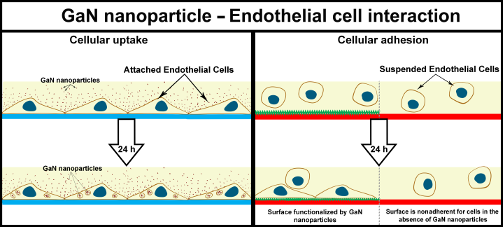
- involved incubation in gradually increasing acetone concentrations from 30% to 100% at room temperature. Thereafter, the acetone was gradually replaced by liquid CO2 at 10 °C in a critical drying point machine (BAL-TEC 030 CPD). In order to bring the sample from the liquid to the gas phase without crossing



In situ characterization of hydrogen absorption in nanoporous palladium produced by dealloying
Beilstein J. Nanotechnol. 2016, 7, 1197–1201, doi:10.3762/bjnano.7.110
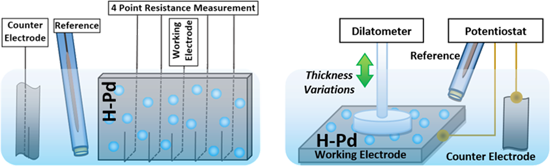
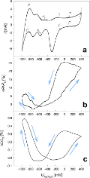
- potential-assisted dealloying [5] has been studied recently with regards to actuation upon electrochemical hydrogenation [4] as well as hydrogen solubility from the gas phase [6]. In the present study np-Pd is produced by electrochemically dealloying a Co–Pd master alloy and investigated upon

Reasons and remedies for the agglomeration of multilayered graphene and carbon nanotubes in polymers
Beilstein J. Nanotechnol. 2016, 7, 1174–1196, doi:10.3762/bjnano.7.109
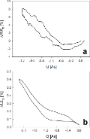
- (ca. 1 mm) [128]. About 50% of the carbon vapors condense at the cathode tip as slag-like deposit (arrow A in Figure 14) called “cylindrical hard deposit”. Some of the remaining carbon vapors condense in the gas phase and form soot. It adheres to the reaction chamber walls (arrow B in Figure 14) and


Phenalenyl-based mononuclear dysprosium complexes
Beilstein J. Nanotechnol. 2016, 7, 995–1009, doi:10.3762/bjnano.7.92
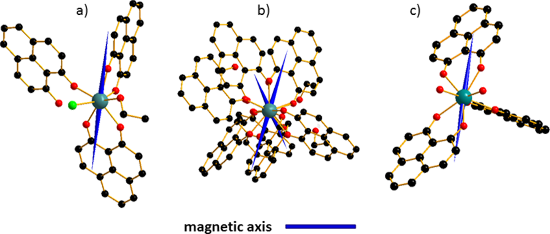
- , aimed to study gas-phase dispersed photoluminescence spectra [25][26]. In this paper we report on the synthesis of three mononuclear dysprosium complexes [Dy(PLN)2(HPLN)Cl(EtOH)] (1), [Dy(PLN)3(HPLN)]·[Dy(PLN)3(EtOH)]·2EtOH (2) and [Dy(PLN)3(H2O)2]·H2O (3) with the focus on studying their magnetic


Large-scale fabrication of achiral plasmonic metamaterials with giant chiroptical response
Beilstein J. Nanotechnol. 2016, 7, 914–925, doi:10.3762/bjnano.7.83
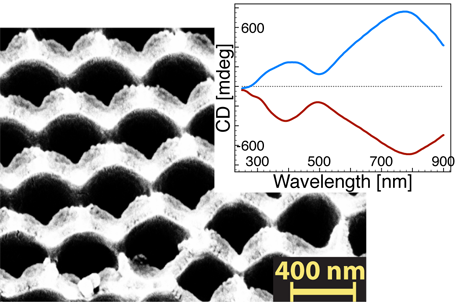
- sputter-coated on the surface of the negative imprints. A monolayer of trichloro(1H,1H,2H,2H-perfluorooctyl)silane (25 vol % in toluene) was applied to the Al films by gas phase deposition for 1 h in a vacuum desiccator. These samples served as new molds for the second imprint in PMMA. The parameters of

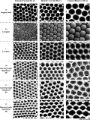


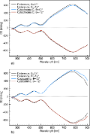
![[Graphic 2]](/bjnano/content/inline/2190-4286-7-83-i2.png?max-width=637&scale=1.18182) , of incident light with respect to the ECM structures.
, of incident light with respect to the ECM structures.



Efficient electron-induced removal of oxalate ions and formation of copper nanoparticles from copper(II) oxalate precursor layers
Beilstein J. Nanotechnol. 2016, 7, 852–861, doi:10.3762/bjnano.7.77
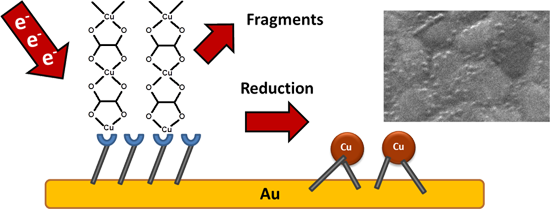
- electron beam induced deposition (FEBID) [1][2] solid materials are produced on surfaces through decomposition of volatile precursor compounds under the electron beam [1][3][4]. As an alternative to deposition from the gas phase, FEBID has recently also been performed in micrometer-thin films of molten
- ] and the control of the size of the nanostructures pose challenges [1][11][12][13][18][20]. For example, when metals are deposited from the gas phase by FEBID, the organic ligands that provide the metal organic precursors with sufficient volatility are often not fully decomposed. In consequence
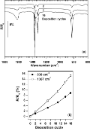
- contamination. The reduction of the material under high-vacuum conditions also offers the perspective of adding capping layers in situ via an electron-beam induced deposition process from the gas phase [1] thus addressing the problem of Cu oxidation [52]. (a) Representative RAIR spectra of surface-grown copper


Orientation of FePt nanoparticles on top of a-SiO2/Si(001), MgO(001) and sapphire(0001): effect of thermal treatments and influence of substrate and particle size
Beilstein J. Nanotechnol. 2016, 7, 591–604, doi:10.3762/bjnano.7.52
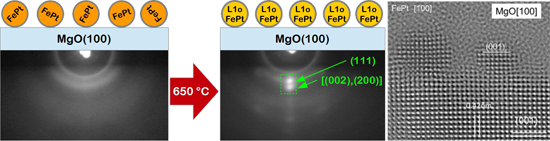
- diffusion [22]. On WSe2(0001) supports, epitaxial FePt nanostructures were grown epitaxially with three possible azimuthal orientations [23]. FePt NPs have been prepared by different approaches mainly using colloidal chemistry [5][24], gas-phase preparation techniques [25][26], or thin films of few


Synthesis and applications of carbon nanomaterials for energy generation and storage
Beilstein J. Nanotechnol. 2016, 7, 149–196, doi:10.3762/bjnano.7.17
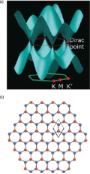
- of Si in the gas phase [169] in order to reduce the sublimation rate with the positive pressure. The growth temperature is a very important parameter because it influences the number of graphene layers grown and it is directly related to the Si diffusion (Figure 28) [170]. The graphene can also be















Vibration-mediated Kondo transport in molecular junctions: conductance evolution during mechanical stretching
Beilstein J. Nanotechnol. 2015, 6, 2417–2422, doi:10.3762/bjnano.6.249
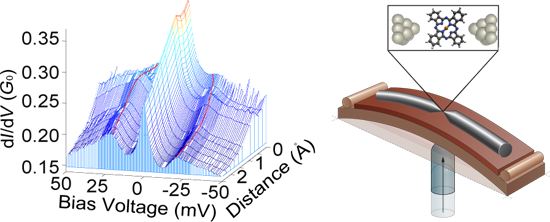
- ][28][29]. Furthermore, the side peak voltage shifts in a non-monotonic manner in response to moderate elongation (Figure 2a,b). This shift was associated by calculations with the response of a specific junction vibration mode, which is a derivative of the A1g gas phase vibration of CuPc, to junction


Sub-monolayer film growth of a volatile lanthanide complex on metallic surfaces
Beilstein J. Nanotechnol. 2015, 6, 2412–2416, doi:10.3762/bjnano.6.248
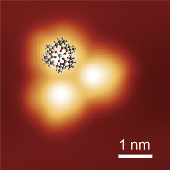
- -dikenonate ligands (see Figure 1) and the total charge of the molecule is zero. Recent DFT calculations for Ln(thd)3 in gas phase show that the D3 symmetry structure corresponds to the minimum of the potential energy [14]. Though remarkable magnetic properties of Ln(thd)3 in bulk have not been reported, some