Search results
Search for "hierarchical" in Full Text gives 190 result(s) in Beilstein Journal of Nanotechnology.
Characterization of ferrite nanoparticles for preparation of biocomposites
Beilstein J. Nanotechnol. 2017, 8, 1257–1265, doi:10.3762/bjnano.8.127
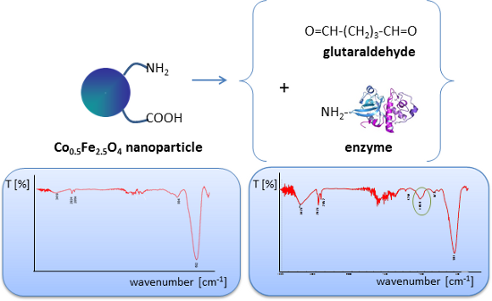
- functionalization of nanoparticles with organic compounds are becoming the most popular due to the wide potential applications of such hierarchical structures. On demand surface characteristics allow further immobilization of proper biological structures [3], and as a result, biocomposites are obtained. Metallic
- , optical, magnetic and structural characteristics of specific nanoparticles in one hierarchical structure [9]. In such systems, nanoparticles can be functionalized with various biomolecules through different linkage chemistry [10][11][12]. Nanocomposites based on magnetic nanoparticles have a huge



Preparation of thick silica coatings on carbon fibers with fine-structured silica nanotubes induced by a self-assembly process
Beilstein J. Nanotechnol. 2017, 8, 1145–1155, doi:10.3762/bjnano.8.116
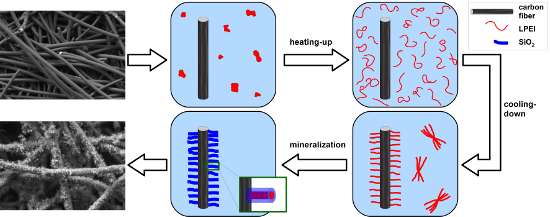
- linear poly(ethylenimine), silica shells of several micrometers in thickness can be obtained and their morphology is easily controlled by a considerable number of synthesis parameters. A unique feature is the hierarchical biomimetic structure of the silica coating which surrounds the embedded carbon
- significant influence on the morphology can be achieved by addition of metal ions. Owing to complex formation between the polyamine and the metal ions, the hierarchical structure is modified by a metal salt addition. The ratio between metal ion and ethylenimine monomer unit was set to 1:30. The hybrid silica
- primary building units are arranged to more complex and hierarchical structures depending on a wide range of factors. For the standard conditions, the nanotubes form a silica shell around the carbon fiber with a spatial extent of about 9 µm. The presented coating procedure using LPEI is suitable for the


Hierarchically structured nanoporous carbon tubes for high pressure carbon dioxide adsorption
Beilstein J. Nanotechnol. 2017, 8, 1135–1144, doi:10.3762/bjnano.8.115
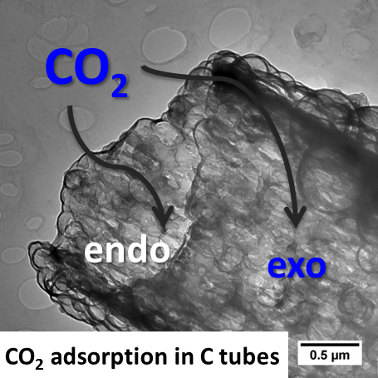
- tubes. Keywords: carbon dioxide adsorption; carbon tubes; gas adsorption; mesoporous carbon; Introduction Nanostructured carbon and silicon carbide materials have numerous potential applications. Structured carbons such as graphene, carbon nanotubes, carbon fibres or hierarchical porous carbons were
- created by nanocasting [29]. All of these approaches have allowed for the synthesis of ordered hierarchical macro–mesoporous materials [24]. Electrospinning is a versatile technique for the synthesis of different one-dimensional forms such as fibers, tubes or wires for various applications such as gas


Bio-inspired micro-to-nanoporous polymers with tunable stiffness
Beilstein J. Nanotechnol. 2017, 8, 906–914, doi:10.3762/bjnano.8.92
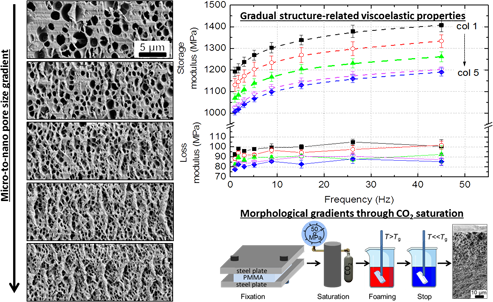
- storage modulus; Introduction Functional adaptation through porous structures is widely present in nature [1]. Natural structures are often made of hierarchical porous networks, serving mainly for passive mechanical functions [1][2][3], but also for capillary channels and membranes [1]. Nature offers
- citrus fruit, which survives falls from heights above 10 m without any visible external damage [2]. Its tens of millimetres thick protective peel with a hierarchical, graded porous structure was shown to be critical for this amazing mechanical performance [2][4]. Graded porous structures show great


Hybrid nanomaterials: from the laboratory to the market
Beilstein J. Nanotechnol. 2017, 8, 861–862, doi:10.3762/bjnano.8.87

- -performance materials such as bone or teeth are organic/inorganic hybrid materials of multiscale hierarchical structure and chemical composition perfectly matched to their respective task. As a result, hybrid materials have been explored for essentially all applications possible. Their chemical composition
Recombinant DNA technology and click chemistry: a powerful combination for generating a hybrid elastin-like-statherin hydrogel to control calcium phosphate mineralization
Beilstein J. Nanotechnol. 2017, 8, 772–783, doi:10.3762/bjnano.8.80
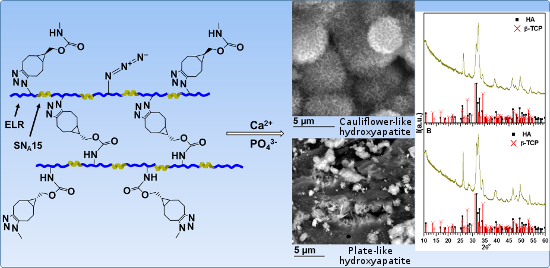
- fibrillar morphology. It is known that ELRs undergo hierarchical self-assembly producing a fibrillar structure [27][30][47]. For example, poly(VPGVG) and its analog poly [fv(VPGVG), fx(VPGKG)] (0.1 ≤ fx ≤0.2, fv + fx = 1) interact hydrophobically and self-assemble into nanofilaments that align in parallel



Synthesis of graphene–transition metal oxide hybrid nanoparticles and their application in various fields
Beilstein J. Nanotechnol. 2017, 8, 688–714, doi:10.3762/bjnano.8.74


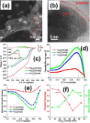


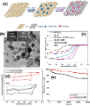


Liquid permeation and chemical stability of anodic alumina membranes
Beilstein J. Nanotechnol. 2017, 8, 561–570, doi:10.3762/bjnano.8.60
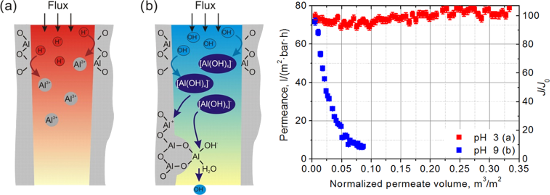
- various porosity parameters (channel diameter 5–400 nm, interpore distance 20–600 nm, porosity 10–50%, thickness from 500 nm to 300 µm) [2][3][4]. It also allows membranes with a hierarchical porous structure to be obtained, where a supporting macroporous layer (aimed to provide mechanical durability


Formation and shape-control of hierarchical cobalt nanostructures using quaternary ammonium salts in aqueous media
Beilstein J. Nanotechnol. 2017, 8, 494–505, doi:10.3762/bjnano.8.53
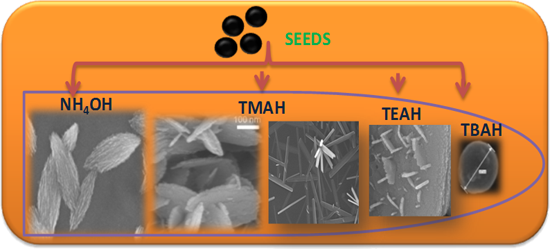
- , in this study, a wide range of nanostructures ranging from zero-dimensional nanospheres to hierarchical nanoplates and spindles have been successfully synthesized at ambient temperature in aqueous solution. The nanostructures reported here are formed by aggregation of spherical seed particles
- microscopy; hierarchical nanostructures; magnetic moment; tetramethylazanium hydroxide (TMAH); Introduction The synthesis of ferromagnetic nanomaterials with complex functional architectures has seen rapid development during the past decade [1][2][3]. Cobalt nanostructures form an important class of
- is not observed in other ferromagnetic materials such as nickel and iron. Synthesizing anisotropic and hierarchical nanostructures of cobalt is an effective strategy for tuning its electronic, magnetic and crystal properties. The interest in these nanostructures lies in comprehending the physical and


When the going gets rough – studying the effect of surface roughness on the adhesive abilities of tree frogs
Beilstein J. Nanotechnol. 2016, 7, 2116–2131, doi:10.3762/bjnano.7.201




Nanostructured TiO2-based gas sensors with enhanced sensitivity to reducing gases
Beilstein J. Nanotechnol. 2016, 7, 1718–1726, doi:10.3762/bjnano.7.164
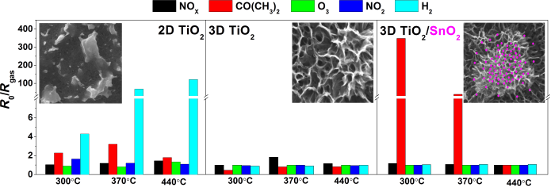
- ], there are several possible explanations for this phenomenon. The first is related to formation of titanium vacancies, VTi, in the flower-like structure during synthesis. Upon Ti foil oxidation by H2O2, a mesoporous hierarchical structure is formed. The three-step process includes, inter alia
- , hierarchical flower-like nanostructures obtained during the chemical oxidation process were applied in the field of gas sensor technology. The obtained sensors were analyzed as a detector of oxidizing and reducing gases. The selectivity of the nanostructures was demonstrated by a sensitivity investigation in
- on the hierarchical TiO2 nanostructure. The response is not only dependent on the type of gas and its concentration but also on the sensor working temperature. The comparison of sensitivity vs working temperature for T30, NS0 and NS1 samples for all investigated gases is shown in Figure 7. For the


Biomechanics of selected arborescent and shrubby monocotyledons
Beilstein J. Nanotechnol. 2016, 7, 1602–1619, doi:10.3762/bjnano.7.154
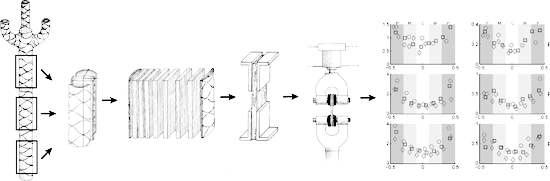
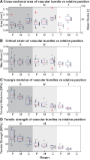
- properties concentrate on two hierarchical levels: On a first level, the radial and axial Young’s moduli of stem tissues in the five “woody” monocotyledon species are analysed (Figure 2A). In addition, in stems of Dracaena marginata, which was chosen as a representative model plant for “woody” monocotyledons
- (see below), the variations of the axial Young’s modulus and the tissue densities at different radial and axial positions are assessed (Figure 2B). On a second hierarchical level, the Young’s moduli and the tensile strengths of individual fibrous vascular bundles of D. marginata are investigated
- . five times higher than the Young’s modulus of the bulk tissue, so that the measured values for the longitudinal Young’s modulus of the tissues (first hierarchical level) can be assumed to be dominated by the values of the longitudinal Young’s modulus of the vascular bundles (second hierarchical level



Dealloying of gold–copper alloy nanowires: From hillocks to ring-shaped nanopores
Beilstein J. Nanotechnol. 2016, 7, 1361–1367, doi:10.3762/bjnano.7.127
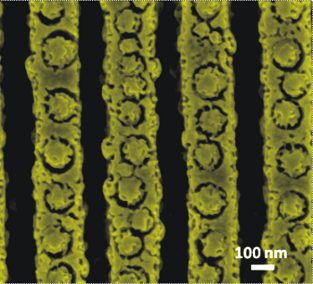
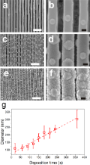
- growth of the material to obtain 1D nanostructures with a hierarchical structuring stays very challenging. In thin film deposition processes, the surface of the substrate is a key point to control the growth of thin films. Indeed, since the surface of the substrate is the starting point for film growth




Functional diversity of resilin in Arthropoda
Beilstein J. Nanotechnol. 2016, 7, 1241–1259, doi:10.3762/bjnano.7.115
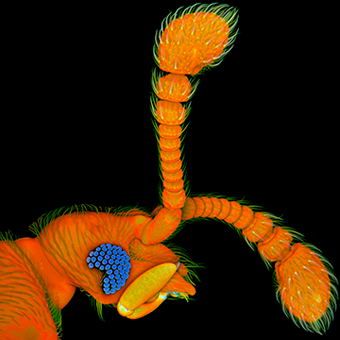
- systems, provide great advantages [102]. The formation of multiple contacts, which contribute to an increase of the overall length of the total peeling line, is facilitated by a hierarchical organisation of the attachment structures [103]. It was shown that the combination of thin tape-like contact tips


Frog tongue surface microstructures: functional and evolutionary patterns
Beilstein J. Nanotechnol. 2016, 7, 893–903, doi:10.3762/bjnano.7.81
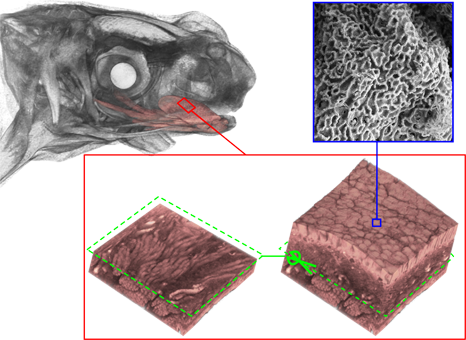
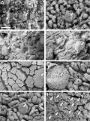
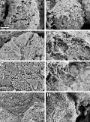
- item. In Megophrys nasuta and Rana (Lithobates) pipiens, where we found hair-like structures on top of the filiform papillae. This second level of hierarchical organization is hypothesized to increase the adaptability of the tongue under load. The micro-ridges on the filiform papillae in Bufo bufo and
Efficient electron-induced removal of oxalate ions and formation of copper nanoparticles from copper(II) oxalate precursor layers
Beilstein J. Nanotechnol. 2016, 7, 852–861, doi:10.3762/bjnano.7.77
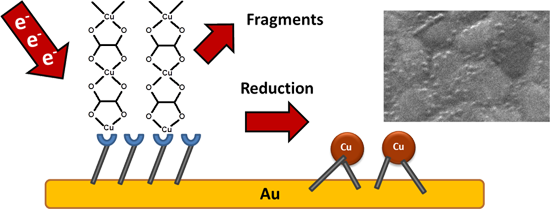
- smaller structures, namely, when electron exposure leads to formation of nanoparticles (NPs) in the irradiated surface area. Hierarchical surface patterns are thus accessible. In fact, the formation of metal NPs under electron irradiation has been observed in diverse precursor materials such as solid [11


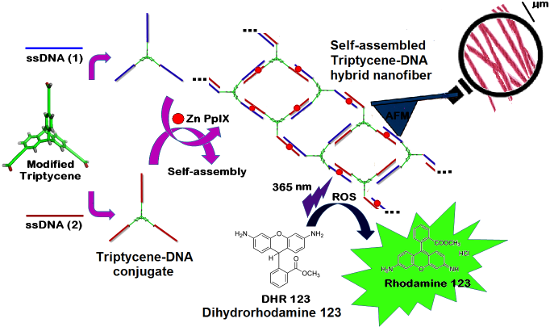
Hierarchical coassembly of DNA–triptycene hybrid molecular building blocks and zinc protoporphyrin IX
Beilstein J. Nanotechnol. 2016, 7, 697–707, doi:10.3762/bjnano.7.62


Rigid multipodal platforms for metal surfaces
Beilstein J. Nanotechnol. 2016, 7, 374–405, doi:10.3762/bjnano.7.34

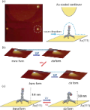
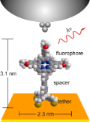
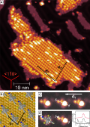
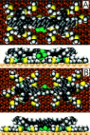
- through three anchoring groups. An extended study by Katano et al. investigated by UHV-STM analysis at 4.7 K also confirmed the three-point contacts of 17 on Au(111) surfaces and showed that these tripodal molecules form a highly ordered “two-tiered” hierarchical chiral self-assembly on a gold surface [86










Synthesis and applications of carbon nanomaterials for energy generation and storage
Beilstein J. Nanotechnol. 2016, 7, 149–196, doi:10.3762/bjnano.7.17















Evaluation of gas-sensing properties of ZnO nanostructures electrochemically doped with Au nanophases
Beilstein J. Nanotechnol. 2016, 7, 22–31, doi:10.3762/bjnano.7.3
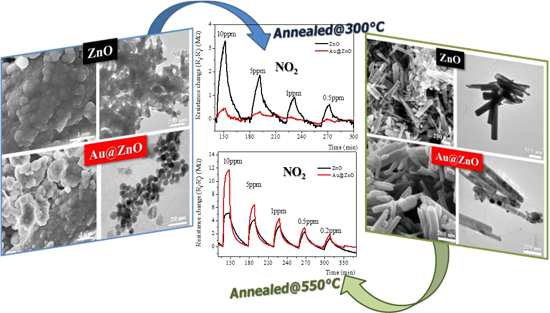
- strategies have been developed to improve the gas-sensing properties of MOS-based gas sensors. These include the synthesis of porous nanoparticles [25][26] the assembly of hierarchical structures [27][28], the use of catalysts and promoters [29][30], multi-sensor array systems [31], the optimization of the




Fabrication of hybrid graphene oxide/polyelectrolyte capsules by means of layer-by-layer assembly on erythrocyte cell templates
Beilstein J. Nanotechnol. 2015, 6, 2310–2318, doi:10.3762/bjnano.6.237
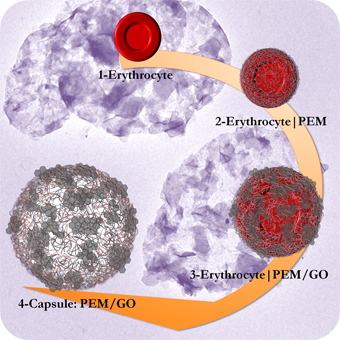
- lead to materials with properties more like G than GO [12][13][14][15]. The derivatization of G to form GO leads to easily dispersible and stable systems containing GO with an overall surface charge while exfoliated, for example, in water [16]. The use of GO sheets in the formation of hierarchical
- internal volume and form planar films with nanoscale thicknesses. Such films could be used to build additional hierarchical structures or for integration into devices; moreover, by the judicious choice of reagents, the GO may be further reduced to form rGO to alter particularly the electronic, mechanical
- image of the same area analysed in a). Acknowledgements This work was financially supported by the Marie Curie project “Higraphen, Hierarchical functionalization and assembly of Graphene for multiple device fabrication” (HiGRAPHEN) (Grant ref: 612704). The authors also acknowledge the project MAT2013


Analysis of soil bacteria susceptibility to manufactured nanoparticles via data visualization
Beilstein J. Nanotechnol. 2015, 6, 1635–1651, doi:10.3762/bjnano.6.166
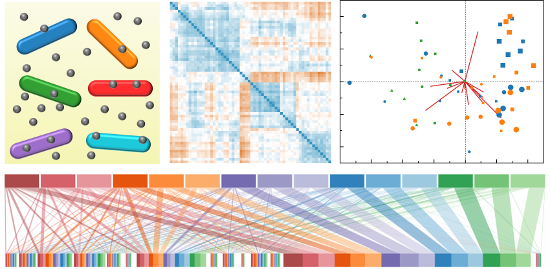
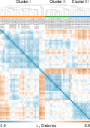
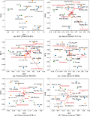
- multi-dimensional scaling (NMDS) of the dataset, along with hierarchical clustering, demonstrated that high doses of ZnO and TiO2 MNPs caused significant compositional changes in soil bacterial communities. The suitability of family level for MNP taxonomic impact assessment was demonstrated by both the
- different MNPs were projected and explored via two-dimensional (2D) maps constructed by hierarchical clustering [32][38][39] and multidimensional scaling [32][40]. Also, a recently developed distance correlation [41] was employed to quantify the consistency between MNP impacts summarized at a range of
- the impact of the 15 treatments on soil bacterial communities [18]. The OTUs were further summarized/assigned into a set of hierarchical taxa (i.e., genus (446), family (135), order (53), class (41), and phylum (19); the total number of taxa at each taxonomic level is given in the parentheses) [18





The eNanoMapper database for nanomaterial safety information
Beilstein J. Nanotechnol. 2015, 6, 1609–1634, doi:10.3762/bjnano.6.165
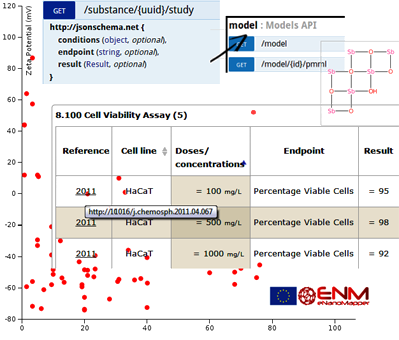
- and becomes available in tools such as BioPortal automatically. The hierarchical classification structure of the ontology, together with the use of domain-specific relationships, is envisioned to enable intelligent searching, browsing and clustering tools to be developed in the future, as well as to


Polymer blend lithography for metal films: large-area patterning with over 1 billion holes/inch2
Beilstein J. Nanotechnol. 2015, 6, 1205–1211, doi:10.3762/bjnano.6.123
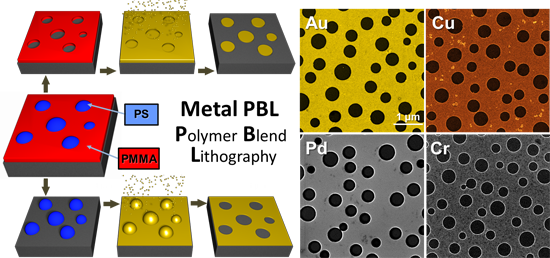
- hierarchical micro–nano structures for applications such as cell-adhesion studies [36][37]. Metals like Cr, Au or Cu are good etching resists. Therefore the metal masks could be used to amplify the topographic contrast by anisotropic etching into the substrate with techniques such as reactive ion etching [38


Fulleropeptide esters as potential self-assembled antioxidants
Beilstein J. Nanotechnol. 2015, 6, 1065–1071, doi:10.3762/bjnano.6.107
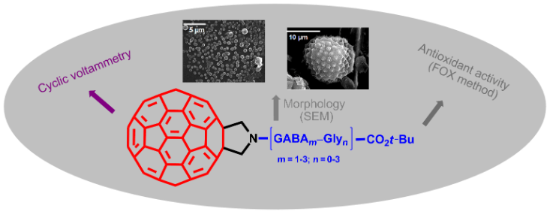
- contrast to the rod-like particles of non-peptidic ester 1, solid samples of fulleropeptides generated different, hierarchical, highly organized assemblies such as flower-like, artichoke-like and spiral objects. During the slow evaporation of the solvent, all compounds, regardless of the number of peptide