Search results
Search for "hydrophobic" in Full Text gives 438 result(s) in Beilstein Journal of Nanotechnology. Showing first 200.
An overview of microneedle applications, materials, and fabrication methods
Beilstein J. Nanotechnol. 2021, 12, 1034–1046, doi:10.3762/bjnano.12.77
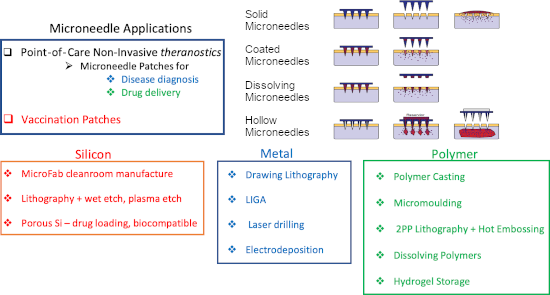
- by adsorption [92], with rates of release depending on interaction of the drug with the porous silicon. Oxidation, covalent binding, and electrostatic interactions can all be used to immobilise the drug on the porous silicon [94], while both hydrophilic and hydrophobic molecules can be loaded on


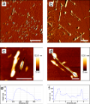
Self-assembly of Eucalyptus gunnii wax tubules and pure ß-diketone on HOPG and glass
Beilstein J. Nanotechnol. 2021, 12, 939–949, doi:10.3762/bjnano.12.70
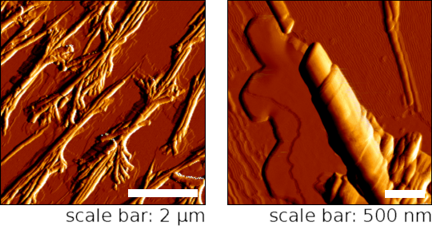
- interface, covers all aerial non-lignified parts of higher plants [1]. It is an extracellular membrane of epidermal cells, consisting of a matrix of the polymer cutin and a mixture of hydrophobic compounds, the cuticular waxes [2][3]. This interface is a multifunctional surface optimized by evolution to




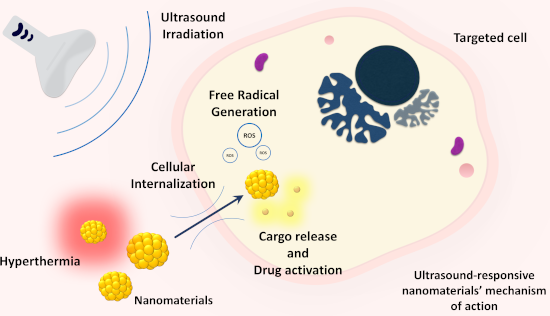
Comprehensive review on ultrasound-responsive theranostic nanomaterials: mechanisms, structures and medical applications
Beilstein J. Nanotechnol. 2021, 12, 808–862, doi:10.3762/bjnano.12.64


Silver nanoparticles nucleated in NaOH-treated halloysite: a potential antimicrobial material
Beilstein J. Nanotechnol. 2021, 12, 798–807, doi:10.3762/bjnano.12.63
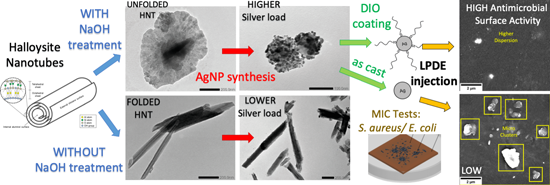
- were quantified by means of an antimicrobial surface activity test. First, two 10 g samples of Ag-NPs were prepared according the process described in section “Silver nanoparticle synthesis”. Then, one of the Ag-NP samples was coated with DIO to make its surface hydrophobic and therefore more
- , and the DIO coating was considered successful since qualitative tests showed that Ag/HNT-8/DIO did indeed present hydrophobic behaviour, while Ag/HNT-8 did not. Afterwards, 2 g of Ag/HNT-8 and Ag/HNT-8/DIO were mixed with 650 g of LDPE pellets. Both mixtures were homogenized and moulded into square
- , depending on the type of material. Polyethylene (both low- and high-density) is almost apolar and thus mixes very well with hydrophobic particles and very badly with hydrophilic ones. Qualitative tests have shown that, while Ag/HNT-8 gets wet in water, Ag/HNT-8/DIO is highly hydrophobic. This hydrophobic




Physical constraints lead to parallel evolution of micro- and nanostructures of animal adhesive pads: a review
Beilstein J. Nanotechnol. 2021, 12, 725–743, doi:10.3762/bjnano.12.57
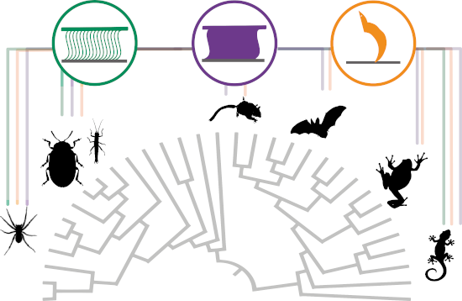
- affinity to substrata with various physicochemical properties (hydrophilic and hydrophobic). In other words, the fluid may be a kind of coupling agent, promoting and strengthening the adhesion between otherwise incompatible materials by providing the proximity of contact for intermolecular forces. At a


Nanogenerator-based self-powered sensors for data collection
Beilstein J. Nanotechnol. 2021, 12, 680–693, doi:10.3762/bjnano.12.54
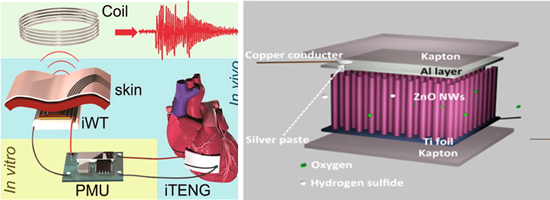
- intelligence. Wang et al. proposed a hydrophobic polytetrafluoroethylene film and sponge-like graphene/polydimethylsiloxane composite material to prepare a multifunctional self-powered sensor [51]. The sensor can infer the performance of the material through the difference in the output of the electrical



Surface-enhanced Raman scattering of water in aqueous dispersions of silver nanoparticles
Beilstein J. Nanotechnol. 2021, 12, 497–506, doi:10.3762/bjnano.12.40
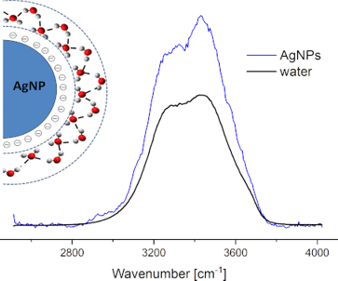
- by the changes in the Raman spectra of water. Two types of agents can be distinguished: destructive agents (e.g., most ions, temperature, polar molecules) and structure-ordering agents (e.g., apolar molecules, biological macromolecules, or hydrophobic surfaces [19]). The intensity of the OH


The impact of molecular tumor profiling on the design strategies for targeting myeloid leukemia and EGFR/CD44-positive solid tumors
Beilstein J. Nanotechnol. 2021, 12, 375–401, doi:10.3762/bjnano.12.31
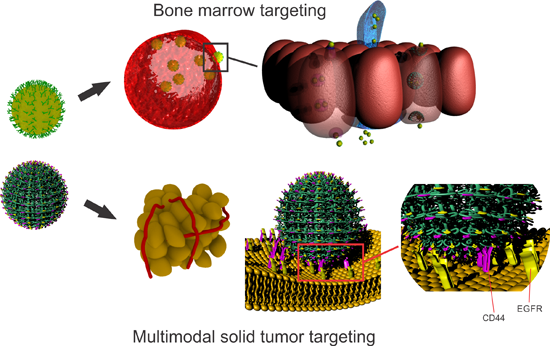
- ponatinib and SAR302503 are hydrophobic drugs and were co-encapsulated inside the hydrophobic core of PEG–PLA micelles by solvent displacement nanoprecipitation. The results demonstrated that the targeted NDDS enabled a high availability of the drugs inside the BM, which is a prerequisite for overcoming the


A review on the green and sustainable synthesis of silver nanoparticles and one-dimensional silver nanostructures
Beilstein J. Nanotechnol. 2021, 12, 102–136, doi:10.3762/bjnano.12.9
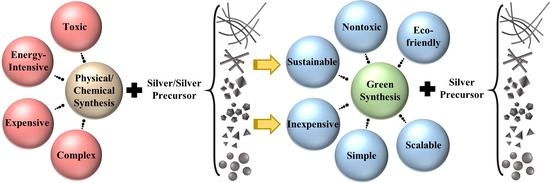
- fatty acids in a hydrophobic solvent such as alkanes [235]. There is a water phase inside the microemulsions which is also referred to as the water pool where the reactants are present [235]. The water pool is where the silver ions are reduced into silver atoms which then form AgNPs [152]. The reverse


Self-assembly and spectroscopic fingerprints of photoactive pyrenyl tectons on hBN/Cu(111)
Beilstein J. Nanotechnol. 2020, 11, 1470–1483, doi:10.3762/bjnano.11.130
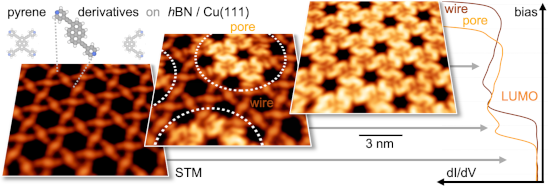
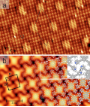
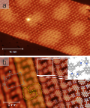
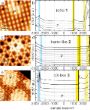
- length 0.29 nm ± 0.05 nm) or was positioned in the hydrophobic pocket between the pyridyl group and the pyrene core of an adjacent molecule (see d2 and d3). trans-like-disubstituted pyrene Figure 3 shows the STM images of the surface after the deposition of the trans-like-disubstituted pyrene derivative




Antimicrobial metal-based nanoparticles: a review on their synthesis, types and antimicrobial action
Beilstein J. Nanotechnol. 2020, 11, 1450–1469, doi:10.3762/bjnano.11.129
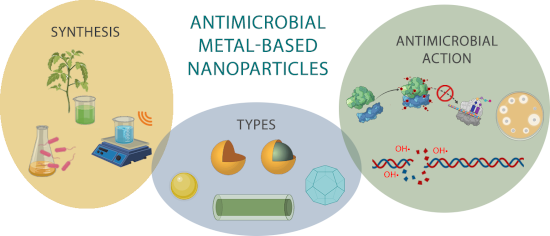
- , slightly attract NPs [158]. In addition, the double membrane acts as a selective physical barrier against hydrophobic compounds, such as detergents and antibiotics. On the other hand, Gram-positive bacteria have a higher permeability, even with a thick layer of peptidoglycan, since the single membrane is
- ]. Silver, gold, zinc oxide, and titanium dioxide NPs can be attracted to the cell wall by electrostatic attraction [161], van der Waals forces [162], and hydrophobic interactions [163], inducing changes in the shape, function and permeability of the cells. Proteins and DNA Proteins play a fundamental role


Photothermally active nanoparticles as a promising tool for eliminating bacteria and biofilms
Beilstein J. Nanotechnol. 2020, 11, 1134–1146, doi:10.3762/bjnano.11.98
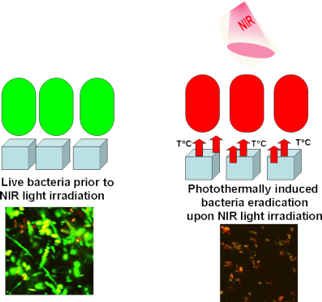
- biofilm viable count was ≈2.5–6.0 log cycle upon laser excitation with different gold nanoparticle concentrations. Previously, the same research group studied the photothermal bactericidal activity of hydrophilic and hydrophobic functionalized gold nanorods against S. aureus and Propionibacterium acnes by


Applications of superparamagnetic iron oxide nanoparticles in drug and therapeutic delivery, and biotechnological advancements
Beilstein J. Nanotechnol. 2020, 11, 1092–1109, doi:10.3762/bjnano.11.94
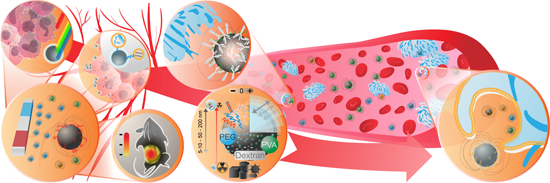
- hydrophobic surfaces that induce aggregation and/or the formation of large clusters. When in contact with biological structures, this mechanism provokes capillary clotting and reduces tissue and cellular absorption. To prevent this, nanoparticles are coated with stabilizers, which are added during preparation
- commonly used for SPION coating, yielding good nanoparticle stability and no cytotoxicity. It is currently the preferred coating for MRI nanoparticles [54][76][84]. Depending on the type of emulsifier used, the coating can be hydrophilic or hydrophobic, but it is common to use hydrophilic polymers, such as
- PVA or PEG, for drug release studies [33][76] because the hydrophobic polymers are rapidly uptaken by macrophages [85]. SPIONs coated with a mixture of PVA and polyvinyl amine were shown to induce very active mitochondrial and endocytic processes in cells and to be highly toxic to cells due to the


A few-layer graphene/chlorin e6 hybrid nanomaterial and its application in photodynamic therapy against Candida albicans
Beilstein J. Nanotechnol. 2020, 11, 1054–1061, doi:10.3762/bjnano.11.90
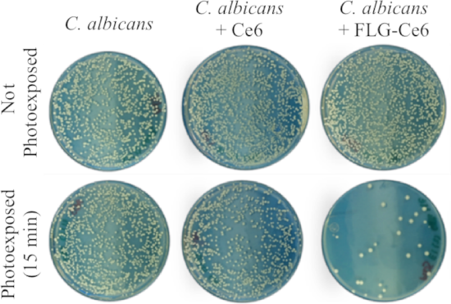
- negatively affected, resulting in the interaction by H-bond formation. Thus, FLG and Ce6 interact by means of π–π stacking, Ce6–Ce6 transition dipole, hydrogen bond formation, hydrophobic, and electron-donor interactions [36]. The observed changes in the UV–vis spectrum of FLG- Ce6 corroborates the TEM


Uniform Fe3O4/Gd2O3-DHCA nanocubes for dual-mode magnetic resonance imaging
Beilstein J. Nanotechnol. 2020, 11, 1000–1009, doi:10.3762/bjnano.11.84
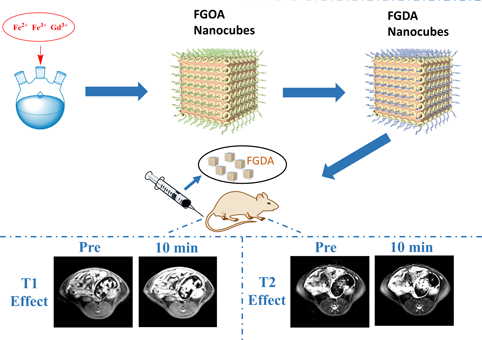
- distributed Fe3O4/Gd2O3 composites. FGOA nanocubes are hydrophobic since they are covered by oleic acid, which is enriched in alkyl groups. In order to increase the hydrophilicity of FGOA nanocubes so they could be used as a contrast agent in vivo, FGOA was exchanged with DHCA via the ligand-exchange method
- the mixture to precipitate the nanocubes. Then, the hydrophobic nanocubes were collected by centrifugation at 8000 rpm for 5 min, washed several times using ethanol and hexane and the final product, the FGOA nanocubes, was resuspended in 3 mL of hexane. Synthesis of Fe3O4-OA nanocubes 0.92 g of ferric
- ethanol was added to precipitate the nanocubes. Next, the hydrophobic nanocubes were collected by centrifugation at 8000 rpm for 5 min, washed several times using ethanol and hexane and the final product, the Fe3O4-OA nanocubes, was resuspended in 3 mL of hexane. Synthesis of Gd2O3-OA nanoparticles 0.334



A 3D-polyphenylalanine network inside porous alumina: Synthesis and characterization of an inorganic–organic composite membrane
Beilstein J. Nanotechnol. 2020, 11, 938–951, doi:10.3762/bjnano.11.78
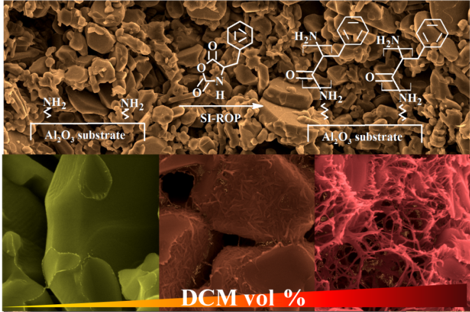
- Fores et al. The authors realized peptide hydrogels in a porous melamine foam for use in continuous flow chemistry [30]. Other polyelectrolytes such as poly(acrylic acid) were prepared using an ozone-induced grafting process for cellulose fibers [31]. Hydrophobic foams of poly(γ-benzyl-ʟ-glutamate-co-ʟ
- chose phenylalanine as an aromatic and hydrophobic amino acid to achieve a good interaction with slightly water-soluble compounds (e.g. chloroanilic acid) in aqueous solutions. Due the lack of amino groups in the side chain of phenylalanine, no further protection groups are needed for NCA-synthesis and
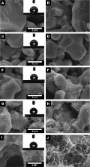
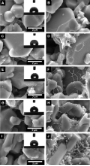
- therefore phenylalanine serves as an ideal and straightforward test bed. To the best of our knowledge, in situ formation and grafting of hydrophobic organo-gels within an inorganic porous environment has not been studied so far. As an inorganic substrate, sintered porous alumina membranes were




Preparation, characterization and photocatalytic performance of heterostructured CuO–ZnO-loaded composite nanofiber membranes
Beilstein J. Nanotechnol. 2020, 11, 631–650, doi:10.3762/bjnano.11.50
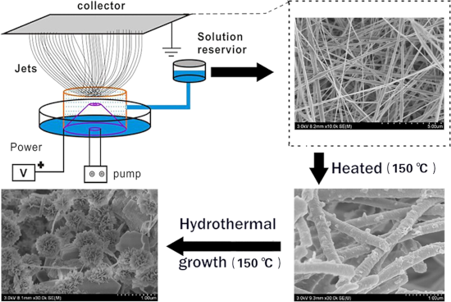
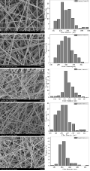
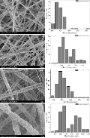
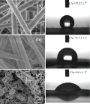
- PVDF/PAN weight ratios are displayed in Figure 4. All CNFMs are hydrophobic, and the hydrophobicity of the CNFMs decreases slightly with decreasing weight ratio. The reason might be that the hydrophobicity of pure PVDF nanofiber membranes (NFMs) is higher than that of pure PAN NFMs. Also, nanofiber











Silver-decorated gel-shell nanobeads: physicochemical characterization and evaluation of antibacterial properties
Beilstein J. Nanotechnol. 2020, 11, 620–630, doi:10.3762/bjnano.11.49
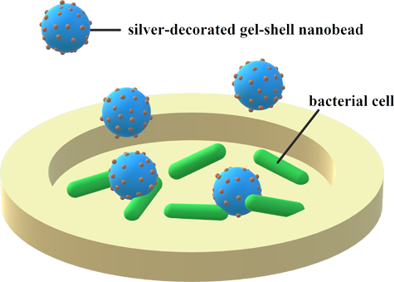
- reduction of AgNO3 with sodium borohydride). Since polystyrene is hydrophobic, the adsorption of hydrophilic Ag species in aqueous medium results in a decrease of the Gibbs surface free energy. The advantage of this method is its simplicity. However, even though it was demonstrated that the resulting
- structures are stable in aqueous solution, this may not be the case after addition of surfactants or the exchange of the solvent for a more hydrophobic one. Zhao et al. [23] proposed to incorporate silver nanoparticles into polystyrene/polystyrene sulfonate particles through accumulation of a silver complex


Adsorptive removal of bulky dye molecules from water with mesoporous polyaniline-derived carbon
Beilstein J. Nanotechnol. 2020, 11, 597–605, doi:10.3762/bjnano.11.47
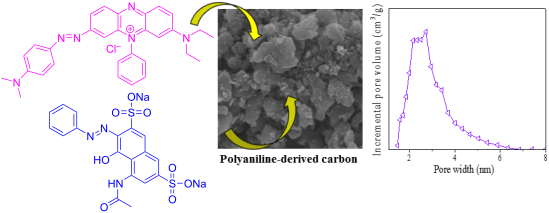
- ) 8.1 times that of commercial, activated carbon for AR1. The remarkable adsorption of AR1 and JGB over KOH-900 could be explained by the combined mechanisms of hydrophobic, π–π, electrostatic and van der Waals interactions. Keywords: acid red 1; adsorption; bulky dye molecules; Janus green B
- other adsorbent, KOH-900 showed the highest performance in AR1 adsorption, as shown in Figure 3. Therefore, hydrophobic interaction can be suggested as a plausible mechanism for AR1 and JGB adsorption. This mechanism, which has been suggested earlier in adsorption of malachite green [52], aromatics [64
- the bulky dye molecules. In summary, the remarkable adsorption of AR1 and JGB over KOH-900 can be explained by the combined mechanisms of hydrophobic, π–π, electrostatic and van der Waals interactions. Competitiveness of KOH-900 in adsorption of dyes Based on the remarkable performance of KOH-900 in


Identification of physicochemical properties that modulate nanoparticle aggregation in blood
Beilstein J. Nanotechnol. 2020, 11, 550–567, doi:10.3762/bjnano.11.44
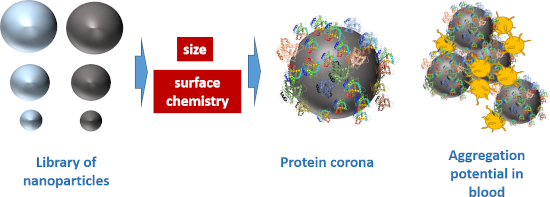
- interact with the proteins [22]. The affinity of a protein for a certain surface and the mode of interaction rise from the interplay of electrostatic interactions, hydrogen bondings, and hydrophobic forces [32]. Both nanomaterials are negatively charged at physiological pH. However, SNPs exhibit a less
- groups/nm2 [31][32]. Both surfaces exhibit surface sites able to form hydrogen bonds or hydrophobic interaction with proteins. However, such tendency may be different since hydrogen bond formation obeys geometrical constraints due to the directional character of this bond. On the other hand, both silica
- and carbon surfaces exhibit hydrophobic patches, i.e., siloxane bridges and carbon–carbon bonds, respectively. These moieties have a different nature, exhibiting a higher dipolar character. Previous studies reported fibrinogen-induced aggregation for silica nanoparticles [23][40]. However, in these




Multilayer capsules made of weak polyelectrolytes: a review on the preparation, functionalization and applications in drug delivery
Beilstein J. Nanotechnol. 2020, 11, 508–532, doi:10.3762/bjnano.11.41
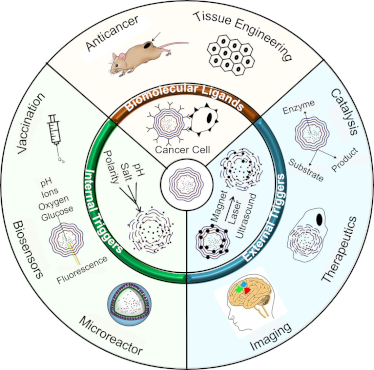
- various forces, mostly electrostatic interactions, hydrogen bonding, covalent bonding, host–guest interactions and other interactions (e.g., hydrophobic and biospecific recognition) as shown in Figure 3. Electrostatic interactions The LbL assemblies were originally applied to both charged planar
- calixarene units covalently bound in various ways. Although there are many reports on calixerene [59], cyclodextrins offer a wide scope for such interactions in biological applications. They could act as a host for many biomolecules or drugs via hydrogen bonding, hydrophobic interaction or van der Waals
- thickening at elevated temperatures was responsible for trapping the macromolecules inside the capsules. The hydrophobic molecules could be loaded into multilayer capsules by changing the state of the capsules from open to closed via a polarity change [73]. Alternatively, water soluble, positively charged



Preparation and in vivo evaluation of glyco-gold nanoparticles carrying synthetic mycobacterial hexaarabinofuranoside
Beilstein J. Nanotechnol. 2020, 11, 480–493, doi:10.3762/bjnano.11.39
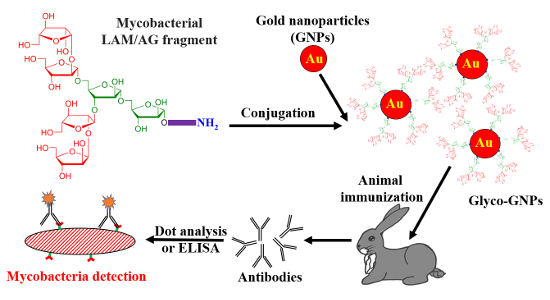
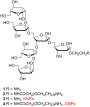
- -induced coagulation (due to electrostatic and hydrophobic interactions and structural-mechanical stability factors) [57][97][98]. The minimal stabilizing concentrations for both glycosides 1 and 2 were found to be 100 μg·mL−1. This concentration was used to conjugate antigens 1 and 2 with GNPs, which gave
- may be related to the formation of reaction solutions with modified structures featuring different supramolecular assemblies of the reagents (supramers [104]) in solution. In a similar fashion, solutions of Ara6C2NH2-GNPs 3 with the shorter and more hydrophobic С2 spacer aglycon might form tighter


Brome mosaic virus-like particles as siRNA nanocarriers for biomedical purposes
Beilstein J. Nanotechnol. 2020, 11, 372–382, doi:10.3762/bjnano.11.28
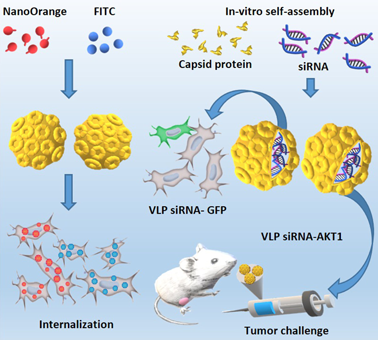
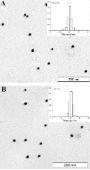
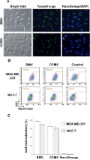
- internalization of VLPs In order to test the cell internalization of VLPs, BMV and CCMV VLPs were loaded with NanoOrange, a hydrophobic fluorescent dye. Both BMV and CCMV viruses have hydrophobic residues in their capsid protein in which hydrophobic molecules, such as NanoOrange, are bound. Due to the high
- internalization To visualize the cell internalization, viruses were loaded with NanoOrange. These are hydrophobic molecules that bind to the hydrophobic domains of the capsid proteins of BMV and CCMV. NanoOrange (NanoOrange™ Protein Quantitation Kit; ThermoFisher Scientific) were incubated with 1 µg of BMV or


Interactions at the cell membrane and pathways of internalization of nano-sized materials for nanomedicine
Beilstein J. Nanotechnol. 2020, 11, 338–353, doi:10.3762/bjnano.11.25
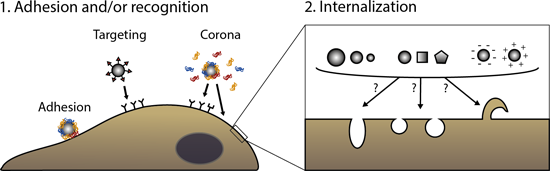
- side effects [6]. Additionally, nanomedicines can encapsulate different types of hydrophilic and hydrophobic drugs, and they can be designed to control their release profile [7]. Several other characteristics of nanomaterials such as size, material, shape, surface charge, hydrophobicity, roughness, and
- specific carriers) [72][73], membrane bending, which occurs through different mechanisms, including the insertion of hydrophobic protein motifs in the membrane, local recruitment of membrane-bending domains, or scaffolding by proteins (the classic example being clathrin) [72][73][77][78], and scission of


Rational design of block copolymer self-assemblies in photodynamic therapy
Beilstein J. Nanotechnol. 2020, 11, 180–212, doi:10.3762/bjnano.11.15
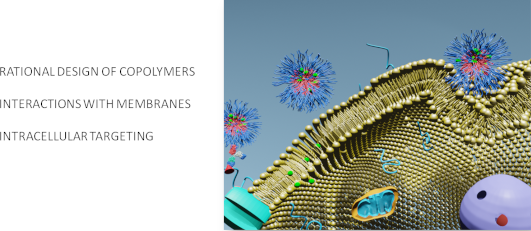
- that could be either hydrophobic or a polyelectrolyte enabled the creation of numerous systems [8]. Depending on their structure, copolymers may also form self-assemblies. This is typically the case for amphiphilic block copolymers, which can form in aqueous solution polymer nanoobjects such as
- micelles or vesicles. The driving forces of this assembly are a loss of entropy during the self-assembly and different interactions acting on the monomer units of the polymer. Whereas polymer/polymer interactions are favored for the hydrophobic block, interactions between the hydrophobic block and water
- are strongly disfavored, leading to the isolation of the hydrophobic block into core or membranes [9]. In the last twenty years, thousands of papers have been published on this topic and the reader is referred to recent reviews [10][11][12][13][14]. Basically, the desired properties of an ideal