


Search results
Search for "infrared spectroscopy" in Full Text gives 187 result(s) in Beilstein Journal of Nanotechnology.
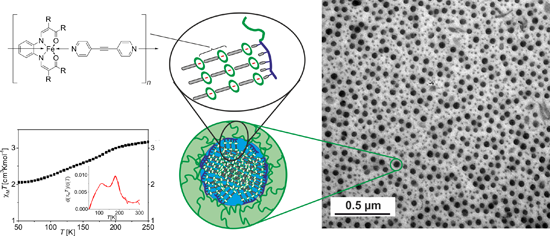
Synthesis of [Fe(Leq)(Lax)]n coordination polymer nanoparticles using blockcopolymer micelles
Beilstein J. Nanotechnol. 2017, 8, 1318–1327, doi:10.3762/bjnano.8.133
- (National Institutes of Health, USA). Elemental analysis: Carbon, nitrogen and hydrogen content was measured using a Vario EL III with acetanilide as standard. The samples were placed in tin boats and measured at least twice. The average of the measurements was used. Infrared spectroscopy measurements



Oxidative chemical vapor deposition of polyaniline thin films
Beilstein J. Nanotechnol. 2017, 8, 1266–1276, doi:10.3762/bjnano.8.128
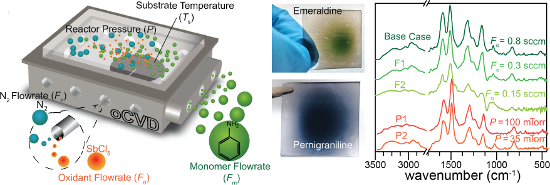
- pentachloride as oxidant. Microscopy and spectroscopy indicate that oCVD processing conditions influence the PANI film chemistry, oxidation, and doping level. Fourier transform infrared spectroscopy (FTIR), scanning electron microscopy (SEM), and X-ray photoelectron spectroscopy (XPS) indicate that a substrate
- components that might lead to unfavorable electrochemical properties. Thin film characterization As-deposited and washed PANI films were analyzed by Fourier transform infrared spectroscopy (FTIR), X-ray photoelectron spectroscopy (XPS), and scanning electron microscopy (SEM). FTIR spectra were acquired using




Characterization of ferrite nanoparticles for preparation of biocomposites
Beilstein J. Nanotechnol. 2017, 8, 1257–1265, doi:10.3762/bjnano.8.127
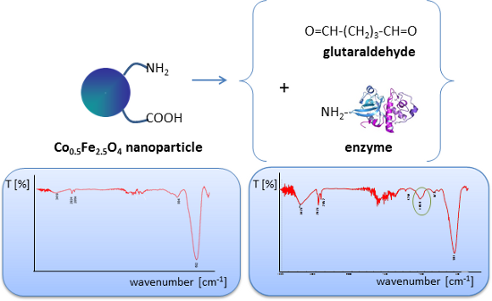
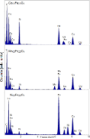
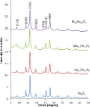
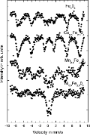
- dispersive X-ray and Mössbauer spectroscopy. The effect of the obtained biocomposites was monitored by Fourier transform infrared spectroscopy. The obtained results show that in some cases the use of glutaraldehyde was crucial (albumin). Keywords: albumin; EDX; glucose oxidase; IR spectroscopy; lipase
- nanoparticle and enzyme) and then respective enzymes were immobilized. For the second group, enzymes were attached without any previous surface modification. The prepared composites were measured by FTIR spectroscopy after drying. Infrared spectroscopy Selected ferrite nanoparticle samples were tested by IR



Hierarchically structured nanoporous carbon tubes for high pressure carbon dioxide adsorption
Beilstein J. Nanotechnol. 2017, 8, 1135–1144, doi:10.3762/bjnano.8.115
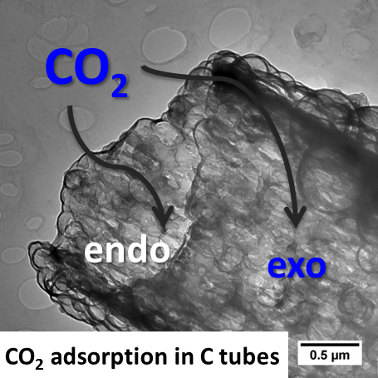
- nitrogen adsorption at 77 K, Raman spectroscopy, infrared spectroscopy, thermal gravimetric analysis (TGA), scanning electron microscopy (SEM) as well as transmission electron microscopy (TEM). The adsorption of carbon dioxide on the carbon tubes at 25 °C at pressures of up to 30 bar was studied using a


Vapor-phase-synthesized fluoroacrylate polymer thin films: thermal stability and structural properties
Beilstein J. Nanotechnol. 2017, 8, 933–942, doi:10.3762/bjnano.8.95
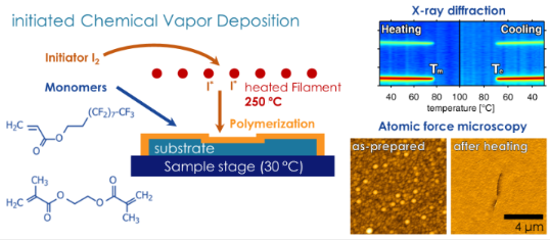
- infrared spectroscopy and X-ray diffraction. In situ ellipsometric studies allow the monitoring of the evolution of the thickness and optical constants of the materials during the heating ramp. This is particularly suitable for evidencing thermal transitions in thin films with thickness ranging from a few
- Supporting Information File 1, while a full description of the setup can be found in a previous publication [17]. As substrates, silicon wafers with a native oxide layer (thickness 1.7 nm) were used after being cut into 2 × 2 cm2 pieces. Fourier transform infrared spectroscopy (FTIR) was performed on a


Triptycene-terminated thiolate and selenolate monolayers on Au(111)
Beilstein J. Nanotechnol. 2017, 8, 892–905, doi:10.3762/bjnano.8.91
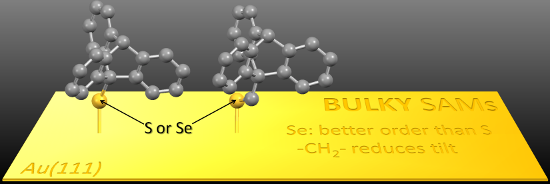
- Supporting Information File 1). Substrates with Au(111) surfaces For the investigation of the SAMs with infrared spectroscopy and electron spectroscopy, single-crystalline Si(100) wafer (Wacker) pieces with evaporated gold layers were used as substrates. Metal deposition was carried out using a commercial
- rinsed with ethanol and dried in a stream of N2. Infrared spectroscopy Spectra of KBr pellets containing the triptycene-based compounds were recorded at room temperature using a dry-air purged BioRad Excalibur FTS-3000 Fourier-transform infrared spectrometer equipped with a deuterated triglycine sulfate




Relationships between chemical structure, mechanical properties and materials processing in nanopatterned organosilicate fins
Beilstein J. Nanotechnol. 2017, 8, 863–871, doi:10.3762/bjnano.8.88
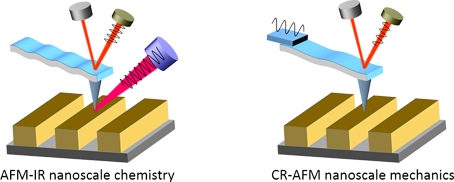
- molecular/chemical structure characterization has only been recently demonstrated with the advent of atomic-force-microscopy-based infrared spectroscopy (AFM-IR) and related techniques. Therefore, we have combined measurements of chemical structures with AFM-IR and of mechanical properties with contact
- microscope; contact resonance; infrared spectroscopy; organosilicate; photothermal; Introduction A fundamental objective of materials science and engineering is to understand, control, and exploit the relationships between the structure of a material at various length scales and its properties in order to



Recombinant DNA technology and click chemistry: a powerful combination for generating a hybrid elastin-like-statherin hydrogel to control calcium phosphate mineralization
Beilstein J. Nanotechnol. 2017, 8, 772–783, doi:10.3762/bjnano.8.80
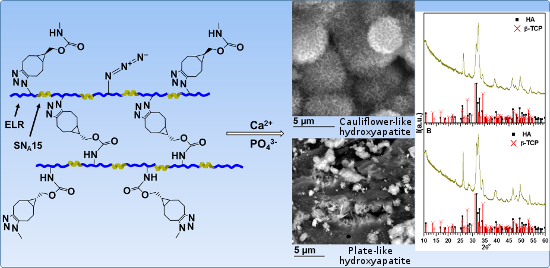
- purification, ELRs were characterized using matrix-assisted laser deposition ionization time of flight mass spectrometry (MALDI-TOF-MS), attenuated total reflection infrared spectroscopy (ATR-IR) and nuclear magnetic resonance spectroscopy (1H NMR). 3 Preparation of ELR hydrogels ELR hydrogels were made by
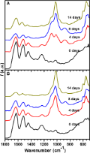
- position-sensitive detector (2θ = 5–70°), and a silicon sample holder. Step size was 0.02°. Phase identification was performed using PCPDFWIN (version 2.2 June 2001 JCPDS). 6.4 Attenuated total reflection infrared spectroscopy (ATR-IR spectroscopy) Dry samples were ground in an agate mortar and placed


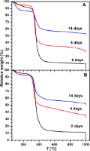

Fiber optic sensors based on hybrid phenyl-silica xerogel films to detect n-hexane: determination of the isosteric enthalpy of adsorption
Beilstein J. Nanotechnol. 2017, 8, 475–484, doi:10.3762/bjnano.8.51
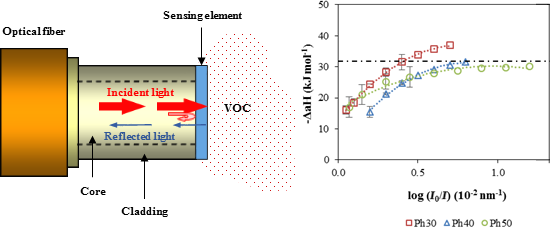
- , respectively. The films were synthesized by the sol–gel method and affixed to the end of optical fibers by the dip-coating technique. Fourier transform infrared spectroscopy, N2 adsorption–desorption at 77 K and X-ray diffraction analysis were used to characterize the xerogels. At a given pressure of n-hexane




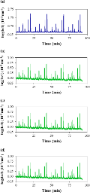


The longstanding challenge of the nanocrystallization of 1,3,5-trinitroperhydro-1,3,5-triazine (RDX)
Beilstein J. Nanotechnol. 2017, 8, 452–466, doi:10.3762/bjnano.8.49
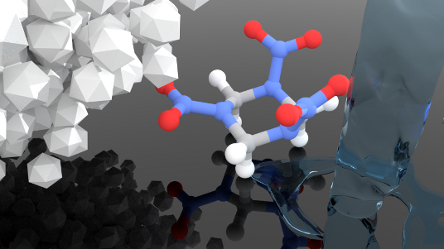
- indicate either a strong degradation or cocrystallization. Infrared spectroscopy definitely demonstrated a critical partial decomposition of both RDX and TNT due to the electrospray technique and the same phenomenon has likely happened for Radacsi et al., too. Whatever was really obtained, Reus


Optical and photocatalytic properties of TiO2 nanoplumes
Beilstein J. Nanotechnol. 2017, 8, 190–195, doi:10.3762/bjnano.8.20
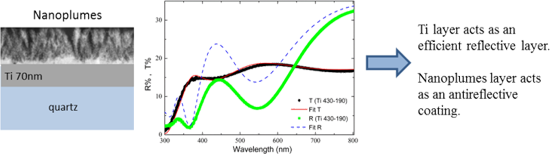
- reported in [21] indicated that the nanoplumes are made of TiO2. In addition, an accurate characterization of the nanoplumes performed by X-ray diffraction (XRD) measurements, X-ray Fourier transform infrared spectroscopy (FTIR), and photoelectron spectroscopy (XPS), revealed that after the etching the


A novel electrochemical nanobiosensor for the ultrasensitive and specific detection of femtomolar-level gastric cancer biomarker miRNA-106a
Beilstein J. Nanotechnol. 2016, 7, 2023–2036, doi:10.3762/bjnano.7.193
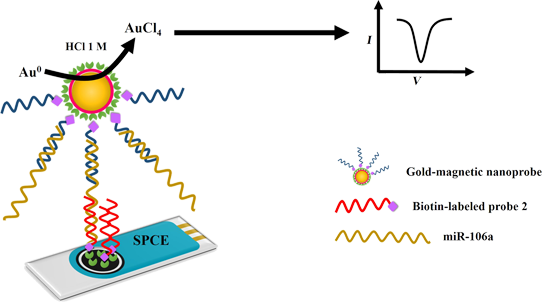
- , Freescale) analysis. In order to study structural and elemental properties, X-ray diffraction (XRD) (Philips, pw 1800, Netherlands) and energy-dispersive X-ray diffraction (EDX) were carried out. These NPs were also characterized using Fourier transform infrared spectroscopy (FTIR) to study the chemical


Organoclay hybrid materials as precursors of porous ZnO/silica-clay heterostructures for photocatalytic applications
Beilstein J. Nanotechnol. 2016, 7, 1971–1982, doi:10.3762/bjnano.7.188
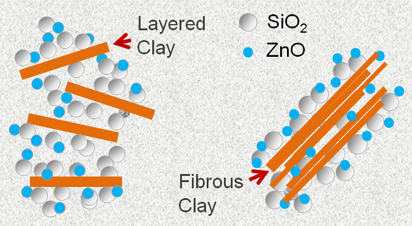
- diffractometer using monochromatic Cu Kα radiation, scanning from 2 to 70° in 2θ degrees with steps of 0.02 degrees. The average size of the crystallites was calculated by using the Debye–Scherrer formula [33]. Fourier transform infrared spectroscopy (FTIR) was performed in a Bruker IFS 260 66v/S





3D printing of mineral–polymer bone substitutes based on sodium alginate and calcium phosphate
Beilstein J. Nanotechnol. 2016, 7, 1794–1799, doi:10.3762/bjnano.7.172
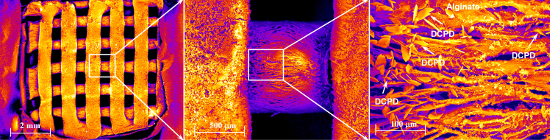
- transform infrared spectroscopy and scanning electron microscopy. Both the phase composition and the diameter of the CP particles depend on the concentration of a liquid component (i.e., the “ink”). The 3D printed structures were fabricated and found to have large interconnected porous systems (mean


Surface-enhanced infrared absorption studies towards a new optical biosensor
Beilstein J. Nanotechnol. 2016, 7, 1736–1742, doi:10.3762/bjnano.7.166
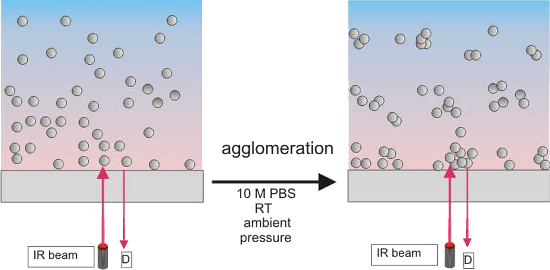
- results are compared with a similar experiment performed with an ATR (attenuated total reflectance) set-up. Keywords: attenuated total reflectance Fourier transform infrared spectroscopy (ATR-FTIR); direct optical sensing; mid-infrared regime (MIR); reflectometric interference spectroscopy; surface


Antitumor magnetic hyperthermia induced by RGD-functionalized Fe3O4 nanoparticles, in an experimental model of colorectal liver metastases
Beilstein J. Nanotechnol. 2016, 7, 1532–1542, doi:10.3762/bjnano.7.147
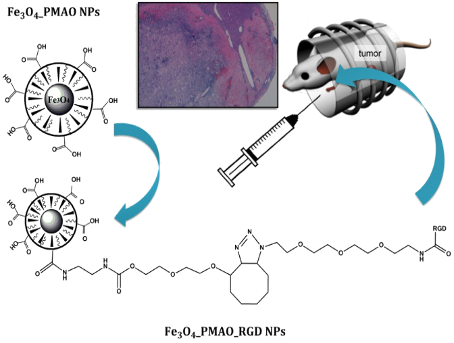
- can be found in the Experimental section below. Structural, morphologic and spectroscopic characterization In order to know the characteristics and the magnetic response of the nanoparticles, X-ray diffraction (XRD), transmission electron microscopy (TEM), infrared spectroscopy (IR), dynamic light


Ammonia gas sensors based on In2O3/PANI hetero-nanofibers operating at room temperature
Beilstein J. Nanotechnol. 2016, 7, 1312–1321, doi:10.3762/bjnano.7.122
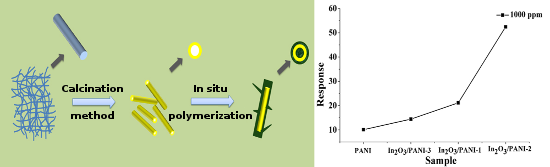
- morphology of In(NO3)3/PVP, In2O3/PANI composite nanofibers and pure PANI were investigated by scanning electron microscopy (SEM), Fourier transform infrared spectroscopy (FTIR), X-ray diffraction (XRD), transmission electron microscopy (TEM) and current–voltage (I–V) measurements. The gas sensing properties


Multiwalled carbon nanotube hybrids as MRI contrast agents
Beilstein J. Nanotechnol. 2016, 7, 1086–1103, doi:10.3762/bjnano.7.102
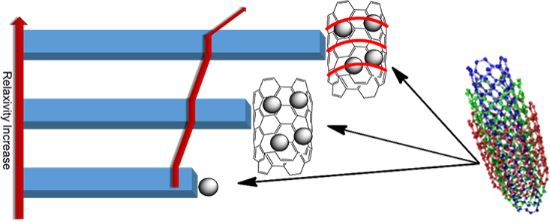
- form (i.e., γ-Fe2O3 and Fe3O4 in the hybrids with SPIO). Fourier transform infrared spectroscopy (FTIR) and thermogravimetric analysis (TGA), supported again by TEM, were applied to monitor the effects of wrapping with organic moieties. Infrared spectroscopy has commonly been used to follow the



Large-scale fabrication of achiral plasmonic metamaterials with giant chiroptical response
Beilstein J. Nanotechnol. 2016, 7, 914–925, doi:10.3762/bjnano.7.83
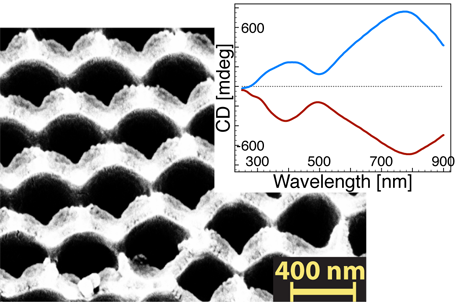
- implementations in various fields such as optics [1], improved photovoltaic devices [2], electronics [3], surface-enhanced infrared spectroscopy [4], Raman spectroscopy [5] and biosensors [6]. Planar chiral metamaterials (PCMs) have also attracted attention because of their negative refractive index [7][8] and

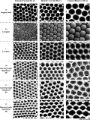


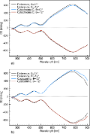
![[Graphic 2]](/bjnano/content/inline/2190-4286-7-83-i2.png?max-width=637&scale=1.18182) , of incident light with respect to the ECM structures.
, of incident light with respect to the ECM structures.



Efficient electron-induced removal of oxalate ions and formation of copper nanoparticles from copper(II) oxalate precursor layers
Beilstein J. Nanotechnol. 2016, 7, 852–861, doi:10.3762/bjnano.7.77
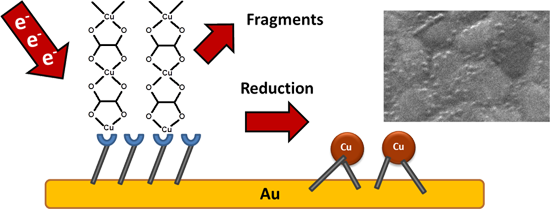
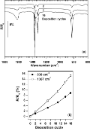
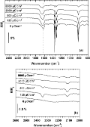
- infrared spectroscopy (RAIRS). Helium ion microscopy (HIM) reveals the formation of spherical nanoparticles with well-defined size and X-ray photoelectron spectroscopy (XPS) confirms their metallic nature. Continued irradiation after depletion of oxalate does not lead to further particle growth giving
- between 4 and 16 to generate layers with different thickness and, consequently, metal content. Reflection absorption infrared spectroscopy Reflection absorption infrared (RAIR) spectra between 4000 and 500 cm−1 were recorded using an evacuated FTIR spectrometer (IFS 66v/S, Bruker Optics GmbH) by
- . A dwell time per pixel between 30 and 100 μs without averaging as well as 1 μs with averaging 64 lines was used. The HIM micrographs were recorded with pixel sizes between 0.49 and 0.98 nm. Results Reflection absorption infrared spectroscopy As described previously, the deposition of copper(II


Correlative infrared nanospectroscopic and nanomechanical imaging of block copolymer microdomains
Beilstein J. Nanotechnol. 2016, 7, 605–612, doi:10.3762/bjnano.7.53
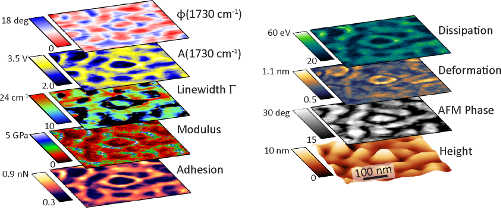
- , hybrid imaging, near-field infrared spectroscopy, scanning probe microscopy; Introduction Functional soft-matter and polymer systems often exhibit novel phenomena due to nanoscale chemical heterogeneity and the resulting intermolecular interactions. Infrared vibrational scattering scanning near-field
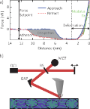
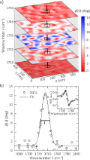
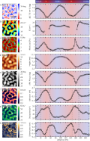


![[Graphic 9]](/bjnano/content/inline/2190-4286-7-53-i10.png?max-width=637&scale=1.18182) (1730 ...
(1730 ...
Investigating organic multilayers by spectroscopic ellipsometry: specific and non-specific interactions of polyhistidine with NTA self-assembled monolayers
Beilstein J. Nanotechnol. 2016, 7, 544–553, doi:10.3762/bjnano.7.48
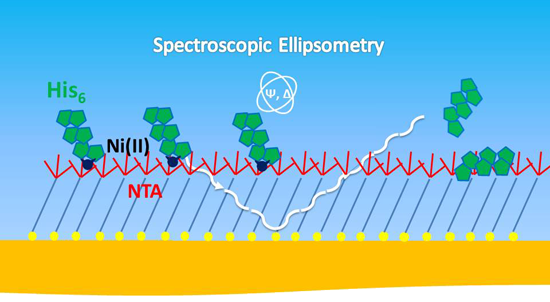
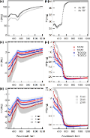
- information about molecular orientations in the SAM and about the SAM organization. Such properties should be probed through surface-sensitive infrared spectroscopy methods such as reflection–absorption infrared spectroscopy [56]. Nevertheless, the values of film thickness determined by SE and AFM testify the



Bacteriorhodopsin–ZnO hybrid as a potential sensing element for low-temperature detection of ethanol vapour
Beilstein J. Nanotechnol. 2016, 7, 501–510, doi:10.3762/bjnano.7.44
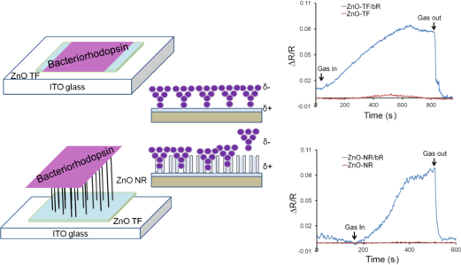
- nonhybrid structures, as is evident from Figure 2c,d. The structural and optical properties of ZnO-TF, ZnO-NR and their hybrid structures were assessed using UV–vis spectroscopy, photoluminescence spectroscopy (PL), Raman spectroscopy and Fourier transform infrared spectroscopy (FTIR). Figure 3 shows the


Chemical bath deposition of textured and compact zinc oxide thin films on vinyl-terminated polystyrene brushes
Beilstein J. Nanotechnol. 2016, 7, 102–110, doi:10.3762/bjnano.7.12
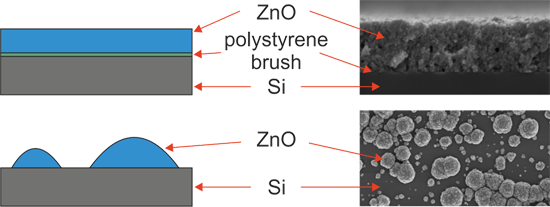
- measurements as well as scanning electron microscopy (SEM), atomic force microscopy (AFM) and X-ray diffraction (XRD). Infrared spectroscopy (IR) measurements were used to investigate the polystyrene brushes before and after modification. Keywords: bioinspired synthesis; polymer brush; template activation
- PS molecules that are grafted to a silicon wafer forming a very thin film. The obtained ZnO thin films, which were synthesized via chemical bath deposition (CBD) at 60 °C, were characterized by X-ray diffraction (XRD), scanning electron microscopy (SEM), AFM and infrared spectroscopy (IR). Our
- . For each measurement point, four pressure ramps from 0 to 400 mbar were performed and the streaming current was measured. The ζ-potential was calculated with a Fairbrother–Mastin approach. Infrared spectroscopy IRRAS: The IRRA-spectra were recorded on a Bruker Vertex 80 purged with dry air under a


Fabrication and characterization of novel multilayered structures by stereocomplexion of poly(D-lactic acid)/poly(L-lactic acid) and self-assembly of polyelectrolytes
Beilstein J. Nanotechnol. 2016, 7, 81–90, doi:10.3762/bjnano.7.10
- . Both multilayer structures, with and without polymeric precursor, were firstly fabricated and characterized on planar supports. A quartz crystal microbalance (QCM), attenuated total reflection Fourier transform infrared spectroscopy (ATR-FTIR) and ellipsometry were used to evaluate the thickness and
- , which only gave information about mass change [35]. Attenuated total reflection Fourier transform infrared spectroscopy (ATR-FTIR) was used to verify the stereocomplex formation and its effective adsorption onto the polyelectrolyte precursor. Differential scanning calorimetry (DSC) and wide X-ray
- substrate was completely dried, after each deposition step. ATR-FTIR measurements Attenuated total reflection Fourier transform infrared spectroscopy (ATR-FTIR) spectra were obtained with a Bruker A225/Q device equipped with a Bruker MCT detector. Each spectrum was recorded with a total of 32 scans at a 4





