


Search results
Search for "interactions" in Full Text gives 1250 result(s) in Beilstein Journal of Nanotechnology. Showing first 200.
Colloidal few layered graphene–tannic acid preserves the biocompatibility of periodontal ligament cells
Beilstein J. Nanotechnol. 2025, 16, 664–677, doi:10.3762/bjnano.16.51
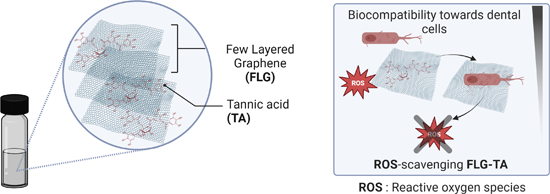
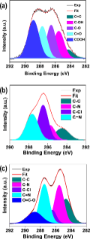
- employed to determine structure and surface functionalities. Second, by employing TA, we aim to develop graphene layers rich in polyphenols to serve as a bioactive interface for cellular interactions. Given that TA possesses potential antioxidant properties, we assessed the in vitro free radical scavenging
- , characterized by numerous hydroxy groups, is proposed to potentially form non-covalent interactions, such as π–π stacking, with the carbon network and oxygen atoms of graphite [16][20]. This interaction could exfoliate graphite, resulting in a stable colloidal dispersion of functionalized graphene sheets. The
- groups into the graphene structure. In our scenario, the integration of mixing and ultrasonication greatly aided the homogenization process and improved the interactions at the molecular level between the functional groups of tannic acid and the carbon layers of graphene, resulting in defects mainly




Nanoscale capacitance spectroscopy based on multifrequency electrostatic force microscopy
Beilstein J. Nanotechnol. 2025, 16, 637–651, doi:10.3762/bjnano.16.49

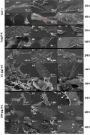
- frequencies and beyond. Our results show a significant reduction of signal background from long-range electrostatic interactions, resulting in highly localized measurements. Combined with refined tip–sample capacitance models, MFH-EFM will enhance the precision of quantitative studies on dielectric effects in
- of the long-range interactions from tip cone and cantilever in the C′ signal. Thus, the overall impact of the local surface dielectric properties under the tip apex is reduced as compared to the impact of the dielectric properties probed by tip cone and cantilever (see Figure 3). Imaging C′ versus C
- leads to a significant reduction of signal background, which results in higher locality of the measurements with less cross talk. This is due to the fact that the second capacitance gradient is less affected by long-range interactions, such as those from tip cone and lever. We demonstrate the reliable




Focused ion and electron beams for synthesis and characterization of nanomaterials
Beilstein J. Nanotechnol. 2025, 16, 613–616, doi:10.3762/bjnano.16.47

- deposition techniques, this thematic issue includes studies on low-energy electron interactions with metal(II) bis(acetylacetonate) complexes [5]. Another molecule investigated for its gas-phase fragmentation mechanism via dissociative ionization and dissociative electron attachment is [Au(CH3)2Cl]2. Studies
- ion beam interactions [15]. In addition, the extension of the continuum model has proven useful in predicting the outcomes of ion beam milling processes in multilayered systems, as demonstrated in the case of the Si/SiO2/Pt system [16]. To identify the current state of the technology and routes
- , Aleksandra Szkudlarek Krakow, April 2025 Complexity of interactions among electrons, ions, and precursor molecules behind fabrication of functional 3D nanostructures.

Polyurethane/silk fibroin-based electrospun membranes for wound healing and skin substitute applications
Beilstein J. Nanotechnol. 2025, 16, 591–612, doi:10.3762/bjnano.16.46
- the body [67]. Yildiz et al. used polycaprolactone (PCL)/SF to develop nanofibers as an improved skin substitute for treating chronic wounds or burns. The addition of SF increased tensile strength and Young’s modulus through intermolecular interactions. Results showed that the PCL/SF nanofibers had
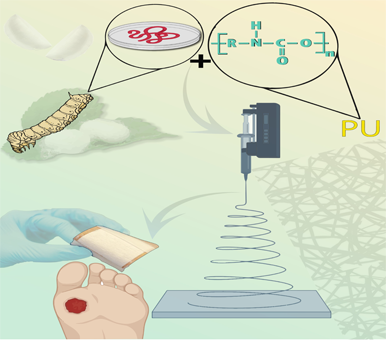
- for tissue engineering, particularly for bone, ligaments, tendons, blood vessels, and cartilage, where mechanical properties and biological interactions are crucial. SF can be fabricated into foams, films, fibers, meshes, and hydrogels, as shown in Figure 4 [97]. Films made of fibroin and collagen
- surgery [113]. Polyurethane The biocompatibility of polyurethane (PU) makes it well suited for interactions with biological fluids and tissues [114]. Its ability to imitate the mechanical characteristics of natural tissues further enhances its appeal in biomedical applications [115]. The surface of PU can



Feasibility analysis of carbon nanofiber synthesis and morphology control using a LPG premixed flame
Beilstein J. Nanotechnol. 2025, 16, 581–590, doi:10.3762/bjnano.16.45
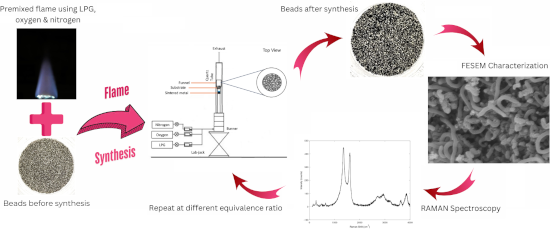
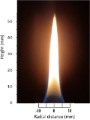
- sidewalls, while the G′ peak at 2500–2900 cm−1 represents photon–phonon interactions [22]. To the best of our knowledge, the present study describes the first flame synthesis using a LPG premixed flame and a spherical substrate for CNF growth. The characteristics of the LPG premixed flame are studied with



Nanomaterials in targeting amyloid-β oligomers: current advances and future directions for Alzheimer's disease diagnosis and therapy
Beilstein J. Nanotechnol. 2025, 16, 561–580, doi:10.3762/bjnano.16.44
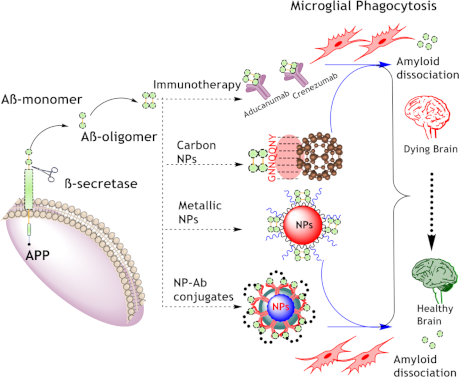
- emphasized the importance of accurately identifying AβOs in patient samples, enhancing the potential for timely intervention. In recent years, nanomaterials (NMs) have emerged as promising agents for addressing AβOs regarding their multivalent interactions, which can more effectively detect and inhibit AβO
- interactions between n-mers (oligomers formed from a defined number of monomers), or from non-specific interactions, akin to micelles. The precise mechanisms underlying the formation of AβOs during the growth of AβFs remain elusive. However, researchers have identified three main pathways to explain this
- . employed a combination of experimental and computational approaches to investigate the interaction between PEGylated NPs and Aβ monomers. Their findings revealed that surface interactions between NPs and Aβ monomers effectively inhibited the formation of AβOs [59]. Building upon their previous research


Retrieval of B1 phase from high-pressure B2 phase for CdO nanoparticles by electronic excitations in CdxZn1−xO composite thin films
Beilstein J. Nanotechnol. 2025, 16, 551–560, doi:10.3762/bjnano.16.43

- transfer to the electronic system occurs through electron–electron interactions, followed by transference to the lattice atomic system via electron–phonon correlation [20][21]. Along the ion trajectory, a cylindrical region is generated, characterized by temperature exceeding the melting point of the


Zeolite materials with Ni and Co: synthesis and catalytic potential in the selective hydrogenation of citral
Beilstein J. Nanotechnol. 2025, 16, 520–529, doi:10.3762/bjnano.16.40
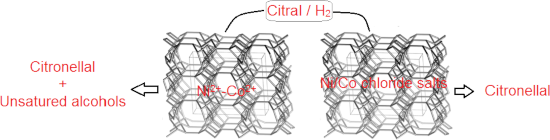
- Ni2+ isolated cations, attributed to synergistic interactions that weakened the cation–framework binding. Catalytic activity tests showed that nickel species were primarily responsible for citronellal formation. Among all materials, the bimetallic CoNiIE catalyst, prepared by IE, was the only one to
- produce unsaturated alcohols, suggesting that synergistic Ni–Co interactions played a role in their formation. Keywords: citral hydrogenation; cobalt–nickel mixture; impregnation; ion exchange; natural zeolite; Introduction Numerous publications in the literature highlight zeolites modified with


Water in nanoporous hexagonal boron nitride nanosheets: a first-principles study
Beilstein J. Nanotechnol. 2025, 16, 510–519, doi:10.3762/bjnano.16.39
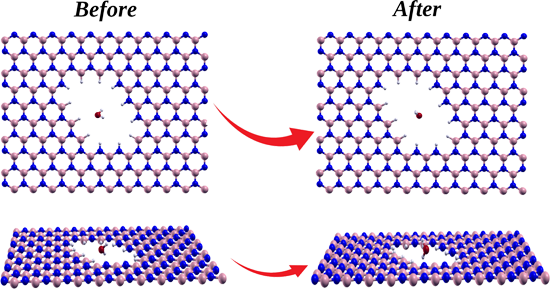
- graphene membranes interacting with water, where wrinkles significantly impact the mechanical response of the membranes when filled with water on a platform. Conclusion Our investigation of pores in a free-standing hexagonal boron nitride monolayer sheds light on the intricate interactions between 2D
- type of pore can alter the hydrophobicity of h-BN and influence the flow of water through it. Moreover, the formation of a hydrogen bond with the N–H-terminated surface in rhombic pores, which is absent in interactions with the B–N-terminated surface, may lead to asymmetries in water flow through the




N2+-implantation-induced tailoring of structural, morphological, optical, and electrical characteristics of sputtered molybdenum thin films
Beilstein J. Nanotechnol. 2025, 16, 495–509, doi:10.3762/bjnano.16.38
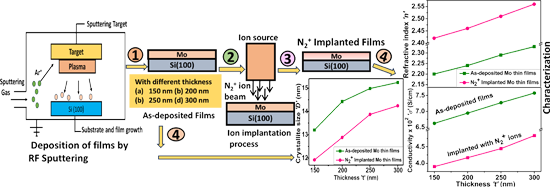
- the target material. This balance highlights the importance of electronic and nuclear interactions in the energy transfer processes during ion implantation. Furthermore, of the total energy of 15 keV from a single nitrogen ion, 8.5 keV produce ionization, while 6.2 keV generate phonons, and 0.29 keV
- create damage within the target material, as demonstrated in Figure 1C. These findings highlight the significant interactions between the nitrogen ions and the molybdenum target material during the implantation process, providing valuable insights into the mechanisms that govern ion implantation and the
- of the as-deposited and N2+-implanted Mo films increases from 13.22 to 15.24 nm and from 11.92 to 14.42 nm with an increase in thickness from 150 to 300 nm, respectively. This variation may relate to several factors involving film growth and substrate interactions. Thicker films (i.e., 250 and 300 nm


Impact of adsorbate–substrate interaction on nanostructured thin films growth during low-pressure condensation
Beilstein J. Nanotechnol. 2025, 16, 473–483, doi:10.3762/bjnano.16.36

- elastic adsorbate–substrate interactions in processes of nanostructuring of thin films during low-pressure condensation in the framework of theoretical approaches and numerical simulations. It will be shown that an increase in the elastic interaction strength induces first-order transitions and pattern
- formation. We simulate deposition on one- and multicomponent substrates with different strengths of adsorbate–substrate interactions. We will show that an increase in the strength of adsorbate–substrate interactions stimulates the formation of stable surface structures during deposition, which leads to an
- increase in its coverage and the formation of a smaller number of adsorbate islands of larger size. At elevated adsorption rates, an increase in adsorbate–substrate interactions results in the transformation of the surface morphology and the formation of percolating adsorbate structures. Deposition onto


Synthetic-polymer-assisted antisense oligonucleotide delivery: targeted approaches for precision disease treatment
Beilstein J. Nanotechnol. 2025, 16, 435–463, doi:10.3762/bjnano.16.34


Quantification of lead through rod-shaped silver-doped zinc oxide nanoparticles using an electrochemical approach
Beilstein J. Nanotechnol. 2025, 16, 422–434, doi:10.3762/bjnano.16.33
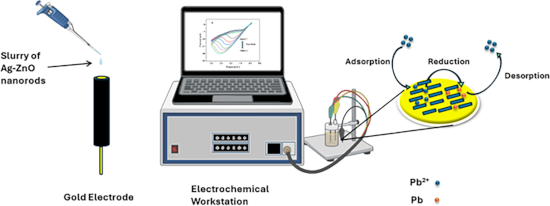
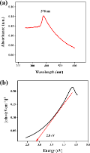
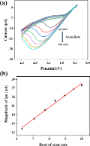
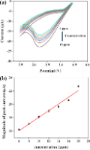
- . Electrochemical techniques comparatively offer quick, portable, sensitive, and inexpensive basic equipment for heavy metal detection. The interactions between Ag@ZnO NRs and lead were studied using electrochemical methods. The prepared lead sensor using Ag@ZnO NRs show a very low detection limit and a very high





Biomimetics and bioinspired surfaces: from nature to theory and applications
Beilstein J. Nanotechnol. 2025, 16, 418–421, doi:10.3762/bjnano.16.32
- environmental pressures. Such pressures involve intricate interactions between surface structures and the environment across different scales, including nano-, micro-, and macroscales. Biomimetics aims at making use of understanding how these adaptations and the particular material properties of these surfaces

ReactorAFM/STM – dynamic reactions on surfaces at elevated temperature and atmospheric pressure
Beilstein J. Nanotechnol. 2025, 16, 397–406, doi:10.3762/bjnano.16.30
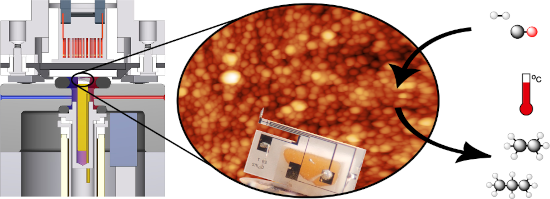
- , a high-pressure ReactorSTM has been developed [10][11]. The pressures in the scanning tunneling microscopy (STM) reactor are orders of magnitude above UHV (up to several bar), rendering gas–catalyst interactions very significant and leading to differences in reaction mechanisms [12][13][14][15


Engineered PEG–PCL nanoparticles enable sensitive and selective detection of sodium dodecyl sulfate: a qualitative and quantitative analysis
Beilstein J. Nanotechnol. 2025, 16, 385–396, doi:10.3762/bjnano.16.29
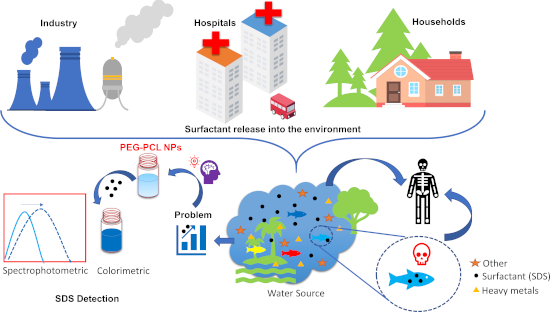
- undergoing undesirable chemical changes. The functional group interactions between PEG and PCL to form PEG–PCL nanoparticles were investigated using FTIR spectroscopy (Figure 3). The FTIR spectrum of PEG–PCL nanoparticles reveals several characteristic peaks indicating their chemical structure and successful
- interactions. Previous studies confirmed that PEG contains hydroxyl groups (–OH) that can form hydrogen bonds with the PCL carbonyl groups (C=O). These hydrogen bonds help stabilize the nanocomposite structure and improve its mechanical properties [33]. Optimization of PEG–PCL nanoparticle concentration The
- hydrophobic PCL [34]. The positive charge on the G-250 dye or the Bradford reagent can form ionic interactions with PEG–PCL NPs due to their negative surface charge, which is confirmed through the zeta potential. We also observed when the PEG–PCL nanoparticle concentrations decreased from 10 to 0.005 mg/mL


Development of a mucoadhesive drug delivery system and its interaction with gastric cells
Beilstein J. Nanotechnol. 2025, 16, 371–384, doi:10.3762/bjnano.16.28

- position was detected (from 1567 to 1608 cm−1). This was attributed to weak interactions between alginate and Eudragit polymer, which were also observed in other studies [37]. Taken together, it can be concluded from the results of microscopy and FTIR analysis that the Alg nanoparticles were coated with
- ± 121.8 nm. The increase in size after mucin interaction was observed in other studies as well [52][53][54]. The size increase of the particles interacting with mucin has been attributed to the formation of bigger aggregates or complexes due to the interactions of positively charged groups on the
- intermolecular hydrogen bonding and secondary interactions resulting from the interpenetration of polymer chains of mucin into the structure of the nanoparticles. The presence of positively charged Eudragit polymer on the surface of nanoparticles yield additional electrostatic interactions, which are known to be


Pulsed laser in liquid grafting of gold nanoparticle–carbon support composites
Beilstein J. Nanotechnol. 2025, 16, 349–361, doi:10.3762/bjnano.16.26
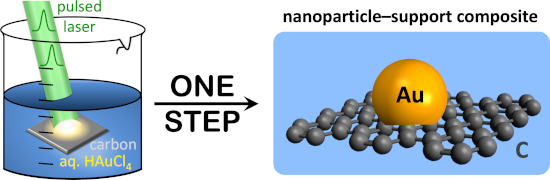
- pyrolytic graphite (HOPG); edge-plane HOPG is expensive, brittle, and not amenable to large electrode areas. In general, graphitic basal-plane carbon atoms are unreactive, unlike those in graphene, because of the π-stacking interactions of adjacent graphite sheets. We reported an environmentally friendly


Graphene oxide–chloroquine conjugate induces DNA damage in A549 lung cancer cells through autophagy modulation
Beilstein J. Nanotechnol. 2025, 16, 316–332, doi:10.3762/bjnano.16.24
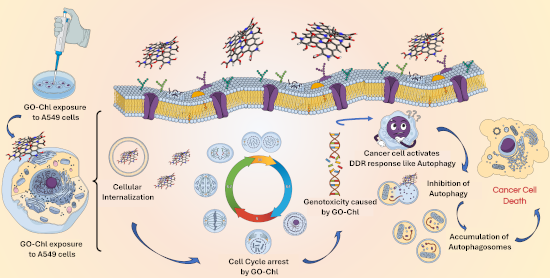
- chloroquine onto graphene oxide nanosheets Chloroquine molecules were bound to GO nanosheets through noncovalent π–π interactions between the quinoline of Chl and the graphitic domain of GO, according to a previously reported procedure [25]. Briefly, 100 mL of an aqueous dispersion of GO (500 μg/mL
- equivalent of KMnO4 (added in two steps of 3 equiv each) were used relative to the graphite powder used. Chloroquine binds to the surface of graphene oxide nanosheets through noncovalent π–π interactions between the quinoline ring of Chl and the sp2 hybrid π-bonded carbon framework of graphene oxide. The



Enhancing mechanical properties of chitosan/PVA electrospun nanofibers: a comprehensive review
Beilstein J. Nanotechnol. 2025, 16, 286–307, doi:10.3762/bjnano.16.22

- uses, and wound healing [4][5][6]. However, a drawback of electrospun nanofibers is their mechanical properties [7][8]. Electrospun nanofibers typically exhibit poor mechanical properties due to their high porosity, random fiber arrangement, and weak interactions at the cross-points of the nanofibers
- factors, chitosan can only be electrospun in the presence of a spinnable polymer such as PVA [56]. A previous study has demonstrated the viability of adding PVA as an additional component to chitosan [57]. This addition reduces the repulsive interactions between polycations, thereby decreasing chain
- release time of substances by exploiting the surface properties and interactions between hydrophobic and hydrophilic layers [86]. This sequential method of producing composite fibers is generally easier than the other methods as the different materials are electrospun separately, eliminating concerns


Preferential enrichment and extraction of laser-synthesized nanoparticles in organic phases
Beilstein J. Nanotechnol. 2025, 16, 254–263, doi:10.3762/bjnano.16.20
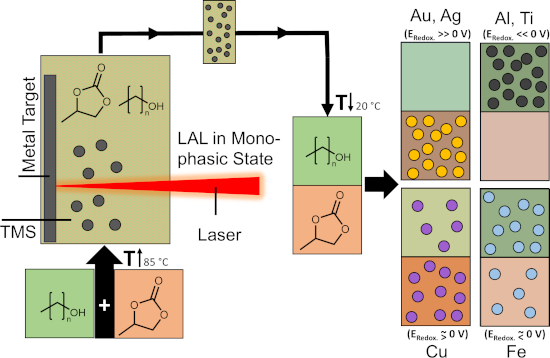
- carbonate and alcohol might influence the occurring interactions and reactions between the solvent and the Cu and Fe particles the most during nanoparticle formation, which then leads to a difference in phase preference of the formed nanoparticle fractions. Yet, this remains highly speculative and neglects




Radiosensitizing properties of dual-functionalized carbon nanostructures loaded with temozolomide
Beilstein J. Nanotechnol. 2025, 16, 229–251, doi:10.3762/bjnano.16.18
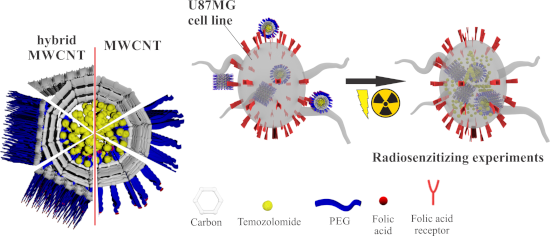
- ) formulations relative to the functionalized ones (Table 1) could be explained by the formation of strong covalent bonds between CNs and PEG6000, the competition between PEG6000 and TMZ regarding interactions with MWCNTs-COOH and MWCNTs-G-COOH, and the physical entrapment of TMZ in the tubes. One can assume
- that TMZ is both physically entrapped in the tubes and wrapped around the CNs because of electrostatic and hydrogen bond interactions with CNs and PEG6000. This assumption is supported by the similar values for loading efficacy and drug content of covalently PEGylated TMZ-loaded MWCNTs and hybrid
- MWCNTs-G (Table 1), which differ in the fraction of tubes. When analyzing the data for dual-functionalized formulations with TMZ, one can see that FA acts like an additional competitor for drug loading (although interactions between TMZ and FA cannot be excluded), indicated by the lower values for




Synthesis and the impact of hydroxyapatite nanoparticles on the viability and activity of rhizobacteria
Beilstein J. Nanotechnol. 2025, 16, 216–228, doi:10.3762/bjnano.16.17
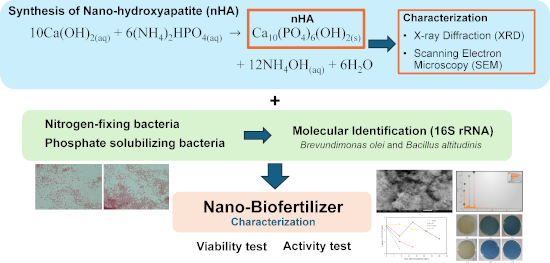
- microorganisms. Nanomaterials, particularly nanohydroxyapatite (nHA), have garnered attention for sustaining rhizobacterial viability, high loading capacity, high biodegradability, and biocompatibility, which facilitate microbial interactions. In this study, nHA was synthesized using a hydrothermal method and
- , biocompatibility, and the ability to absorb organic substances [20][21]. Furthermore, nHA possesses the unique ability to be resorbed within physiological environments while remaining non-toxic, a feature that holds significant promise for synergistic interactions with microorganisms and biological molecules [22
- can affect the stability of a substance, ion interactions, and molecular ionization in a solution. However, the effect of pH and EC values on the psychochemical properties highly depends on the material’s application [28][29]. Pd rhizobacterium typically thrives optimally at pH 7.5 and exhibits


Recent advances in photothermal nanomaterials for ophthalmic applications
Beilstein J. Nanotechnol. 2025, 16, 195–215, doi:10.3762/bjnano.16.16
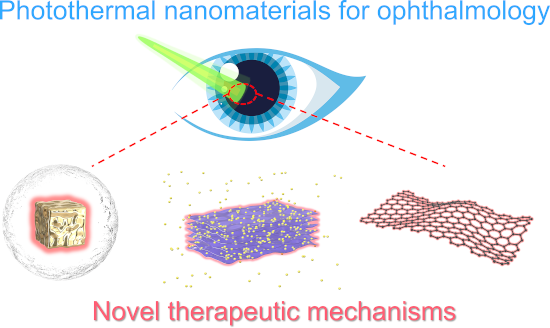
- triggers a rapid, collective resonance among them [44]. This resonance leads to interactions between the excited free electrons and other electrons, lattice phonons, and surface ligands, converting the kinetic energy of these electrons into thermal energy through the Joule mechanism, an exceptionally
- molecule dyes can be modulated by intramolecular rotation or intermolecular interactions [63]. By using nanocarrier encapsulation and self-assembly strategies, the water solubility and stability of organic small molecule dyes can be improved, and photobleaching can be reduced [64]. Materials that undergo


Probing the potential of rare earth elements in the development of new anticancer drugs: single molecule studies
Beilstein J. Nanotechnol. 2025, 16, 187–194, doi:10.3762/bjnano.16.15
- -disorder statistical model that describes DNA interactions with small ligands was developed by our group in the past [22][19]. Such a model allows one to extract the binding parameters of a given interaction from the data of the persistence length as a function of the ligand concentration in the sample [22
- the corresponding europium data in [7]. The fits are also shown in Figure 2 as solid lines and allowed us to determine the relevant binding parameters of the interactions, which are schematically shown in Table 1. The equilibrium association binding constant of the interactions between Yb and Nd with
- molecules, a situation similar to that found for Eu. Finally, the values found for the local persistence length A1 reflect the fact that the interactions induce a decrease on the effective persistence length of the complexes formed, probably by promoting bends at the binding sites. For the DNA complexes





