Search results
Search for "monodisperse" in Full Text gives 143 result(s) in Beilstein Journal of Nanotechnology.
Focused electron beam induced deposition: A perspective
Beilstein J. Nanotechnol. 2012, 3, 597–619, doi:10.3762/bjnano.3.70


Macromolecular shape and interactions in layer-by-layer assemblies within cylindrical nanopores
Beilstein J. Nanotechnol. 2012, 3, 475–484, doi:10.3762/bjnano.3.54
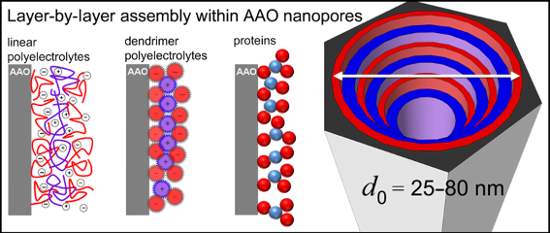
- , hexagonally close-packed, cylindrical pores running straight through the AAO membrane thickness, with conveniently adjustable monodisperse pore diameters, degree of lattice spacing, and membrane thickness [27][28][29], making it well suited as a model nanoporous system [30][31][32]. LbL of polyelectrolyte




Magnetic-Fe/Fe3O4-nanoparticle-bound SN38 as carboxylesterase-cleavable prodrug for the delivery to tumors within monocytes/macrophages
Beilstein J. Nanotechnol. 2012, 3, 444–455, doi:10.3762/bjnano.3.51
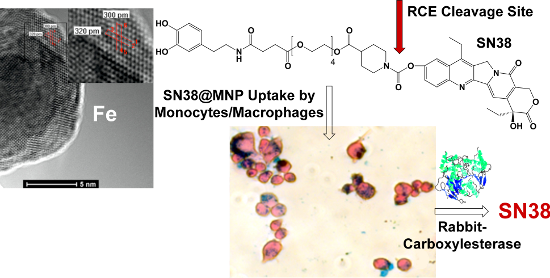
- nanoparticles in water is about 95 nm, indicating that some level of aggregation occurred in the aqueous media, but overall the nanoparticles are monodisperse with a narrow size distribution (polydispersity <0.20) (Supporting Information File 1, Figure S1). Since the MNP-SN38 platform will be loaded on Mo/Ma


Colloidal lithography for fabricating patterned polymer-brush microstructures
Beilstein J. Nanotechnol. 2012, 3, 397–403, doi:10.3762/bjnano.3.46
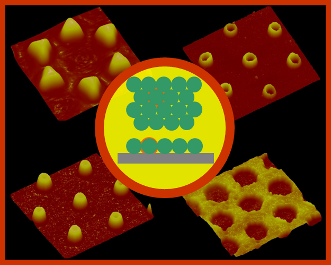
- : atom-transfer radical polymerization; colloidal lithography; patterning; self-assembled microsphere monolayer; Introduction It is well known that monodisperse colloidal microspheres easily self-assemble into hexagonally close-packed arrays on surfaces as a result of capillary forces arising from the


Analysis of fluid flow around a beating artificial cilium
Beilstein J. Nanotechnol. 2012, 3, 163–171, doi:10.3762/bjnano.3.16
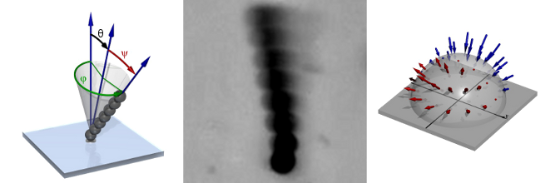
- terms and the corrected theoretical result shows an excellent agreement with the measured data. Experimental Preparation of artificial cilium We assembled the artificial cilium from monodisperse superparamagnetic beads (Dynabeads Epoxy M-450, Dynal Biotech, diameter 4.4 μm, standard deviation in bead



Self-assembly of octadecyltrichlorosilane: Surface structures formed using different protocols of particle lithography
Beilstein J. Nanotechnol. 2012, 3, 114–122, doi:10.3762/bjnano.3.12
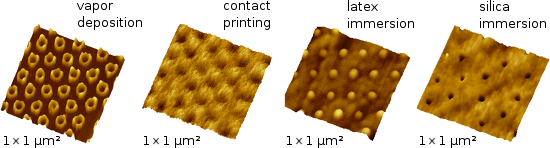
- handled carefully. After acid cleaning, the substrates were rinsed with copious amounts of deionized water and dried in air. Size-sorted, monodisperse polystyrene latex mesospheres (200 nm diameter) were used as surface masks for patterning (Thermo-Fisher Scientific, Waltman, MA). Aqueous solutions of




STM study on the self-assembly of oligothiophene-based organic semiconductors
Beilstein J. Nanotechnol. 2011, 2, 802–808, doi:10.3762/bjnano.2.88
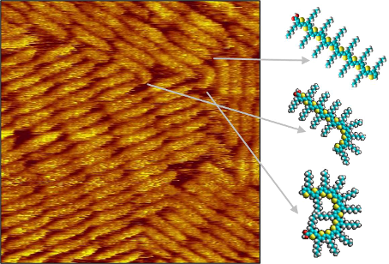
- -molecule organic devices have restored huge interest in structurally well-defined and therefore monodisperse, crystalline oligomers [8]. The method of choice to investigate the ordering of organic semiconductors adsorbed on flat metallic surfaces, at the desired molecular level in the subnanometer range


Formation of SiC nanoparticles in an atmospheric microwave plasma
Beilstein J. Nanotechnol. 2011, 2, 665–673, doi:10.3762/bjnano.2.71
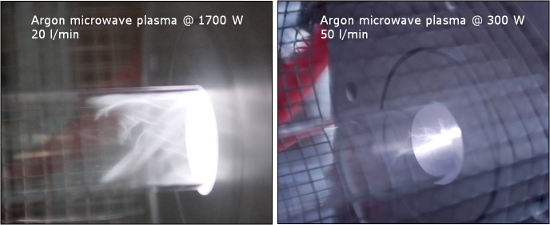
- produced powder was measured with the BET (Brunauer, Emmett, and Teller) method in a QUADRASORB Sl (Quantachrome Instruments). The specific surface area σ (m2/g) gives the particle diameter d (nm) as dBET = 6000/(σ∙ρ), when we assume spherical and monodisperse particles with bulk density ρ (g/cm3



Towards multiple readout application of plasmonic arrays
Beilstein J. Nanotechnol. 2011, 2, 501–508, doi:10.3762/bjnano.2.54
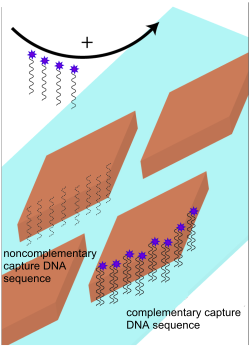
- process, such as in nanosphere lithography (NSL) [15][16], film over nanospheres (FON) [17][18], and sculpted SERS substrates [19]. Here, the arrays are tunable by varying the size of the monodisperse polystyrene or silicon dioxide beads. Unfortunately, frequently occurring constructional defects within


Platinum nanoparticles from size adjusted functional colloidal particles generated by a seeded emulsion polymerization process
Beilstein J. Nanotechnol. 2011, 2, 459–472, doi:10.3762/bjnano.2.50
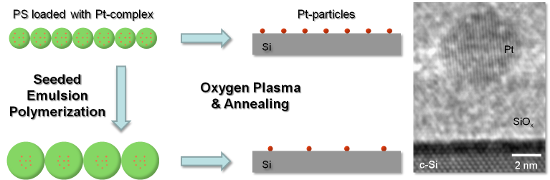
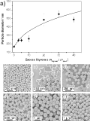
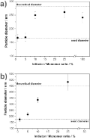
- initiator to monomer and the choice of surfactant and composition of the continuous phase. Critical parameters affecting the control of the reaction are determined. If carefully controlled, the seeded emulsion polymerization with functional seed particles yields monodisperse particles with adjustable size
- ]. Results and Discussion 1 Adjustment of colloidal size by a seeded emulsion polymerization process In order to combine the advantages of both miniemulsion- and emulsion polymerization to create monodisperse functional colloidal particles with precisely adjustable sizes, a seeded emulsion polymerization



Kinetic lattice Monte-Carlo simulations on the ordering kinetics of free and supported FePt L10-nanoparticles
Beilstein J. Nanotechnol. 2011, 2, 40–46, doi:10.3762/bjnano.2.5
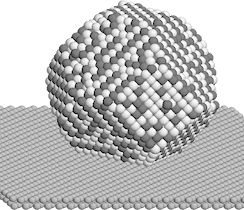
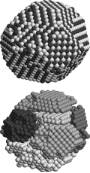
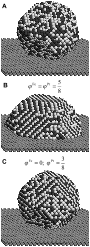
- experimentally that ordered arrays of particles with monodisperse size distribution can be prepared by various synthesis routes ([3] and references therein). The as-prepared particles, however, are in most cases partially disordered and can also contain twin planes [4]. In the past, major attention has been paid




Magnetic interactions between nanoparticles
Beilstein J. Nanotechnol. 2010, 1, 182–190, doi:10.3762/bjnano.1.22
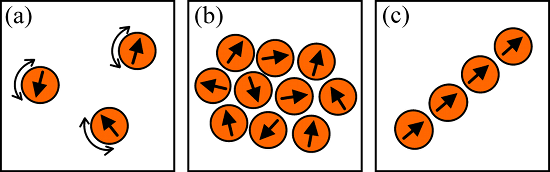
- ]. Moreover, below T0 the memory and rejuvenation phenomena that are characteristic for spin-glass behavior have been observed [20]. The studies of ‘super spin-glass’ behavior have recently been reviewed [21][22]. As an example, Figure 1 shows the relaxation time of suspensions of nearly monodisperse 4.7 nm
- nearly monodisperse particles suspended in decalin as a function of temperature. The data were obtained from AC susceptibility measurements. The open circles are data from a dilute sample, whereas the full circles are data for a concentrated sample. The insets show a transmission electron microscopy (TEM



Magnetic nanoparticles for biomedical NMR-based diagnostics
Beilstein J. Nanotechnol. 2010, 1, 142–154, doi:10.3762/bjnano.1.17
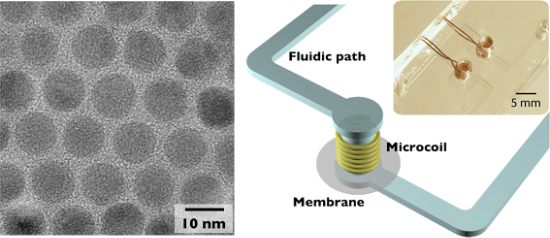
- found to be highly monodisperse and superparamagnetic at 300 K (Figure 2a). The MNPs were subsequently rendered water-soluble using the small molecule, meso-2,3-dimercaptosuccinic acid (DMSA). DMSA has a terminal carboxylic acid group at one end which interacts directly with the magnetic core, and a


Ultrafine metallic Fe nanoparticles: synthesis, structure and magnetism
Beilstein J. Nanotechnol. 2010, 1, 108–118, doi:10.3762/bjnano.1.13
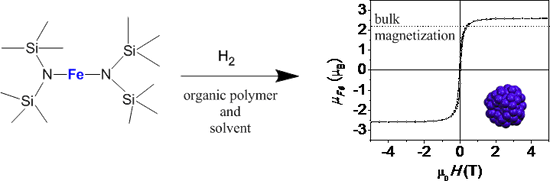
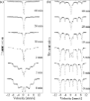
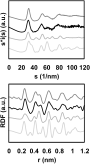
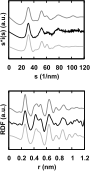
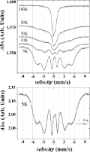
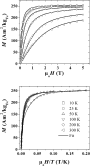
- , monodisperse, with a diameter below 2 nm, which corresponds to a number of around 200 atoms. The X-ray absorption near-edge structure and Mössbauer spectrum are characteristic of metallic Fe. The structural studies by wide angle X-ray scattering indicate an original polytetrahedral atomic arrangement similar





Magnetic coupling mechanisms in particle/thin film composite systems
Beilstein J. Nanotechnol. 2010, 1, 101–107, doi:10.3762/bjnano.1.12
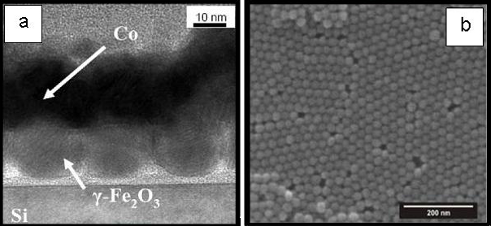
- (AFM) images in Figure 1a and scanning electron microscopy (SEM) images in Figure 1b. The monodisperse nature of the particles and their ordering can be observed in these images. Furthermore, in both images common faults can be seen which are encountered in NP monolayer samples prepared by spin-coating


Review and outlook: from single nanoparticles to self-assembled monolayers and granular GMR sensors
Beilstein J. Nanotechnol. 2010, 1, 75–93, doi:10.3762/bjnano.1.10
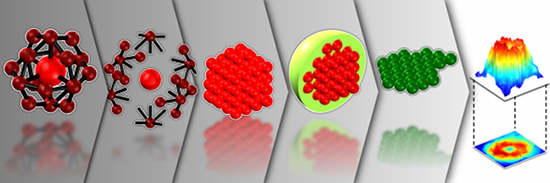
- This paper highlights recent advances in synthesis, self-assembly and sensing applications of monodisperse magnetic Co and Co-alloyed nanoparticles. A brief introduction to solution phase synthesis techniques as well as the magnetic properties and aspects of the self-assembly process of nanoparticles




Flash laser annealing for controlling size and shape of magnetic alloy nanoparticles
Beilstein J. Nanotechnol. 2010, 1, 55–59, doi:10.3762/bjnano.1.7
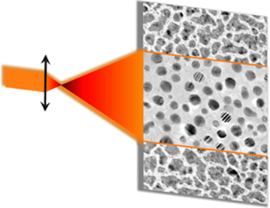
- applications depend on the ability to synthesize NPs with a very good control over the size distribution and the chemical composition. Up to now, only chemical synthesis is able to produce monodisperse CoPt [6] and FePt [7][8] NPs with a polydispersity (that is, standard deviation divided by the mean size) as
- small as 10%. However, chemically prepared monodisperse bimetallic NPs are limited to sub-10 nm diameter, and postsynthesis thermal treatments used to increase NPs size, inevitably widen size dispersion. Vapour phase homogenous nucleation allows the fabrication of sub-10 nm and sup-10 nm particles, but
- effects are obtained with CoPt thin films near the percolation threshold, indicating that the morphological transformations does not depend on the as-grown film morphology. If flash laser annealing experiments always result in spherical and monodisperse NPs, the nominal thickness of the as-grown film can


Preparation and characterization of supported magnetic nanoparticles prepared by reverse micelles
Beilstein J. Nanotechnol. 2010, 1, 24–47, doi:10.3762/bjnano.1.5
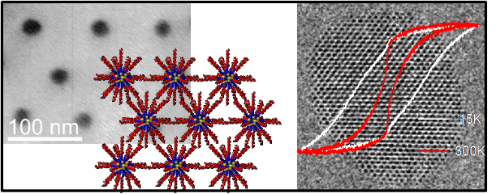
- atoms from a specific target which then agglomerate into clusters in a continuous gas flow before landing on a support [16][17]. This method has the advantage of full processing under vacuum conditions and, moreover, monodisperse NPs can be prepared by size selection during flight [18][19]. One general