Search results
Search for "nanofibers" in Full Text gives 136 result(s) in Beilstein Journal of Nanotechnology.
Nanostructure sensitization of transition metal oxides for visible-light photocatalysis
Beilstein J. Nanotechnol. 2014, 5, 696–710, doi:10.3762/bjnano.5.82
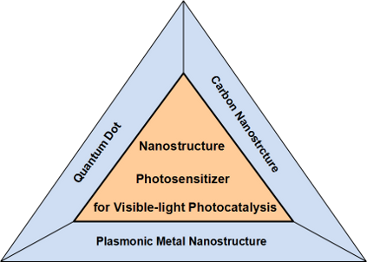
- ][44], CdTe quantum dot monolayer sensitized ZnO nanowire [45], CdS nanoparticle/ZnO nanowire array [46][47], CdS/ TiO2 nanofibers heteroarchitectures [48], ZnO/CdS core/shell nanowire [49], CdS nanowires decorated with TiO2 nanoparticles [50], and their potential applications for photoelectrochemical




DNA origami deposition on native and passivated molybdenum disulfide substrates
Beilstein J. Nanotechnol. 2014, 5, 501–506, doi:10.3762/bjnano.5.58
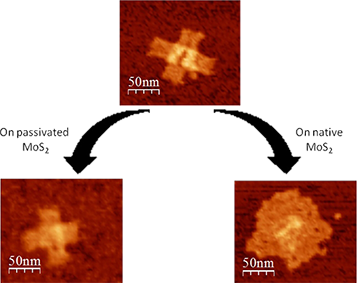
- energy harvesting applications [17]. Compared to conventional semiconductor materials such as silicon, MoS2 is readily processed as a prototypical nanomaterial. MoS2 nanosheets, nanofibers, and nanorods have been prepared [15], which means the material could readily be used to construct electronic


A catechol biosensor based on electrospun carbon nanofibers
Beilstein J. Nanotechnol. 2014, 5, 346–354, doi:10.3762/bjnano.5.39
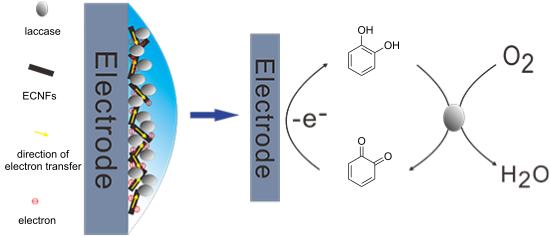
- Dawei Li Zengyuan Pang Xiaodong Chen Lei Luo Yibing Cai Qufu Wei Key Laboratory of Eco-Textiles of Ministry of Education, Jiangnan University, Wuxi 214122, P. R. China 10.3762/bjnano.5.39 Abstract Carbon nanofibers (CNFs) were prepared by combining electrospinning with a high-temperature
- water samples. Keywords: biosensor; carbon nanofibers; catechol; electrospinning; laccase; Introduction Nowadays, carbon nanomaterials attract a great deal of attention due to their high surface area, excellent electronic conduction and biocompatibility. Among these, mesoporous carbon [1][2][3][4][5
- ][6][7][8], activated or porous carbon nanofibers [9][10][11][12][13][14][15][16][17][18][19] have been widely studied. Notably, the carbon nanofibers (CNFs) possess a history of more than a century, the carbon filaments discovered in 1889 may be the earliest CNFs [20]. After more than a century of


Design criteria for stable Pt/C fuel cell catalysts
Beilstein J. Nanotechnol. 2014, 5, 44–67, doi:10.3762/bjnano.5.5
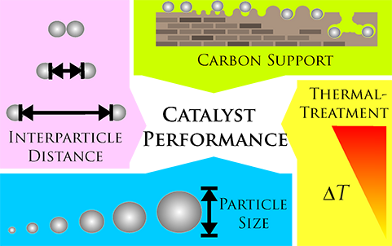
- [23]. Due to the large versatility of carbon structures, many research groups have focused on a variety of alternative carbon materials [24] as supports for fuel cell applications such as single walled and multi-walled carbon nanotubes (SWCNTs, MWCNTs) [25][26], graphene [27], carbon nanofibers [28





Controlled synthesis and tunable properties of ultrathin silica nanotubes through spontaneous polycondensation on polyamine fibrils
Beilstein J. Nanotechnol. 2013, 4, 793–804, doi:10.3762/bjnano.4.90
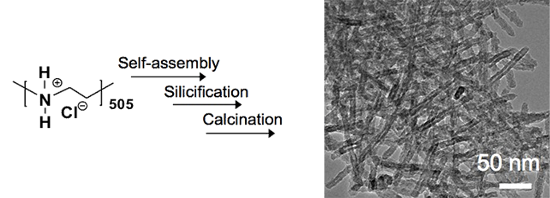
- . Further studies indicated that this method of cooling a hot solution normally produced a mixture of nanoribbons and nanofibers with diameters ranging from 30 to 150 nm [36]. A removal of the LPEI core from the nanofibers led to the formation of hollow silica but without control over the final structures
- performed by using a molar ratio [OH]/[EI] = 3.2. As shown in Figure 7E and Figure 7F, large aggregates composed of a mixture of small silica nanoribbons and nanofibers were formed. The BET study did not show any obvious proof for a uniform formation of nanotube structures (run 11 in Table 1, Figure S4 in
- because of the hybrid nature of the framework. The carbonization of the sample after the adsorption of one layer of PSS (polymer content: 47.9 wt %) produced silica/carbon composites with a much higher of carbon content (7.9 wt %, “b” in Figure 9A). The network structure of nanofibers of this silica


Electrospinning preparation and electrical and biological properties of ferrocene/poly(vinylpyrrolidone) composite nanofibers
Beilstein J. Nanotechnol. 2013, 4, 189–197, doi:10.3762/bjnano.4.19

- 200433, PR China 10.3762/bjnano.4.19 Abstract Nanofibers containing ferrocene (Fc) have been prepared for the first time by electrospinning. In this paper, Fc was dispersed uniformly throughout the poly(vinypyrrolidone) (PVP) matrix for the purpose of combining the properties of PVP and Fc. The effects
- of solvents and Fc concentration on the morphologies and diameters of nanofibers were investigated. In the DMF/ethanol solvent, the morphologies of the obtained nanofibers significantly changed with the increase of Fc concentration. The results demonstrated that the morphologies of the nanofibers
- PVP nanofibers. X-ray diffraction (XRD) results showed that the crystalline structure of Fc in the fibers was amorphous after the electrospinning process. A biological evaluation of the antimicrobial activity of Fc/PVP nanofibers was carried out by using Gram-negative Escherichia coli (E. coli) as


Functionalization of vertically aligned carbon nanotubes
Beilstein J. Nanotechnol. 2013, 4, 129–152, doi:10.3762/bjnano.4.14
- -emission performance. However, it was demonstrated that a fluorine-based functionalization of carbon nanomaterials such as diamond films [83] or amorphous carbon nanoparticle films [84] increases the yield of the phenomenon. The fluorination of carbon nanofibers [85] and SWCNTs [86] was also underlined
- membrane. Feng et al. [140] opted for a polyaniline (PANI) matrix. This material is one of the most conducting polymers (Figure 18). Synthesis and characterization of conducting polymer polyaniline nanofibers was reported by Huang [141]. The major issue related to great disorder of the functionalized








Surface functionalization of aluminosilicate nanotubes with organic molecules
Beilstein J. Nanotechnol. 2012, 3, 82–100, doi:10.3762/bjnano.3.10
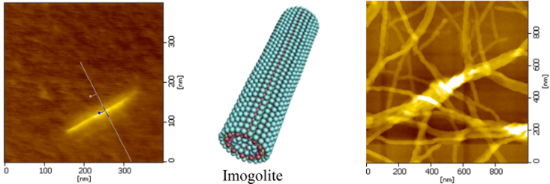
- proposed as the inorganic nanotube to be hybridized with P3HT nanofibers. Reinforcement of P3HT nanofibers by imogolite is expected to impart additional mechanical and thermal stability to organic compounds, making the resulted hybrid material more durable under the outer environmental conditions
- -defined low-dimensional structures. In order to improve compatibility with the P3HT nanofibers, hydrophilic Al–OH groups on the imogolite surface were modified with alkyl phosphonic acid substituted terthiophene (HT3P), as shown in Figure 21. The molecular aggregation states and molecular orientation of
- powerful tool for the direct observation of the aggregation of polymeric nanofibers. By spin coating a dilute solution in anisole, a network of nanofibers more or less entirely covers the silicon substrate. The dimensions of the nanofiber were determined from DFM images; as shown in Figure 23a, P3HT


Synthesis and catalytic applications of combined zeolitic/mesoporous materials
Beilstein J. Nanotechnol. 2011, 2, 785–801, doi:10.3762/bjnano.2.87
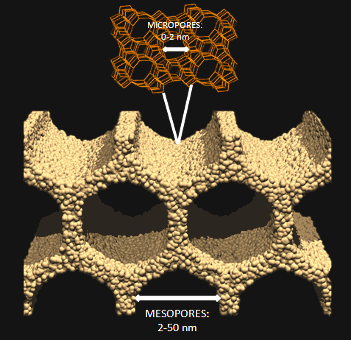
- carbons (CMKs) [102][103], carbon nanotubes [104], and carbon nanofibers [105]. The choice of template is crucial for the final material, since the mesoporous zeolites essentially become replicas of the carbon pore system in which they grow. For example, with carbon black, the resulting pores will be



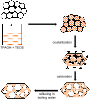


Approaches to nanostructure control and functionalizations of polymer@silica hybrid nanograss generated by biomimetic silica mineralization on a self-assembled polyamine layer
Beilstein J. Nanotechnol. 2011, 2, 760–773, doi:10.3762/bjnano.2.84
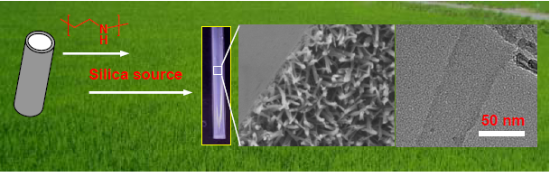
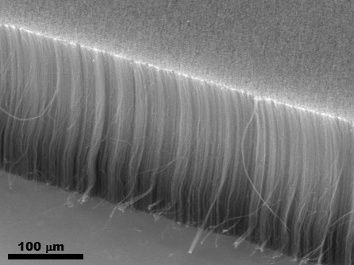
- [8][9][10][11]. On the other hand, silica films consisted of a network of interwoven nanofibers were also reported as produced by flame spray pyrolysis of organometallic solutions with the deposition and annealing temperature of silica in the range from 500 to 800 °C [12]. However, these conventional


Self-organizing bioinspired oligothiophene–oligopeptide hybrids
Beilstein J. Nanotechnol. 2011, 2, 525–544, doi:10.3762/bjnano.2.57
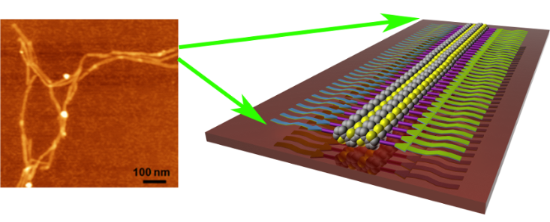
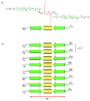
- theoretical considerations of the experimentally observed nanofibers, the molecular structure of the molecule was constructed. Our theoretical research methodology consists of four main steps schematically depicted in Figure 11. First, the available experimental data, including available X-ray structural data
- the A–B system 6 in the native state of the peptide. In principle both parts of this hybrid molecule (thiophene part and peptide part) may be capable of strong intermolecular interactions, thus leading to the formation of highly anisotropic structures such as nanofibers, nanorods, etc. However, the IR
- spectroscopic data for the compound under study revealed that the β-sheet structure formation was at least involved in the self-assembly mechanism of our nanofibers. While the formation of fibers at the nanometer scale (especially amyloid-like fibers) from separate peptide moieties due to β-sheet aggregation is