


Search results
Search for "nanospheres" in Full Text gives 142 result(s) in Beilstein Journal of Nanotechnology.
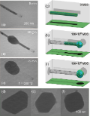
Antimicrobial properties of CuO nanorods and multi-armed nanoparticles against B. anthracis vegetative cells and endospores
Beilstein J. Nanotechnol. 2014, 5, 789–800, doi:10.3762/bjnano.5.91
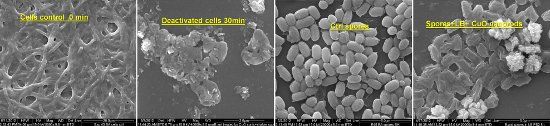
- [21]. Recently it has been found that conversion of three-dimensional polystyrene nanospheres to a two-dimensional nanodisc shape offers a larger contact surface with cell membranes and generates less impact during their interaction, which leads to a binding that is limited to the cell membrane with


Nanostructure sensitization of transition metal oxides for visible-light photocatalysis
Beilstein J. Nanotechnol. 2014, 5, 696–710, doi:10.3762/bjnano.5.82
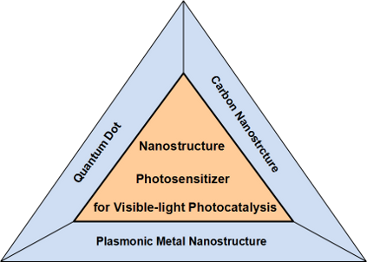
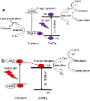
- ) and then emit shorter wavelength light (300 to 530 nm) for the excitation of m-BiVO4 to further generate electron–hole pairs for photocatalytic degradation. Due to the special upconversion property of carbon nanodots, the carbon nanodots–m-BiVO4 nanospheres can be used as photocatalysts under the




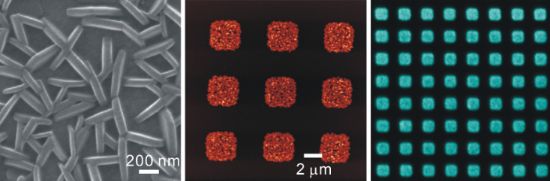
Hole-mask colloidal nanolithography combined with tilted-angle-rotation evaporation: A versatile method for fabrication of low-cost and large-area complex plasmonic nanostructures and metamaterials
Beilstein J. Nanotechnol. 2014, 5, 577–586, doi:10.3762/bjnano.5.68
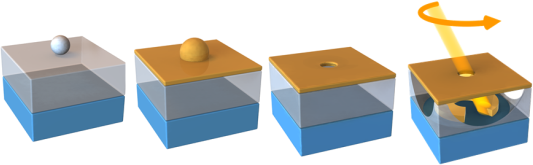
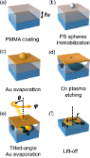
- diameter, namely, the size of the used nanospheres. The average radius of the SRRs depends on the PMMA thickness h0 and the azimuthal angle θ: The gap size s depends additionally on the rotated angle φ: After evaporation has been carried out, the sacrificial PMMA layer and the gold mask are removed by
- – variation of nanostructure density In order to realize different plasmonic applications, the density of the disordered drop-coated nanospheres must be well controlled by suitable concentrations of the negatively charged PS nanospheres and the positively charged PDDA solution. The electrostatic and steric
- sufficient oxygen plasma etching time has been reached. PS nanospheres of 119 nm diameter were used in all four examples. A variety of different nanostructures fabricated by hole-mask colloidal lithography: (a) ellipses, (b) split-rings, (c) asymmetric double split-rings, (d) dimers, (e) pentamers, (f) three


In vitro toxicity and bioimaging studies of gold nanorods formulations coated with biofunctional thiol-PEG molecules and Pluronic block copolymers
Beilstein J. Nanotechnol. 2014, 5, 546–553, doi:10.3762/bjnano.5.64
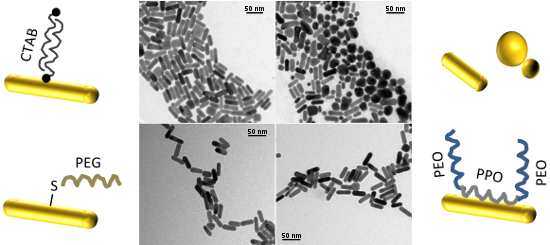
- . AuNRs have the unique ability to enhance the electromagnetic field within sub-wavelength regions adjacent to their surfaces under resonance excitation. The optical cross section of AuNRs is comparable to gold nanospheres and nanoshells, but the smaller effective dimension of AuNRs makes them useful for


Mesoporous cerium oxide nanospheres for the visible-light driven photocatalytic degradation of dyes
Beilstein J. Nanotechnol. 2014, 5, 517–523, doi:10.3762/bjnano.5.60
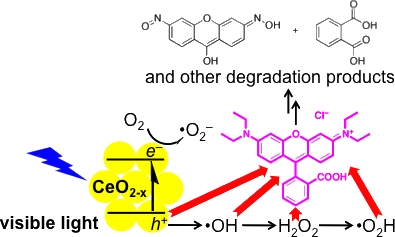
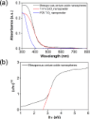
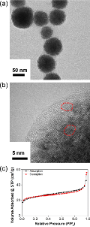
- , Singapore 138632 Energy Research Institute @ NTU (ERI@N), 1 CleanTech Loop, Singapore 637141 Singapore-Berkeley Research Initiative for Sustainable Energy (SinBeRISE), 1 Create Way, Singapore 138602 10.3762/bjnano.5.60 Abstract A facile, solvothermal synthesis of mesoporous cerium oxide nanospheres is
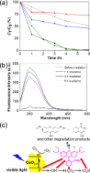
- nanospheres, which is a mixed phase of Ce7O12 and CeO2, and can absorb visible light to photocatalytically degrade dyes such as rhodamine B (RhB). The materials characterization of the cerium oxide nanospheres and some mechanistic insights into the photocatalytic process are presented. Findings
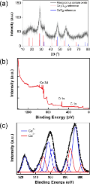
- (CAN) in ethylene glycol and isopropanol as the solvent and reductant was heated up to 130 °C to yield mesoporous cerium oxide nanospheres after work-up. The powder X-ray diffraction (XRD) pattern (Figure 1a) indicates that the as-prepared cerium oxide material can be indexed to a superposition of

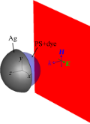
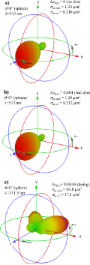
Dye-doped spheres with plasmonic semi-shells: Lasing modes and scattering at realistic gain levels
Beilstein J. Nanotechnol. 2013, 4, 974–987, doi:10.3762/bjnano.4.110
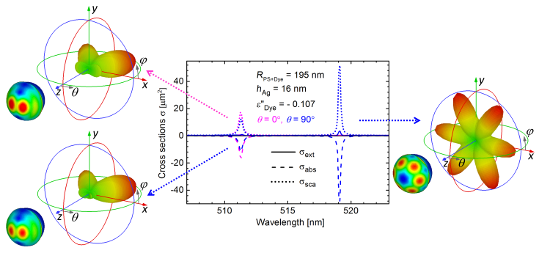
- plasmonic shells [27][28]. Loss-compensation in the case of solid gold nanospheres embedded in a gain medium has been experimentally verified by Noginov et al. [29] and more recently confirmed by Strangi et al. [30]. The cancellation of the losses in hybrid materials that comprise resonant nanoparticle




Probing the plasmonic near-field by one- and two-photon excited surface enhanced Raman scattering
Beilstein J. Nanotechnol. 2013, 4, 834–842, doi:10.3762/bjnano.4.94
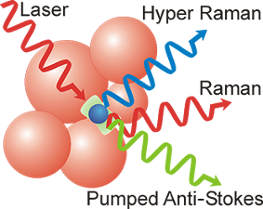
- aggregates of nanoparticle of various sizes and shapes reaching from dimers [4][5][6][7], and trimers [8] to selfsimilar structures formed by silver- or gold nanospheres [9]. High local fields can also exist in fractal films or cavities of these noble metals [10]. The recently reported super-resolution
- only 0.00003 % of the surface of the nanoaggregates provide electromagnetic SERS enhancement factors on the order of 1012. For more regular Ag films over nanospheres (AgFON) substrates, it has been found that 0.0003% of the surface provides an enhancement factor larger than 1010 [49] and 0.003% exhibit




Nanoglasses: a new kind of noncrystalline materials
Beilstein J. Nanotechnol. 2013, 4, 517–533, doi:10.3762/bjnano.4.61
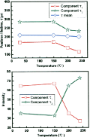
- spectrum of the ribbon or of the isolated Fe90Sc10 nanometer-sized clusters and (2) a ferromagnetic component (six-line subspectrum: red curve in Figure 12). As the ferromagnetism at ambient temperature is observed only if the Fe90Sc10 nanospheres are compacted (Figure 12), one is led to conclude that it






Near-field effects and energy transfer in hybrid metal-oxide nanostructures
Beilstein J. Nanotechnol. 2013, 4, 306–317, doi:10.3762/bjnano.4.34
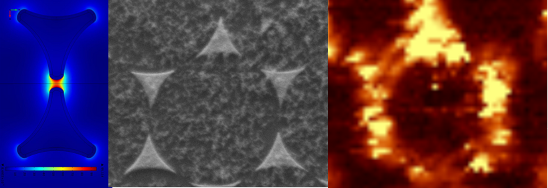
- surface. Such a quenching of the fluorescence has been reported earlier for noble-metal nanospheres [19][20]. The quenching can be suppressed by inserting a dielectric layer between the metal and the semiconducting nanophosphors. This can either be achieved by coating of the nanoparticles, or by








Plasticity of Cu nanoparticles: Dislocation-dendrite-induced strain hardening and a limit for displacive plasticity
Beilstein J. Nanotechnol. 2013, 4, 173–179, doi:10.3762/bjnano.4.17
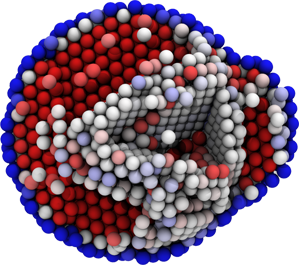
- nanowires at high stresses and zero temperatures [4]. Non-close-packed nanostructures have been reported to deform by phase-transitions to a higher density phase. A limit of displacive plasticity leading to a phase-transition path was reported for Si nanospheres [5] concluding that in ultrasmall structures


Functionalization of vertically aligned carbon nanotubes
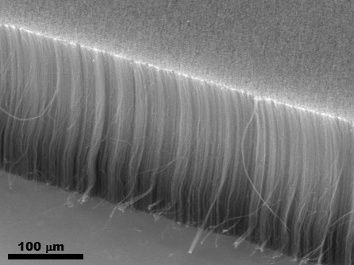
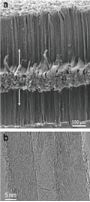
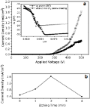
Beilstein J. Nanotechnol. 2013, 4, 129–152, doi:10.3762/bjnano.4.14








Characterization and properties of micro- and nanowires of controlled size, composition, and geometry fabricated by electrodeposition and ion-track technology
Beilstein J. Nanotechnol. 2012, 3, 860–883, doi:10.3762/bjnano.3.97








The oriented and patterned growth of fluorescent metal–organic frameworks onto functionalized surfaces
Beilstein J. Nanotechnol. 2012, 3, 570–578, doi:10.3762/bjnano.3.66
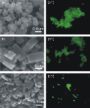
- [10][11], ultrasonic synthesis [12][13], microemulsions [14][15], or solvent-triggered precipitation [16][17]. Nanoscale MOFs with various morphologies, (e.g., nanospheres [16][18][19][20], nanocubes [21], nanorods [14][22], nanowheels [23], and hierarchical spheres [22]) have been synthesized [24



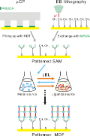


Colloidal lithography for fabricating patterned polymer-brush microstructures
Beilstein J. Nanotechnol. 2012, 3, 397–403, doi:10.3762/bjnano.3.46
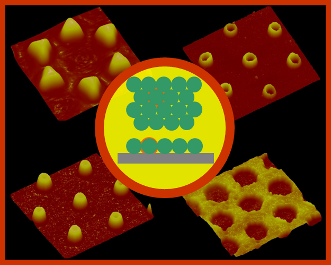
- area of the interstices on the substrate [2][4]. Micro- and nanospheres can also be used to guide the transport of molecules so that the molecular deposition forms a ring-shaped pattern around the contact point (footprint) of the microsphere with the substrate [9]. For a self-assembled microsphere
- . Results and Discussion Hexagonally packed arrays of self-assembled colloidal micro- and nanospheres on surfaces have been used as masks to guide deposition or etching through the interstices between the colloidal microspheres [5][6][9]. For example, arrays of triangularly shaped metal islands can be


Ceria/silicon carbide core–shell materials prepared by miniemulsion technique
Beilstein J. Nanotechnol. 2011, 2, 638–644, doi:10.3762/bjnano.2.67
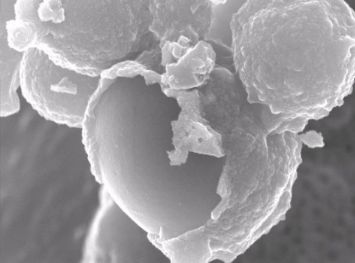
- reaction [34][35]. Thus, we report for the first time a CeO2/SiC core–shell system with tunable particle sizes through a miniemulsion technique, and demonstrate its use as a catalyst for the oxidation of methane. Results and Discussion Polycarbosilane (PCS) nanospheres were synthesized from a miniemulsion
- centrifugation. In case of the surface functionalized PCS-Acr spheres (comonomer = acrylic acid), 3.5 mL of this PCS-Acr miniemulsion was added to an 0.1 M aqueous solution of 440 mg Ce(NO3)3·6H2O (Aldrich, 99%) and stirred overnight at RT. The PCS-nanospheres were destabilized by adding acetone, centrifuged and
- washed with water. Coating and pyrolysis The functionalized PCS nanospheres were either pyrolyzed as synthesized or coated on a silicon wafer at 1073 K under an argon atmosphere (RT–573 K at 150 K·h−1, then 5 h at 573 K, followed by heating to 973 K at 30 K·h−1. After reaching 973 K, the sample was


Towards multiple readout application of plasmonic arrays
Beilstein J. Nanotechnol. 2011, 2, 501–508, doi:10.3762/bjnano.2.54
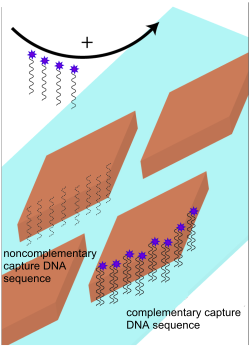
- process, such as in nanosphere lithography (NSL) [15][16], film over nanospheres (FON) [17][18], and sculpted SERS substrates [19]. Here, the arrays are tunable by varying the size of the monodisperse polystyrene or silicon dioxide beads. Unfortunately, frequently occurring constructional defects within


A collisional model for AFM manipulation of rigid nanoparticles
Beilstein J. Nanotechnol. 2010, 1, 158–162, doi:10.3762/bjnano.1.19
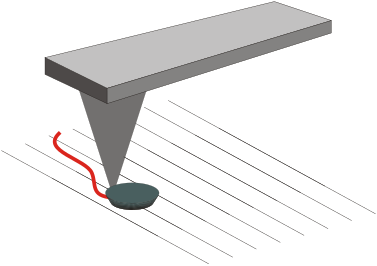
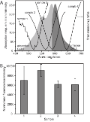
- nanoparticles manipulated by atomic force microscopy are related to the scan path of the probing tip. The direction of motion of the nanoparticles is essentially fixed by the distance b between consecutive scan lines. Well-defined formulas are obtained in the case of rigid nanospheres and nanowires. Numeric
- manipulation of rigid nanorods, including nanospheres and thin nanowires as limit cases, we discuss symmetric nanostars as a prototype of more complex shaped particles. We show that in any case the angle of motion of the nanoparticles is precisely related to the distance b between consecutive scan lines. When
- Equation 8 show that the directions of motion of nanospheres and nanowires manipulated by AFM in tapping mode are completely determined by the distance b between consecutive scan lines or, equivalently, by the density of scan lines 1/b. The functions of Equation 7 and Equation 8 are plotted in Figure 2. In





