


Search results
Search for "nanotechnology" in Full Text gives 706 result(s) in Beilstein Journal of Nanotechnology. Showing first 200.
Assessing phytotoxicity and tolerance levels of ZnO nanoparticles on Raphanus sativus: implications for widespread adoptions
Beilstein J. Nanotechnol. 2024, 15, 115–125, doi:10.3762/bjnano.15.11
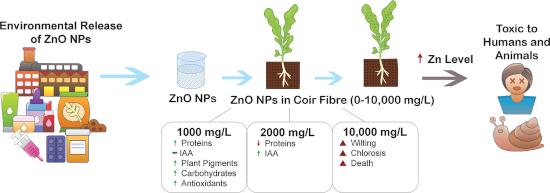
- efficient, novel sources of Zn fertilizers for cultivated crops through the integration of nanotechnology has been the focus of considerable research in the past decade [10]. Nanoparticles have garnered the interest of researchers, leading to their wide application in agriculture due to their enhanced
- kcps, a duration of 50 s. Water was used as a dispersant with a NP concentration of 25 ppm following sonication for 30 min at 45 kHz using a GT SONIC-L3 sonicator. Particle size and shape of ZnO NPs were analyzed using Hitachi SU6600 FE (Field Emission)-SEM at the Sri Lankan Institute of Nanotechnology


Development and characterization of potential larvicidal nanoemulsions against Aedes aegypti
Beilstein J. Nanotechnol. 2024, 15, 104–114, doi:10.3762/bjnano.15.10
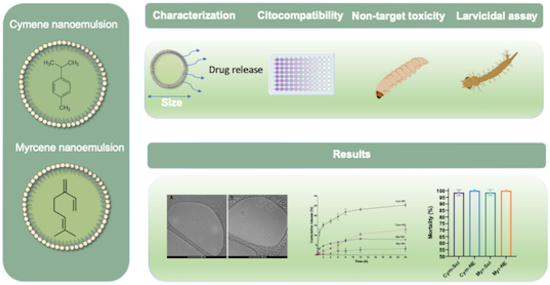
- , and immunity to resistance issues that plague conventional chemicals. However, the practical use of monoterpenes in insect control has been hampered by challenges including their poor solubility and stability in aqueous environments. In recent years, the application of nanotechnology-based
- Nanotechnology National Laboratory (LNNano), part of the Brazilian Centre for Research in Energy and Materials (CNPEM), for the access to the Cryo-EM facility, proposal TEM-27086. Funding This study was financed by the São Paulo Research Foundation (FAPESP), Grant number 2019/25125-7 and partially supported by


Curcumin-loaded nanostructured systems for treatment of leishmaniasis: a review
Beilstein J. Nanotechnol. 2024, 15, 37–50, doi:10.3762/bjnano.15.4
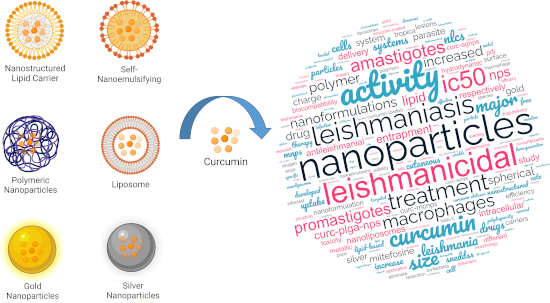
- Leishmania spp. Although its mechanism of action has not yet been fully elucidated, its leishmanicidal potential may be associated with its antioxidant and anti-inflammatory properties. However, it has limitations that compromise its clinical use. Conversely, nanotechnology has been used as a tool for
- parasite towards a given drug through decreased uptake of the drug by macrophages [55][56][57]. Thus, nanotechnology-based systems are a promising alternative for drug delivery and vectorization in the treatment of leishmaniasis as they present several advantages. One could mention decreased side effects
- promising activity, this molecule shows poor water solubility, high metabolism, and fast elimination impair, which results in low systemic bioavailability and poor in vivo pharmacological effect. In this context, molecules with similar limitations have been combined with nanotechnology tools to allow their


Nanotechnological approaches in the treatment of schistosomiasis: an overview
Beilstein J. Nanotechnol. 2024, 15, 13–25, doi:10.3762/bjnano.15.2
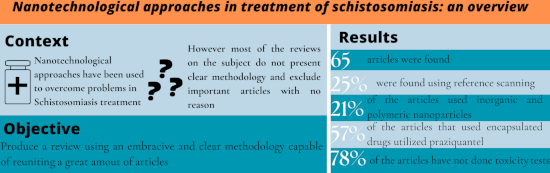
- ; nanoformulation; nanotechnology; neglected diseases; praziquantel; schistosoma; Introduction Schistosomiasis is a disease common in tropical countries caused by trematodes from the genus Schistosoma. More than 220 million people are affected by this disease, in addition to 800 million at risk of infection [1][2
- address all these issues related to PZQ and bring new treatment alternatives [10]. Nanotechnology involves the creation and use of materials and technologies at the nanoscale, while nanomedicine focuses on the application of nanotechnology to treat, monitor, and prevent diseases [11]. Nanomedicine uses
- also brings disadvantages, such as occurrence of resistant strains, low bioavailability [47], and organoleptic characteristics such as bitter taste [29][48]. In the literature, it is described that nanoformulations approaches can overcome these drawbacks. Most publications used nanotechnology to alter


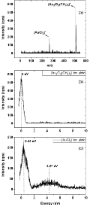
A combined gas-phase dissociative ionization, dissociative electron attachment and deposition study on the potential FEBID precursor [Au(CH3)2Cl]2
Beilstein J. Nanotechnol. 2023, 14, 1178–1199, doi:10.3762/bjnano.14.98
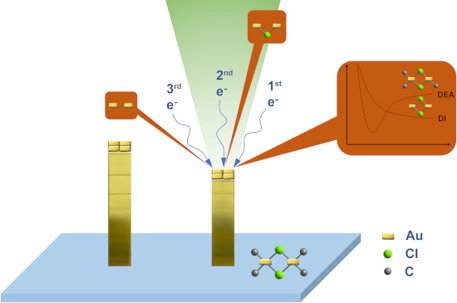
- nanotechnology. These include, but are not limited to electronic interconnects [5], metamaterials [6], growth substrates for nanowires and nanotubes [7], and complex plasmonic structures [8][9]. For the latter application, mastery over the shape as well as accurate control of the distribution of the



Spatial variations of conductivity of self-assembled monolayers of dodecanethiol on Au/mica and Au/Si substrates
Beilstein J. Nanotechnol. 2023, 14, 1169–1177, doi:10.3762/bjnano.14.97
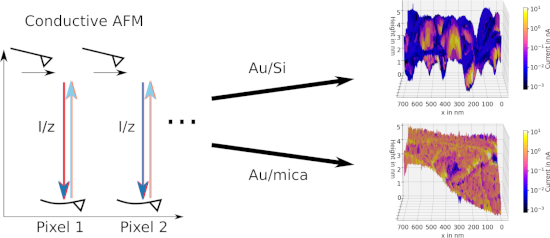
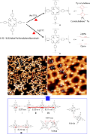
- /mica, Bruker MESP-V2 (CoCr-coated Si) probes were used, whereas, for the remaining measurements, Rocky Mountain Nanotechnology RMN-25PT300B probes with solid Pt wire as tips were used. The latter have the advantage that they do not oxidize easily and remain conductive, as there is no fragile metal


Sulfur nanocomposites with insecticidal effect for the control of Bactericera cockerelli
Beilstein J. Nanotechnol. 2023, 14, 1106–1115, doi:10.3762/bjnano.14.91
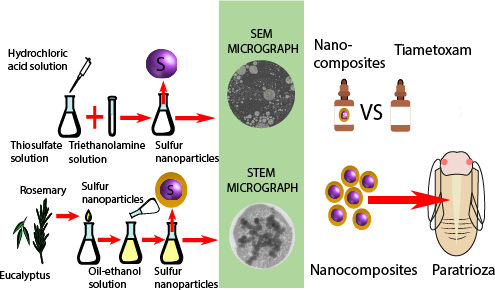
- nanocomposites are more effective in controlling nymphs of paratrioza than the commercial insecticide thiamethoxam; thus, they could be used for the development of new insecticides. Keywords: eucalyptus; nanoinsecticide; nanotechnology; Paratrioza control; rosemary; Introduction Paratrioza (Bactericera
- , contamination of water bodies, degradation of agroecosystems, and damages to human health after direct or indirect exposure [11][12][13]. Therefore, new methods need to be considered to control the pest. Nanotechnology has emerged as a technological advance that can enhance modern agriculture by helping in the
- development of new nanoinsecticides to combat pests in a more productive, cost-effective, and eco-friendly way [8][12]. Nanoscale agricultural products are developed using nanotechnology, such as nanopesticides, nanoinsecticides, nanoemulsions, and nanoparticles, to reduce the use of toxic chemicals [14


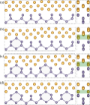
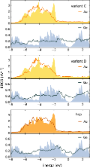
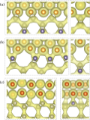
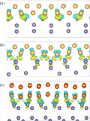
Density functional theory study of Au-fcc/Ge and Au-hcp/Ge interfaces
Beilstein J. Nanotechnol. 2023, 14, 1093–1105, doi:10.3762/bjnano.14.90
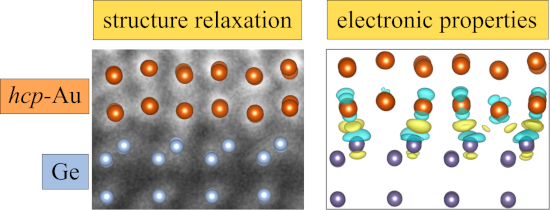
- , Poland 10.3762/bjnano.14.90 Abstract In recent years, nanostructures with hexagonal polytypes of gold have been synthesised, opening new possibilities in nanoscience and nanotechnology. As bulk gold crystallizes in the fcc phase, surface effects can play an important role in stabilizing hexagonal gold
- . Deeper knowledge of surfaces and interfaces in heterostructures can play a crucial role in developing new methods for synthesizing such materials and in expanding their possible applications in nanoscience and nanotechnology. As a result of advances in computational methods and the increasing computer






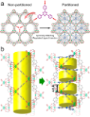
Metal-organic framework-based nanomaterials for CO2 storage: A review
Beilstein J. Nanotechnol. 2023, 14, 964–970, doi:10.3762/bjnano.14.79
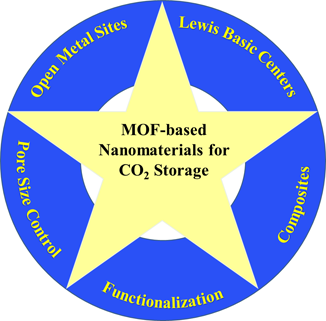
- Ha Huu Do Iqra Rabani Hai Bang Truong VKTech Research Center, NTT Hi-Tech Institute, Nguyen Tat Thanh University, Ho Chi Minh City 700000, Vietnam Department of Nanotechnology and Advanced Materials Engineering, Sejong University, Seoul 05006, Republic of Korea Optical Materials Research Group




Antibody-conjugated nanoparticles for target-specific drug delivery of chemotherapeutics
Beilstein J. Nanotechnol. 2023, 14, 912–926, doi:10.3762/bjnano.14.75
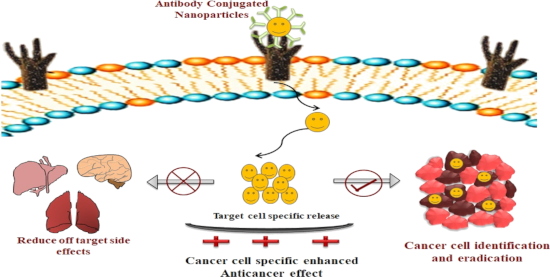
- , India Academy of Scientific & Innovative Research (AcSIR), Ghaziabad-201002, India 10.3762/bjnano.14.75 Abstract Nanotechnology provides effective methods for precisely delivering chemotherapeutics to cancer cells, thereby improving efficacy and reducing off-target side effects. The targeted delivery



N-Heterocyclic carbene-based gold etchants
Beilstein J. Nanotechnol. 2023, 14, 865–871, doi:10.3762/bjnano.14.71
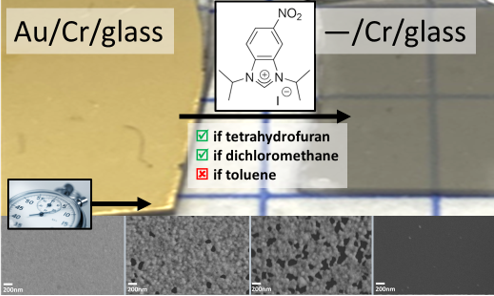
- . Acknowledgements We would like to acknowledge Dr. Irene Andreu for her help collecting and analyzing SEM images. Funding This work was supported by NSF OIA-1655221. SEM images were acquired at the RI Consortium for Nanoscience and Nanotechnology, a URI College of Engineering core facility partially funded by the



Biomimetics on the micro- and nanoscale – The 25th anniversary of the lotus effect
Beilstein J. Nanotechnol. 2023, 14, 850–856, doi:10.3762/bjnano.14.69

- Matthias Mail Kerstin Koch Thomas Speck William M. Megill Stanislav N. Gorb Institute of Nanotechnology (INT), Karlsruhe Institute of Technology (KIT), Hermann-von-Helmholtz-Platz 1, D-76344 Eggenstein-Leopoldshafen, Germany Faculty of Life Sciences, Rhine-Waal University of Applied Sciences, D


Ultralow-energy amorphization of contaminated silicon samples investigated by molecular dynamics
Beilstein J. Nanotechnol. 2023, 14, 834–849, doi:10.3762/bjnano.14.68
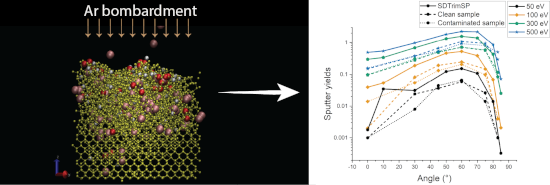
- . Furthermore, several domains of nanotechnology and industry use nanoscaled samples that need to be controlled to an extreme level of precision. To reduce the irradiation-induced damage and to limit the interactions of the ions with the sample, low-energy ion beams are used because of their low implantation





Silver nanoparticles loaded on lactose/alginate: in situ synthesis, catalytic degradation, and pH-dependent antibacterial activity
Beilstein J. Nanotechnol. 2023, 14, 781–792, doi:10.3762/bjnano.14.64
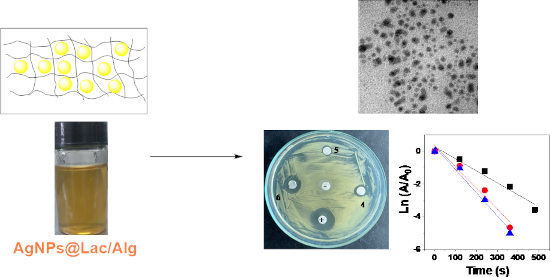
- is an important topic in the field of nanotechnology. However, AgNPs synthesized in that way have a number of drawbacks such as high cost and low stability. Typically, AgNPs are loaded onto polymers/composites in order to enhance their performance in usage [4][10][12]. Among polymers, polysaccharides


Nanoarchitectonics for advanced applications in energy, environment and biology: Method for everything in materials science
Beilstein J. Nanotechnol. 2023, 14, 738–740, doi:10.3762/bjnano.14.60
- 10.3762/bjnano.14.60 Keywords: functional materials; materials science; nanoarchitectonics; nanotechnology; The advancement of society depends on functional materials that are available and systems that are generated by the population. We can say that the development of advanced civilizations happens in
- the creation of functional materials that improved human life. In the course of their development, we have learned that the function of a material depends not only on the material itself but also on the precision of its internal structure. This is where nanotechnology has brought about a revolution
- . Nanotechnology has enabled the observation and analysis of the properties of objects at the nanoscale level, down to molecules and atoms. Then, by understanding and creating new nanostructures it became possible to create materials with unprecedented high functionality. Society has brought about amazing progress

Nanomaterials for photocatalysis and applications in environmental remediation and renewable energy
Beilstein J. Nanotechnol. 2023, 14, 722–724, doi:10.3762/bjnano.14.58
- persistent organic pollutants (POPs) also contributes to water pollution, increasing global environmental pollution. Recently, the reduction and conversion of CO2 into fuel as valuable hydrocarbon products has been drawing attention from scientists in materials science, chemical engineering, nanotechnology
- We sincerely thank the authors who contributed with quality articles to this Thematic Issue. We also thank the editorial team of the Beilstein Journal of Nanotechnology, especially the support from Dr. Barbara Hissa and Dr. Lasma Gailite for the completion of this Thematic Issue.

A graphene quantum dots–glassy carbon electrode-based electrochemical sensor for monitoring malathion
Beilstein J. Nanotechnol. 2023, 14, 701–710, doi:10.3762/bjnano.14.56
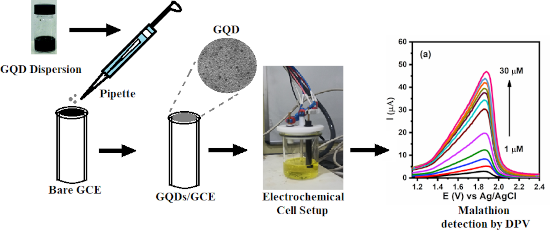
- Sanju Tanwar Aditi Sharma Dhirendra Mathur Centre of Nanotechnology, Rajasthan Technical University, Kota, Rajasthan, India Materials Research Centre, Malaviya National Institute of Technology, Jaipur, Rajasthan, India 10.3762/bjnano.14.56 Abstract Graphene quantum dots (GQDs) were made via a


Metal-organic framework-based nanomaterials as opto-electrochemical sensors for the detection of antibiotics and hormones: A review
Beilstein J. Nanotechnol. 2023, 14, 631–673, doi:10.3762/bjnano.14.52
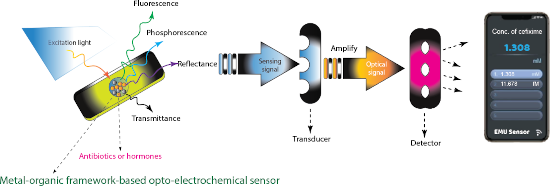
- instrumentation or highly skilled technical experts. Given the many benefits of nanomaterials, it is anticipated that the incorporation of nanotechnology in sensing would lead to the development of a diagnostic tool for detecting hormone and antibiotic residues in diverse single or multiple matrices. Other


Molecular nanoarchitectonics: unification of nanotechnology and molecular/materials science
Beilstein J. Nanotechnol. 2023, 14, 434–453, doi:10.3762/bjnano.14.35
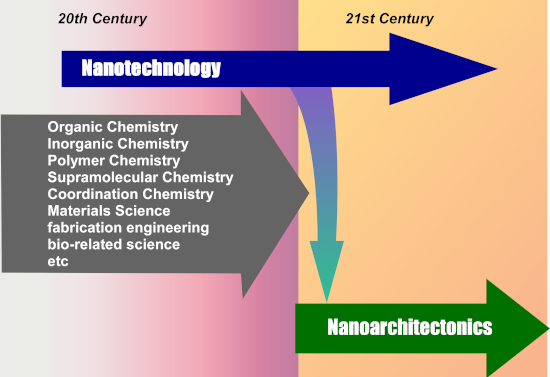
- , Chiba 277-8561, Japan 10.3762/bjnano.14.35 Abstract The development of nanotechnology has provided an opportunity to integrate a wide range of phenomena and disciplines from the atomic scale, the molecular scale, and the nanoscale into materials. Nanoarchitectonics as a post-nanotechnology concept is a
- are introduced, and future prospects of nanoarchitectonics are discussed. The fusion of basic science and the application of practical functional materials will complete materials chemistry for everything. Keywords: local probe chemistry; materials chemistry; nanoarchitectonics; nanotechnology; on
- -surface synthesis; Review Introduction Nanotechnology is a game changer that has innovated the course of scientific research. Nanotechnology innovations have unlocked mysteries at the nanoscale [1][2][3]. These research innovations have bridged the gap between nanoscale basic science and materials





Evaluation of electrosynthesized reduced graphene oxide–Ni/Fe/Co-based (oxy)hydroxide catalysts towards the oxygen evolution reaction
Beilstein J. Nanotechnol. 2023, 14, 420–433, doi:10.3762/bjnano.14.34
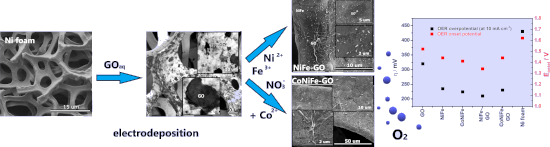
- Advanced Materials Center, Institute of Nanotechnology and Materials Engineering, Faculty of Applied Physics and Mathematics, Gdańsk University of Technology, ul. Narutowicza 11/12, 80–233 Gdańsk, Poland National Synchrotron Radiation Centre SOLARIS, Jagiellonian University, ul. Czerwone Maki 98, 30-392
- obtained on an ultrahigh vacuum spectrophotometer at a pressure below 1.1 × 10⁻⁸ mbar at room temperature (Omicron NanoTechnology). Photoelectrons were detected by a spectrophotometer equipped with a 128-channel collector. The X-ray anode was operated at 15 keV and 300 W. The chemical composition




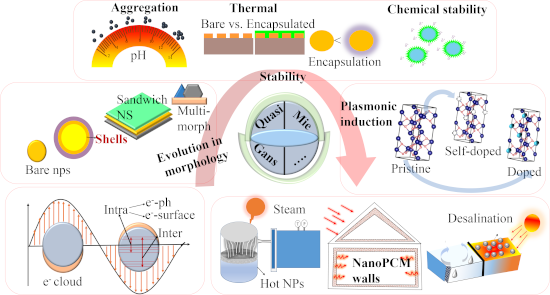
Plasmonic nanotechnology for photothermal applications – an evaluation
Beilstein J. Nanotechnol. 2023, 14, 380–419, doi:10.3762/bjnano.14.33


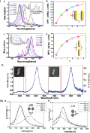


New trends in nanobiotechnology
Beilstein J. Nanotechnol. 2023, 14, 377–379, doi:10.3762/bjnano.14.32
- Pau-Loke Show Kit Wayne Chew Wee-Jun Ong Sunita Varjani Joon Ching Juan Department of Chemical Engineering, Khalifa University, P.O. Box 127788, Abu Dhabi, United Arab Emirates Centre for Energy and Environmental Sustainability, Lucknow, India Nanotechnology & Catalysis Research Centre (NanoCat
- -assembly; wet chemical reduction; The widespread use of nanotechnology has reached almost every sector in our daily lives and amazed the world by offering various potential applications in these sectors. The uprising wave of nanotechnology and its application are now prominent in the fields of chemistry
- and biomedicine, which are vital as these fields serve as a basis for the discovery of new molecules that may benefit humans. Nanotechnology contributed to the advancement of promising techniques either by the implementation of existing methods or by the establishment of new ones. Researchers in
Quercetin- and caffeic acid-functionalized chitosan-capped colloidal silver nanoparticles: one-pot synthesis, characterization, and anticancer and antibacterial activities
Beilstein J. Nanotechnol. 2023, 14, 362–376, doi:10.3762/bjnano.14.31
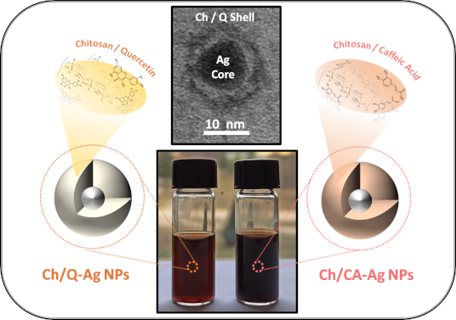
- ; Introduction In recent years, nanoscale studies have become an important research area thanks to the ever increasing means of synthesis, characterization, and application of nanoscale materials (1 to 100 nm). Progress and development in nanotechnology have started to make a difference in various areas


The steep road to nonviral nanomedicines: Frequent challenges and culprits in designing nanoparticles for gene therapy
Beilstein J. Nanotechnol. 2023, 14, 351–361, doi:10.3762/bjnano.14.30
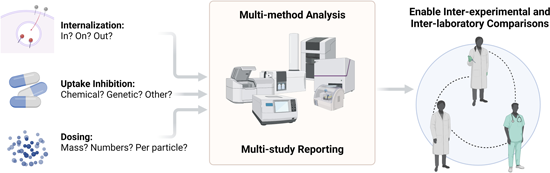
- Nanotechnology”’s editorial that “few studies offer consistent results that are of value, and it is difficult to compare studies because they are often carried out using poorly characterized nanomaterials and arbitrary experimental conditions” [9]. In addition to the difficulty of interexperimental and
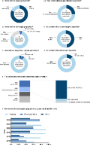

Overview of mechanism and consequences of endothelial leakiness caused by metal and polymeric nanoparticles
Beilstein J. Nanotechnol. 2023, 14, 329–338, doi:10.3762/bjnano.14.28
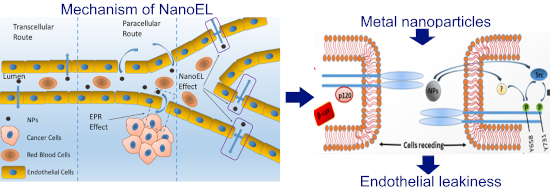
- nanotechnology and the use of nanoparticles as drugs, researchers have faced new problems, such as nanotoxicity and pathological consequences of their use. Therefore, knowledge about mechanisms and consequences of endothelial leakiness (NanoEL) caused by nanoparticles is crucial to develop effective and safe
- providing a new therapeutic approach that could also be applied in noncancerous applications [41]. Therapeutic and pathological consequences of NanoEL The development of nanotechnology creates a number of possibilities in the synthesis of NPs with the desired physicochemical properties, which will determine





