Search results
Search for "nitrate" in Full Text gives 225 result(s) in Beilstein Journal of Nanotechnology. Showing first 200.
Kinetics of solvent supported tubule formation of Lotus (Nelumbo nucifera) wax on highly oriented pyrolytic graphite (HOPG) investigated by atomic force microscopy
Beilstein J. Nanotechnol. 2018, 9, 468–481, doi:10.3762/bjnano.9.45
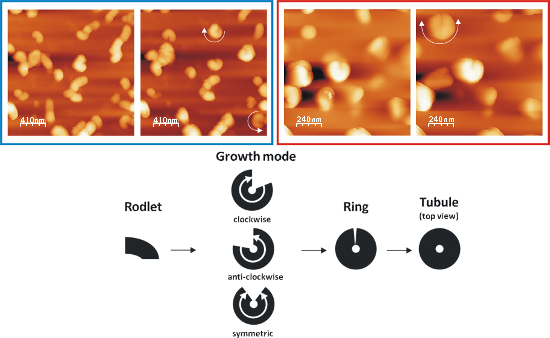
- may suggest that salts like ammonium-nitrate or -sulfate do not seem to interact with wax molecules at all and, hence, have no effect on tubule growth rate or orientation. But a too low solubility of these two salts in chloroform (dipole moment 1.15 D) in order to expect any influence cannot be


Influence of the preparation method on the photocatalytic activity of Nd-modified TiO2
Beilstein J. Nanotechnol. 2018, 9, 447–459, doi:10.3762/bjnano.9.43
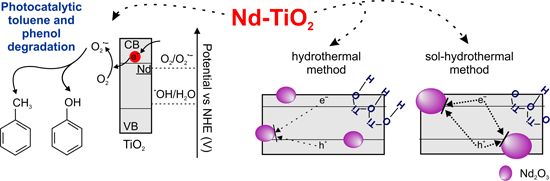
- different scavengers (Figure 10). Silver nitrate was used as electron scavenger, ammonium oxalate as hole scavenger, benzoquinone for O2•− and tert-butanol for •OH radicals. After 60 min of visible light irradiation in the presence of SHT photocatalyst, the degradation rate declined from 0.31 to 0.30
- μmol·dm−1·min−1 due to addition of ammonium oxalate and tert-butanol (Table 4). While, after the addition of silver nitrate and benzoquinone, the degradation rate decreased from 0.31 to 0.12 and 0.22 μmol·dm−1·min−1, respectively, suggesting that photogenerated electrons and superoxide radicals are the
- , respectively) compared to the system without scavengers (0.62 μmol·dm−1·min−1), suggesting a limited role played by holes in the photocatalytic process. The addition of silver nitrate and benzoquinone significantly reduced the phenol degradation rate (from 0.62 to 0.15 and 0.21 μmol·dm−1·min−1, respectively




Blister formation during graphite surface oxidation by Hummers’ method
Beilstein J. Nanotechnol. 2018, 9, 407–414, doi:10.3762/bjnano.9.40
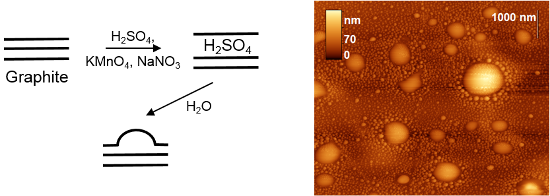
- Offeman, in which graphite is treated with a mixture of concentrated sulfuric acid, sodium nitrate, and potassium permanganate and then washed with water [8]. Traditionally, HOPG is used as a model material to study the physical and chemical processes occurring on graphite surfaces [9]. HOPG consists of
- provided by Optigraph GmbH (Germany). Samples of HAPG with a size of ≈10 × 10 mm2 were cleaved before the experiment. Then, an oxidation mixture was prepared consisting of 5 mg of sodium nitrate, 30 mg of potassium permanganate, and 230 μL of concentrated sulfuric acid (obtained from Sigma Tec). 10 μL of


Dielectric properties of a bisimidazolium salt with dodecyl sulfate anion doped with carbon nanotubes
Beilstein J. Nanotechnol. 2018, 9, 164–174, doi:10.3762/bjnano.9.19
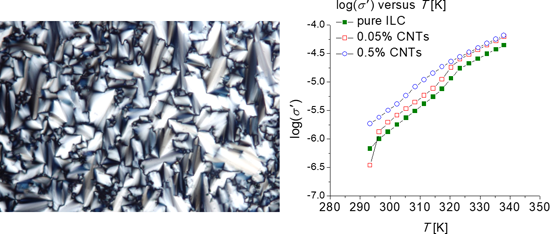
- dropwise to a solution of compound 2 (2 g, 3.0 mmol) in dichloromethane (50 mL). The mixture was stirred at room temperature for 1 h after which 100 mL of deionised water was added. The organic layer was separated and washed repeatedly with water until no reaction with silver nitrate for Br− was noticed


Gas-sensing behaviour of ZnO/diamond nanostructures
Beilstein J. Nanotechnol. 2018, 9, 22–29, doi:10.3762/bjnano.9.4
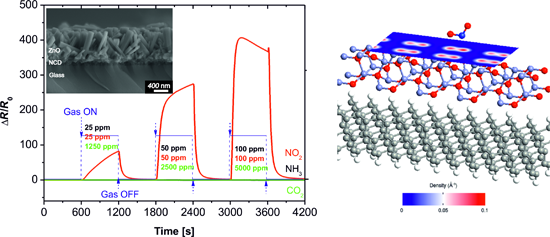
- hydrothermal synthesis process. The synthesis was conducted in an equimolar aqueous solution containing zinc nitrate hexahydrate (Zn(NO3)2·6H2O) and hexamethylenetetramine (C6H12N4). During the synthesis a temperature of 90 °C was maintained for 3 h. The experimental procedure has been described in detail in


Facile synthesis of silver/silver thiocyanate (Ag@AgSCN) plasmonic nanostructures with enhanced photocatalytic performance
Beilstein J. Nanotechnol. 2017, 8, 2781–2789, doi:10.3762/bjnano.8.277
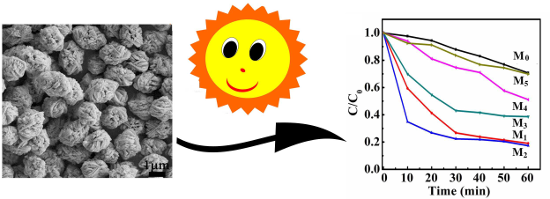
- stability compared to the previously reported silver halogen plasma catalyst, which make it more suitable for practical application. Experimental Chemicals Silver nitrate (AgNO3, Shanghai Chemical Co.) and ammonium thiocyanate (NH4SCN, Tianjin Reagent Co.) were used as precursors for the synthesis of silver


One-step chemical vapor deposition synthesis and supercapacitor performance of nitrogen-doped porous carbon–carbon nanotube hybrids
Beilstein J. Nanotechnol. 2017, 8, 2669–2679, doi:10.3762/bjnano.8.267
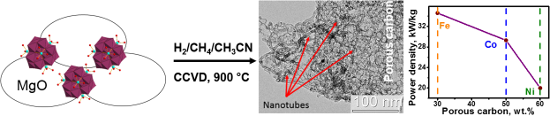
- works devoted to one-step formation of porous carbon–CNT hybrids for energy storage applications. Lei et al. have reported the CCVD synthesis of nitrogen-doped ordered mesoporous carbon and multiwalled CNTs (MWCNTs) with the use of a silica SBA-15 template impregnated by iron nitrate [14


Patterning of supported gold monolayers via chemical lift-off lithography
Beilstein J. Nanotechnol. 2017, 8, 2648–2661, doi:10.3762/bjnano.8.265
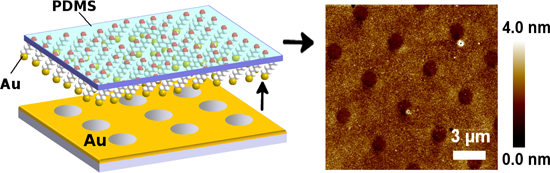
- , Ithaca, NY, USA) for 40 s and contacted with SAMs. The stamps were removed from Au substrates after 2 h. The substrates were then treated with 20 mM iron(III) nitrate and 30 mM thiourea for 10–15 min to etch the Au selectively from the exposed regions. Fabricating flat poly(dimethylsiloxane) stamps The


The role of ligands in coinage-metal nanoparticles for electronics
Beilstein J. Nanotechnol. 2017, 8, 2625–2639, doi:10.3762/bjnano.8.263
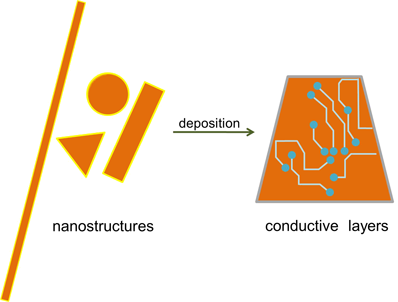
- silver nitrate in the presence of poly(vinylpyrrolidone) (PVP, Figure 2) and sodium bromide. The nanobars formed when bromide ions etched the multiply twinned seeds, promoted the formation of single crystal seeds, and initiated anisotropic growth [68]. Longer silver nanowires grew from multiply twinned
- nanoparticles by the reduction of silver nitrate in the presence of PVP. The twin boundaries served as active sites for the addition of silver atoms as the strong interaction between PVP and the sides of the initially formed nanorod allowed preferential diffusion of the silver atoms to the ends of the nanorods


Synthesis of [{AgO2CCH2OMe(PPh3)}n] and theoretical study of its use in focused electron beam induced deposition
Beilstein J. Nanotechnol. 2017, 8, 2615–2624, doi:10.3762/bjnano.8.262
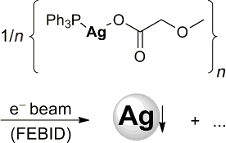
- hydride and then from P2O5. Dichloromethane (95%) and diethyl ether (99%) were dried with a solvent purification system (MB SPS-800, MBraun). Silver(I) nitrate (99%), methoxyacetic acid (97%), triethylamine (99%), triphenylphosphine (99%) were obtained from commercial suppliers and used without further
- . Data have been deposited with the Cambridge Structural Database under CCDC 1552018. Synthesis of [{AgO2CCH2OMe}n] (1) [11]. Silver(I) nitrate (0.5 g (2.94 mmol)) was dissolved in a mixture of 20 mL of ethanol and 0.25 mL of acetonitrile at 25 °C. To this solution a mixture of 0.26 g (2.89 mmol, 0.22 mL


Synthesis of metal-fluoride nanoparticles supported on thermally reduced graphite oxide
Beilstein J. Nanotechnol. 2017, 8, 2474–2483, doi:10.3762/bjnano.8.247
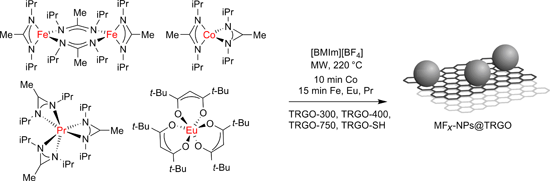
- with sodium nitrate, potassium permanganate and sulfuric acid followed by thermal reduction through rapid heating under nitrogen to 300–1000 °C [5], yielding thermally reduced graphite oxide (TRGO) as a graphene-type material (Scheme S1, Supporting Information File 1) [6]. The thermal reduction results


Fabrication of CeO2–MOx (M = Cu, Co, Ni) composite yolk–shell nanospheres with enhanced catalytic properties for CO oxidation
Beilstein J. Nanotechnol. 2017, 8, 2425–2437, doi:10.3762/bjnano.8.241
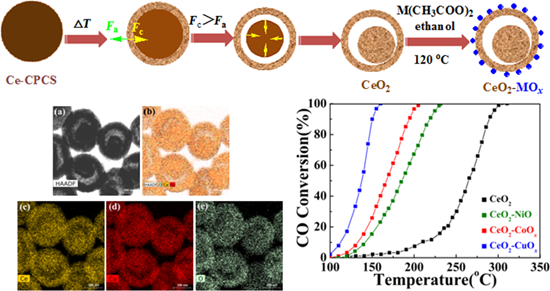
- nanostructures for a broad range of technical applications. Experimental Materials Cerium(III) nitrate hexahydrate (Ce(NO3)3·6H2O), concentrated nitric acid (HNO3, 68%), diethylene glycol (DEG), acetone, copper(II) acetate monohydrate (Cu(CH3COO)2·H2O), nickel(II) acetate tetrahydrate (Ni(CH3COO)2·4H2O), cobalt





Tailoring the nanoscale morphology of HKUST-1 thin films via codeposition and seeded growth
Beilstein J. Nanotechnol. 2017, 8, 2307–2314, doi:10.3762/bjnano.8.230
- , MO, USA). The DMSO was purged with nitrogen and passed through columns of molecular sieves. Copper(II) nitrate hemi(pentahydrate) (ACS grade) and copper(II) acetate monohydrate were received from Fisher Scientific (Fair Lawn, NJ, USA). Absolute, anhydrous ethyl alcohol (200 proof, ACS/USP grade) was
- formed the foundational anchor for the framework. Once removed from solution, the sample was rinsed thoroughly with ethanol and dried with nitrogen gas. Codeposition SurMOF formation: The codeposition solution was prepared, consisting of 0.53 M copper nitrate and 0.27 M TMA in DMSO. This concentration


In situ controlled rapid growth of novel high activity TiB2/(TiB2–TiN) hierarchical/heterostructured nanocomposites
Beilstein J. Nanotechnol. 2017, 8, 2116–2125, doi:10.3762/bjnano.8.211
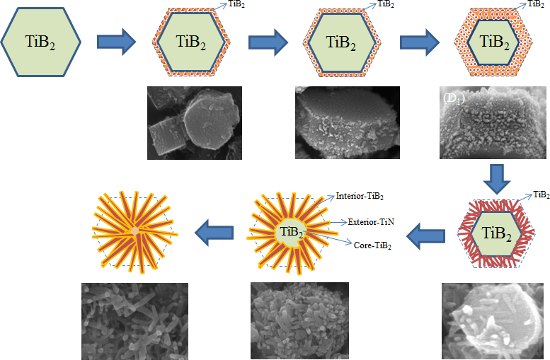
- reaction, while Equation 13 is an endothermic reaction. The standard enthalpies of Equation 12 and Equation 13 are calculated as −15.88 kJ/(g TiB2) and 5.89 kJ/(g TiB2), respectively. Besides, ammonium nitrate and nitrogen are applied as the nitrogen source. Finally, the whole reaction of B2O3/TiO2/Mg/KBH4


Synthesis and characterization of noble metal–titania core–shell nanostructures with tunable shell thickness
Beilstein J. Nanotechnol. 2017, 8, 2083–2093, doi:10.3762/bjnano.8.208
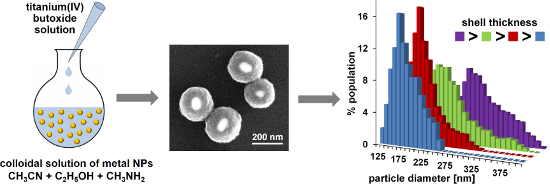
- the reduction of silver nitrate with hydroxylamine hydrochloride [50][51]. In both cases, relatively monodisperse spherical or quasi-spherical metal NPs with a mean particle diameter of around 100 nm were obtained (Table 1, Figure 1 and Figure S1, Supporting Information File 1). Initially, we also
- /w aq. soln.) and silver nitrate (99.9%) were purchased from Alfa Aesar. Ethanol (99.8%) and acetonitrile (99.5%) were purchased from Avantor Performance Materials Poland. Nitric acid (65% w/w aq. soln.), hydrofluoric acid (40% w/w aq. soln.) and sodium hydroxide (>99%) were purchased from Chempur
- aqueous solution of silver nitrate (1.1 mM) were stirred at room temperature. 10 mL of solution containing hydroxylamine hydrochloride (25 mM) and sodium hydroxide (0.1 w/w %) were added. The reaction was completed within a few seconds, which was indicated by a change of solution color to milky yellow. In


A systematic study of the controlled generation of crystalline iron oxide nanoparticles on graphene using a chemical etching process
Beilstein J. Nanotechnol. 2017, 8, 2017–2025, doi:10.3762/bjnano.8.202
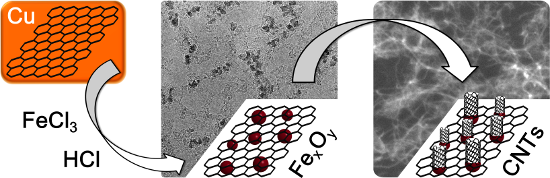
- [12][13][30][38]. For transferring the graphene layer, the copper substrate is dissolved in a Faradaic reaction with aqueous etchants such as iron(III) chloride [25][28], iron(III) nitrate [22][23] or ammonium persulfate [26][27]. Though all of these etchants are suitable oxidizing agents for


Enhancement of mechanical and electrical properties of continuous-fiber-reinforced epoxy composites with stacked graphene
Beilstein J. Nanotechnol. 2017, 8, 1909–1918, doi:10.3762/bjnano.8.191
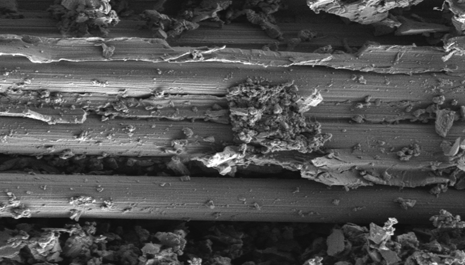
- exfoliating graphite treated by a mixture of H2SO4/HNO3/KMnO4 at a ratio of 1:9:3:0.44 over an immersing time of 150 min in formic acid [10]. Intercalation with 98% HNO3 followed by hydrolysis resulted in the the formation of graphite nitrate with negligible damage to the sp2 graphite lattice. An interlayer


Low-temperature CO oxidation over Cu/Pt co-doped ZrO2 nanoparticles synthesized by solution combustion
Beilstein J. Nanotechnol. 2017, 8, 1546–1552, doi:10.3762/bjnano.8.156

- . Experimental Material synthesis For solution combustion [20], 0.02 mol of metal nitrates (zirconyl nitrate, hexachloroplatinic acid, copper nitrate) and 0.10 mol of urea (fuel) were taken in a beaker with 10–15 mL deionized water and mixed properly. For the synthesis of Cu/Pt co-doped ZrO2 nanoparticles, the


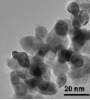


Calcium fluoride based multifunctional nanoparticles for multimodal imaging
Beilstein J. Nanotechnol. 2017, 8, 1484–1493, doi:10.3762/bjnano.8.148
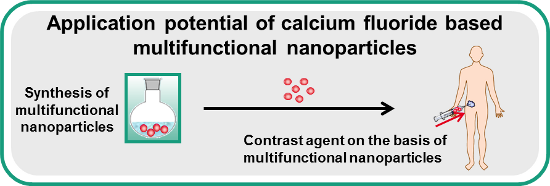
- CaF2:(Tb3+,Gd3+), which can be used as a multimodal CA for two different imaging methods and therefore allows for a more reliable, precise and time efficient diagnosis of diseases. Experimental Materials Calcium chloride (CaCl2, ≥95%), ammonium fluoride (NH4F, p.a.), terbium(III) nitrate pentahydrate


Surface-enhanced Raman spectroscopy of cell lysates mixed with silver nanoparticles for tumor classification
Beilstein J. Nanotechnol. 2017, 8, 1183–1190, doi:10.3762/bjnano.8.120
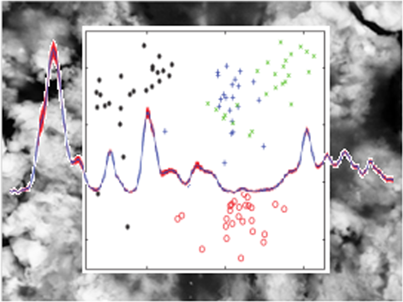
- all approaches mentioned above: generation of droplets with single cells in a microfluidic chip, addition of cell lysis buffer, nanoparticles and activation salt, mixing of all solvents and collection of SERS spectra for classification. Experimental Nanoparticle preparation Silver nitrate (ACS reagent
- mM silver nitrate was added to a solution of 1.5 mM hydroxylamine hydrochloride and 3 mM sodium hydroxide. The whole mixture was stirred during the addition of the silver nitrate. As a sign of a successful preparation the color of the solution changed from grey to yellow. The silver colloids were


Preparation of thick silica coatings on carbon fibers with fine-structured silica nanotubes induced by a self-assembly process
Beilstein J. Nanotechnol. 2017, 8, 1145–1155, doi:10.3762/bjnano.8.116
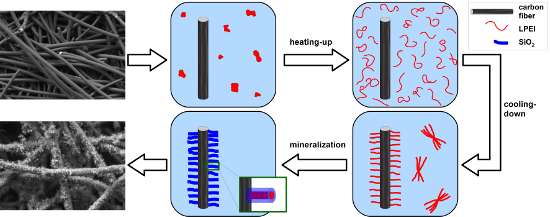
- of metal-ions containing LPEI aggregates, the water phase of the aqueous LPEI suspension was substituted by a copper nitrate solution and a calcium nitrate solution, respectively. The ratio between the metal ion and the ethylenimine monomer unit was set to 1:30. Modification of carbon fiber surfaces
- mediated by LPEI (inset: surface patterning of the neat carbon fiber) and b) close-up image of a silica shell fragment. Scanning electron micrographs of mineralized LPEI aggregates modified by copper nitrate addition, a) disk-like morphology of a complete particle, b) close-up image of the linear
- nanostructures. Scanning electron micrograph of mineralized LPEI aggregates modified by calcium nitrate addition. Scanning electron micrographs of carbon fibers coated with a silica shell mediated by LPEI with addition of a) copper(II) and b) calcium(II) nitrate (inset: fine-structure for copper addition


High photocatalytic activity of Fe2O3/TiO2 nanocomposites prepared by photodeposition for degradation of 2,4-dichlorophenoxyacetic acid
Beilstein J. Nanotechnol. 2017, 8, 915–926, doi:10.3762/bjnano.8.93
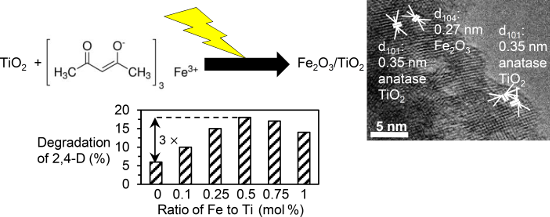
- /TiO2 catalysts without heat treatment at ambient conditions. Using iron(III) nitrate nonahydrate as the precursor, active and stable Fe2O3/TiO2 was successfully prepared via photodeposition [15]. However, the actual amount of iron precursor in the prepared Fe2O3/TiO2 was much lower than that added. In
- activity. The formation of Fe2O3 was in good agreement with other reported photodeposition methods when using a different iron precursor, Fe(III) nitrate nonahydrate [15]. Due to the oxidative condition during the synthesis process, the Fe(III) acetylacetonate precursor could be decomposed to Fe2O3 such as
- to improve the photocatalytic activity of TiO2 for degradation of 2,4-D. The Fe2O3(0.5)/TiO2(PD) showed a 2,4-D degradation of 18%, which was three times higher than the unmodified TiO2 (NT). Such enhanced performance was only slightly higher than that reported when using a Fe(III) nitrate


Selective detection of Mg2+ ions via enhanced fluorescence emission using Au–DNA nanocomposites
Beilstein J. Nanotechnol. 2017, 8, 762–771, doi:10.3762/bjnano.8.79
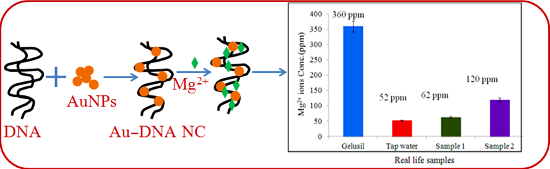
- bromide (CTAB) and DL-dithiothreitol solution (DTT) were purchased from Sigma Aldrich. Sodium borohydride (NaBH4) and silver nitrate (AgNO3) were purchased from Rankem and Fisher Scientific, respectively. Chloroauric acid (HAuCl4·H2O), ascorbic acid, mercaptopropionic acid (MPA) and magnesium acetate (Mg




α-((4-Cyanobenzoyl)oxy)-ω-methyl poly(ethylene glycol): a new stabilizer for silver nanoparticles
Beilstein J. Nanotechnol. 2017, 8, 627–635, doi:10.3762/bjnano.8.67
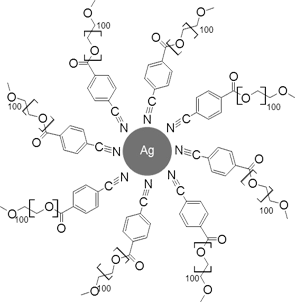
- -ascorbic acid (≥99%, Roth), N,N’-dicyclohexylcarbodiimide (99%, Aldrich), poly(ethylene glycol) methyl ether (Mn = 4830 g·mol−1, Aldrich), silver nitrate (≥99%, Sigma-Aldrich), sodium hydroxide (>99%, Roth), and trisodium citrate dihydrate (99.7%, Merck) were used as received. Water with a resistivity of
- 0.5 M sodium hydroxide solution. The mixture was heated to 30 °C and a silver nitrate solution (0.1 M, 80 µL, 8.0 µmol) was added under vigorous stirring. After ten minutes stirring at room temperature the mixture was refluxed for two hours, resulting in an orange dispersion, which was allowed to cool
- to a scissoring NO2 vibration, likely from nitrate anions adsorbed on the SNP surface [47]. It must be noted here that at an excitation wavelength of 514.5 nm, the surface enhancement effect is less pronounced than at other wavelengths, but nevertheless is an established approach [48][49][50][51][52


The longstanding challenge of the nanocrystallization of 1,3,5-trinitroperhydro-1,3,5-triazine (RDX)
Beilstein J. Nanotechnol. 2017, 8, 452–466, doi:10.3762/bjnano.8.49
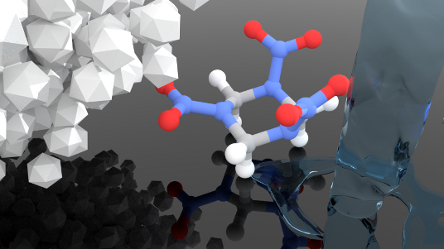
- deposition of ammonium nitrate (AN), RDX and a composite AN–RDX was performed on a cooled quartz substrate. The mean particle diameter was directly measured from atomic force microscopy (AFM): a diameter of 50 nm was obtained for the three materials, even after processing the nanopowder (removal from the