


Search results
Search for "nucleation" in Full Text gives 382 result(s) in Beilstein Journal of Nanotechnology. Showing first 200.
Fabrication and characterization of Si1−xGex nanocrystals in as-grown and annealed structures: a comparative study
Beilstein J. Nanotechnol. 2019, 10, 1873–1882, doi:10.3762/bjnano.10.182
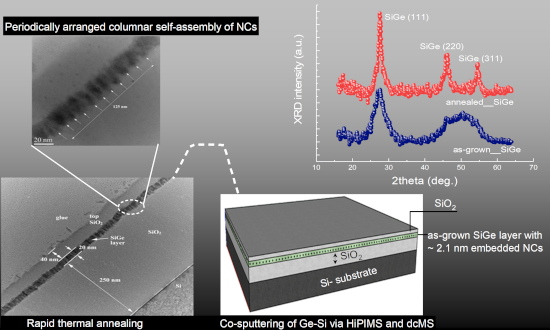
- measurements, to explore structural changes and corresponding properties. It is observed that the employment of HiPIMS facilitates the formation of SiGe nanoparticles (2.1 ± 0.8 nm) in the as-grown structure, and that presence of such nanoparticles acts as a seed for heterogeneous nucleation, which upon
- crystals upon annealing. A similar phenomenon may have occurred in our structures, as depicted in Figure 4 and Figure 5. Thus, we can anticipate heterogeneous nucleation to be a dominant process during crystallization rather than conventional homogenous nucleation. This can be due to a better wetting of
- SiGe layer, which in turn reduces the nucleation barrier. It can also be argued that since heterogeneous nucleation occurs at preferential sites (as in our case), small NCs in as-grown MLs or even the crystallites that are under strain [39][40][41][42] will further reduce the surface energy and


Synthesis of nickel/gallium nanoalloys using a dual-source approach in 1-alkyl-3-methylimidazole ionic liquids
Beilstein J. Nanotechnol. 2019, 10, 1754–1767, doi:10.3762/bjnano.10.171
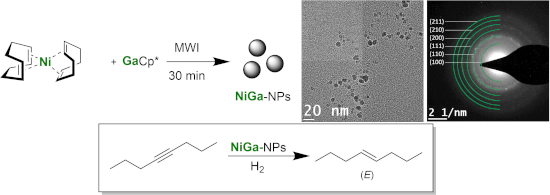
- reduce the Ga3+ precursor, working as a nucleation center for the Ga atoms and prevent uncontrolled coagulation of the liquid metal. Through annealing, the single-phase products can be obtained [27][42]. The all-hydrocarbon precursor GaCp* (Cp* = pentamethylcyclopentadienyl), with the Ga atom in the




Hierarchically structured 3D carbon nanotube electrodes for electrocatalytic applications
Beilstein J. Nanotechnol. 2019, 10, 1475–1487, doi:10.3762/bjnano.10.146
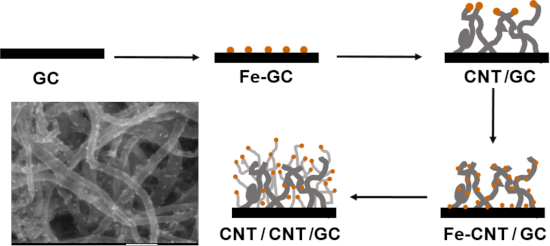
- method allows adjustment of nucleation and growth potential to control the distribution and size of the Fe nanoparticles. A nucleation potential of −1.41 V vs Ag|AgCl|KClsat. and a growth potential of −1.27 V vs Ag|AgCl|KClsat. were applied (compare also Figure S1, Supporting Information File 1). Figure
- . Additionally, the Fe nanoparticles seem to prefer to nucleate on cross junctions between primary CNTs, as observed from Figure S3a, which could be caused by improvement of electron transfer or preferential nucleation sites. The growth of secondary CNTs using the same optimized gas mixture as above and a gas
- transfer resistance with respect to the primary CNTs as determined by electrochemical impedance spectroscopy. Thus, we speculate that the improvement in Pt dispersion is due to a better conductivity within the 3D network and a facilitated electron transfer, which may facilitate Pt nucleation at the CNT





Alloyed Pt3M (M = Co, Ni) nanoparticles supported on S- and N-doped carbon nanotubes for the oxygen reduction reaction
Beilstein J. Nanotechnol. 2019, 10, 1251–1269, doi:10.3762/bjnano.10.125
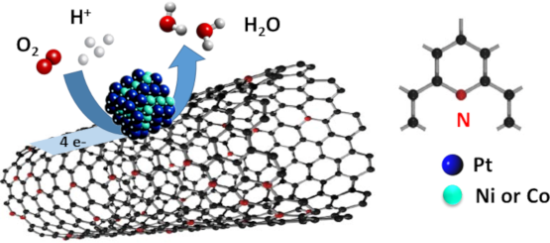
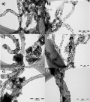
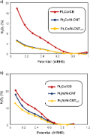
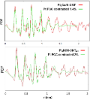
- due to the presence of different functional groups at the surface of the CNTs, while un-doped CNTs are relatively inert. With nitrogen or sulfur groups acting as nucleation centers, the distribution of NPs on the CNT walls is better on N-CNTs and S-CNTs than on CNTs. A decrease of the nitrogen content







Green fabrication of lanthanide-doped hydroxide-based phosphors: Y(OH)3:Eu3+ nanoparticles for white light generation
Beilstein J. Nanotechnol. 2019, 10, 1200–1210, doi:10.3762/bjnano.10.119
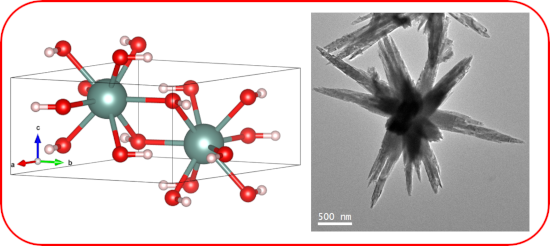
- and TEM images (Figure 1c and Figure 2). The growth mechanism that governs almost the entire nucleation and crystal growth process here was reported already by Hussain et al. [52] in detail, where the authors employed hexamethylenetetramine (HMTA) during the fabrication of La(OH)3:Eu3+ crystals. HMTA
- formed as in a needle-like shape. Such a fast crystal formation may indicate fast nucleation, and here (which is similar to the idea proposed by Hussain et al. [52] where the authors argued that the excessive NH4+ ions may accelerate the reaction between La3+ and OH−), excessive Li+ ions in the reaction



Pure and mixed ordered monolayers of tetracyano-2,6-naphthoquinodimethane and hexathiapentacene on the Ag(100) surface
Beilstein J. Nanotechnol. 2019, 10, 1188–1199, doi:10.3762/bjnano.10.118
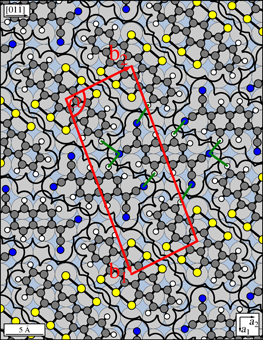
- center of the TNAP molecules, possibly related to the comparably electron-rich aromatic core of the molecule. At lower coverages, the nucleation of small TNAP islands (below 50 nm in diameter) at step edges and on terraces was observed. Hardly any mobile molecules could be found between the islands, as


Tailoring the magnetic properties of cobalt ferrite nanoparticles using the polyol process
Beilstein J. Nanotechnol. 2019, 10, 1166–1176, doi:10.3762/bjnano.10.116
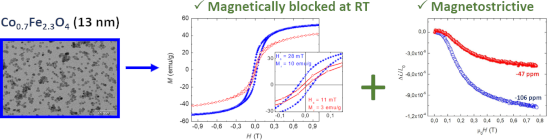
- lower for TriEG but not so much regarding the boiling points of the two polyols. Considering the very probable hypothesis that particle nucleation proceeds when the boiling temperature of the reaction medium is reached (leading to the lowest viscosity), one can expect the formation of much more nuclei




A highly efficient porous rod-like Ce-doped ZnO photocatalyst for the degradation of dye contaminants in water
Beilstein J. Nanotechnol. 2019, 10, 1157–1165, doi:10.3762/bjnano.10.115
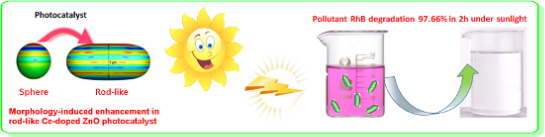
- affects the formation of ZIF-8. More specifically, it undergoes three main stages: gel formation, nucleation and crystallization [23]. According to Mahmoud’s [35] report, the Ce element which is doped into the lattice of Zn seeds may lower the surface energy, thus leading to a new morphology. Labhane et


In situ AFM visualization of Li–O2 battery discharge products during redox cycling in an atmospherically controlled sample cell
Beilstein J. Nanotechnol. 2019, 10, 930–940, doi:10.3762/bjnano.10.94
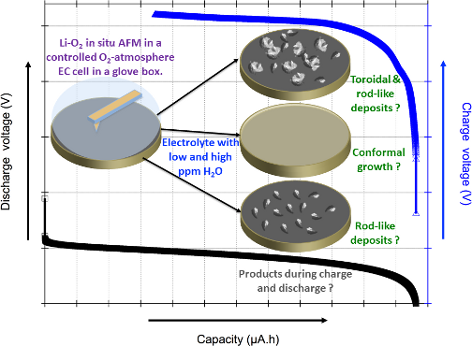
- those formed due to nucleation on the surface of glassy carbon grow in volume while fresh nucleation and growth of toroidal structures continues on all areas. The total discharge capacity of the cell was measured to be 11.6 µAh. Upon completion of discharge, the cell was allowed to rest at open-circuit
- of electrochemical deposits from solution and nucleation and growth of smaller deposits on the surface of the glassy carbon during discharge. Complementarily, the sudden disappearance of the electrochemical deposits during recharge occurs in a small voltage window of 4.25 V (14% SOC) to 4.35 V (18
- concentration was further increased to ≈4600 ppm. A similar sudden appearance of electrochemical deposits on the surface followed by further nucleation and growth during discharge and disappearance during recharge was also measured with a corresponding increase in the cell capacity to about 24 µAh (Movie 3


Fabrication of silver nanoisland films by pulsed laser deposition for surface-enhanced Raman spectroscopy
Beilstein J. Nanotechnol. 2019, 10, 882–893, doi:10.3762/bjnano.10.89
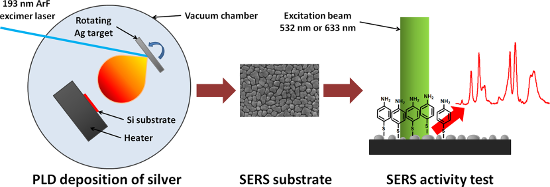
- 2C) is also visible. After 8000 laser pulses, the embedded silver islands are already that large that almost all of them are connected and a semicontinuous layer with an irregular structure is formed (Figure 2D). After 16000 laser pulses the nucleation and growth of silver nanoislands occurs on the




An iridescent film of porous anodic aluminum oxide with alternatingly electrodeposited Cu and SiO2 nanoparticles
Beilstein J. Nanotechnol. 2019, 10, 735–745, doi:10.3762/bjnano.10.73
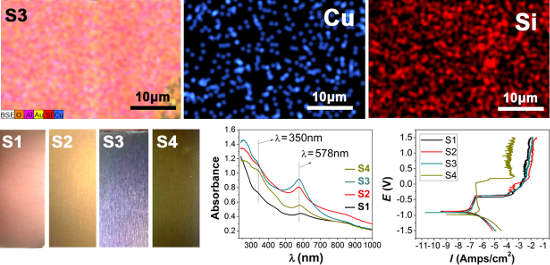
- simultaneous way, into a stable structure possessing a regular geometric appearance. In contrast, electrodeposition involves the nucleation at an electrode surface under the action of an electric field [25]. For example, a high-purity aluminum foil was directly used as a template, on which anodic aluminum


Deposition of metal particles onto semiconductor nanorods using an ionic liquid
Beilstein J. Nanotechnol. 2019, 10, 718–724, doi:10.3762/bjnano.10.71
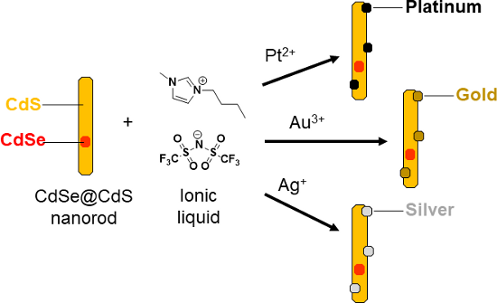
- potential to impact a number of applications [1][2][3][4]. Deposition of metal nanoparticles onto the nanorod surface competes with homogeneous nucleation of the metal nanoparticles, with the size and number of metal nanoparticles attached to each nanorod controlled by lattice matching of the materials and
- ][15][16][17]. The low surface tension of ionic liquids causes high nucleation rates and allows for the synthesis of small nanoparticles with minimal Ostwald ripening [17]. Further, many ionic liquids consist of a large anion with diffuse negative charge; this lack of strongly binding anionic ligands


Self-assembly and wetting properties of gold nanorod–CTAB molecules on HOPG
Beilstein J. Nanotechnol. 2019, 10, 696–705, doi:10.3762/bjnano.10.69
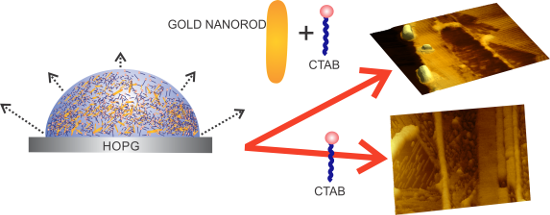
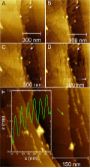
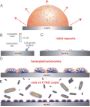
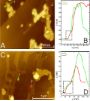
- ) Sequential AFM images depicting the dynamics of self-assembled CTAB stripes on terraces; for reference, a defect which acts as a vacancy nucleation site is indicated by the white arrows. (E) After the large stripes have completely disappeared, a corrugation of the surface is still observed; the inset depicts


Ultrasonication-assisted synthesis of CsPbBr3 and Cs4PbBr6 perovskite nanocrystals and their reversible transformation
Beilstein J. Nanotechnol. 2019, 10, 666–676, doi:10.3762/bjnano.10.66
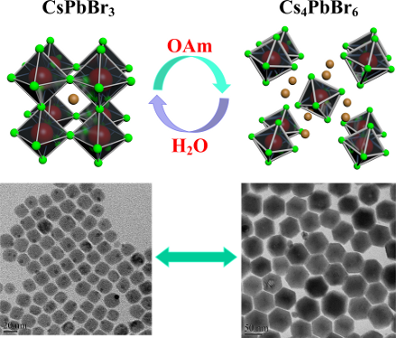
- transformation into Cs4PbBr6 PNCs. This process is related to Ostwald ripening that was found during the nucleation and growth of PNCs [42]. Therefore, the formation of Cs4PbBr6 PNCs is promoted by the capacity of the organic ligands to dissolve PbBr2 and by the dissociation of CsPbBr3 PNCs. A series of TEM



Hydrophilicity and carbon chain length effects on the gas sensing properties of chemoresistive, self-assembled monolayer carbon nanotube sensors
Beilstein J. Nanotechnol. 2019, 10, 565–577, doi:10.3762/bjnano.10.58
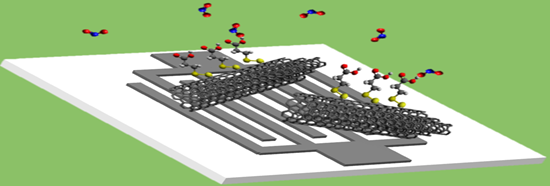
- oxygen plasma treatment. However, the presence of such defects in CNTs is essential, since it has been shown that they play the role of nucleation centers and help to anchor the Au nanoparticles during the sputtering process [36]. In other words, the defects help to achieve a dense and homogenous
- nucleation centers for the anchoring the Au NPs) was conducted using XPS. The chemical modification caused by the plasma treatment results in the presence of hydroxy, carbonyl and carboxyl groups [36]. Furthermore, Au nucleation centers occur mainly in the proximity of oxygenated defects created during the
- need to be subsequently decorated with Au nanoparticles. Oxygenated defects act as anchoring and nucleation sites. Therefore, high control in the decoration homogeneity and the size of Au nanoparticles (avoiding coalescence effects) have been reported in oxygen-plasma-treated CNTs [37]. Since


Direct observation of the CVD growth of monolayer MoS2 using in situ optical spectroscopy
Beilstein J. Nanotechnol. 2019, 10, 557–564, doi:10.3762/bjnano.10.57
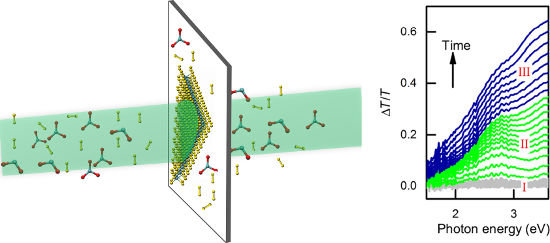
- and have inspired many theoretical discussions about the growth mechanisms, they were still unable to provide a clear path to the full understanding of the growth mechanisms [10][15][16][17][18][19]. Several recent efforts aiming at manipulating the nucleation and growth of 2D TMDCs have successfully
- the morphology and crystalline structure of the films. By systematic study using in situ optical spectroscopy assisted with other ex situ characterization techniques, the details of the kinetics including adsorption, dissociation, reaction, nucleation, and growth can be revealed. Differential


Ceria/polymer nanocontainers for high-performance encapsulation of fluorophores
Beilstein J. Nanotechnol. 2019, 10, 522–530, doi:10.3762/bjnano.10.53
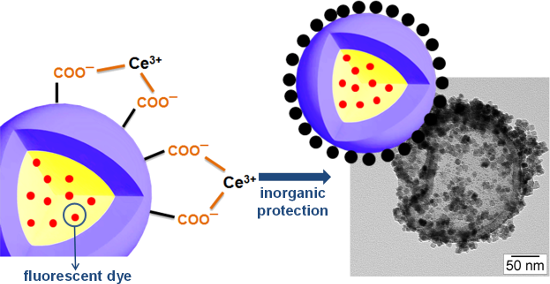
- group [10][12]. The regular arrangement of functional groups on the nanocapsule surface can provide nucleation and structure-directing centers for the controlled crystallization of metal-oxide particles. We have chosen cerium(IV) oxide nanoparticles to be deposited on the nanocapsule surface in order to


Polymorphic self-assembly of pyrazine-based tectons at the solution–solid interface
Beilstein J. Nanotechnol. 2019, 10, 494–499, doi:10.3762/bjnano.10.50
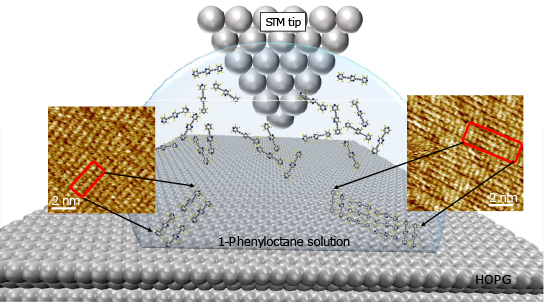
- between thermodynamic and kinetic effects. During the growth process, kinetic parameters such as nucleation rates and growth rates for each polymorph play a crucial role in determining the arrangement of the molecules on the surface [27]. Non-equilibrium polymorphs can form on the surface provided they
- have faster nucleation or growth rate than the equilibrium structure. Typically such phases are promoted by stronger intermolecular interactions [28]. Availability of additional hydrogen-bonding sites, as discussed previously, thus favors faster nucleation and growth of polymorph II. Once such


Advanced scanning probe lithography using anatase-to-rutile transition to create localized TiO2 nanorods
Beilstein J. Nanotechnol. 2019, 10, 412–418, doi:10.3762/bjnano.10.40
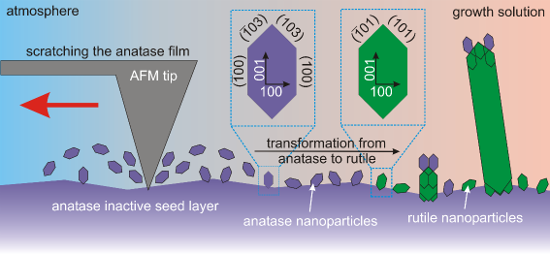
- anatase film. In addition, silicon nanoparticles being scraped off the AFM tip might act as nucleation sites such as other dirt particles appearing in the growth solution. However, the absence of nanorods on SiO2 indicates that the growth of rutile nanorods is not triggered by silicon nanoparticles. It


Sub-wavelength waveguide properties of 1D and surface-functionalized SnO2 nanostructures of various morphologies
Beilstein J. Nanotechnol. 2019, 10, 379–388, doi:10.3762/bjnano.10.37
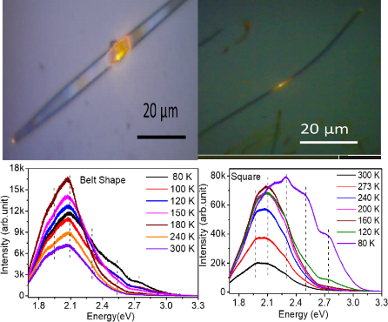
- thermodynamically by considering the Gibbs energy as a measure of structural phase transformation [8]. During VLS growth, the formation of nucleation from the saturated catalyst (Au) is the important step for the shape and structure. As reported earlier, the difference in the Gibbs energy promotes the phase
- transition between two competing phases at the nucleation stage itself and is found to control square and cylindrical shapes [8]. Considering a rectangular shape nucleus for square-shaped NWs (Figure 5a) and a circular-shaped nucleus for cylindrical NWs (Figure 5b), the difference in Gibbs free energy can be
- appropriate value it can be shown that = 2.48 ≈ 1.24(2). After nucleation, a continuous supply of precursor led to axial as well as radial growth. Kwon et al. [21] has shown that axial growth is more favorable than the radial growth and the growth continues until the aspect ratio reaches its limit. However


A Ni(OH)2 nanopetals network for high-performance supercapacitors synthesized by immersing Ni nanofoam in water
Beilstein J. Nanotechnol. 2019, 10, 281–293, doi:10.3762/bjnano.10.27
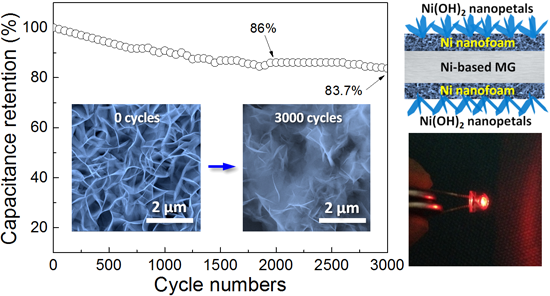
- flower-like structures may arise from nucleation and coalescence processes [32]. The thickness of the nanopetals rises with immersion time from 0.5 μm (inset of Figure 2b) over 1.0 μm (inset of Figure 2c) to 1.5 μm (inset of Figure 2c). We can see from Figure 2f–h that the curly Ni(OH)2 nanopetals




Site-specific growth of oriented ZnO nanocrystal arrays
Beilstein J. Nanotechnol. 2019, 10, 274–280, doi:10.3762/bjnano.10.26
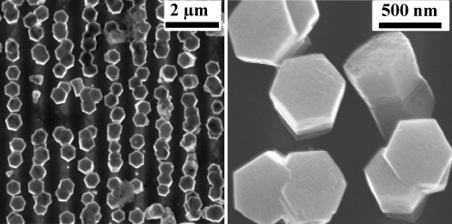
- electrodeposition technique. Further, vertically aligned periodic nanocrystal (NC) growth is engineered at predefined positions on polymer-coated ITO substrates patterned with ordered pores. The vertical alignment of ZnO NCs along the c-axis is achieved via ion-by-ion nucleation-controlled growth for patterned
- ; growth kinetics; nanocrystals; nucleation; twinning; zinc oxide; Introduction Metal oxide semiconductor nanostructures are quite interesting not only in terms of the basic growth mechanism involved in their fabrication, but also due to the large number of applications based on them in the field of
- of a patterned pore size in controlling the growth of array vs branched ZnO NCs is shown. A mechanism based on the nucleation and growth is proposed to understand the oriented/branched twin ZnO NC morphologies. Experimental Growth of ZnO nanocrystals An electrodeposition technique was employed to


Relation between thickness, crystallite size and magnetoresistance of nanostructured La1−xSrxMnyO3±δ films for magnetic field sensors
Beilstein J. Nanotechnol. 2019, 10, 256–261, doi:10.3762/bjnano.10.24
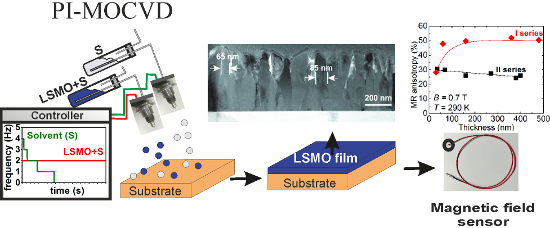
- deposition temperature influences the magnetic properties of the films [17]. The increase of the deposition rate also results in changes in the crystallite dimensions, leading to a higher number of nucleation sites [18]. In our research, the pulsed-injection metal organic chemical vapour deposition (PI-MOCVD
- ) [19][20] was used to enable easy and reproducible control of the growth rate and nucleation site density by introducing the additional supply source of the precursor solution to the reaction chamber. The novelty of our investigations concerns the growth of La1−xSrxMnyO3±δ (LSMO) films on ceramic Al2O3


Raman study of flash-lamp annealed aqueous Cu2ZnSnS4 nanocrystals
Beilstein J. Nanotechnol. 2019, 10, 222–227, doi:10.3762/bjnano.10.20
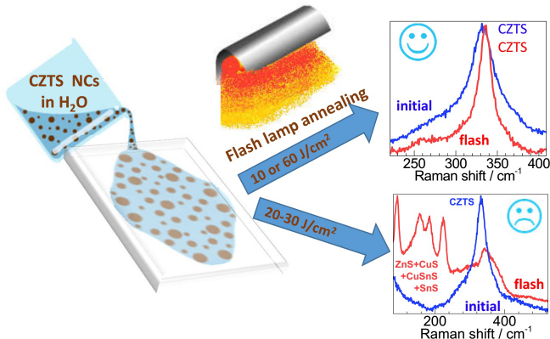
- probable nucleation of secondary phases as described in more detail in the following discussion. In a separate detailed investigation of the influence of film deposition and drying conditions on the formation of secondary phases we found the optimum substrate and environment for significantly reducing the


pH-mediated control over the mesostructure of ordered mesoporous materials templated by polyion complex micelles
Beilstein J. Nanotechnol. 2019, 10, 144–156, doi:10.3762/bjnano.10.14
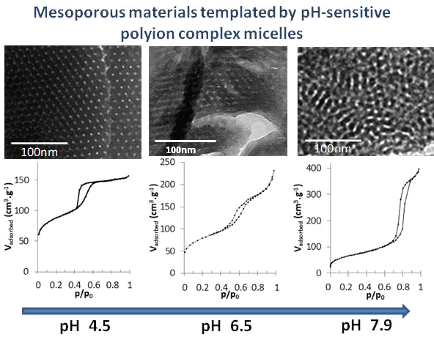
- surfactants [38][39] as SDA of silica; it was ascribed to an increase of the polycondensation rate of silicic species with pH favoring fast nucleation of small flocs of surfactant and silica [40]. As emphasized by Berggren and Palmqvist [35], these small flocs further grow until reaching a final size that





