


Search results
Search for "particle size distribution" in Full Text gives 174 result(s) in Beilstein Journal of Nanotechnology.
Influence of synthesis conditions on microstructure and phase transformations of annealed Sr2FeMoO6−x nanopowders formed by the citrate–gel method
Beilstein J. Nanotechnol. 2016, 7, 1202–1207, doi:10.3762/bjnano.7.111
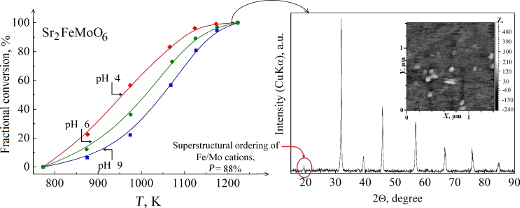
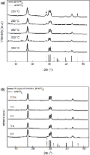
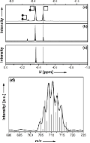
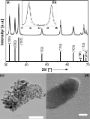
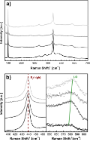
- degree of the iron and molybdenum cations. (b) X-ray diffractogram of Sr2FeMoO6−x synthesized from a colloidal solution at pH 4 with varied annealing conditions (893 K for 1 h, 1060 K for 1 h and 1120 K for 4 h) and hardened at room temperature. Inset: Particle size distribution obtained by DLS. The



Reasons and remedies for the agglomeration of multilayered graphene and carbon nanotubes in polymers
Beilstein J. Nanotechnol. 2016, 7, 1174–1196, doi:10.3762/bjnano.7.109
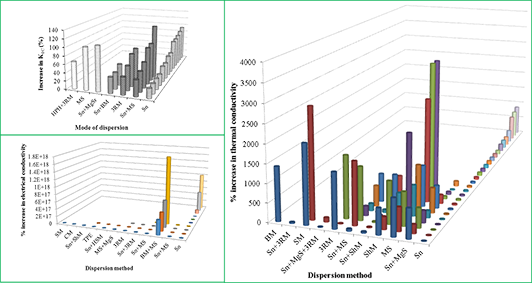
- . Atif et al. showed that a wide particle size distribution yields an effective reinforcement as the empty spaces created by the larger particles can be occupied by the smaller particles thereby resulting in a strong network of the filler and a concomitant increase in the mechanical properties [143]. A


Improved biocompatibility and efficient labeling of neural stem cells with poly(L-lysine)-coated maghemite nanoparticles
Beilstein J. Nanotechnol. 2016, 7, 926–936, doi:10.3762/bjnano.7.84
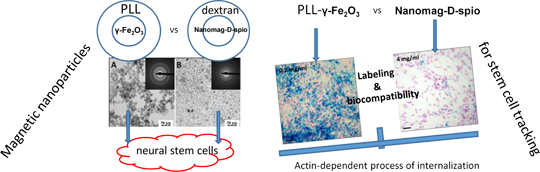
- , transmission electron microscopy (TEM) and dynamic light scattering (DLS) were used (Figure 1, Table 1). The average size of the PLL-γ-Fe2O3 nanoparticles (Figure 1A) was larger than that of nanomag®-D-spio nanoparticles (Figure 1B). The latter particles had a broader particle size distribution due to presence
- six morphological descriptors, namely area, perimeter, Convex-Hull perimeter, equivalent diameter, roughness and circularity (Figure 1C). To further characterize the particle size distribution, number-equivalent diameter (Dn), weight-average diameter (Dw) and polydispersity index (PDI) were calculated




Direct formation of gold nanorods on surfaces using polymer-immobilised gold seeds
Beilstein J. Nanotechnol. 2016, 7, 809–816, doi:10.3762/bjnano.7.72
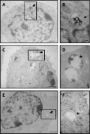
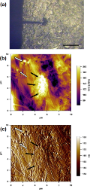
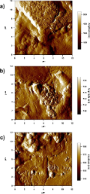
- data and measure the particle size distribution in our samples. The AFM phase image in Figure 2c and Figure 2d are very helpful in identifying the bright spots in Figure 2a and Figure 2b and to establish whether they are big particles or not. The spots appear as the same colour as the surrounding


Microwave solvothermal synthesis and characterization of manganese-doped ZnO nanoparticles
Beilstein J. Nanotechnol. 2016, 7, 721–732, doi:10.3762/bjnano.7.64
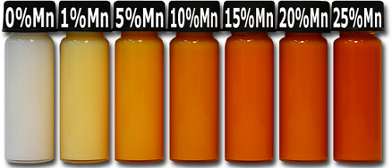
- employed methods. The lack of simultaneous control over chemical composition, stoichiometry, dopant homogeneity, particle size distribution, shape, phase purity, surface modification and agglomeration, makes it difficult to obtain NPs [22]. The primary cause of the lack of reproducibility of magnetic
- , thanks to which these expressions can be used interchangeably in this paper; the obtained crystallite size distribution may be interpreted as particle size distribution. Conclusion Zn1−xMnxO (x = 0.01, 0.05, 0.10, 0.15, 0.2, 0.25) nanoparticles have been synthesized by microwave solvothermal synthesis
- obtaining crystalline Zn1−xMnxO, pure in terms of phase, with a narrow particle size distribution with the nominal dopant content reaching 25 mol % and doping efficiency of circa 22%. Our paper also indicates a high potential of microwave solvothermal synthesis for obtaining doped ZnO nanoparticles. The


Impact of ultrasonic dispersion on the photocatalytic activity of titania aggregates
Beilstein J. Nanotechnol. 2015, 6, 2423–2430, doi:10.3762/bjnano.6.250
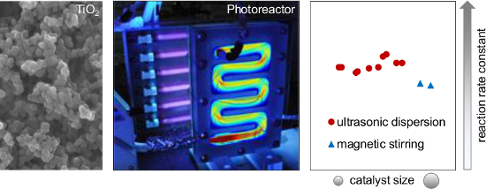
- with different P25 concentrations. All experiments were repeated two or three times to check the reproducibility. Analytical method The particle size distribution of the TiO2 P25 suspensions was characterized by a Malvern Nano S90 photon correlation spectrometer [30]. The immediate results are the


Green and energy-efficient methods for the production of metallic nanoparticles
Beilstein J. Nanotechnol. 2015, 6, 2354–2376, doi:10.3762/bjnano.6.243
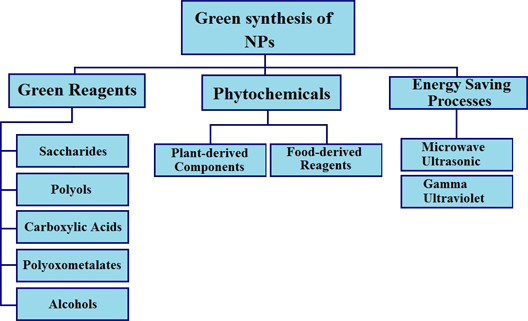
- in smaller particle sizes compared to gelatin–glucose solutions, due to the rate of the reduction reaction. Their instrumental analysis including XRD, UV–vis spectrometry, TEM, and AFM confirmed the formation of NPs with a quite narrow particle size distribution. The size of their NPs was less than


Green synthesis, characterization and catalytic activity of natural bentonite-supported copper nanoparticles for the solvent-free synthesis of 1-substituted 1H-1,2,3,4-tetrazoles and reduction of 4-nitrophenol
Beilstein J. Nanotechnol. 2015, 6, 2300–2309, doi:10.3762/bjnano.6.236
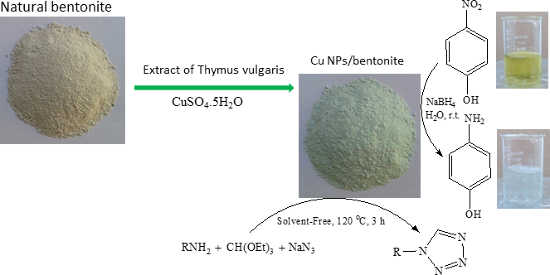
- and O were observed. The size of the as-prepared Cu NPs/bentonite was further examined by TEM. The histogram of the particle size distribution of Cu nanoparticles on the surface of bentonite is given in Figure 6a–c. The average size of the Cu NPs on bentonite was 56 nm. The particles exhibited
- images of Cu NPs/bentonite (a,b), the histogram of the particle size distribution of Cu nanoparticles on the bentonite surface (c) and corresponding SAED pattern (d). The N2 adsorption–desorption isotherm (a) and Barrett–Joyner–Halenda (BJH) pore size distribution plot of Cu NPs/bentonite (b). Conversion


Silica-coated upconversion lanthanide nanoparticles: The effect of crystal design on morphology, structure and optical properties
Beilstein J. Nanotechnol. 2015, 6, 2290–2299, doi:10.3762/bjnano.6.235
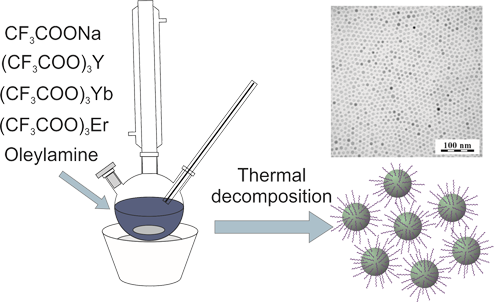
- energy dispersive spectroscopy (EDX) were used to determine the morphology, crystal structure and elemental composition of the nanocrystals, respectively. All TEM micrographs, diffractograms and spectra were taken at an accelerating voltage of 120 kV. Particle size distribution was analyzed with the
- particle surface effectively prevented aggregation. The particles had regular spherical shapes with sizes (Dn) in the range of 6–10 nm (Table 1). The particle size increased as the temperature increased up to 350 °C, which is close to the OM boiling point. Particle size distribution was relatively narrow
- approximately 10 nm and the particle size distribution was rather narrow (Table 1 and Table 2). The degree of crystallinity according to XRD (Figure 3b) was approximately 75 wt % (Table 2). A small amorphous halo originated primarily from OM on the nanoparticle surface. In α- and β-phase particles, the presence






Fabrication of hybrid nanocomposite scaffolds by incorporating ligand-free hydroxyapatite nanoparticles into biodegradable polymer scaffolds and release studies
Beilstein J. Nanotechnol. 2015, 6, 2217–2223, doi:10.3762/bjnano.6.227
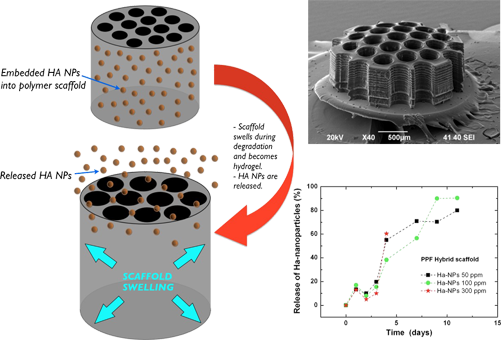
- spiral with an outer radius of 1 mm. The irradiation time was fixed at 120 min. Particle size distribution was evaluated by TEM. The HA NP/ethanol colloidal solution was added to the PPF:DEF during resin production: The colloidal solution was mixed with DEF, then added to the PPF in 7:3 w/w followed by 1
- –4000 cm−1. TEM image of hydroxyapatite colloidal solution prepared by UV laser ablation of hydroxyapatite target immersed in ethanol solution. b) Size distribution histogram of the colloidal solution revealing the mean size around 17 nm. The particle size distribution is obtained by using the ImageJ


A single-source precursor route to anisotropic halogen-doped zinc oxide particles as a promising candidate for new transparent conducting oxide materials
Beilstein J. Nanotechnol. 2015, 6, 2161–2172, doi:10.3762/bjnano.6.222
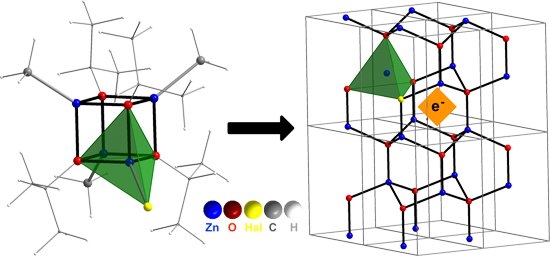
- crystallographic c-axis/a,b-extension) has become slightly larger due to the presence of chlorine. This can be confirmed by transmission electron microscopy (TEM) investigations shown in Figure 3c and Figure S4 (Supporting Information File 1). The particle size distribution is polydisperse and almost all particles



Nanotechnology in the real world: Redeveloping the nanomaterial consumer products inventory
Beilstein J. Nanotechnol. 2015, 6, 1769–1780, doi:10.3762/bjnano.6.181
- that is available to corroborate the manufacturer’s claim that the product contains nanomaterials. If the manufacturer provides supporting information (e.g., a datasheet containing electron micrographs showing the nanomaterials or a particle size distribution), the product is placed in Category 3



Synthesis, characterization and in vitro biocompatibility study of Au/TMC/Fe3O4 nanocomposites as a promising, nontoxic system for biomedical applications
Beilstein J. Nanotechnol. 2015, 6, 1677–1689, doi:10.3762/bjnano.6.170
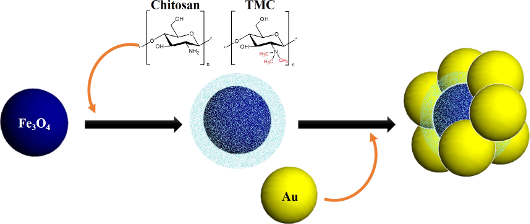
- ) [37]. According to the TEM images, the chitosan-coated magnetic nanoparticles had a diameter of about 25 nm, which is reasonable compared to similar reported nanoparticles. The TEM results and particle size distribution of the polymer-coated Fe3O4 nanoparticles (Figure 4a–d) indicated an interesting
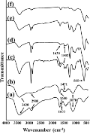
- percentage of the viability of the control culture [48][54]. (a) TEM image of uncoated Fe3O4 nanoparticles and their (b) corresponding particle size distribution. (c) Hysteresis loop of the synthesized magnetic nanoparticles: (1) Fe3O4, (2) TMC/Fe3O4, (3) Au/TMC/Fe3O4, (4) chitosan/Fe3O4 and (5) Au/chitosan
- /Fe3O4. (d) Iron oxide suspensions with (right) and without (left) an external magnetic field. (a) TEM image of Au nanoparticles along with (b) their corresponding particle size distribution. (c) UV–vis absorption spectrum of synthesized Au nanoparticles. (d) Image of a freshly prepared, ruby-red




The eNanoMapper database for nanomaterial safety information
Beilstein J. Nanotechnol. 2015, 6, 1609–1634, doi:10.3762/bjnano.6.165
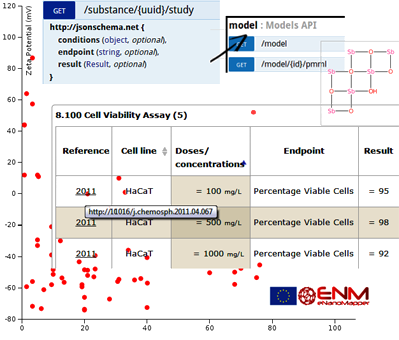
- semantics-free stable identifier that is suitable for use in data annotation, as it is resistant to minor changes in the label and improvements in the definition of the class. Examples of annotations that have already been included in the database are: “particle size distribution (granulometry)” annotated
- , modes of action), interactions (cell lines, assays) and a wide variety of measurements. A number of analytic techniques have been proposed and developed to characterise the physicochemical properties of nanomaterials, including the commonly used dynamic light scattering to measure the particle size
- distribution and zeta potentiometry to estimate the pH-dependent surface charge. Biological identity With the expanding insight into the factors determining toxicity, the list of measurable effects is growing increasingly long. The need for validated in vitro tests has been advocated since 2006 [1]. It is


Synthesis, characterization and in vitro effects of 7 nm alloyed silver–gold nanoparticles
Beilstein J. Nanotechnol. 2015, 6, 1212–1220, doi:10.3762/bjnano.6.124
- exchange with PVP. Dynamic light scattering also showed a monomodal particle size distribution without agglomerates. The polydispersity index between 0.1 and 0.3 confirmed a good degree of monodispersity. Note that the hydrodynamic radius, dH, as probed by DLS, is slightly larger (10–12 nm) than the radius
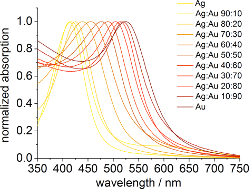
- /Au 30:70, d = 7.1 nm; (C) Ag/Au 90:10, d = 11.5 nm, with the particle size distribution shown in the histograms. DCS results of Ag/Au–PVP nanoparticles of three different compositions: Ag/Au 40:60, d = 5.3 nm; Ag/Au 60:40, d = 5.5 nm; Ag/Au 10:90, d = 5.8 nm. UV–vis spectra of PVP-functionalized Ag


Tattoo ink nanoparticles in skin tissue and fibroblasts
Beilstein J. Nanotechnol. 2015, 6, 1183–1191, doi:10.3762/bjnano.6.120
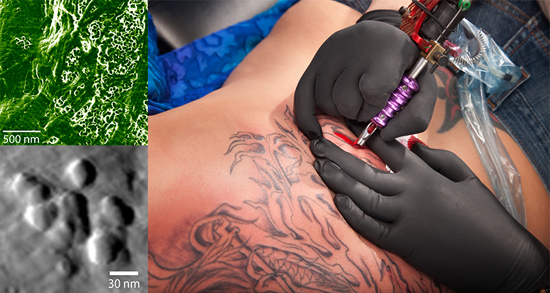
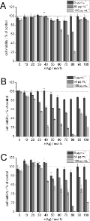
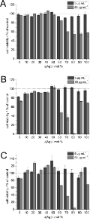
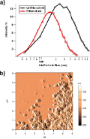
- . Further, we also investigate the cell viability of dermal fibroblasts after incubation with filtered/unfiltered diluted tattoo ink and discuss these results in the context of nanoparticle research. Results and Discussion Tattoo ink particle size distribution Following three repeats of the particle size
- 2895 nm2, which translates to a diameter of 60.7 nm assuming a spherical shape. For this study we have only examined one commercially available tattoo ink. However, the AFM and particle size distribution results are in strong agreement with Høgsberg et al., who carried out a large study of 58 tattoo
- embedded in the dermal collagenous network, which were visible especially at the periphery of a clump of deposited particles. Wherever primary pigment particles could be resolved they were of approximately this diameter, suggesting that the observed ink particle size distribution reflects the range of


Simulation tool for assessing the release and environmental distribution of nanomaterials
Beilstein J. Nanotechnol. 2015, 6, 938–951, doi:10.3762/bjnano.6.97

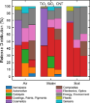
- thermodynamic equilibrium, the intermedia transport of ENMs is governed by physical transport processes of particulate matter. Therefore, a description of the environmental fate and transport of ENMs requires the particle size distribution (PSD) to be accounted for within the modeling framework, as well as the
- distribution (percent) among the various compartments, (d) ENM apportionment throughout the ambient particle size distribution (Figure 8), and (e) the magnitude of intermedia transport rates, as a fraction of the ENM release rates, that allows assessment of the relative significance of various intermedia
- the environmental distribution of ENMs. ITP: intermedia transport processes, PSD: particle size distribution. Examples of MendNano web-based graphical user interface for scenario building showing inputs of soil parameters. Examples of graphical representations of MendNano simulation results depicting


Proinflammatory and cytotoxic response to nanoparticles in precision-cut lung slices
Beilstein J. Nanotechnol. 2014, 5, 2440–2449, doi:10.3762/bjnano.5.253
- instrument in high vacuum without sputtering. Particle size distribution and PDI were measured by DLS with a Malvern Zetasizer Nano ZS (Malvern Instruments GmbH, Herrenberg, Germany). The uncoated ZnO-NPs NM110 belonged to a set of representative manufactured nanomaterials provided and characterized by the
- European Commission Joint Research Centre (JRC, Ispra, Italy). Particle size distribution was determined by DLS. Shortly before incubation with PCLS, ZnO-NPs were dispersed following the Nanogenotox dispersion protocol [49]. The quartz particles (Min-U-Sil 5, crystalline silica, α-quartz) with a purity of


Anticancer efficacy of a supramolecular complex of a 2-diethylaminoethyl–dextran–MMA graft copolymer and paclitaxel used as an artificial enzyme
Beilstein J. Nanotechnol. 2014, 5, 2293–2307, doi:10.3762/bjnano.5.238
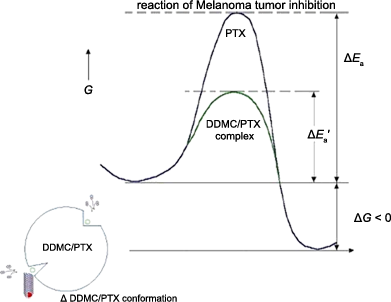
- Discussion Supramolecular DDMC/PTX complex Characterization of the supramolecular DDMC/PTX complex A complex consisting of DDMC and PTX (DDMC/PTX) was obtained by using the antitumor alkaloid PTX as the guest and DDMC as the host. The particle size distribution and ζ-potential of the DDMC/PTX complex were
- complex. From the above, Figure 3b shows the presence of a large hydrophobic bond in the DDMC/PTX complex. Particle size distribution and ζ-potential The particle size distribution and the ζ-potential of the DDMC/PTX complex were measured by dynamic light scattering and particle electrophoretic mobility
- ) DDMC, (2) DDMC/PTX complex (DDMC 9.6 mg/PTX 0.385 mg), (3) DDMC/PTX complex (DDMC 9.6 mg/PTX 0.709 mg), and (4) PTX. (b): Reprinted from [62]. Characteristics of the DDMC–paclitaxel complex. (a) Particle size distribution and ζ-potential of the DDMC–paclitaxel complex determined by dynamic light


Nanoencapsulation of ultra-small superparamagnetic particles of iron oxide into human serum albumin nanoparticles
Beilstein J. Nanotechnol. 2014, 5, 2259–2266, doi:10.3762/bjnano.5.235
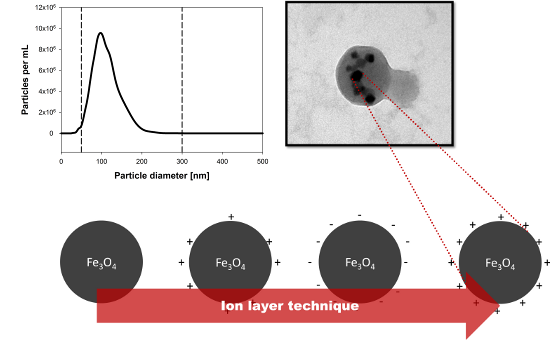
- high electron density appeared in black. Since the agglomeration of HSA molecules during desolvation process is depending on the charge of the molecules, particles increase in diameter with increasing amount of incorporated iron (Figure 4A and B). Determination of particle size distribution by
- morphology of the particles was investigated with a Philips EM 208S electron microscope, at a nominal magnification of 16,000–21,000 and analyzed by using the GATAN software package (Gatan Inc., Pleasanton, USA). Particle size distribution by nanoparticle tracking analysis NTA was conducted by using a


PVP-coated, negatively charged silver nanoparticles: A multi-center study of their physicochemical characteristics, cell culture and in vivo experiments
Beilstein J. Nanotechnol. 2014, 5, 1944–1965, doi:10.3762/bjnano.5.205



Imaging the intracellular degradation of biodegradable polymer nanoparticles
Beilstein J. Nanotechnol. 2014, 5, 1905–1917, doi:10.3762/bjnano.5.201
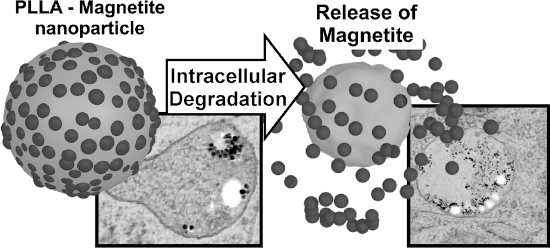
- convolved with the broad PLLA particle size distribution (see inset in Figure 3) and the unknown cross section through the particle. Accordingly, Poisson statistics will take effect rather than a Gaussian standard deviation. The measurement error scales with N−1/2, where N is the number of events


A reproducible number-based sizing method for pigment-grade titanium dioxide
Beilstein J. Nanotechnol. 2014, 5, 1815–1822, doi:10.3762/bjnano.5.192
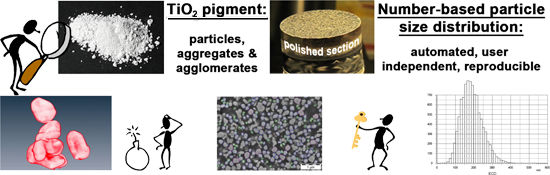
- its particle size distribution is optimized for best scattering efficiency according to Mie's theory [2][3]. The most common industrial processing routes are the sulfate process and the chloride process. In the sulfate process, for example, ilmenite ore is dissolved in sulfuric acid, iron and titanium
- recommendation of the European Commission [4], the method gives a conservative estimate of the particle size distribution. Results and Discussion In order to establish the proposed method, especially for the sizing of pigment-grade titanium dioxide, the reproducibility of the method was primarily tested. Each


The surface properties of nanoparticles determine the agglomeration state and the size of the particles under physiological conditions
Beilstein J. Nanotechnol. 2014, 5, 1774–1786, doi:10.3762/bjnano.5.188
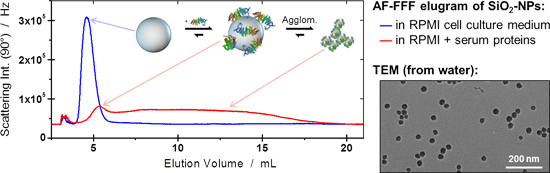
- broad size distributions. Due to the differences in the preparation procedures, the three silica particle types exhibit different properties beyond the realizable particle size and particle size distribution, for example, with respect to density and surface porosity [54][56][58][59]. Silica


Influence of surface-modified maghemite nanoparticles on in vitro survival of human stem cells
Beilstein J. Nanotechnol. 2014, 5, 1732–1737, doi:10.3762/bjnano.5.183
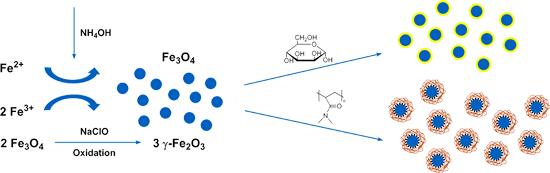
- not substantially differ showing a relatively high uniformity in terms of size and spherical shape (Figure 1). The average diameter of the particles was 6–7 nm and their polydispersity (weight- to number-average particle diameter) was 1.3–1.5 indicating a moderately broad particle size distribution





