Search results
Search for "photocatalytic activity" in Full Text gives 139 result(s) in Beilstein Journal of Nanotechnology.
High activity of Ag-doped Cd0.1Zn0.9S photocatalyst prepared by the hydrothermal method for hydrogen production under visible-light irradiation
Beilstein J. Nanotechnol. 2014, 5, 587–595, doi:10.3762/bjnano.5.69
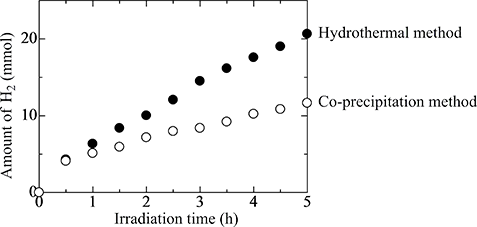
- activity of Cd0.1Zn0.9S was studied for the hydrogen production from water reduction under visible light irradiation. Results: Compared to the series prepared by the co-precipitation method, samples prepared by the hydrothermal method performed with a better photocatalytic activity. The sample with the
- . In addition to the larger absorption in the visible-light region, the increase in photocatalytic activity of samples with Ag doping may also come from the Ag species facilitating electron–hole separation. Conclusion: This study demonstrated that Ag doping is a promising way to enhance the activity of
- , the activity was not improved. After 5 h of reaction, Ag(0.03)-doped Cd0.1Zn0.9S and Ag(0.05)-doped Cd0.1Zn0.9S even showed a lower rate than that obtained from the undoped Cd0.1Zn0.9S. The enhancement in the photocatalytic activity of Ag(0.01)-doped Cd0.1Zn0.9S might be attributed to the better


Artificial sunlight and ultraviolet light induced photo-epoxidation of propylene over V-Ti/MCM-41 photocatalyst
Beilstein J. Nanotechnol. 2014, 5, 566–576, doi:10.3762/bjnano.5.67
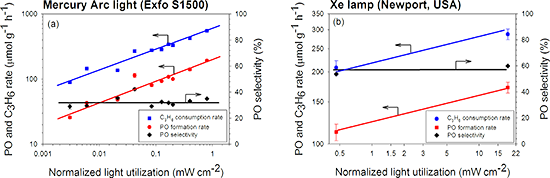
- excitation of (Ti–O) moieties by UV irradiation but also to the indirect excitation through a charge transition from (V4+–OL−)* states as proposed in [34][35], which brings up a high photocatalytic activity [34]. Furthermore, Amano et al. reported that the lattice oxygen in the excited triplet state (V4+–OL




Mesoporous cerium oxide nanospheres for the visible-light driven photocatalytic degradation of dyes
Beilstein J. Nanotechnol. 2014, 5, 517–523, doi:10.3762/bjnano.5.60
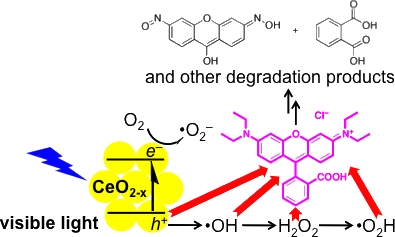
- , suggesting that the mechanism of photocatalytic activity under visible-light irradiation involves predominantly hydroxyl radicals as the active species. Keywords: cerium oxide; dye degradation; mesoporous; photocatalysis; visible light; Introduction The degradation of organic pollutants by affordable and
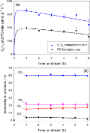
- . Control experiments were performed in the absence of scavengers (black line, Figure 5a). The established scavengers used include sodium oxalate for h+ (red), CrO3 for e− (green), isopropanol for •OH (blue), and 1,4-benzoquinone for •OOH/•O2− (grey, Figure 5a) [5]. The inhibition of photocatalytic activity
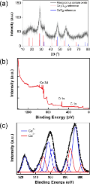
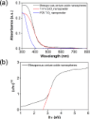
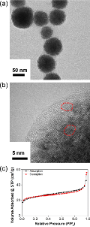
- of the material. The visible-light photocatalytic activity in the degradation of RhB surpasses that of the commercially available CeO2 and P25 TiO2 nanopowders. With a series of radical scavengers, the mechanism of the photocatalytic activity is proposed to involve a prominent role of •OH radicals as

Dye-sensitized Pt@TiO2 core–shell nanostructures for the efficient photocatalytic generation of hydrogen
Beilstein J. Nanotechnol. 2014, 5, 360–364, doi:10.3762/bjnano.5.41
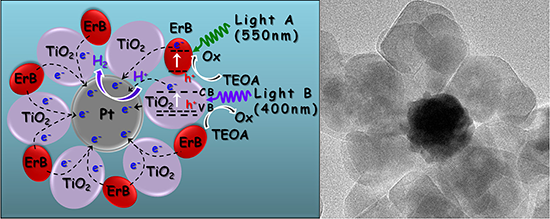
- hydrothermal method. The dye-sensitization of these Pt@TiO2 core–shell structures allows for a high photocatalytic activity for the generation of hydrogen from proton reduction under visible-light irradiation. When the dyes and TiO2 were co-excited through the combination of two irradiation beams with
- recombination rate of photogenerated electrons and holes often leads to low quantum yields and a poor photocatalytic activity [6]. Tremendous efforts have been made to improve the photocatalytic performance of TiO2. One typical strategy is prolonging the lifetime of the electron–hole pair through deposition of


Preparation of NiS/ZnIn2S4 as a superior photocatalyst for hydrogen evolution under visible light irradiation
Beilstein J. Nanotechnol. 2013, 4, 949–955, doi:10.3762/bjnano.4.107
- be used as co-catalyst to enhance the photocatalytic hydrogen evolution over CdS [39]. It was found that NiS/CdS photocatalysts prepared via a simple hydrothermal loading method showed high photocatalytic activity for hydrogen evolution in the presence of lactic acid as sacrificial agent and a high
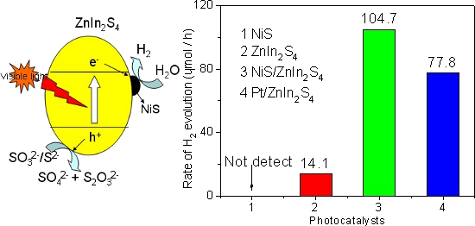
- evolution under visible light irradiation and the activity of NiS/ZnIn2S4 with optimized amount of NiS is even higher than that of Pt/ZnIn2S4. A possible enhancement mechanism based on the co-catalyst and the formed junction for the improved photocatalytic activity in the NiS/ZnIn2S4 system was also
- doping of only 0.2 wt % NiS onto ZnIn2S4 led to its highly enhanced photocatalytic activity for hydrogen evolution. The hydrogen evolution rate over 0.2 wt % NiS/ZnIn2S4 was enhanced to 70.5 μmol/h, about 5 times of that over pure ZnIn2S4 under similar condition. This indicates that NiS deposited on the


Structural, optical and photocatalytic properties of flower-like ZnO nanostructures prepared by a facile wet chemical method
Beilstein J. Nanotechnol. 2013, 4, 763–770, doi:10.3762/bjnano.4.87
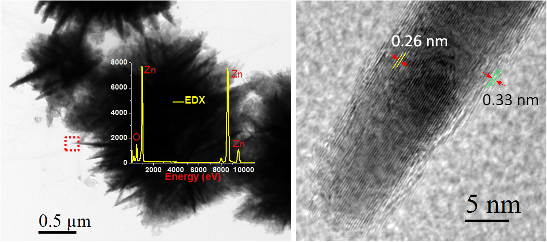
- UV–vis absorption spectroscopy. SEM and TEM studies revealed flower-like structures consisting of nanosheets, formed due to oriented attachment of ZnO nanoparticles. Flower-like ZnO structures showed enhanced photocatalytic activity towards sun-light driven photodegradation of methylene blue dye (MB
- ] by the tape casting method. These ZnO plates showed a good photocatalytic activity for azo dyes that depended on their surface area. Shen et al. [34] have shown that depositing ZnO on silica nanoparticles is a simple and effective method to prepare photocatalysts that could degrade 90% methylene blue
- (MB) in 60 min. ZnO nanoparticles (NP) that were synthesized by wet chemical methods can be passivated by a Zn(OH)2 layer during ageing. Hong et al. [35] have shown that the photocatalytic activity of ZnO NP is drastically reduced when the is surface modified with polysterene. In this paper, we have


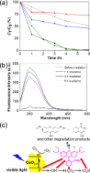
Modulation of defect-mediated energy transfer from ZnO nanoparticles for the photocatalytic degradation of bilirubin
Beilstein J. Nanotechnol. 2013, 4, 714–725, doi:10.3762/bjnano.4.81
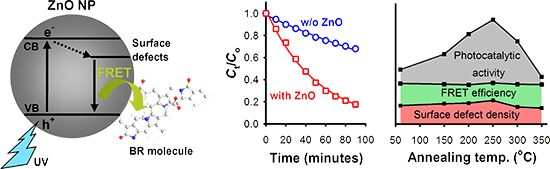
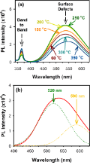
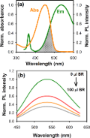
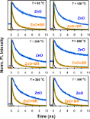
- ]. It has been reported that the native defects in the ZnO lattice, mostly the oxygen vacancy sites, play an important role in the photocatalytic activity of the nanostructures [11]. Oxygen vacancies have been reported as the cause of the characteristic green luminescence of ZnO [12][13][14]. These
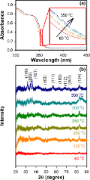
- of surface defects. The rates of the photocatalytic degradation of BR were found to follow a first-order exponential equation with a maximum photocatalytic activity for the ZnO nanoparticles annealed at 250 °C. However, when the surface defects were reduced by annealing the ZnO nanoparticles at
- be attributed to the highest concentration of surface defect-states present in these nanoparticles. Under continuous UV irradiation, the ZnO nanoparticles annealed at 250 °C showed the maximum photocatalytic activity, which was almost 3.5 times higher than that of the as-synthesized ZnO nanoparticles


Photocatalytic antibacterial performance of TiO2 and Ag-doped TiO2 against S. aureus. P. aeruginosa and E. coli
Beilstein J. Nanotechnol. 2013, 4, 345–351, doi:10.3762/bjnano.4.40
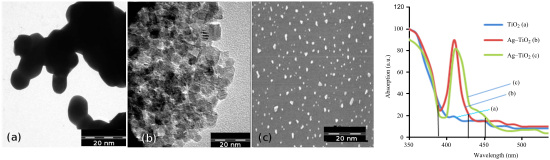
- ., India Department of Biotechnology, Motilal Nehru National Institute of Technology, Allahabad -211004. U.P., India. 10.3762/bjnano.4.40 Abstract This paper reports the structural and optical properties and comparative photocatalytic activity of TiO2 and Ag-doped TiO2 nanoparticles against different
- microorganisms including bacteria, fungi and viruses, because it has high photoreactivity, broad-spectrum antibiosis and chemical stability [1][2][3][4][5][6]. The photocatalytic activity of annealed TiO2 sturdily depends upon its existing phase, i.e., anatase, rutile, brokite. The anatase phase shows an
- is decreased. The photocatalytic activity of TiO2 nanoparticles depends not only on the properties of the TiO2 material itself, but also on the modification of TiO2 with metal or metal oxide. Previous studies reported that the addition of noble metal (silver and gold) in titanium dioxide enhances its


Paper modified with ZnO nanorods – antimicrobial studies
Beilstein J. Nanotechnol. 2012, 3, 684–691, doi:10.3762/bjnano.3.78
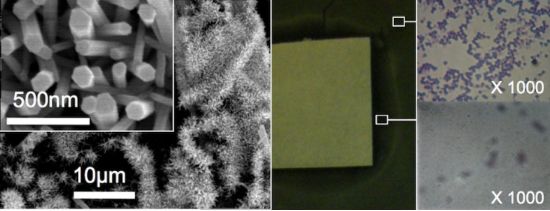
- superoxide anions (·O2−), hydrogen peroxide (H2O2), hydroxyl radicals (·OH), hydrogendioxide anion (HO2−), and hydroperoxy radicals (·HO2). Surface area and surface defects play an important role in the photocatalytic activity of metal-oxide nanostructures. One-dimensional nanostructures such as nanorods


Mesoporous MgTa2O6 thin films with enhanced photocatalytic activity: On the interplay between crystallinity and mesostructure
Beilstein J. Nanotechnol. 2012, 3, 123–133, doi:10.3762/bjnano.3.13
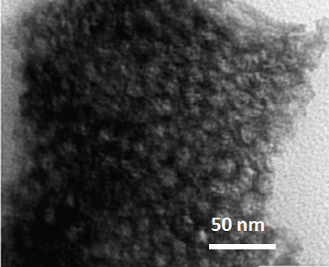
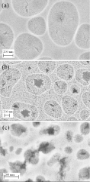
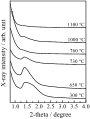
- of the mesoporous films to assist the photodegradation of rhodamine B in water was studied. As a result, two maxima in the photocatalytic activity were identified in the calcination temperature range of 550–850 °C, peaking at 700 °C and 790 °C, and the origin of this was investigated by using
- achieved in order to optimize the physicochemical performance of mesoporous metal-oxide films. Keywords: magnesium tantalate; mesoporous materials; photocatalytic activity; self-assembly; thin films; Introduction Because of its excellent microwave dielectric properties, MgTa2O6 is one of the ternary
- photocatalytic activity is quite low. With the help of a block polymer P123, a Mg–Ta oxide powder with highly ordered mesopores was previously synthesized [11]. After removal of the P123 template by washing in water, the wormholelike microporous MgTa2O6 powder, though amorphous, showed enhanced water






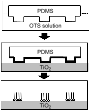
Self-assembled monolayers and titanium dioxide: From surface patterning to potential applications
Beilstein J. Nanotechnol. 2011, 2, 845–861, doi:10.3762/bjnano.2.94



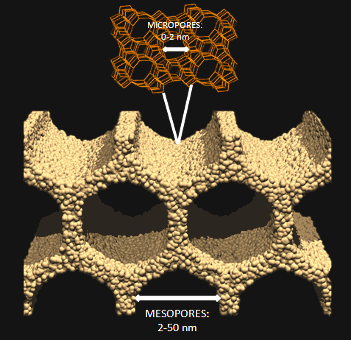
Synthesis and catalytic applications of combined zeolitic/mesoporous materials
Beilstein J. Nanotechnol. 2011, 2, 785–801, doi:10.3762/bjnano.2.87
- properties and their photocatalytic activity in photodegradation processes [169], TiO2 formation often needs to be avoided in the synthesis of Ti-containing nanoporous siliceous materials since its presence can be detrimental for the catalytic activity associated with tetrahedrally coordinated Ti [170][171





Approaches to nanostructure control and functionalizations of polymer@silica hybrid nanograss generated by biomimetic silica mineralization on a self-assembled polyamine layer
Beilstein J. Nanotechnol. 2011, 2, 760–773, doi:10.3762/bjnano.2.84
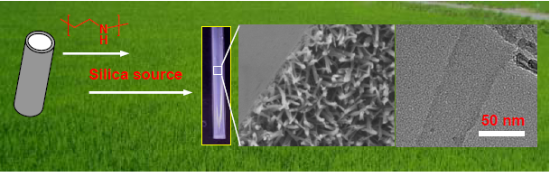
- water contact angle could be attributed to the degradation of the low-surface-energy alkyl group due to the photocatalytic activity of anatase titania [47]. This was further confirmed by a simple control experiment. A superhydrophobic silica nanograss surface was produced by a similar DecTMS treatment


Enhanced visible light photocatalysis through fast crystallization of zinc oxide nanorods
Beilstein J. Nanotechnol. 2010, 1, 14–20, doi:10.3762/bjnano.1.3
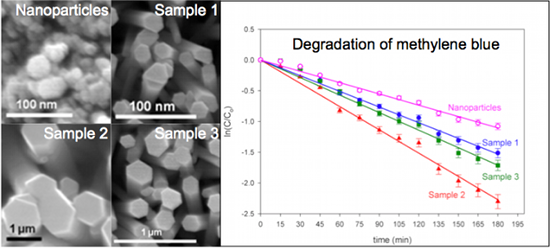
- Abstract Hydrothermally grown ZnO nanorods have inherent crystalline defects primarily due to oxygen vacancies that enhance optical absorption in the visible spectrum, opening up possibilities for visible light photocatalysis. Comparison of photocatalytic activity of ZnO nanorods and nanoparticle films on
- form of interstitials and vacancies, were intentionally created by faster growth of the nanorods by microwave activation. Visible light photocatalytic activity was observed to improve by ≈8% attributed to the availability of more electron deficient sites on the nanorod surfaces. Engineered defect
- surface defects play an important role in the photocatalytic activity of metal-oxide nanostructures, as the contaminant molecules need to be adsorbed on to the photocatalytic surface for the redox reactions to occur. The higher the effective surface area, the higher will be the adsorption of target