


Search results
Search for "plant" in Full Text gives 159 result(s) in Beilstein Journal of Nanotechnology.
Novel roles for well-known players: from tobacco mosaic virus pests to enzymatically active assemblies
Beilstein J. Nanotechnol. 2016, 7, 613–629, doi:10.3762/bjnano.7.54
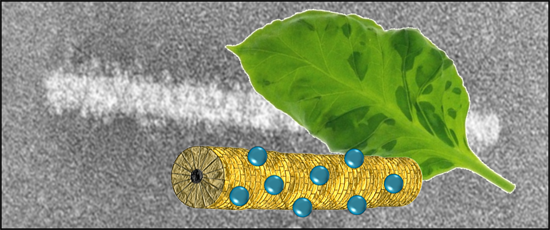
- Claudia Koch Fabian J. Eber Carlos Azucena Alexander Forste Stefan Walheim Thomas Schimmel Alexander M. Bittner Holger Jeske Hartmut Gliemann Sabine Eiben Fania C. Geiger Christina Wege Institute of Biomaterials and Biomolecular Systems, Department of Molecular Biology and Plant Virology
- Nanogune, Tolosa Hiribidea 76, E-20018 Donostia-San Sebastián, Spain, and Ikerbasque, Maria Díaz de Haro 3, E-48013 Bilbao, Spain 10.3762/bjnano.7.54 Abstract The rod-shaped nanoparticles of the widespread plant pathogen tobacco mosaic virus (TMV) have been a matter of intense debates and cutting-edge
- research for more than a hundred years. During the late 19th century, their behavior in filtration tests applied to the agent causing the 'plant mosaic disease' eventually led to the discrimination of viruses from bacteria. Thereafter, they promoted the development of biophysical cornerstone techniques


Green and energy-efficient methods for the production of metallic nanoparticles
Beilstein J. Nanotechnol. 2015, 6, 2354–2376, doi:10.3762/bjnano.6.243
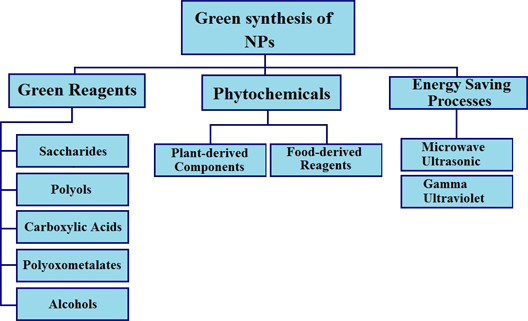
- -toxic reagents remains a challenge for researchers and more studies are needed to achieve high quality products with sustainable commercial viability [6][13][14][19][20]. Recently, biological systems including microbes and fungi as reactors and plant extracts as precursors have been intensively explored
- applications. Plant-derived components Leela and Vivekanandan investigated the capability of leaf extracts of different plants including Helianthus annus, Basella alba, Oryza sativa, Saccharum officinarum, Sorghum bicolour and Zea mays for the reduction of Ag precursor. They found that H. annus has strong
- potential for the reduction of Ag ions and is therefore promising in the development of Ag NPs [50]. Also Song and Kim used five plant leaf extracts including Pinus desiflora, Diopyros kaki, Gingko biloba, Magnolia kobus and Platanus orientalis for the synthesis of Ag NPs from AgNO3. They found that the


Green synthesis, characterization and catalytic activity of natural bentonite-supported copper nanoparticles for the solvent-free synthesis of 1-substituted 1H-1,2,3,4-tetrazoles and reduction of 4-nitrophenol
Beilstein J. Nanotechnol. 2015, 6, 2300–2309, doi:10.3762/bjnano.6.236
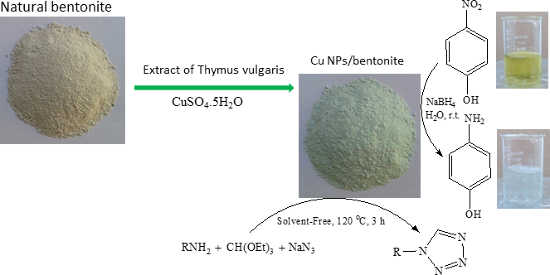
- recent research on tetrazoles, 1-substituted 1H-1,2,3,4-tetrazoles was found to be a special category due to their biological activity [16]. The plant biosynthesis of nanoparticles immobilized on natural supports is a subject of new research as little has been published on this topic [17][18]. Therefore
- reagents All reagents were purchased from the Merck and Sigma-Aldrich and used without further purification. The bentonite and Thymus vulgaris plant used in this paper were collected from the Vartoon region (Isfahan, Iran). The IR spectra were recorded on a JASCO, FT/IR-6300 instrument in KBr pellets. The
- NPs/bentonite The Cu NPs/bentonite composite was prepared by a simple and inexpensive method involving the immobilization of Cu NPs on bentonite using an aqueous extract of Thymus vulgaris without the usage of any special capping agents or surfactant template. The plant not only functioned as a


Analysis of soil bacteria susceptibility to manufactured nanoparticles via data visualization
Beilstein J. Nanotechnol. 2015, 6, 1635–1651, doi:10.3762/bjnano.6.166

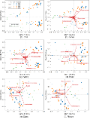
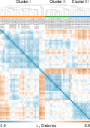
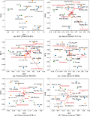
- legume roots to fix atmospheric N2 into ammonium for plant growth [48]. One can also explore the effect of treatment on bacterial taxa (treatment → bacterial taxon). For example, the relative abundances of the 14 order taxa displayed in Figure 4 illustrates treatment with ZnO MNPs at the dose of 0.1 mg/g





Peptide-equipped tobacco mosaic virus templates for selective and controllable biomineral deposition
Beilstein J. Nanotechnol. 2015, 6, 1399–1412, doi:10.3762/bjnano.6.145
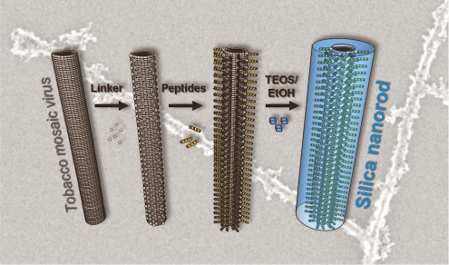
- Klara Altintoprak Axel Seidenstucker Alexander Welle Sabine Eiben Petia Atanasova Nina Stitz Alfred Plettl Joachim Bill Hartmut Gliemann Holger Jeske Dirk Rothenstein Fania Geiger Christina Wege Department of Molecular Biology and Plant Virology, Institute of Biomaterials and Biomolecular Systems
- weight polymers [15], carbon nanotubes [16], peptide nanotubes [17], certain plant viruses [18][19][20][21], filamentous bacteriophages [22][23], and bacterial flagellae [24] have been evaluated for their applicability on a technical scale. To achieve control over mineral precipitation, the modification
- virus (TMV) were used as templates for coating with inorganic materials including Pt, Au [28], Ag [29][30], Pd [31][32], TiO2 [33], SiO2 [34], NiO [35], CdS [21], CoPt, FePt, ZnS [27][36] and ZnO [37][38][39]. Among the virus-based templates, plant viruses are especially suitable nanostructured




Natural and artificial binders of polyriboadenylic acid and their effect on RNA structure
Beilstein J. Nanotechnol. 2015, 6, 1338–1347, doi:10.3762/bjnano.6.138
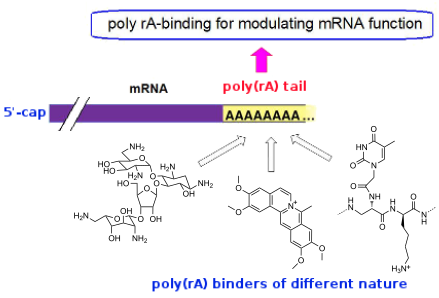
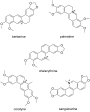
- helix poly(rA) structures induced at low pH conditions. Recent reports on poly(rA) binding activity of the plant alkaloid chelerythrine (Figure 3) indicated that this natural compound was also able to induce poly(rA) self-structures with the formation of a poly(rA) helix that showed a cooperative
- showed a strong and specific binding to triple helical as well as double helical complexes of poly(rA) with poly(rU). Aristololactam-β-D-glucoside alkaloid: Aristololactam-β-D-glucoside (Figure 4) is another plant alkaloid whose structure also contains a sugar moiety which is able to interact, even if





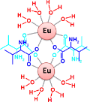
Microwave assisted synthesis and characterisation of a zinc oxide/tobacco mosaic virus hybrid material. An active hybrid semiconductor in a field-effect transistor device
Beilstein J. Nanotechnol. 2015, 6, 785–791, doi:10.3762/bjnano.6.81
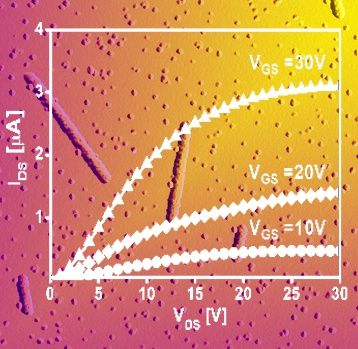
- Biology and Plant Virology, University of Stuttgart, 70550 Stuttgart, Germany 10.3762/bjnano.6.81 Abstract Tobacco mosaic virus (TMV) has been employed as a robust functional template for the fabrication of a TMV/zinc oxide field effect transistor (FET). A microwave based approach, under mild conditions
- variety of inorganic materials under mild fabrication conditions. With its well-defined tube-like structure, the tobacco mosaic virus is one the most widely studied plant virus consisting of ≈2130 identical protein units, a length of 300 nm and an outer and inner diameter of 18 nm and 4 nm, respectively


Mapping of elasticity and damping in an α + β titanium alloy through atomic force acoustic microscopy
Beilstein J. Nanotechnol. 2015, 6, 767–776, doi:10.3762/bjnano.6.79
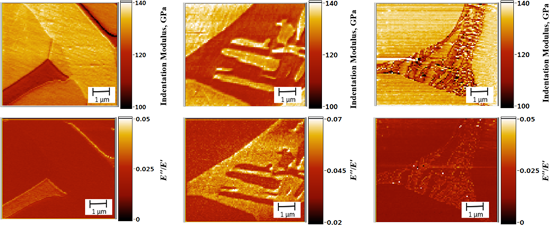
- films [8], NiMnGa films [9], Arabidopsis plant [10], polystyrene–propylene blends [11], nickel base alloys [12][13], ferritic steels [13], and metallic glasses [14]. Besides contact-resonance based methods, multi-frequency AFM techniques have also been used for measurement of elastic and damping


Exploiting the hierarchical morphology of single-walled and multi-walled carbon nanotube films for highly hydrophobic coatings
Beilstein J. Nanotechnol. 2015, 6, 353–360, doi:10.3762/bjnano.6.34
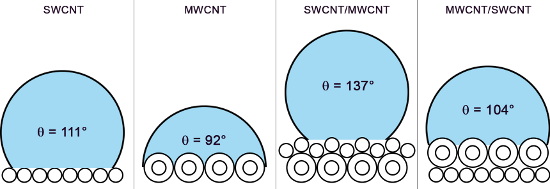
- of water [9]. In particular, hierarchical surface morphologies are a recent concept introduced to explain the wetting properties of surfaces such as plant leaves [2][3], bird feathers [10], and insect legs [11]. These surfaces are made of a hierarchical micro- and nanomorphology which improves their
- SWCNT/MWCNT samples are comparable with those of micropapillae in hydrophobic plant leaves. (ii) The hierarchical surface morphology lead to the formation of a consistent amount of air pockets, as a consequence of the transition from the hydrophobic Wenzel state to the hydrophobic Cassie–Baxter


Green preparation and spectroscopic characterization of plasmonic silver nanoparticles using fruits as reducing agents
Beilstein J. Nanotechnol. 2015, 6, 293–299, doi:10.3762/bjnano.6.27
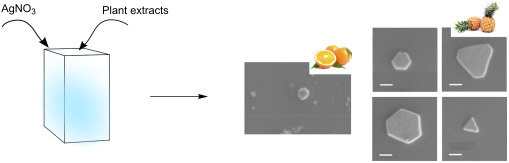
- process. The most popular process among the bottom up methods might be the preparation of silver and gold nanoparticles in aqueous solution by the reduction of silver and gold salts using sodium citrate or sodium borohydride as reducing agent [9]. Recently it has been identified that also plant extracts
- reducing and also stabilizing agents [11]. Overall, using plant materials offers an eco-friendly way to prepare silver- and gold nanoparticles. Moreover, the diversity of chemical composition of plants, i.e., the combination of various reducing and stabilizing agents results in a broad variety of
- behavior of the green silver nanoparticles might be explained by the presence of other molecules on the surface of the particles related to plant materials introduced due to the green preparation, which prevent that particles come very close together and even touch each other. Moreover, these residual


Aquatic versus terrestrial attachment: Water makes a difference
Beilstein J. Nanotechnol. 2014, 5, 2424–2439, doi:10.3762/bjnano.5.252
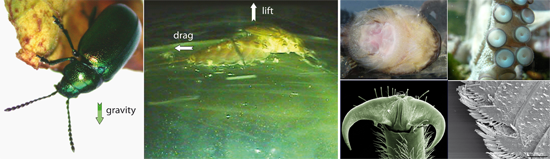
- important difference between adhesion in terrestrial and aquatic systems. Nevertheless, there are exceptions. Some terrestrial animals can step in droplets, e.g., on plant surfaces or even be completely submerged under water for a short time due to heavy rainfall. For example, the beetle Gastrophysa


From sticky to slippery: Biological and biologically-inspired adhesion and friction
Beilstein J. Nanotechnol. 2014, 5, 1450–1451, doi:10.3762/bjnano.5.157

- of cells, insect feet, snake skin, plant traps, and bird wings are just a few striking examples of a tremendous diversity of biological surfaces and systems with remarkable contact behavior about many of which our knowledge is limited compared to medically relevant biotribosystems. Since the 90s a

Liquid fuel cells
Beilstein J. Nanotechnol. 2014, 5, 1399–1418, doi:10.3762/bjnano.5.153
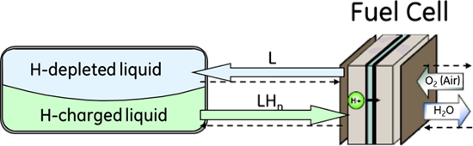
- or chemically at a central plant). In the latter case, the fuel cells can be recharged by using the existing infrastructure for the delivery of liquid fuels. The theoretical open circuit potential (OCP) of electrochemical cells based on the reaction in Equation 7 is in the range of 1.06–1.11 V if the
- Glycerol as a nontoxic fuel for fuel cells was proposed in 1964 [107]. Glycerol is the major product in biodiesel production by transesterification of plant oils and animal fats. Although it is used as a raw material in the chemical industry and animal feed, its market is saturated thus limiting the

Insect attachment on crystalline bioinspired wax surfaces formed by alkanes of varying chain lengths
Beilstein J. Nanotechnol. 2014, 5, 1031–1041, doi:10.3762/bjnano.5.116
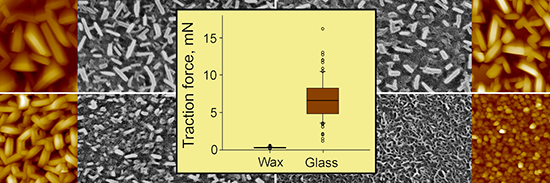
- Engineering and the Russell Berrie Nanotechnology Institute, Technion – Israel Institute of Technology, 32000 Haifa, Israel 10.3762/bjnano.5.116 Abstract The impeding effect of plant surfaces covered with three-dimensional wax on attachment and locomotion of insects has been shown previously in numerous
- attachment and higher pull-off forces of polydimethylsiloxane probes on wax surfaces having a higher density of wax coverage, created by smaller crystals. Keywords: Coccinella septempunctata; insect–plant interactions; plant waxes; pull-off force; traction force; Introduction During their locomotion
- between plants and insects, plants have developed surfaces that enable pollinators and symbiotic insects to attach to and walk on, as well as surface structures that reduce insect attachment [11]. The impeding effects of plant surfaces on insect attachment ability depend on the concrete plant–insect


Measuring air layer volumes retained by submerged floating-ferns Salvinia and biomimetic superhydrophobic surfaces
Beilstein J. Nanotechnol. 2014, 5, 812–821, doi:10.3762/bjnano.5.93
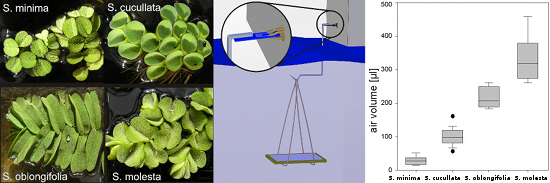
- Matthias J. Mayser Holger F. Bohn Meike Reker Wilhelm Barthlott Microfluidics Lab, GRASP, University of Liege, Chemin des Chevreuils 1, 4000 Liege, Belgium Nees-Institute for Biodiversity of Plants, University Bonn, Venusbergweg 22, 53115 Bonn, Germany Plant Biomechanics Group Freiburg, University
- structured, superhydrophobic, self-cleaning plant surfaces (Lotus-effect) [1][2] there has been an increasing interest in superhydrophobic surfaces [3][4][5]. Superhydrophobicity describes the extreme repellence of water by a surface. The level of water repellence is usually described by the contact angle
- applications for these trapped air layers in the Cassie wetting regime have been proposed which include drag reducing ship coatings or fluid channels [22][23][24][25][26] with the capability of 30% drag reduction [27] and could provide high economic and ecologic value [28][29]. While superhydrophobic plant


The surface microstructure of cusps and leaflets in rabbit and mouse heart valves
Beilstein J. Nanotechnol. 2014, 5, 622–629, doi:10.3762/bjnano.5.73
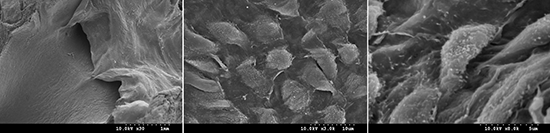
- plant leaves have been studied beginning with the lotus leaf [1][2][3]. Researchers then studied the microstructures of the India canna leaf, the rice leaf, and the leaf of Colocasia esculenta [4][5]. Subsequently, the study of surface microstructures expanded to animals. Researchers studied surface



Applicability and costs of nanofiltration in combination with photocatalysis for the treatment of dye house effluents
Beilstein J. Nanotechnol. 2014, 5, 476–484, doi:10.3762/bjnano.5.55
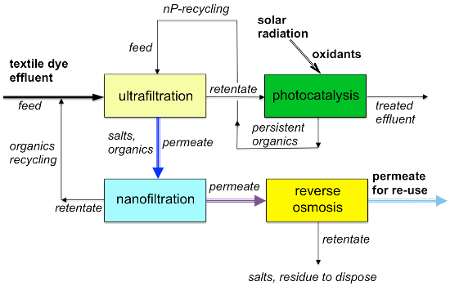
- attributed to the membrane replacement costs, which directly depend on the required membrane area and therefore, on the size of the plant that is used for the treatment process. When membrane plants are applied, it is a challenge to keep membrane costs low, because of the frequent need for membrane
- operating costs, as given in Table 1, are between 204 and 408 US$, which is roughly seven times the assumed membrane replacement costs (MRC) of 30 to 60 US$ per m2 of the spirally wound membrane elements used in the focused treatment plant. The estimated figures of fixed and variable costs are empirical
- 200 and 600 L/m2·d or, when calculated for one year, of 40 to 120 m3/(m2·a). Depreciation and maintenance costs incur independently of the operatinal status of the plant. That is, no matter whether or not there is a demand to treat effluents, the periodical CIP is included in the maintenance cost


A catechol biosensor based on electrospun carbon nanofibers
Beilstein J. Nanotechnol. 2014, 5, 346–354, doi:10.3762/bjnano.5.39
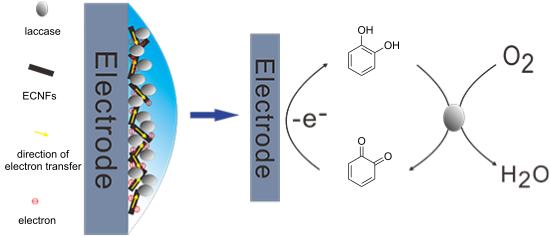
- fast and effective methods to detect phenolic compounds. Laccase (benzendiol:oxygen oxidoreductases; EC 1.10.3.2), a multicopper oxidase widely distributed in plant and fungal species, can reduce oxygen directly to water through a four-electron transfer step, and this chemical reaction does not produce


Atomic force microscopy recognition of protein A on Staphylococcus aureus cell surfaces by labelling with IgG–Au conjugates
Beilstein J. Nanotechnol. 2013, 4, 743–749, doi:10.3762/bjnano.4.84
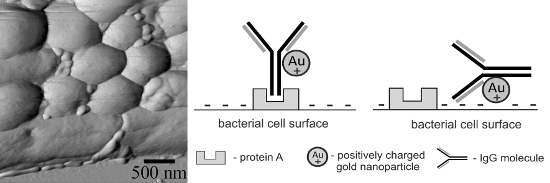
- ]. The mica surface is most commonly used for protein AFM imaging because of its hydrophilic character, its atomically flatness and the high affinity for proteins [28]. Atomic force microscopy imaging Images were collected by using an SMM-2000 atomic force microscope (JSC "Proton-MIET Plant", Russia


Apertureless scanning near-field optical microscopy of sparsely labeled tobacco mosaic viruses and the intermediate filament desmin
Beilstein J. Nanotechnol. 2013, 4, 510–516, doi:10.3762/bjnano.4.60
- , Universitätsstrasse 25, D-33615 Bielefeld, Germany Department of Molecular Biology and Plant Virology, Institute of Biology, University of Stuttgart, Pfaffenwaldring 57, D-70569 Stuttgart, Germany Erich and Hanna Klessmann Institute for Cardiovascular Research & Development (EHKI), Heart and Diabetes Center NRW, Ruhr
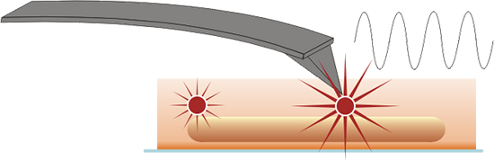
- and might give insight in the patho-mechanism. The tobacco mosaic virus (TMV) is a tubular shaped plant virus with a length of 300 nm and a diameter of 18 nm. It is composed of 2130 identical capsid protein subunits helically arranged on a single RNA strand thereby enclosing an inner longitudinal
- channel [25]. Apart from plant research, TMV is also important for nanotechnology applications of virus-derived biotemplates [26][27][28][29]. The self-assembly of the capsid components and the homogeneous nucleoprotein tube diameter make TMV an attractive scaffold for nanotechnological applications such


A nano-graphite cold cathode for an energy-efficient cathodoluminescent light source
Beilstein J. Nanotechnol. 2013, 4, 493–500, doi:10.3762/bjnano.4.58
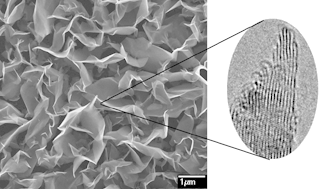
- is a decrease of energy loss on heating only from 95 to 90%. At the same time, production costs for these lamps, i.e. consumption and waste of energy at the production plant, are many times higher compared to the production costs of incandescent bulbs. Thus, the development of new types of light


Mechanical and thermal properties of bacterial-cellulose-fibre-reinforced Mater-Bi® bionanocomposite
Beilstein J. Nanotechnol. 2013, 4, 325–329, doi:10.3762/bjnano.4.37
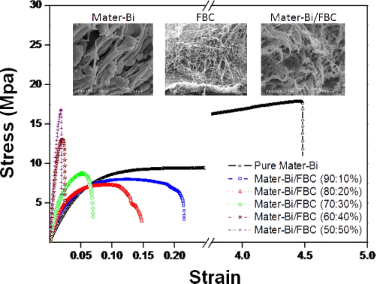
- environment. Composites of Mater-Bi with biodegradable fibres, particularly plant cellulose, have been developed. The use of flax cellulose pulp with Mater-Bi produces better mechanical properties and higher thermal stability [4]. Short fibres of sisal added in the range from 5 to 20% have been able to raise
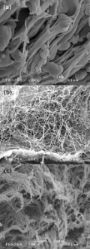
- /matrix interface [6]. Cellulose is the main component of plant cell walls. Some bacteria produce cellulose (celled biocellulose or bacterial cellulose). Plant cellulose and bacterial cellulose (BC) have the same chemical structure, but different physical and chemical properties. BC is produced by
- researchers due to its unique properties, such as high water capacity, high crystallinity, ultrafine fibre networks with a diameter of 20–100 nm, high purity (which is distinguished from plant cellulose), and high tensile strength [7][8][9][10]. The isotropic Young’s modulus of a BC sheet is about 20 GPa [11


Glassy carbon electrodes modified with multiwalled carbon nanotubes for the determination of ascorbic acid by square-wave voltammetry
Beilstein J. Nanotechnol. 2012, 3, 388–396, doi:10.3762/bjnano.3.45
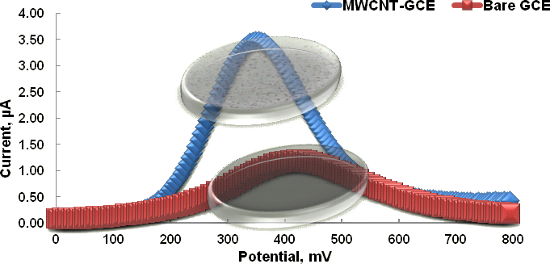
- Sushil Kumar Victoria Vicente-Beckett Central Queensland University, Centre for Plant and Water Science, Rockhampton, Queensland 4702, Australia Central Queensland University, Centre for Environmental Management, Rockhampton, Queensland 4702, Australia 10.3762/bjnano.3.45 Abstract Multiwalled


Drive-amplitude-modulation atomic force microscopy: From vacuum to liquids
Beilstein J. Nanotechnol. 2012, 3, 336–344, doi:10.3762/bjnano.3.38
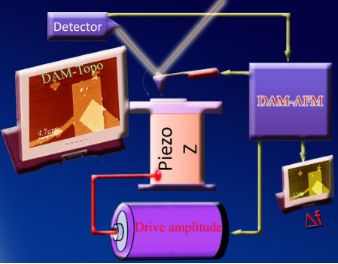
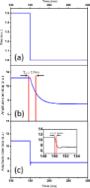
- differential equation that describes the dynamic of a plant (in the present case, the plant is the cantilever). As a consequence, the new transient time can be reduced arbitrarily by changing the feedback gains. This is conveniently illustrated in Figure 4 (see a more detailed discussion in Supporting


Impact of cell shape in hierarchically structured plant surfaces on the attachment of male Colorado potato beetles (Leptinotarsa decemlineata)
Beilstein J. Nanotechnol. 2012, 3, 57–64, doi:10.3762/bjnano.3.7
- Bettina Prum Robin Seidel Holger Florian Bohn Thomas Speck Plant Biomechanics Group Freiburg, Botanic Garden, Faculty of Biology, University of Freiburg, Schänzlestraße 1, 79104 Freiburg, Germany Bionics Competence Network BIOKON e. V., Ackerstraße 76, 13355 Berlin, Germany Competence Network
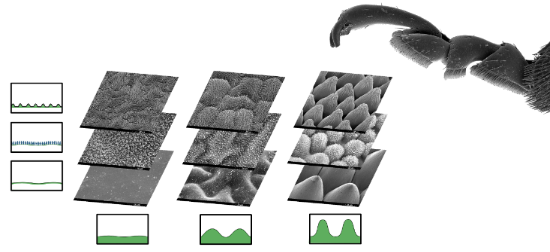
- Biomimetics, Schänzlestraße 1, 79104 Freiburg, Germany 10.3762/bjnano.3.7 Abstract Plant surfaces showing hierarchical structuring are frequently found in plant organs such as leaves, petals, fruits and stems. In our study we focus on the level of cell shape and on the level of superimposed microstructuring
- plant surfaces possessing convex or papillate cells on insect attachment remains unclear. We performed traction experiments with male Colorado potato beetles on nine different plant surfaces with different structures. The selected plant surfaces showed epidermal cells with either tabular, convex or





