Search results
Search for "pollutants" in Full Text gives 157 result(s) in Beilstein Journal of Nanotechnology.
Organoclay hybrid materials as precursors of porous ZnO/silica-clay heterostructures for photocatalytic applications
Beilstein J. Nanotechnol. 2016, 7, 1971–1982, doi:10.3762/bjnano.7.188
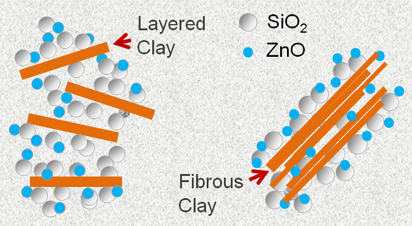
- water solution was tested using methylene blue and ibuprofen compounds, respectively, as model of pollutants. Keywords: delamination; montmorillonite; organoclays; photocatalysis; porous clay heterostructures; sepiolite; ZnO nanoparticles; Introduction In the last decades, great effort has been
- devoted to study ZnO as a very promising catalyst in the photocatalytic degradation of water pollutants. This is because of its elevated activity, its low cost and, in particular, its environmentally friendly behavior [1][2]. It has been confirmed that ZnO compared to TiO2 exhibits better efficiency in the
- photocatalytic degradation of organic pollutants [3][4][5][6]. It should be remembered that nanoparticulated zinc oxide is a wide-band gap II–VI semiconductor with a band-gap energy of around 3.4 eV, which is of great interest for photocatalytic applications [7]. ZnO nanoparticles (NP) have been assembled to





Prediction of the mechanical properties of zeolite pellets for aerospace molecular decontamination applications
Beilstein J. Nanotechnol. 2016, 7, 1761–1771, doi:10.3762/bjnano.7.169
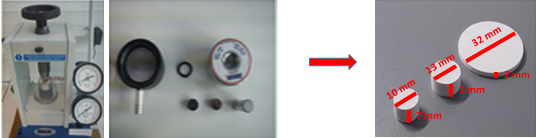
- pollutants without being damaged by impact or vibrations. Experimental Materials Two hydrophilic and two hydrophobic zeolites have been chosen to make zeolite pellets: - FAU 13X powder with a crystal size of 3–5 µm and a Si/Al molar ratio of 1.2 was purchased from Sigma-Aldrich. - Na-LTA powder with a


Role of RGO support and irradiation source on the photocatalytic activity of CdS–ZnO semiconductor nanostructures
Beilstein J. Nanotechnol. 2016, 7, 1684–1697, doi:10.3762/bjnano.7.161
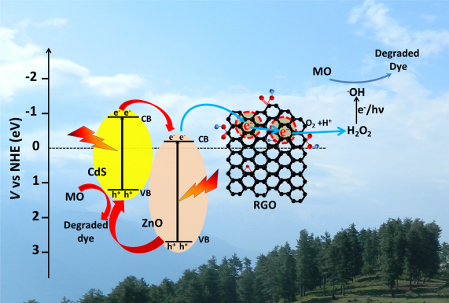
- nanostructures. Keywords: catalytic properties; chemical synthesis; nanostructures; semiconductors; transmission electron microscopy (TEM); Introduction In the past decade, there has been an increased interest in the photocatalytic degradation of various kinds of organic pollutants in water and soil [1]. Many
- of these pollutants, particularly dyes, are carcinogenic and mutagenic [2]. Thus, there is an urgent need for removal of these pollutants as these are harmful to both human and environment [3]. Previous studies have extensively explored the role of semiconductor oxides mainly ZnO, TiO2 in the
- photocatalytic decomposition of organic pollutants [4][5][6][7][8]. These semiconductor photocatalysts not only degrade the contaminants, but also cause their complete mineralization into CO2, H2O and mineral acids [9][10]. Thus, it is advantageous over physico-chemical methods such as flocculation–coagulation





Development of adsorptive membranes by confinement of activated biochar into electrospun nanofibers
Beilstein J. Nanotechnol. 2016, 7, 1556–1563, doi:10.3762/bjnano.7.149
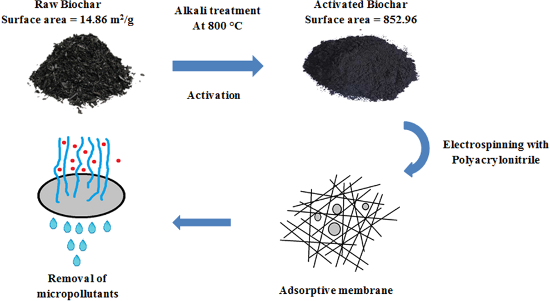
- , there is no report on the fabrication of NFM containing carbonaceous adsorbents for the removal of pollutants from aqueous media. In recent years, emerging contaminants such as pharmaceutically active compounds (PhACs) and endocrine disrupters have been the focus of attention due to their long term




An efficient recyclable magnetic material for the selective removal of organic pollutants
Beilstein J. Nanotechnol. 2016, 7, 1447–1453, doi:10.3762/bjnano.7.136
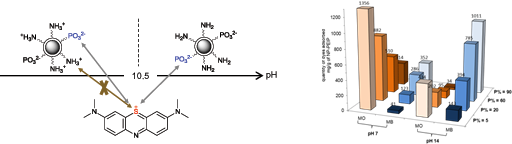
- Wastewater cleaning strategies based on the adsorption of materials are being increasingly considered, but the wide variety of organic pollutants at low concentrations still makes their removal a challenge. The hybrid material proposed here consists of a zwitterionic polyethylenimine polymer coating a
- introduced on the polymer. After recovering the nanoparticles with a magnet, pollutants are quantitatively released by repeated washing with low amounts of pH-adjusted water. The material can be reused many times without noticeable loss of efficiency and is designed to resist high temperatures, oxidation and
- harsh conditions. Keywords: adsorption; magnetic nanoparticles; organic pollutants; phosphonated polyethylenimine; Introduction During the last decades, an increased emphasis was placed on the issue of diffuse contamination of water. Toxic metals and organic pollutants are significant sources of


A composite structure based on reduced graphene oxide and metal oxide nanomaterials for chemical sensors
Beilstein J. Nanotechnol. 2016, 7, 1421–1427, doi:10.3762/bjnano.7.133
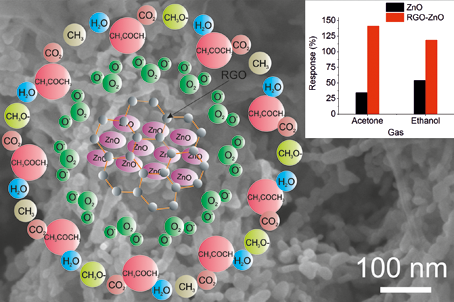
- monitoring of environmental pollutants and for the application of breath tests in assessment of exposure to volatile organic compounds. Keywords: chemical sensors; reduced graphene oxide (RGO); volatile organic compounds; zinc oxide (ZnO); Introduction Hazard analysis of critical control point (HACCP


High performance Ce-doped ZnO nanorods for sunlight-driven photocatalysis
Beilstein J. Nanotechnol. 2016, 7, 1338–1349, doi:10.3762/bjnano.7.125
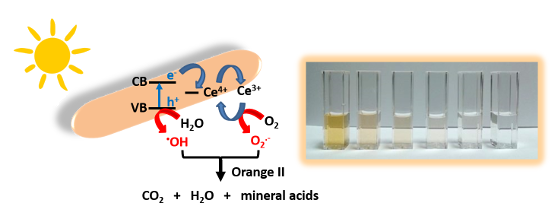
- ability of the Ce dopant to reduce charge recombinations is promising for the efficient photodegradation of pollutants. Photocatalytic degradation of Orange II We first investigated the photocatalytic activities of Ce-doped ZnO in comparison to ZnO rods in the photodegradation of Orange II used at a 10 mg







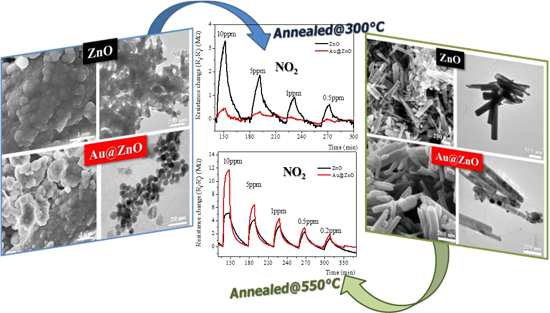
Evaluation of gas-sensing properties of ZnO nanostructures electrochemically doped with Au nanophases
Beilstein J. Nanotechnol. 2016, 7, 22–31, doi:10.3762/bjnano.7.3
- authors thank Mr G. Cassano for technical assistance at ENEA and The Italian Ministry of University and Scientific Research, PON program 2007–2013 for financial support, specifically, “INNOVHEAD” for the development of sensing devices for the selective detection of pollutants of automotive interest, and




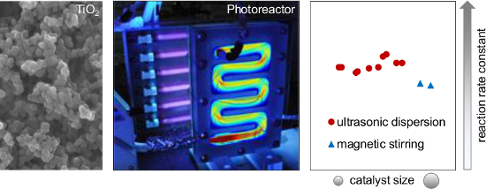
Impact of ultrasonic dispersion on the photocatalytic activity of titania aggregates
Beilstein J. Nanotechnol. 2015, 6, 2423–2430, doi:10.3762/bjnano.6.250
- oxidation, discoloration, mineralization, and degradation of organic pollutants [1][2]. Photocatalysis is an example of an AOP that has been effectively applied for the treatment of highly polluted water such as dye sewage [3][4]. Among the materials for this application, titanium dioxide (TiO2) is a very


Green and energy-efficient methods for the production of metallic nanoparticles
Beilstein J. Nanotechnol. 2015, 6, 2354–2376, doi:10.3762/bjnano.6.243
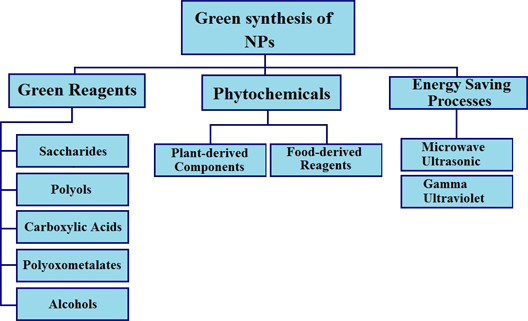
- methods involve the use of dispersants, surfactants or chelating agents to prevent the agglomeration of particles. Most of these reagents can be considered environmental pollutants, if they are going to be used in large scale production [16]. As a consequence, there have been growing concerns about the
- environmental issues of large-scale production of nanomaterials. Therefore, environmentally friendly procedures should be developed that lead to a reduction of cost, energy, product loss and the emission of pollutants [6][8][17][18]. However, the production of monodispersed nanomaterials by using cheap and non
- short life span of the product after release into the environment [66]. Real-time analysis of pollutants: The monitoring of the concentrations of different chemicals is crucial for the prevention of undesirable events. This approach can save energy and prevent accidents and also unwanted production of


Natural and artificial binders of polyriboadenylic acid and their effect on RNA structure
Beilstein J. Nanotechnol. 2015, 6, 1338–1347, doi:10.3762/bjnano.6.138
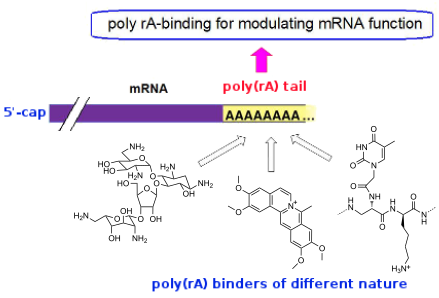
- in single-stranded poly(rA), and melting experiments led to the conclusion that the observed transition was cooperative similar to the case of a cooperative melting of a DNA double helix. Environmental pollutants In addition, some molecules derived from anthropic pollution are also able to bind, in
- Craig and Isenberg [67] evidenced similar binding results, concerning the ability of polycyclic hydrocarbons to bind double-stranded poly(rA) structures. Haloacetonitriles are chlorinated pollutants present in drinking water and swimming pools formed as disinfection by-products, whose oncogenic effect






Simulation tool for assessing the release and environmental distribution of nanomaterials
Beilstein J. Nanotechnol. 2015, 6, 938–951, doi:10.3762/bjnano.6.97
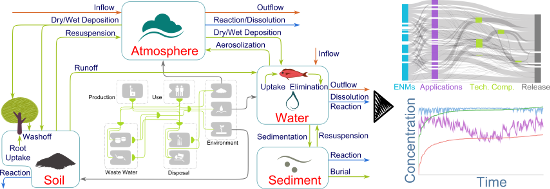
- chemical pollutants (e.g., Mend-Tox [13][14], CalTOX [15], TRIM.FaTE [16]), these are not directly applicable for ENMs. Unlike gaseous and dissolved chemical pollutants, for which interphase mass transport rates are governed by chemical potential (fugacity) driving forces that are constrained by


Pt- and Pd-decorated MWCNTs for vapour and gas detection at room temperature
Beilstein J. Nanotechnol. 2015, 6, 919–927, doi:10.3762/bjnano.6.95
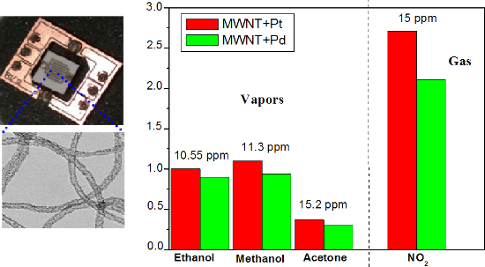
- ; mutiwalled carbon nanotubes; plasma treatment; sputtering; Introduction Volatile organic compounds (VOCs), nitrogen oxides (NOx) and hydrogen sulphide are among the most dangerous pollutants released each year by industry into the environment [1][2][3]. Some VOCs have very harmful effects on human and



Tm-doped TiO2 and Tm2Ti2O7 pyrochlore nanoparticles: enhancing the photocatalytic activity of rutile with a pyrochlore phase
Beilstein J. Nanotechnol. 2015, 6, 605–616, doi:10.3762/bjnano.6.62
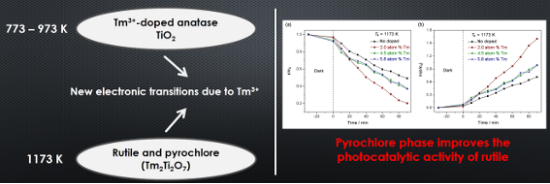
- radicals play a role in degrading pollutants [45]. It is generally suggested that the rate-limiting steps of the photocatalytic reaction of semiconductors are electron–hole recombination and electron transfer from the semiconductor surface to the adsorbed oxygen molecules [45][46][47][48]. In our case, the


Gas sensing properties of nanocrystalline diamond at room temperature
Beilstein J. Nanotechnol. 2014, 5, 2339–2345, doi:10.3762/bjnano.5.243
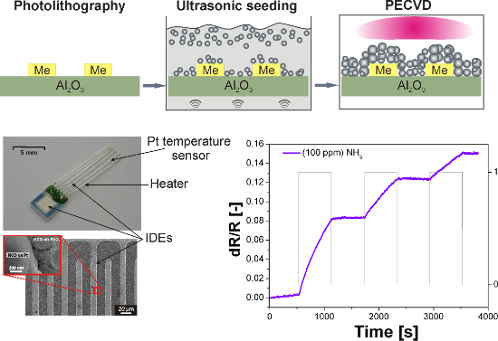
- electrodes; nanocrystalline diamond; response; Introduction Air pollution is one of the main environmental-health related threats. Increasing amounts of noxious pollutants are emitted into the atmosphere, resulting in damage to human health and the environment. There is great interest in using sensing


Advances in NO2 sensing with individual single-walled carbon nanotube transistors
Beilstein J. Nanotechnol. 2014, 5, 2179–2191, doi:10.3762/bjnano.5.227
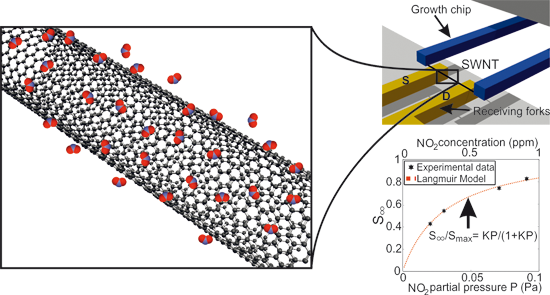
- nanotubes, calculations and experiments have shown that the interactions with other gases present in the atmosphere, such as N2, H2, CO, H2O and CO2 are negligible [19]. However, nanotubes are sensitive to other interfering pollutants, such as SO2 [20], NH3 [12] and O3 [21]. Therefore, the task of enhancing


Nanomanipulation and environmental nanotechnology
Beilstein J. Nanotechnol. 2014, 5, 2079–2080, doi:10.3762/bjnano.5.216

- examples in which nanotechnologies are used to study or potentially solve environmental problems. For example, organic pollutants can be successfully removed from wastewater using the unique catalytic properties of pyrite nanoparticles. Adhesion of marine bacteria can be prevented by new coating materials
- processes. For example, the photocatalytic degradation of pollutants can be interpreted using density functional theory. On a different scale, AFM measurements in liquid environments can be supported by advanced contact mechanics models including the squeeze-out of wetting fluids. Adhesion of fluorite
Liquid fuel cells
Beilstein J. Nanotechnol. 2014, 5, 1399–1418, doi:10.3762/bjnano.5.153
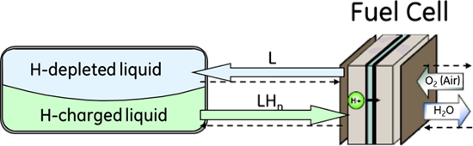
- sources would be widely used as a clean energy carrier [1]. They do not produce greenhouse gases and other pollutants during their operation, and they have a higher efficiency entitlement (no Carnot cycle limitation) and lower maintenance (no moving parts) than internal combustion engines [2]. The total

DFT study of binding and electron transfer from colorless aromatic pollutants to a TiO2 nanocluster: Application to photocatalytic degradation under visible light irradiation
Beilstein J. Nanotechnol. 2014, 5, 1016–1030, doi:10.3762/bjnano.5.115
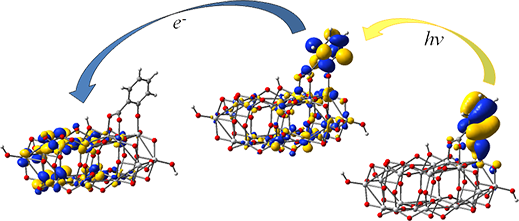
- order to explain experimental results regarding the photocatalytic degradation of these pollutants under visible light irradiation. Based on our modeling, we are able to clarify why transparent pollutants can degrade under visible light in the presence of a catalyst that absorbs only in the UV, to
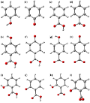
- levels with the oxide catalyst and the likelihood of the charge-transfer to the substrate. The comparison between several colorless aniline and phenolic systems allows a correlation between the chemical structure and the degradation rate of these pollutants. Keywords: colorless aromatic pollutants
- UV radiation, a fact that limits the efficiency and keeps the costs of the photocatalytic degradation of environmental pollutants high. To be used under visible light irradiation, in the range of wavelengths where the solar spectrum has its maximum, the electronic band structure of the photocatalyst




Gas sensing with gold-decorated vertically aligned carbon nanotubes
Beilstein J. Nanotechnol. 2014, 5, 910–918, doi:10.3762/bjnano.5.104
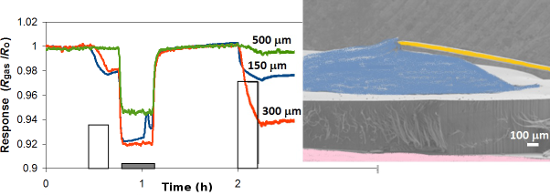
- increasing impact in our environment of human activities. The detection of typical pollutants such as nitrogen dioxide (NO2) generated by industrial combustions or by car emissions is critical because of both environmental problems and health consequences for humans. In the last few years, new technologies


Pyrite nanoparticles as a Fenton-like reagent for in situ remediation of organic pollutants
Beilstein J. Nanotechnol. 2014, 5, 855–864, doi:10.3762/bjnano.5.97
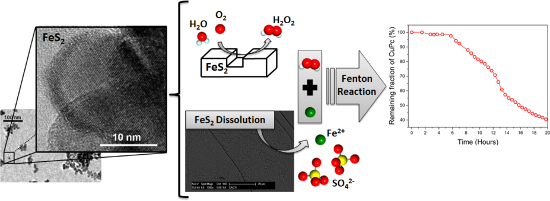
- hydroxyl radicals (OH•) that trigger the formation of other reactive intermediates (e.g., HO2• and O2•−). Due to their high oxidation potential (E0 = 2.8 V), hydroxyl radicals attack most organic pollutants with rate constants in the order of 106 to 109 M−1·s−1 [4][5]. In practice, the formation of OH• to
- abundant iron sulfide in the crust of Earth, releases Fe2+ and H+ upon oxidative dissolution. As such, it has been used with H2O2 as a Fenton catalyst for the degradation of several organic pollutants, including trinitrotoluene, carbon tetrachloride and diclofenac [16][17][18][19]. Several recent studies
- dissolution of pyrite in the presence of O2(aq), according to Equation 3: At this moment, Fe2+ starts to catalyze the decomposition of H2O2 into OH• and other reactive oxygen species involved in the oxidation of organics pollutants, according to the Fenton chain-reaction sequence, described by Equations 4 to


Nanostructure sensitization of transition metal oxides for visible-light photocatalysis
Beilstein J. Nanotechnol. 2014, 5, 696–710, doi:10.3762/bjnano.5.82
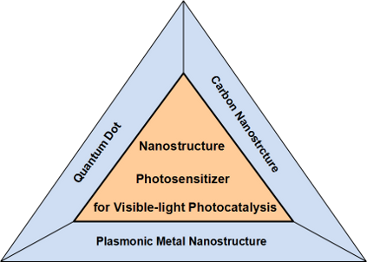
- for the conversion of solar energy into chemical fuel, electricity, the decomposition of organic pollutants etc. All of these photocatalytic reactions occur on the surface of semiconductors. Basically, the photocatalytic process can be mainly divided into three pathways [1][2][3], as shown in Figure 1
- visible light photocatalysis which is important for the photo-degradation of organic pollutants and the splitting of water for the production of H2 fuel. In this section, we mainly focus on the different nanostructures like quantum dots, plasmonic metal nanostructures, and carbon-based nanostructures used




A visible-light-driven composite photocatalyst of TiO2 nanotube arrays and graphene quantum dots
Beilstein J. Nanotechnol. 2014, 5, 689–695, doi:10.3762/bjnano.5.81
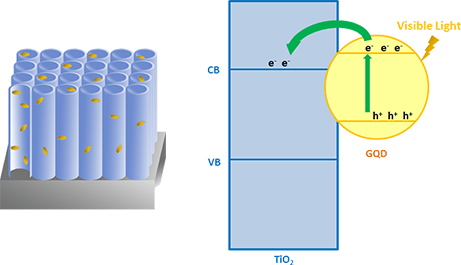
- light irradiation. Keywords: anodic oxidation; graphene quantum dots; photocatalyst; photodegradation; TiO2 nanotube arrays; Introduction Semiconductor-mediated photocatalysis is a promising technique for the conversion of solar energy as well as degradation of organic pollutants in air and water [1


Effects of the preparation method on the structure and the visible-light photocatalytic activity of Ag2CrO4
Beilstein J. Nanotechnol. 2014, 5, 658–666, doi:10.3762/bjnano.5.77
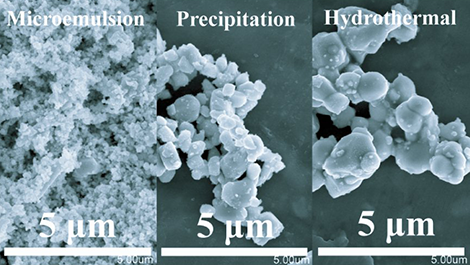
- areas are beneficial for the enhancement of photocatalytic performance by facilitating the absorption of pollutants for degradation. UV–vis spectroscopy measurements A comparison of UV–vis diffuse reflectance spectra (DRS) and the corresponding colours of the Ag2CrO4 samples are displayed in Figure 5
- Ag2CrO4 toward the degradation of other organic pollutants under visible-light irradiation. Experimental Preparation of Ag2CrO4 photocatalysts All chemicals were analytical grade and used without further purification. Deionized (DI) water was used in all experiments. The Ag2CrO4 photocatalysts were


Mesoporous cerium oxide nanospheres for the visible-light driven photocatalytic degradation of dyes
Beilstein J. Nanotechnol. 2014, 5, 517–523, doi:10.3762/bjnano.5.60
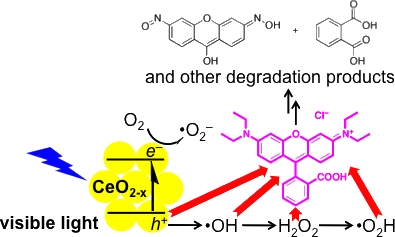
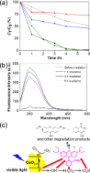
- , suggesting that the mechanism of photocatalytic activity under visible-light irradiation involves predominantly hydroxyl radicals as the active species. Keywords: cerium oxide; dye degradation; mesoporous; photocatalysis; visible light; Introduction The degradation of organic pollutants by affordable and
- ambient conditions and react with water and air to form reactive oxygen species such as •OH, •OOH, H2O2, and O2− for example [1][2][4][5][6]. These reactive oxygen species can subsequently decompose organic pollutants. Recent developments in nanotechnology have enhanced the performance of photocatalytic
- dye-sensitized solar cells to the oxidative degradation of pollutants [7][8][9][10][11]. Despite being cheap, chemically robust, and generally non-toxic, TiO2 has a wide band gap of more than 3.0 eV, which means that photocatalytic processes that use TiO2 as the sensitizer can only absorb UV radiation