Search results
Search for "pore size" in Full Text gives 216 result(s) in Beilstein Journal of Nanotechnology. Showing first 200.
Carbon nano-onions as fluorescent on/off modulated nanoprobes for diagnostics
Beilstein J. Nanotechnol. 2017, 8, 1878–1888, doi:10.3762/bjnano.8.188
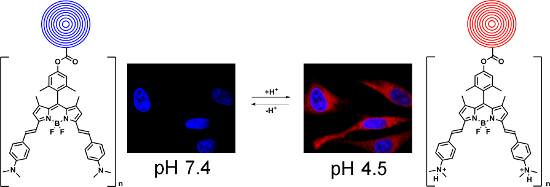
- h. The oxi-CNOs were separated from the reaction mixture by centrifugation (15 min at 1800 rpm) and filtered off on a nylon filter membrane (pore size 0.2 µm) and washed with dH2O, DMF, methanol and acetone. After drying overnight at RT, 51.2 mg of oxi-CNOs were obtained as a black powder. fluo-CNOs
- (0.0044 mmol) of BODIPY 3, and the mixture was stirred at room temperature for 20 h under di-nitrogen atmosphere. The fluo-CNOs were filtered off thought a nylon membrane (pore size 0.2 µm) and washed with fresh DMF, THF and MeOH to remove the unreacted dye and the remaining reagents. 9.7 mg of fluo-CNOs




Evaluation of preparation methods for suspended nano-objects on substrates for dimensional measurements by atomic force microscopy
Beilstein J. Nanotechnol. 2017, 8, 1774–1785, doi:10.3762/bjnano.8.179
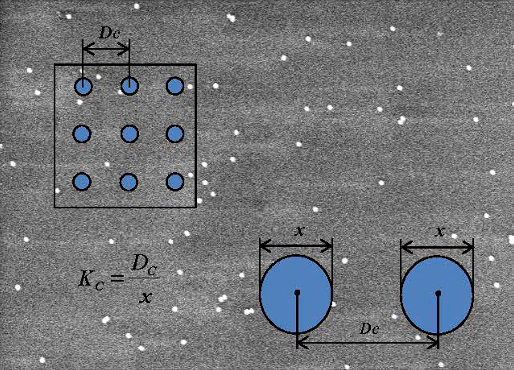
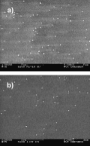
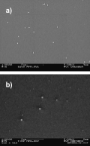
- of polycarbonate (pore size 30 nm and 50 nm, Sterlitech Corp, Kent, USA and 100 nm, Merck Millipore, Darmstadt, Germany) as well as on silicon wafers (crystal orientation <100>) and on silicon wafers (crystal orientation <100>) coated with silicon dioxide. SEM measurements were performed for all
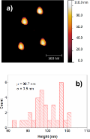
- preparation methods in which all of precipitated particles are deposited on the substrate, so the estimation is relevant for membrane filtration (if particle size > pore size) and droplet drying. Membrane filtration: The membranes were fixed and flowed off in a filter element (stainless steel 316, diameter 13


Oxidative stabilization of polyacrylonitrile nanofibers and carbon nanofibers containing graphene oxide (GO): a spectroscopic and electrochemical study
Beilstein J. Nanotechnol. 2017, 8, 1616–1628, doi:10.3762/bjnano.8.161
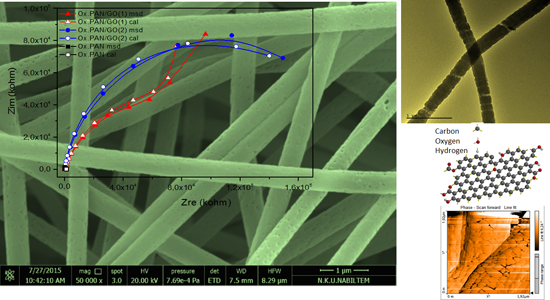
- these pores are well distributed on the fibers. The morphological property of the porous carbon electrodes such as the surface and pore size distributions are the factor that influences the double-layer capacitance. Therefore, the pore size distribution of porous carbons also affect the performance of
- carbon-based electrochemical capacitors [58]. According to SEM images (Figure 11b) pore size on the nanofibers were measured as 38.5 ± 11 nm. All morphologic characterizations prove the porous structure of GO containing nanofibers. In supercapacitors that use nanoporous electrodes to store large amounts
- of charge, ions penetrate into the pores of the electrode. Raymundo-Piñero et al. considered that an adequate pore size is more important than a high surface area and reported optimum pore sizes as 0.7 nm and 0.8 nm in aqueous and organic media, respectively [59]. Graphene oxide shows a high specific


Miniemulsion copolymerization of (meth)acrylates in the presence of functionalized multiwalled carbon nanotubes for reinforced coating applications
Beilstein J. Nanotechnol. 2017, 8, 1328–1337, doi:10.3762/bjnano.8.134
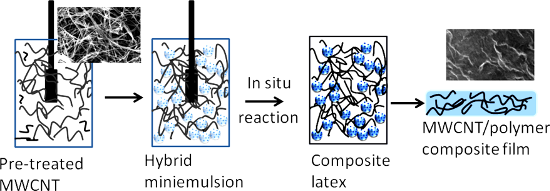
- the MWCNTs was reported. The resulting nanocomposites were foamed with supercritical CO2. The foams showed a decreased pore size, an increased cell density and higher volume expansion when the MWCNT concentration increased. Capek and Kocsisova [35] studied the effect of the type and concentration of


Fabrication of hierarchically porous TiO2 nanofibers by microemulsion electrospinning and their application as anode material for lithium-ion batteries
Beilstein J. Nanotechnol. 2017, 8, 1297–1306, doi:10.3762/bjnano.8.131
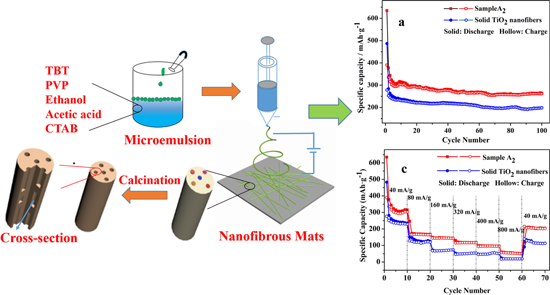
- theory. In addition, Figure 5b displays the pore-size distribution of sample A2, sample B2 and sample C2. According to the analysis of pore-size distribution with the Barrett–Joyner–Halenda (BJH) method, the average pore size increased gradually, and the average pore diameter was 17.8, 18.5 and 20.1 nm
- TEM images of sample A2 (h). (a) Nitrogen adsorption–desorption curves of sample A2, sample B2, sample C2 and solid TiO2 nanofibers; (b) pore-size distribution of sample A2, sample B2, sample C2. Galvanostatic charge–discharge curves of sample A2 (a), sample B2 (b) and sample C2 (c) for the first ten




Nanotopographical control of surfaces using chemical vapor deposition processes
Beilstein J. Nanotechnol. 2017, 8, 1250–1256, doi:10.3762/bjnano.8.126
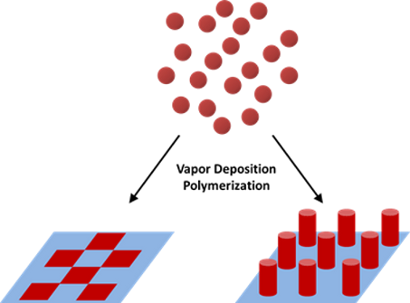
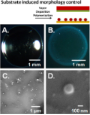
- solid monomer and polymerization. Following the deposition process, the solid monomer is removed via sublimation, leading to membrane structures with dual-scale porosity. The growth rate and the pore size of the resulting membrane can be controlled by the reactor parameters, such as deposition time
- and patterned coatings from a great variety of polymer materials can be created that can be tailored to the respective applications. Polymer structures via masked deposition: polypyrrole nanotubes by deposition using aluminum oxide membranes with a pore size of 100 nm as the template. The wall




A top-down approach for fabricating three-dimensional closed hollow nanostructures with permeable thin metal walls
Beilstein J. Nanotechnol. 2017, 8, 1231–1237, doi:10.3762/bjnano.8.124
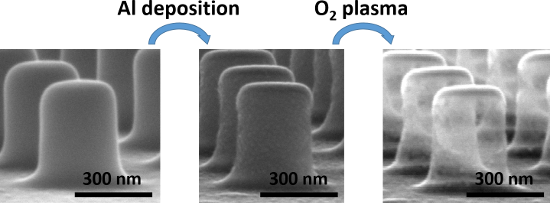
- permeability (e.g., role of porosity, pore size control, diffusion constants, effect of Al thickness and degree of oxidation), which is beyond the scope of this preliminary proof-of-concept work, should provide deeper insight into the mechanisms of the demonstrated emptying process. Figure 3a shows the


Hierarchically structured nanoporous carbon tubes for high pressure carbon dioxide adsorption
Beilstein J. Nanotechnol. 2017, 8, 1135–1144, doi:10.3762/bjnano.8.115
- linearized isotherm equation between P/P0 0.035 and 0.2 and the pore size was calculated by density functional theory (DFT) for slit pores. The scanning electron microscopy (SEM) micrographs were obtained using a Philips XL 30 FEG (20 kV) instrument equipped with an EDX (energy dispersive X-ray) detector
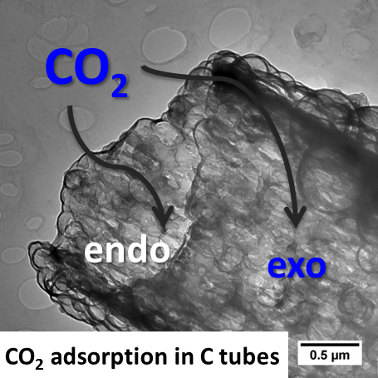
- supermicropores have undergone an irreversible expansion after high pressure CO2 adsorption. This is also confirmed by the pore size distribution analysis (Figure 10b) which indicates a decrease in the fraction of micropores and an increase in the content of mesopores. The higher contribution of the mesopores to
- the total surface area (Table 1) after high pressure CO2 adsorption (37.4% compared to 5.5% for the as-prepared carbon tubes (4)) from the t-plot analysis is consistent with results obtained from the pore size distribution analysis. The internal stress induced by the adsorbed CO2 under high pressure


Structural properties and thermal stability of cobalt- and chromium-doped α-MnO2 nanorods
Beilstein J. Nanotechnol. 2017, 8, 1032–1042, doi:10.3762/bjnano.8.104
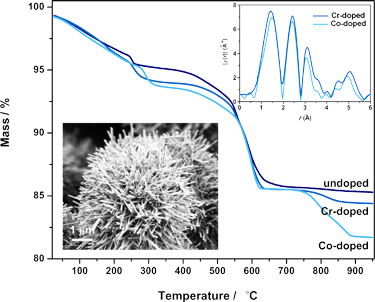
- ]. The size and shape of different tunnel sizes (1 × 1, 1 × 2, 2 × 2, 3 × 3, 3 × 2, 2 × 4) direct the pore opening and control the separation [1][4]. In α-MnO2, octahedrons form the 2 × 2 channel structure with a pore size of 4.6 Å [5]. In the structure named cryptomelane hydrated K+ cations are


Bio-inspired micro-to-nanoporous polymers with tunable stiffness
Beilstein J. Nanotechnol. 2017, 8, 906–914, doi:10.3762/bjnano.8.92
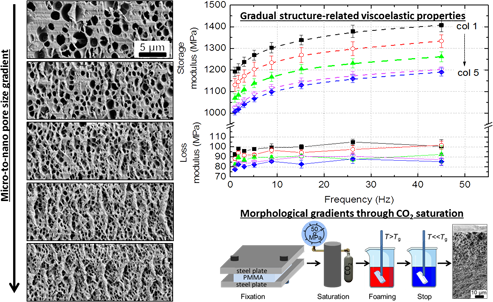
- analysis of the pore structure. Therefore, our approach represents a non-chemical way to tune the elastic properties and their local variation for a broad range of polymers by adjusting the pore size gradient. Keywords: biomimetics; polymeric materials; supercritical carbon dioxide (SC-CO2); tunable
- improvement of re-usability and durability of the products. Porous structures with a pore-size gradient have been manufactured in the past from different materials such as ceramics [6][7][8], metals [9], composites [10] and polymers [11]. These structures exhibited improved thermal [12] and mechanical
- is subjected to inhomogeneous pressure and/or temperature conditions during steps (ii) and (iii), the pore size within the polymer can vary [20]. To the best of our knowlegde, the correlation between the density of the porous material and its storage modulus, especially the size-dependent mechanical


First examples of organosilica-based ionogels: synthesis and electrochemical behavior
Beilstein J. Nanotechnol. 2017, 8, 736–751, doi:10.3762/bjnano.8.77
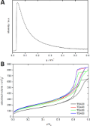
- onset of significant nitrogen uptake and the parallel adsorption and desorption branches also indicate the presence of rather small pores and a relatively narrow pore size distribution [37]. Analysis of the SAXS data using the Porod-approach [37][38][39][40] confirms this, although pore sizes determined
- , however, not the case here. We never observe cracking or other pore collapse. This is likely due to the flexibility of the organic bridges that enable the dry solid to respond to local mechanical stress without breaking or pore collapse. Table 1 also shows that the pore size and open pore volume strongly
- , pore size, and open pore volume. The same observation applies to materials obtained with MTMS instead of TMOS in acetone. High surface areas up to 740 cm3/g, high open pore volumes of around 60%, and pore sizes between 3 and 5 nm are also obtained in this system. In contrast, the methanol-based








Phospholipid arrays on porous polymer coatings generated by micro-contact spotting
Beilstein J. Nanotechnol. 2017, 8, 715–722, doi:10.3762/bjnano.8.75
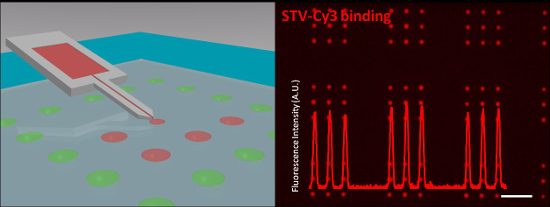
- ], emphasizes the need for sustained progress in this field. The work presented here demonstrates the potential of nanoporous poly(2-hydroxyethyl methacrylate-co-ethylene dimethacrylate) (HEMA-EDMA) as a novel advantageous substrate for lipid arrays. Porous HEMA support, with pore size distribution in the range


Synthesis of graphene–transition metal oxide hybrid nanoparticles and their application in various fields
Beilstein J. Nanotechnol. 2017, 8, 688–714, doi:10.3762/bjnano.8.74


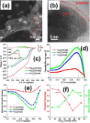


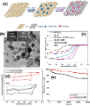


Ion beam profiling from the interaction with a freestanding 2D layer
Beilstein J. Nanotechnol. 2017, 8, 682–687, doi:10.3762/bjnano.8.73
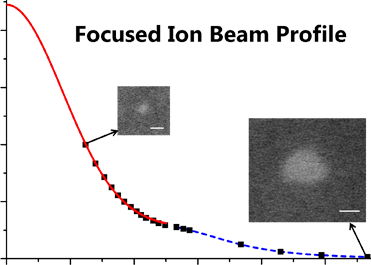
- dwell times ranging from 0.5 to 10 ms. A clear dependence of the pore size on the exposure dose is observed. It is also seen that pores can have slightly irregular shapes. In order to precisely extract pore diameters from such experiments, we perforated sets of pores with identical exposure parameters
- important issue is high-resolution imaging of the pores. When pore size becomes smaller than a few nanometers, like in the case of 1–3 pA He+ beams, it is difficult to measure these pore dimensions precisely with standard STEM or HIM. Time consuming high-resolution TEM imaging would be required. The third


Dispersion of single-wall carbon nanotubes with supramolecular Congo red – properties of the complexes and mechanism of the interaction
Beilstein J. Nanotechnol. 2017, 8, 636–648, doi:10.3762/bjnano.8.68
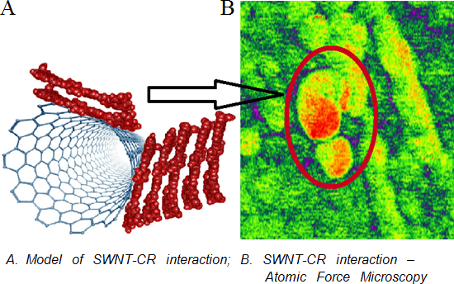
- . Polytetrafluoroethylene (PTFE) membranes (0.2 µm pore size) were purchased from MERCK Millipore. All other reagents used were of analytical grade. Dispersion of SWNTs by non-covalent attachment of supramolecular Congo red 1 mL of aqueous CR solution (2 or 5 mg/mL) was heated for 3 min at 100 °C, slowly cooled to room


Liquid permeation and chemical stability of anodic alumina membranes
Beilstein J. Nanotechnol. 2017, 8, 561–570, doi:10.3762/bjnano.8.60
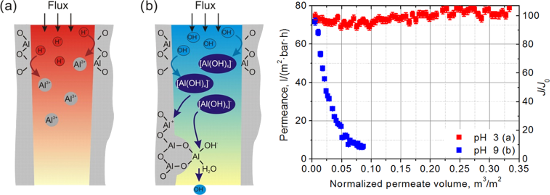
- and exceptional transport characteristics. A very narrow pore size distribution, low pore tortuosity and controllable membrane porosity make AAO one of the top performers given its permeability/pore diameter ratio [1]. The synthetic procedure of AAO membranes enables significant tunability of the
- media [1][13][14][15]. In contrast, the narrow pore size distribution of anodic alumina membranes should result in a sharp cut-off curve and excellent filtration characteristics [1]. The possible reason for low publishing and application activity in the field is the degradation of AAO membrane materials


Fiber optic sensors based on hybrid phenyl-silica xerogel films to detect n-hexane: determination of the isosteric enthalpy of adsorption
Beilstein J. Nanotechnol. 2017, 8, 475–484, doi:10.3762/bjnano.8.51
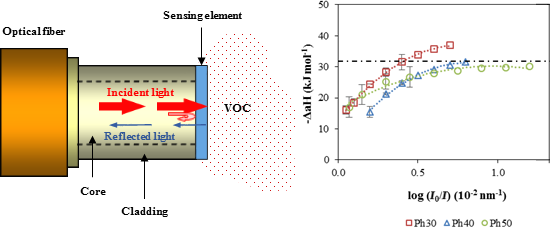
- , controlled porous texture that includes a specific surface area and average pore size distribution, and tunable surface chemistry. In the case of fiber optic reflectance sensors (FORSs), these sensitive films vary their optical properties upon interaction with the analyte, thereby resulting in a change in
- –Radushkevich method [19]. The volume of the pores was calculated using 0.808 g cm−3 as the liquid density of N2 at 77 K. The pore size distributions were obtained from the N2 adsorption data by applying the BJH method [17]. Experimental The measuring device comprised an optical system, a measuring cell, a
- in the molar percentage of PhTEOS in the mixture of silicon precursors. As the percentage of PhTEOS increased, the position of the capillary condensation step shifted towards higher relative pressure, indicating an increase in pore size. The hysteresis loops did not close at p/pº of 0.42, as is






Innovations from the “ivory tower”: Wilhelm Barthlott and the paradigm shift in surface science
Beilstein J. Nanotechnol. 2017, 8, 394–402, doi:10.3762/bjnano.8.41

- induced a different reception. The filter changed The pore size of the filter changed, the border became permeable for a different type and quality of information because it was not “complicated biology” anymore but the property of self-cleaning was now demonstrated with a material that people in the


Nanoscale isoindigo-carriers: self-assembly and tunable properties
Beilstein J. Nanotechnol. 2017, 8, 313–324, doi:10.3762/bjnano.8.34
- poured into a dialysis bag that was immersed in 200 mL of phosphate buffer (pH 7.4) and incubated at 37 °C and 100 rpm. Bags with a pore size of 12 Da (Sigma-Aldrich) were used for this study. They were soaked in Milli-Q water for 12 h before use. After dialysis (3 h), a SIP sample (1 mL) of the fluid




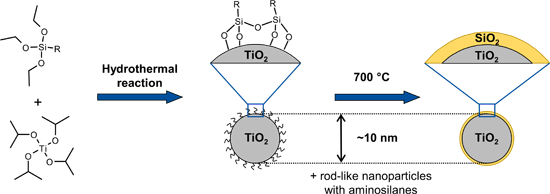
Functionalized TiO2 nanoparticles by single-step hydrothermal synthesis: the role of the silane coupling agents
Beilstein J. Nanotechnol. 2017, 8, 304–312, doi:10.3762/bjnano.8.33
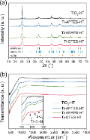
- distance over more than ten consecutive hkl planes, using DigitalMicrograph (Gatan Inc. version 3.01). Specific surface area (BET method [29]) and pore size distribution (BJH method [30]) were measured by nitrogen adsorption on a Micrometrics Tristar 3000. Samples were degassed for 12 h at 180 °C in vacuum
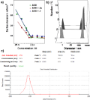
- ). Since particle sizes from SEM and surface area are similar, porosity is associated with inter-particle volume of the agglomerates and can be directly correlated with the particle sizes [34]. Figure 4b displays the pore size distribution from desorption isotherms of TiO2 and in situ surface
- -functionalized TiO2 nanoparticles. The pore size distribution is centered between 4 and 7 nm for TiO2 and Ti-DTES, while for the aminosilane-functionalized samples, the size distribution is broader and shifted towards larger pores and two features are observed. The first feature centered between 4 and 7 nm is



Surface-enhanced Raman scattering of self-assembled thiol monolayers and supported lipid membranes on thin anodic porous alumina
Beilstein J. Nanotechnol. 2017, 8, 74–81, doi:10.3762/bjnano.8.8
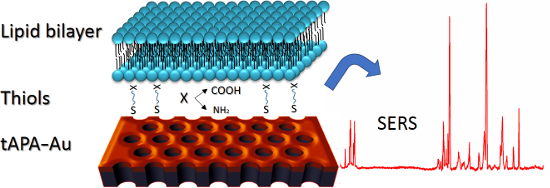
- ; SERS; nanopores; supported lipid bilayers; thiols; Introduction Anodic porous alumina (APA) is a layered material usually obtained in thick form (≈10 µm thickness scale) from electrochemical anodization in the acidic aqueous electrolyte of aluminum (Al) foils [1]. In APA, the control of pore size
- phosphoric acid electrolyte at a bath temperature of ≈15 °C. Post-fabrication etching in the same electrolyte for 20 min at room temperature (RT) plus 15 min at 35 °C allowed to obtain tAPA with ≈160 nm pore size and ≈80 nm wall thickness. After thoroughly rinsing with de-ionized water, blowing dry with
- is of critical importance in SERS [23]. The SEM images reported in Figure 1 show the good control achieved in both mean pore size and its dispersion and prove the long range uniformity of the surfaces with the Au coating to make it plasmonic-active. tAPA–Au substrates could possibly be used as a



Streptavidin-coated gold nanoparticles: critical role of oligonucleotides on stability and fractal aggregation
Beilstein J. Nanotechnol. 2017, 8, 1–11, doi:10.3762/bjnano.8.1
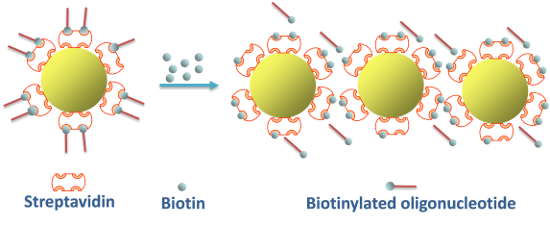
- or 0.22 µm pore size membrane. Samples (1 mL) were transferred into a disposable polystyrene cuvette for DLS measurements while a folded capillary cell was used for ζ-potential measurements. The concentration of solutions (0.1–1 nM) was adjusted to accommodate scattering properties of samples and




Intercalation and structural aspects of macroRAFT agents into MgAl layered double hydroxides
Beilstein J. Nanotechnol. 2016, 7, 2000–2012, doi:10.3762/bjnano.7.191
- stationary phase. Samples were filtered on a 0.45 μm pore size membrane and analyzed at 3 mg mL−1. Separation was carried out on three columns from Malvern Instruments (T6000 M General Mixed Org (300 × 8 mm)). The device (Viscotek TDA305) was equipped with a refractive index (RI) detector (λ = 670 nm). The


Organoclay hybrid materials as precursors of porous ZnO/silica-clay heterostructures for photocatalytic applications
Beilstein J. Nanotechnol. 2016, 7, 1971–1982, doi:10.3762/bjnano.7.188
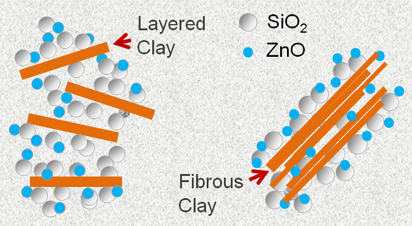
- suggest that an appropriate pore volume with an optimized pore size distribution besides a large specific surface area of these materials, can promote a more efficient photocatalytic activity but also a higher adsorption capacity of MB molecules, which also contributes to the removal of these molecules





In situ formation of reduced graphene oxide structures in ceria by combined sol–gel and solvothermal processing
Beilstein J. Nanotechnol. 2016, 7, 1815–1821, doi:10.3762/bjnano.7.174
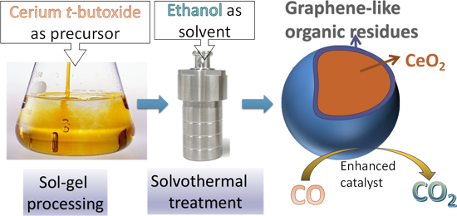
- according to Brunauer, Emmett and Teller (BET), and the pore size distribution (from the desorption branch) according to Barrett, Joyner and Halenda (BJH). CO oxidation was performed in a continuous-flow fixed-bed quartz reactor under atmospheric pressure. A sample amount of 20 mg was loaded into the
- Figure 5, left. Only rGO(0.2)–CeO2 is mesoporous, according to the IUPAC classification, while the others contain mainly micropores and a small portion of mesopores. This can also be seen from the pore size distribution (Figure 5, right). rGO(0.2)–CeO2 has an average pore size of 4.8 nm, while the other
- samples have smaller pore size in the range of 3.3–3.8 nm. The surface area increased with decreasing rGO proportion, from 147 m2/g with 0.2 g rGO to 275 m2/g with 0.02 g rGO. rGO(0)–CeO2 and rGO(0.02)–CeO2 processed almost the same surface area. The influence of the rGO proportion on the catalytic