


Search results
Search for "proliferation" in Full Text gives 176 result(s) in Beilstein Journal of Nanotechnology.
Cationic PEGylated polycaprolactone nanoparticles carrying post-operation docetaxel for glioma treatment
Beilstein J. Nanotechnol. 2017, 8, 1446–1456, doi:10.3762/bjnano.8.144
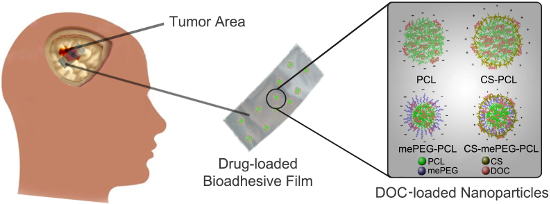
- an intracranial U87 glioma model. They demonstrated that active targeted and cationic core–shell nanoparticles could be effective in inhibition of tumor proliferation with higher accumulation in tumor area when they are administered intravenously [67]. Different studies also showed that nanoparticles




Micro- and nano-surface structures based on vapor-deposited polymers
Beilstein J. Nanotechnol. 2017, 8, 1366–1374, doi:10.3762/bjnano.8.138
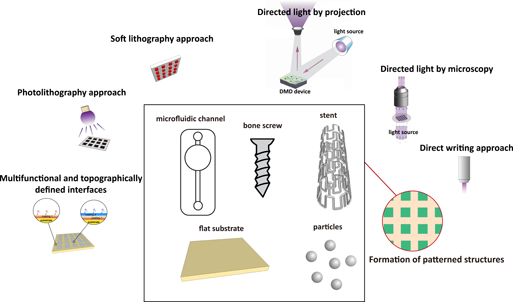
- proliferation (FGF-2) and osteogenic differentiation (BMP-2) for adipose-derived stem cells [76]. Selective deposition The aforementioned methods rely on physical means to obtain spatially controlled surface modifications and patterned structures. A simpler approach is the selective inhibition of the vapor


Carbon nanomaterials sensitize prostate cancer cells to docetaxel and mitomycin C via induction of apoptosis and inhibition of proliferation
Beilstein J. Nanotechnol. 2017, 8, 1307–1317, doi:10.3762/bjnano.8.132
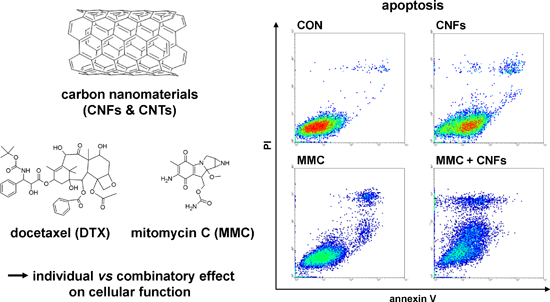
- combination with the carbon nanomaterials. The impact of the monotreatments and the combinatory treatments on cellular function was then systematically analyzed by using different experimental approaches (viability, short-term and long-term proliferation, cell death rate). DTX and MMC alone reduced the
- contrast, the dose of platinum-based chemotherapeutics could only be reduced by up to 3-fold by combination with carbon nanomaterials. Furthermore, combinatory treatments with CNFs led mostly to an additive inhibition of short- and long-term proliferation compared to the individual treatments. Also, higher
- proliferation as well as by an increased induction of apoptosis [27][28]. In order to further verify this concept and to avoid a bias that might be caused by the structurally similar platinum-based chemotherapeutics, we investigated other chemotherapeutics relevant for urological cancers, namely DTX and


Nano-engineered skin mesenchymal stem cells: potential vehicles for tumour-targeted quantum-dot delivery
Beilstein J. Nanotechnol. 2017, 8, 1218–1230, doi:10.3762/bjnano.8.123
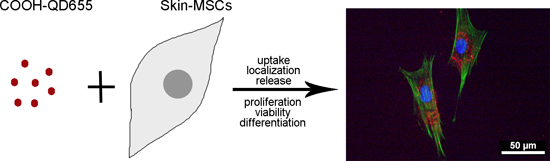
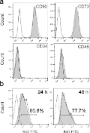
- in skin MSCs was clathrin-mediated endocytosis. QDs were mainly localized in early endosomes after 6 h as well as in late endosomes and lysosomes after 24 h. QDs in concentrations ranging from 0.5 to 64 nM had no effect on cell viability and proliferation. The expression of MSC markers, CD73 and CD90
- affect the osteogenesis and chondrogenesis capacities of bone marrow MSCs [17]. The impact of QD labelling on the biological properties of targeted stem cells, such as proliferation, cell cycle, and apoptosis, remains elusive. Therefore, further research on MSCs with regard to the delivery of QDs for
- daughter cells (Figure 3c). Inhibition of proliferation was additionally confirmed by analysing the cell number in the respective medium (data not shown). The addition of QDs did not change the expression of Ki67 (data not shown). QD effect on immunophenotype, proliferation and differentiation of MSCs The





Recombinant DNA technology and click chemistry: a powerful combination for generating a hybrid elastin-like-statherin hydrogel to control calcium phosphate mineralization
Beilstein J. Nanotechnol. 2017, 8, 772–783, doi:10.3762/bjnano.8.80
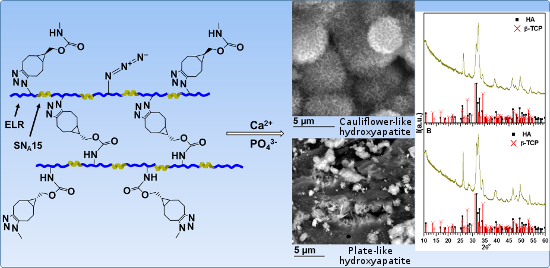
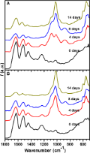
- specific surface area and three-dimensional porous structures. In addition, osteoblast proliferation and apoptosis are affected by the size and shape of CP. Despite this interest, control of the formation of CP nanostructures with specific characteristics remains a challenge. Although dry methods and high
- , ELR membranes with SNA15 epitopes and/or surface topographies have been conducted on the cell morphology, adhesion, proliferation and differentiation, and their potential for dental and orthopedic implants integration during the mineralization process. Although the mineralization activity of ELRs



Silicon microgrooves for contact guidance of human aortic endothelial cells
Beilstein J. Nanotechnol. 2017, 8, 675–681, doi:10.3762/bjnano.8.72
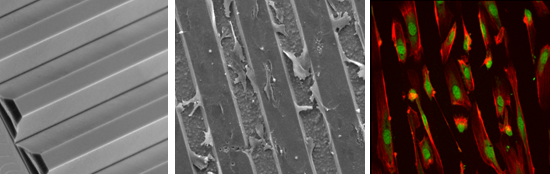
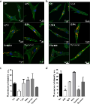
- cell adhesion, morphology and proliferation were assessed, by comparing them to flat silicon substrates, used as control condition. Using human aortic endothelial cells, microscopy images demonstrate that the cellular response is different depending on the silicon surface, when it comes to cell
- adhesion, morphology (alignment, circularity and filopodia presence) and proliferation. Moreover, these structures exerted no cytotoxic effect. Conclusion: The results suggest that topographical patterning influences cell response. Silicon groove substrates can be used in developing medical devices with
- chemistry influence cellular behaviour such as adhesion, migration and proliferation [1][2][3][4][5][6]. It is important to understand and control cell behaviour by topography in order to modulate the functions of the cells. Cells react to topographic stimuli through a process known as mechanotransduction


Uptake of the proteins HTRA1 and HTRA2 by cells mediated by calcium phosphate nanoparticles
Beilstein J. Nanotechnol. 2017, 8, 381–393, doi:10.3762/bjnano.8.40
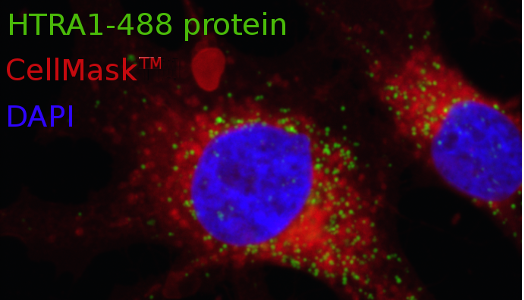
- this protein family in humans are HTRA1 and HTRA2 that are both involved in tumour suppression and in the control of proliferation, migration, and neurodegeneration [31]. The HTRA1 gene (previously termed PRSS11) was initially identified in human fibroblasts [32]. Numerous experimental findings suggest
- a tumour suppressor function for HTRA1. In various cancer types, an epigenetic silencing of HTRA1 has been observed. Moreover, a decreased HTRA1 expression is correlated both with a reduced response to chemotherapeutics and an augmented cell migration. Additionally, a reduced proliferation of tumour


Surface-enhanced Raman scattering of self-assembled thiol monolayers and supported lipid membranes on thin anodic porous alumina
Beilstein J. Nanotechnol. 2017, 8, 74–81, doi:10.3762/bjnano.8.8
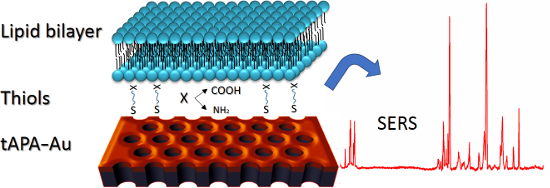
- surface roughness [3][4], the latter of which can play an important role in the adhesion and proliferation of cells [5][6][7]. The self-ordered nano-structured APA, also demonstrated recently as a possible nanolithographic mask [8][9] and for chemical sensors and biosensors [10], after coating with noble



Facile fabrication of luminescent organic dots by thermolysis of citric acid in urea melt, and their use for cell staining and polyelectrolyte microcapsule labelling
Beilstein J. Nanotechnol. 2016, 7, 1905–1917, doi:10.3762/bjnano.7.182
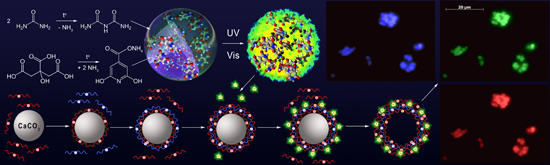
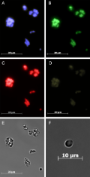
- also known that the MTT assay is typically used for quantifying metabolically active cells, independently of proliferation [63]. Therefore, the highest concentration of sample that caused, in the treated cells, the activation of NADP-H-dependent oxidoreductases, not more than in the intact cells, was




Low temperature co-fired ceramic packaging of CMOS capacitive sensor chip towards cell viability monitoring
Beilstein J. Nanotechnol. 2016, 7, 1871–1877, doi:10.3762/bjnano.7.179
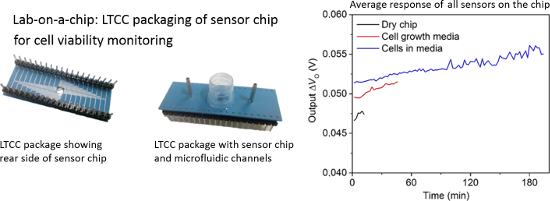
- cell proliferation thus seemed to be normal, the use of the LTCC package for the sensor chip was regarded as promising [23]. Here we have tested version 2 of the LTCC package made from DupontTM 951 LTCC tape instead of the Heraeus HeraLock® Tape HL2000 (no longer produced) used in our earlier version


Nano- and microstructured materials for in vitro studies of the physiology of vascular cells
Beilstein J. Nanotechnol. 2016, 7, 1620–1641, doi:10.3762/bjnano.7.155
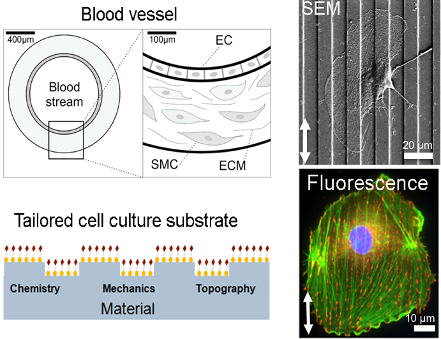
- and their biological responses to micro- and nanostructured surfaces are reviewed. Emphasis is given to studies of cell morphology and motility, cell proliferation, the cytoskeleton and cell-matrix adhesions, and signal transduction pathways of vascular cells. We finalize with a short outlook on
- following section, a brief summary of the most common methods for control of the surface biochemistry and of the mechanical properties of the substrate are given. 1.5 Surface (bio)functionalization The surface (bio)chemistry of a material may regulate cell adhesion, survival, proliferation and
- ][173][174][175][176]. Thereby, a multitude of stimulating signals, such as messenger molecules, ECM, pulsatile blood flow and endogenous electrical fields exist in and around the vasculature [177][178][179]. Additionally, in blood vessels of healthy humans, the regulation of SMC proliferation and



Influence of hydrothermal synthesis parameters on the properties of hydroxyapatite nanoparticles
Beilstein J. Nanotechnol. 2016, 7, 1586–1601, doi:10.3762/bjnano.7.153
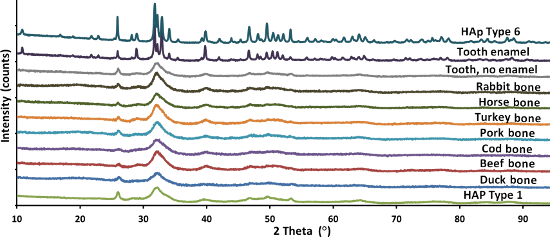
- proliferation of such malignant cells was inhibited more efficiently by the occurrence of the nanoscale effect than by HAp particle morphology [9]. Another study analyzed the effects of different sized nano-HAp – ranging from 20 to 80 nm – on the proliferation of bone-related cells (bone marrow mesenchyme stem


Viability and proliferation of endothelial cells upon exposure to GaN nanoparticles
Beilstein J. Nanotechnol. 2016, 7, 1330–1337, doi:10.3762/bjnano.7.124
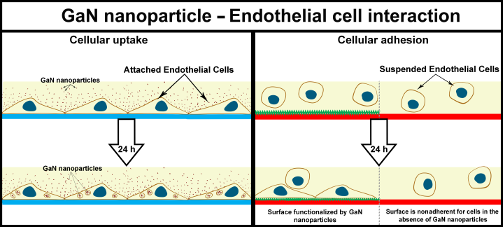
- ) semiconductor nanoparticles. Cellular viability, adhesion, proliferation, and uptake of nanoparticles by endothelial cells were investigated. The effect of free GaN nanoparticles versus the effect of growing endothelial cells on GaN functionalized surfaces was examined. To functionalize surfaces with GaN, GaN
- cells grown on surfaces functionalized with GaN nanoparticles demonstrated excellent adhesion and proliferation, suggesting good biocompatibility of the nanostructured GaN. Keywords: endothelial cells; GaN nanoparticles; proliferation; surface functionalization; Introduction The development of new
- the mechanical load of incorporated nanoparticles, which could result in reduced migration and slowed proliferation process with increasing quantities of incorporated nanoparticles [20]. When nanoparticles were added after the cellular layer reached 50% confluence, we clearly observed how the same



On the pathway of cellular uptake: new insight into the interaction between the cell membrane and very small nanoparticles
Beilstein J. Nanotechnol. 2016, 7, 1296–1311, doi:10.3762/bjnano.7.121
- . Similar results were reported by Zhang et al. comparing 80 nm SiNPs with 500 nm SiNPs on HepG2 cells [40]. Those investigated particles affect cell viability and the proliferation potential in a size-ascending-dependent manner. Nevertheless, these data were only focusing on large differences in size and




Reasons and remedies for the agglomeration of multilayered graphene and carbon nanotubes in polymers
Beilstein J. Nanotechnol. 2016, 7, 1174–1196, doi:10.3762/bjnano.7.109
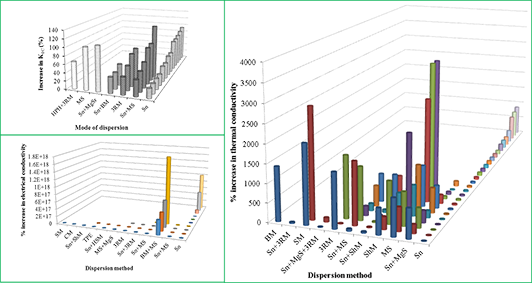
- conductive polymer nanocomposites can be produced. However, all these enhancements of the performance of polymers can only be achieved when the filler is uniformly dispersed and no agglomeration of filler in the polymer matrix takes place. MLG and CNTs have been reported to promote the proliferation of


Improved biocompatibility and efficient labeling of neural stem cells with poly(L-lysine)-coated maghemite nanoparticles
Beilstein J. Nanotechnol. 2016, 7, 926–936, doi:10.3762/bjnano.7.84
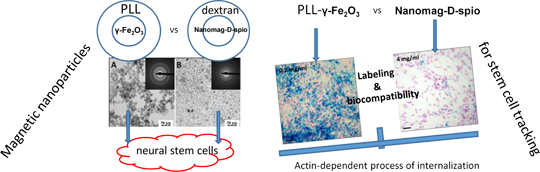
- their cellular uptake, the mechanism of internalization, cytotoxicity, viability and proliferation of neural stem cells, and compared them to the commercially available dextran-coated nanomag®-D-spio nanoparticles. Results: Light microscopy of Prussian blue staining revealed a concentration-dependent
- intracellular uptake of iron oxide in neural stem cells. The methyl thiazolyl tetrazolium assay and the calcein acetoxymethyl ester/propidium iodide assay demonstrated that poly(L-lysine)-coated maghemite nanoparticles scored better than nanomag®-D-spio in cell labeling efficiency, viability and proliferation
- follow the stem cells through their migration, distribution, proliferation and differentiation is an essential prerequisite to characterize the biology and behavior of stem cells, to design the therapeutic approaches and minimize possible side effects [8][9][10]. Magnetic nanoparticles are widely used to




Tight junction between endothelial cells: the interaction between nanoparticles and blood vessels
Beilstein J. Nanotechnol. 2016, 7, 675–684, doi:10.3762/bjnano.7.60
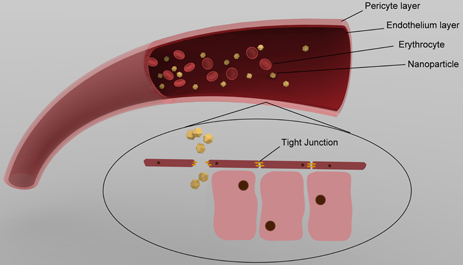
- inhibited (79%) by silver nanoparticles (2–6 nm) [80]. Also, AuNPs have the ability to prevent vascular endothelial growth factor (VEGF)- and interleukin-1 beta (IL-1β)-induced proliferation and migration in bovine retinal pigment epithelial cells (BRPEs) through the suppression of the Src kinase pathway

Unraveling the neurotoxicity of titanium dioxide nanoparticles: focusing on molecular mechanisms
Beilstein J. Nanotechnol. 2016, 7, 645–654, doi:10.3762/bjnano.7.57
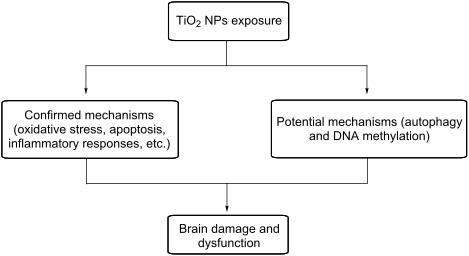
- expression. These stable alternations are not caused by changes to DNA sequence itself, but instead arise during development and cell proliferation [13][14]. DNA methylation is the one of the most extensively studied epigenetic mechanisms. Whether TiO2 NPs are able to induce neurotoxicity through altering
- nasal administration for nine months, after which the glial cells showed over-proliferation and tissue necrosis was found in hippocampal area. Meanwhile, the expression of genes associated with neurotrophin signaling pathways, such as nerve growth factor (NGF) and brain-derived neurotrophic factor (BDNF
- tumor necrosis factor-α (TNF-α) in the mouse hippocampus was promoted. At the same time, histopathological changes were observed in the hippocampus; over-proliferation of glial cells, impaired nuclei, and cellular degeneration were observed, all of which contributed to neuro-inflammation. In addition
Antibacterial activity of silver nanoparticles obtained by pulsed laser ablation in pure water and in chloride solution
Beilstein J. Nanotechnol. 2016, 7, 465–473, doi:10.3762/bjnano.7.40
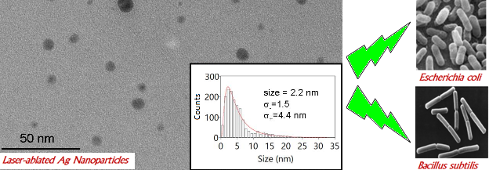
- about 2 h and increases at 3 h, with no detectable CFUs after 24 h of incubation (Table 3). Hence, according to our data on ns-ablated AgNPs, the minimum time necessary to achieve bactericidal effect was longer than 3 h. Nevertheless, such AgNPs are very quick at inhibiting bacterial proliferation, when


Fabrication of hybrid nanocomposite scaffolds by incorporating ligand-free hydroxyapatite nanoparticles into biodegradable polymer scaffolds and release studies
Beilstein J. Nanotechnol. 2015, 6, 2217–2223, doi:10.3762/bjnano.6.227
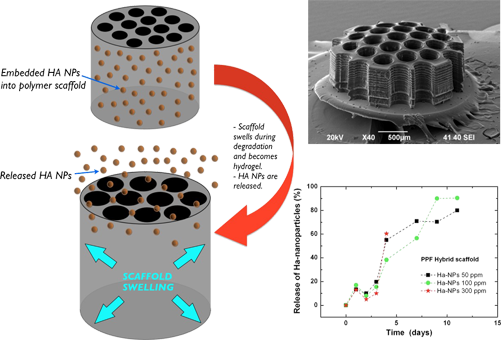
- similarity to the mineral constituent of human bones, are bioactive and can be fairly easily bioconjugated [1]. HA NPs can enhance cell proliferation in bone tissue regeneration [2]. Tissue engineering is an interdisciplinary field that combines the principles of life sciences and engineering to improve
- of HA enhanced hydrophilicity and serum protein adsorption, and as a result, this increased pre-osteoblast cell attachment, spreading, and proliferation after four days of culture. Different technical routes have been explored for the synthesis of HA NPs, including mechanochemical synthesis [10


PLGA nanoparticles as a platform for vitamin D-based cancer therapy
Beilstein J. Nanotechnol. 2015, 6, 1306–1318, doi:10.3762/bjnano.6.135
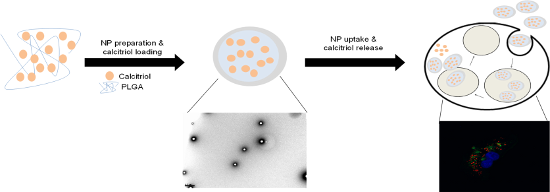
- in the S or/and G2/M phases (Figure 6B,C). Additionally, the observed changes on the cell cycle distribution between control A549 cells and A549 cells treated with free calcitriol for 72 h were not significant (p > 0.05). These results are in agreement with the proliferation studies, where the A549
- pancreatic cell lines, S2-013 and hTERT-HPNE, was reported. The in vitro proliferation assay showed that the encapsulation of calcitriol enhanced its antiproliferative activity. The efficient cell internalization by an endocytosis mechanism of PLGA NPs and their rapid endo-lysosomal escape observed in this


Influence of gold, silver and gold–silver alloy nanoparticles on germ cell function and embryo development
Beilstein J. Nanotechnol. 2015, 6, 651–664, doi:10.3762/bjnano.6.66
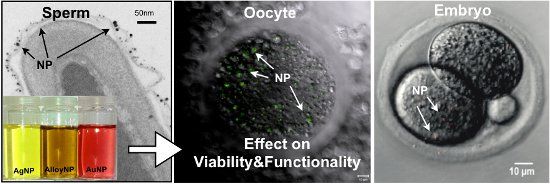
- effect was caused by silver ions. However, it supports findings made on spermatogonial stem cells in vitro, which claimed a decrease in cell proliferation after AgNP exposure [40][41]. Observations concerning female reproductive organs are rather rare as most nanoparticle biodistribution studies have




Self-assembled anchor layers/polysaccharide coatings on titanium surfaces: a study of functionalization and stability
Beilstein J. Nanotechnol. 2015, 6, 617–631, doi:10.3762/bjnano.6.63
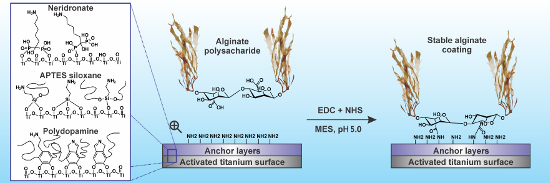
- molecules) formed by ionic cross-linking [40]. The proposed architecture is envisaged to enhance adhesion, proliferation, differentiation of osteoblasts, and thus ultimately, to achieve a better integration of the titanium implant into the bone tissue. Conclusion In the present contribution, we demonstrated


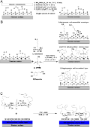
Novel ZnO:Ag nanocomposites induce significant oxidative stress in human fibroblast malignant melanoma (Ht144) cells
Beilstein J. Nanotechnol. 2015, 6, 570–582, doi:10.3762/bjnano.6.59
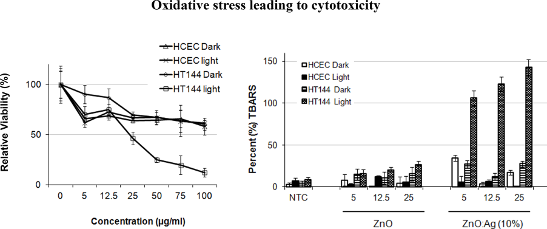
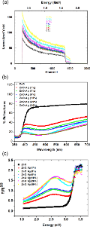
- ) assay the cytotoxicity in vitro and the differential effect of different Ag contents in the ZnO nanoparticles affecting cell proliferation was analyzed. The photo-oxidation-mediated cytotoxicity of different NPs was investigated by irradiating the samples with daylight or keeping them in the dark. The
- (565)NP control and Abs(565)blank represent the background optical density and was measured in NPs only and media only samples. HCEC cells were included as a normal control cell line. Mitochondrial function: cell survival and proliferation assay MTT assay was used to investigate mitochondrial function




Silica micro/nanospheres for theranostics: from bimodal MRI and fluorescent imaging probes to cancer therapy
Beilstein J. Nanotechnol. 2015, 6, 546–558, doi:10.3762/bjnano.6.57
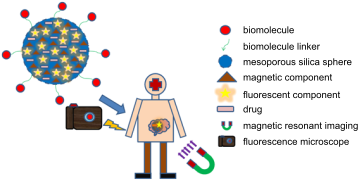
- biocompatibility of these NPs was investigated by standard MTT cell proliferation assay. Studies suggested that the cell viability was maintained at 83% even after a high dose of 500 µg·mL−1 of the nanocomposites. To check the applicability of these nanocomposites as fluorescence imaging agents, Gastric SGC7901





