


Search results
Search for "quantitative analysis" in Full Text gives 170 result(s) in Beilstein Journal of Nanotechnology.
Synthesis, characterization and in vitro effects of 7 nm alloyed silver–gold nanoparticles
Beilstein J. Nanotechnol. 2015, 6, 1212–1220, doi:10.3762/bjnano.6.124
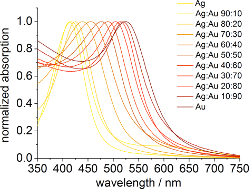
- ) was also carried out, but the data were not included because it was impossible to obtain reproducible results. The presence of nanoparticles did not permit a reliable quantitative analysis. Transmission electron micrographs of PVP-functionalized Ag/Au nanoparticles: (A) Ag/Au 10:90, d = 6.5 nm; (B) Ag


Closed-loop conductance scanning tunneling spectroscopy: demonstrating the equivalence to the open-loop alternative
Beilstein J. Nanotechnol. 2015, 6, 1116–1124, doi:10.3762/bjnano.6.113
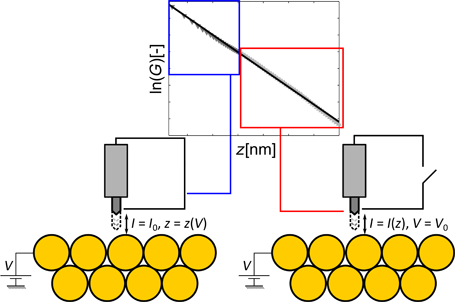
- possibilities of (semi-)quantitative analysis offered by scanning tunneling spectroscopy (STS). STS measurements are typically performed in a X(Y) format, where variable Y is actively driven and the response of variable X is measured, with all other system variables being kept constant. Numerous types of STS
- effect of image charges, although the inverse decay length will take a slightly different form: It is directly apparent that a significant image charge effect will have a bending effect on the ln(G)-vs-z curve. However, a quantitative analysis is made difficult by the non-straightforward dependence of κ
- * on ζ. In order to make a quantitative analysis possible, a numerical method will have to be developed. As a starting point, Equation 5 will have to be rewritten to eliminate as many unknown parameters as possible. By taking the the derivative dI/dz, the density of states ρ can be eliminated from the


Experimental determination of the light-trapping-induced absorption enhancement factor in DSSC photoanodes
Beilstein J. Nanotechnol. 2015, 6, 886–892, doi:10.3762/bjnano.6.91
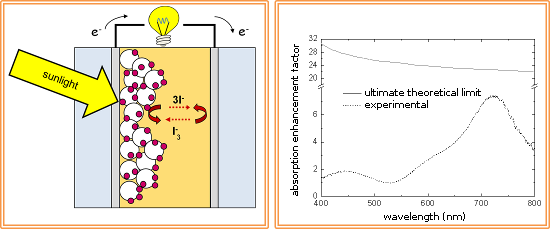
- on dye desorption in a basic solution and subsequent spectrophotometric quantitative analysis. The dye content was 1.0 × 10⁻⁷ mol/cm2. Calibrated ethanol solutions were also used to obtain values of the spectral molar absorptivity, ε(λ), of the dye. Optical characterization of photoanodes A double


Protein corona – from molecular adsorption to physiological complexity
Beilstein J. Nanotechnol. 2015, 6, 857–873, doi:10.3762/bjnano.6.88
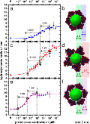
- similar experiments [9][111]. From the quantitative analysis of their data with the Hill equation [111], they revealed an equilibrium constant of KD(HSA) = (6.4 ± 3.6) μM, supporting previous findings for HSA adsorption onto polymer-coated FePt NPs [9][111]. The data from HSAsuc showed a distinctly



Stiffness of sphere–plate contacts at MHz frequencies: dependence on normal load, oscillation amplitude, and ambient medium
Beilstein J. Nanotechnol. 2015, 6, 845–856, doi:10.3762/bjnano.6.87
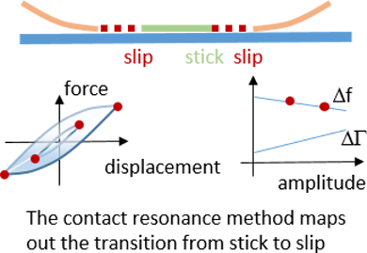
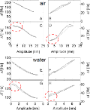
- for the functions Δf(u0) and ΔΓ(u0). The authors in [10] focused on how the amount of partial slip depends on contact size. For the current work, the sphere size was chosen large enough to always guarantee partial slip. An improved experimental setup allowed for a detailed quantitative analysis in




Statistics of work and orthogonality catastrophe in discrete level systems: an application to fullerene molecules and ultra-cold trapped Fermi gases
Beilstein J. Nanotechnol. 2015, 6, 755–766, doi:10.3762/bjnano.6.78
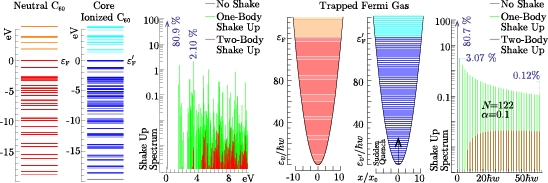
- superimposing Gaussian functions of width 0.15, centered at the occupied/empty energy values. A more quantitative analysis comes from the squared overlaps , some of which are numerically computed and reported in Table 2. In contrast to the C60/ case, we notice that the states involved is the εv,↔εv′, mapping

![[Graphic 22]](/bjnano/content/inline/2190-4286-6-78-i30.png?max-width=637&scale=1.18182) ) fullerene molecules, as com...
) fullerene molecules, as com...


Electromagnetic enhancement of ordered silver nanorod arrays evaluated by discrete dipole approximation
Beilstein J. Nanotechnol. 2015, 6, 686–696, doi:10.3762/bjnano.6.69
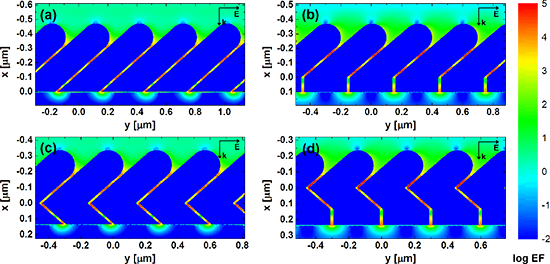
- hotspots are found in S0:42 and S0:−42:42. Quantitative analysis shows that the average EFs of S42 and S−42:42 are comparable, which are 797 and 793, respectively, while S0:−42:42 shows the strongest EFavg of 1228, followed by S0:42 with EFavg = 1006. Corners/bends are usually considered to give rise


Self-assembled anchor layers/polysaccharide coatings on titanium surfaces: a study of functionalization and stability
Beilstein J. Nanotechnol. 2015, 6, 617–631, doi:10.3762/bjnano.6.63
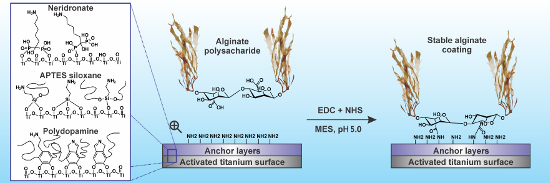
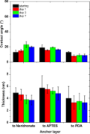
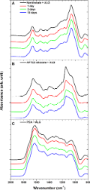
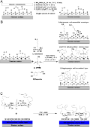
- experimental uncertainties in the quantitative analysis of XPS were assessed in separate experiments with several standard materials and were estimated to be below 7%. This value encompasses the overall uncertainties of the method that are typically introduced by the background subtraction. High resolution Ti


Hematopoietic and mesenchymal stem cells: polymeric nanoparticle uptake and lineage differentiation
Beilstein J. Nanotechnol. 2015, 6, 383–395, doi:10.3762/bjnano.6.38
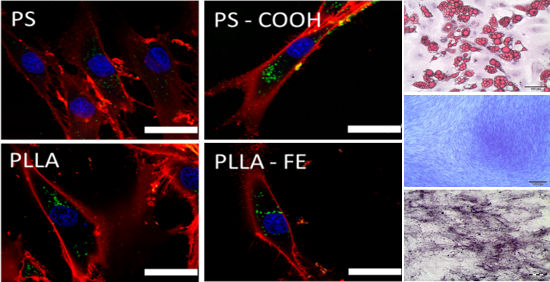
- IL-8 secretion (Figure 3). The lone PLLA particles also showed no influence on the cytokine secretion. In contrast, the PLLA–Fe particles dramatically increased the IL-8 release while the IL-6 secretion was not altered (Figure 4). For hHSCs, cell functionality was tested by quantitative analysis of


Comparative evaluation of the impact on endothelial cells induced by different nanoparticle structures and functionalization
Beilstein J. Nanotechnol. 2015, 6, 300–312, doi:10.3762/bjnano.6.28
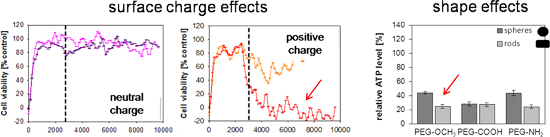
- different nanoparticle formulations, we used different inhibitors to block the best-known internalization routes: clathrin-mediated, caveolae-mediated and macropinocytosis [46]. Microscopy data and the semi-quantitative analysis of the nanoparticle uptake behavior revealed a caveolae-dependent
- were monitored via appropriate controls without nanoparticles and without inhibitors. Semi-quantitative analysis of the nanoparticle uptake After treatment of HMEC-1 with endocytosis inhibitors and nanoparticles, a semi quantitative determination of the amount of internalized nanoparticles was done by
- heads point to affected mitochondria. Scale bars in (b) indicate 2 µm. N = nucleus. Microscopy images of endothelial cells and semi quantitative analysis of nanoparticle uptake to determine the endocytosis pathways of different metal oxide nanoparticles. HMEC-1 cells were treated with 5 µg/mL metal




Caveolin-1 and CDC42 mediated endocytosis of silica-coated iron oxide nanoparticles in HeLa cells
Beilstein J. Nanotechnol. 2015, 6, 167–176, doi:10.3762/bjnano.6.16
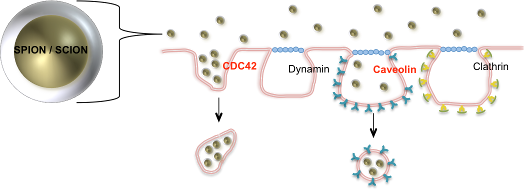
- [27][43], another possible explanation is, that SCIONs accumulate in caveolae-coated vesicles at the cell membrane without their detachment when Dynamin 2 is depleted. These SCIONs would not have been removed before quantitative analysis. Further experiments have to be conducted to test these


Chemoselective silicification of synthetic peptides and polyamines
Beilstein J. Nanotechnol. 2015, 6, 103–110, doi:10.3762/bjnano.6.10
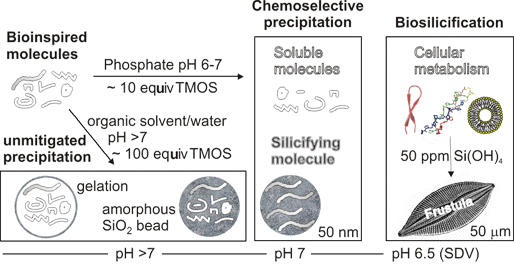
- , silica precipitation studies were mainly focused on the amount, the morphology, and composition of the precipitate while disregarding a quantitative analysis of the remaining soluble components. Here, we turn the tables and quantify the soluble components by 1H NMR in the progress of precipitation and




Materials and characterization techniques for high-temperature polymer electrolyte membrane fuel cells
Beilstein J. Nanotechnol. 2015, 6, 68–83, doi:10.3762/bjnano.6.8
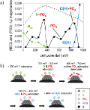
- simultaneous changes in the MEA structure and the phosphoric acid concentration make the quantitative analysis of X-ray radiographs challenging [40]. With additional 3D information, X-ray tomography is more effective in the localization and quantification of the acid electrolyte within the GDL and catalyst
- between the fiber bundles of the carbon cloth. To validate the technique, the authors also quantified the amount of acid of the cell using both viewing directions. Despite some minor discrepancy between though-pane and in-plane imaging directions, the quantitative analysis agreed quite well with the




Nanoparticle interactions with live cells: Quantitative fluorescence microscopy of nanoparticle size effects
Beilstein J. Nanotechnol. 2014, 5, 2388–2397, doi:10.3762/bjnano.5.248
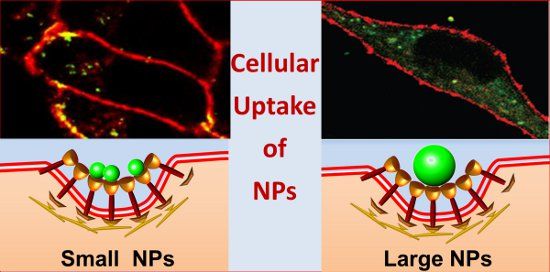
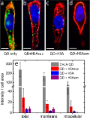
- varying concentrations (1–10 nM), fluorescence microscopy was performed over time courses of typically 1–2 h. Quantitative analysis of the image sequences revealed that the amount of NPs associated with the membrane scaled, within the error, with the NP concentration in solution (Figure 3a). The fraction
- exposure to a 1 nM DPA-QD solution, DPA-QDs were barely detectable inside the cells. A quantitative analysis of the DPA-QD uptake kinetics confirmed that the NPs accumulated on the membrane before uptake occurred (Figure 3b). The same effect was also observed for AuNCs (Figure 3c). These findings clearly


Effect of silver nanoparticles on human mesenchymal stem cell differentiation
Beilstein J. Nanotechnol. 2014, 5, 2058–2069, doi:10.3762/bjnano.5.214
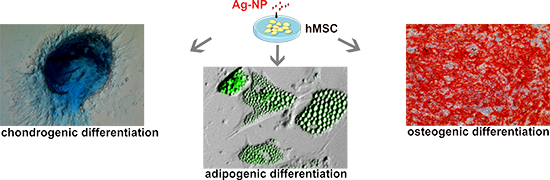
- -differentiated cells was analyzed by calcein-AM staining and revealed viable cells. However, a quantitative analysis was not possible due to the typical cell conversion as a pellet. Silver concentration-dependent differences in the conversion process or in the pellet size were not observed. To investigate the
- analyses of histochemical staining, which might explain the differences in the obtained results. In the case of the chondrogenic differentiation, a quantitative analysis of alcian blue staining was not possible due to the 3-dimensional growth of chondrogenic-derived hMSCs. However, cell morphology and
- ). To quantify the oil red O content, hMSCs were washed three times with DPBS to remove background staining, and 4% Nonidet P-40 (Roche, Mannheim, Germany) was added to resolve oil red O. The quantitative analysis of lipid accumulation of oil red O was performed by using a UV–vis spectrophotometer


Effects of surface functionalization on the adsorption of human serum albumin onto nanoparticles – a fluorescence correlation spectroscopy study
Beilstein J. Nanotechnol. 2014, 5, 2036–2047, doi:10.3762/bjnano.5.212
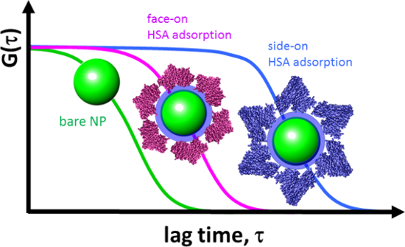
- for the limited space on the NP surface. The corona may be highly dynamic and vary over time. A precise, quantitative analysis of its protein composition would require measurements in situ to avoid protein adsorption or desorption processes during the experiment. Frequently, however, experimental
- the one that is quoted. Reversibility of corona formation A quantitative analysis in terms of equilibrium binding isotherms strictly only applies if corona formation is reversible. However, depending on the NP surface, protein adsorption may lead to tight binding, often accompanied by a substantial



PVP-coated, negatively charged silver nanoparticles: A multi-center study of their physicochemical characteristics, cell culture and in vivo experiments
Beilstein J. Nanotechnol. 2014, 5, 1944–1965, doi:10.3762/bjnano.5.205

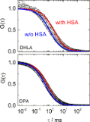
- ][68], the quantitative analysis of the corresponding CD signals has been shown to be a good indicator for the overall extent to which the original secondary structure of serum albumin is preserved in the "equilibrated" corona [54][69][70]. The exact mechanisms of partial or full protein denaturation


Imaging the intracellular degradation of biodegradable polymer nanoparticles
Beilstein J. Nanotechnol. 2014, 5, 1905–1917, doi:10.3762/bjnano.5.201
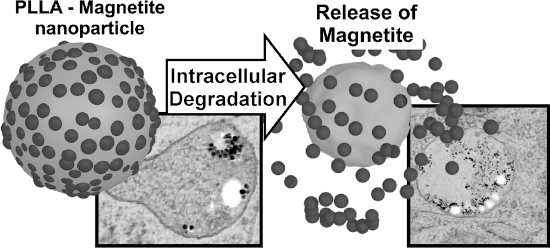
- endosomes and not within other cell compartments such as the cell nucleus, Golgi apparatus, or in mitochondria. Quantitative analysis of TEM observations As stated above, TEM observations of external material inside MSCs are too heterogeneous to provide a coherent picture by presenting only an excerpt of
- ). Quantitative analysis of TEM micrographs as to the occurrence of free magnetite nanocrystals. Average number of free magnetite nanocrystals per endosome (A) and relative proportion of endosomes containing at least


In vitro and in vivo interactions of selected nanoparticles with rodent serum proteins and their consequences in biokinetics
Beilstein J. Nanotechnol. 2014, 5, 1699–1711, doi:10.3762/bjnano.5.180
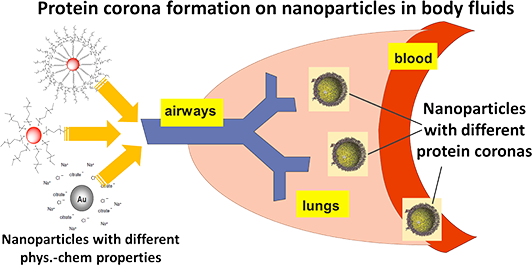
- remaining carcass and those in the excretion. As a result, the administered NP are 100% balanced of and a complete and detailed quantitative analysis of their biokinetics is obtained providing data on the fraction of NP per organ or tissue but also NP mass- or NP surface- or number concentrations per gram


Nanodiamond-DGEA peptide conjugates for enhanced delivery of doxorubicin to prostate cancer
Beilstein J. Nanotechnol. 2014, 5, 937–945, doi:10.3762/bjnano.5.107
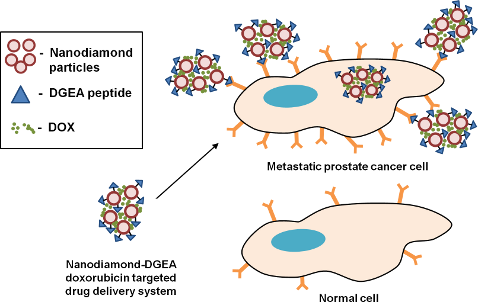
- drug concentrations, DOX efficacy was enhanced. The quantitative analysis of DOX release kinetics and cellular internalization are limitations of this study and should be the subject of future studies. Conclusion In this study, a novel targeted drug delivery system consisting of NDs (drug delivery


Controlling mechanical properties of bio-inspired hydrogels by modulating nano-scale, inter-polymeric junctions
Beilstein J. Nanotechnol. 2014, 5, 887–894, doi:10.3762/bjnano.5.101
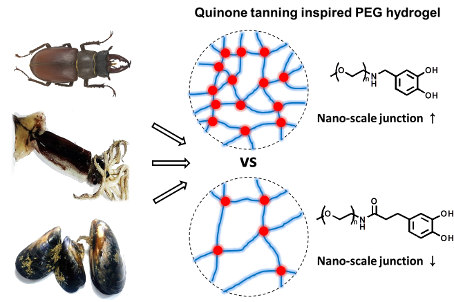
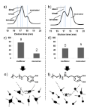
- mM NaIO4) (Supporting Information File 1, Figure S6). Quantitative analysis of the crosslinked PEG products was performed by gel permeation chromatography (GPC). GPC results showed that the peak that appeared at 18 min of elution time is unreacted monomer (Standard data of unreacted monomer
- a slight excess of NaIO4 was found to be necessary for maximal crosslinking. Quantitative analysis of crosslinked PEG products with GPC One notable result was that the relative amounts and the molecular species of the multimers formed by quinone tanning reactions exhibited large differences between



Visible light photooxidative performance of a high-nuclearity molecular bismuth vanadium oxide cluster
Beilstein J. Nanotechnol. 2014, 5, 711–716, doi:10.3762/bjnano.5.83

- reactivity was observed. Quantitative analysis using the observed pseudo-first order rate constant kobs gave a decrease in rate constant of ca. 32% (anaerobic) and ca. 44% (aerobic), respectively, see Table 1 and Figure 3. These significant changes are most likely due to an effective scavenging of hydroxyl


Plasma-assisted synthesis and high-resolution characterization of anisotropic elemental and bimetallic core–shell magnetic nanoparticles
Beilstein J. Nanotechnol. 2014, 5, 466–475, doi:10.3762/bjnano.5.54
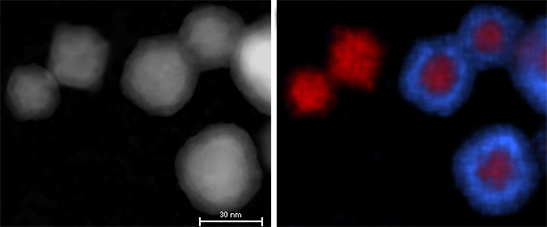
- increasing growth distance, in accord with our findings. Nevertheless, robust quantitative analysis of the phenomenon remains difficult. Indeed, all studies have at some point to commit to a specific growth mechanism. Hihara et al. [13] compared growth through collisions via a Smoluchowski equation with


En route to controlled catalytic CVD synthesis of densely packed and vertically aligned nitrogen-doped carbon nanotube arrays
Beilstein J. Nanotechnol. 2014, 5, 219–233, doi:10.3762/bjnano.5.24
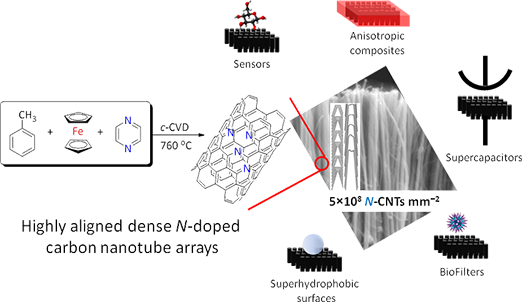
- the nanotubes, the purity (presence/absence of carbonaceous particles), the structure of the individual nanotubes (with a special emphasis on their straightness), and the quantitative analysis of the outer and inner diameters (OD, ID) of the nanotubes. Although the raw products were analysed


Oriented attachment explains cobalt ferrite nanoparticle growth in bioinspired syntheses
Beilstein J. Nanotechnol. 2014, 5, 210–218, doi:10.3762/bjnano.5.23
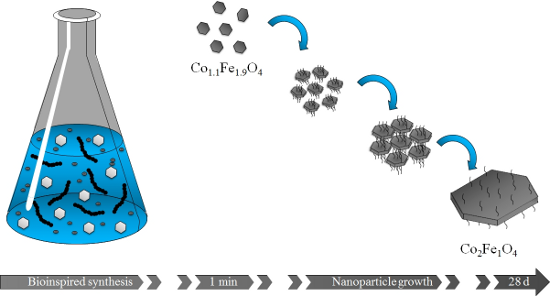
- dried at room temperature afterwards. Microstructure The microstructure and morphology were investigated using a Philips CM100 Transmission Electron Microscope (TEM) with an acceleration voltage U = 80 kV. The quantitative analysis of the nanoparticle sizes and shapes was performed manually by measuring
- the quantitative analysis. A FEI TECNAI F20 HRTEM with an acceleration voltage U = 200 kV was used for a detailed structural analysis. Electron diffraction measurements were also conducted with the FEI TECNAI F20. Since the distances and angles between the reflexes are material and zone axis specific
- Tridiem spectrometer were used for these measurements to allow single particle composition measurements. In addition, the local composition gradient was measured by using a spectrometer entrance aperture to select regions with a diameter of ≈25 nm within a single nanoparticle. For the quantitative





