Search results
Search for "scanning electron microscopy (SEM)" in Full Text gives 544 result(s) in Beilstein Journal of Nanotechnology. Showing first 200.
Sodium doping in brookite TiO2 enhances its photocatalytic activity
Beilstein J. Nanotechnol. 2022, 13, 599–609, doi:10.3762/bjnano.13.52
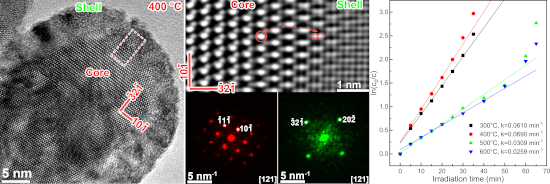
- , which is different from that observed via scanning electron microscopy (SEM) or transmission electron microscopy (TEM). Samples calcinated at 300–600 °C have a similar crystal size (ranging from 39–43 nm), suggesting that there is no obvious correlation between the crystal size and the photocatalytic


Design and characterization of polymeric microneedles containing extracts of Brazilian green propolis
Beilstein J. Nanotechnol. 2022, 13, 503–516, doi:10.3762/bjnano.13.42
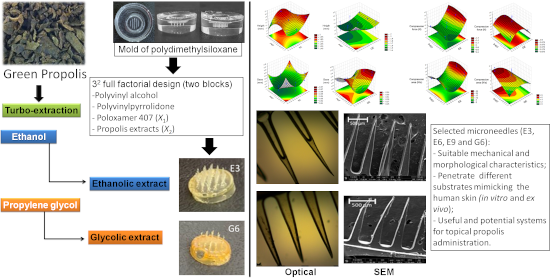
- structure of microneedles containing glycolic extract of propolis (G1 to G9); magnification 40×. Arrows represent locations where bubbles are present. Micrographs obtained by scanning electron microscopy (SEM) showing the surface morphology microneedles containing ethanolic extract of propolis (E1 to E9
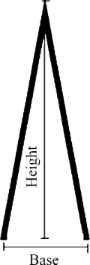
- ); magnification 150×. Micrograph obtained by scanning electron microscopy (SEM) showing the surface morphology of microneedles containing glycolic extract of propolis (G1 to G9); magnification 150×. Response surface plots for height and base measurements of MNs containing EE or GE. The color scale is indicated in


Ethosomal (−)-epigallocatechin-3-gallate as a novel approach to enhance antioxidant, anti-collagenase and anti-elastase effects
Beilstein J. Nanotechnol. 2022, 13, 491–502, doi:10.3762/bjnano.13.41
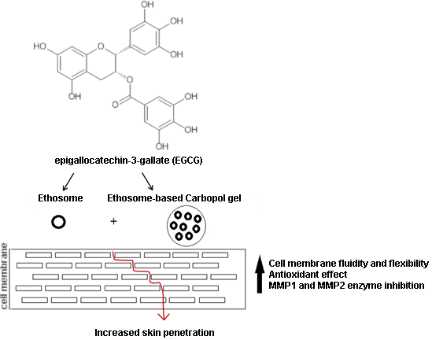
- characterized in vitro. Optimization of ETHs composed of 2–4% (w/v) of soya phosphatidylcholine (SPC) and 15–45% (v/v) of ethanol was performed based on characterization parameters (Table 1). The F3 formulation was chosen as the optimum one. A sample of F3 was examined by scanning electron microscopy (SEM



Investigation of electron-induced cross-linking of self-assembled monolayers by scanning tunneling microscopy
Beilstein J. Nanotechnol. 2022, 13, 462–471, doi:10.3762/bjnano.13.39
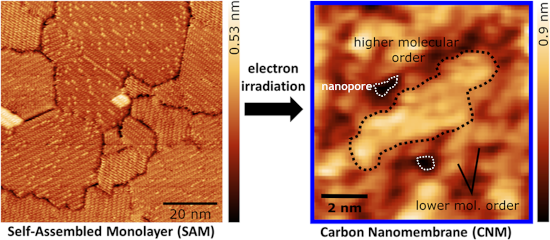
- structural changes is still lacking. In this work, we investigated the structural changes occurring upon irradiation of SAMs of p-terphenylthiol (TPT) on Au(111) using a combination of scanning electron microscopy (SEM) and scanning tunneling microscopy in ultrahigh vacuum (UHV) at room temperature. To study


Tubular glassy carbon microneedles with fullerene-like tips for biomedical applications
Beilstein J. Nanotechnol. 2022, 13, 455–461, doi:10.3762/bjnano.13.38
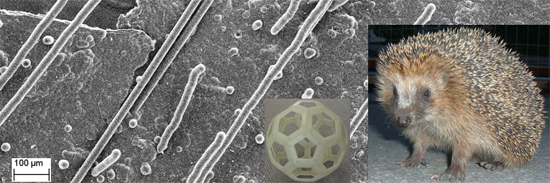
- pyrolysis of methane on a curved alumina surface. The surface provides the catalyst as well as the “strain” required to direct nucleation and growth. Figure 1a is a scanning electron microscopy (SEM) overview image showing a number of glassy carbon microneedles, which grow in the direction of the gas flow
- Raman spectroscopy (WiTec CRM200, laser excitation at 632.8 nm), scanning electron microscopy (SEM Leo 1530, with a spatial resolution of 1 nm at 20 kV and 3 nm at 1 kV, equipped with an energy-dispersive X-ray analysis system EDX INCA 400 from Oxford Instruments), and X-ray diffraction (STOE STADI-P


Systematic studies into uniform synthetic protein nanoparticles
Beilstein J. Nanotechnol. 2022, 13, 274–283, doi:10.3762/bjnano.13.22
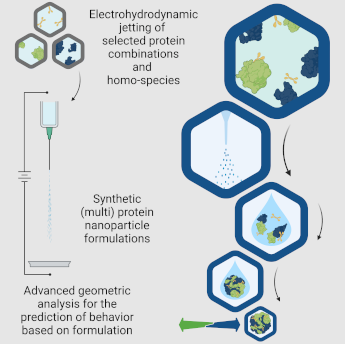
- detailing the exact masses and volumes for these formulations is provided in Supporting Information File 1 (Table S8). Scanning electron microscopy SEM images were obtained using a FEI Nova 200 Nanolab SEM/FIB at the Michigan Center for Materials Engineering using an acceleration voltage of 5 kV. Particles


Photothermal ablation of murine melanomas by Fe3O4 nanoparticle clusters
Beilstein J. Nanotechnol. 2022, 13, 255–264, doi:10.3762/bjnano.13.20
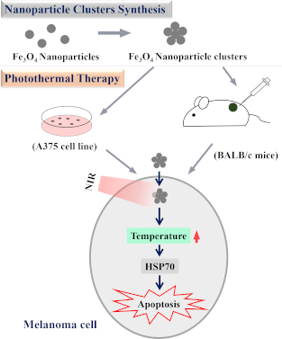
- treatment of cutaneous melanoma has remained unknown. In this study, we synthesized Fe3O4 superparamagnetic nanoparticle clusters, examined their morphology by scanning electron microscopy (SEM) and tested their capacity of light-to-heat conversion. Then, we evaluated the effectiveness of the as-synthesized


Effects of drug concentration and PLGA addition on the properties of electrospun ampicillin trihydrate-loaded PLA nanofibers
Beilstein J. Nanotechnol. 2022, 13, 245–254, doi:10.3762/bjnano.13.19
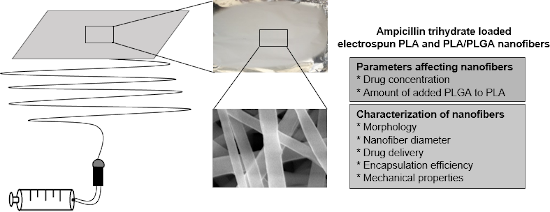
- average nanofiber diameters calculated in ImageJ using scanning electron microscopy (SEM) images of nanofibers, are given in Table 1 and Table 2. Stable jet and continuous nanofiber formation was observed in all PLA nanofibers containing different amounts of drug and in PLA/PLGA nanofibers with different


Relationship between corrosion and nanoscale friction on a metallic glass
Beilstein J. Nanotechnol. 2022, 13, 236–244, doi:10.3762/bjnano.13.18
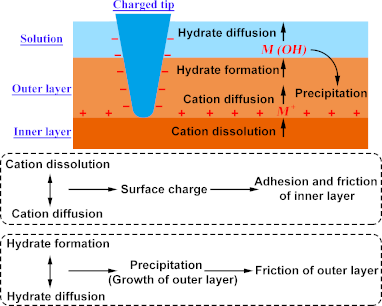
- scanning electron microscopy (SEM); the images are shown in Figure 1b,c. Corrosion pits with a lateral extension of tens of micrometers were observed on the surface polarized in NaCl solution, indicating that the chloride-containing solution initiates localized pitting. The inset in Figure 1b shows the
- scans, each 64 scan lines, were performed in each scan field at a constant applied load and repeated on different surface areas with different loads, while the friction force was recorded. No wear of the AFM tip was observed by means of scanning electron microscopy (SEM) after selected friction


Impact of device design on the electronic and optoelectronic properties of integrated Ru-terpyridine complexes
Beilstein J. Nanotechnol. 2022, 13, 219–229, doi:10.3762/bjnano.13.16
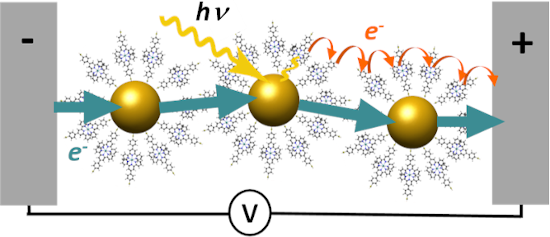
- , and Au 4f were recorded. Data analysis was conducted using CasaXPS (Casa Software, Ltd.) after subtraction of a Shirley background. The binding energies (BE) were calibrated to give the signal for metallic gold Au 4f7/2 at 84.0 eV. Scanning electron microscopy (SEM) was performed with a Hitachi SU8000


Piezoelectric nanogenerator for bio-mechanical strain measurement
Beilstein J. Nanotechnol. 2022, 13, 192–200, doi:10.3762/bjnano.13.14
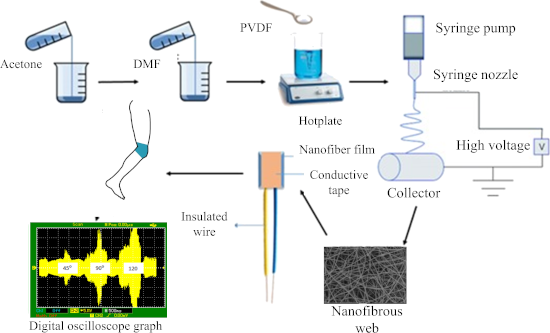
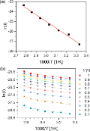
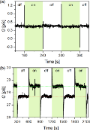
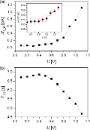
- characterized through scanning electron microscopy (SEM) and X-ray diffraction (XRD) to determine morphology and crystalline structure, respectively. Sensor development, its embedding, and testing The prepared PVDF nanofibrous mesh was folded into a square shape (4 cm2) with 2 mm thickness for sensor


Bacterial safety study of the production process of hemoglobin-based oxygen carriers
Beilstein J. Nanotechnol. 2022, 13, 114–126, doi:10.3762/bjnano.13.8
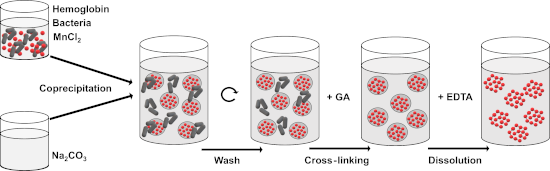
- CCD method produces nearly uniform, peanut-shaped particles. The size distribution determined by dynamic light scattering (DLS) was 759 ± 25 nm. Confocal laser scanning microscopy (CLSM) images confirmed this size range (Figure 1C). Scanning electron microscopy (SEM) images of particles produced with


Chemical vapor deposition of germanium-rich CrGex nanowires
Beilstein J. Nanotechnol. 2021, 12, 1365–1371, doi:10.3762/bjnano.12.100
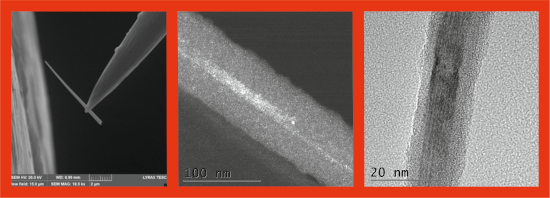
- electron microscopy (SEM) setup (TESCAN Vega 3 InduSEM) equipped with an electron dispersive X-ray spectrometer (EDX, Bruker XFlash Detector 5010) for detecting the elemental composition. A standard automatic instrumental background was applied for the estimation of elemental composition. Individual
- 5.0 × 10⁻⁷ Pa) was used with a polychromatic Mg X-ray source (Mg Kα, 1253.4 eV). A standard superficial surface sputtering with Ar+ ions was applied using 1 kV of acceleration voltage. The Shirley background was subtracted for all spectra. The morphology of each sample was analyzed by a scanning



Electrical, electrochemical and structural studies of a chlorine-derived ionic liquid-based polymer gel electrolyte
Beilstein J. Nanotechnol. 2021, 12, 1252–1261, doi:10.3762/bjnano.12.92
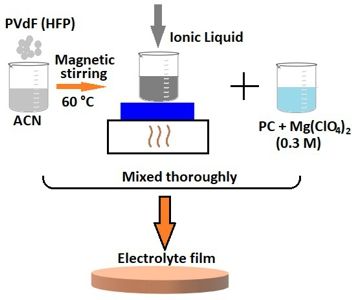
- surface morphology of a pure PVdF-HFP film, {(PVdF-HFP)-[BDiMIM][Cl]} (4:6), and ({(PVdF-HFP)-[BDiMIM][Cl]} (4:6)) (20 wt %) + [PC-Mg(ClO4)2 (0.3 M)] (80 wt %), where PC is the plasticizer propylene carbonate, was characterized using scanning electron microscopy (SEM) and is depicted in Figure 1a–c



The effect of cobalt on morphology, structure, and ORR activity of electrospun carbon fibre mats in aqueous alkaline environments
Beilstein J. Nanotechnol. 2021, 12, 1173–1186, doi:10.3762/bjnano.12.87
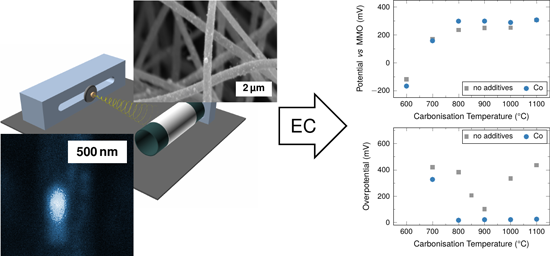
- electron microscopy (SEM), energy-dispersive X-ray spectroscopy (EDX), X-ray diffraction (XRD), X-ray photoelectron spectroscopy (XPS), Raman spectroscopy, elemental analysis, and inductively coupled plasma optical emission spectrometry (ICP-OES). In addition, the fibres were analysed in terms of their
- temperature to gain a more detailed understanding of the interactions of the cobalt additive and the carbon framework, as well as the formation and location of cobalt–nitrogen species. The changes in graphitisation, fibre chemistry, and electrochemical ORR performance are studied in depth using scanning


Assessment of the optical and electrical properties of light-emitting diodes containing carbon-based nanostructures and plasmonic nanoparticles: a review
Beilstein J. Nanotechnol. 2021, 12, 1078–1092, doi:10.3762/bjnano.12.80
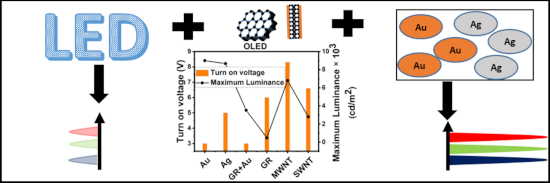
- -layer (4L) graphene and (b) the I–V characteristics of UV LED with and without few-layer graphene-based conductive electrodes. Figure 1a and Figure 1b were adapted from [39], with the permission of AIP Publishing. This content is not subject to CC BY 4.0. Cross-sectional scanning electron microscopy
- (SEM) image of the layers of the OLED. The various layers in the device are clearly visible including the vertical SWNT sheet. Figure 2 was adapted from [21], with the permission of AIP Publishing. This content is not subject to CC BY 4.0. Optical images of light emission of (a) blue and (b) UV LED


An overview of microneedle applications, materials, and fabrication methods
Beilstein J. Nanotechnol. 2021, 12, 1034–1046, doi:10.3762/bjnano.12.77
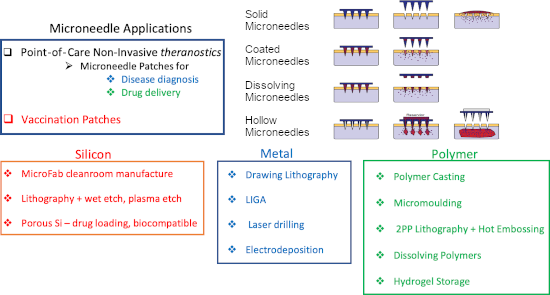
- et al., published by SAGE, distributed under the terms of Creative Commons Attribution-NonCommercial 4.0 License (http://www.creativecommons.org/licenses/by-nc/4.0/). This content is not subject to CC BY 4.0.). Scanning electron microscopy (SEM) image of a 5.3 mm long silicon microneedle fabricated


Revealing the formation mechanism and band gap tuning of Sb2S3 nanoparticles
Beilstein J. Nanotechnol. 2021, 12, 1021–1033, doi:10.3762/bjnano.12.76
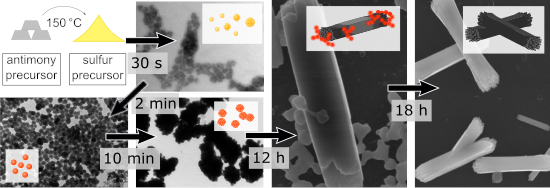
- different reaction time points were characterized by transmission electron microscopy (TEM, Figure 1a–c) and scanning electron microscopy (SEM, Figure 1d–f). The images show that small nanoparticles (type I) were formed about 2 min (Figure 1a) after injecting the antimony precursor Sb-EHA. The bright orange


Self-assembly of Eucalyptus gunnii wax tubules and pure ß-diketone on HOPG and glass
Beilstein J. Nanotechnol. 2021, 12, 939–949, doi:10.3762/bjnano.12.70
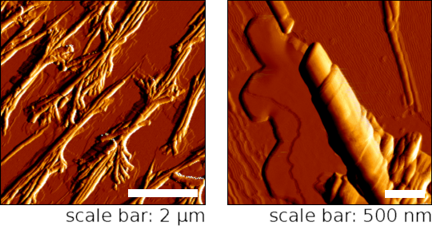
- is unknown. In this study, extracted wax of E. gunnii leaves and pure ß-diketone were recrystallized on two different artificial materials and analyzed by scanning electron microscopy (SEM) and atomic force microscopy (AFM) to study their formation process. Both the wax mixture and pure ß-diketone




In situ transport characterization of magnetic states in Nb/Co superconductor/ferromagnet heterostructures
Beilstein J. Nanotechnol. 2021, 12, 913–923, doi:10.3762/bjnano.12.68
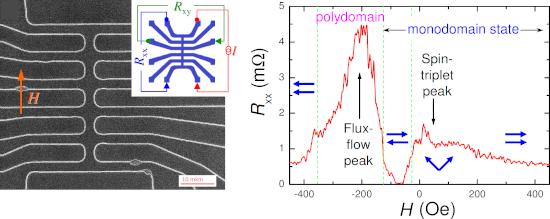
- were used for the calibration of the etching rates of the films. MLs are patterned into micrometer-scale bridges with multiple contacts using photolithography and reactive ion etching. A scanning electron microscopy (SEM) image of one of the studied samples is shown in Figure 1a. Control of the


Silver nanoparticles nucleated in NaOH-treated halloysite: a potential antimicrobial material
Beilstein J. Nanotechnol. 2021, 12, 798–807, doi:10.3762/bjnano.12.63
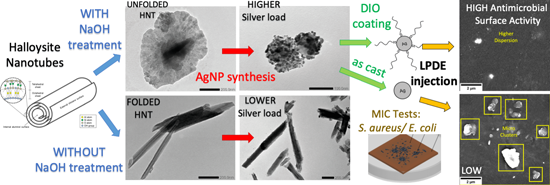
- . Transmission electron microscopy (TEM) was performed in a Jeol JEM-1400 plus (480 keV), energy-dispersive X-ray spectroscopy (EDS) and scanning electron microscopy (SEM) in a Zeiss EVO MA15, and thermogravimetric analysis (TGA) and differential scanning calorimetry (DSC) in a simultaneous thermal analyzer




9.1% efficient zinc oxide/silicon solar cells on a 50 μm thick Si absorber
Beilstein J. Nanotechnol. 2021, 12, 766–774, doi:10.3762/bjnano.12.60
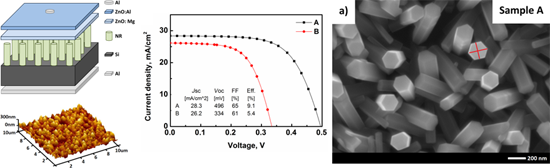
- Figure 1. Results and Discussion Figure 2 shows as-grown zinc oxide nanorods on the silicon surface grown by the hydrothermal method described above. Scanning electron microscopy (SEM) images revealed that the shape of the nanorods is hexagonal. The estimated width of hexagonal rods equals 160 ± 5 nm and


Physical constraints lead to parallel evolution of micro- and nanostructures of animal adhesive pads: a review
Beilstein J. Nanotechnol. 2021, 12, 725–743, doi:10.3762/bjnano.12.57
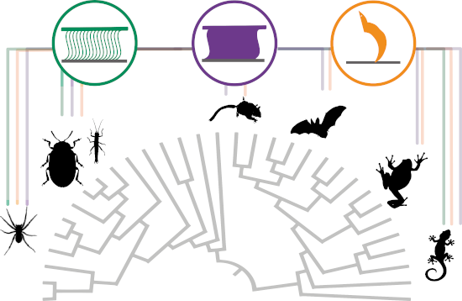
- of Polyneoptera (following [122]). Coloured squares indicate the type of attachment pads, 1different pad types on the same tarsus, and 2in different species. Scanning electron microscopy (SEM) images of a typical phasmatodean tarsus. Orestes draegeri Bresseel & Constant, 2018. (A) Ventral view. (B


High-yield synthesis of silver nanowires for transparent conducting PET films
Beilstein J. Nanotechnol. 2021, 12, 624–632, doi:10.3762/bjnano.12.51
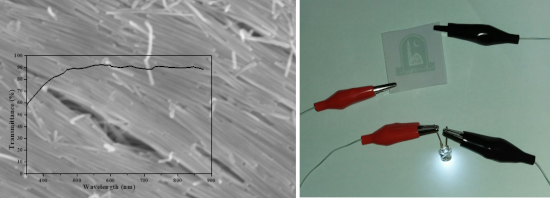
- alignment on a large scale and were characterized by UV–vis spectroscopy, scanning electron microscopy (SEM), X-ray diffraction (XRD), and PL spectroscopy. The luminescent AgNWs exhibited red emission, which was accredited to deep holes. The SEM results confirmed the formation of AgNWs of 3.3 to 4.7 µm in


Impact of GaAs(100) surface preparation on EQE of AZO/Al2O3/p-GaAs photovoltaic structures
Beilstein J. Nanotechnol. 2021, 12, 578–592, doi:10.3762/bjnano.12.48
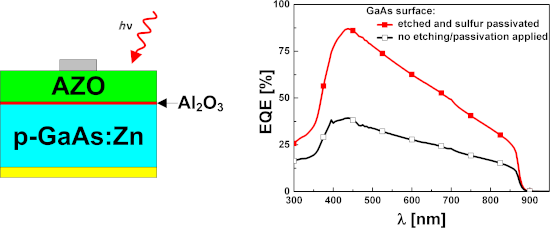
- ) and scanning electron microscopy (SEM) examinations were conducted to obtain structural details of the devices. X-ray photoelectron spectroscopy (XPS) with depth profiling was used to examine interface structure and changes in the elemental content and chemical bonds. The photoluminescence (PL