


Search results
Search for "sensor" in Full Text gives 446 result(s) in Beilstein Journal of Nanotechnology. Showing first 200.
Triboelectric nanogenerator based on Teflon/vitamin B1 powder for self-powered humidity sensing
Beilstein J. Nanotechnol. 2020, 11, 1394–1401, doi:10.3762/bjnano.11.123
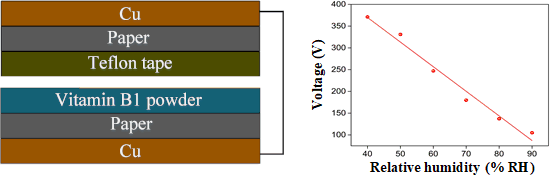
- measured open-circuit voltage was approximately 340 V. The TVB-TENG can be applied as a humidity sensor and exhibits a linear and reversible response to the relative humidity of the environment. Moreover, the change in relative humidity is also indicated by the change in luminosity of a set of light
- -emitting diodes (LEDs) integrated in the TVB-TENG system. The TVB-TENG proposed in this study illustrates a cost-effective method for portable power supply and sensing devices. Keywords: humidity sensor; self-powered system; triboelectric nanogenerators (TENGs); triboelectrification; vitamin B1
- , food safety, wearable electronics, and wireless sensor networks [1][2][3][4]. However, conventional power generation is needed to supply energy to these sensor networks, which leads to increased energy usage and adverse impacts on the environment. More specifically, the degradation of the urban




An atomic force microscope integrated with a helium ion microscope for correlative nanoscale characterization
Beilstein J. Nanotechnol. 2020, 11, 1272–1279, doi:10.3762/bjnano.11.111

- closed-loop sensor data obtained prior to imaging on the AFM scan head. For Figure 2, the AFM image shown was recorded at 300 mHz line rate at a resolution of 1024 pixels and 512 lines and over a scan range of 30 × 30 µm. The imaging mode used was off-resonance tapping (ORT) at a tapping rate of 2 kHz


Ultrasensitive detection of cadmium ions using a microcantilever-based piezoresistive sensor for groundwater
Beilstein J. Nanotechnol. 2020, 11, 1242–1253, doi:10.3762/bjnano.11.108
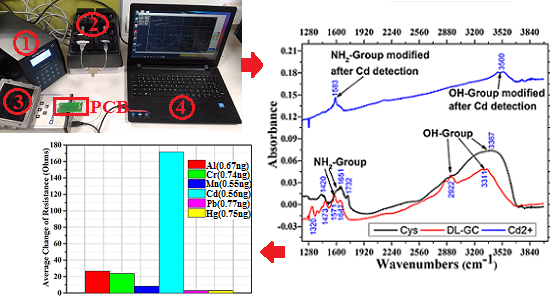
- – 76, India. 10.3762/bjnano.11.108 Abstract This paper proposes the selective and ultrasensitive detection of Cd(II) ions using a cysteamine-functionalized microcantilever-based sensor with cross-linked ᴅʟ-glyceraldehyde (DL-GC). The detection time for various laboratory-based techniques is generally
- only on absorption and fluorescence change and need dynamic acquisition [23]. A magnetic field powered pressure sensor proposed by Khan et al. [24] is capable of measuring pressure in the range of kilopascals but the suitability for the very low pressure caused by HMIs needs to be examined. A reduced
- graphene oxide (RGO)-based sensor and a microfluidic platform fabricated by [25][26][27] can be used with some surface modification for HMIs, but it is mostly capable of detecting in the micromolar range. A polymer-based microcantilever using an encapsulated piezoresistor has been proposed by Kale et al




Applications of superparamagnetic iron oxide nanoparticles in drug and therapeutic delivery, and biotechnological advancements
Beilstein J. Nanotechnol. 2020, 11, 1092–1109, doi:10.3762/bjnano.11.94

- fluorescence) of Alzheimer’s disease Aβ plaque accumulations. They observed that the nanoparticles are not only appropriate for imaging but they also prevent plaque accumulation and break the already formed aggregates. Feng et al. [163] developed a SPION sensor coupled with a synthetic protein that recognizes


A few-layer graphene/chlorin e6 hybrid nanomaterial and its application in photodynamic therapy against Candida albicans
Beilstein J. Nanotechnol. 2020, 11, 1054–1061, doi:10.3762/bjnano.11.90
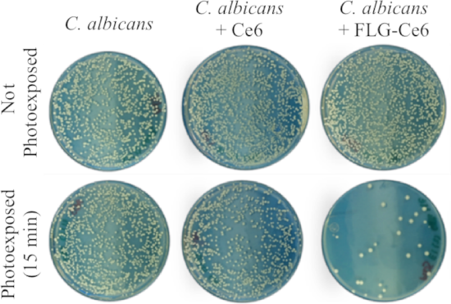
- 3.5 mm at 1000 nm excitation [7]. Figure 3b shows the singlet oxygen production tests of FLG-Ce6 and pristine Ce6. The singlet oxygen production is indirectly observed through the fluorescence intensity of the singlet oxygen sensor green reagent (SOSG), which is a singlet oxygen reporter. Thus, FLG
- presence 1 µM of a reporter molecule called singlet oxygen sensor green reagent (SOSG) to corroborate that FLG-Ce6 has the capacity to produce singlet oxygen and to quantify the production of the radical. The samples of FLG-Ce6 and Ce6, with the same concentration of Ce6, were subjected to a
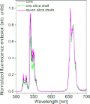
- system characterization. a) UV–vis absorption spectra of pristine Ce6 (blue) and FLG-Ce6 (green). b) Singlet oxygen production assays. Singlet oxygen is indirectly observed through the fluorescence of the reporter molecule, singlet oxygen sensor green reagent; the higher fluorescence is related to higher


Highly sensitive detection of estradiol by a SERS sensor based on TiO2 covered with gold nanoparticles
Beilstein J. Nanotechnol. 2020, 11, 1026–1035, doi:10.3762/bjnano.11.87
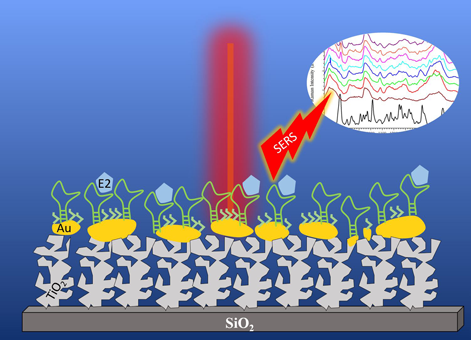
- -enhanced Raman scattering (SERS) sensors for the detection of 17β-estradiol. Gold deposition on top of a TiO2 surface leads to the formation of nanoparticles the plasmonic properties of which fulfil the requirements of a SERS sensor. The morphological and optical properties of the surface were investigated
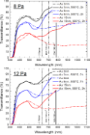
- . Specifically, we demonstrate that the TiO2 background pressure during pulsed laser deposition and the annealing conditions offer control over the formation of Au nanoparticles with different sizes, shapes and distributions, yielding a versatile sensor. We have exploited the surface for the detection of 17β
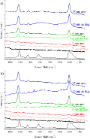
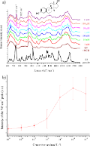
- -estradiol, an emerging contaminant in environmental waters. We have found a limit of detection of 1 nM with a sensitivity allowing for a dynamic range of five orders of magnitude (up to 100 µM). Keywords: aptamer; Au nanoparticles; 17-β estradiol (E2); plasmonics; sensor; surface-enhanced Raman scattering



Gas-sensing features of nanostructured tellurium thin films
Beilstein J. Nanotechnol. 2020, 11, 1010–1018, doi:10.3762/bjnano.11.85
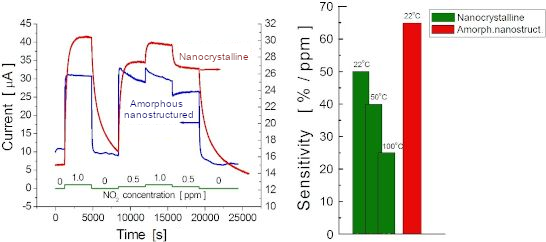
- ] started to thoroughly investigate the use of Te thin films as an active element in gas sensor manufacturing. They showed that microcrystalline Te thin films, grown by thermal vacuum evaporation, exhibit high sensitivity to low concentrations (ppm range) of nitrogen dioxide (NO2) even at room temperature
- time delay between measurements was 2 s, which was, simultaneously, much smaller than the sensor response time and much higher than the assessed dielectric relaxation time value. In order to transform the resistance signal into a voltage signal, the sample was connected in series to a load resistance


Wet-spinning of magneto-responsive helical chitosan microfibers
Beilstein J. Nanotechnol. 2020, 11, 991–999, doi:10.3762/bjnano.11.83
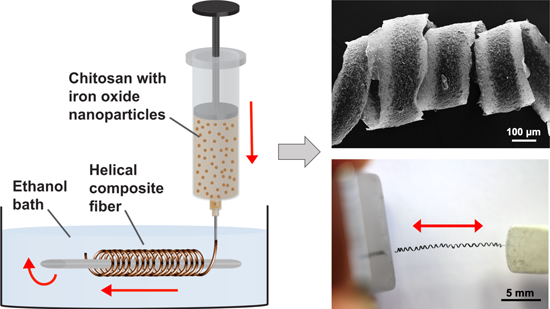
- load cell, a ULC-1N-535 model interface, and a ±1 mm length linear variable differential transformer (LVDT) sensor. System compliance was measured prior to testing. Twenty nine samples were tested under a travelling speed of 1 mm/min until failure. Before testing, the cross-sectional area of every


Extracting viscoelastic material parameters using an atomic force microscope and static force spectroscopy
Beilstein J. Nanotechnol. 2020, 11, 922–937, doi:10.3762/bjnano.11.77
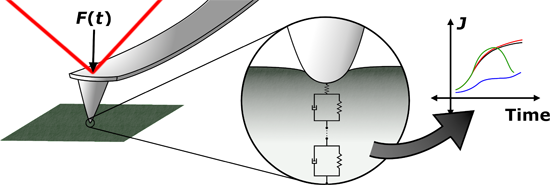
- then subsequently removed. For example, one method involves hanging weights from a material for some time, then removing the weights and allowing the material to recover. A strain gage or displacement sensor captures the deformation occurring during both phases, and the data is used for fitting. The
- data streams for post-processing, including Z-Raw (expected Z-position based on the voltage applied to the Z-piezo), Z-Sensor (measured Z-position), deflection, amplitude, and phase. The Z-Sensor measurement corresponds to the position of the piezo that controls the position of the base of the
- cantilever, and the time-derivative of the Z-Sensor data should be equal to the experimental approach velocity. To perform the fit procedure, only the deflection and Z-Sensor datasets are necessary. Figure 2a illustrates the shape of a common result as read from a force–distance curve output file. Because


Transition from freestanding SnO2 nanowires to laterally aligned nanowires with a simulation-based experimental design
Beilstein J. Nanotechnol. 2020, 11, 843–853, doi:10.3762/bjnano.11.69

- result, Choi et al. were able to measure an improved sensitivity for gas sensors made of tin oxide nanowires (SnO2 NWs) in comparison with powder-based SnO2 thin films [9]. For the use of NWs in electronic and sensor devices, freestanding NWs often have to be scratched off of the growth substrate
- laterally aligned NWs in sensor or electronic devices, control of the NW length is highly desired. Longer NWs can be contacted by means of standard lithography processes and do not require electron-beam lithography [12][28]. In the experiments presented in Figure 6, the process time was increased from 8 min





Multilayer capsules made of weak polyelectrolytes: a review on the preparation, functionalization and applications in drug delivery
Beilstein J. Nanotechnol. 2020, 11, 508–532, doi:10.3762/bjnano.11.41



Evolution of Ag nanostructures created from thin films: UV–vis absorption and its theoretical predictions
Beilstein J. Nanotechnol. 2020, 11, 494–507, doi:10.3762/bjnano.11.40
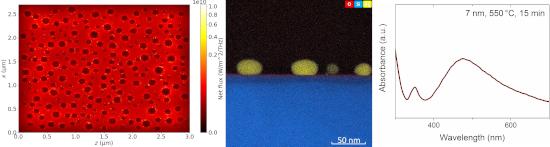
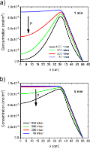
- : dewetting; finite-difference time-domain (FDTD) method; plasmon resonance; silver (Ag) nanostructures; thin films; UV–vis absorption; Introduction In the last decade there has been significant development in sensor-related research regarding the application in optical, medical or biological areas [1][2][3
- plotted as a function of the time. We can observe how these amplitudes increase (sharp rise at approx. 0.9 fs after the start of the simulation), and then decay after the light is switched off and passed the sensor (beginning at approx. 20.9 fs). The absorbance calculated from the FDTD simulations is




Nanoarchitectonics: bottom-up creation of functional materials and systems
Beilstein J. Nanotechnol. 2020, 11, 450–452, doi:10.3762/bjnano.11.36

- spectroscopy [37], bio-nanocomposites with clay nanoarchitectures for electrochemical devices [38], a biomimetic nanofluidic diode with polymeric carbon nitride nanotubes [39], and a unique Janus-micromotor applied as a luminescence sensor for sensitive TNT detection [40]. The variety of nanoarchitectonics

Using gold nanoparticles to detect single-nucleotide polymorphisms: toward liquid biopsy
Beilstein J. Nanotechnol. 2020, 11, 263–284, doi:10.3762/bjnano.11.20
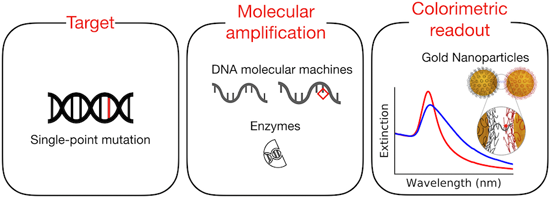
- offers an unprecedented sensitivity in native physiological media. Coupling these nanomaterial-based systems with enzymatic reactions can further increase the sensitivity and selectivity of a given sensor, leading to a scenario in which a tiny structural alteration of a biomolecule can be detected within
- the formation of the branched junctions altered the colloidal stability of the nanoparticles, leading to a gradual aggregation. The detection limit of this method was 7.7 fM. With the aim of improving the sensitivity of the plasmon-based colorimetric sensor, Ying and co-workers [82] have used gold
- . Specifically, the recently proposed protein corona sensor arrays in which the composition of protein corona reflects the presence of a given cancer enabled new venues in detecting diseases directly from a blood sample [140]. Moreover, the simultaneous detection of genetic mutations and disease-specific



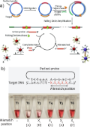

Molecular architectonics of DNA for functional nanoarchitectures
Beilstein J. Nanotechnol. 2020, 11, 124–140, doi:10.3762/bjnano.11.11

- involves critical optimization of the sensor platforms. The length of the target oligonucleotide sequence and the selective use of dopants significantly dominate the sensing efficacy [63]. In this context, electrochemical DNA sensors were developed by noncovalent layer-by-layer assemblies of phenothiazine
- dyes and DNA for the detection of damaged DNA [64]. Apart from biological samples, the identification of volatile organic compounds is another important field gaining the attention of researchers. Hairpin DNA and peptide sequences were integrated in a sensor design strategy to develop an optoelectronic
- thereby unambiguously circumvents the limitations associated with the earlier reports of DNA-based sensor systems. In our creation strategy, novel DNA nanoarchitectures were designed and developed for the sensing of mercury at subnanomolar levels, wherein adenine-conjugated naphthalenediimide (BNA) forms


A review of demodulation techniques for multifrequency atomic force microscopy
Beilstein J. Nanotechnol. 2020, 11, 76–91, doi:10.3762/bjnano.11.8

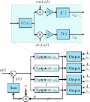
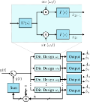
- filter during operation it is recommended to fix Rk such that it reflects the standard deviation σ of the Gaussian noise in the input signal from the sensor y(t) (R = σ2). This leaves Qk as the only tuning variable that directly influences the Kalman gains and sets the tracking bandwidth. The functional
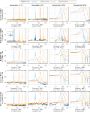
- in the presence of a much larger fundamental resonance frequency, emphasizing the need for strong noise sensitivity from the demodulator. Higher-harmonic AFM imaging was performed using an NT-MDT NTEGRA AFM on the second harmonic amplitude. The chosen cantilever (Budget Sensor TAP190G) has a


The effect of heat treatment on the morphology and mobility of Au nanoparticles
Beilstein J. Nanotechnol. 2020, 11, 61–67, doi:10.3762/bjnano.11.6
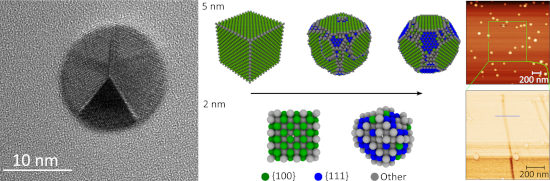
- materials used in studies related to nanostructures. The small size and the enhanced properties of Au nanoparticles (NPs) compared to bulk gold make them important for the development of novel applications, for example, in the field of drug delivery [1], sensor technology [2], printing [3] and catalysis [4


An investigation on the drag reduction performance of bioinspired pipeline surfaces with transverse microgrooves
Beilstein J. Nanotechnol. 2020, 11, 24–40, doi:10.3762/bjnano.11.3
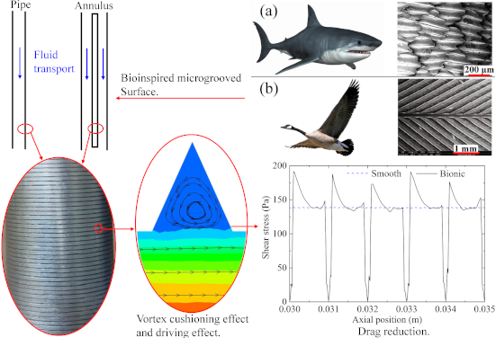
- test section was measured by a differential pressure transmitter (DMP305X-DST) based on monocrystalline silicon technology. The monosilicon pressure transmitter was a high-performance pressure sensor. Its measuring range was 0–20000 Pa, and its precision was ±0.05%. Considering that the electromagnetic


Plasmonic nanosensor based on multiple independently tunable Fano resonances
Beilstein J. Nanotechnol. 2019, 10, 2527–2537, doi:10.3762/bjnano.10.243
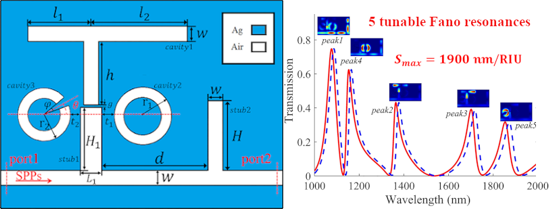
- Fano resonance is preferable to create an excellent plasmonic sensor with ultrahigh performance. However, such attempts to date lack the utilization of various resonators to generate multiple Fano peaks/dips at an arbitrary defined position for practical multi-sensing applications. In this paper, we
- Equation 5–8. However, the good sensor performance requires high transmission and narrow FWHM. It is thus necessary to select the appropriate g to compromise these two parameters. As previously mentioned, peak2 is controlled by the left and bottom parts of cavity1, while the resonance of peak3 is produced
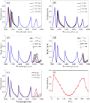
- refractive index values, and (b) the FOM curve of the structure. Dependence of (a) phase shift, (b) delay time, (c) group index on the wavelength. Comparison of the proposed plasmonic sensor and other published similar solutions. Supporting Information Supporting Information File 282: Additional




Synthesis and acetone sensing properties of ZnFe2O4/rGO gas sensors
Beilstein J. Nanotechnol. 2019, 10, 2516–2526, doi:10.3762/bjnano.10.242
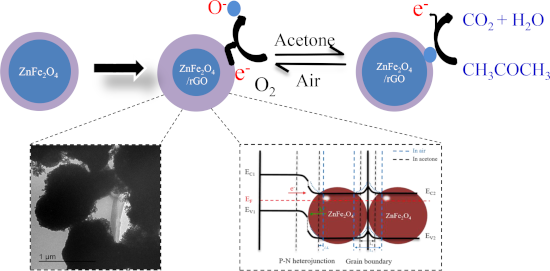
- about 600–1000 nm. The gas sensing test revealed that the introduction of rGO improved the performance of the sensing of acetone to low concentration, and the ZnFe2O4/rGO composite gas sensor containing 0.5 wt % of rGO exhibited a high sensitivity in sensing test using 0.8–100 ppm acetone at 200 °C. The
- response of the 0.5 wt % ZnFe2O4/rGO sensor to 0.8 ppm acetone was 1.50, and its response to 10 ppm acetone was 8.18, which is around 2.6 times more pronounced than the response of pure ZnFe2O4 (10 ppm, 3.20). Moreover, the sensor showed a wide linear range and good selectivity. Keywords: acetone
- ; composites; gas sensor; reduced graphene oxide (rGO); ZnFe2O4 hollow spheres; Introduction As a synthetic raw material in industrial production, acetone is chemically active and extremely flammable. It is toxic if its concentration exceeds 173 ppm, and long-term exposure to acetone poses a serious threat to




Evaluation of click chemistry microarrays for immunosensing of alpha-fetoprotein (AFP)
Beilstein J. Nanotechnol. 2019, 10, 2505–2515, doi:10.3762/bjnano.10.241
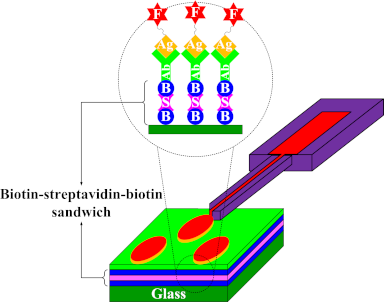
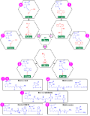
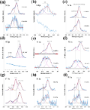
- biotinylated surfaces for the construction of the AFP detection sandwich. Finally, the best performing fabrication route was evaluated for its efficiency as sensor platform. Click chemistry reactions, which have been widely studied since their introduction by Kolb, Finn and Sharpless in 2001 [24], have unique
- ][36][37]. The technique used in this work provides a new platform for the fabrication of clinical immunosensors, which is applicable for the fast and effective diagnosis of HCC. Results and Discussion Generation of biotinylated surfaces To generate biotinylated surfaces as a basis for the sensor
- corresponding microarray sensors. The sensitivity of the epoxy–amine-based array was evaluated to be 9.8 ± 2.9 µg/mL, providing a rapid and inexpensive screening sensor compared to the more sensitive, but also much more elaborate detection approaches. Moreover, the approach can be extended towards label-free


Label-free highly sensitive probe detection with novel hierarchical SERS substrates fabricated by nanoindentation and chemical reaction methods
Beilstein J. Nanotechnol. 2019, 10, 2483–2496, doi:10.3762/bjnano.10.239

- nanoparticles or micro/nanostructures can be applied as a SERS sensor to detect adsorbed markers. Generally, nanoparticles can be fabricated as SERS substrates at low cost and high production via chemical synthesis methods [8][9][10][11][12][13], including chemical/electrochemical deposition and electrochemical


Coating of upconversion nanoparticles with silica nanoshells of 5–250 nm thickness
Beilstein J. Nanotechnol. 2019, 10, 2410–2421, doi:10.3762/bjnano.10.231
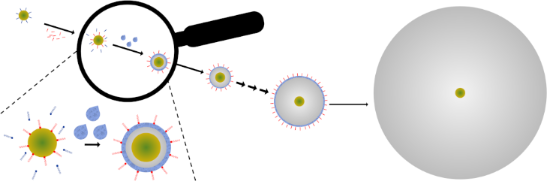
- -core particles are obtained. This strategy can be easily transferred to other nanomaterials for the design of plasmonic nanoconstructs and sensor systems. Keywords: reverse microemulsion; silica coating; stepwise growth; thick shells; upconversion nanoparticles; Introduction Lanthanide-based
- microemulsion technique in 2008 [42][43]. However, for certain applications such as sensing and plasmonics, a thicker silica shell is desired that can be loaded with sensor molecules or used as spacer for the plasmonic enhancement of the emission of UCNPs by gold or silver shells [45]. Moreover, since UCNPs can


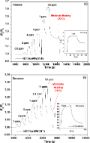
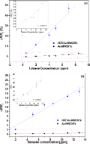
Multiwalled carbon nanotube based aromatic volatile organic compound sensor: sensitivity enhancement through 1-hexadecanethiol functionalisation
Beilstein J. Nanotechnol. 2019, 10, 2364–2373, doi:10.3762/bjnano.10.227
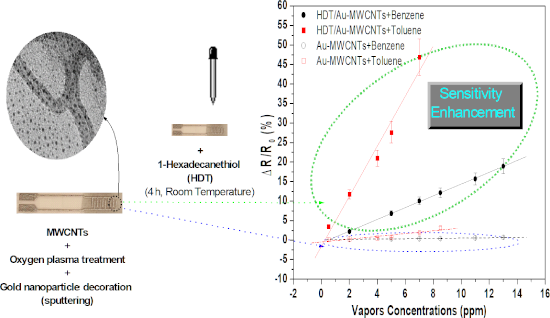
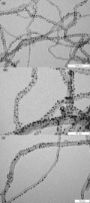
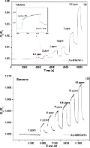
- temperature toluene and benzene sensor based on multiwall carbon nanotubes (MWCNTs) decorated with gold nanoparticles and functionalised with a long-chain thiol self-assembled monolayer, 1-hexadecanethiol (HDT). High-resolution transmission electron microscopy (HRTEM) and Fourier transform infrared
- sensitivity (up to 17 times), selectivity and improves the response dynamics of the sensors. Keywords: gold-decorated MWCNTs; multiwall carbon nanotubes (MWCNTs); self-assembled monolayers (SAMs); sensitivity; selectivity; vapour sensor; Introduction Aromatic volatile organic compounds (VOCs) such as
- of trace concentrations of toluene in exhaled breath is associated with lung cancer and can therefore be considered as a biomarker for this pathology [2][3][4]. A gas sensor is generally composed of an active sensing film or material deposited on an electrode. The sensing performance is strongly




Integration of sharp silicon nitride tips into high-speed SU8 cantilevers in a batch fabrication process
Beilstein J. Nanotechnol. 2019, 10, 2357–2363, doi:10.3762/bjnano.10.226
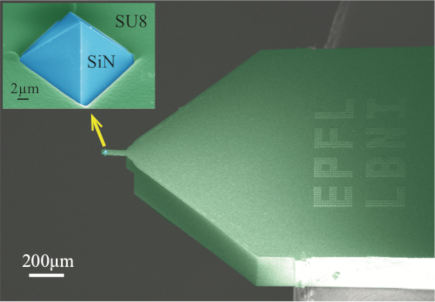
- fabrication yield and an easy bottom-up recipe. Genolet et al. have shown AFM images of DNA-plasmid molecules using SU8 cantilevers [21]. SU8-based Hall effect sensor cantilevers have also been presented by Mouaziz and co-workers [22]. In addition, SU8 cantilevers have shown a performance of high-speed





