Search results
Search for "size" in Full Text gives 2107 result(s) in Beilstein Journal of Nanotechnology. Showing first 200.
Soft materials nanoarchitectonics: liquid crystals, polymers, gels, biomaterials, and others
Beilstein J. Nanotechnol. 2025, 16, 1025–1067, doi:10.3762/bjnano.16.77

- such as quantum dots [95][96][97][98][99], the nanoscale of size and dimensions can result in properties that are not attainable with bulk materials. In other words, the key to developing functionality and improving properties lies in controlling the nanostructure in addition to the creation of the
- crystal nanoarchitectonics Liquid crystals are an attractive form of soft materials, characterized by a combination of moderate fluidity and orientation [223][224][225]. They exhibit a high degree of diversity with regard to both the type of phase and the size of the regular structures. Furthermore, they






Multifunctional properties of bio-poly(butylene succinate) reinforced with multiwalled carbon nanotubes
Beilstein J. Nanotechnol. 2025, 16, 1014–1024, doi:10.3762/bjnano.16.76
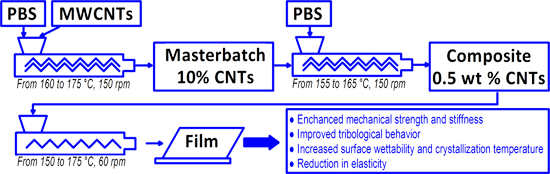
- nm and a length of up to 40 μm (Figure 1b). The microstructure of PBS/CNT_10 (Figure 1c) and PBS/CNT_0.5 (Figure 1d) samples is quite similar. In the SEM images of both samples, small white inclusions (nanotubes) ranging from 24 to 200 nm in size are evenly distributed over the surface. On the



A calix[4]arene-based supramolecular nanoassembly targeting cancer cells and triggering the release of nitric oxide with green light
Beilstein J. Nanotechnol. 2025, 16, 1003–1013, doi:10.3762/bjnano.16.75

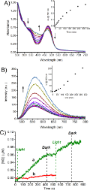
- inset shows the size distribution of the same solution of 1 obtained by DLS. (B) Fluorescence emission spectrum, λexc = 467 nm, of 1 as in (A). The inset shows the fluorescence decay and the related fitting of the same solutions recorded at λexc = 455 nm and λem = 550 nm. T = 25 °C. Cell viability
- observed upon exposure of an air-equilibrated NOPD 2 (100 µM) solution at λexc = 420 nm after 0, 6, 11, 20, 30, 40, 60, 80, 100, 130, and 160 min. (A) Absorption spectrum of the supramolecular complex 1·2 in water; [1] = 50 µM; [2] = 40 µM. The inset shows the size distribution of the same solution of 1·2


Time-resolved probing of laser-induced nanostructuring processes in liquids
Beilstein J. Nanotechnol. 2025, 16, 968–1002, doi:10.3762/bjnano.16.74
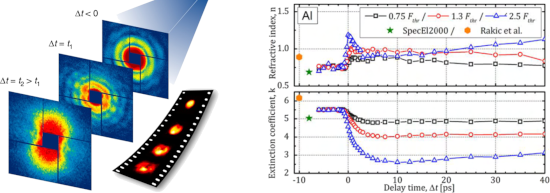
- ][12][13], as well as laser fusion or laser melting in liquid (LML) [14][15]. The latter is used to achieve the opposite effect of increasing particle size with the aim for high quality in shape or size. The presence of a liquid in laser processing, on the one hand, has practical advantages, such as
- -crystalline samples, which lack nucleation sites. Thus, a transient overheating above the melting point could even take place, which lasts for 100 to 200 ps. On longer timescales, heat dissipation can set in during the heating with nanosecond or longer pulses. Heat dissipation in small NPs is strongly size
- the transient absorption technique was nicely demonstrated in a work by Hu et al. [87], in which they measured solvated NPs of varying sizes and determined the effect of size on the rate of energy relaxation. As shown in Figure 7A, the transient bleach results for larger NPs showed two distinct decay


Shape, membrane morphology, and morphodynamic response of metabolically active human mitochondria revealed by scanning ion conductance microscopy
Beilstein J. Nanotechnol. 2025, 16, 951–967, doi:10.3762/bjnano.16.73
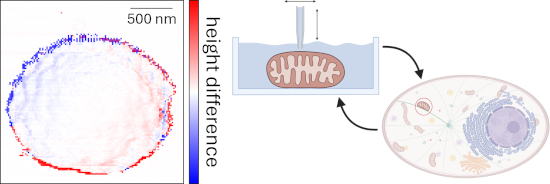
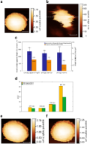
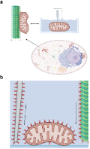
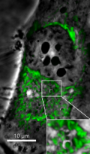
- 3c. The average values of apparent height, diameter, and volume are compared. Irregular mitochondria tend to be smaller with reduced statistical significance (Welch’s t-test). The size distribution of metabolically active mitochondria is bimodal, that is, diameters predominantly fell into two
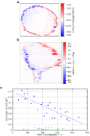
- difference in average mitochondrial volume (p < 0.001, Welch’s t-test). Edge memory effect Metabolically active mitochondria possess the ability to respond to external stimuli. In cells, these responses are reflected in alterations to the shape, size, and number of the mitochondria, which in turn influence
- stability contrasts with the structural alterations reported with more violent techniques, such as deformability cytometry [37]. For mitochondria isolated using the nitrogen cavitation method, fixed mitochondria exhibit significantly smaller dimensions (Figure 4b). The reduction in size can be explained by



Synthesis of biowaste-derived carbon-dot-mediated silver nanoparticles and the evaluation of electrochemical properties for supercapacitor electrodes
Beilstein J. Nanotechnol. 2025, 16, 933–943, doi:10.3762/bjnano.16.71
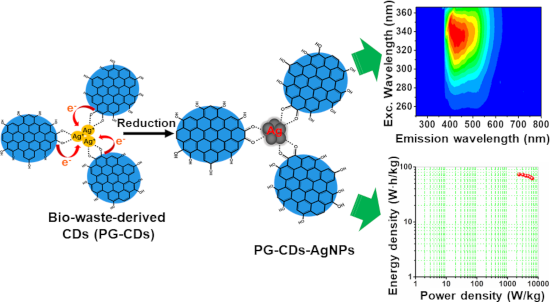
- environmentally friendly as CDs play a role as capping, reducing, and stabilizing agent without addition of any chemicals. PG-CDs-AgNPs showed a particle size of 10 nm having excellent fluorescence emission in the blue region, and it has been explored as an electrode material for supercapacitor applications. The
- the solution to brownish black. The gradual increase in the peak intensity without any spectral shift of absorption maxima (λmax) suggests that with increasing reaction time uniform-size stable nanoparticles were formed [27]. The excitation–wavelength-dependent emission spectra of the as-synthesized
- distribution of PG-CDs-AgNPs was responsible for the enhanced surface area [35]. The pore size distribution plot of PG-CDs-AgNPs suggests the mesoporous characteristics (Supporting Information File 1, Figure S1b), which, via the diffusion of electrolyte ions, is highly efficient for electrochemical charge


Structural and magnetic properties of microwave-synthesized reduced graphene oxide/VO2/Fe2O3 nanocomposite
Beilstein J. Nanotechnol. 2025, 16, 921–932, doi:10.3762/bjnano.16.70
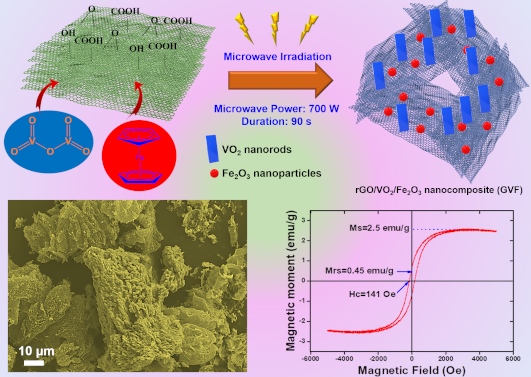
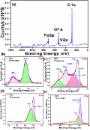
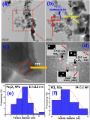
- ) was visible on the thin rGO surfaces. Notably, a clear difference between the size of Fe2O3 NPs (average particle diameter – 8.1 ± 2.2 nm) and VO2 NSs (average particle diameter – 34 ± 5.2 nm) indicates the formation of these two different types of metal oxides on top of the rGO nanosheets (Figure 8e



Focused ion beam-induced platinum deposition with a low-temperature cesium ion source
Beilstein J. Nanotechnol. 2025, 16, 910–920, doi:10.3762/bjnano.16.69
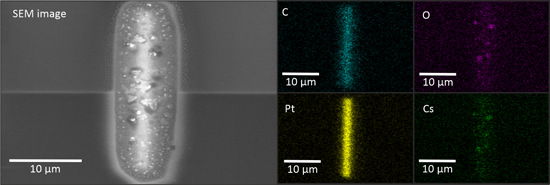
- nozzle kept about 100 μm above the sample surface. The chamber pressure of the Cs+ and the Ga+ FIB was about 5 × 10⁻⁷ mbar before deposition and 8 × 10⁻⁶ mbar during deposition. For Pt deposition, a beam step size of −150% of the beam diameter was used with an upper limit of 200 nm for the Cs FIBID to
- avoid, for example, any inhomogeneous ripple structures. The dwell time was always 200 ns. For growth rate characterization, Pt layers with a length of 20 μm and a width of 1 μm were deposited on silicon (Si). The ion beam currents were changed, while the pattern size was kept constant. With the Cs+ FIB
- 8a. The pattern size was 35 μm by 1.5 μm. The deposition time was varied with the ion beam current and the acceleration voltage to achieve a constant layer thickness of approximately 1000 nm. With the Ga+ FIB, ion beam currents between 30 and 630 pA were used, so the current densities ranged from 0.9


Characterization of ion track-etched conical nanopores in thermal and PECVD SiO2 using small angle X-ray scattering
Beilstein J. Nanotechnol. 2025, 16, 899–909, doi:10.3762/bjnano.16.68
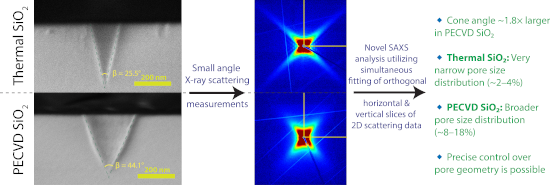
- , and nanofluidic applications. The characterization of the pore morphology and size distribution, along with its dependence on the material properties and fabrication parameters, is crucial to designing nanopore systems for specific applications. Here, we present a comprehensive study of track-etched
- analyzing the complex highly anisotropic two-dimensional SAXS patterns of the pores by reducing the analysis to two orthogonal one-dimensional slices of the data. The simultaneous fit of the data enables an accurate determination of the pore geometry and size distribution. The analysis reveals substantial
- differences between the nanopores in thermal and PECVD SiO2. The track-to-bulk etching rate ratio is significantly different for the two materials, producing nanopores with cone angles that differ by almost a factor of two. Furthermore, thermal SiO2 exhibits an exceptionally narrow size distribution of only 2


Heat-induced transformation of nickel-coated polycrystalline diamond film studied in situ by XPS and NEXAFS
Beilstein J. Nanotechnol. 2025, 16, 887–898, doi:10.3762/bjnano.16.67
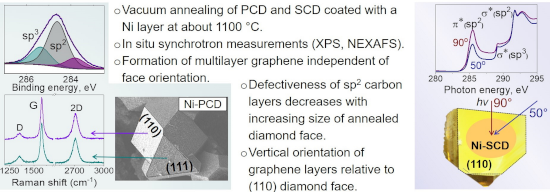
- the vacuum chamber for further SEM and Raman analysis under ambient conditions. Figure 4 shows SEM images of some large crystallites of about 100 μm in size on the surfaces of the annealed PCD and Ni-PCD. These crystallites have well-defined triangular (111) faces and truncated rectangular faces
- on the crystallographic orientation of the diamond surface, and is mainly determined by the annealing temperature. On the other hand, the defectiveness of the sp2 layers is influenced by the crystallite size and the presence of intrinsic structural defects in the diamond. Orientation of graphitic
- higher intensity of the π*(sp2)-resonance in the NEXAFS C K-edge spectrum, this suggests that the defectiveness of the formed sp2-hybridized carbon layers decreases as the size of the annealed diamond face increases. For the annealed Ni-SCD sample, the spectra were measured at angles of 90° and 50


Ar+ implantation-induced tailoring of RF-sputtered ZnO films: structural, morphological, and optical properties
Beilstein J. Nanotechnol. 2025, 16, 872–886, doi:10.3762/bjnano.16.66
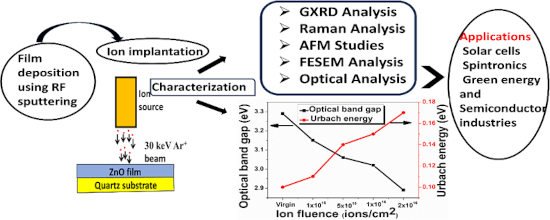
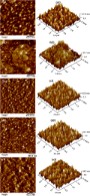
- in grazing incidence angle X-ray diffraction patterns. Atomic force microscopy images show grain size reduction and a fall in the surface roughness value of films after implantation. The implantation-induced structural modifications are further correlated with the variation in diffuse reflectance
- foreign ions in the ZnO film lattice can create an impact on its surface roughness and particle size. Previous reports available discuss the implantation-induced optical longitudinal phonon symmetry in ZnO films using heavy ions with high energy and low implantation fluences [12][13][14][15]. Singh et al
- were implanted with 30 keV Ar+ at fluences varying from 1 × 10¹⁵ to 2 × 10¹⁶ ions·cm−2. Surface variables (roughness and particle size), structural variables (crystallite size and dislocation density), and optical properties (diffuse reflectance, Urbach energy, and optical bandgap) were studied in






Insights into the electronic and atomic structures of cerium oxide-based ultrathin films and nanostructures using high-brilliance light sources
Beilstein J. Nanotechnol. 2025, 16, 860–871, doi:10.3762/bjnano.16.65

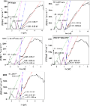
- its sensitivity, the method, when combined with other techniques, has provided quantitative information on the number of electrons transferred per particle to the support (Figure 2), enabling the optimization of the size of the supported active Pt catalyst [27]. This is a crucial factor in minimizing
- supporting oxide was found to decrease with decreasing NP size [53], possibly due to a stronger interaction between Ag and cerium oxide in smaller NPs, resulting from a greater charge transfer per atom [54]. A further possibility offered by synchrotrons is to measure spatially resolved Ce M-edge absorption
- spectra in photoemission electron microscopy (PEEM) mode, in which the photon energy is scanned across the XAS edge and the intensity of the secondary electrons is detected using a PEEM. This allowed to image the shape and size of ceria nanoislands on Ru(0001) and to probe and compare the oxidation state


Synchrotron X-ray photoelectron spectroscopy study of sodium adsorption on vertically arranged MoS2 layers coated with pyrolytic carbon
Beilstein J. Nanotechnol. 2025, 16, 847–859, doi:10.3762/bjnano.16.64
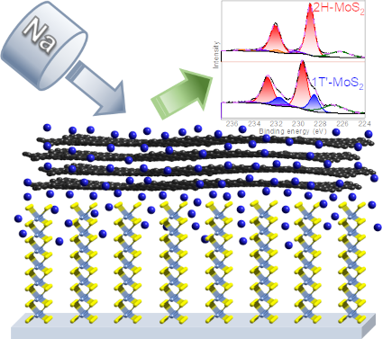
- surface correspond to Pt nanoparticles, the presence of which is confirmed by energy-dispersive X-ray (EDX) spectroscopy (Supporting Information File 1, Figure S1). These nanoparticles have a uniform size and are densely distributed on the sample surface, in contrast to the polysulfide particles of
- confirms the vertical orientation of the MoS2 layers relative to the substrate surface [37]. The weak defect-induced mode LA(M) at 227 cm−1 and the asymmetric shape of the E12g and A1g modes indicate the nanometer size of the MoS2 crystallites in the plane [38][39]. All the above modes are visible in the


Synthesis and magnetic transitions of rare-earth-free Fe–Mn–Ni–Si-based compositionally complex alloys at bulk and nanoscale
Beilstein J. Nanotechnol. 2025, 16, 823–836, doi:10.3762/bjnano.16.62
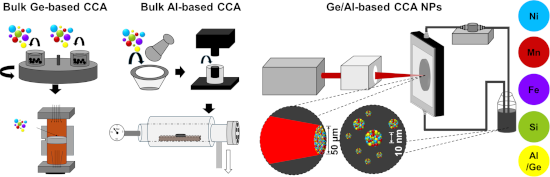
- for Ge-based CCA and Tc = 263 K for Al-based CCA. At the nanoscale, both Ge- and Al-based NPs exhibit superparamagnetic behaviour, with blocking temperatures of TB ≈ 120 K for Ge-based NPs (xc = 13.4 ± 15.5 nm, average particle size) and TB ≈ 100 K for Al-based NPs (xc = 18.4 ± 9.1 nm, average
- particle size), demonstrating the intrinsic superparamagnetic nature of NPs. While the Ge-based CCA demonstrates almost twice the saturation magnetization (Ms) and ≈20% lower hysteresis (Hc) in bulk form, the Al-based CCA exhibits comparable Ms and ≈45% lower Hc at the nanoscale at 5 K. These results
- 2.8 J·cm−2 [41]. Additionally, to increase the NP concentration and reduce the organic solvent use, a closed loop liquid flow system was employed. Size distribution, morphology, elemental composition, and crystal structure of the NPs from both CCA targets were examined using transmission electron


Supramolecular hydration structure of graphene-based hydrogels: density functional theory, green chemistry and interface application
Beilstein J. Nanotechnol. 2025, 16, 806–822, doi:10.3762/bjnano.16.61
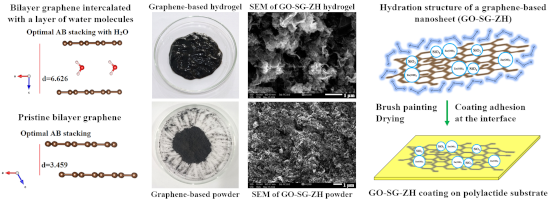
- nanosheets agglomerated and stacked together to form big particles (size of hundreds of micrometers, Figure 3e). The GO-SG-ZH particles had low porosity or small spacing between graphene-based nanosheets (Figure 3f). Besides, the GO-SG-ZH hydrogel was spread on a carbon tape and dehydrated for SEM imaging


Morphology and properties of pyrite nanoparticles obtained by pulsed laser ablation in liquid and thin films for photodetection
Beilstein J. Nanotechnol. 2025, 16, 785–805, doi:10.3762/bjnano.16.60
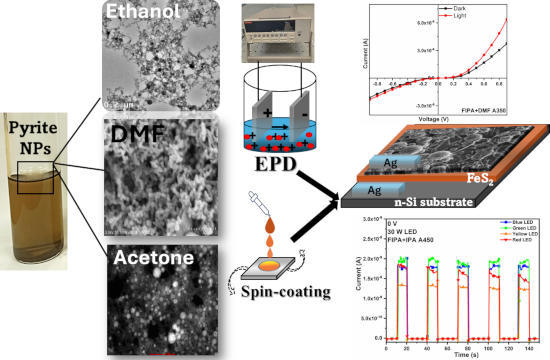
- is that the productivity and morphology/size of the NPs generated can be regulated by carefully managing the input parameters [16]. Due to the challenges in obtaining phase-pure FeS2 by PLAL, this is a much less explored material despite its high potential. A strong reducible ferric ion and an
- such properties [31]. For instance, it has been demonstrated that the wavelength-shifting characteristics of Si nanoparticles were caused by the effects of quantum-size confinement. The bandgap of silicon increased from its typical 1.1 eV in elemental form to nearly 3 eV in nanoparticle form, enhancing
- number of benefits, including small size, light weight, affordable price, low power consumption, high photoresponsivity, quick response, and most importantly, it independently operates without an external power supply and relies on the built-in potential, which helps to save energy [33]. Moreover, self






Changes of structural, magnetic and spectroscopic properties of microencapsulated iron sucrose nanoparticles in saline
Beilstein J. Nanotechnol. 2025, 16, 762–784, doi:10.3762/bjnano.16.59
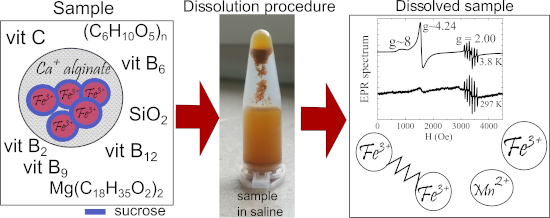
- size of the drug for easier swallowing. Simultaneously, all these compounds due to the iron content should exhibit magnetic properties that may potentially turn out to be interesting. Moreover, since all iron deficiency agents are commercial products and are mass produced, their properties can be
- σ = 0.3, and the inset shows the obtained particle size distribution. It is well visible that the predicted model describes the experimental data perfectly. The small
value of the nanoparticles found in the fitting, and a quite narrow f(D) distribution coincide with the shape of the ZFC curve
- for the FS0 sample (Figure 5a), and with the TEM images (Figure 3a–e). For a noninteracting system of magnetic nanoparticles, the temperature at which the blocking process begins directly depends on the mean particle size and its distribution in the sample. Here, the narrow maximum in the ZFC curve


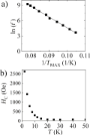


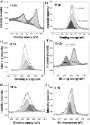

Thickness dependent oxidation in CrCl3: a scanning X-ray photoemission and Kelvin probe microscopies study
Beilstein J. Nanotechnol. 2025, 16, 749–761, doi:10.3762/bjnano.16.58
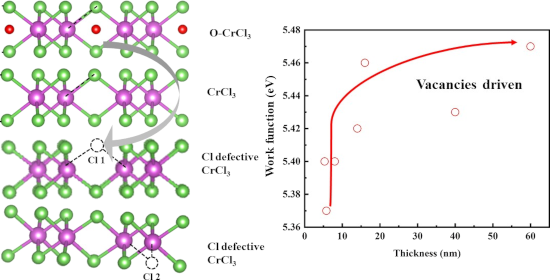
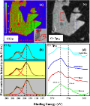
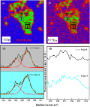
- , Faculty of Applied Physics and Mathematics, 80-233 Gdansk, Poland 10.3762/bjnano.16.58 Abstract The modifications in the electronic properties induced by the thickness and size of an individual flake of transition-metal halides on different substrates (silicon oxide or In-doped tin oxide) are of
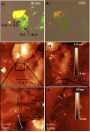
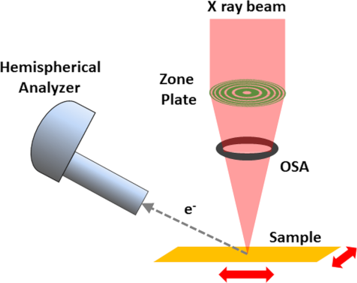
- effect) [19][20][21]. A well-known and suitable technique to investigate the electronic structure of surfaces is X-ray photoemission spectro-microscopy [22][6]; in order to obtain the necessary spatial resolution, the beam size must be reduced to tens of nanometers. The Electron Spectroscopy for Chemical
- Analysis (ESCA) Microscopy beamline [23] enables this by means of a zone plate arrangement that can reduce the beam size to 130 nm in diameter, and its grazing collection angle can provide a highly surface-sensitive probing depth of approximately 1 nm [23][24]. Such a short mean free path condition could





Serum heat inactivation diminishes ApoE-mediated uptake of D-Lin-MC3-DMA lipid nanoparticles
Beilstein J. Nanotechnol. 2025, 16, 740–748, doi:10.3762/bjnano.16.57
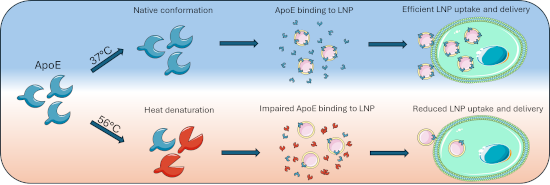
- proteins, forms on its surface. This so-called protein corona significantly affects the physicochemical properties of the nanoparticle, such as size, charge and stability [2][3][4][5]. In turn, the composition of the protein corona is influenced by the physicochemical properties of the pristine


Synthesis of a multicomponent cellulose-based adsorbent for tetracycline removal from aquaculture water
Beilstein J. Nanotechnol. 2025, 16, 728–739, doi:10.3762/bjnano.16.56
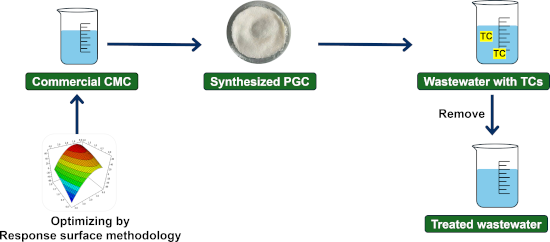
- equipped with a Turbo Ion Spray source, which was operated in both positive mode and negative mode (QTRAP®4000, AB SCIEX, Framingham, MA, USA). The analyses of the tetracyclines were performed using a Sunfire C18 column (150 × 2.1 mm i.d., 5.0 mm particle size) from Waters (Milford, MA, USA), and the


Efficiency of single-pulse laser fragmentation of organic nutraceutical dispersions in a circular jet flow-through reactor
Beilstein J. Nanotechnol. 2025, 16, 711–727, doi:10.3762/bjnano.16.55
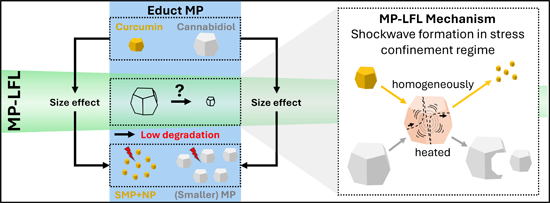
- colloids, for example, to increase their defect density in favor of electrocatalytic or optical properties without changing their size [6][7][8]. In addition, the acronym PUDEL has recently been used for pulsed laser diffusion enhancement in liquids, which refers to an increase in diffusion without
- influencing the particle size or morphology [9], working at comparably low laser fluences (PUDEL < LML < LAL ≤ LFL). Recently, the pulsed laser extraction of organic matter in liquid (LEL), in the mild fluence regime of PUDEL, has been demonstrated to be much faster and more efficient than state-of-the-art
- understood. In the last two decades, the transfer of these laser-based processes to organic substances has been reported with a particular focus on particle size reduction by LFL [10][16][17]. One motivation behind the size reduction of organic particles like drugs or near-infrared absorbing dyes, which


Nanostructured materials characterized by scanning photoelectron spectromicroscopy
Beilstein J. Nanotechnol. 2025, 16, 700–710, doi:10.3762/bjnano.16.54
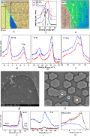
- , optoelectronic, or photovoltaic devices, as they combine a direct bandgap of tunable size with high charge carrier mobility [20]. Furthermore, they can be grown on Si substrates [21][22], which enables integration with a well-established technology platform and constrains the use of high performance, but
- spectra were obtained along the nanowire with a step width of about 130 nm, roughly equaling the size of the X-ray beam, as indicated in Figure 2d. The resulting In 3d5/2 spectra are shown in Figure 2e for the unbiased case, highlighting the p-doped and n-doped nanowire segments with the depletion zone in


Colloidal few layered graphene–tannic acid preserves the biocompatibility of periodontal ligament cells
Beilstein J. Nanotechnol. 2025, 16, 664–677, doi:10.3762/bjnano.16.51
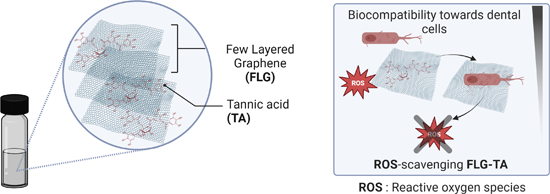
- granules, each being hundreds of micrometers in size (Figure 1A). In contrast, the obtained FLG–TA colloid has a layered structure, and sheets seem to have been peeled off from the graphite surface (Figure 1B,C). Transmission electron microscopy (TEM) micrographs of the flakes’ edges (Figure 1D,E) reveal
- more in-depth its layered structure, consisting of approximately four layers. Quantitative analysis of SEM and TEM images enabled the determination of the FLG–TA sheets’ average lateral size distribution, presented in Figure 1F, indicating an average lateral size of approximately 2 µm. Note that the
- determination of the size distribution was attempted by means of dynamic light scattering but was unsuccessful owing to the lack of transparency of the suspensions even after strong dilution. The TEM images also reveal visible granules atop the layers (Figure 1D,E). Additional analysis of these granules (Figure




Aprepitant-loaded solid lipid nanoparticles: a novel approach to enhance oral bioavailability
Beilstein J. Nanotechnol. 2025, 16, 652–663, doi:10.3762/bjnano.16.50
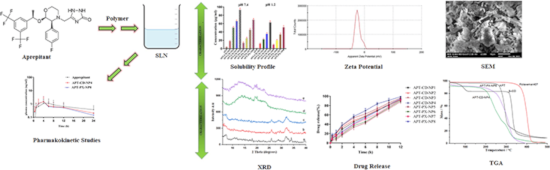
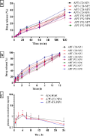
- analysis. APT-loaded SLNs were prepared by the precipitation method and characterized by physicochemical studies including particle size and zeta potential measurements, drug content, encapsulation efficiency and solubility studies, Fourier-transform infrared spectroscopy (FTIR), scanning electron
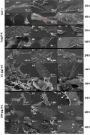
- concentration of β-CD showed the highest drug solubility (93.50% ± 3.73%) in PBS (pH 7.4) and drug content (96.75% ± 0.24%); particle size, zeta potential, and polydispersity index of APT-CD-NP4 were 121.1 ± 0.72 nm, −18.8 ± 0.94 mV, and 0.15 ± 0.35, respectively. SEM analysis showed that APT was converted from
- class-IV drug [10]. Low solubility and poor dissolution of BCS class-IV drugs can be improved by using techniques such as incorporating the drug or prodrug into lipid or polymeric formulations, using solid lipid nanoparticles (SLNs), applying surfactants, adjusting the pH value, reducing particle size



Nanoscale capacitance spectroscopy based on multifrequency electrostatic force microscopy
Beilstein J. Nanotechnol. 2025, 16, 637–651, doi:10.3762/bjnano.16.49

- parts of the cantilever, we used the onward and backward differentiation given in Equation 22 and the central differential quotient of the second order given in Equation 23, respectively. The step size was chosen to be 1·10−10 m with a total number of 1,000,000 steps. Models of the first and the second