


Search results
Search for "sulfur" in Full Text gives 208 result(s) in Beilstein Journal of Nanotechnology. Showing first 200.
Growth, structure and stability of sputter-deposited MoS2 thin films
Beilstein J. Nanotechnol. 2017, 8, 1115–1126, doi:10.3762/bjnano.8.113
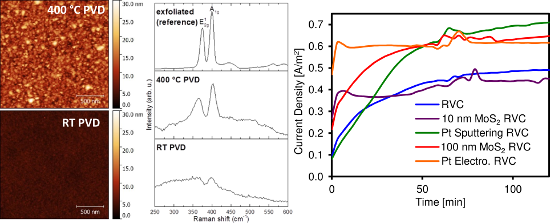
- substrate temperature. The applied sputter deposition process employs a MoS2 target sputtered by argon ions. Ar (atomic number 18) preferably sputters light sulfur atoms (atomic number 16) from the target. Heavier molybdenum atoms (atomic number 42) are harder to sputter. Thus sputter and back-sputter
- process may result in non-stoichiometric, sulfur rich composition in our PVD films. In keeping with this, energy dispersive X-ray spectroscopy (EDX) analysis of the films in general gave slightly S-enriched Mo/S ratios of 1:2.1. Furthermore, also argon or residual oxygen might have been incorporated into


ZnO nanoparticles sensitized by CuInZnxS2+x quantum dots as highly efficient solar light driven photocatalysts
Beilstein J. Nanotechnol. 2017, 8, 1080–1093, doi:10.3762/bjnano.8.110
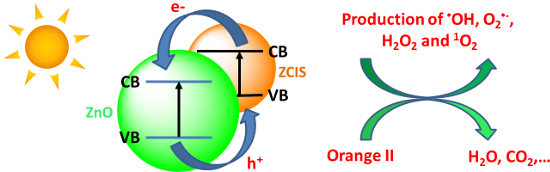
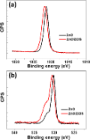
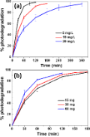
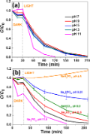
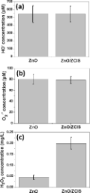
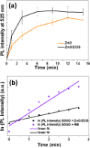
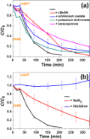
- as the sulfur source and as the stabilizing ligand for the nanocrystals. A Cu/In ratio of 0.7 was used for the synthesis because Cu-deficient CIS QDs exhibit higher PL quantum yields than those prepared with a stoichiometric Cu/In ratio [43]. To improve the PL efficiency, a ZnS shell was coated on




Treatment of fly ash from power plants using thermal plasma
Beilstein J. Nanotechnol. 2017, 8, 1043–1048, doi:10.3762/bjnano.8.105
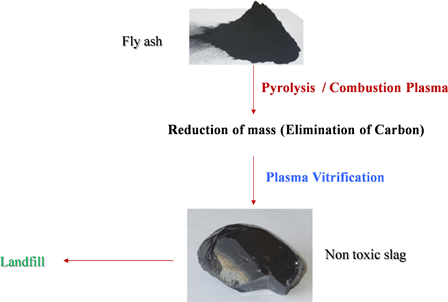
- coupled plasma atomic emission spectroscopy and scanning electron microscopy. With these technics, the composition, the chemical and physical proprieties of fly ash are determined. The results obtained by these analysis show that fly ash is mainly composed of carbon, and it contains also sulfur and metals
- were V, Ca, Mg, Na, Fe, Ni, and Rh. The minor constituents (10–100 mg/kg) include Br, Si, and Al. The fly ash contains also toxic elements such as Pb, As, Zn, and Cr but with relatively low concentrations. In addition, the fly ash samples have been analyzed for carbon, sulfur, nitrogen and hydrogen
- (CHN elemental analysis). Table 2 shows the results of the fly ash samples. It should be noted that fly ash is black, which indicates a high carbon content (90.81 wt %). It also contains a high amount of sulfur (6.17 wt %). Combustion of fly ash As indicated in Table 2, fly ash is mainly composed of



Structural properties and thermal stability of cobalt- and chromium-doped α-MnO2 nanorods
Beilstein J. Nanotechnol. 2017, 8, 1032–1042, doi:10.3762/bjnano.8.104
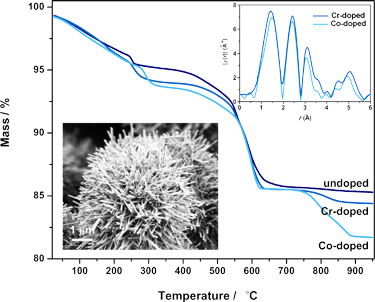
- indication that at 170 °C the dopant ions partially substitute K+ in the tunnels. The EXAFS spectrum of this sample also indicates a distortion of the symmetry of the chromium site. In addition, all samples contain sulfur. The average sulfur content falls in the range between 1.1 and 3.1 atom % (Table 1
- ). The sulfur detected in the samples is originating from the sulfuric acid that was a part of the reaction mixture [26]. The chemical composition of an individual nanorod (Co-90) was determined using electron energy loss spectroscopy (EELS) in combination with high-angle annular dark field scanning
- depositing a droplet of the dispersion on a lacey-carbon-coated copper grid. The elemental analysis of potassium, sulfur, manganese and cobalt/chromium was performed with the FE-SEM equipped with an energy dispersive X-ray spectrometer (EDS). Standard K-edge X-ray absorption fine structure (XAFS) of the


Triptycene-terminated thiolate and selenolate monolayers on Au(111)
Beilstein J. Nanotechnol. 2017, 8, 892–905, doi:10.3762/bjnano.8.91
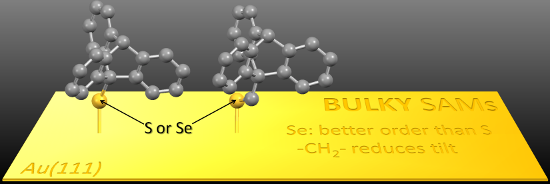
- selenoacetate Trp1SeAc (compare Scheme S1 in the Supporting Information File 1). Selenoacetate compounds can be used to form selenolate SAMs on gold surfaces [8]. Earlier work on homologous sulfur compounds revealed that free thiol groups are incompatible with benzyne [28]. Yet, it could be shown that formation
- of the triptycene group by reaction of anthracene moieties with benzyne is possible if the sulfur atom is protected, e.g., with an acyl group [28]. We suspected the selenol group to be similarly unstable towards benzyne as the thiol group and thus aimed to protect it. For this purpose, 9
- of S+ (m/z = 32), Se+ (m/z = 79), triptycyl+ (m/z = 253), triptycylmethyl+ (m/z = 267) and triptycylsulfur+ (m/z = 285). Since the molecular masses of the other sulfur- and selenium-based fragments are close to or even beyond the maximum detectable mass of the used apparatus, we scanned the molecular




Investigation of growth dynamics of carbon nanotubes
Beilstein J. Nanotechnol. 2017, 8, 826–856, doi:10.3762/bjnano.8.85
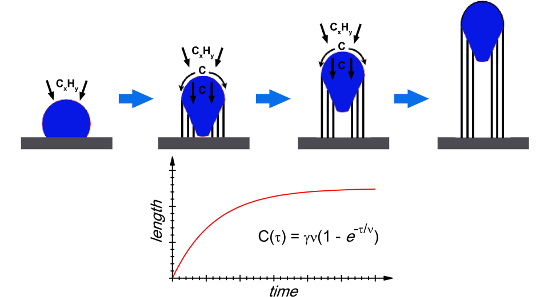
- presence of sulfur, which limited the aggregation of Co particles and formed Co–S compounds, was suggested to enable the chirality selectivity toward the (9,8) tubes. In [119], large diameter SWCNTs with a narrow (n,m) distribution and dominant (13,12) tubes (d = 1.67 nm) were synthesized in aerosol


First examples of organosilica-based ionogels: synthesis and electrochemical behavior
Beilstein J. Nanotechnol. 2017, 8, 736–751, doi:10.3762/bjnano.8.77
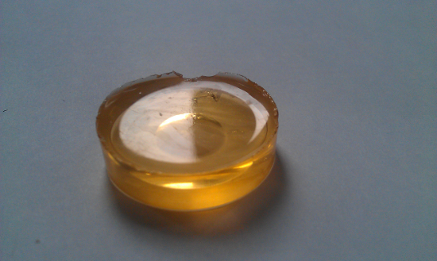
- %, nitrogen contents between 6 and 7%, and sulfur contents around 15%. In the case of the IGs based on the monoliths made from acetone, the carbon contents are somewhat more scattered and vary from around 40 to 48%, while the H, N, and S contents are again rather constant at around 5 to 8%, 5 to 8%, and 15 to
- materials with a high application potential in various fields. Ball-and-stick representation of the simulation box. Visualized with TRAVIS [43] and vmd [44]. Left: cations in green and anions in red. Right: carbon in orange, sulfur in yellow, oxygen in red, nitrogen in blue, and hydrogen in white










Gas sensing properties of MWCNT layers electrochemically decorated with Au and Pd nanoparticles
Beilstein J. Nanotechnol. 2017, 8, 592–603, doi:10.3762/bjnano.8.64
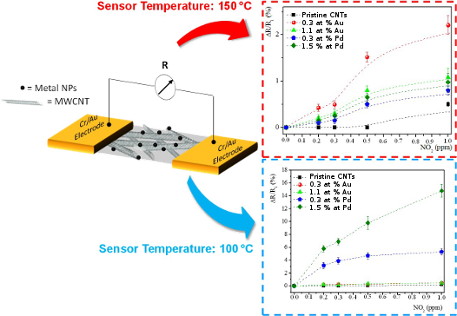
- that a high gold content enhances the gas sensor response, thanks to the great affinity between gold and sulfur atoms of thiol groups [50]. Therefore, the increase in the Au NP density enhances the amount of the adsorption sites for H2S, resulting in a higher sensitivity and selectivity towards H2S gas


Colorimetric gas detection by the varying thickness of a thin film of ultrasmall PTSA-coated TiO2 nanoparticles on a Si substrate
Beilstein J. Nanotechnol. 2017, 8, 229–236, doi:10.3762/bjnano.8.25
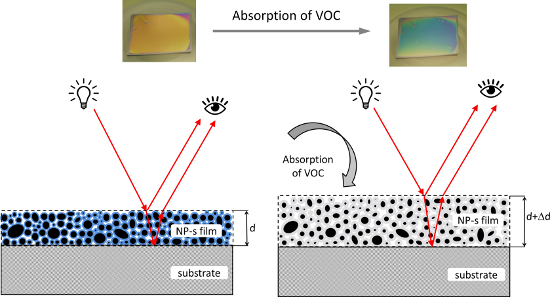
- used to characterize the surface region of the NP-based film. From the overview spectrum (Figure 3c) the presence of oxygen, titanium, carbon and sulfur can be seen; no other elements were detected on the film surface. The Ti 2p spectrum corresponds well to literature data [20][21] of TiO2, and fits
- bound with PTSA. (a) TEM images of TiO2 nanoparticles; (b) Raman spectrum of the NP-based thin film showing the existence of the anatase crystal phase (Eg band at 151 cm−1); (c) XPS overview spectrum demonstrating the presence of titanium, oxygen, carbon and sulfur in the NP-based thin film; (d) Ti 2p


Phosphorus-doped silicon nanorod anodes for high power lithium-ion batteries
Beilstein J. Nanotechnol. 2017, 8, 222–228, doi:10.3762/bjnano.8.24
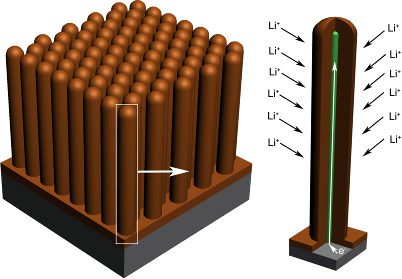
- -based anodes. To match the practical use of Si-based anodes, sulfur (1675 mAh/g) and/or transition-metal-sulphides might be the potential candidates for the state-of-the-art commercial cathodes [15]. In addition, the rate performance of the resulting Si anode was tested and the result is illustrated as


Performance of colloidal CdS sensitized solar cells with ZnO nanorods/nanoparticles
Beilstein J. Nanotechnol. 2017, 8, 210–221, doi:10.3762/bjnano.8.23
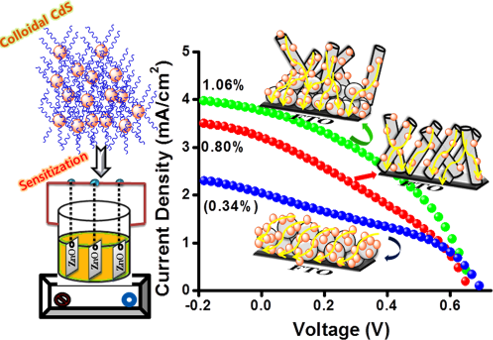
- second element is needed to couple with S2− from the Na2S. In most studies, sulfur is added to the sulfide salt to form a polysulfide (S2−/Sx2−) redox couple. From the above results it is evident that polysulphide electrolyte is more suitable for achieving better efficiency whereas the I−/I3− system is


Surface-enhanced Raman scattering of self-assembled thiol monolayers and supported lipid membranes on thin anodic porous alumina
Beilstein J. Nanotechnol. 2017, 8, 74–81, doi:10.3762/bjnano.8.8
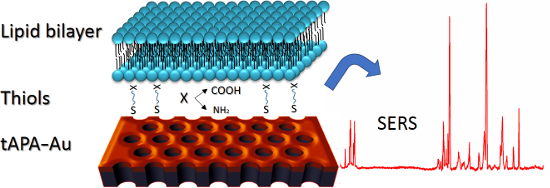
- , to let the sulfur of the –SH group bind covalently to the Au surface (chemisorption). The substrates were then gently washed with their aqueous solutions and dried under nitrogen flow. All the lipids were dissolved in chloroform/methanol 2:1 vol/vol, dried under a gentle nitrogen flux in a test tube



A new approach to grain boundary engineering for nanocrystalline materials
Beilstein J. Nanotechnol. 2016, 7, 1829–1849, doi:10.3762/bjnano.7.176
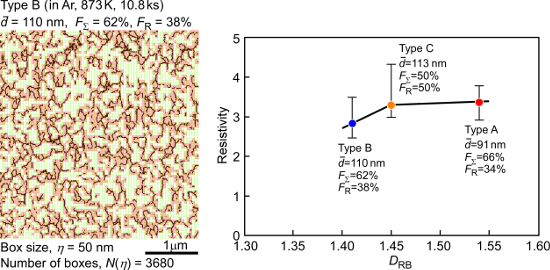
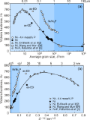
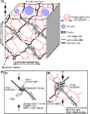
- strongly depend on the grain boundary character and structure [69][80][81][82][83][84]. Bouchet and Priester [82][83] have found that the intergranular segregation of sulfur in Ni occurred preferentially at high-energy general random boundaries, but is very difficult or small at low-energy special
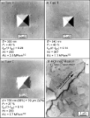
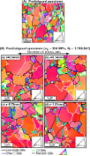
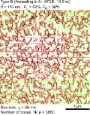
- micrographs of the propagation path of cracks produced by Vickers indentation tests at a load of 1.96 N for the sulfur-doped submicrometer-grained Ni specimens with different grain boundary microstructures [85]. Type A and Type B specimens had different fractions of low-Σ CSL boundaries (including low-angle
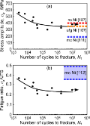
- our recent work on sulfur-doped polycrystalline Ni [87]. Effects of grain boundary microstructure on fatigue deformation and fracture in nanocrystalline Ni–P alloy In recent years, it has been revealed that grain boundaries play important and different roles in fatigue crack nucleation [88][89][90][91









Sb2S3 grown by ultrasonic spray pyrolysis and its application in a hybrid solar cell
Beilstein J. Nanotechnol. 2016, 7, 1662–1673, doi:10.3762/bjnano.7.158
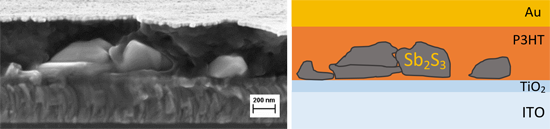
- if an abundance of sulfur source is present in the precursor solution (SbCl3/SC(NH2)2 = 1:6) sprayed onto the substrate at 250 °C in air. Solar cells with glass-ITO-TiO2-Sb2S3-P3HT-Au structure and an active area of 1 cm2 had an open circuit voltage of 630 mV, short circuit current density of 5 mA
- temperature of 255 °C leads to films that consist of orthorhombic stibnite and a secondary phase that was identified as Sb2O3 [23]. To suppress the formation of oxides, an excess of sulfur source in the precursor solution may be required as indicated by similar studies for indium sulfide [25][26], zinc
- test the Sb2S3 layer in a planar TiO2/Sb2S3/P3HT configuration solar cell. In the present work we will show that by using an excess of thiourea as the sulfur source in the spray solution, such as with a SbCl3/tu molar ratio of 1:6, one can rapidly grow single-phase and crystalline Sb2S3 by ultrasonic




An efficient recyclable magnetic material for the selective removal of organic pollutants
Beilstein J. Nanotechnol. 2016, 7, 1447–1453, doi:10.3762/bjnano.7.136
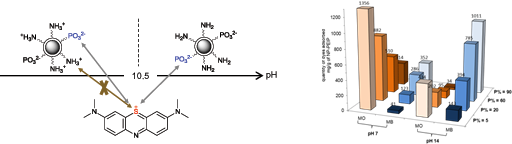
- MO sulfonate groups are at the maximum intensity. Concerning the MB, the sulfur atom is always positively charged. The adsorption therefore increases after the second deprotonation of phosphonate, and is maximized above pKa of the ammonium/amine deprotonation, where repulsive forces are negligible


Fracture behaviors of pre-cracked monolayer molybdenum disulfide: A molecular dynamics study
Beilstein J. Nanotechnol. 2016, 7, 1411–1420, doi:10.3762/bjnano.7.132
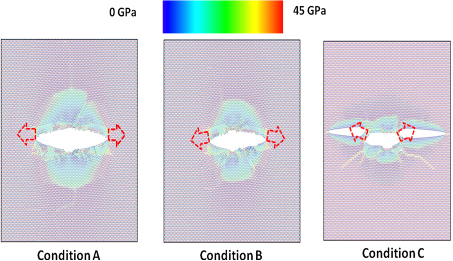
- is displayed), unless otherwise specified, this model size will be used in most of the simulations. The SW potential [15] is adopted to describe the interaction between molybdenum and sulfur atoms in the MoS2 sheets due to its good agreement with the experimental data and its successful usage in the
- simulation. The top and side views of atomic structures under different uniaxial tension strains are shown in Figure 3. From Figure 3, the structure consisting of molybdenum and sulfur atoms varies suddenly at the engineering strain of about 18%. Please see Supporting Information File 1 and Supporting
- tension. From animation, the structure consisting of molybdenum and sulfur atoms varies suddenly at the engineering strain of about 18%. Supporting Information File 177: View 1 of structure transition of MoS2. Supporting Information File 178: View 2 of structure transition of MoS2. Acknowledgements This




Mesoporous hollow carbon spheres for lithium–sulfur batteries: distribution of sulfur and electrochemical performance
Beilstein J. Nanotechnol. 2016, 7, 1229–1240, doi:10.3762/bjnano.7.114
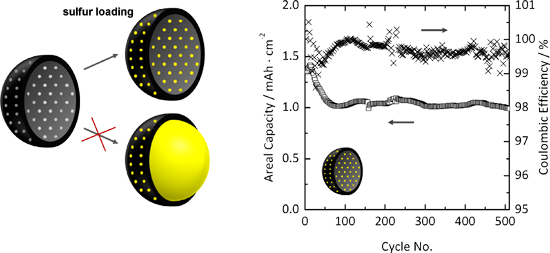
- the use in lithium–sulfur batteries because of the large internal void offering space for sulfur and polysulfide storage and confinement. However, there is an ongoing discussion whether the cavity is accessible for sulfur. Yet no valid proof of cavity filling has been presented, mostly due to
- application of unsuitable high-vacuum methods for the analysis of sulfur distribution. Here we describe the distribution of sulfur in hollow carbon spheres by powder X-ray diffraction and Raman spectroscopy along with results from scanning electron microscopy and nitrogen physisorption. The results of these
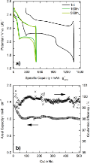
- methods lead to the conclusion that the cavity is not accessible for sulfur infiltration. Nevertheless, HCS/sulfur composite cathodes with areal sulfur loadings of 2.0 mg·cm−2 were investigated electrochemically, showing stable cycling performance with specific capacities of about 500 mAh·g−1 based on the


Preparation of alginate–chitosan–cyclodextrin micro- and nanoparticles loaded with anti-tuberculosis compounds
Beilstein J. Nanotechnol. 2016, 7, 1208–1218, doi:10.3762/bjnano.7.112
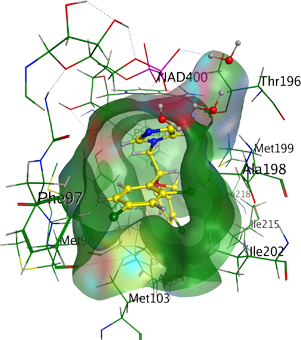
- interactions were predicted between the isoconazole and sulfur-containing methionine amino acid residues of InhA (Met98, Met103, and Met199). Also an arene–H interaction was obtained between the imidazole ring of isoconazole and NAD+ cofactor. The catalytic residues of InhA Tyr158 and Thr196 provided polar



Rigid multipodal platforms for metal surfaces
Beilstein J. Nanotechnol. 2016, 7, 374–405, doi:10.3762/bjnano.7.34

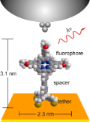
- (thiols, disulfides), and related moieties on coinage metals, particularly Au(111), Ag, Cu as well as Pt, Hg, GaAs(100) and InP(100) surfaces [23]. Particularly, the sulfur–gold bond is the most popular and the most extensively investigated junction for anchoring organic molecules on metal surfaces
- with oxygen and can be handled even under ambient conditions in the laboratory before its surface functionalization with organosulfur compounds. The covalent bond between sulfur and gold gives rise to robust and reasonably conductive single-molecular junctions of adsorbed molecules on gold substrates
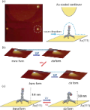
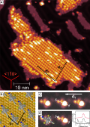
- -known long range 22 × √3 herringbone reconstruction with both face-centered cubic (fcc) and hexagonal close-packed (hcp) domains. But the absorption of sulfur-containing molecules (e.g., thiol, disulfide) on Au(111) forms a strong covalent bond and induces significant changes in the surface










Hemolysin coregulated protein 1 as a molecular gluing unit for the assembly of nanoparticle hybrid structures
Beilstein J. Nanotechnol. 2016, 7, 351–363, doi:10.3762/bjnano.7.32
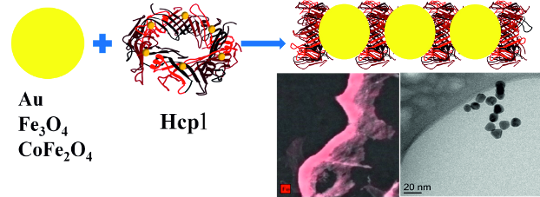
- stretching bands of cysteine appear at 955 cm−1 [31][32] and 1105 cm−1 [33]. The strong S–H band of cysteine around 2600 cm−1 is missing due to the direct binding of the sulfur atom to the NP surface [32]. Based on the Raman investigation, it can be concluded that Hcp1_cys3 is located in between two Au NPs
- , leading to a signal enhancement of the protein. The secondary protein structure remains intact on the NPs surface and the protein–Au binding takes place via the sulfur in the integrated cysteine group. In order to demonstrate a first application of such protein-based hybrid structures, we use our Au NP
- protein to Au on the sulfur atom of the cysteine. Furthermore, the Au network shows similar catalytic reactivity as the blank Au NP, which makes it more attractive owing to the easier recycling condition of the catalyst. This protein gluing unit approach was then extended to assemble Fe3O4 NPs and CoFe2O4




Case studies on the formation of chalcogenide self-assembled monolayers on surfaces and dissociative processes
Beilstein J. Nanotechnol. 2016, 7, 263–277, doi:10.3762/bjnano.7.24
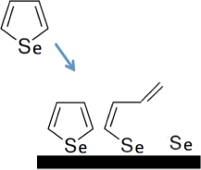
- determines the binding to the substrate and plays an important role in defining the molecular ordering and electronic coupling, which determines the charge flow between the molecular components and the substrate electrode. Much work on various aspects of assembly and its uses has been performed with sulfur
- conductance pathway than sulfur. Besides the case of self-assembly on bulk metal surfaces, the knowledge of the physics and chemistry of chalcogenide SAMs on metal nanoparticle surfaces is also very important as they are widely used in different areas. In this paper, we focus on recent work where the
- in this case as opposed to the case of the same SAMs on gold [46][47]. Similarly, in some examples of thiol adsorption on Cu, there exists evidence [26] of S–C bond scission with sulfur remaining on the surface. It is clear that such processes strongly affect the interface properties and in


Characterisation of thin films of graphene–surfactant composites produced through a novel semi-automated method
Beilstein J. Nanotechnol. 2016, 7, 209–219, doi:10.3762/bjnano.7.19
- towards the left than its equivalent in the SDS-stabilised graphene. The peak representing carbon-1 in SDS (at around 4 ppm) is shifted downfield by complexation with the graphene. This means that the protons are deshielded by the presence of graphene. Since the carbon–sulfur bond is polar the electron
- density around the carbon atom is already lower than it would normally be in a carbon–carbon bond. Repulsion between the graphene and the sulfate group could cause lengthening of the carbon–sulfur bond. This could in turn lead to a lower electron density around the nuclei responsible for this peak [16





3D solid supported inter-polyelectrolyte complexes obtained by the alternate deposition of poly(diallyldimethylammonium chloride) and poly(sodium 4-styrenesulfonate)
Beilstein J. Nanotechnol. 2016, 7, 197–208, doi:10.3762/bjnano.7.18
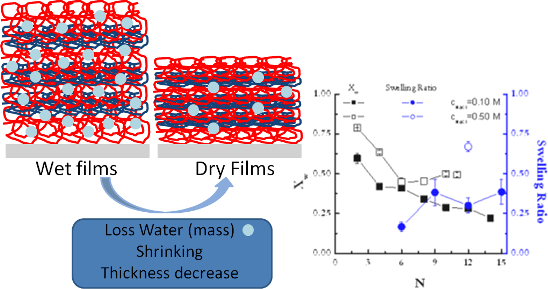
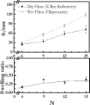
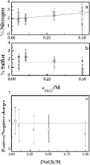
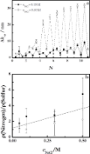
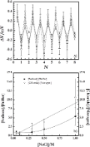
- element representing each of the polymers, nitrogen for PDADMAC and sulfur for PSS. Thus, XPS can reveal information about a lamellar or disordered structure of the samples. Figure 5a and Figure 5b report the dependence of the element content of nitrogen and sulfur in the films on the ionic strength for
- different emission angles. The atomic content remains almost constant with increasing ionic strength. Indeed, the atomic fractions of nitrogen and sulfur are both independent of the angle of incidence. This confirms the strong interdigitation of the successively adsorbed layers; PDADMAC and PSS form quasi
- by Raposo and co-workers [47]. We have measured the ratio between the total content of positive (sodium and nitrogen) and negative charges (sulfur and chloride) in the multilayers. Values of this ratio close to unity indicate non-stratified films whereas values higher or lower than unity evidence the



Surface-site reactivity in small-molecule adsorption: A theoretical study of thiol binding on multi-coordinated gold clusters
Beilstein J. Nanotechnol. 2016, 7, 53–61, doi:10.3762/bjnano.7.6
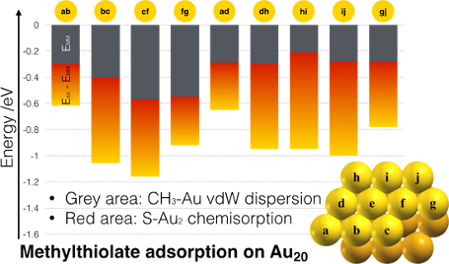
- ; sulfur–gold interactions; thiol adsorption; Introduction The interactions between organic molecules and metallic surfaces have been the subject of significant interest in recent years, because of their fundamental relevance in a broad array of nanoscience applications. One area of interfacial research
- ], and for developing a general understanding of nanoparticle biosafety [21][22], among other issues. The sulfur-containing aminoacids cysteine, homocysteine and methionine are often targeted for such investigations, because of the binding affinity of sulfur-based groups to metal atoms. Much is known of
- the adsorption behavior of sulfur-containing aminoacids on low-Miller-index [(111), (100), (110)] gold and silver surfaces [3][23][24][25][26][27][28][29][30][31][32][33][34][35], though many questions regarding binding modes and condensed phase behavior still remain. Quantum calculations have been


Ultrastructural changes in methicillin-resistant Staphylococcus aureus induced by positively charged silver nanoparticles
Beilstein J. Nanotechnol. 2015, 6, 2396–2405, doi:10.3762/bjnano.6.246
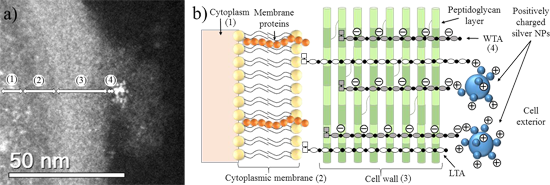
- permeability [38]. After penetrating the cell membrane, AgNPs can also alter sulfur-containing amino acids and phosphorus (a main constituent of DNA), inhibiting replication via attaching to the bacterial ribosome [39][40]. The proteomic signatures of AgNP-treated E. coli demonstrated an accumulation of





