Search results
Search for "surface modification" in Full Text gives 193 result(s) in Beilstein Journal of Nanotechnology.
Tailoring bifunctional hybrid organic–inorganic nanoadsorbents by the choice of functional layer composition probed by adsorption of Cu2+ ions
Beilstein J. Nanotechnol. 2017, 8, 334–347, doi:10.3762/bjnano.8.36
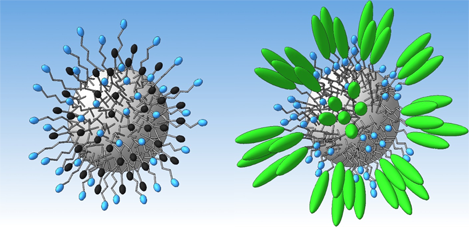
- of functionalized silica nano- and sub-microspheres is achieved usually via two commonly used techniques. The first is based on the surface modification of Stöber silica spheres using trialkoxy silanes, (RO)3SiR'. The second technique applies a one-step synthesis, where the network-forming agent
- Q4 structural units decreased. This might indicate lower degree of cross-linking in the polysiloxane networks in the particles. The most broadly used technique for the preparation of aminoalkyl functionalized silica has been, however, the surface modification of pre-produced nanoparticles with


Functionalized TiO2 nanoparticles by single-step hydrothermal synthesis: the role of the silane coupling agents
Beilstein J. Nanotechnol. 2017, 8, 304–312, doi:10.3762/bjnano.8.33
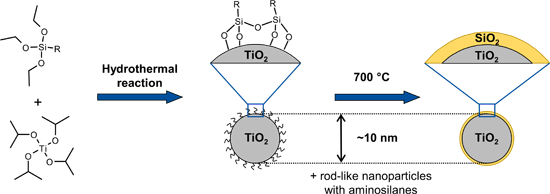
- stable polymorph), brookite, and anatase [4]. Due to the differences in surface energy, anatase and brookite are more stable than rutile at nanosize, and anatase is more stable than brookite at even smaller sizes (generally below 15–30 nm) [5][6][7]. Surface modification of TiO2 nanoparticles, via core



Comparison of four functionalization methods of gold nanoparticles for enhancing the enzyme-linked immunosorbent assay (ELISA)
Beilstein J. Nanotechnol. 2017, 8, 244–253, doi:10.3762/bjnano.8.27
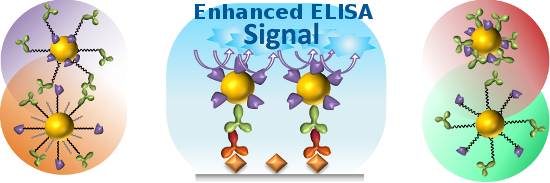
- ]. AuNPs possess the advantages of easy synthesis and narrow size distribution together with an easy and efficient surface modification compatible with linkers or biomolecules [16]. A critical step for obtaining gold complexes is the conjugation of biomolecules to AuNPs. Increasingly, the process of


Impact of surface wettability on S-layer recrystallization: a real-time characterization by QCM-D
Beilstein J. Nanotechnol. 2017, 8, 91–98, doi:10.3762/bjnano.8.10
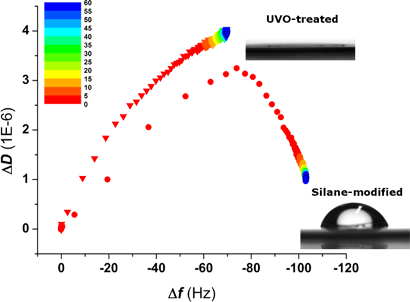
- isolated SbpA bacterial surface proteins onto silicon dioxide substrates of different surface wettability. Surface modification by UV/ozone oxidation or by vapor deposition of 1H,1H,2H,2H-perfluorododecyltrichlorosilane yielded hydrophilic or hydrophobic samples, respectively. Time evolution of frequency


Nanostructured SnO2–ZnO composite gas sensors for selective detection of carbon monoxide
Beilstein J. Nanotechnol. 2016, 7, 2045–2056, doi:10.3762/bjnano.7.195
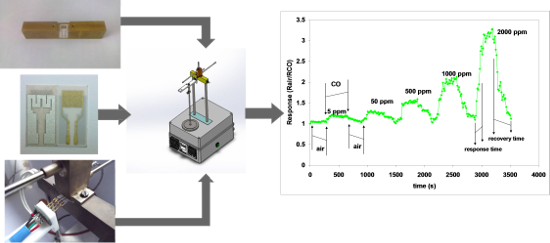
- [6][7], the addition of a noble metal [8] or oxide catalysts [9], surface modification [10][11], manipulation of the nanostructure [12], the use of multicomponent (or composite) sensing films [13][14][15][16][17][18][19][20][21][22], electronic noses, advanced signal processing techniques




Intercalation and structural aspects of macroRAFT agents into MgAl layered double hydroxides
Beilstein J. Nanotechnol. 2016, 7, 2000–2012, doi:10.3762/bjnano.7.191
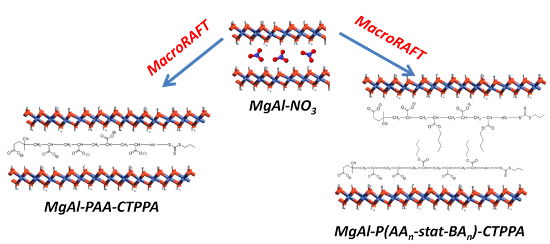
- −51 mV compared to the positive value of +43 mV measured for the MgAl-NO3 LDH precursor. This clearly evidences a modification of the particle surface through intercalation/adsorption phenomena. Interestingly, such a chemical and surface modification of LDH through anion exchange did not modify the


Effect of nanostructured carbon coatings on the electrochemical performance of Li1.4Ni0.5Mn0.5O2+x-based cathode materials
Beilstein J. Nanotechnol. 2016, 7, 1960–1970, doi:10.3762/bjnano.7.187
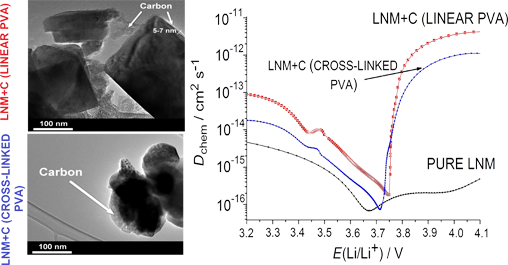
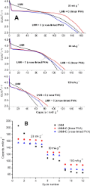
- and currents [9][10]. The most common way of overcoming this problem is the modification of cathode materials by introducing additives and by depositing coatings that would suppress the interaction of electrolyte and the surface of particles. Various kinds of materials have been tested for surface
- modification, namely other cathode materials (LiMnPO4 [11], LiMn2O4 [12], LiCoO2 [13], LiNiO2 [14]) or simple binary compounds such as CaF2 [15], TiO2 [16], ZnO [17] and Al2O3 [18]. During the assembly of the lithium-ion cells, the cathode materials are always mechanically mixed with carbon black in order to




Evolution of the graphite surface in phosphoric acid: an AFM and Raman study
Beilstein J. Nanotechnol. 2016, 7, 1878–1884, doi:10.3762/bjnano.7.180

- allows for successful graphite exfoliation, as reported quite recently [12][13]. However, a detailed analysis of the surface modification of a graphite crystal subjected to EC processes in phosphoric acid solution is still missing. In a recent work [7], we have shown that the EC characterization of the
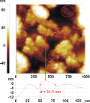
- visible range, it is possible to roughly estimate that the film thickness in the B-areas is of the order of hundreds of nanometers. From this initial optical analysis of the sample, areas labeled as C seem not to be affected by any surface modification. A deeper morphological analysis has been conducted


Nanostructured TiO2-based gas sensors with enhanced sensitivity to reducing gases
Beilstein J. Nanotechnol. 2016, 7, 1718–1726, doi:10.3762/bjnano.7.164
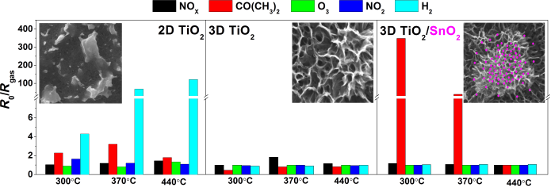
- nitrogen oxides and in the presence of acetone. The effect of surface modification on the response and recovery time was studied. Experimental Sample preparation The sensing materials were prepared by thermal and chemical oxidation of Ti foils (d = 0.127 mm, 99.7%, Sigma-Aldrich). Titanium was cut into 20


Nano- and microstructured materials for in vitro studies of the physiology of vascular cells
Beilstein J. Nanotechnol. 2016, 7, 1620–1641, doi:10.3762/bjnano.7.155
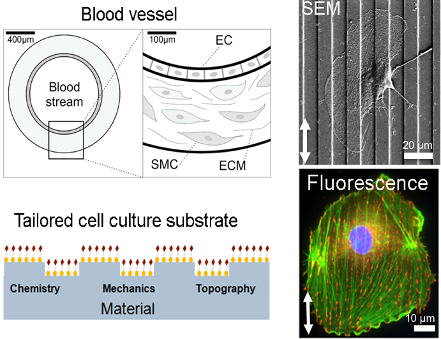
- thermoplastic polymers. Another method for generating surface topographies is surface cracking. It provokes controlled cracks on a surface of a material and surface microstructures but also nanotopographies can be obtained by this method [51][52]. After surface modification (e.g., plasma treatment) of an



On the pathway of cellular uptake: new insight into the interaction between the cell membrane and very small nanoparticles
Beilstein J. Nanotechnol. 2016, 7, 1296–1311, doi:10.3762/bjnano.7.121
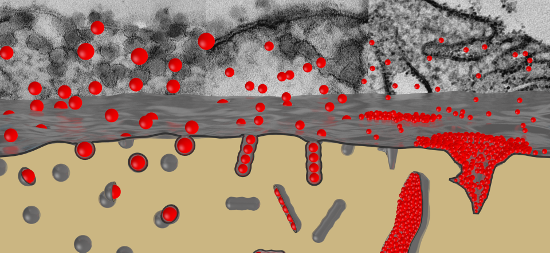
- using transmission electron microscopy (TEM) and dynamic light scattering (DLS), especially under consideration of the application conditions in physiological media. The three differently sized silica NPs investigated throughout this study, were used as purchased without further surface modification




Reasons and remedies for the agglomeration of multilayered graphene and carbon nanotubes in polymers
Beilstein J. Nanotechnol. 2016, 7, 1174–1196, doi:10.3762/bjnano.7.109
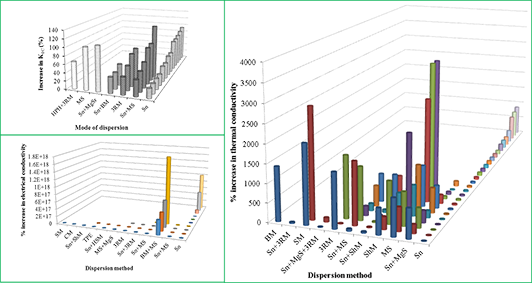
- the theoretical value. Hence, the catalytic CVD process is nearly ideal [42]. Remedies for agglomeration The dispersion state of nano-fillers can be tailored in two ways. Firstly, in the uncured state, the dispersion can be improved by using surfactants, mechanical mixing, or surface modification


Voltammetric determination of polyphenolic content in pomegranate juice using a poly(gallic acid)/multiwalled carbon nanotube modified electrode
Beilstein J. Nanotechnol. 2016, 7, 1104–1112, doi:10.3762/bjnano.7.103
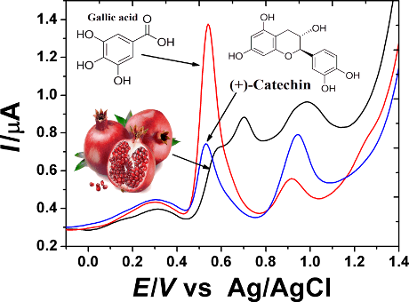
- modified with a multiwalled carbon nanotube/o-dianisidine derivative [11] and a molecularly imprinted polypyrrole polymer-based film [12] were used for gallic acid analysis with high selectivity. A bimediator amperometric sensor for gallic acid was fabricated by surface modification of a graphite electrode


Improved biocompatibility and efficient labeling of neural stem cells with poly(L-lysine)-coated maghemite nanoparticles
Beilstein J. Nanotechnol. 2016, 7, 926–936, doi:10.3762/bjnano.7.84
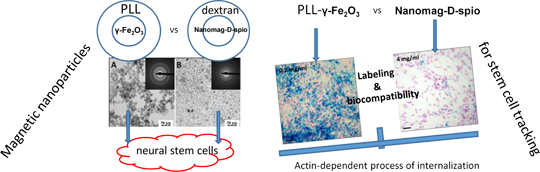
- tracking [16]. Biocompatible polymers are used to modify the surface of nanoparticles, prevent their agglomeration and facilitate internalization. The most widely used coating for surface modification of nanoparticles is dextran, which promotes nanoparticle internalization, in particular in different




Direct formation of gold nanorods on surfaces using polymer-immobilised gold seeds
Beilstein J. Nanotechnol. 2016, 7, 809–816, doi:10.3762/bjnano.7.72
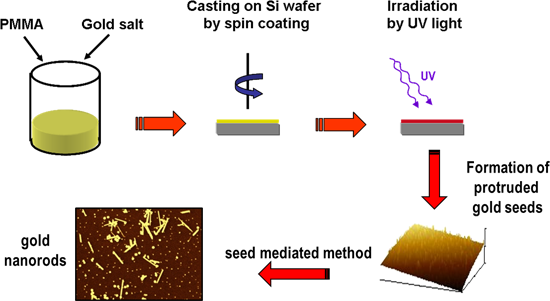
- nanocomposites provide a suitable seed base for direct growth of GNRs on their surfaces, without any surface modification for chemical bonding agents or linkers. The best distributed GNRs were produced on the P1-20 surface with low Mw (P1) and 20 wt % of Au salt. This provides an important potential growth


Microwave solvothermal synthesis and characterization of manganese-doped ZnO nanoparticles
Beilstein J. Nanotechnol. 2016, 7, 721–732, doi:10.3762/bjnano.7.64
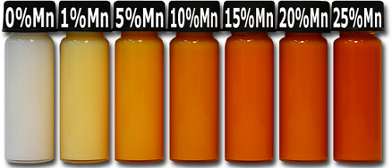
- employed methods. The lack of simultaneous control over chemical composition, stoichiometry, dopant homogeneity, particle size distribution, shape, phase purity, surface modification and agglomeration, makes it difficult to obtain NPs [22]. The primary cause of the lack of reproducibility of magnetic
- content, high efficiency, and surface modification [47]. MSS products are characterised by homogeneous morphology, purity, narrow size distribution and low agglomeration. The present paper contains an attempt to obtain ZnO nanoparticles with a Mn2+ dopant content of up to 25 mol %. For the synthesis we


Green and energy-efficient methods for the production of metallic nanoparticles
Beilstein J. Nanotechnol. 2015, 6, 2354–2376, doi:10.3762/bjnano.6.243
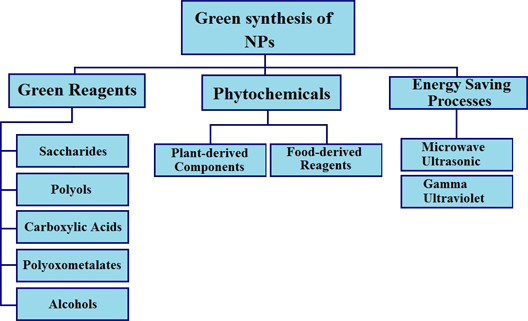
- , they produced spherical Ag NPs with an average diameter of 26 nm, and polydispersity of 2.3%. They also investigated the capability of different ionic and non-ionic surfactants and also polyethylene glycol (PEG) and polyvinylpyrrolidone (PVP) in surface modification and stabilization of Ag NPs produced


Self-organization of gold nanoparticles on silanated surfaces
Beilstein J. Nanotechnol. 2015, 6, 2345–2353, doi:10.3762/bjnano.6.242
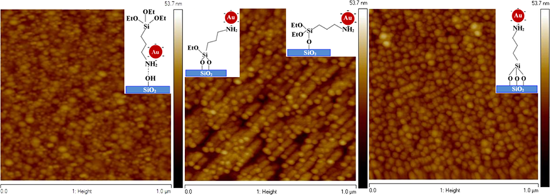
- deposition of APTES molecules [7]. Thus, NH2-terminated APTES deposition on any substrate is extremely important for further surface modification. Gold nanoparticles (AuNPs) have unique physical, chemical and electrical properties that differ from the bulk due to the quantum confinement effects in small


Silica-coated upconversion lanthanide nanoparticles: The effect of crystal design on morphology, structure and optical properties
Beilstein J. Nanotechnol. 2015, 6, 2290–2299, doi:10.3762/bjnano.6.235
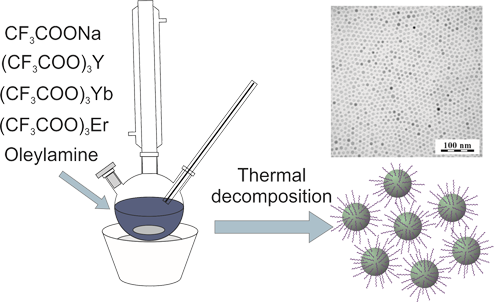
- specific application. Thus, various ligands and functionalities have to be attached to the particle surface to provide efficient drug delivery, to ensure engulfment by the cells, or to control the release of biomolecules and their specific target. Finally, the surface modification must ensure that the
- . Surface modification of the particles using silica precursors enhanced colloidal stability and facilitated the transfer of the crystals in aqueous media. Experimental Materials Sodium and yttrium(III) trifluoroacetate, ytterbium(III) chloride hexahydrate, erbium(III) chloride hexahydrate, oleylamine (OM
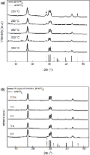
- +/Er3+ and successful surface modification. Conclusion OM–NaYF4:Yb3+/Er3+ nanoparticles were synthesized by conventional thermal decomposition of lanthanide trifluoroacetates in OM. Particle morphology was controlled by the careful selection of reaction temperature and time, as evidenced by TEM. XRD and






Electrochemical coating of dental implants with anodic porous titania for enhanced osteointegration
Beilstein J. Nanotechnol. 2015, 6, 2183–2192, doi:10.3762/bjnano.6.224
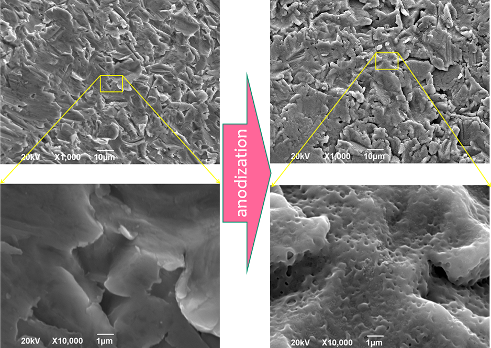
- voltage during the surface modification of the dental implants. (a) Preliminary, optional cathodization pretreatment, and (b) standard, subsequent anodization. The current, i, is plotted in black, the voltage, V, in blue. The curves were obtained from the anodization of Stark implants, but were very


Electrospray deposition of organic molecules on bulk insulator surfaces
Beilstein J. Nanotechnol. 2015, 6, 1927–1934, doi:10.3762/bjnano.6.195
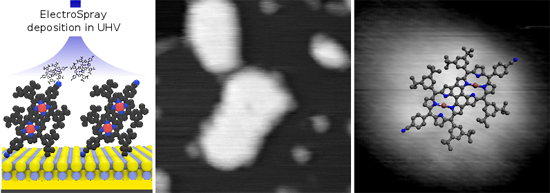
- in Figure 4 reveals the surface modification due to the annealing in presence of the molecules. Indeed, pits, hills and a circular shape for the step-edges are observed instead of straight step-edges that are normally observed. Molecules are adsorbed at KBr step-edges (arrow 1) and also form small


Optimized design of a nanostructured SPCE-based multipurpose biosensing platform formed by ferrocene-tethered electrochemically-deposited cauliflower-shaped gold nanoparticles
Beilstein J. Nanotechnol. 2015, 6, 1840–1852, doi:10.3762/bjnano.6.187
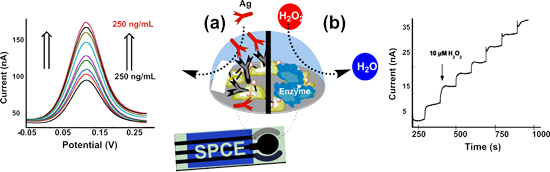
- antibody and BSA have similar shapes with a noticeable decrease in current densities showing that the formation of a protein layer hindered the ET process. Faradic EIS showed that the surface modification by gold induces a dramatic decrease of RCT, which slowly increases after the stepwise modification by
- sweeps. (a) CV curves of functionalization of cfAuNPs by FcD (blue), conjugation with the Ab (black), coverage with BSA protein (green). The inset shows the the logarithm of the peak current as a function of the logarithm of the scan rate, (b) EIS characterization of the stepwise surface modification, (c
- the addition of gIgG/BSA and hIgG/gIgG/BSA mixtures showing a large current increase due to the presence of hIgG. (a) CV curves of functionalized cfAuNPs by the FcD (red) and its conjugation to the HRP enzyme (blue), (b) EIS characterization of the stepwise surface modification, (c) amperometric


Synthesis, characterization and in vitro biocompatibility study of Au/TMC/Fe3O4 nanocomposites as a promising, nontoxic system for biomedical applications
Beilstein J. Nanotechnol. 2015, 6, 1677–1689, doi:10.3762/bjnano.6.170
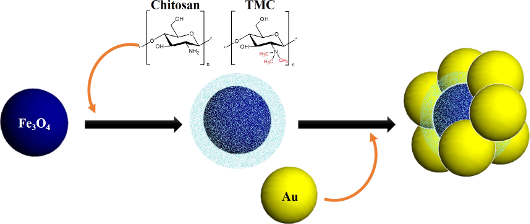
- distribution, facile and low cost synthesis process, and ease of surface modification, biological and medical applications using uncoated iron oxide nanoparticles are limited because of their tendency to aggregate and oxidize [9][19]. Covering their surface with organic molecules (e.g., biodegradable polymers
- biocompatible and nontoxic to the cells. Conclusion In summary, this study reports the preparation of two nanocomposites using a three step procedure. The monodisperse, uniform, Fe3O4 nanoparticles were synthesized through a co-precipitation method resulting in a diameter of about 10 nm, followed by surface
- modification by a chitosan or TMC coating. The successful coating process was confirmed by FTIR. These nanocomplexes were then exposed to Au nanoparticles, which assembled on the surface to form the final nanoparticles. The size, magnetic behavior, chemical composition, thermal stability and surface




The eNanoMapper database for nanomaterial safety information
Beilstein J. Nanotechnol. 2015, 6, 1609–1634, doi:10.3762/bjnano.6.165

- physical and chemical identity of ENMs, including the notion of mixtures and their particle size distributions, differences in the amount of surface modification, manufacturing conditions and batch effects. It must also capture the biological identities (e.g., toxicity pathways, effects of ENM coronas


Influence of surface chemical properties on the toxicity of engineered zinc oxide nanoparticles to embryonic zebrafish
Beilstein J. Nanotechnol. 2015, 6, 1568–1579, doi:10.3762/bjnano.6.160
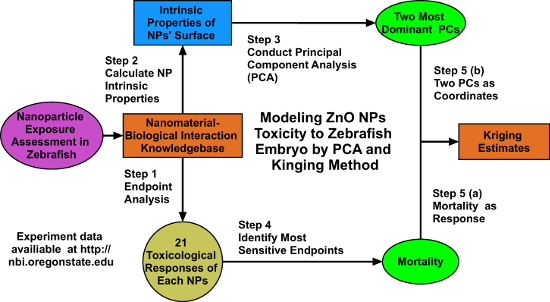
- used to calculate the surface properties. Zebrafish mortality at 120 hpf following exposure to: (A) ZnO NPs with and (B) without surface modification. Individual variance for each of the principal components (PCs). Black dots represent the accumulated variance explained by each PC, while the solid line