Search results
Search for "thermal stability" in Full Text gives 237 result(s) in Beilstein Journal of Nanotechnology. Showing first 200.
Gas-assisted silver deposition with a focused electron beam
Beilstein J. Nanotechnol. 2018, 9, 224–232, doi:10.3762/bjnano.9.24
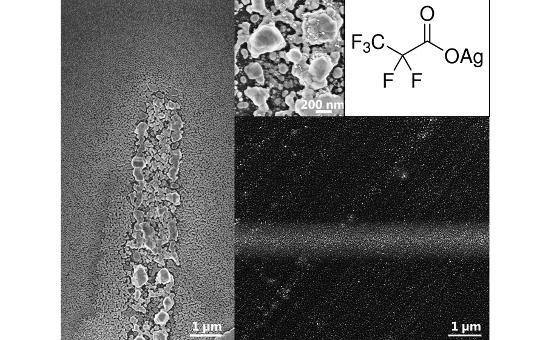
- )/synthesized = 242−244 °C/247 °C). Previous measurements indicated thermal stability of the precursor in the gas phase up to 220 °C [18]. Upon electron irradiation of the pristine solid precursor compound, a strong increase in silver content from 9 to >40 atom % was observed. Thermal stability and electron


Bombyx mori silk/titania/gold hybrid materials for photocatalytic water splitting: combining renewable raw materials with clean fuels
Beilstein J. Nanotechnol. 2018, 9, 187–204, doi:10.3762/bjnano.9.21
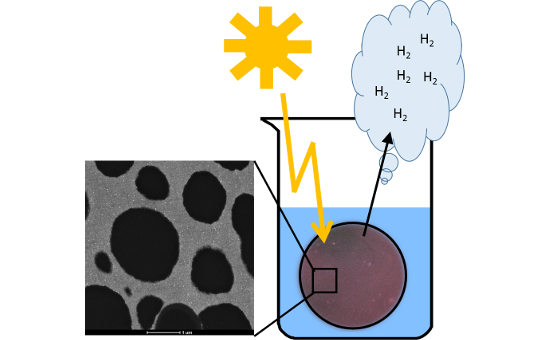
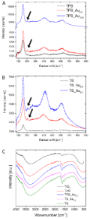
- , ethanol, ethylacetoacetate (EtAcAc), and possibly isopropanol from unreacted TiO2 precursors [82]. The PEO-containing hybrid materials TPS and TPS_Au2.5 essentially exhibit an identical thermal stability. The first weight loss of 9% below 120 °C can be assigned to water and ethanol evaporation. The second




Dry adhesives from carbon nanofibers grown in an open ethanol flame
Beilstein J. Nanotechnol. 2017, 8, 2719–2728, doi:10.3762/bjnano.8.271
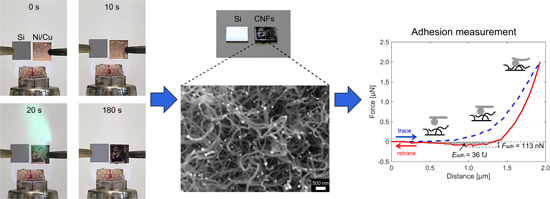
- ]. Additionally, they are not applicable under conditions of high radiation like in outer space. Carbon nanotubes, however, benefit from excellent thermal stability up to 750 °C in air and 2800 °C in vacuum [29], alongside a high mechanical strength with a Young’s modulus of 0.8 TPa and a tensile strength of 150


One-step chemical vapor deposition synthesis and supercapacitor performance of nitrogen-doped porous carbon–carbon nanotube hybrids
Beilstein J. Nanotechnol. 2017, 8, 2669–2679, doi:10.3762/bjnano.8.267
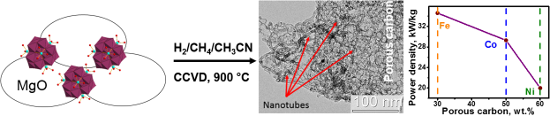
- carbon component. Magnesium oxide (MgO) is a suitable substrate for the synthesis of porous carbon–CNT hybrids owing its high surface area, chemical and thermal stability under growth conditions, and easy removal from carbon products using a diluted hydrochloric acid aqueous solution. Nanoporous carbon
- related to the combustion of porous carbon and MWCNTs, respectively. Asymmetry in the differential thermogravimetric (DTG) curves (Figure 3) confirms the synthesis of carbon species of different thermal stability [26]. The curves have been fitted by three components, which were respectively assigned to


Amplified cross-linking efficiency of self-assembled monolayers through targeted dissociative electron attachment for the production of carbon nanomembranes
Beilstein J. Nanotechnol. 2017, 8, 2562–2571, doi:10.3762/bjnano.8.256
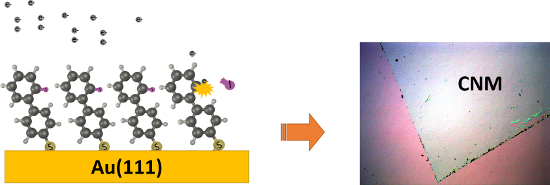
- high thermal stability [1][2][3]. Depending on the fabrication method, the choice of precursor molecules and functionalization type, such membranes have great potential for a wide variety of applications [2]. In recent years, protocols and procedures have been developed to produce functional CNMs by


Laser-assisted fabrication of gold nanoparticle-composed structures embedded in borosilicate glass
Beilstein J. Nanotechnol. 2017, 8, 2454–2463, doi:10.3762/bjnano.8.244
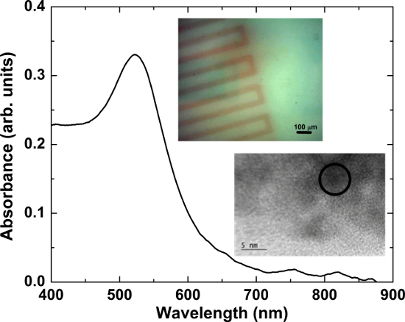
- samples were studied via their absorbance spectra (HR 4000 spectrometer, Ocean Optics) in the range 200–1000 nm. The experimental procedure included thermal annealing of the glass samples in a standard controllable oven. The glass transition temperature and the thermal stability of the glass samples


Fabrication of CeO2–MOx (M = Cu, Co, Ni) composite yolk–shell nanospheres with enhanced catalytic properties for CO oxidation
Beilstein J. Nanotechnol. 2017, 8, 2425–2437, doi:10.3762/bjnano.8.241
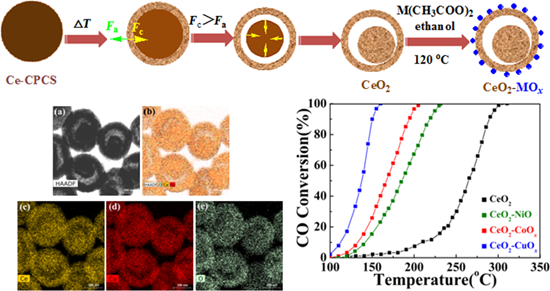
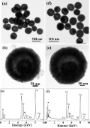
- ], including high surface area, preferential exposure of reactive facets and oxygen vacancy defects. However, pure CeO2 deactivates seriously at an elevated temperature due to the decline of surface area and OSC. In order to maintain the OSC and enhance the catalytic activity and thermal stability of CeO2





Preparation and characterization of polycarbonate/multiwalled carbon nanotube nanocomposites
Beilstein J. Nanotechnol. 2017, 8, 2026–2031, doi:10.3762/bjnano.8.203
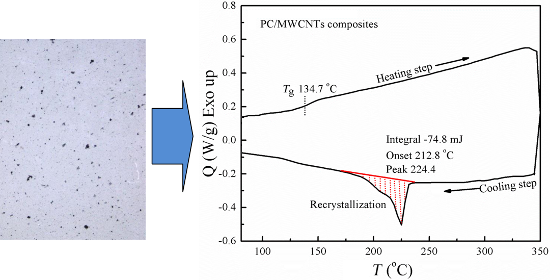
- dispersed phase in the composite films, while TGA and DSC analysis of the nanocomposites revealed enhanced thermal stability and decreased crystallinity, respectively, as compared to the neat polymer. The proposed composites can find application in a number of everyday products where polycarbonate is the
- serious thermal stability issues at the hot embossing temperature of PC. It has been suggested that the addition of MWCNTs can significantly change the mechanical properties of PC, as well as affect the crystallization behavior [5]. In former work, the effect of adding gold nanoparticles on the optical
- loadings as high as 10 wt % [9]. However, to the best of our knowledge, this is the first time that this composite system is investigated in detail for crystallinity and thermal stability. The research activity and procedures adopted during this work and reported here are in agreement with the


Enhancement of mechanical and electrical properties of continuous-fiber-reinforced epoxy composites with stacked graphene
Beilstein J. Nanotechnol. 2017, 8, 1909–1918, doi:10.3762/bjnano.8.191
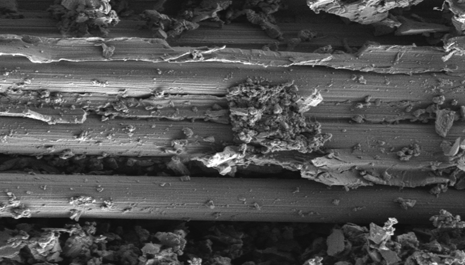
- matrices with low content of inexpensive SG. Both surface and volume resistivity dropped by 7–8 orders of magnitude. Laminated composites based on carbon fabric showed increased DMA storage moduli, improved thermal stability and increased Young's moduli. SEM images of SAA-modified epoxy/SG/carbon fabric
- composites revealed no distinctive effect of the epoxy composition on the morphology of laminates, yet the compounds demonstrated significant improvement in thermal stability at elevated temperatures, especially with a polyol surfactant. A reduction of electrical surface resistivity was registered, while


Fabrication of carbon nanospheres by the pyrolysis of polyacrylonitrile–poly(methyl methacrylate) core–shell composite nanoparticles
Beilstein J. Nanotechnol. 2017, 8, 1897–1908, doi:10.3762/bjnano.8.190

- , the temperatures of PMMA nanoparticles with a mass loss of 2% and 5% were 193 °C and 293 °C, respectively (Supporting Information File 1, Figure S5). We chose to preoxidize the PAN–PMMA nanoparticles at 250 °C, considering the limited thermal stability of PMMA outer layer. Carbonized product Three



(Metallo)porphyrins for potential materials science applications
Beilstein J. Nanotechnol. 2017, 8, 1786–1800, doi:10.3762/bjnano.8.180
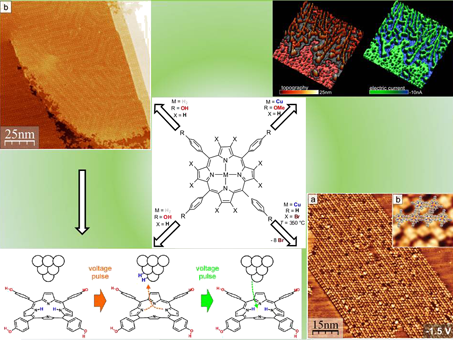
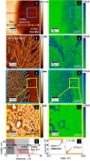
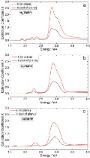
- functionalize (metallo)porphyrins in order to better match their physical properties to requirements of the envisaged application [1][2][3]. Because of the general high chemical and thermal stability, thin films of (metallo)porphyrins can be obtained by using organic molecular beam deposition (OMBD) techniques






Fluorination of vertically aligned carbon nanotubes: from CF4 plasma chemistry to surface functionalization
Beilstein J. Nanotechnol. 2017, 8, 1723–1733, doi:10.3762/bjnano.8.173
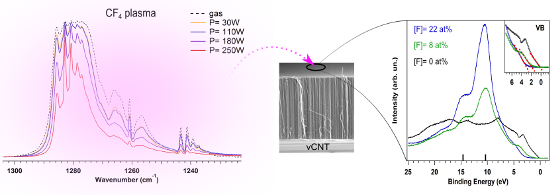
- ][24]. In single- and multiwalled nanotubes the tuning of surface properties via fluorine-based plasma has been investigated highlighting the modification of morphology, chemical composition and electronic properties, as well as focusing on the field emission performances and the thermal stability [25




Effect of the fluorination technique on the surface-fluorination patterning of double-walled carbon nanotubes
Beilstein J. Nanotechnol. 2017, 8, 1688–1698, doi:10.3762/bjnano.8.169
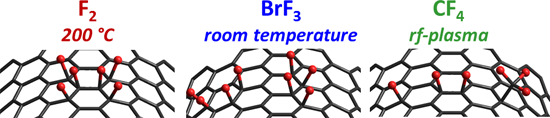
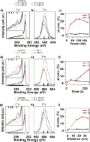
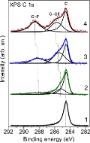
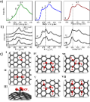
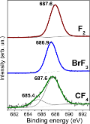
- been determined. The high thermal stability of F2 means elevated temperatures are required in order for the fluorination process to take place. The saturation composition C2F for a CNT surface was achieved using pure F2 below 300 °C for several hours [15]. The temperature and/or duration of the



Two-dimensional carbon-based nanocomposites for photocatalytic energy generation and environmental remediation applications
Beilstein J. Nanotechnol. 2017, 8, 1571–1600, doi:10.3762/bjnano.8.159
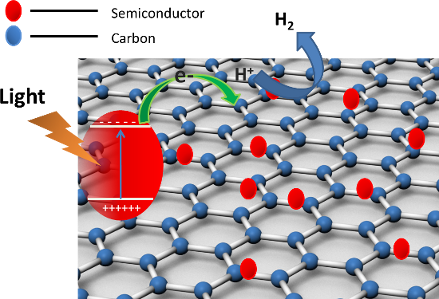
- reactions but mainly hydrogen evolution reactions [67]. The lattice structure of g-C3N4 is composed of C–N with short interlayer distances and amino functional groups with larger periodic vacancies [67]. In addition to this, g-C3N4 possesses excellent chemical and thermal stability, unique surface
- forces [69]. Thus it is clear that the lattice structure of g-C3N4 consists only of two abundant elements, C and N (C/N molar ratio = 0.75), which are earth abundant and nontoxic in nature [61]. More surface active sites, nontoxicity, natural abundance and good thermal stability of g-C3N4 makes it a
- exhibit excellent chemical stability and is insoluble in various kinds of acid, base and organic solvents like toluene and THF [68]. The good chemical and thermal stability of carbon nitride permits its use in PEC cells even under oxygen atmosphere [63]. Furthermore, the chemical inertness and


Luminescent supramolecular hydrogels from a tripeptide and nitrogen-doped carbon nanodots
Beilstein J. Nanotechnol. 2017, 8, 1553–1562, doi:10.3762/bjnano.8.157
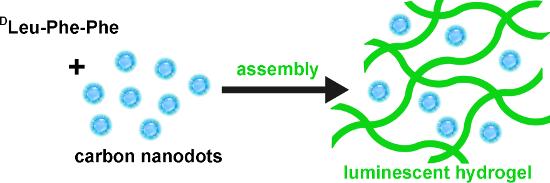
- diameters in all samples, with and without NCNDs (see Supporting Information File 1). These observations are not surprising since it is well known that the nanostructure outcome of self-assembly is greatly influenced by experimental conditions and gelation kinetics [39][40]. Thermal stability of NCND
- –peptide hydrogels The NCND–peptide hydrogels were assessed for their thermal stability by means of differential scanning calorimetry (DSC) and circular dichroism (CD) with a heating ramp from room temperature up to complete disappearance of the CD signal (see Supporting Information File 1). DSC did not
- aggregates formed during heating [41][42]. It is thus possible that the wide endotherm observed in this work is the sum of all such different components. As a result, minor differences in the thermal stability of the systems with or without NCNDs may have been masked. Indeed, the small DSC sample volumes


Low-temperature CO oxidation over Cu/Pt co-doped ZrO2 nanoparticles synthesized by solution combustion
Beilstein J. Nanotechnol. 2017, 8, 1546–1552, doi:10.3762/bjnano.8.156

- ). This is due to combined effect of smaller particle size, large oxygen vacancies, high specific surface area and better thermal stability of the Cu/Pt co-doped ZrO2 nanoparticles. The apparent activation energy for CO oxidation is found to be 45.6 kJ·mol−1. The CO conversion decreases with increase in




Synthesis, spectroscopic characterization and thermogravimetric analysis of two series of substituted (metallo)tetraphenylporphyrins
Beilstein J. Nanotechnol. 2017, 8, 1191–1204, doi:10.3762/bjnano.8.121
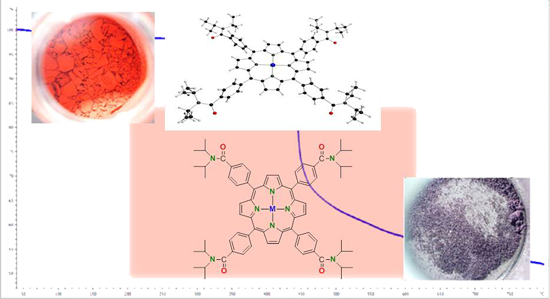
- molecular beam deposition (OMBD), which is attributed to their comparatively low thermal stability as determined by thermogravimetric analysis (TG) of selected representatives. Keywords: electrospray ionization mass spectrometry; IR spectroscopy; metalloporphyrin; porphyrin; thermogravimetry; UV–vis
- spectroscopy; Introduction Over the last decades metalloporphyrins have been studied in great detail as they exhibit a high chemical and thermal stability, are aromatic and possess distinctive electrochemical and photophysical properties [1][2][3][4]. For example, access to the first organic spin valves
- morphologies of successfully OMBD-deposited CuTPP(OMe)4 2/2a–d and 3/3a–d were equipped with sterically more bulky terminal organic groups. Unfortunately, all trials to deposit members of 2/2a–d and 3/3a–d by OMBD failed, which is attributed to a significantly lower thermal stability compared to CuTPP(OMe)4 [8


Atomic structure of Mg-based metallic glass investigated with neutron diffraction, reverse Monte Carlo modeling and electron microscopy
Beilstein J. Nanotechnol. 2017, 8, 1174–1182, doi:10.3762/bjnano.8.119
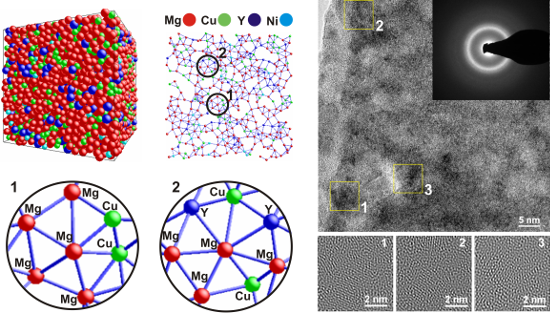
- Mg65Cu20Y10Ni5 ribbon exhibits a higher onset crystallization temperature and higher ΔTx parameter. The addition of nickel can improve the thermal stability of Mg-based metallic glasses. Moreover, the determination of the crystallization temperature is helpful to prepare nanocrystalline samples by heat treatment




Hierarchically structured nanoporous carbon tubes for high pressure carbon dioxide adsorption
Beilstein J. Nanotechnol. 2017, 8, 1135–1144, doi:10.3762/bjnano.8.115
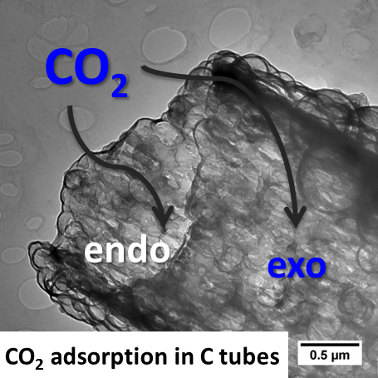
- successfully tested as potential material for catalysis [1], gas sensors [2], electronic devices [3] and for gas adsorption [4]. Activated carbons (ACs) are widely used for gas adsorption because of their straightforward production, low cost and thermal stability [5][6][7]. Nevertheless, the excellent
- under oxygen atmosphere (Figure 5) using thermal gravimetric analysis. The decomposition starts at about 530 °C indicating a high thermal stability of the carbon material. The carbon tubes (4) do not decompose completely even at temperatures of 800 °C. A ceramic residue (6.5%) remains as a white powder


Fully scalable one-pot method for the production of phosphonic graphene derivatives
Beilstein J. Nanotechnol. 2017, 8, 1094–1103, doi:10.3762/bjnano.8.111
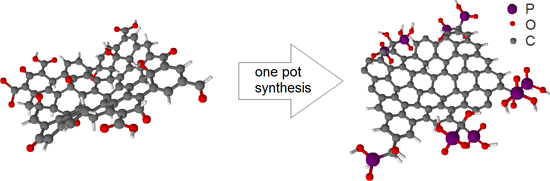
- hazardous waste. Finally, after ball milling for two days the resultant carbonaceous material is rather high-surface-area graphite than graphene. Thermogravimetric (TG) analysis with differential scanning calorimetry (DSC) provided information about thermal stability of GO and GO-P and allowed for an


Structural properties and thermal stability of cobalt- and chromium-doped α-MnO2 nanorods
Beilstein J. Nanotechnol. 2017, 8, 1032–1042, doi:10.3762/bjnano.8.104
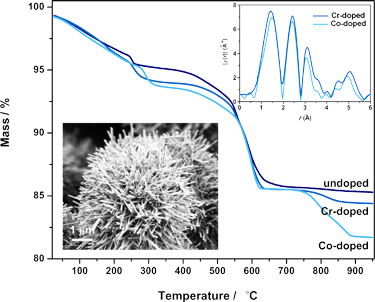
- cryptomelane samples exhibit a higher thermal stability than undoped ones. For instance, doping with tin and cobalt shifted the reduction of α-MnO2 to Mn2O3 from 500–550 °C (undoped sample) to 850–900 °C [19][20]. This was ascribed to the incorporation of dopant ions into tunnels stabilizing the structure [19
- of K+ ions and also decreased thermal stability [8]. Undoped materials also possess a higher thermal stability than materials doped with one or more elements of Fe3+, Cu2+, Mo6+, V5+ with the exception of that doped only with Fe3+, which shows the same stability as the undoped samples [14][21]. The
- introduction of silver ions into the cryptomelane structure also lowered thermal stability due to a partial distortion of the regular channel-like structure [22]. The influence of doping the pristine material with different ions on its thermal stability is quite complex. When an ion of higher valence (3+, 2


Vapor-phase-synthesized fluoroacrylate polymer thin films: thermal stability and structural properties
Beilstein J. Nanotechnol. 2017, 8, 933–942, doi:10.3762/bjnano.8.95
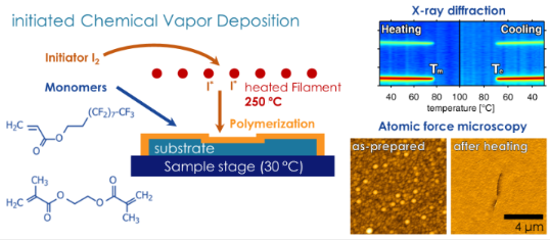
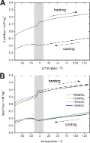
- hysteresis between advancing and receding contact angle [14]. The advantage of cross-linking with EGDMA is the elimination of the annealing step, resulting in a cross-linked film already in the as-deposited form. The thermal stability of the thin films was evaluated by ellipsometry, Fourier transform


Triptycene-terminated thiolate and selenolate monolayers on Au(111)
Beilstein J. Nanotechnol. 2017, 8, 892–905, doi:10.3762/bjnano.8.91
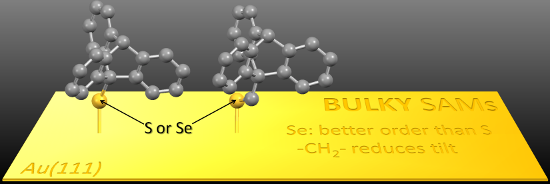
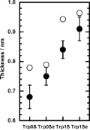
- group have an impact on the thermal stability of the monolayers. The selenolate SAMs are more stable than their thiolate counterparts (by 0.13 eV in case of Trp0Se vs Trp0S and by ≈0.06 eV in case of Trp1Se vs Trp1S). This finding reflects that the Se–Au binding energy is higher than the one of the S–Au
- identified to be an important parameter in SURMOF liquid epitaxial growth [3][21]. The higher thermal stability of the selenium anchor group compared to the one of the sulfur anchor group enables triptycene-selenolate SAMs to push the upper temperature limit available for SURMOF growth. We believe that these




First examples of organosilica-based ionogels: synthesis and electrochemical behavior
Beilstein J. Nanotechnol. 2017, 8, 736–751, doi:10.3762/bjnano.8.77
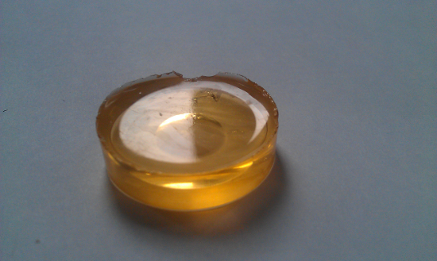
- interesting for intermediate temperature fuel cells operating above ca. 80 °C. At this point, conventional Nafion membranes dry out and lose the ability for proton conduction [9]. Due to their relatively high thermal stability, high ionic conductivity, and low vapor pressure, many ILs can overcome this
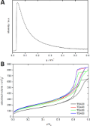
- (ii) efficient stabilization of the (highly viscous) liquid phase over extended periods of time. As a result, [BmimSO3H][PTS] is a viable candidate for use in membranes, especially when considering the simple, near quantitative synthesis (Figure 7) and the high thermal stability of the IL (Figure 10








Synthesis of graphene–transition metal oxide hybrid nanoparticles and their application in various fields
Beilstein J. Nanotechnol. 2017, 8, 688–714, doi:10.3762/bjnano.8.74
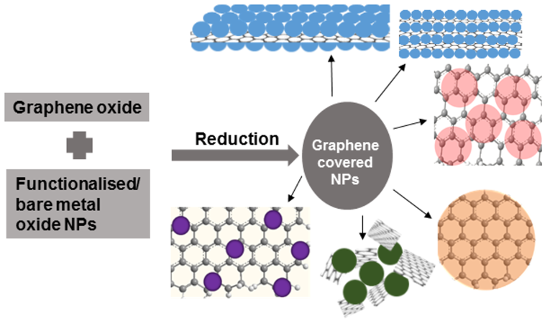
- of 12.1% with excellent thermal stability [209]. Cuprous oxide (Cu2O) is a p-type semiconductor and is used for solar energy conversion, as sensors and for photocatalytic degradation. The controlled synthesis of Cu2O results in a vast palette of architectures including nanocubes, nanocages, nanowires