


Search results
Search for "time dependent" in Full Text gives 233 result(s) in Beilstein Journal of Nanotechnology. Showing first 200.
Process-specific mechanisms of vertically oriented graphene growth in plasmas
Beilstein J. Nanotechnol. 2017, 8, 1658–1670, doi:10.3762/bjnano.8.166
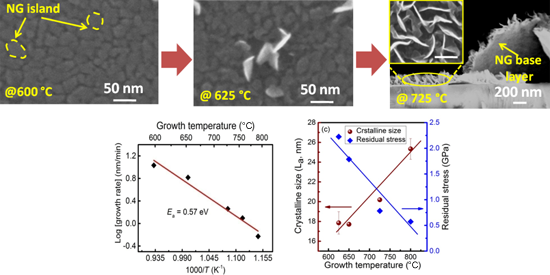
- reported previously in the studies of time-dependent growth of VGNs [27]. Case II: Influence of deposition distance Figure 5 depicts the morphology of VGNs deposited at various distances between the plasma source and the substrate. It is observed that the number density of vertical sheets decreases with


Group-13 and group-15 doping of germanane
Beilstein J. Nanotechnol. 2017, 8, 1642–1648, doi:10.3762/bjnano.8.164
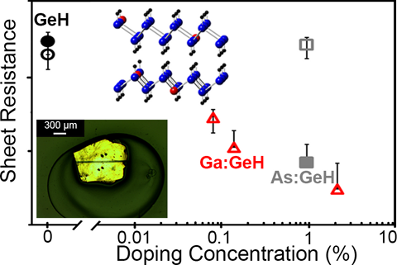
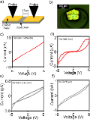
- % Ga:GeH (red) and 1.1% As:GeH (gray) exposed for 0 days. b) Time-dependent XPS of 2.3% Ga:GeH and c,d) 1.1% As:GeH at 0 day (black), 1 day (yellow), 4 days (green), and 8 day (red). a) Diagram and b) photo of typical device for two-probe I–V measurements. Representative curves of 2.3% Ga:GeH (red) in c



Development of polycationic amphiphilic cyclodextrin nanoparticles for anticancer drug delivery
Beilstein J. Nanotechnol. 2017, 8, 1457–1468, doi:10.3762/bjnano.8.145
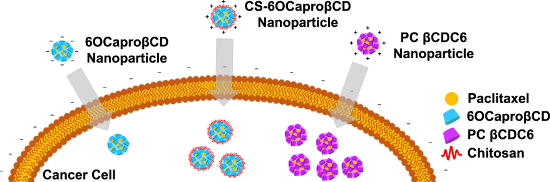
- . Schematic representation of amphiphilic 6OCaproβCD (a), amphiphilic PC βCDC6 (b), chitosan (c) and paclitaxel (d). Time-dependent variation of particle size (nm) of PCX-loaded amphiphilic CD nanoparticles stored in aqueous dispersion form, (n = 3, ± SD). Time-dependent variation of the PDI value of PCX
- -loaded amphiphilic CD nanoparticles stored in aqueous dispersion form (n = 3, ± SD). Time-dependent variation of the zeta potential value of PCX-loaded amphiphilic CD nanoparticles stored in aqueous dispersion form (n = 3, ± SD). Cumulative release profile of PCX from different amphiphilic CD


Cationic PEGylated polycaprolactone nanoparticles carrying post-operation docetaxel for glioma treatment
Beilstein J. Nanotechnol. 2017, 8, 1446–1456, doi:10.3762/bjnano.8.144
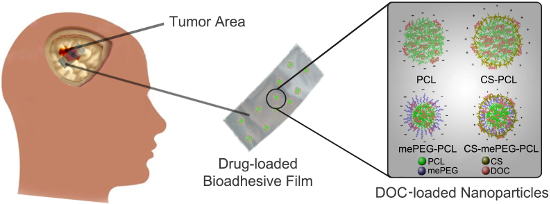
- for DOC both with time-dependent and formulation-dependent mechanisms. The cell culture data showed that DOC-loaded CS-mePEG-PCL nanoparticle dispersions have a significantly higher cytotoxic effect than DOC solutions in DMSO (p < 0.05). Besides, blank nanoparticle formulations did not exert any toxic




Spin-chemistry concepts for spintronics scientists
Beilstein J. Nanotechnol. 2017, 8, 1427–1445, doi:10.3762/bjnano.8.143
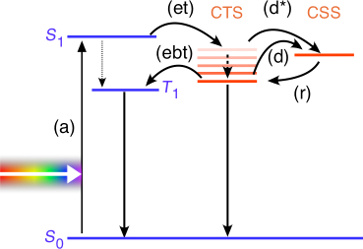
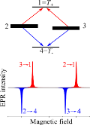
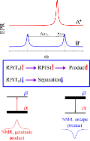
- rate kS, whereas the phase elements, singlet–triplet coherences, decay at kS/2 [46][47] Recently, possible corrections to such a form of the operator were discussed [48] differing in the decay of the coherences, which is faster than kS/2 in some models. The time-dependent rate of the product is given
- spectrum, one should add the corresponding terms to the Hamiltonian. Such terms are generally time-dependent but typically vanish in the MW-rotating frame of reference. The nuclear Zeeman interaction is omitted in the expression for the Hamiltonian because in liquids it is usually irrelevant. The reason is



Nano-engineered skin mesenchymal stem cells: potential vehicles for tumour-targeted quantum-dot delivery
Beilstein J. Nanotechnol. 2017, 8, 1218–1230, doi:10.3762/bjnano.8.123
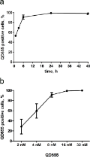
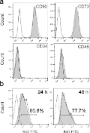
- incubation with QDs at 0.5–64 nM for 24 and 48 h. Evaluation of the optimal QD uptake conditions in skin MSCs. Time-dependent (a) and concentration-dependent (b) uptake dynamics in MSCs using flow cytometry analysis. The percentage of QD655-positive cells was obtained from the analysis of flow-cytometry





Adsorption characteristics of Er3N@C80on W(110) and Au(111) studied via scanning tunneling microscopy and spectroscopy
Beilstein J. Nanotechnol. 2017, 8, 1127–1134, doi:10.3762/bjnano.8.114
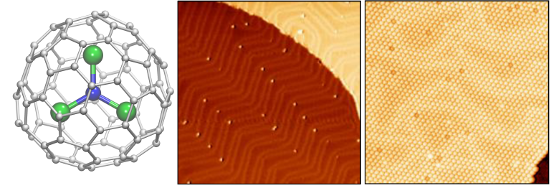
- uniformity as assumed for a thermodynamically most favored arrangement. This could be assigned to a frozen structure resulting from too short annealing times which implies that the rearrangement of the interfacial Au-atoms is most probably a thermally assisted and time-dependent process. While effects of


Near-field surface plasmon field enhancement induced by rippled surfaces
Beilstein J. Nanotechnol. 2017, 8, 956–967, doi:10.3762/bjnano.8.97
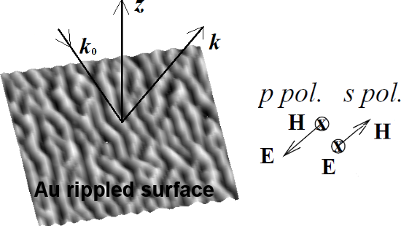
- changes its parameters in space [53], while the QNM frequency is supposed to change monotonically with a decay rate . If both ξ and γ are constants, the time-dependent plasmon amplitude E(r,t) is now proportional to e(ξ−γ)t with a competition between the frequency decay rate ξ and the damping rate γ. If ξ


Functional dependence of resonant harmonics on nanomechanical parameters in dynamic mode atomic force microscopy
Beilstein J. Nanotechnol. 2017, 8, 883–891, doi:10.3762/bjnano.8.90
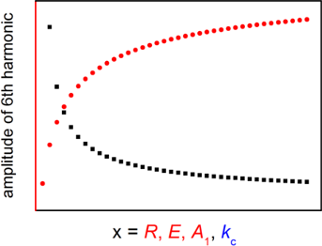
- , represented by the force field Fts, between the cantilever tip and the surface [1]. Thus, the time dependent trajectory a(t) of the cantilever tip, which can be expressed in the harmonic limit by a(t) = A1cos(2πft), is transformed into a Fourier series with harmonic oscillations of amplitudes An and


Association of aescin with β- and γ-cyclodextrins studied by DFT calculations and spectroscopic methods
Beilstein J. Nanotechnol. 2017, 8, 348–357, doi:10.3762/bjnano.8.37
- ]. In vitro incubation with cells of the C6 (glioma) and A549 (lung adenocarcinoma) tumoural lines showed that aescin has potent dose- and time-dependent antiproliferative effects [8]. Studies with human castration-resistant prostate cancer, both in vitro, using the cell lines PC-3 and DU-145, and in


Selective photodissociation of tailored molecular tags as a tool for quantum optics
Beilstein J. Nanotechnol. 2017, 8, 325–333, doi:10.3762/bjnano.8.35
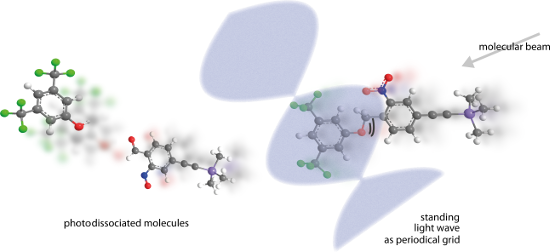
- molecular beam depletion is even possible in high vacuum and with a cross section high enough for accessible laser sources. When isolated in high vacuum many details of the photochemistry are expected to change, opening interesting questions for future research with regard to the time-dependent reaction


Flexible photonic crystal membranes with nanoparticle high refractive index layers
Beilstein J. Nanotechnol. 2017, 8, 203–209, doi:10.3762/bjnano.8.22
- reorientation of the PEO to the surface–water interface the interfacial free energy is reduced. The modified PDMS surface exhibits a time-dependent water contact angle. It drops rapidly in the first 30 s and is stable after ≈200 s. The contact angle is reduced to 20° at a concentration of about 2% of PEO in the


Tunable plasmons in regular planar arrays of graphene nanoribbons with armchair and zigzag-shaped edges
Beilstein J. Nanotechnol. 2017, 8, 172–182, doi:10.3762/bjnano.8.18
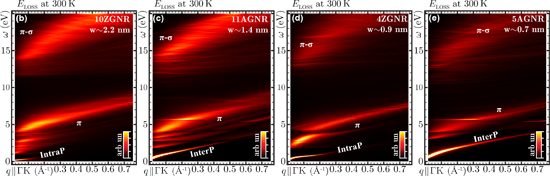
- width, chirality and unit-cell length of each ribbon, as well as the in-plane vacuum distance between two contiguous ribbons. Our predictions, based on time-dependent density functional theory, in the random phase approximation, are expected to be of immediate help for measurements of plasmonic features
- in nanoscale architectures of nanoribbon devices. Keywords: graphene nanoribbons; plasmonics; time-dependent density functional theory; Introduction Quantized, coherent and collective density fluctuations of the valence electrons in low-dimensional nanostructures, better known as plasmons, have
- , width and chirality of each GNR, or the in-plane distance between contiguous GNRs. Our study is carried out using time-dependent (TD) density functional theory (DFT), within the random phase approximation (RPA). The computations are performed at room temperature (T = 300 K), including both intrinsic and


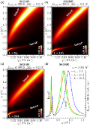
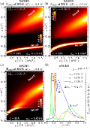
![[Graphic 8]](/bjnano/content/inline/2190-4286-8-18-i16.png?max-width=637&scale=1.18182) , Equation 6) and EL function (ELOSS, Equation 8) at room temperature for the GNR arrays of Figure 1 ...
, Equation 6) and EL function (ELOSS, Equation 8) at room temperature for the GNR arrays of Figure 1 ...

Sub-nanosecond light-pulse generation with waveguide-coupled carbon nanotube transducers
Beilstein J. Nanotechnol. 2017, 8, 38–44, doi:10.3762/bjnano.8.5
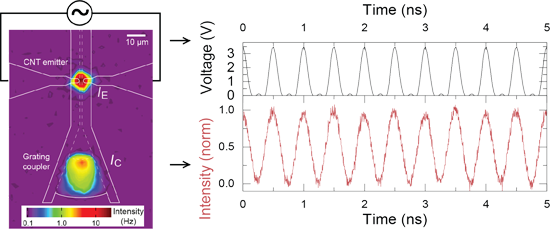
- transducer can respond to an electrical signal. Indeed, time-dependent incandescence from a CNT film in free-space has been measured [11] and modulation of CNT emission with decay times below 250 ps has been shown [6]. The intrinsic characteristic timescale for CNT incandescence is expected to be of the


Ferromagnetic behaviour of ZnO: the role of grain boundaries
Beilstein J. Nanotechnol. 2016, 7, 1936–1947, doi:10.3762/bjnano.7.185
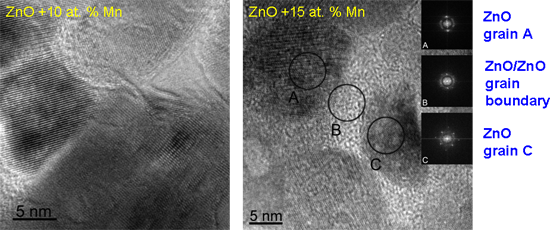
- decay in the muon asymmetry spectrum can be obtained. Such decay is due to the presence of an internal magnetic field distribution. In Figure 5 one can see three such time-dependent spectra of µSR asymmetry for the three studied samples with different GB specific density. In Figure 5 we plotted the


“Sticky invasion” – the physical properties of Plantago lanceolata L. seed mucilage
Beilstein J. Nanotechnol. 2016, 7, 1918–1927, doi:10.3762/bjnano.7.183
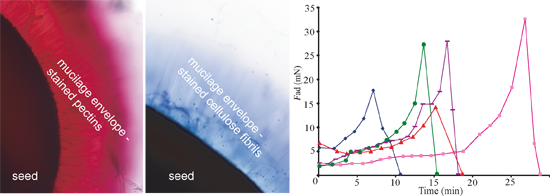
- (Figure 3), presumably because of a different mucilage amount and water content in the envelope. The average time for reaching the maximum force was 16 ± 3 min. Very important and interesting was that the shape of the time-dependent pull-off force curves of individual seeds are very similar (Figure 3


Role of RGO support and irradiation source on the photocatalytic activity of CdS–ZnO semiconductor nanostructures
Beilstein J. Nanotechnol. 2016, 7, 1684–1697, doi:10.3762/bjnano.7.161
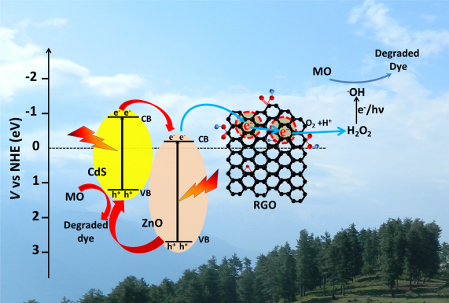
- spectra of (a) GO, (b) ZnO, (c) CdS, (d) CdS–ZnO and (e) CdS–ZnO–RGO nanocomposite. UV–vis absorption spectra of GO, ZnO NR, CdS NP, CdS–ZnO and CdS–ZnO–RGO nanocomposite. Time-dependent UV–vis spectra of photocatalytic degradation of MO: (a) visible light irradiation from a solar simulator using CdS–ZnO




Influence of hydrothermal synthesis parameters on the properties of hydroxyapatite nanoparticles
Beilstein J. Nanotechnol. 2016, 7, 1586–1601, doi:10.3762/bjnano.7.153
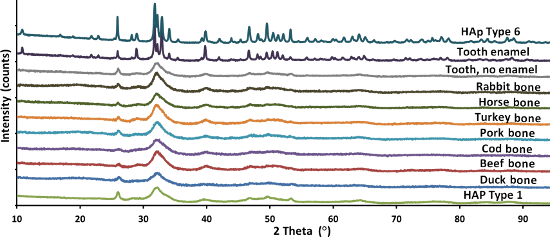
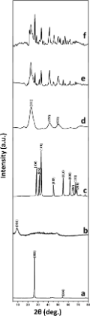
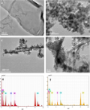
- was synthesis-time dependent. The purpose of this study was to further develop the previously reported synthesis methods in order to: further extend the range of particle sizes, scale up the synthesis process by six orders of magnitude of six types of nano-hydroxyapatite, and to demonstrate that a


Dynamic of cold-atom tips in anharmonic potentials
Beilstein J. Nanotechnol. 2016, 7, 1543–1555, doi:10.3762/bjnano.7.148
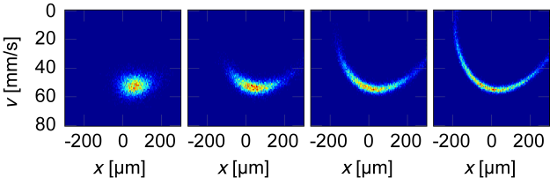
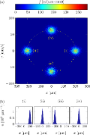
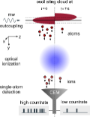
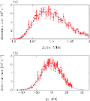
- position fixed in space and monitor the time-dependent ionization rate Γ(t) at the ion detector. Measuring Γ(t) will then unveil dynamics within the distribution function. Detecting harmonic tip oscillations For harmonic potentials the time-dependent density distribution of an oscillating tip is given via
- Equation 6, resulting in a time-dependent detector signal As a periodic function, it can be expanded to harmonic oscillations at multiples of the fundamental frequency ω0. Here we used the Jakobi–Anger expansion with Iα being the modified Bessel functions of first kind. In the limit of small oscillation




Deformation-driven catalysis of nanocrystallization in amorphous Al alloys
Beilstein J. Nanotechnol. 2016, 7, 1428–1433, doi:10.3762/bjnano.7.134
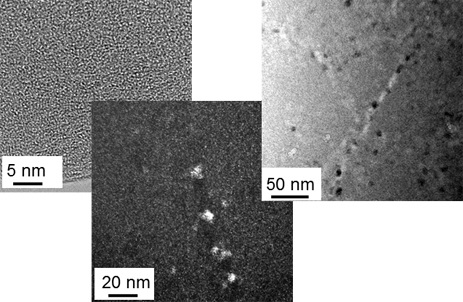
- must have occurred throughout the metallic glass during cold rolling and not only within shear bands [50]. Recent measurements of time-dependent tracer diffusion along shear bands that showed a non-monotonic behavior with an initial increase of the diffusivity upon relaxation moreover suggest that


On the pathway of cellular uptake: new insight into the interaction between the cell membrane and very small nanoparticles
Beilstein J. Nanotechnol. 2016, 7, 1296–1311, doi:10.3762/bjnano.7.121
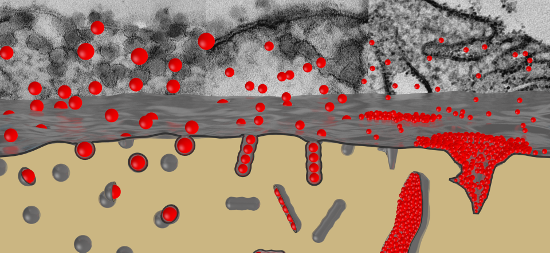
- serum-containing media [8][11][13][14]. Interestingly, studies using cell models like artificial liposomes or polymersomes report the uptake of SiNPs into these structures in a size-dependent manner [15]. Different groups report that silica NPs are cytotoxic in a dose, size and time-dependent manner




The self-similarity theory of high pressure torsion
Beilstein J. Nanotechnol. 2016, 7, 1267–1277, doi:10.3762/bjnano.7.117
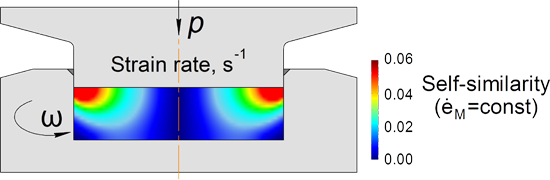
- β does not explicitly appear in Equations 3–7 but the problem is time-dependent because the flow stress σs depends on the von Mises strain eM, which in turn increases with β according to Equation 8. The global solution of Equations 4–9 has the following form: where x is the position vector. 2 A self
- solution at time t0 by a simple similarity transformation: where T(t) is time-dependent. Thus, the spatial distribution of y varies with time while remaining always geometrically similar to itself. This definition generalizes the concept of similarity in geometry where two figures are called similar if one


NO gas sensing at room temperature using single titanium oxide nanodot sensors created by atomic force microscopy nanolithography
Beilstein J. Nanotechnol. 2016, 7, 1044–1051, doi:10.3762/bjnano.7.97
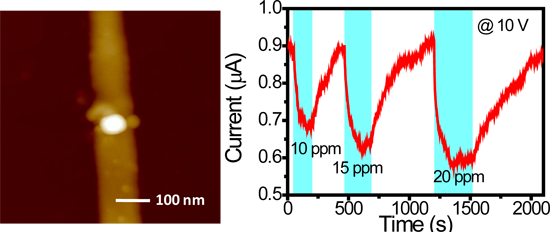
- sensing. After a sufficient sensing time (which is shown in blue in the current-response figures), the chamber was evacuated again for NO desorption (which is shown in white in the current-response figures). After the pumping, the sensing cycle ended and the next cycle was started. The time-dependent


Thermo-voltage measurements of atomic contacts at low temperature
Beilstein J. Nanotechnol. 2016, 7, 767–775, doi:10.3762/bjnano.7.68
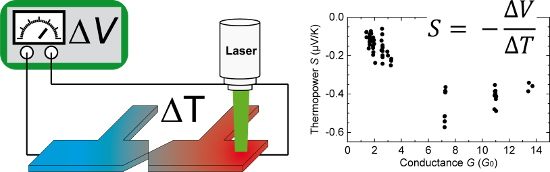
- . To determine the resistance change caused by this temperature difference we also simulate the time-dependent sensor leads resistance due to laser heating. The simulation was fed with measured resistance values of a sample which had the same dimensions and fabrication parameters as the one used in the
- behavior along the red trace (red curve) and the green trace (green curve). b) The temperature behavior along y = 0 µm where the junction is located at position (0,0). The simulation shows a temperature difference of about 7 K. Time-dependent simulation of the resistivity of the two sensor leads due to


Finite-size effect on the dynamic and sensing performances of graphene resonators: the role of edge stress
Beilstein J. Nanotechnol. 2016, 7, 685–696, doi:10.3762/bjnano.7.61
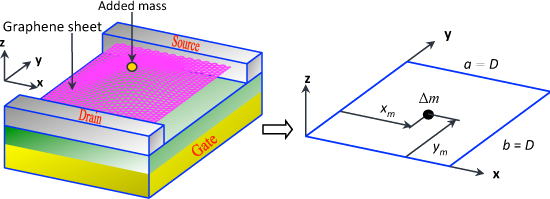
- resonator, we need to numerically solve the equation of motion given by Equation 18, which is not straightforward. To numerically treat the equation of motion, we employed Galerkin’s method [37][38], where the transverse deflection of graphene is assumed to be in the form of with z(t) and being the time
- -dependent amplitude of transverse deflection and the deflection eigenmode, respectively. Consequently, the equation of motion can be written as shown in Equation 19. By multiplying the deflection eigenmode into Equation 19 followed by the integration by parts, the equation of motion becomes the Duffing





