


Search results
Search for "waste" in Full Text gives 128 result(s) in Beilstein Journal of Nanotechnology.
A nano-graphite cold cathode for an energy-efficient cathodoluminescent light source
Beilstein J. Nanotechnol. 2013, 4, 493–500, doi:10.3762/bjnano.4.58
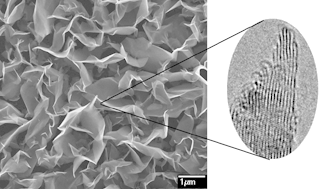
- as ineffective. The other 95% of the energy are transformed into heat, which cannot be considered as waste in many countries where electricity is used for house heating practically every day. In the “energy efficient” fluorescent and LED lamps the energy conversion ratio is about 10%, so that there
- is a decrease of energy loss on heating only from 95 to 90%. At the same time, production costs for these lamps, i.e. consumption and waste of energy at the production plant, are many times higher compared to the production costs of incandescent bulbs. Thus, the development of new types of light


Synthesis and thermoelectric properties of Re3As6.6In0.4 with Ir3Ge7 crystal structure
Beilstein J. Nanotechnol. 2013, 4, 446–452, doi:10.3762/bjnano.4.52
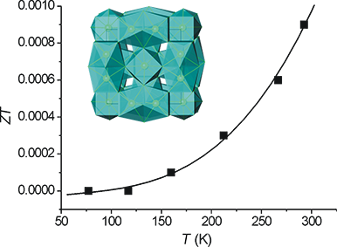
- from waste heat (e.g., that stemming from combustion in car engines) or to cool an environment under an external power supply. However, the efficiency of these processes depends on the efficiency of the thermoelectric material in question, which is defined by the value of the figure of merit where T


Twofold role of calcined hydrotalcites in the degradation of methyl parathion pesticide
Beilstein J. Nanotechnol. 2011, 2, 99–103, doi:10.3762/bjnano.2.11
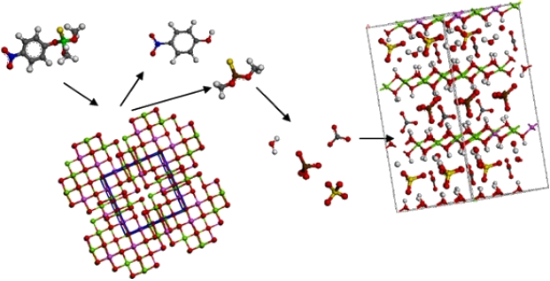
- effective (Figure 1b) and after 1170 minutes of the sorption process MP still remained in the waste solution as p-NP. The result using Ni–Al mixed oxide as sorbent was surprising, as it did not promote the degradation of MP (Figure 1c). Figure 2 shows the MP degradation performance to p-NP of Mg–Al, Zn–Al
- are promising nanolayer materials for the effective cleansing of water contaminated by organic pesticides. UV–vis spectra of MP solution after being in contact with Mg–Al (a), Zn–Al (b) and Ni–Al. (c) hydrotalcite oxides, MP: methyl parathion, p-NP = p-nitrophenol. Conversion of MP to p-NP from waste


Other Beilstein-Institut Open Science Activities



