


Search results
Search for "CNTs" in Full Text gives 175 result(s) in Beilstein Journal of Nanotechnology.
Gas sensing with gold-decorated vertically aligned carbon nanotubes
Beilstein J. Nanotechnol. 2014, 5, 910–918, doi:10.3762/bjnano.5.104
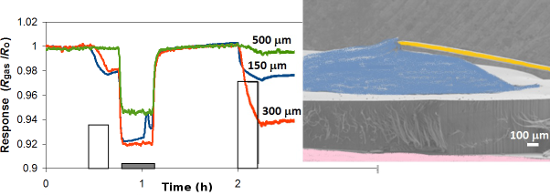
- based on nanomaterials have been developed to fabricate small and inexpensive gas sensors with high sensitivity and able to work at room temperature [1]. Among the possible active materials in gas sensing devices, good candidates are carbon nanotubes (CNTs), thanks to their intrinsic properties such as
- very large surface area to volume ratio, high electron mobility, physico-chemical stability and high adsorption capability [2][3][4][5]. The use of CNTs as gas sensors was first proposed by Kong et al., who showed that a dramatic change in the electrical resistance of an individual single-walled
- room temperature), prompt response, short recovery time and reasonable reversibility and stability [2][3][4][6]. A further advance in the development of CNT gas sensing devices was the use of vertically aligned CNTs (VA-CNTs). In this case the sensing device benefits from the unidirectional electrical


An analytical approach to evaluate the performance of graphene and carbon nanotubes for NH3 gas sensor applications
Beilstein J. Nanotechnol. 2014, 5, 726–734, doi:10.3762/bjnano.5.85
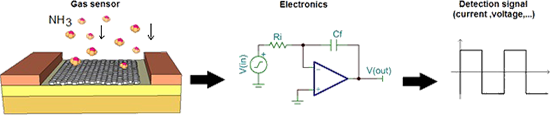
- Teknologi Malaysia, Johor Bahru, Malaysia Malaysia–Japan International Institute of Technology (MJIIT), Universiti Teknologi Malaysia, Kuala Lumpur, Malaysia 10.3762/bjnano.5.85 Abstract Carbon, in its variety of allotropes, especially graphene and carbon nanotubes (CNTs), holds great potential for
- applications in variety of sensors because of dangling π-bonds that can react with chemical elements. In spite of their excellent features, carbon nanotubes (CNTs) and graphene have not been fully exploited in the development of the nanoelectronic industry mainly because of poor understanding of the band
- wavelength of carriers. Novel applications [7][8][9] are possible by exploiting the quantum waves in operation of these low-dimensional devices. New materials are being discovered in building novel sensors that can operate on the nanometer scale. Examples of these include graphene and carbon nanotubes (CNTs


Chemi- vs physisorption in the radical functionalization of single-walled carbon nanotubes under microwaves
Beilstein J. Nanotechnol. 2014, 5, 537–545, doi:10.3762/bjnano.5.63
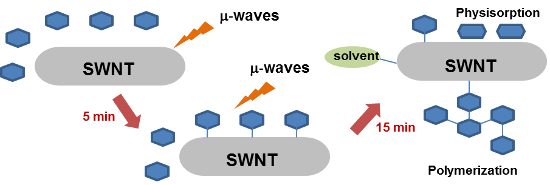
- functionalization; grafting; microwaves; physisorption; Introduction Carbon nanotubes (CNTs) are recognized to have a huge potential in a variety of applications such as electronics, composite materials, energy storage and medicine [1][2][3][4]. From bulk synthesis method, CNTs are often entangled contingent upon
- to the CNTs. It is recognized to be an efficient way to confer specific surface properties [5]. However, the methods generally used for the covalent functionalization of CNTs often require long reaction times (from several hours to days) [6]. The reaction times can be considerably reduced to a few
- conjugated π system of CNTs thereby having a negative impact on their intrinsic properties (conductivity, mechanical properties) [23][24][25]. Low functionalization levels are indisputably preferred for CNT based composites [26]. As a consequence of the fast reaction times achieved under microwave heating, a




A catechol biosensor based on electrospun carbon nanofibers
Beilstein J. Nanotechnol. 2014, 5, 346–354, doi:10.3762/bjnano.5.39
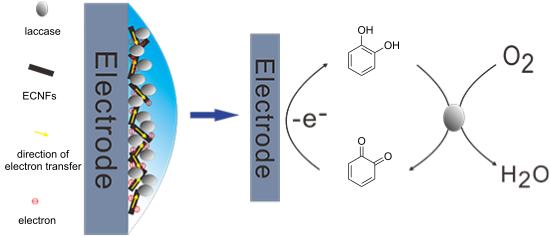
- calibration curve of the current response on the catechol concentration. It can be seen that the response current increased with the increase in catechol concentration. The linear range was 1–1310 µM (R = 0.998, n = 19), which was much wider than for the biosensor based on CNTs and laccase [33]. And the


Tensile properties of a boron/nitrogen-doped carbon nanotube–graphene hybrid structure
Beilstein J. Nanotechnol. 2014, 5, 329–336, doi:10.3762/bjnano.5.37
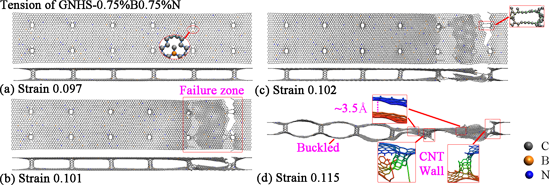
- GNHS with 0.5%, 1.0%, 1.5%, 2.0%, 2.5% and 3.5% of N- dopants fracture at either the right or the left end of the structure. The atomic configurations of the GNHS with 2% of N-dopants are presented in Figure 4a-d. Before the initiation of failure, a shearing of the CNTs and an elongation of bonds are
- configurations of the case with 0.75%B and 0.75%N at different strains. Surprisingly, the hybrid structure is found to fracture around four CNTs. After failure, the upper layer is found to break at the outermost two CNTs at the right end, while the lower layer fractures at the second outermost two CNTs. Such
- failure of the hybrid structure around the middle region is also witnessed. As shown in Figure 8f, the top and bottom layers of GNHS-1.5%N1.5%B fracture simultaneously around the two connecting CNTs. In all investigated cases, the self-adhesive behavior between the dangling layers and the bulked


Modeling and optimization of atomic layer deposition processes on vertically aligned carbon nanotubes
Beilstein J. Nanotechnol. 2014, 5, 234–244, doi:10.3762/bjnano.5.25
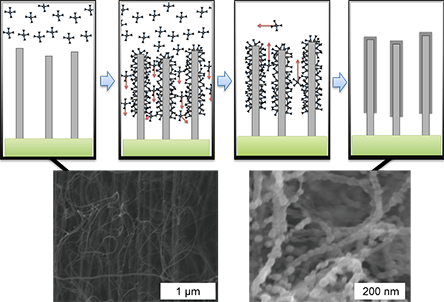
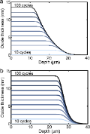
- guidelines; titania, TiO2; Introduction Recent advances in the synthesis and processing of carbon nanotubes (CNTs) have enabled the prospect of their integration into existing technologies that exploit the high surface area of mesoporous ceramic films [1]. Over the last 10 years, ceramic coated CNTs have
- ceramic coating of the CNTs. Atomic layer deposition (ALD) is a highly attractive option for coating CNTs because it enables a wide range of ceramics and metals to be deposited conformally on arbitrary surface topologies with precise control of layer thickness [1][18]. However, vertically aligned CNT
- functionalization [19][20][21][22][23][24]. In practice, however, chemical vapor deposition (CVD) grown CNTs are prone to a sufficient density of surface defect sites to allow for the nucleation of the ceramic at discrete points along the surface of the CNT. The ceramic then grows from these nucleation sites until



En route to controlled catalytic CVD synthesis of densely packed and vertically aligned nitrogen-doped carbon nanotube arrays
Beilstein J. Nanotechnol. 2014, 5, 219–233, doi:10.3762/bjnano.5.24
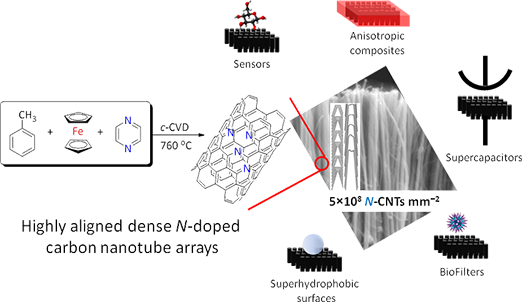
- nitrogen-doped carbon nanotubes (N-CNTs). A mixture of toluene (main carbon source), pyrazine (1,4-diazine, nitrogen source) and ferrocene (catalyst precursor) was used as the injection feedstock. To optimize conditions for growing the most dense and aligned N-CNT arrays, we investigated the influence of
- key parameters, i.e., growth temperature (660, 760 and 860 °C), composition of the feedstock and time of growth, on morphology and properties of N-CNTs. The presence of nitrogen species in the hot zone of the quartz reactor decreased the growth rate of N-CNTs down to about one twentieth compared to
- the growth rate of multi-wall CNTs (MWCNTs). As revealed by electron microscopy studies (SEM, TEM), the individual N-CNTs (half as thick as MWCNTs) grown under the optimal conditions were characterized by a superior straightness of the outer walls, which translated into a high alignment of dense


Synthesis of boron nitride nanotubes from unprocessed colemanite
Beilstein J. Nanotechnol. 2013, 4, 843–851, doi:10.3762/bjnano.4.95
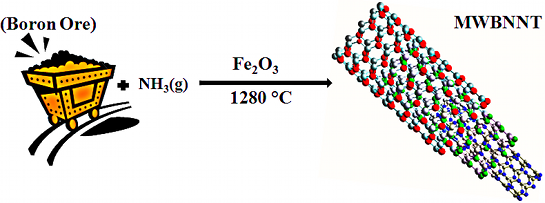
- used to synthesize boron nitride nanotubes (BNNT)s [3][4]. BNNTs, structural analogoues of carbon nanotube (CNT)s, have superior properties than CNTs due to their robust structure which resists high temperatures and harsh chemical conditions. They also have a high hydrogen storage capacity due to the
- ionic nature of the B–N bond [5]. In contrast to CNTs, the BNNTs have a constant and wide band-gap of 5.5 eV. Therefore, they are electrical isolators independent from their size or chirality. In recent studies, it has been indicated that the hydrogen storage capacity of BNNTs is two times greater than
- that of CNTs [6]. It has been theoretically demonstrated that BNNTs can capture ions selectively creating superhydrophobic surfaces [7][8]. Since hexagonal boron nitrides (h-BNs) have a sp2 hybridization, the BNNTs can interact with polymers possessing aromatic rings via π-π interaction. Therefore, the


Size-dependent characteristics of electrostatically actuated fluid-conveying carbon nanotubes based on modified couple stress theory
Beilstein J. Nanotechnol. 2013, 4, 771–780, doi:10.3762/bjnano.4.88
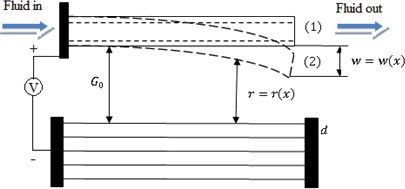
- and structures made from different metallic and non-metallic materials, carbon nanomaterials play a special role. For instance, carbon nanotubes (CNTs) possess extraordinary chemical, physical, mechanical and electrical properties. Thus, since their discovery in 1991 by Iijima [13], they have
- attracted a lot of scientists and researchers all over the world to study their characteristics as well as their actual and potential applications. A mathematical formulation of the applicability of CNTs in NEMS was conducted by Dequesnes et al. [14]. They applied a model with one degree of freedom in order
- to study the manipulation of CNTs by using electrostatic actuation and vdW interactions. The results revealed that the vdW force played an important role in the deflection and pull-in behaviors of the CNTs. In electrostatic actuation, a voltage is applied to two electrodes with a gap in-between. In


AFM as an analysis tool for high-capacity sulfur cathodes for Li–S batteries
Beilstein J. Nanotechnol. 2013, 4, 611–624, doi:10.3762/bjnano.4.68
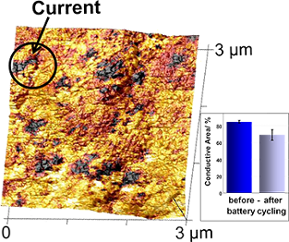
- capacity of approximately 1000 mA·g(sulfur)−1 [19][20]. Another approach is based on vertically aligned carbon nanotubes (CNTs) grown on a nickel foil without any binder. To date, these binder-free CNT cathodes contain the highest published total ratio of sulfur (90%) in an electrode [21]. The advantage of



Functionalization of vertically aligned carbon nanotubes
Beilstein J. Nanotechnol. 2013, 4, 129–152, doi:10.3762/bjnano.4.14
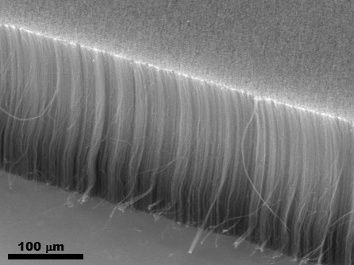
- , Materia Nova Research Center, Mons, Belgium 10.3762/bjnano.4.14 Abstract This review focuses and summarizes recent studies on the functionalization of carbon nanotubes oriented perpendicularly to their substrate, so-called vertically aligned carbon nanotubes (VA-CNTs). The intrinsic properties of
- individual nanotubes make the VA-CNTs ideal candidates for integration in a wide range of devices, and many potential applications have been envisaged. These applications can benefit from the unidirectional alignment of the nanotubes, the large surface area, the high carbon purity, the outstanding electrical
- conductivity, and the uniformly long length. However, practical uses of VA-CNTs are limited by their surface characteristics, which must be often modified in order to meet the specificity of each particular application. The proposed approaches are based on the chemical modifications of the surface by

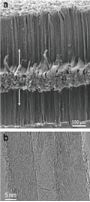


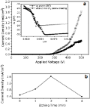

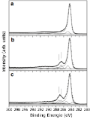


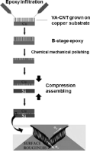


Electronic and transport properties of kinked graphene
Beilstein J. Nanotechnol. 2013, 4, 103–110, doi:10.3762/bjnano.4.12
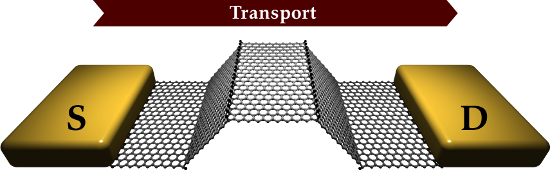
- nanoribbons (GNR) [2]. The electronic structure of GNRs depends on width, direction and edge structure – all parameters that to some degree can be controlled. GNRs can be formed by etching [2], by unzipping carbon nanotubes (CNTs) [3], or ultimately be grown with atomic-scale precision by using self-assembly
- a (25,25) nanotube. Experiments by Ruffieux et al. [38] compare hydrogen adsorption on C60 molecules, CNTs, and graphite to show that reactivity is increased with curvature. In our case we find that the local electronic density of states changes little for the atoms on the pristine bent graphene


Low-dose patterning of platinum nanoclusters on carbon nanotubes by focused-electron-beam-induced deposition as studied by TEM
Beilstein J. Nanotechnol. 2013, 4, 77–86, doi:10.3762/bjnano.4.9
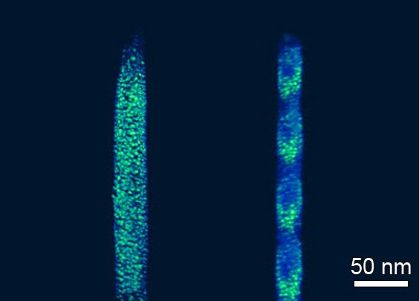
- nanotubes; FEBID; nanocluster; platinum; patterning; radiation-induced nanostructures; TEM; Introduction Hybrid nanostructures consisting of carbon nanotubes (CNTs) decorated with metal nanoclusters enable access to various electrical and catalytic properties. Therefore, they are considered as building
- blocks for nanoscopic electronic devices [1]. In such hybrid nanostructures, metals are often deposited onto the CNTs by thermal evaporation [2][3][4][5][6] or wet chemistry [7], which results in a non-site-specific covering. However, when using such structures for nanodevice fabrication, specific sites
- of the CNTs need to be functionalized in order to create components with specific properties. For instance, in order to fabricate CNT contacts on electrodes, Pd is thermally evaporated onto both ends by using shadowing masks [8]. In earlier reports, it has been shown that Au nanoclusters can be site


Low-temperature synthesis of carbon nanotubes on indium tin oxide electrodes for organic solar cells
Beilstein J. Nanotechnol. 2012, 3, 524–532, doi:10.3762/bjnano.3.60
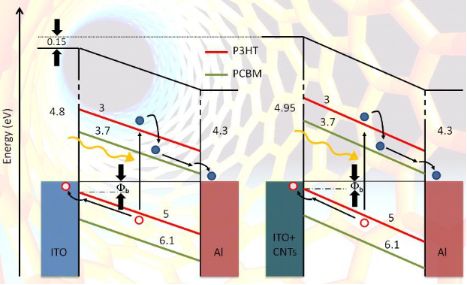
- solar cells based on poly(3-hexylthiophene) (P3HT) and phenyl-C61-butyric acid methyl ester (PCBM), the MWCNT-enhanced electrodes are found to improve the charge-carrier extraction from the photoactive blend, thanks to the additional percolation paths provided by the CNTs. The work function of as
- , such as thermal [8] and solvent annealing [9], or the use of additives in the blend preparation [10]. Along with fullerenes, carbon nanotubes (CNTs) have also been suggested as promising materials to boost solar cell PCE, thanks to their excellent electrical properties and to a favorable aspect ratio
- [11]. In fact, CNTs were initially suggested as a replacement for fullerene [12], because of their ability to create percolation paths through the heterostructure, while providing electron–hole dissociation sites. Being that the electron mobility in fullerenes is rather low [13][14][15], the initial




Conducting composite materials from the biopolymer kappa-carrageenan and carbon nanotubes
Beilstein J. Nanotechnol. 2012, 3, 415–427, doi:10.3762/bjnano.3.48
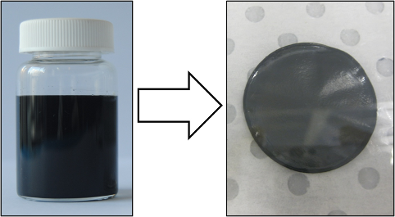
- Rico, San Juan, Puerto Rico 00931, USA 10.3762/bjnano.3.48 Abstract Conducting composite films containing carbon nanotubes (CNTs) were prepared by using the biopolymer kappa-carrageenan (KC) as a dispersant. Rheological studies indicated that 0.5% w/v was the appropriate KC concentration for
- dispersing CNTs. Our results showed that multiwalled nanotubes (MWNTs) required less sonic energy than single-walled nanotubes (SWNTs) for the dispersion process to be complete. Films prepared by vacuum filtration exhibited higher conductivity and improved mechanical characteristics compared to those
- prepared by evaporative casting. All composite films displayed sensitivity to water vapour, but MWNT films were more sensitive than SWNT films. Keywords: biopolymers; carbon nanotubes; carrageenan; composite materials; conductivity; mechanical; rheology; Introduction Carbon nanotubes (CNTs) have


Glassy carbon electrodes modified with multiwalled carbon nanotubes for the determination of ascorbic acid by square-wave voltammetry
Beilstein J. Nanotechnol. 2012, 3, 388–396, doi:10.3762/bjnano.3.45
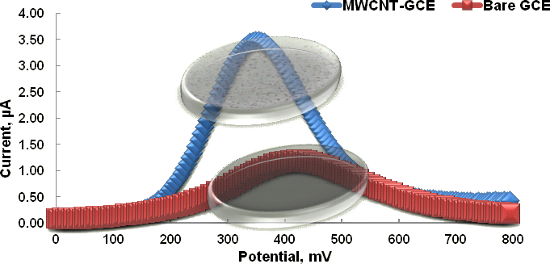
- , which results in poor selectivity and reproducibility, thus limiting the use of bare GCEs in quantitative measurements. Presently there are increasing reports on the use of carbon nanotubes (CNTs) in electroanalysis [10]. CNTs may be multiwalled or single-walled depending on the number of layers of
- carbon atoms in the nanotubes [11][12]. CNTs have unique geometric, mechanical, electronic and chemical properties. They possess a high aspect ratio (length/diameter) [13] and large surface areas (typically 200–300 m2/g) and, hence, potentially high electroactivity [14]. The defects present at the open
- ends of the CNTs have been observed to produce relatively low peak potentials and high peak currents in the voltammetry of several electroactive molecules at electrodes modified with CNTs [14][15]. Nafion, a perfluorosulfonated polymer with cation-exchange properties, has been used to stably confine


Structural, electronic and photovoltaic characterization of multiwalled carbon nanotubes grown directly on stainless steel
Beilstein J. Nanotechnol. 2012, 3, 360–367, doi:10.3762/bjnano.3.42
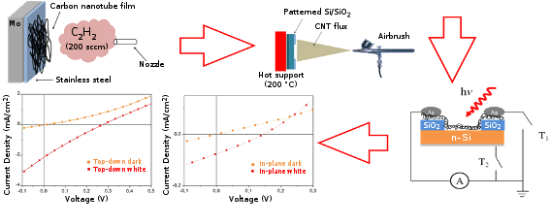
- silicon substrate plays an important role in the production of electron–hole pairs. Keywords: carbon nanotubes; electronic properties; heterojunction; photovoltaic; stainless steel; Introduction Carbon nanotubes (CNTs) possess unique electronic, mechanical and optical properties that make them
- interesting for fundamental studies as well as practical applications [1]. Among the various synthesis techniques, chemical vapour deposition is preferred in the field of electronics, since it allows for the direct growth of CNTs on substrates [2]. CNTs are generally synthesized on Si or Si/SiO2 substrates
- been made to grow CNTs on SS substrates with [4][5] or without [6][7] the addition of an external catalyst. In particular, we have shown that the growth of high quality multiwalled CNTs on SS in the absence of an external catalyst is possible because the nanoscale roughness and the metallic nature of


Surface functionalization of aluminosilicate nanotubes with organic molecules
Beilstein J. Nanotechnol. 2012, 3, 82–100, doi:10.3762/bjnano.3.10
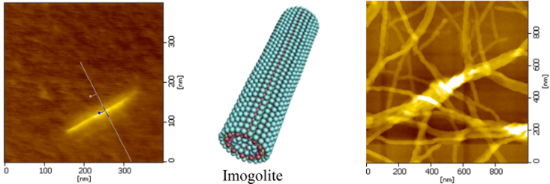
- ratios and ability to form network structures. It is no doubt that nanotubes with reactive surfaces and a reliable supply are preferred for the application as scaffold of organic molecules. Carbon nanotubes (CNTs) play an important role in the nanotube family. However, the surface of CNTs is inert for


Approaches to nanostructure control and functionalizations of polymer@silica hybrid nanograss generated by biomimetic silica mineralization on a self-assembled polyamine layer
Beilstein J. Nanotechnol. 2011, 2, 760–773, doi:10.3762/bjnano.2.84
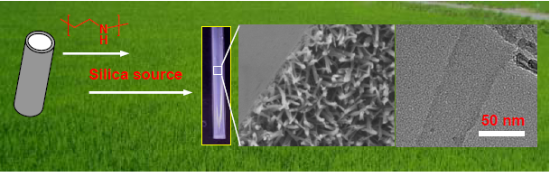
- -driven self-assembly of preformed PSS-wrapped CNTs. In our case, the presence of IPA in the media was assumed to play an essential role in the formation of the pyramidlike structure since the use of neat water did not give this kind of surface structure. However, the detailed formation mechanism is still


Generation and agglomeration behaviour of size-selected sub-nm iron clusters as catalysts for the growth of carbon nanotubes
Beilstein J. Nanotechnol. 2011, 2, 734–739, doi:10.3762/bjnano.2.80
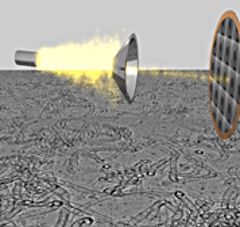
- °C, no CNT growth is observed. Keywords: carbon nanotubes; CNT growth; metal clusters; size selected clusters; Introduction Controlling the individual diameters of carbon nanotubes (CNTs) is still one of the major challenges in current CNT research, and it is particularly important as it determines
- crucially their physical and electronic properties. High quality single-walled and double-walled CNTs are currently prepared on a large scale with the aid of nm-sized transition metal catalysts, by using high-temperature chemical vapour deposition (CVD) techniques above 750 °C, despite the fact that several
- crystal [6]. Size-defined, sub-nm, ligand-free metal clusters would be an interesting synthetic alternative to obtain CNTs with controlled diameter. However, such small metal clusters can only be generated by gas-phase techniques, typically in a ligand-free environment as naked clusters. A controlled


Optical properties of fully conjugated cyclo[n]thiophenes – An experimental and theoretical approach
Beilstein J. Nanotechnol. 2011, 2, 720–726, doi:10.3762/bjnano.2.78
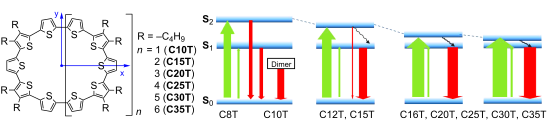
- of cyclo[n]thiophenes was developed. By using linear pentameric quinquethiophene L5T as a building block, a series of individual macrocycles CnT, from C10T to an unprecedented size up to C35T, was obtained in an excellent overall yield of around 60%. For the first time, CnTs including members with an


Dynamics of capillary infiltration of liquids into a highly aligned multi-walled carbon nanotube film
Beilstein J. Nanotechnol. 2011, 2, 311–317, doi:10.3762/bjnano.2.36
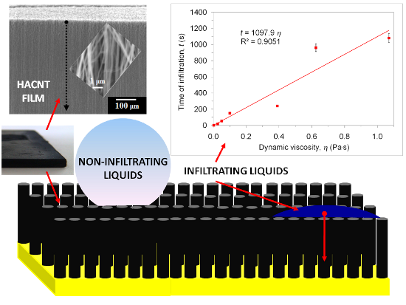
- ; Introduction Wettability of carbon nanotubes (CNTs) and highly aligned carbon nanotube (HACNT) films is an important aspect in numerous technologies including manufacture of composites [1], fabrication of constantly/interchangeably hydrophobic or hydrophilic materials [2][3], nanofluidic devices [4] or sponges
- for non-polar liquids [5]. One of the cutting edge areas of research exploiting CNTs is nanomedicine where the interface of CNTs with a liquid environment is essential, e.g., subcutaneous glucose sensors [6], microcatheters [7] or tissue engineering materials [8]. Until now, physical compatibility of
- liquids and pristine CNTs was determined by dispersibility of randomly oriented and highly entangled, hydrophobic nanotubes. Wetting of CNTs in non-polar to medium polar liquids (a key factor enabling their dispersibility) can be gained generally via two routes: (1) By control of the CNTs dimensions


Studies towards synthesis, evolution and alignment characteristics of dense, millimeter long multiwalled carbon nanotube arrays
Beilstein J. Nanotechnol. 2011, 2, 293–301, doi:10.3762/bjnano.2.34
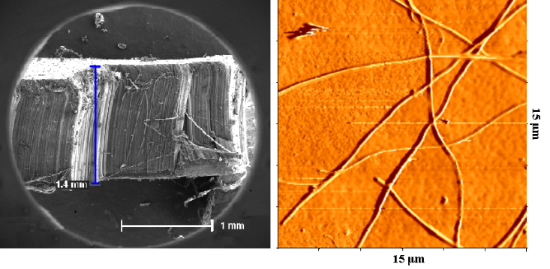
- , India 10.3762/bjnano.2.34 Abstract We report the synthesis of aligned arrays of millimeter long carbon nanotubes (CNTs), from benzene and ferrocene as the molecular precursor and catalyst respectively, by a one-step chemical vapor deposition technique. The length of the grown CNTs depends on the
- reaction temperature and increases from ~85 µm to ~1.4 mm when the synthesis temperature is raised from 650 to 1100 °C, while the tube diameter is almost independent of the preparation temperature and is ~80 nm. The parallel arrangement of the CNTs, as well as their tube diameter can be verified
- spectroscopically by small angle X-ray scattering (SAXS) studies. Based on electron diffraction scattering (EDS) studies of the top and the base of the CNT films, a root growth process can be deduced. Keywords: carbon nanotubes; characterization; synthesis; Introduction CNTs have been extensively studied in


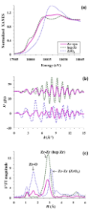
Zirconium nanoparticles prepared by the reduction of zirconium oxide using the RAPET method
Beilstein J. Nanotechnol. 2011, 2, 198–203, doi:10.3762/bjnano.2.23
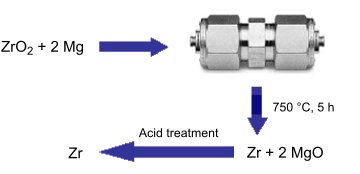
- the application of metallic Zr is the use of Zr nanoparticles (NP) as catalysts for growing TWCNTs (two or three graphene layer tubing) [5]. The presence of the zirconium as a catalyst ensures an effective method for the synthesis of high purity and good quality CNTs. The best known process for the



Electrochemical behavior of dye-linked L-proline dehydrogenase on glassy carbon electrodes modified by multi-walled carbon nanotubes
Beilstein J. Nanotechnol. 2010, 1, 135–141, doi:10.3762/bjnano.1.16
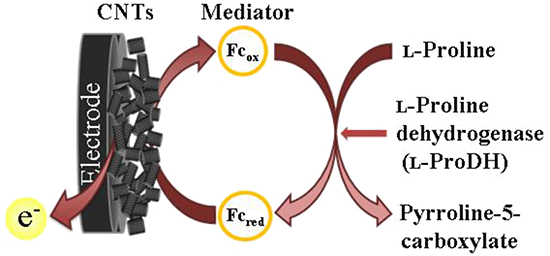
- enzyme, specific immobilization strategies, including electron mediators, should be considered [10][11][12]. In the last decade, the use of nano materials, especially carbon nanotubes (CNTs), in the construction of enzyme biosensors has received considerable attention. Because of their excellent
- mechanical and electrochemical properties [13][14], CNTs can mediate the electron transfer between an electrode and a number of electroactive substances such as hydrogen peroxide, ascorbic acid and dopamine, and accelerate surface electrochemical reactions [15]. Direct electron transfer between the active
- site of several biomacromolecules and the electrode surface can also be set up with the aid of CNTs [16][17]. Because the application of CNTs can dramatically improve the sensitivity of electrochemical sensors, more and more analytical chemists have focused their attention on CNTs-modified electrodes





