Search results
Search for "Si substrate" in Full Text gives 212 result(s) in Beilstein Journal of Nanotechnology. Showing first 200.
Fulleropeptide esters as potential self-assembled antioxidants
Beilstein J. Nanotechnol. 2015, 6, 1065–1071, doi:10.3762/bjnano.6.107
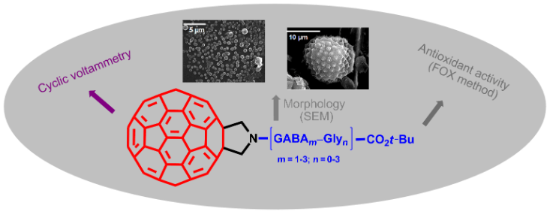
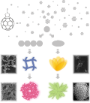
- mM) on a Si substrate at room temperature. The ester 1 arranged into a flower-shaped, hierarchically ordered architecture of curled leaf-like particles with diameters of up to 5 μm (Figure 3A) [25]. Figure 3B–F shows selected representative examples of SEM micrographs of typical fulleropeptide self
- compound was dispersed on a brass substrate. The dried samples obtained from dilute solutions were prepared as follows: 10 μL of 1 mM solution in the PhMe/MeOH (5:1, v/v) mixture of fullerene derivatives was deposited on the surface of a Si substrate (10 × 10 mm) and left overnight to slowly evaporate in a
- particles of 4 and 11. (E, F) Networks of spherical particles of 9 and 12, all prepared from 5:1 PhMe/MeOH (v/v) on a Si substrate after evaporation of a 1 mM solution. Scale bars correspond to 5 μm. Representatives of the SEM images of the self-organized rods of Fp–GABA ester 1 (A) and fulleropeptides self


Fabrication of high-resolution nanostructures of complex geometry by the single-spot nanolithography method
Beilstein J. Nanotechnol. 2015, 6, 976–986, doi:10.3762/bjnano.6.101
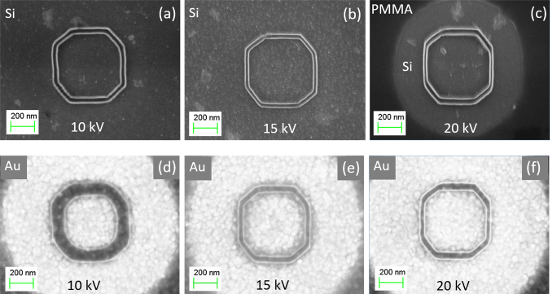
- outer edges vary significantly. In the case of a monocrystalline Si substrate, the ring has a sharp edge with a small resist undercut (Figure 1a). As seen in Figure 1b, exposure of the resist on the polycrystalline Au film leads to a deep undercut and rough edges after development. The physics behind
- emission is very broad and corresponds to the normalized energy, W = E/E0 = 0.5, where E and E0 are the energy of backscattered and primary electrons, respectively. For Au, W = 0.95–0.98. As a result, in the case of the Au substrate, the rings have a much smaller outer diameter compared to the Si substrate
- (Figure 3). Even at a dose of 2.5 pC, the ring on the Au substrate is still smaller than that patterned onto the Si substrate at a dose 0.35 pC. Our experimental findings are supported by Monte Carlo simulations performed with NanoPECS software [17]. In the case of the Si substrate, most of the electrons


Electron-stimulated purification of platinum nanostructures grown via focused electron beam induced deposition
Beilstein J. Nanotechnol. 2015, 6, 907–918, doi:10.3762/bjnano.6.94
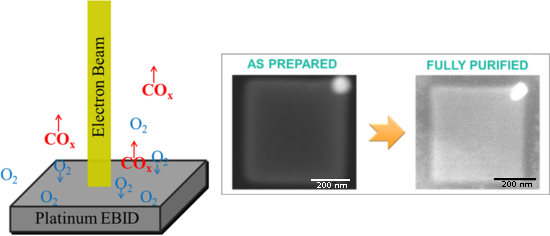
- pre-cleaned 100 nm thermal SiO2 on Si substrate and then purified. The deposition and subsequent purification was performed using a FEI NOVA 600 dual-beam system equipped with FEI and Omniprobe gas injection systems. Prior to deposition, the substrate was sonicated in isopropanol for 5 min and




Combination of surface- and interference-enhanced Raman scattering by CuS nanocrystals on nanopatterned Au structures
Beilstein J. Nanotechnol. 2015, 6, 749–754, doi:10.3762/bjnano.6.77
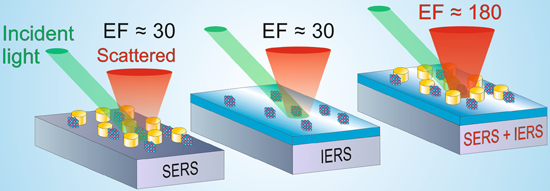
- SEM image of the edge of a periodic Au nanocluster array on a Si substrate with deposited CuS NCs is presented in Figure 4a. One can see that the CuS NCs are homogeneously distributed on the Au nanocluster array and on the bare Si surface with an average thickness of about 1 ML. The Raman spectrum
- measured from the area where CuS NCs are formed on bare Si (lower part in Figure 4a) shows only one strong Raman line at 521 cm−1 related to the Si substrate (lower curve in Figure 4b). Weak Raman features located in the spectral range of 400–500 cm−1 are also typical for monocrystalline Si [21] while no
- , CuS NCs were deposited on arrays of Au nanoclusters fabricated using nanolithography on a 75 nm thick SiO2 layer. Obviously, the LSPR energy of the Au nanocluster arrays fabricated on a SiO2 layer and on a Si substrate can be different due to the difference of dielectric functions of SiO2 and Si [22


Morphological and structural characterization of single-crystal ZnO nanorod arrays on flexible and non-flexible substrates
Beilstein J. Nanotechnol. 2015, 6, 720–725, doi:10.3762/bjnano.6.73
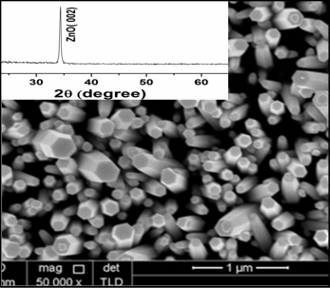
- work [17], the lattice and thermal mismatches between ZnO and a Si substrate are 15 and 60%, respectively. PET and glass substrates are amorphous, and are thus expected to result in even larger lattice and thermal mismatching with ZnO than for the Si substrate [18]. In the current study, the lattice
- -induced scattering [22]. Also, other highly intense peaks were detected in sample (b) in the region 600–890 cm−1 characteristic of the PET substrate (sub), which also can be seen in sample (a) for glass substrate (sub), yet it was not detected for the Si substrate. Conclusion Single-crystal ZnO nanorod


Observation of a photoinduced, resonant tunneling effect in a carbon nanotube–silicon heterojunction
Beilstein J. Nanotechnol. 2015, 6, 704–710, doi:10.3762/bjnano.6.71
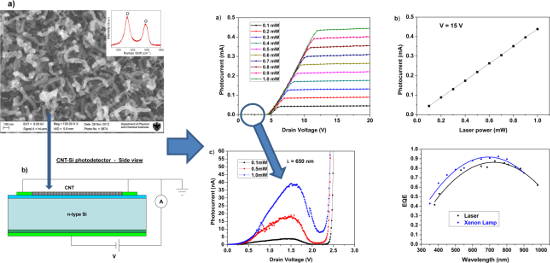
- obtained by growing a continuous layer of multiwall carbon nanotubes on an n-doped silicon substrate. The multiwall carbon nanostructures were grown by a chemical vapor deposition (CVD) technique on a 60 nm thick, silicon nitride layer, deposited on an n-type Si substrate. The heterojunction
- . Conclusion In this paper, we report the results of a negative differential resistance behavior generated by the incident radiation, which varies as a function of wavelength and incident power intensity for a new photosensitive device consisting of MWCNTs grown at 700 °C on a Si substrate. The junction
- still under investigation, suggest the potential use of the device for optoelectronics applications. (a) Schematic front view and (b) side view of the Si substrate produced by Fondazione Bruno Kessler (FBK) in Povo, Trento (Italy). (a) Scanning electron microscopy (SEM) image of MWCNT samples grown on


Simple approach for the fabrication of PEDOT-coated Si nanowires
Beilstein J. Nanotechnol. 2015, 6, 640–650, doi:10.3762/bjnano.6.65
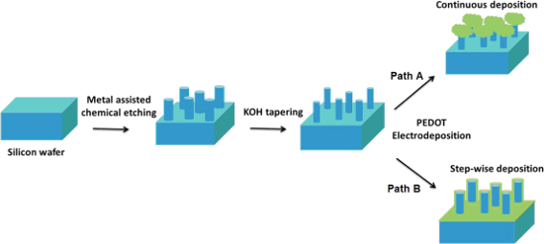
- transmission electron microcopies, energy-dispersive X-ray analysis, and IR spectroscopy. Results and Discussion Effect of tapering on SiNW antireflection The SiNWs, as prepared from an n-type Si substrate according to the process described in the Experimental section, can be seen in Figure 1. The geometry of
- . The chosen experimental conditions resulted in a dense array of smooth Si nanowires, 2 µm in length, approximately 100 nm thick, and oriented perpendicular to the Si substrate. In this case, the space between the wires was quite small. TEM observation of the nanowires allows the dimensions to be
- -type Si substrate conductive in the anodic area. The deposition was controlled by a Solartron SI 1287 with a computer running CorrWare software. A non-aqueous medium was preferred over the classical sodium polystyrene sulfonate (NaPSS) aqueous environment in order to avoid the important silicon




Entropy effects in the collective dynamic behavior of alkyl monolayers tethered to Si(111)
Beilstein J. Nanotechnol. 2015, 6, 583–594, doi:10.3762/bjnano.6.60
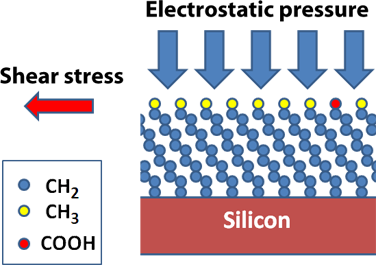
- thickness (spectroscopic ellipsometry, SE), molecular packing density and possible interface oxidation of the Si substrate (X-ray photoelectron spectroscopy). The surface density of acid groups (0.4 × 1014 cm−2) and the total organic layer (acid + alkyl) coverage (2.6 × 1014 cm−2) were obtained by XPS using




Electrical properties of single CdTe nanowires
Beilstein J. Nanotechnol. 2015, 6, 444–450, doi:10.3762/bjnano.6.45
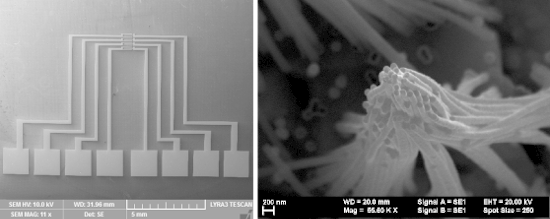
- transport through the nanowire, a third electrical contact was made to the n++ Si substrate. A comparison of the transport properties of the nanowires with and without a passivated thin layer of PMMA was performed. This polymer passivation layer was deposited onto the wire by means of spin coating. SEM


Boosting the local anodic oxidation of silicon through carbon nanofiber atomic force microscopy probes
Beilstein J. Nanotechnol. 2015, 6, 215–222, doi:10.3762/bjnano.6.20
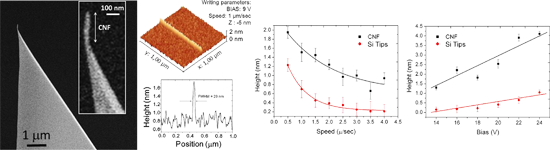
- relatively stiff cantilevers as specified above. The routines and conditions to perform LAO-AFM in the dynamic mode have been described in [1][19]. In brief, a target location onto the Si substrate is inspected for surface cleanliness. Then, the cantilever free oscillation is set to a low amplitude value


Synthesis of boron nitride nanotubes and their applications
Beilstein J. Nanotechnol. 2015, 6, 84–102, doi:10.3762/bjnano.6.9
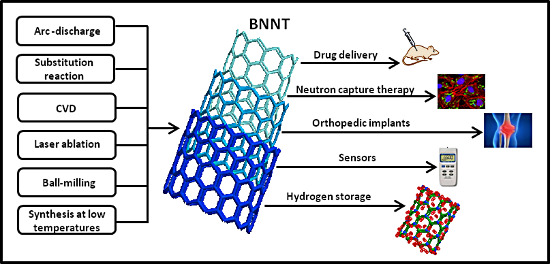
- first successful synthesis of patterned BNNTs was performed by catalytic CVD [56]. To produce pure and vertically aligned BNNTs, a Si substrate was coated with Al2O3 of 30 nm thickness, then MgO, Ni, or Fe catalysts was deposited on the surface of the Al2O3 by pulsed laser deposition. This substrate was
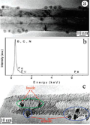
- setup, (b) stretching of dense BNNTs from the sample surface, (c) high magnification SEM image of BNNTs, (d) SEM images of slightly compressed BNNTs on a Si substrate, and (e) cross-sectional view of vertically aligned BNNTs. Figure adapted with permission from [56], copyright 2010 American Chemical




Bright photoluminescence from ordered arrays of SiGe nanowires grown on Si(111)
Beilstein J. Nanotechnol. 2014, 5, 2498–2504, doi:10.3762/bjnano.5.259
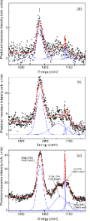
- to 25 K) with excitation at 405 and 458 nm. There are four major features in the energy range of interest (980–1120 meV) at energies of 1040.7, 1082.8, 1092.5, and 1098.5 meV, which are assigned to the NW-transverse optic (TO) Si–Si mode, NW-transverse acoustic (TA), Si–substrate–TO and NW-no-phonon
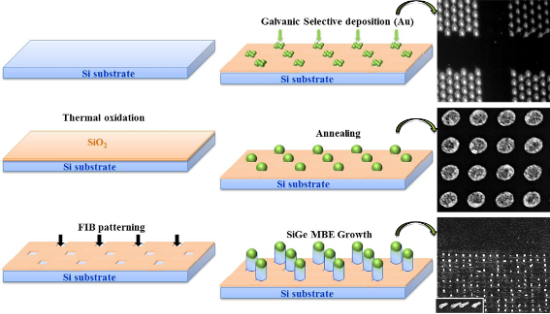
- -shell NWs using a condensation process that we have developed. Three NW samples were prepared for this study: Sample (A), where the NWs are grown randomly across the Si substrate; sample (B), where the nanowires decorate the edges of 400 × 400 µm2 boxes; and sample (C), where the NWs fill 400 × 400 µm2
- spectra obtained for sample (C) with excitation at 405 and 438 nm are compared in Figure 3. The two spectra exhibit the same features, most of which arise from the Si substrate together with a few arising from instrumental effects. The main difference between them, as also observed for the other two


Si/Ge intermixing during Ge Stranski–Krastanov growth
Beilstein J. Nanotechnol. 2014, 5, 2374–2382, doi:10.3762/bjnano.5.246
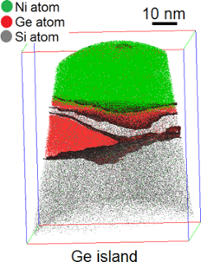
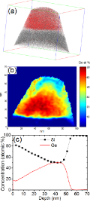
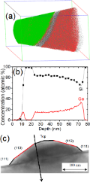
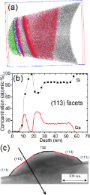
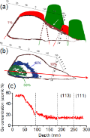
- intermixing during Ge island formation, the Si cap or Si substrate/island interface is abrupt, exhibiting weak Si/Ge intermixing during Si deposition. The islands keep their usual {111} and {113} surface facets under the Si cap, and Ge segregation is observed only in {113} facets. The thickness and the Ge
- preparation, the second layer of islands (the WL and a small part of a surface island are recognizable), the Si buffer, the first layer of islands, and the Si substrate. APT analysis allows one-dimensional (1D) atomic composition profiles to be determined in any direction in the analyzed volume. Figure 4
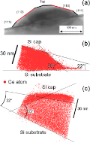
- an average thickness ≈2.7 nm) and from 5 to 30 atom % Ge, respectively. Figure 5a shows a TEM cross-sectional view of a typical dome island exhibiting {111} and {113} facets forming an angle of 54.7° and 25.2°, respectively, with the (001) surface of the Si substrate [40]. Figure 5b,c presents only




Low cost, p-ZnO/n-Si, rectifying, nano heterojunction diode: Fabrication and electrical characterization
Beilstein J. Nanotechnol. 2014, 5, 2216–2221, doi:10.3762/bjnano.5.230
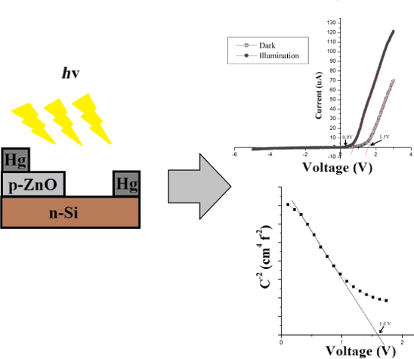
- using solution-processed, p-type, ZnO nanoparticles and an n-type Si substrate. p-type ZnO nanoparticles were synthesized using a chemical synthesis route and characterized by XRD and a Hall effect measurement system. The device was fabricated by forming thin film of synthesized p-ZnO nanoparticles on
- an n-Si substrate using a dip coating technique. The device was then characterized by current–voltage (I–V) and capacitance–voltage (C–V) measurements. The effect of UV illumination on the I–V characteristics was also explored and indicated the formation of a highly rectifying, nano heterojunction
- nanoparticles were found to be +5 × 1014 cm−3, 31.63 cm2/Vs, and 395.19 Ωcm, respectively. These results clearly indicate that the synthesized ZnO nanoparticles have p-type conductivity. A Hall measurement of the n-Si substrate was also performed on a silicon wafer with dimensions 1.4 × 0.9 × 0.04 cm3. The


Properties of plasmonic arrays produced by pulsed-laser nanostructuring of thin Au films
Beilstein J. Nanotechnol. 2014, 5, 2102–2112, doi:10.3762/bjnano.5.219
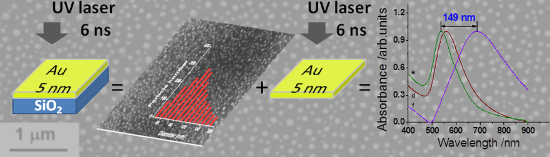
- obtained the different velocities of the metallic (Au and Ta) film surfaces of 0.6 m/s and 1.9 m/s below and above the melting threshold, respectively [24]. Interestingly, the velocity values in the range of 20–70 m/s characteristic of the instability driven processes (i.e., film detachment from Si
- substrate, followed by dewetting and droplet formation) are in reasonable agreement with those observed in femtosecond experiments [25]. Similar to other laser-based methods, LNS results in a variety of unique properties not reproducible by other production routes. This contributes to new research on


Optical properties and electrical transport of thin films of terbium(III) bis(phthalocyanine) on cobalt
Beilstein J. Nanotechnol. 2014, 5, 2070–2078, doi:10.3762/bjnano.5.215
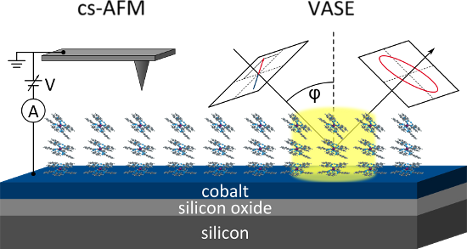
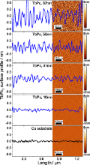
- film acts as a back electrode. Samples for cs-AFM measurements were deposited on a Si substrate with a top SiO2 layer of 1 µm in order to eliminate possible leakage current. Figure 6b shows a 5 × 5 µm2 topography image of an 80 nm thick TbPc2 film which has the highest roughness, with respect to Figure


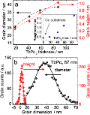

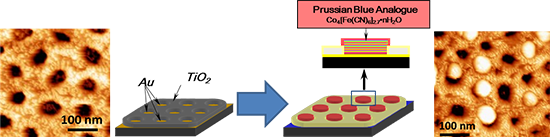
Towards bottom-up nanopatterning of Prussian blue analogues
Beilstein J. Nanotechnol. 2014, 5, 1933–1943, doi:10.3762/bjnano.5.204
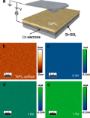
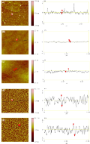
- particles in the reaction media. Work is in progress in order to fully control this step. AFM images of a) the Si substrate b) Au10, c) Au20 and d) Au50. a) AFM and b) SEM images of the sample Au10NC. Depth distribution histogram in the c) dark and d) light areas. SEM micrographs of a) Au20NC and b) Au50NC


High speed e-beam lithography for gold nanoarray fabrication and use in nanotechnology
Beilstein J. Nanotechnol. 2014, 5, 1918–1925, doi:10.3762/bjnano.5.202
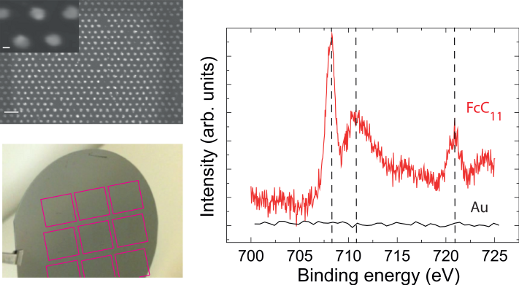
- use an EBPG 5000 Plus from Vistec Lithography. The (100) Si substrate (resistivity = 10−3 Ω·cm) is cleaned with UV/ozone and native oxide etched before resist deposition. The e-beam lithography has been optimized by using a 45 nm-thick diluted (3:5 with anisole) PMMA (950 K). For the writing, we use


Synthesis of Pt nanoparticles and their burrowing into Si due to synergistic effects of ion beam energy losses
Beilstein J. Nanotechnol. 2014, 5, 1864–1872, doi:10.3762/bjnano.5.197
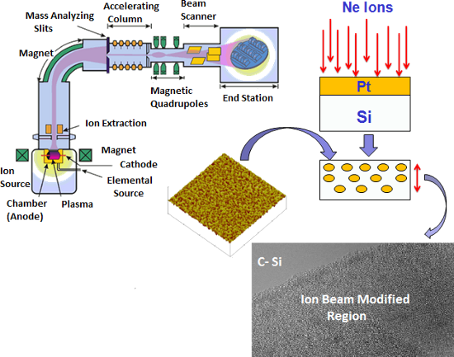
- substrate. The sharp feature just before Si substrate peak is a non-Bragg scattering peak. Conclusion We have reported the synthesis and the burrowing of Pt NPs due to medium-energy neon ion irradiation for Pt thin films deposited on a silicon substrate (Pt–Si). The ion fluence was kept constant (1017 ions
- polycrystalline in nature and (111) and (200) planes are clearly visible in the XRD pattern [47]. The reduced intensities and the broadening of the Pt peaks in the irradiated film confirm the Pt loss on the surface and the formation of NPs. The peak at around 2θ = 56º in the irradiated film is due to the Si



Silicon and germanium nanocrystals: properties and characterization
Beilstein J. Nanotechnol. 2014, 5, 1787–1794, doi:10.3762/bjnano.5.189
- simple MOS structure, with Ge NCs embedded in the SiO2 film deposited on a Si substrate. In order to check for the existence of the deep level traps coming from the Si/SiO2 interface, temperature dependent C–V measurements have been performed. The activation energy of the electron emission has been


Growth and structural discrimination of cortical neurons on randomly oriented and vertically aligned dense carbon nanotube networks
Beilstein J. Nanotechnol. 2014, 5, 1575–1579, doi:10.3762/bjnano.5.169
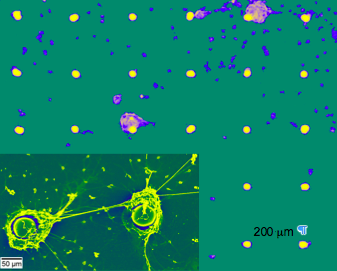
- structured on the silicon substrate. (d) The follow up growth of CNTs proceeds selectively on these spatially defined catalyst islands in a vertically aligned fashion on the Si substrate (left side), or in a randomly oriented fashion on an Au substrate (right side). SEM images of neurons cultured on randomly


Formation of CuxAu1−x phases by cold homogenization of Au/Cu nanocrystalline thin films
Beilstein J. Nanotechnol. 2014, 5, 1491–1500, doi:10.3762/bjnano.5.162
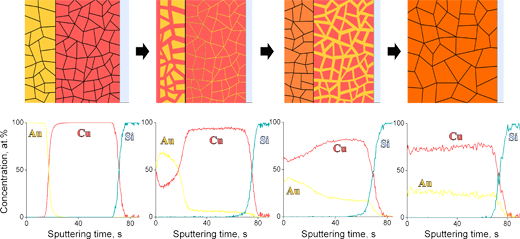
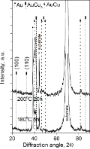
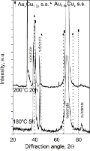
- . Examples for the latter are the metallization of integrated circuits (the formation of a nanometric NiSi layer on the Si substrate [1][2]), or the production of thin chemically ordered FePt films for perpendicular magnetic data recording [3][4]. Regarding the basic understanding of such reactions the
- ), Au(25nm)/Cu(12nm), Au(10nm)/Cu(25nm) and Au(10nm)/Cu(15nm). During the deposition of metal layers the Si substrate was kept at room temperature and the Ar base pressure was set at 0.5 Pa. The rates of the deposition for Au and Cu layers were 0.85 nm/s and 0.5 nm/s, respectively. The samples were






Topology assisted self-organization of colloidal nanoparticles: application to 2D large-scale nanomastering
Beilstein J. Nanotechnol. 2014, 5, 1203–1209, doi:10.3762/bjnano.5.132
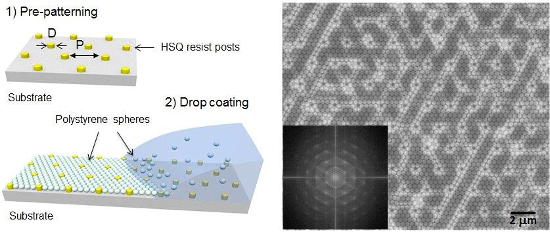
- scanning electron beam lithographic patterning of a 600 nm thick hydrogen silsesquioxane (HSQ) resist layer on a Si substrate. 20 patterns each with a size of 500 × 500 µm2 were fabricated on a Si substrate of 2 × 2 cm2. Si substrates were cleaned with acetone and then with a piranha solution for 24 h at


Nanoforging – Innovation in three-dimensional processing and shaping of nanoscaled structures
Beilstein J. Nanotechnol. 2014, 5, 1066–1070, doi:10.3762/bjnano.5.118
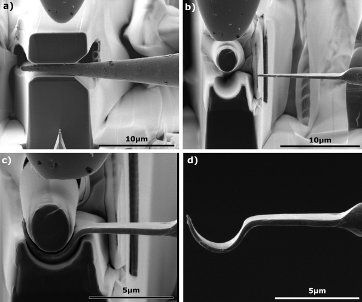
- axis [13]. The forging tools were machined by focused ion beam milling at the corner of a single crystalline Si-substrate. Varying tools in different positions were produced to allow several forging steps after each other (Figure 1). All of these tools are based on a spring principle similar to so


A nanometric cushion for enhancing scratch and wear resistance of hard films
Beilstein J. Nanotechnol. 2014, 5, 1005–1015, doi:10.3762/bjnano.5.114
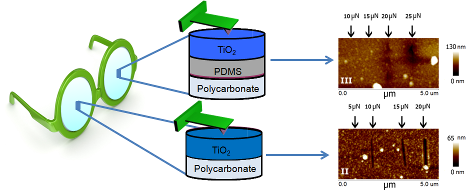
- performs better than the titania on the Si substrate (Figure 4). These results suggest the beneficial influence of a softer substrate in improving the scratch resistance of the titania films. We refer to this as a “cushioning effect”. Taking the Young's modulus as a measure of the substrate compliance
- to 53% of that for the control Si substrate for the 8 nm titania on PDMS sample, and to 78% of the control for 36 nm of titania on PDMS. This compares favorably to the experimental results of Figure 10, where the friction coefficient for the 8 nm titania on PDMS is 46% that of the control, and for
- µN. Applied load vs friction force curves and µ evaluated by lateral force microscopy. FEA model for 7 nm titania layer for 10 nN force showing z-component of global stress distribution for a) PDMS substrate, and b) Si substrate. Inset shows the deformation, with z enlarged by 7× for PDMS and 70× for