Search results
Search for "TEM" in Full Text gives 861 result(s) in Beilstein Journal of Nanotechnology. Showing first 200.
Sodium doping in brookite TiO2 enhances its photocatalytic activity
Beilstein J. Nanotechnol. 2022, 13, 599–609, doi:10.3762/bjnano.13.52
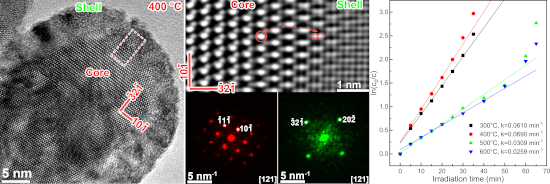
- , which is different from that observed via scanning electron microscopy (SEM) or transmission electron microscopy (TEM). Samples calcinated at 300–600 °C have a similar crystal size (ranging from 39–43 nm), suggesting that there is no obvious correlation between the crystal size and the photocatalytic


A new method for obtaining the magnetic shape anisotropy directly from electron tomography images
Beilstein J. Nanotechnol. 2022, 13, 590–598, doi:10.3762/bjnano.13.51
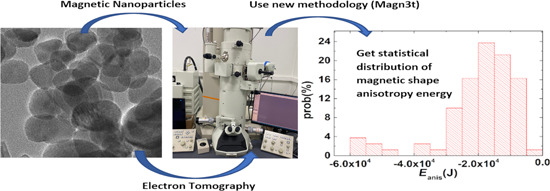
- Avizo Amira or the more limited Tomviz and ImageJ, as well as software from TEM manufacturers, such as the visualizer Kay-JEOL). However, none of them is focused on answering the abovementioned issues, specific to magnetic nanoscale systems. On the other side, there are micromagnetic simulation software
- and washing with water, and it was air-dried at 70 °C overnight in an oven. The experimental tomographic series was acquired with a JEOL 2100 transmission electron microscope (TEM). The instrument was operated at a voltage of 200 kV and the images have been obtained in scanning transmission electron
- microscopy (STEM) operation mode, using the high-angle annular dark-field (HAADF) detectors and an appropriate camera length. The TEM specimen was prepared by a standard powder method, using a 300 Mesh, lacey Carbon, Cu grid. X-ray diffraction (XRD) has been performed on MNPs using a Bruker D8 Advance


Detection and imaging of Hg(II) in vivo using glutathione-functionalized gold nanoparticles
Beilstein J. Nanotechnol. 2022, 13, 549–559, doi:10.3762/bjnano.13.46
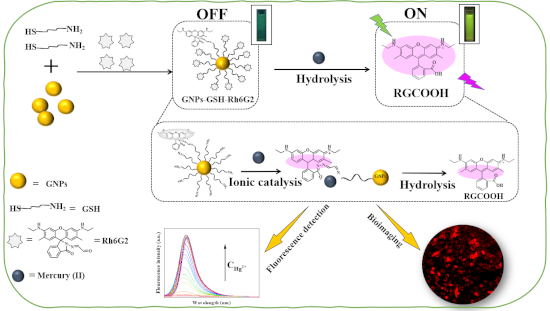
- excitation at 516 nm was chosen as the signal of the GNPs-GSH-Rh6G2. Characterization of GNPs-GSH-Rh6G2 To confirm the formation of GNPs-GSH-Rh6G2, transmission electron microscopy (TEM) was carried out (insets of Figure 2a–c). The TEM image in Figure 2a shows that pure GNPs were well dispersed with a
- were of analytical grade. TEM was carried out using a JEM-2100 transmission electron microscope (JEOL, Japan) at an accelerating voltage of 200 kV. UV–vis absorption spectra were obtained using a UV-2100 Spectrophotometer (Shimadzu, Japan). Fluorescence spectra were recorded using an F-7000
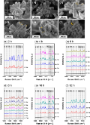
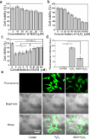
- bottle contain GNPs-GSH-Rh6G2 and GSH-Rh6G2, respectively); (c) UV–vis spectra of GNPs, GNPs-GSH, and GNPs-GSH-Rh6G2; (d) fluorescence excitation and emission spectra of GNPs-GSH-Rh6G2. DLS of (a) GNPs, (b) GNPs-GSH, and (c) GNPs-GSH-Rh6G2 (insets: TEM images); (d) zeta potential of GNPs, GNPs-GSH, and


Stimuli-responsive polypeptide nanogels for trypsin inhibition
Beilstein J. Nanotechnol. 2022, 13, 538–548, doi:10.3762/bjnano.13.45
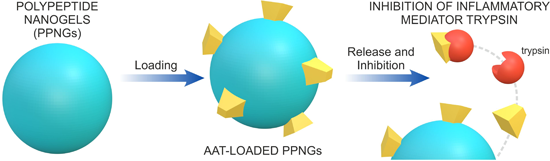
- presence of SPAN 80 [24]. TEM microscopy analysis has revealed a slight narrowing of the particle size distribution with Đ = 1.43. PHEG-Tyr nanogel is composed of two families of compact hydrogel spheres with Dn = 111 and 19 nm, and Dw = 159 and 24 nm, respectively. Biocompatible zwitterionic Nα-Lys-NG was
- synthesized according to our earlier study [25] and TEM image analysis of Nα-Lys-NG demonstrated that the nanogel is more irregular in shape and collapses in the dry state (Figure 1b). This can be the result of the softer structure of Nα-Lys-NG nanogel with Dn values in the range of 50 to 180 nm. Stimuli
- microscope (TEM; FEI; Brno, Czech Republic) after negative staining of nanogel samples with uranyl acetate. The number-average diameter (Dn), weight-average diameter (Dw), and dispersity (Ð) were calculated using ImageJ software by counting the hydrogel nanoparticles in the TEM images following these


Zinc oxide nanostructures for fluorescence and Raman signal enhancement: a review
Beilstein J. Nanotechnol. 2022, 13, 472–490, doi:10.3762/bjnano.13.40




Tubular glassy carbon microneedles with fullerene-like tips for biomedical applications
Beilstein J. Nanotechnol. 2022, 13, 455–461, doi:10.3762/bjnano.13.38
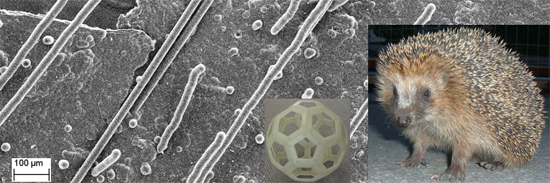
- a fullerene-like structure. So far, evidence for this was inferred from TEM observations and theoretical models of polymer-derived carbons [13]. Since glassy carbon has been identified as a promising material for electrodes used in neural prosthetics [1], our long-term aim is to develop a scaleable
- characterization techniques such as XPS and TEM. Recently, V. Uskoković [30] has pointed out that although glassy carbons have seen numerous application in the last fifty years, biomedical applications have been sporadic. I. Schreiver et al. [31] have shown that allergic reactions can be triggered by nickel and


Alcohol-perturbed self-assembly of the tobacco mosaic virus coat protein
Beilstein J. Nanotechnol. 2022, 13, 355–362, doi:10.3762/bjnano.13.30
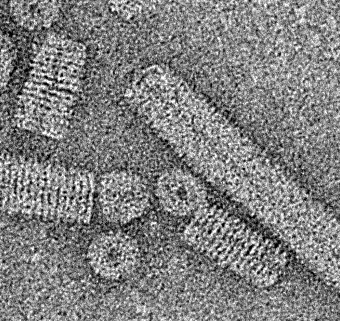
- between in TEM. The bilayer disk has been reported in two different polymorphs: a polar disk with both layers in the same orientation or a bipolar disk with the two layers related by C2 symmetry [18][19][20]. Under basic conditions and at high ionic strength, a four-layer disk aggregate is observed [21
- electron microscopy (TEM) by the strong transverse striations visible in stacked disks but not helical rods [20][23]. Like many VLPs, helical rod assembly follows a cooperative assembly model, which leads to a bimodal distribution of long rods and small particles (disks and short stacked disks), with few
- TEM and dynamic light scattering (DLS). The TMV-cp samples in this work are polydisperse and non-spherical, which complicates the interpretation of DLS data. Because DLS is a light scattering technique, the signal intensity is proportional to the sixth power of the radius [39]. This means that the


Coordination-assembled myricetin nanoarchitectonics for sustainably scavenging free radicals
Beilstein J. Nanotechnol. 2022, 13, 284–291, doi:10.3762/bjnano.13.23
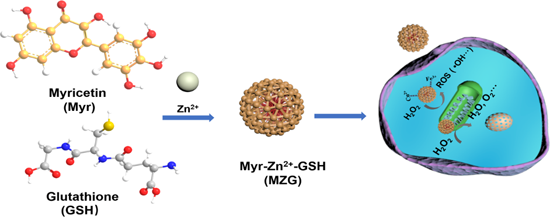
- interaction (Myr/GSH = 1:2) [32][33][34]. The nanoparticles were formed by coordination self-assembly of Zn2+, Myr, and GSH (Figure 1a). They were expected to show good antioxidant activity to protect cells from the ROS-induced damage (Figure 1b). The transmission electron microscopy (TEM) image in Figure 2a
- shows spherical MZG nanoparticles. Size and zeta potential value of the MZG nanoparticles were 44.6 ± 26.5 nm and −23.1 ± 3.4 mV, respectively, measured by dynamic light scattering (DLS) (Figure 2b) and consistent with the TEM results. Importantly, the co-assembly mechanism was further revealed through
- activity for maintaining redox homeostasis in cells. Physicochemical characterization of MZG nanoparticles. (a) TEM image. (b) DLS profile of MZG nanoparticles. (c) UV–vis absorbance spectra of Myr dissolved in (0.1 M NaOH), Myr/Zn2+ complex, GSH, and MZG (equivalent concentration of Myr: 20 μg·mL−1). (d


Investigation of a memory effect in a Au/(Ti–Cu)Ox-gradient thin film/TiAlV structure
Beilstein J. Nanotechnol. 2022, 13, 265–273, doi:10.3762/bjnano.13.21
- impurities were observed in the coating. Structural properties were analyzed using X-ray diffraction (XRD) and transmission electron microscopy (TEM). XRD patterns were obtained with a PANalytical Empyrean PIXed3D powder diffractometer with Cu Kα radiation (1.5406 Å) and no diffraction peaks were observed
- using a scanning electron microscope (FEI Inspected S50) with an electron dispersion spectrometer (EDS) and the cross-sectional analysis of the prepared thin film structures using a transmission electron microscope (TEM) with X-ray probe. With respect to the programmed U-shape of the magnetron powering
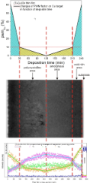
- the next ca. 200 nm. The fourth and last part is the rapid increase in copper content for the next ca. 80 nm. TEM and EDS (Figure 8) confirmed that a symmetric U-shaped gradient (Ti–Cu)Ox of the thin film was achieved. In addition, the structure of the prepared thin film could also be divided into



Photothermal ablation of murine melanomas by Fe3O4 nanoparticle clusters
Beilstein J. Nanotechnol. 2022, 13, 255–264, doi:10.3762/bjnano.13.20
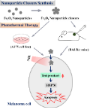
- solution with high thermal stability. Transmission electron microscopy (TEM) revealed a typical face-centered cubic structure with uniform size and an average diameter of 5.2 ± 1.5 nm (Figure 1a) [17]. After the surfactant dodecyltrimethylammonium bromide (DTAB) was introduced, its lipophilic ends combined
- morphology of the as-synthesized nanoparticle clusters was characterized with a JEOL JEM-2100 transmission electron microscopy (TEM). Dynamic light scattering (DLS) The synthesized Fe3O4 NPCs were diluted in RPMI 1640 medium to a final concentration of 0.25 mg/mL. The particle size distribution was
- . Characterization of the superparamagnetic Fe3O4 nanoparticle clusters. (a) TEM image revealing cubic morphology of individual Fe3O4 nanoparticles with a uniform diameter of ca. 5.2 nm. Scale bar: 20 nm. (b) SEM image of clustered Fe3O4 nanoparticles with an average diameter of 329.2 nm. Scale bar: 1 µm. (c


Surfactant-free syntheses and pair distribution function analysis of osmium nanoparticles
Beilstein J. Nanotechnol. 2022, 13, 230–235, doi:10.3762/bjnano.13.17
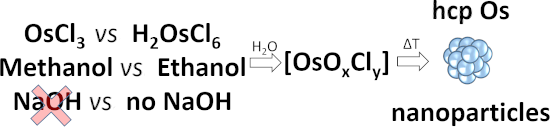
- parameters investigated for this parametric study and Figures S2–S21, Supporting Information File 1, gather transmission electron microscopy (TEM) micrographs and pictures of the materials synthesized. Our results clearly show that small Os NPs can be easily obtained from this simple synthesis method. For
- example, TEM images of Os NPs from two different syntheses are shown in Figure 1. In both cases, the synthesis results in Os NPs of approx. 1–2 nm. When further comparing the results from the large parameter space (Figures S2–S21, Supporting Information File 1), it is clear that the synthesis conditions
- Information File 1). As opposed to the case of Pt NP synthesis, the Os NP size is also not affected by the alcohol used as reductant, as similar NP sizes are obtained when considering the TEM results (comparing Figure S6 and Figure S8, Supporting Information File 1). This result is confirmed by size analysis


Impact of device design on the electronic and optoelectronic properties of integrated Ru-terpyridine complexes
Beilstein J. Nanotechnol. 2022, 13, 219–229, doi:10.3762/bjnano.13.16
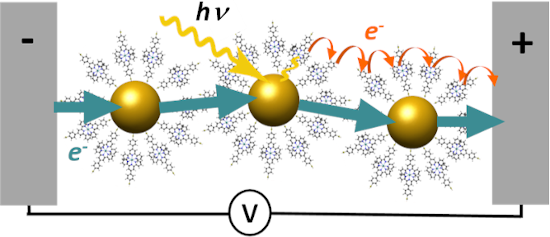
- Fermi–Dirac distribution, and indicates a tunneling mechanism [33][34][35]. A tunneling mechanism has been observed for single-Ru(MPTP)2–AuNP devices as well [15]. TEM images of Ru(MPTP)2–AuNP assemblies point to a nanoparticle separation of about 4 nm corresponding to slightly intercalating ligand


Low-energy electron interaction and focused electron beam-induced deposition of molybdenum hexacarbonyl (Mo(CO)6)
Beilstein J. Nanotechnol. 2022, 13, 182–191, doi:10.3762/bjnano.13.13
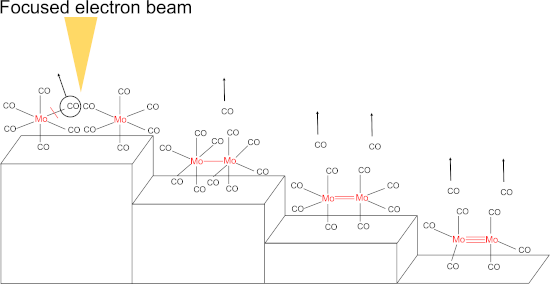
- electron monochromator (TEM), an effusive gas inlet system and a quadrupole mass spectrometer (Hiden EPIC1000). A quasi mono-energetic electron beam generated by the TEM, crosses an effusive beam of the target molecules in a collision region confined by the extraction optics of the quadrupole mass
- spectrometer (QMS). Both positive and negative ions resulting from the electron–molecule interaction are analyzed and detected using the quadrupole mass spectrometer. The flow of the molecular beam can be controlled with a leak valve. The TEM is heated to 120 °C with two halogen lamps in order to avoid


A comprehensive review on electrospun nanohybrid membranes for wastewater treatment
Beilstein J. Nanotechnol. 2022, 13, 137–159, doi:10.3762/bjnano.13.10




Theranostic potential of self-luminescent branched polyethyleneimine-coated superparamagnetic iron oxide nanoparticles
Beilstein J. Nanotechnol. 2022, 13, 82–95, doi:10.3762/bjnano.13.6
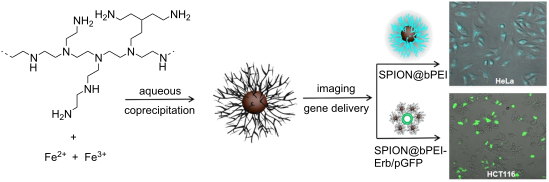
- synthesized luminescent SPION@bPEI was published by Unal et al. in 2018 [35]. The total organic content of the particles was determined to be 76% by TGA. The average crystal size of SPION@bPEI nanoparticles was measured from transmission electron microscopy (TEM) images to be approx. 6 nm (Figure 1a). The TEM
- images related to polymer-coated magnetic nanoparticles show that these nanoparticles seem to be agglomerated, which is due to the protruding of near particles under vacuum. It is difficult to see the PEI polymer coating around the crystal by TEM. However, it is possible to distinguish the polymer
- performed at magnetic mode indicated particles of approx. 20 nm in size, which suggests a slight particle aggregation (Figure 1b). According to the literature, it is usually not uncommon to obtain different results using AFM and TEM analysis. However, due to a higher resolution and material-related




Sputtering onto liquids: a critical review
Beilstein J. Nanotechnol. 2022, 13, 10–53, doi:10.3762/bjnano.13.2
- electron microscopy (TEM), it was shown that the Au sol formation process consists of an induction period followed by a rapid increase in the number of particles, followed by a linear increase, followed by a rapid decrease in the growth rate. In other words, the typical kinetic curve has a sigmoidal S






Measurement of polarization effects in dual-phase ceria-based oxygen permeation membranes using Kelvin probe force microscopy
Beilstein J. Nanotechnol. 2021, 12, 1380–1391, doi:10.3762/bjnano.12.102
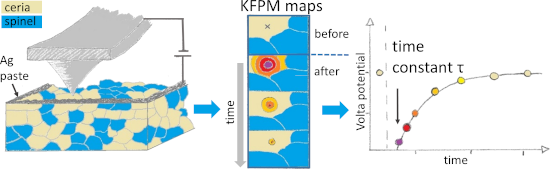
- -conductive phase and 40 vol % FeCo2O4 as electron-conductive phase was synthesized. TEM measurements showed a relatively pure dual-phase material with only minor amounts of a tertiary (Sm,Ce)(Fe,Co)O3 perovskite phase and isolated residues of a rock salt phase at the grain boundaries. The obtained material
- , KPFM measurements were started with an imaging velocity of 1 image per minute to measure the relaxation of the introduced gradient. Electron microscopy The TEM specimens were cut from 60CSO20-FC2O pellets by focused ion beam (FIB) milling using a FEI Strata400 system with Ga ion beam. Further thinning
- and cleaning were performed with an Ar ion beam in a Fischione Nanomill 1040 at 900 eV and 500 eV beam energy, respectively. TEM and energy-filtered TEM (EFTEM) imaging were performed with a FEI Tecnai F20 at 200 kV. High-resolution HAADF imaging and energy-dispersive X-ray (EDX) chemical mapping were


Chemical vapor deposition of germanium-rich CrGex nanowires
Beilstein J. Nanotechnol. 2021, 12, 1365–1371, doi:10.3762/bjnano.12.100
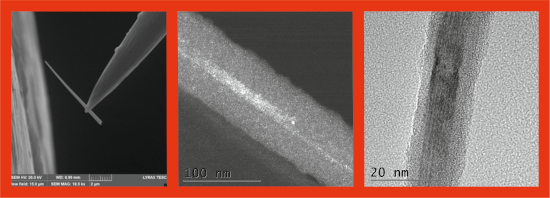
- nanoobjects were studied by transmission electron microscopy (TEM) performed on a Philips CM 120 (LaB6, 120 kV) equipped with a NanoMEGAS precession unit DigiStar, an Olympus SIS CCD camera Veleta (2048 × 2048 px), and a windowless detector Apollo XLTW for EDX measurements. Selected area electron diffraction



Biocompatibility and cytotoxicity in vitro of surface-functionalized drug-loaded spinel ferrite nanoparticles
Beilstein J. Nanotechnol. 2021, 12, 1339–1364, doi:10.3762/bjnano.12.99
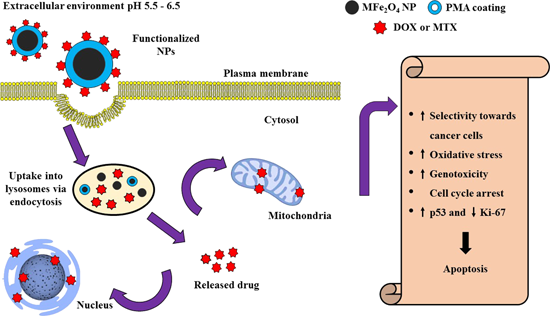
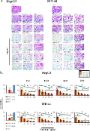
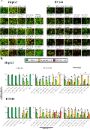
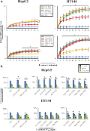
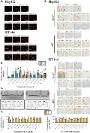
- phase of the samples is consistent with the XRD results. The formation of spherical NPs was confirmed by transmission electron microscopy (TEM) (Figure 2a). The nanospheres are uniformally distributed throughout the surface of the samples. High-resolution transmission electron microscopy (HR-TEM) images





Plasmon-enhanced photoluminescence from TiO2 and TeO2 thin films doped by Eu3+ for optoelectronic applications
Beilstein J. Nanotechnol. 2021, 12, 1271–1278, doi:10.3762/bjnano.12.94
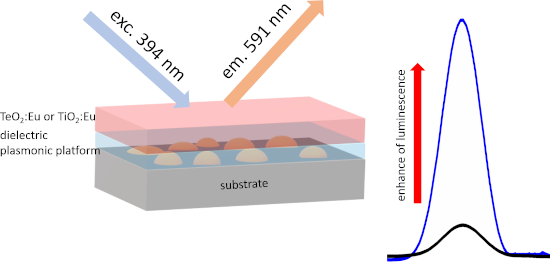
- investigated by SEM and TEM, while the composition of oxides film was analyzed by XPS. Luminescence properties were studied on the basis of excitation and emission spectra. The experiments show that the additional dielectric layer enhances the luminescence intensity. Such structures could be potential
- examined by SEM and TEM. The SEM image presented in Figure 2a shows a good uniformity of the prepared Au nanostructures. Nanoislands cover the whole substrate surface. Additionally, the HRTEM image of a cross section of a single nanoisland is shown in Figure 2b [25][26]. It can be seen, that the


Morphology-driven gas sensing by fabricated fractals: A review
Beilstein J. Nanotechnol. 2021, 12, 1187–1208, doi:10.3762/bjnano.12.88
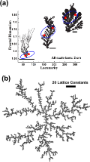
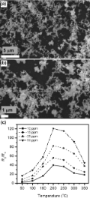
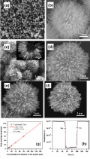
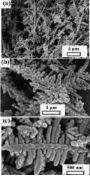
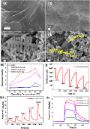
- -assisted chemical etching was used by Qin et al. [79] to prepare a dendritic array of Si/WO3 NW composites, which was tested for the detection of NO2 gas at room temperature. Figure 17a–e SEM and high-resolution transmission electron microscopy (HR-TEM) images of Si/WO3 NWs. Figure 17f shows the XRD
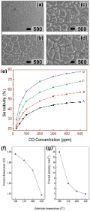
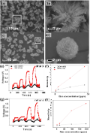
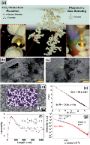
- gas molecules to penetrate the sensor more easily. The response and recovery times for a small concentration of HCOOH (ca. 50 ppm) was reported to be ca. 27 s and 21 s at 260 °C, respectively. Figure 21a–e shows SEM, TEM and HR-TEM images of the CdS dendrites. The CdS dendrites were shown to have
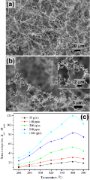
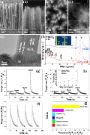
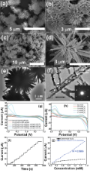
- 2–3 µm length) by a hydrothermal method and calcined the fabricated nanostructure precursors in air [84]. Figure 23a–f shows SEM and TEM micrographs with selected-area electron diffraction (SAED) patterns of the Co3O4 nanostructures. Hydrogen peroxide (H2O2) was detected by an electrochemical sensor










pH-driven enhancement of anti-tubercular drug loading on iron oxide nanoparticles for drug delivery in macrophages
Beilstein J. Nanotechnol. 2021, 12, 1127–1139, doi:10.3762/bjnano.12.84
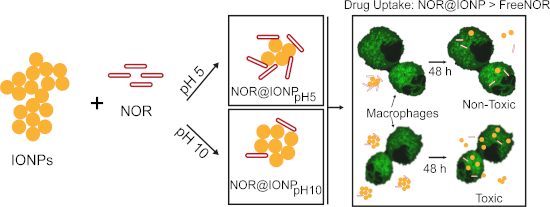
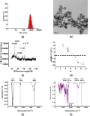
- File 1, Table S1). Characterization of uncoated iron oxide nanoparticles and NOR Uncoated iron oxide nanoparticles (UIONPs) exhibited a hydrodynamic diameter (from DLS) greater than 1000 nm, which was due to the aggregation of ≈10 nm individual UIONPs, as observed by TEM (Figure 2a,b). The size
- COOH, NH (quinolone), C=O, CH and NH (piperazine) vibrations, respectively [36]. Characterization of NOR-coated IONPs, coated at pH 5 NOR@IONP, coated at pH 5 (NOR@IONPpH5), exhibited a distribution size range of 45 to 110 nm (Figure 3a), which was confirmed by TEM, to be aggregates of 10–12 nm size
- . Characterization of NOR-coated iron oxide nanoparticle coated at pH 10 NOR@IONP coated at pH 10 (NOR@IONPpH10), had a size distribution ranging from 25 to 120 nm, as examined through DLS (Figure 4a). TEM further confirmed these to be aggregates of 10–13 nm sized individual nanoparticles (Figure 4b). The FWHM was



Assessment of the optical and electrical properties of light-emitting diodes containing carbon-based nanostructures and plasmonic nanoparticles: a review
Beilstein J. Nanotechnol. 2021, 12, 1078–1092, doi:10.3762/bjnano.12.80
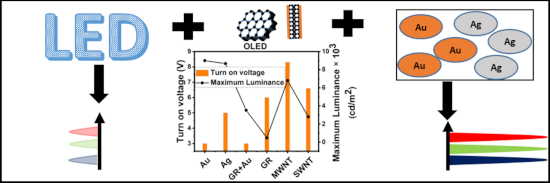
- of 20 mA/cm2. Similarly, the roles of Ag-doped ZnO and pristine ZnO as EIL in the imidazole organic EML-based HyLED were compared [61]. The transmission electron microscopy (TEM) images of Figure 8 illustrate that the pristine ZnO NP are larger (≈50 nm) than the Ag-doped ZnO (≈15 nm). In addition
- on ITO glass. The inset shows the TEM image of AuNP with a particle size of 20 nm. (c) The electromagnetic field distribution around AuNP with 20 nm diameter simulated by finite-difference time-domain modelling. Figure 6a–c was adapted from [51] (© 2018 J. Feng et al., distributed under the terms of


Revealing the formation mechanism and band gap tuning of Sb2S3 nanoparticles
Beilstein J. Nanotechnol. 2021, 12, 1021–1033, doi:10.3762/bjnano.12.76
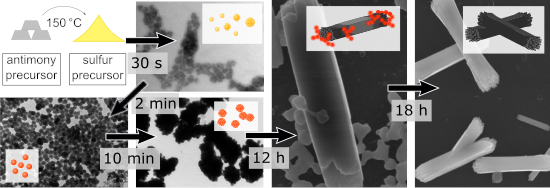
- different reaction time points were characterized by transmission electron microscopy (TEM, Figure 1a–c) and scanning electron microscopy (SEM, Figure 1d–f). The images show that small nanoparticles (type I) were formed about 2 min (Figure 1a) after injecting the antimony precursor Sb-EHA. The bright orange
- the shape, but no individual type I nanoparticles could be identified anymore in TEM at this stage. Also, the type II nanoparticles appeared to have formed superordinate structures (type III). Such multistep hierarchical growth mechanisms have already been observed for different materials, such as
- after 30 h within the measurement uncertainties (5.5 ± 1.9 µm and 5.4 ± 1.6 µm). Histograms of the length and width distribution of the crystalline particles obtained after 16 h, 18 h, and 30 h can be found in Figure S3 in Supporting Information File 1. TEM images of growing rods show layered structures


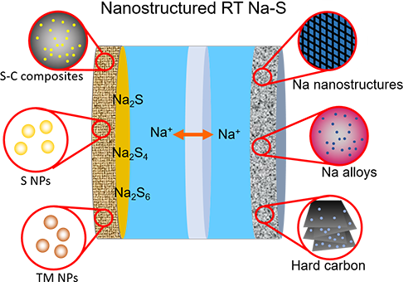
Progress and innovation of nanostructured sulfur cathodes and metal-free anodes for room-temperature Na–S batteries
Beilstein J. Nanotechnol. 2021, 12, 995–1020, doi:10.3762/bjnano.12.75