


Search results
Search for "batteries" in Full Text gives 185 result(s) in Beilstein Journal of Nanotechnology.
Materials for sustainable energy production, storage, and conversion
Beilstein J. Nanotechnol. 2015, 6, 1601–1602, doi:10.3762/bjnano.6.163

- is the storage of electrical energy for stationary, mobile, and portable applications. Here, solutions are needed that are based either on chemical compounds, such as hydrogen or hydrocarbons, or on safe, low cost and powerful batteries, which have a long cycle and calendar life and a high energy
- -noble metals with a long lifetime and a low kinetic barrier for conversion. For electrochemical storage, batteries based on new ionic shuttles such as sodium or magnesium are being explored. Moreover, oxygen from air could serve as an active cathode material, which does not need to be intrinsically
- elevated temperatures (HT-PEMFC) below 200 °C are discussed by Roswitha Zeis [3]. The field of electrochemical energy storage is particularly challenging. Current Li-ion batteries are not only expensive and have a relatively short lifetime, they are also considered to not have enough energy content to meet
The Kirkendall effect and nanoscience: hollow nanospheres and nanotubes
Beilstein J. Nanotechnol. 2015, 6, 1348–1361, doi:10.3762/bjnano.6.139

- biotechnology [8], batteries [9][10][11][12][13], sensors [14][15][16], catalysis [17][18][19], photodetectors [20], electrochromic devices [21] and supercapacitors [22]. Three years after the pioneering work of Yin et al. [7], the progress in the synthesis of nanotubes and hollow nanoparticles using the

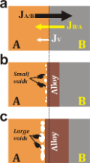


From lithium to sodium: cell chemistry of room temperature sodium–air and sodium–sulfur batteries
Beilstein J. Nanotechnol. 2015, 6, 1016–1055, doi:10.3762/bjnano.6.105
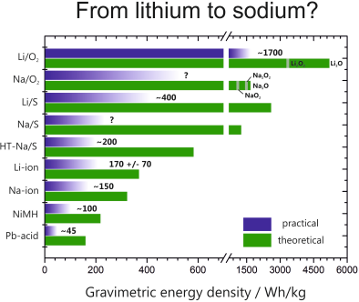
- , Germany 10.3762/bjnano.6.105 Abstract Research devoted to room temperature lithium–sulfur (Li/S8) and lithium–oxygen (Li/O2) batteries has significantly increased over the past ten years. The race to develop such cell systems is mainly motivated by the very high theoretical energy density and the
- systems, although the already commercialized, high-temperature Na/S8 and Na/NiCl2 batteries suggest that a rechargeable battery based on sodium is feasible on a large scale. Moreover, the natural abundance of sodium is an attractive benefit for the development of batteries based on low cost components
- . This review provides a summary of the state-of-the-art knowledge on lithium–sulfur and lithium–oxygen batteries and a direct comparison with the analogous sodium systems. The general properties, major benefits and challenges, recent strategies for performance improvements and general guidelines for


Multiscale modeling of lithium ion batteries: thermal aspects
Beilstein J. Nanotechnol. 2015, 6, 987–1007, doi:10.3762/bjnano.6.102

- .6.102 Abstract The thermal behavior of lithium ion batteries has a huge impact on their lifetime and the initiation of degradation processes. The development of hot spots or large local overpotentials leading, e.g., to lithium metal deposition depends on material properties as well as on the nano- und
- and discuss in detail a rigorous approach for the continuum scale based on rational thermodynamics and homogenization theories. Our focus is on the development of a systematic thermodynamically consistent theory for thermal phenomena in batteries at the microstructure scale and at the cell scale. We
- special cases the averaged thermal behavior can be captured very well by porous electrode theory. Keywords: lithium ion batteries; multiscale modeling; heat transport; Introduction The main challenge for establishing an ab initio multiscale simulation approach for batteries or electrochemical storage


Effects of swift heavy ion irradiation on structural, optical and photocatalytic properties of ZnO–CuO nanocomposites prepared by carbothermal evaporation method
Beilstein J. Nanotechnol. 2015, 6, 928–937, doi:10.3762/bjnano.6.96
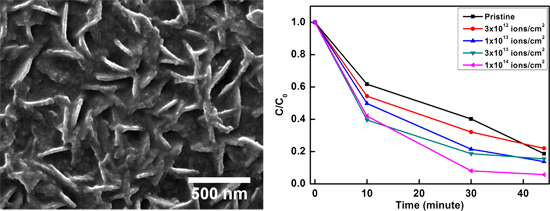
- promising for applications ranging from solar cells to lithium-ion batteries [26][27][28][29]. ZnO–CuO nanocomposites formed by combining ZnO and CuO nanostructures are expected to exhibit improved physicochemical properties as compared to pure ZnO and CuO nanostructures, because of the formation of nano





Simple approach for the fabrication of PEDOT-coated Si nanowires
Beilstein J. Nanotechnol. 2015, 6, 640–650, doi:10.3762/bjnano.6.65
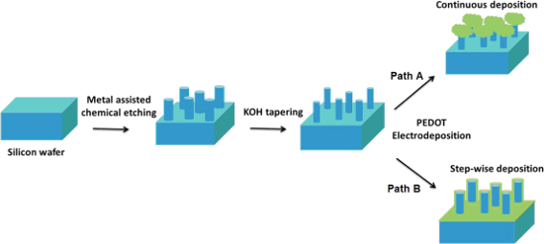
- research topic for many applications such as photovoltaics [1], lithium batteries [2], hydrogen storage [3] and optoelectronic devices [4] due to their unique properties with respect to visible light management [5][6][7]. Using an electroless etching method, a reflectivity as low as 1.3% over the entire





Filling of carbon nanotubes and nanofibres
Beilstein J. Nanotechnol. 2015, 6, 508–516, doi:10.3762/bjnano.6.53
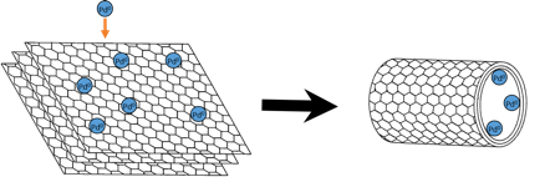
- technique could be used to control the nickel/iron ratio and the amount of filling. Electrochemical methods have also been used to fill TCNSs with water [74] and can take advantage of the presence of oxygen within TCNSs applied as an electrode for Li–O2 rechargeable batteries [75]. Filling through


Advanced atomic force microscopy techniques II
Beilstein J. Nanotechnol. 2014, 5, 2326–2327, doi:10.3762/bjnano.5.241
- batteries for a comparison of their nanoscale electrical, electrochemical, and morphological properties [6] or the analysis of CdS quantum dots on TiO2 by a combination of AFM and X-ray photoelectron spectroscopy [7]. The folding and rupture of graphene on SiC analyzed by non-contact AFM and Kelvin probe
Carbon nano-onions (multi-layer fullerenes): chemistry and applications
Beilstein J. Nanotechnol. 2014, 5, 1980–1998, doi:10.3762/bjnano.5.207
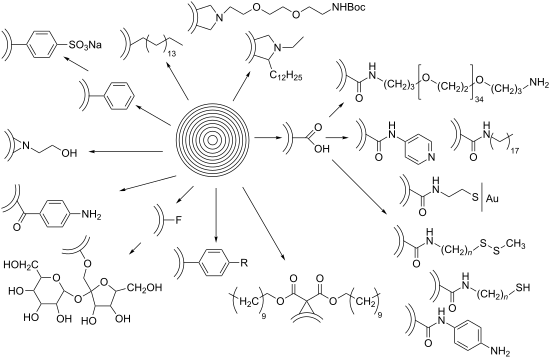
- capacitors and lithium-ion batteries and will be discussed in the corresponding part of this review article. Toxicological aspects In the context of applications in biology and medicine, newly employed nanomaterials should be carefully evaluated with regard to biocompatibility, environmental health and
- counter electrode. The capacitance of pure MnO2 (40 F·g−1) could be increased by the incorporation of CNO up to 177.5 F·g−1. In addition, the authors report an excellent cycling stability with 99–101% retention of the specific capacitance after 1000 cycles. Lithium-Ion batteries: Carbon nanotubes are
- widely studied for a use in lithium ion batteries [63]. However, also CNOs were studied for a potential application as anode materials. Han et al., for example, reported the large scale synthesis of CNOs starting from CuCl2·2 H2O and CaC2 and found that they exhibit a high capacity in combination with a



Magnesium batteries: Current state of the art, issues and future perspectives
Beilstein J. Nanotechnol. 2014, 5, 1291–1311, doi:10.3762/bjnano.5.143
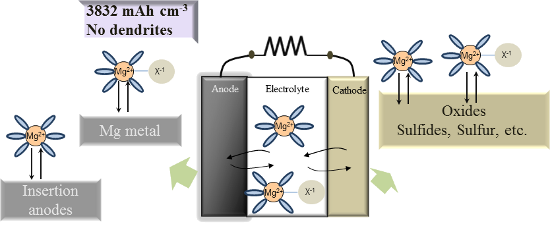
- of modern human life, energy storage systems or batteries occupy a central role in driving the electrification of our societies [1]. The basic principles of a battery are rather old; its invention by Allessandro Volta dates back to the eighteenth century [2] (archeological findings in the 20th
- a myriad of distinct batteries and energy storage chemistries [1]. Out of the several known battery technologies, secondary or rechargeable batteries, such as nickel metal hydride and lithium-ion, which allow for reversibly storing and harnessing power on demand while providing high power and energy
- as in hybrid (HV), plug-in hybrid (PHEV) and electric vehicles (EV) up to large scale stationary and grid applications [1][4]. As one of the scalable battery systems, lithium-ion batteries have been at the forefront in attracting great interests since the great discovery and ingenious use of Li-ion


Growth and characterization of CNT–TiO2 heterostructures
Beilstein J. Nanotechnol. 2014, 5, 946–955, doi:10.3762/bjnano.5.108
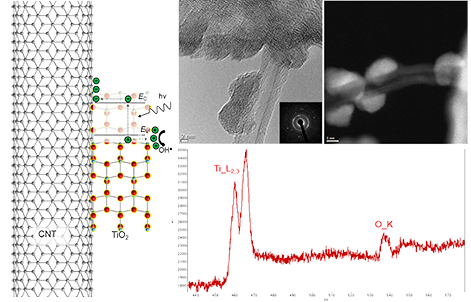
- ], sensors [16] and batteries [17] where the synergetic effect of the ensemble can be fully exploited. It is therefore of paramount importance to achieve CNT–TiO2 in a controllable way and further characterize the interface. Fundamental questions need to be answered, such as how TiO2 nucleates and grows on


Magnesiothermic conversion of the silica-mineralizing golden algae Mallomonas caudata and Synura petersenii to elemental silicon with high geometric precision
Beilstein J. Nanotechnol. 2014, 5, 554–560, doi:10.3762/bjnano.5.65
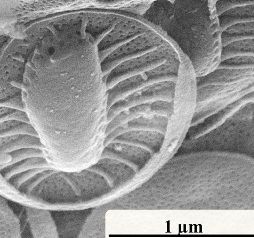
- use as electrodes in lithium batteries has been proposed [9][15][16]. Another advantage of such biofabrication approaches is the conversion of a large number of almost identical biological objects into defined materials. Different approaches which start from porous silica-mineralizing organisms as


Tensile properties of a boron/nitrogen-doped carbon nanotube–graphene hybrid structure
Beilstein J. Nanotechnol. 2014, 5, 329–336, doi:10.3762/bjnano.5.37
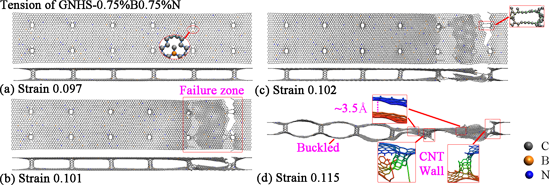
- for the application as fuel cell electrocatalyst, in field-effect transistors, and in lithium batteries. Thus, especially N-doped nanotube–graphene hybrid structures have been envisioned to have promising potential applications in the field of catalysis, gas storage and energy storage [16]. The


Thermal stability and reduction of iron oxide nanowires at moderate temperatures
Beilstein J. Nanotechnol. 2014, 5, 323–328, doi:10.3762/bjnano.5.36
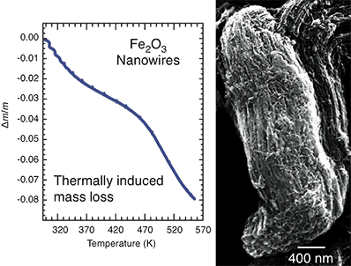
- La Sapienza, Piazzale Aldo Moro 2, I - 00185 Roma, Italy 10.3762/bjnano.5.36 Abstract Background: The thermal stability of iron oxide nanowires, which were obtained with a hard template method and are promising elements of Li-ion based batteries, has been investigated by means of thermogravimetry
- by scanning electron microscopy. Conclusion: This complementary spectroscopy–microscopy study allows to assess the temperature limits of these Fe2O3 nanowires during operation, malfunctioning or abuse in advanced Li-ion based batteries. Keywords: IR spectroscopy; iron oxide; nanowires; scanning
- electron microscopy (SEM); thermogravimetry; XPS; Introduction The ever-growing need for energy is pushing research towards the study and development of new energy storage and conversion tools with high efficiency such as Li-ion based batteries [1]. The request of stable low-cost components with a high


Atomic layer deposition, a unique method for the preparation of energy conversion devices
Beilstein J. Nanotechnol. 2014, 5, 245–248, doi:10.3762/bjnano.5.26
- Julien Bachmann Institute of Inorganic Chemistry, Friedrich-Alexander University of Erlangen-Nürnberg, Egerlandstrasse 1, 91058 Erlangen, Germany 10.3762/bjnano.5.26 Keywords: atomic layer deposition; batteries; energy conversion; electrochemistry; electrolysis; fuel cells; photovoltaics; solar
- ), between light and chemical forms (photosynthesis and chemiluminescence), and between chemical and electrical forms (batteries, electrolyzers, fuel cells, respiration) always relies on the transport of charge carriers towards an interface and away from it, combined with the transfer of electrons at the
- interface. This electron transfer, the most fundamental energy-converting single event, occurs at the interface between two phases, which can have various identities depending on the type of device. In most solar cells these two phases are two solid semiconductors, in batteries and fuel cells they are


Many-body effects in semiconducting single-wall silicon nanotubes
Beilstein J. Nanotechnol. 2014, 5, 19–25, doi:10.3762/bjnano.5.2
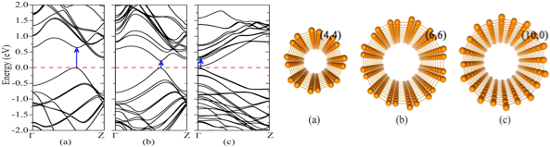
- anodes for lithium rechargeable batteries [10][11][12]. Although the ground-state geometric and electronic properties of SiNTs have been studied [14][15][16][17], properties of excited states, for example optical absorption of SiNTs, are still in need. It is of high importance to correctly understand the


Adsorption of the ionic liquid [BMP][TFSA] on Au(111) and Ag(111): substrate effects on the structure formation investigated by STM
Beilstein J. Nanotechnol. 2013, 4, 903–918, doi:10.3762/bjnano.4.102
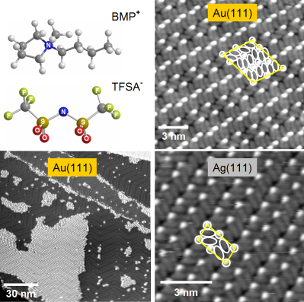
- optimize ionic liquids for a specific application. Aside from many other applications, ionic liquids have been proposed as promising new solvents in electrochemical applications, e.g., in lithium ion batteries [8][9][10]. For the latter application, trifluoromethylsulfonyl imide [TFSA] based ionic liquids





Synthesis and electrochemical performance of Li2Co1−xMxPO4F (M = Fe, Mn) cathode materials
Beilstein J. Nanotechnol. 2013, 4, 860–867, doi:10.3762/bjnano.4.97
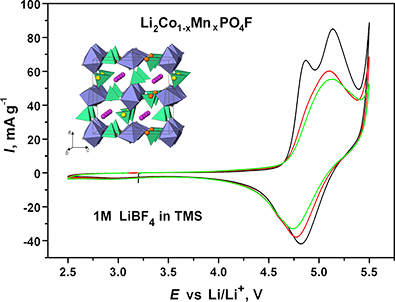
- voltammetry supported a single-phase de/intercalation mechanism in the Li2Co0.9Mn0.1PO4F material. Keywords: energy related; fluorophosphates; high-energy cathode materials; high-voltage electrolyte; Li-ion batteries; nanomaterials; reversible capacity; Introduction In recent years the range of application
- of Li-ion batteries has been expanded from small-sized portable electronics to large-scale electric vehicles and stationary energy storage systems. Large-scale energy applications require batteries that are economically efficient, highly safe and that provide a high energy and power density. Today
- most of the cells in use have almost reached their intrinsic limits, and no significant improvements are expected. Therefore, current research in this field is directed towards the development of new high-performance materials. The specific energy of Li-ion batteries can be enhanced by applying cathode



Lithium peroxide crystal clusters as a natural growth feature of discharge products in Li–O2 cells
Beilstein J. Nanotechnol. 2013, 4, 758–762, doi:10.3762/bjnano.4.86
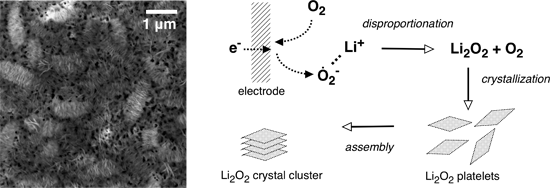
- oxygen reduction reaction (ORR). This feature limits the rechargeability of Li–O2 cells, but at the same time it can be beneficial for both capacity improvement and gain in recharge rate if a proper liquid phase mediator can be found. Keywords: lithium–air batteries; lithium peroxide; oxygen reduction
- reaction; Findings The idea to utilize oxygen as an oxidizer in rechargeable batteries has been kept in mind for a long time because of the easy availability of O2 in ambient air. Alkali metal negative electrodes were always attractive for metal–oxygen (metal–air) batteries as they show record parameters
- alkali-metal–air rechargeable batteries is impossible because of the very limited cycle life, which primarily arises from the low chemical stability of the electrolytes [3] and the carbon positive electrodes [4]. The oyxgen reduction reaction, which occurs in the cathodes during the discharge of the


Ellipsometry and XPS comparative studies of thermal and plasma enhanced atomic layer deposited Al2O3-films
Beilstein J. Nanotechnol. 2013, 4, 732–742, doi:10.3762/bjnano.4.83
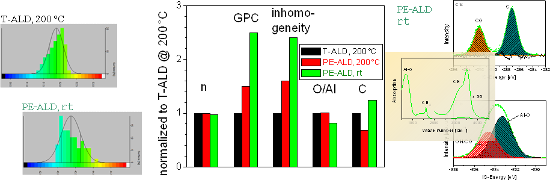
- solar energy conversion systems like dye sensitized solar cells [11][12] and water splitting devices [13] or lithium ion batteries [14]. Here, in particular the excellent conformability of ALD growth over high surface area materials and its uniformity and self-termination [15] were beneficially applied


Influence of particle size and fluorination ratio of CFx precursor compounds on the electrochemical performance of C–FeF2 nanocomposites for reversible lithium storage
Beilstein J. Nanotechnol. 2013, 4, 705–713, doi:10.3762/bjnano.4.80
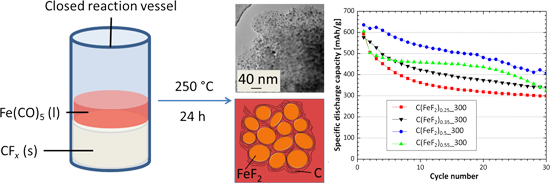
- ; enregy-related; graphite fluoride; lithium battery; iron fluoride; Introduction Lithium-ion batteries are key energy storage systems for portable and mobile electric devices. However, for applications that need high energy densities, current insertion-based lithium-ion batteries do not match the targets
- for such systems [1][2][3][4]. As a perspective, energy storage materials that are based on conversion reactions may offer high theoretical capacities and high theoretical energy densities for hydrogen storage and for electrochemical storage in batteries [5]. Compared to state-of-the-art insertion
- to 571 mAh/g [8]. This mainly results from a utilization of several oxidation states of the active metal that allows for a multi-electron process per redox step compared to only one-electron processes in the insertion materials [9][10][11]. An early example for conversion reactions in batteries was


A facile synthesis of a carbon-encapsulated Fe3O4 nanocomposite and its performance as anode in lithium-ion batteries
Beilstein J. Nanotechnol. 2013, 4, 699–704, doi:10.3762/bjnano.4.79
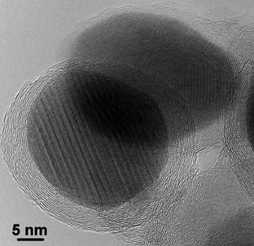
- oxide; lithium-ion battery; nanoparticles; pyrolysis; Findings Due to high energy density and excellent cyclic performance, lithium-ion batteries (LIBs) have become the leading energy storage device for portable electronic markets and for powering upcoming electric vehicles [1][2]. In order to obtain


Energy-related nanomaterials
Beilstein J. Nanotechnol. 2013, 4, 678–679, doi:10.3762/bjnano.4.76
- concern fuel cells, Li-based batteries, and organic solar cells, to energy-related applications of nanographite and silicon nanotubes as well as the optimization of thermoelectric materials and electrochemistry-based microscopy. We would like to thank all colleagues for their valuable contributions and
Electrochemical and electron microscopic characterization of Super-P based cathodes for Li–O2 batteries
Beilstein J. Nanotechnol. 2013, 4, 665–670, doi:10.3762/bjnano.4.74
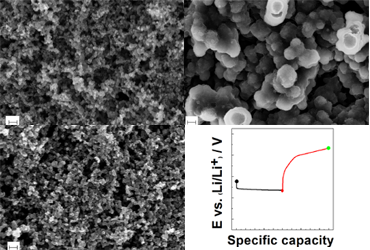
- Ulm, Germany 10.3762/bjnano.4.74 Abstract Aprotic rechargeable Li–O2 batteries are currently receiving considerable interest because they can possibly offer significantly higher energy densities than conventional Li-ion batteries. The electrochemical behavior of Li–O2 batteries containing bis
- side during the operation of Li–O2 cells. Keywords: aprotic electrolyte; impedance spectroscopy; Li–O2 batteries; scanning electron microscopy; Introduction The development of new types of electrochemical power sources is nowadays considered a key factor for further development of hybrid and fully
- electric vehicles. Indeed one of the major concerns for the practical use of fully electric vehicles is the limited mileage of such vehicles. Aprotic rechargeable Li–O2 batteries may overcome this limitation since they can provide a much higher energy density than common Li-ion batteries. However, research





