


Search results
Search for "dynamic light scattering (DLS)" in Full Text gives 178 result(s) in Beilstein Journal of Nanotechnology.
Proinflammatory and cytotoxic response to nanoparticles in precision-cut lung slices
Beilstein J. Nanotechnol. 2014, 5, 2440–2449, doi:10.3762/bjnano.5.253
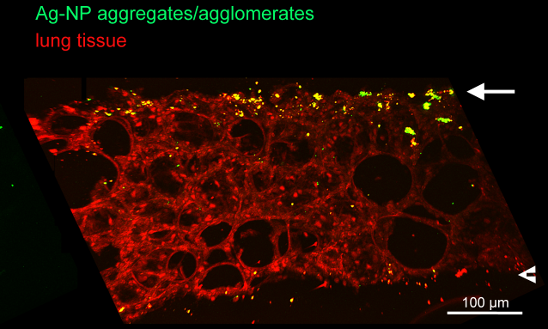
- vitro as well as in vivo assays. Results Particle characterization The mean hydrodynamic diameter of the Ag-NPs as determined by dynamic light scattering (DLS) was 116 nm and the polydispersity index (PDI) was below 0.3 for all measurements. The mean diameter of the metallic core as determined by


Nanoparticle interactions with live cells: Quantitative fluorescence microscopy of nanoparticle size effects
Beilstein J. Nanotechnol. 2014, 5, 2388–2397, doi:10.3762/bjnano.5.248
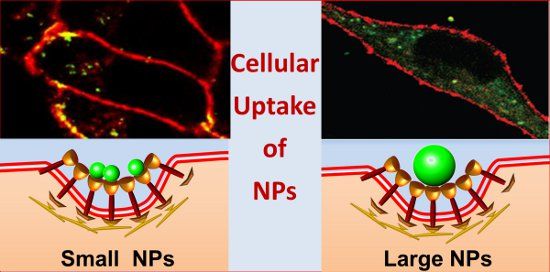
- adsorbed amphiphiles, the anionic surfactant SDS or cetyltrimethylammonium (CTMA) chloride to yield negatively (PS−) and positively (PS+) charged NPs, respectively. The hydrodynamic diameters of these NPs suspended in PBS, pH 7.4, were determined by dynamic light scattering (DLS) (Table 1). Furthermore


Nanobioarchitectures based on chlorophyll photopigment, artificial lipid bilayers and carbon nanotubes
Beilstein J. Nanotechnol. 2014, 5, 2316–2325, doi:10.3762/bjnano.5.240
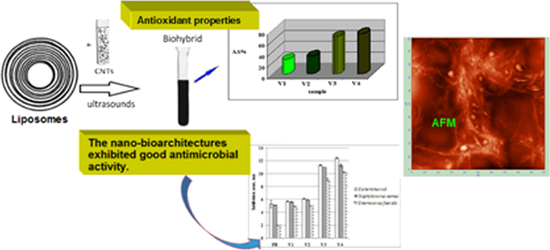
- . Dynamic light scattering (DLS) measurements The size of the liposomes represented by the hydrodynamic diameter, Zaverage (the particle diameter plus the double layer thickness) was measured using DLS (Zetasizer Nano ZS, Malvern Instruments Ltd., U.K.) at 25 °C at a scattering angle of 90°. The average


Nanoencapsulation of ultra-small superparamagnetic particles of iron oxide into human serum albumin nanoparticles
Beilstein J. Nanotechnol. 2014, 5, 2259–2266, doi:10.3762/bjnano.5.235
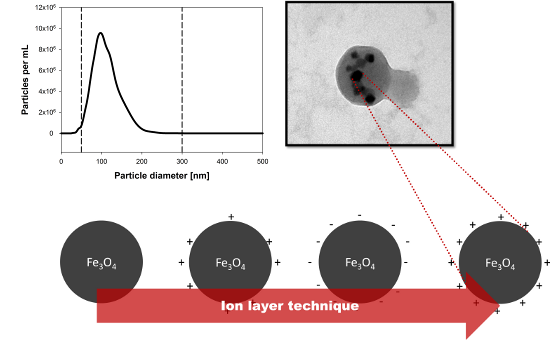
- desolvation in absence and in presence of USPIO. The particle size and zeta potential observed by dynamic light scattering (DLS) measurements significantly increased with the amount of iron oxide particles present during the desolvation process (ANOVA). Particles with the highest content of iron oxide were


Influence of stabilising agents and pH on the size of SnO2 nanoparticles
Beilstein J. Nanotechnol. 2014, 5, 2192–2201, doi:10.3762/bjnano.5.228
- . Dynamic light scattering (DLS): The diameter distribution of the resulting nanoparticles was determined by DLS. The studies were performed using a Nicomp 380ZLS Particle Sizing System with an excitation wavelength of 532 nm at 50 mW. The frequency of the photon counting was fixed at about 200 kHz, and
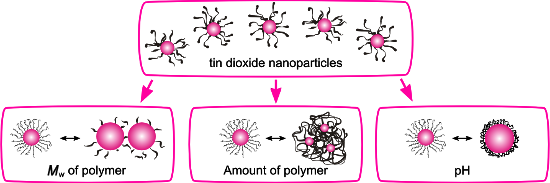
- consists of: 8.24 mL of water, 3 mL of PEI Mw = 750 000 with a concentration of 1.0 mol/L, 6.56 mL of Triton X-100 with a concentration of 0.08 mol/L, 0.1 mL of SnCl4 with a concentration of 0.375 mol/L, and 0.21 mL of ammonium hydroxide with a concentration of 0.0714 mol/L. Analysis of the dynamic light
- scattering (DLS) results revealed that in the solution of standard composition, nanoparticles of average diameter of approximately 8 nm are formed (Figure 2). For statistical analysis, a proprietary, high resolution, multimodal deconvolution analysis for proper measurement of the nanoparticle diameter was


Effect of silver nanoparticles on human mesenchymal stem cell differentiation
Beilstein J. Nanotechnol. 2014, 5, 2058–2069, doi:10.3762/bjnano.5.214
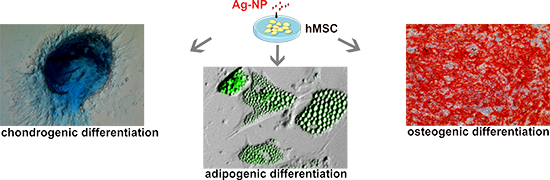
- atomic absorption spectroscopy (AAS, Thermo Electron Corporation, M-Series). The hydrodynamic diameter and the zeta-potential of the dispersed particles were measured by dynamic light scattering (DLS) using a Malvern Zetasizer Nano ZS. The z-average value was used as the average particle diameter. The


Effects of surface functionalization on the adsorption of human serum albumin onto nanoparticles – a fluorescence correlation spectroscopy study
Beilstein J. Nanotechnol. 2014, 5, 2036–2047, doi:10.3762/bjnano.5.212
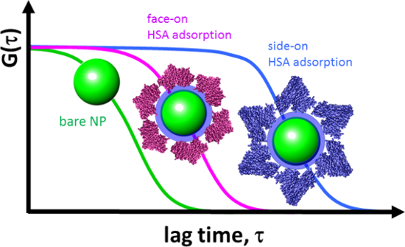
- with other NPs. Results and Discussion QD characterization Hydrodynamic radii, RH, of the differently stabilized QDs, determined by FCS and dynamic light scattering (DLS), zeta potentials and fluorescence quantum yields (QY) are compiled in Table 1. The polymer-coated QDs were significantly larger than



Electrostatic interplay: The interaction triangle of polyamines, silicic acid, and phosphate studied through turbidity measurements, silicomolybdic acid test, and 29Si NMR spectroscopy
Beilstein J. Nanotechnol. 2014, 5, 2026–2035, doi:10.3762/bjnano.5.211
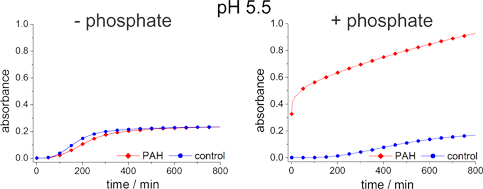
- ]. Corresponding in vitro investigations using polyallylamine (in form of polyallylamine hydrochloride, PAH) as a synthetic analogue [15] for native LCPAs revealed that phosphate is capable of inducing the self-assembly of PAH into large aggregates that could be detected by dynamic light scattering (DLS


Data-adaptive image-denoising for detecting and quantifying nanoparticle entry in mucosal tissues through intravital 2-photon microscopy
Beilstein J. Nanotechnol. 2014, 5, 2016–2025, doi:10.3762/bjnano.5.210
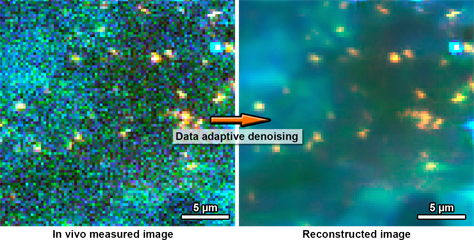
- a hydrodynamic diameter of ca. 25 nm, as determined by dynamic light scattering (DLS). The spectral position of the excitonic emission band was located at ca. 585 nm (FWHM: ca. 32 nm), and the photoluminescence quantum yield was around 20–30%. Setup of the 2-photon microscope Intravital 2PM was done


PVP-coated, negatively charged silver nanoparticles: A multi-center study of their physicochemical characteristics, cell culture and in vivo experiments
Beilstein J. Nanotechnol. 2014, 5, 1944–1965, doi:10.3762/bjnano.5.205



Imaging the intracellular degradation of biodegradable polymer nanoparticles
Beilstein J. Nanotechnol. 2014, 5, 1905–1917, doi:10.3762/bjnano.5.201
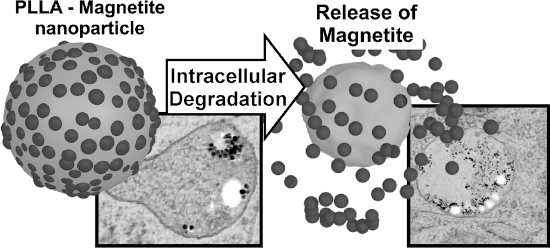
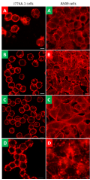
- PLLA particles imaged in Figure 3A ranges from 20 to 175 nm. This is in good agreement with the dynamic light scattering (DLS) measurement, which yielded an average diameter of 121 nm. The majority of the magnetite nanocrystals are attached to the PLLA particles. Only very few detached magnetite


The surface properties of nanoparticles determine the agglomeration state and the size of the particles under physiological conditions
Beilstein J. Nanotechnol. 2014, 5, 1774–1786, doi:10.3762/bjnano.5.188
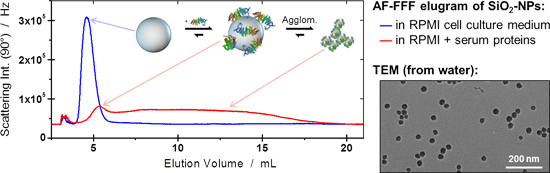
- techniques, that is, transmission electron microscopy (TEM), multiangle dynamic light scattering (DLS) and asymmetric flow field-flow fractionation (AF-FFF). By combining the strengths of each of the individual techniques, their drawbacks are compensated for and a comprehensive characterization in
- ][22][23]. However, as cryo-TEM investigations require an experienced operator and are both cost- and time-consuming, the method is far from becoming a standard technique. DLS: In dynamic light scattering (DLS), the fluctuations of the intensity of light scattered by a colloidal dispersion are observed


In vitro and in vivo interactions of selected nanoparticles with rodent serum proteins and their consequences in biokinetics
Beilstein J. Nanotechnol. 2014, 5, 1699–1711, doi:10.3762/bjnano.5.180
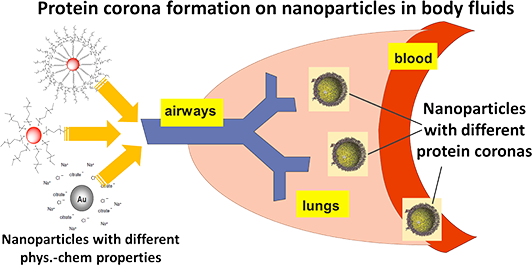
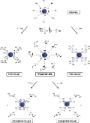
- linear correlation of the added amount of NP and the amount of bound proteins was found and was described quantitatively by binding indices (BI, Figure 1). Hydrodynamic size distributions determined by dynamic light scattering (DLS) and zeta potentials were determined for all particles before and after
- previous physicochemical characterizations [8], all AuNP used in these experiments were thoroughly characterized through TEM (size distribution), UV–vis spectroscopy (absorbance), dynamic light scattering (DLS, hydrodynamic diameter), differential centrifugal sedimentation (DCS) and atomic force microscopy
- hydrodynamic diameter distribution was verified by dynamic light scattering (DLS) measurements prior to intratracheal instillation in groups of four healthy, adult, female Wistar-Kyoto rats (8–10 weeks aged, body weight 180–200 g). Doses of freshly prepared AgNP were 50 µg and 250 µg per rat in 80 µL


Different endocytotic uptake mechanisms for nanoparticles in epithelial cells and macrophages
Beilstein J. Nanotechnol. 2014, 5, 1625–1636, doi:10.3762/bjnano.5.174
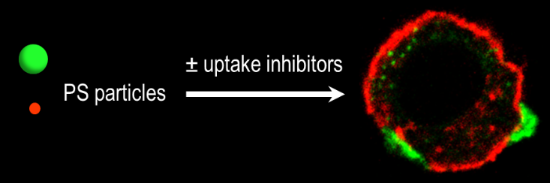
- dynamic light scattering (DLS) revealed an average hydrodynamic radius of approximately 581 nm for the microparticles and 28 nm for the nanoparticles. Transmission electron microscopy (TEM) revealed a core radius of 520 nm for the microparticles and 30.9 nm for the NPs. The latter, however, exhibited a
- as 40 nm hydrodynamic diameter) polystyrene (PS) particles (Molecular Probes, Luzern, Switzerland) were used for the study. The particles were characterized in terms of size by dynamic light scattering (DLS) and transmission electron microscopy (TEM). The hydrodynamic radius was acquired by DLS (3D



Precise quantification of silica and ceria nanoparticle uptake revealed by 3D fluorescence microscopy
Beilstein J. Nanotechnol. 2014, 5, 1616–1624, doi:10.3762/bjnano.5.173
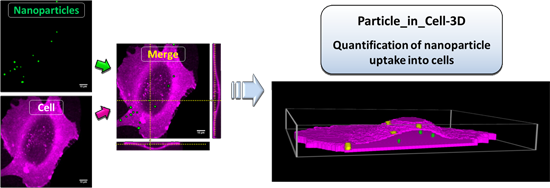
- by transmission electron microscopy (TEM). In addition, the hydrodynamic diameter of the particles over time was determined by dynamic light scattering (DLS) measurements in water and in cell medium. Depending on the properties of the nanoparticles, they may agglomerate in a given cell medium [40


In vitro interaction of colloidal nanoparticles with mammalian cells: What have we learned thus far?
Beilstein J. Nanotechnol. 2014, 5, 1477–1490, doi:10.3762/bjnano.5.161
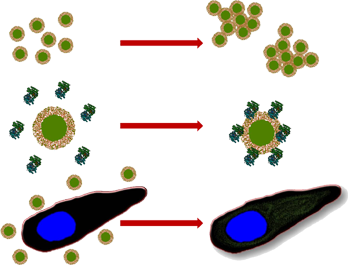
- determined with TEM. There are several techniques for determining the hydrodynamic diameters of NPs [108], of which dynamic light scattering (DLS) might be the most common approach. All techniques have their limitations, and it is always helpful to know the measuring principle they are based on. DLS, for


The cell-type specific uptake of polymer-coated or micelle-embedded QDs and SPIOs does not provoke an acute pro-inflammatory response in the liver
Beilstein J. Nanotechnol. 2014, 5, 1432–1440, doi:10.3762/bjnano.5.155
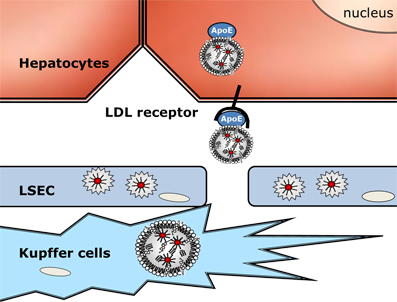
- through a 0.45, 0.2, and 0.1 μm Millipore filter. Based on dynamic light scattering (DLS) measurements, the size of polymer-coated nanocrystals is 25 nm. These polymer-coated nanoparticles are negatively charged due to the formation of carboxyl groups at the surface. Labelling of lipid micelles with


The protein corona protects against size- and dose-dependent toxicity of amorphous silica nanoparticles
Beilstein J. Nanotechnol. 2014, 5, 1380–1392, doi:10.3762/bjnano.5.151
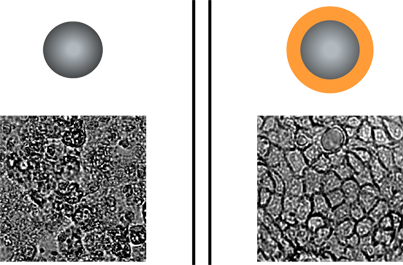
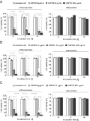
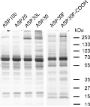
- % fetal calf serum (FCS). According to dynamic light scattering (DLS) and zeta potential measurements, all ASP display the expected hydrodynamic diameter and carry negative surface charges in water, as reflected by their negative zeta potential (Table 1). As the highest absolute values for zeta potential




Mimicking exposures to acute and lifetime concentrations of inhaled silver nanoparticles by two different in vitro approaches
Beilstein J. Nanotechnol. 2014, 5, 1357–1370, doi:10.3762/bjnano.5.149
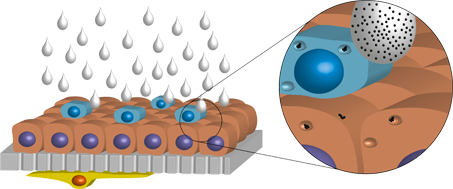
- in order to reveal a greater insight into the effect of Ag NP toxicity. Results Particle characterisation PVP-coated Ag NPs were characterised by scanning electron microscopy (SEM) and dynamic light scattering (DLS). Figure 1A shows a representative SEM image of particles deposited on a silicon wafer



Optimizing the synthesis of CdS/ZnS core/shell semiconductor nanocrystals for bioimaging applications
Beilstein J. Nanotechnol. 2014, 5, 919–926, doi:10.3762/bjnano.5.105
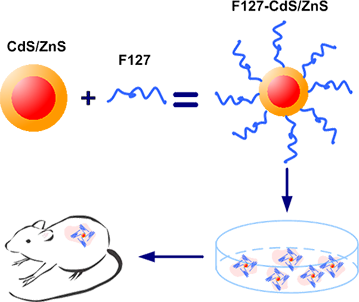
- producing water-dispersible nanocrystals that should easily be applicable in biology. Effect of pH on the hydrodynamic diameter of the QDs The dynamic light scattering (DLS) technique was used to measure the hydrodynamic diameter profile of the micelle-encapsulated nanocrystals. For the purposes of the DLS


Manipulation of isolated brain nerve terminals by an external magnetic field using D-mannose-coated γ-Fe2O3 nano-sized particles and assessment of their effects on glutamate transport
Beilstein J. Nanotechnol. 2014, 5, 778–788, doi:10.3762/bjnano.5.90
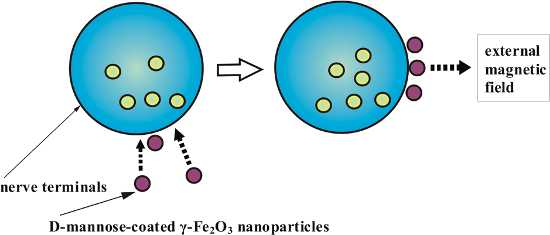
- of particles with the diameter Di) documents a moderately broad particle size distribution (Table 1). The obtained iron oxide nanoparticle colloids were also investigated by dynamic light scattering (DLS). The hydrodynamic diameter (Dh) of the nanoparticles calculated from DLS was about 10 times
- 200 CX transmission electron microscope (TEM). The size was calculated by using the Atlas program (Tescan, Digital Microscopy Imaging, Brno, Czech Republic). The hydrodynamic diameter Dh (z-average) and polydispersity as a measure of the particle size distribution were determined by dynamic light
- scattering (DLS) with an Autosizer Lo-C (Malvern Instruments, UK). The modification of the nanoparticle surface with D-mannose was analyzed using a Nicolet Impact 400 Fourier transformation infrared (FTIR) spectrometer in water-purged surrounding with a DTGS detector. The spectra were measured by ATR



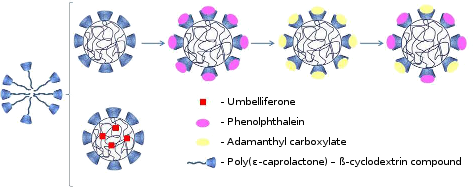
Cyclodextrin-poly(ε-caprolactone) based nanoparticles able to complex phenolphthalein and adamantyl carboxylate
Beilstein J. Nanotechnol. 2014, 5, 651–657, doi:10.3762/bjnano.5.76
- HEMAbio 100 (MZ-Analysentechnik), pump, degasser and autosampler (Agilent 1200, Agilent technologies). The eluent was ultrapure water at a flow rate of 1 mL/min. The molecular weight was calculated with Astra5 software from static-light-scattering data by using the Zimm model. Dynamic light scattering
- (DLS) experiments were carried out with a Malvern Zetasizer Nano ZS ZEN 3600 at a temperature of 25 °C. The particle size distribution is derived from a deconvolution of the measured intensity autocorrelation function of the sample by a general purpose method, i.e., the non-negative least squares


In vitro toxicity and bioimaging studies of gold nanorods formulations coated with biofunctional thiol-PEG molecules and Pluronic block copolymers
Beilstein J. Nanotechnol. 2014, 5, 546–553, doi:10.3762/bjnano.5.64
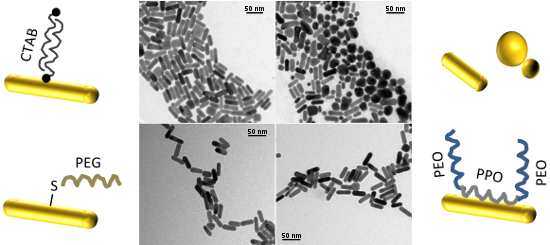
- , transmission electron microscopy (TEM), cell viability assay, dynamic light scattering (DLS), and dark-field imaging microscopy. The non-specific uptake of these AuNRs by cells was also studied under dark-field microscopy. Our work demonstrates that the coating of AuNRs surfaces with PEG-SH or PEO–PPO–PEO


One pot synthesis of silver nanoparticles using a cyclodextrin containing polymer as reductant and stabilizer
Beilstein J. Nanotechnol. 2014, 5, 380–385, doi:10.3762/bjnano.5.44
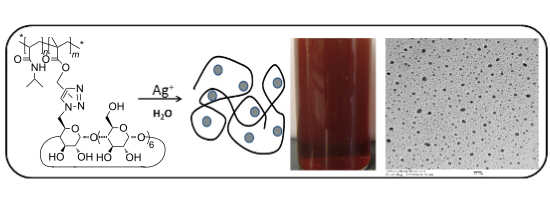
- –visible spectrophotometer equipped with a Thermo Scientific CD10 Heating Circulator bath. Fluorescence spectra were recorded on a Perkin Elmer LS55 luminescence spectrometer. Zeta Potential and dynamic light scattering (DLS) experiments were carried out with a Malvern Zetasizer Nano; ZS ZEN 3600 at a


Morphological characterization of fullerene–androsterone conjugates
Beilstein J. Nanotechnol. 2014, 5, 374–379, doi:10.3762/bjnano.5.43
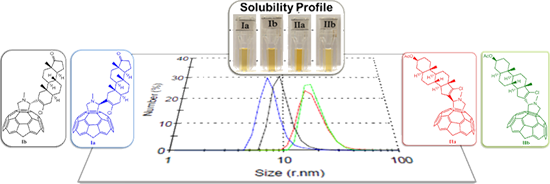
- , respectively. The morphology and particle size in aqueous solution were determined by transmission electron microscopy (TEM) and dynamic light scattering (DLS), with satisfactory agreement between both techniques. In general, these fullerene derivatives are shown to organize into spherical nano-scale
- report on the morphological characterization of four fullerene–androsterone conjugates in water. The morphology and particle size of the C60–androsterone hybrids in aqueous solution were determined by transmission electron microscopy (TEM) and dynamic light scattering (DLS). Results and Discussion The
- of the difference in hydrophilicity of the androsterone moieties in both diasteromeric pairs. The presence of a carbonyl group in Ia,b instead of a less polar group such as acetoxy in IIa,b, promoted the formation of smaller vesicles. Dynamic light scattering DLS measurements gave further information





