


Search results
Search for "electrodes" in Full Text gives 617 result(s) in Beilstein Journal of Nanotechnology. Showing first 200.
Free and partially encapsulated manganese ferrite nanoparticles in multiwall carbon nanotubes
Beilstein J. Nanotechnol. 2020, 11, 1891–1904, doi:10.3762/bjnano.11.170
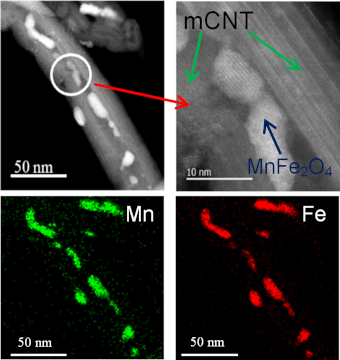
- removal of harmful pollutants [8], carbon nanotubes decorated with molybdenum disulfide are used in microbial fuel cells [9] and photoelectric detectors [10], supercapacitor electrodes use binary metal oxide/multiwall carbon nanotubes (MWCNTs) [11], among other numerous recently developed applications [12




Kondo effects in small-bandgap carbon nanotube quantum dots
Beilstein J. Nanotechnol. 2020, 11, 1873–1890, doi:10.3762/bjnano.11.169
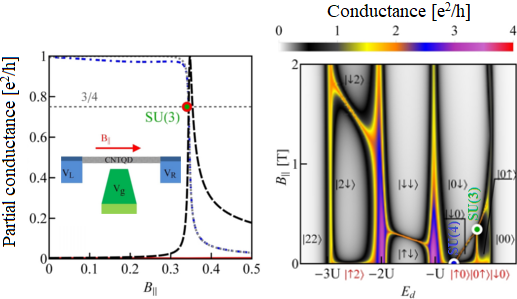
- charging energy. For very weak dot–lead coupling and strong Coulomb interaction, the electrons enter the dot one by one and Coulomb-blockade oscillations of conductance are observed. For stronger coupling to electrodes, higher-order tunneling processes (i.e., cotunneling) begin to play a decisive role
- the Fermi distribution function of electrodes and μα = ±Vsd/2. is the spin–orbital transmission. Important quantities for spintronics and valleytronics are spin (SPC) or orbital (OPC) polarizations of conductance directly expressed through partial conductances, Spin and orbital magnetic moments are
- electrodes, the mentioned degeneracies of the electron and hole states enable the formation of Kondo resonances in which both electron and hole states participate. For a simpler numerical analysis, we restrict ourselves in our discussion to the subspace of only the two lowest electron states and the two

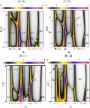
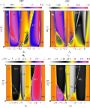


![[Graphic 37]](/bjnano/content/inline/2190-4286-11-169-i52.svg?max-width=637&scale=1.18182) as a functio...
as a functio...


Piezotronic effect in AlGaN/AlN/GaN heterojunction nanowires used as a flexible strain sensor
Beilstein J. Nanotechnol. 2020, 11, 1847–1853, doi:10.3762/bjnano.11.166
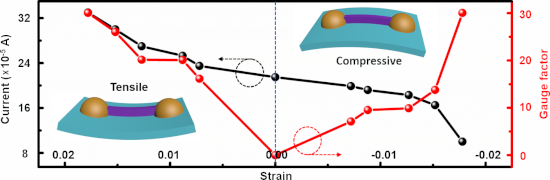
- synthesize AlGaN/AlN/GaN heterojunction NWs with controllable size. A single NW is transferred to a flexible poly(ethylene terephthalate) substrate and fixed by indium tin oxide electrodes to form an ohmic contact for the strain sensor. An external mechanical stress is introduced to study the performance of
- (EC) wet etching, to prepare AlGaN/AlN/GaN heterojunction NWs with a controllable size. After the lift-off, a single NW is transferred to a flexible poly(ethylene terephthalate) (PET) substrate and is fixed by indium tin oxide (ITO) electrodes to form an ohmic contact for the strain sensor. Under
- ITO transparent electrodes were patterned and deposited onto the two ends of the AlGaN/AlN/GaN heterojunction NWs to eliminate the impact of the Schottky barrier. In addition, they fixed the NW to the flexible PET substrate. A schematic of the equipment (electric one-dimensional translation stage) for


Self-standing heterostructured NiCx-NiFe-NC/biochar as a highly efficient cathode for lithium–oxygen batteries
Beilstein J. Nanotechnol. 2020, 11, 1809–1821, doi:10.3762/bjnano.11.163
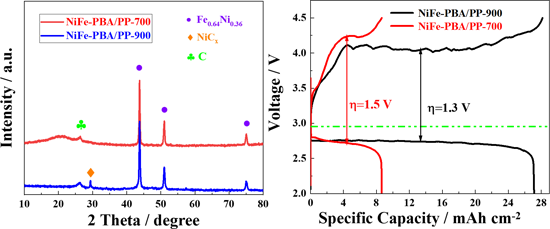
- series of 3D self-standing electrodes [40][41][42][43] by depositing MOFs on biomass followed by either a carbonization or a phosphating step. These electrodes can be directly used as cathodes in Li–O2 batteries. In this work, the NiFe-PBA/pomelo peel (PP) precursors were prepared in a similar way as in
- biochar was synthesized for the use in Li–O2 batteries. The electrocatalytic properties of the obtained electrodes were evaluated in a Li–O2 battery and these electrodes showed superior catalytic performance in Li–O2 batteries. Experimental Preparation of NiFe-PBA/PP-T NiFe-PBA/PP precursors were prepared






Absorption and photoconductivity spectra of amorphous multilayer structures
Beilstein J. Nanotechnol. 2020, 11, 1757–1763, doi:10.3762/bjnano.11.158
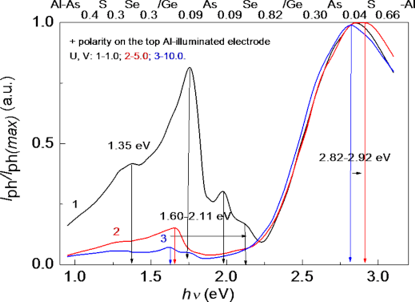
- absorption depending on the nature and the thickness of each amorphous layer, on the wavelength, and on contact phenomena at the interfaces between different layers and between the amorphous layers and the metal electrodes with different work functions. Keywords: amorphous multilayer structures
- Ge0.30As0.04S0.66, without and with Al electrodes, were prepared by thermal evaporation in vacuum (P = 10−5 Torr) of the synthesized initial glasses onto glass substrates. Longitudinal, instead of lateral, conductivity measurements were carried out. The thickness of each layer was chosen such that the distribution
- prepared. The experimental samples had a sandwich configuration with two Al electrodes, of which the top electrode was transparent to the incident light. The dark conductivity σd and the spectral distribution of the stationary photocurrent Iph = f(λ) have been measured under constant-current conditions


Piezoelectric sensor based on graphene-doped PVDF nanofibers for sign language translation
Beilstein J. Nanotechnol. 2020, 11, 1655–1662, doi:10.3762/bjnano.11.148
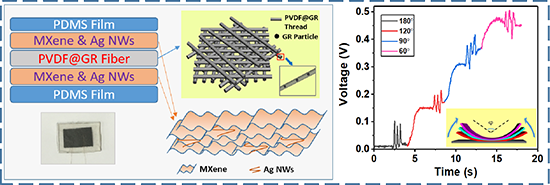
- membrane is encapsulated with PDMS. Thermoelectric test process: The PES unit is attached to a thin polyethylene plate and connected to the analogue signal test system via the copper wire electrodes. The surface of the plate heater is kept at a temperature of 50 °C. The polyethylene plate is fixed to a


Amorphized length and variability in phase-change memory line cells
Beilstein J. Nanotechnol. 2020, 11, 1644–1654, doi:10.3762/bjnano.11.147
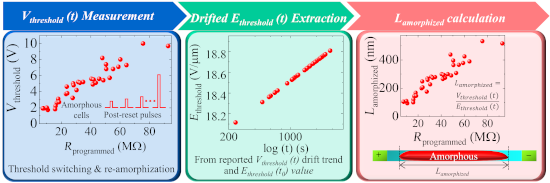
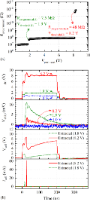
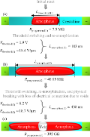
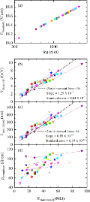
- memory (PCM) is an emerging non-volatile memory technology with high endurance, high speed, and good scalability. PCM relies on the change in phase of a nanoscale volume of a chalcogenide material sandwiched between two electrodes. The phase of the material can be switched between the high-resistivity




Walking energy harvesting and self-powered tracking system based on triboelectric nanogenerators
Beilstein J. Nanotechnol. 2020, 11, 1590–1595, doi:10.3762/bjnano.11.141
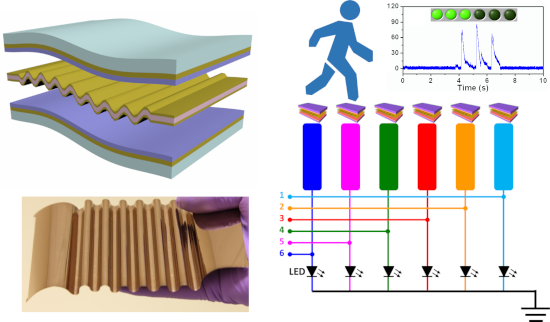
- triboelectric nanogenerator (u-TENG) was proposed and fabricated to scavenge the walking energy from areas with a high pedestrian flow. The as-prepared u-TENG is composed of two copper-coated nanostructured poly(tetrafluoroethylene) (PTFE) thin films as the back electrodes and an elastic undulated electrode in
- , nanostructured PTFE thin films coated with copper foils (back electrodes), and an elastic undulated electrode in between. The internal wave-shaped electrode is obtained by depositing copper layers onto both sides of the wave-shaped Kapton film, as displayed in Figure 1a. Due to their huge difference in electron




Fabrication of nano/microstructures for SERS substrates using an electrochemical method
Beilstein J. Nanotechnol. 2020, 11, 1568–1576, doi:10.3762/bjnano.11.139
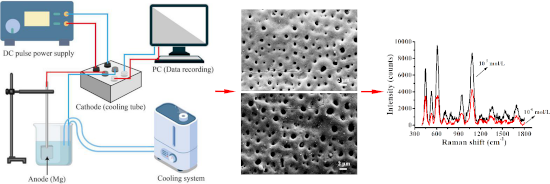
- a KCl-saturated Ag/AgCl rod are used as the working, counter, and reference electrodes, respectively. Using this approach, Au/TiO2 nanocomposites formed on Pt substrates yielded a SERS enhancement factor of 1.8 × 10⁸ for R6G molecules [34]. Chang et al. [35] fabricated different Ag nanostructures on


Electrokinetic characterization of synthetic protein nanoparticles
Beilstein J. Nanotechnol. 2020, 11, 1556–1567, doi:10.3762/bjnano.11.138
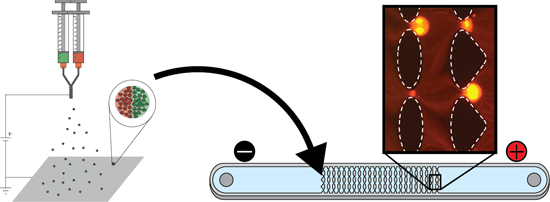
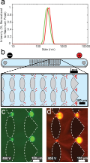
- -covered glass wafers to ensure all the internal walls had the same zeta potential. These microchannels were designed to include an inlet and an outlet liquid reservoir in which electrodes are placed, and an array of PDMS insulating posts located at the center of the channel (Figure 2b and Figure S1
- aggregates. This low-conductivity medium has a limited buffer capacity. A sample of suspended SPNPs (1–5 µL) was injected into a device before the electrodes were inserted and the pressure was equalized. In order to determine the trapping voltage of one particular type of SPNPs, a range of increasing voltage



A wideband cryogenic microwave low-noise amplifier
Beilstein J. Nanotechnol. 2020, 11, 1484–1491, doi:10.3762/bjnano.11.131
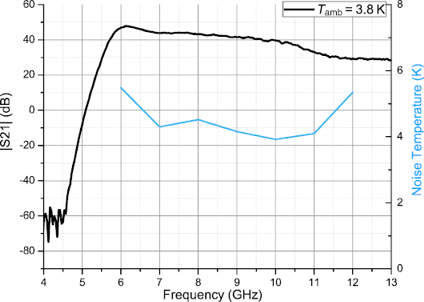
- range up to 12 GHz were soldered directly to the microwave laminate. The feedthrough filters were used as the input biasing electrodes and the power supply cables from a micro-D cryostat connector were soldered directly to them. The first two stages of the amplifier circuit are presented in Figure 1




One-step synthesis of carbon-supported electrocatalysts
Beilstein J. Nanotechnol. 2020, 11, 1419–1431, doi:10.3762/bjnano.11.126

- electrochemical long-term stability of these electrodes is often unsatisfactory due to particle coalescence and Ostwald ripening [15]. These degradation processes can be avoided by increasing interparticle distance (at the expense of the electrochemically active surface) or by creating barriers to prevent NP
- (including preheating), and M is the molar mass of the precursor (393.302 g/mol). The material deposition was mainly done on 1 × 1 cm2 silicon substrates. In preparation for the cyclic voltammetry measurements, glassy carbon electrodes (GCEs; diameter 4 mm, Catalog No. 013338, ALS Co., Ltd.) were used as




Triboelectric nanogenerator based on Teflon/vitamin B1 powder for self-powered humidity sensing
Beilstein J. Nanotechnol. 2020, 11, 1394–1401, doi:10.3762/bjnano.11.123
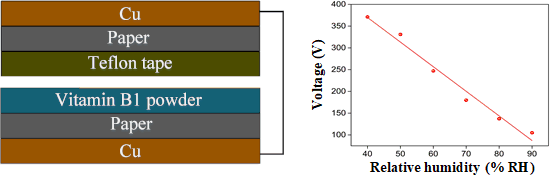
- result, a potential difference between the electrodes is generated. Subsequently, when the TVB-TENG is pressed again, an opposite potential difference is produced due to the triboelectrification principle. As such, there is a positive charge transfer from the top of the conductive copper foil tape of the


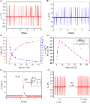


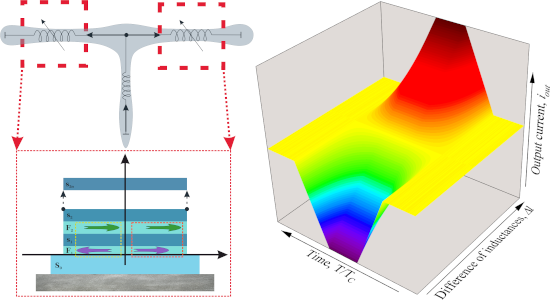
Controlling the proximity effect in a Co/Nb multilayer: the properties of electronic transport
Beilstein J. Nanotechnol. 2020, 11, 1336–1345, doi:10.3762/bjnano.11.118
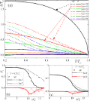
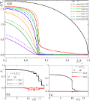
- electrodes (Figure 5b). The observed variation in the R(T) step-like behavior may also be due to the specific sample geometry (i.e., electrodes with horizontal and vertical orientations, Figure 4a). Due to the shape anisotropy, the “body” of the “centipede” is magnetized along the longitudinal direction
- ) segments are almost the same. This means that the source of the voltage is in the “T”-electrode, which is the source of the normal quasiparticles, while the “R”- and “V”-arms are in the superconductive state. At the same time, due to the connection between the “N”- and “R”-electrodes, the jumps occur at
- electrodes to the superconducting state. There are two possible reasons for such behavior in this system. The first one is associated with the sequential transition of the thin s-layers in the middle part of the “centipede” that was measured. This mechanism is shown in Figure 3a. In that case, thin s-layers



Effect of localized helium ion irradiation on the performance of synthetic monolayer MoS2 field-effect transistors
Beilstein J. Nanotechnol. 2020, 11, 1329–1335, doi:10.3762/bjnano.11.117
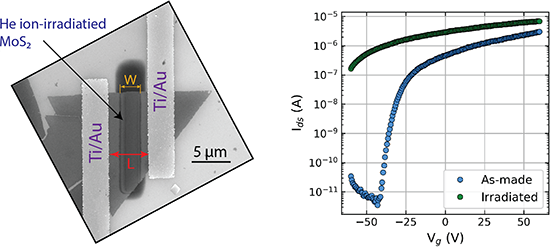
- synthesized using a CVD microreactor method, described in detail in [33], directly on 285 nm SiO2/Si substrates, which also served as the back-gate in the FET configuration. MoS2 flakes were contacted with electrodes using standard electron beam lithography on polymethyl methacrylate (PMMA) resist, followed


Structural and electronic properties of SnO2 doped with non-metal elements
Beilstein J. Nanotechnol. 2020, 11, 1321–1328, doi:10.3762/bjnano.11.116
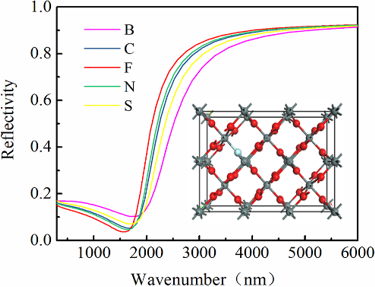
- research works has been done examining different doping elements. Doped tin oxide thin film have been widely used in the fields of thin film solar cell electrodes, electronic display devices, and gas sensors. Also doped SnO2 been used for energy-saving low-emissivity glass coatings due to low resistivity



Cryogenic low-noise amplifiers for measurements with superconducting detectors
Beilstein J. Nanotechnol. 2020, 11, 1316–1320, doi:10.3762/bjnano.11.115
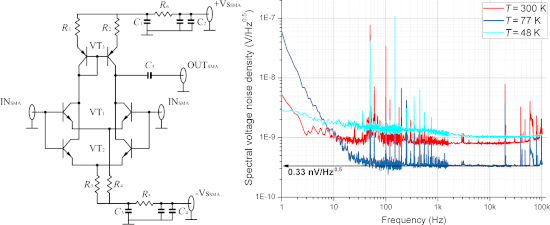
- and the capacitors have a C0G-type of dielectric. All the components were mounted on the designed layout of the printed circuit board (PCB) from FR4 material. We did not solder the electrodes of the capacitors directly to the PCB in order to reduce the mechanical stress during the cooldown cycles


Structure and electrochemical performance of electrospun-ordered porous carbon/graphene composite nanofibers
Beilstein J. Nanotechnol. 2020, 11, 1280–1290, doi:10.3762/bjnano.11.112
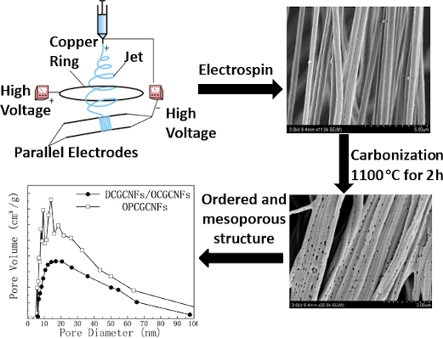
- configurations were used as a material to fabricate supercapacitor electrodes. These nanofibers were synthesized by applying a modified parallel electrode to the electrospinning method (MPEM) in order to generate electrospun polyacrylonitrile (PAN) nanofibers containing graphene. After synthesis, these fibers
- devices [1][2], are one of the most needed energy storage devices. Their main characteristics include high energy density, high power density, and fast charging speed [3][4][5]. These instruments have electrodes that are composed of either carbonaceous materials (carbon nanotubes, graphene, carbon
- nanofibers) or metal oxides (manganese oxide, nickel oxide, RuO2, Co3O4, etc.). Carbon is the primary material used to manufacture EDLC electrodes since it has a high specific surface area, which can easily form a double layer to store more electrical energy [6][7][8][9][10]. Since there is still room for


Role of redox-active axial ligands of metal porphyrins adsorbed at solid–liquid interfaces in a liquid-STM setup
Beilstein J. Nanotechnol. 2020, 11, 1264–1271, doi:10.3762/bjnano.11.110
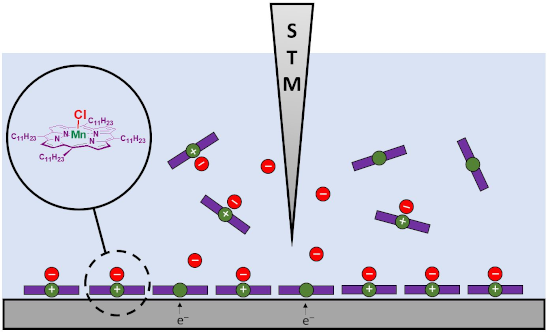
- ) to (II) [15][16], results from previous work that the substrates in an STM setup act as electrodes at which manganese porphyrins can be reduced [6][7][8], and the fact that also cobalt porphyrins can accept electrons from a HOPG surface in a liquid-STM setup [17][18]. While we have demonstrated that
- of the chloride counterion for the redox reactivity of MnTUPCl. To investigate the influence of the nature of the used electrodes, we varied the sample surfaces (HOPG and Au(111)) and the tip material (Pt90Ir10, Au and W). A summary of these experiments is given in Table 1. Additional currents were
- surface effect is highlighted by the observation that the magnitude of the observed currents is typically not mirrored when the sign of the applied bias voltage is switched (Table 1), indicating that when the two redox reactions occur at different sample electrodes this gives rise to different reaction


Ultrasensitive detection of cadmium ions using a microcantilever-based piezoresistive sensor for groundwater
Beilstein J. Nanotechnol. 2020, 11, 1242–1253, doi:10.3762/bjnano.11.108
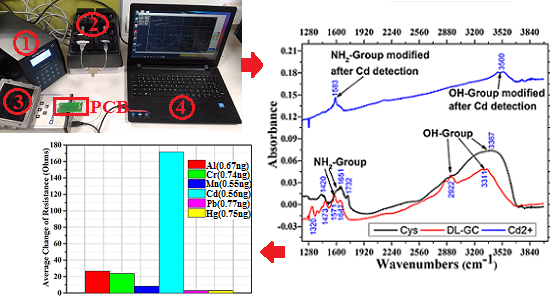
- concentrations below the limit is also hazardous. Hence, it is essential to sense Cd(II) in the picomolar (pM) range well below the specified WHO limit. The ion-selective electrodes (ISEs) fabricated by [7] are stable and precise for HMI detection, but the measurement requires by laboratory equipment. Sensors




Gas sorption porosimetry for the evaluation of hard carbons as anodes for Li- and Na-ion batteries
Beilstein J. Nanotechnol. 2020, 11, 1217–1229, doi:10.3762/bjnano.11.106
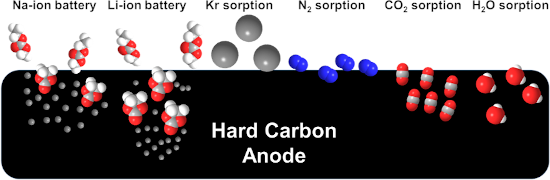
- ]. Theoretical studies suggest a minimum distance of around 0.37 nm in order to enable reversible intercalation of sodium ions [14]. Therefore, the use of less crystalline carbon electrodes in SIBs cannot be avoided [15]. The lower gravimetric energy density compared to LIBs (because of the higher specific
- phase separation during the preparation [28][29]. After grinding for preparation of the electrodes, however, the monolithic structure was lost (Supporting Information File 1, Figure S6). The reason why HT6 (Figure 1f) shows smaller particle diameters than the other carbons (Figure 1a–e) can be explained
- sorption. Apparently, the absolute quantification of porosity is questionable and the most accurate results may depend on how well the gas fits the studied material. Relative differences for similarly prepared materials may be helpful for the evaluation of HCs for application as anode electrodes in LIBs or


Thermophoretic tweezers for single nanoparticle manipulation
Beilstein J. Nanotechnol. 2020, 11, 1126–1133, doi:10.3762/bjnano.11.97
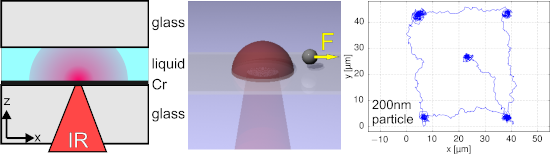
- details are given in the Experimental section at the end of this paper. Similarly to other optothermal trap designs [31][32], the approach is free of any prior modifications of the substrate such as electrodes, microchannels, biochemical or local inhomogeneous surface modifications and can thus be


Monolayers of MoS2 on Ag(111) as decoupling layers for organic molecules: resolution of electronic and vibronic states of TCNQ
Beilstein J. Nanotechnol. 2020, 11, 1062–1071, doi:10.3762/bjnano.11.91
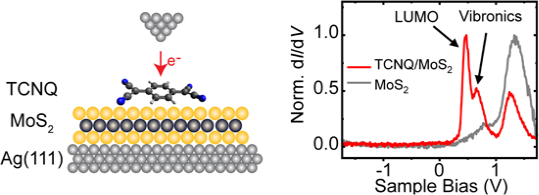
- in a scanning tunneling microscope, requires a metal electrode. To (partially) preserve the molecular properties the molecule–electrode coupling has to be properly designed. An elegant way is to clamp the molecule between electrodes via single-atom bonds at opposing sites of the molecule while the
- molecule is freely hanging between the electrodes [7][8][9][10]. While these configurations give access to important transport properties [11][12][13], they do not allow for imaging molecular properties with intramolecular resolution [14]. The latter requires the molecules to be flat lying on a surface. To


A new photodetector structure based on graphene nanomeshes: an ab initio study
Beilstein J. Nanotechnol. 2020, 11, 1036–1044, doi:10.3762/bjnano.11.88
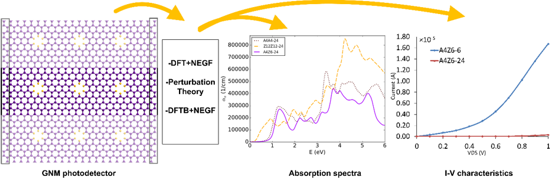
- channel is made of a large number of GNRs of the same type arranged in the XY plane in a parallel fashion, and the device channel in the Y direction is periodic. A finite number of GNRs, each with a constant length, is placed between the electrodes in X direction. The electrodes and the channel are made
- of the same GNR type. Also, we consider the electrodes have n-type doping. The left- and the right-hand edge of the electrodes are shown in the figure with black lines. Figure 1e shows a typical GNM-based device where nanomesh channel with graphene contacts are introduced to be used in our
- is about 5 nm. The electrodes on either side of the graphene and GNM devices are made of graphene. The electrodes in all three types of devices are n-type doped. Computational Method In the first section of calculations, we perform DFT calculations by using ATK software with linear combination of


Gas-sensing features of nanostructured tellurium thin films
Beilstein J. Nanotechnol. 2020, 11, 1010–1018, doi:10.3762/bjnano.11.85
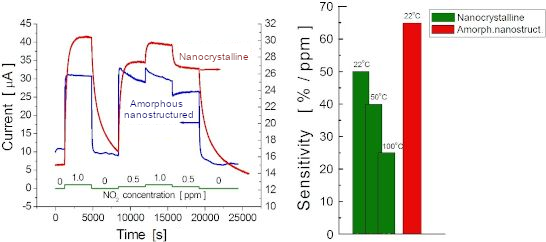
- performed using a DRONE–YM1 (Burevestnik, Russia) diffractometer with Fe Kα radiation. The rotational velocity of the scintillation counter was set to be either 2 or 4°/min. For the electrical and gas-sensing characterization, the samples were supplied with symmetrical gold or platinum electrodes
- , identified in our preliminary works as ohmics [25][26], which form electrically transparent contacts with Te. The gold or copper wires were then attached to the electrodes with a silver paste. Figure 1A shows the surface morphology of a Te film grown on a Pyrex glass substrate at a rate of 10 nm/s. As shown





