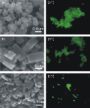
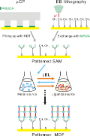
Search results
Search for "hierarchical" in Full Text gives 190 result(s) in Beilstein Journal of Nanotechnology.
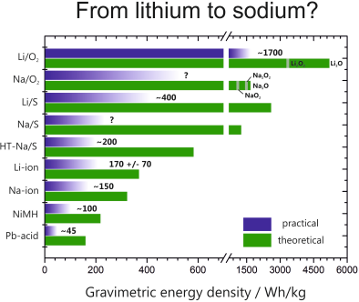
From lithium to sodium: cell chemistry of room temperature sodium–air and sodium–sulfur batteries
Beilstein J. Nanotechnol. 2015, 6, 1016–1055, doi:10.3762/bjnano.6.105


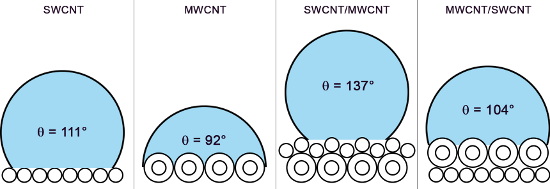
Exploiting the hierarchical morphology of single-walled and multi-walled carbon nanotube films for highly hydrophobic coatings
Beilstein J. Nanotechnol. 2015, 6, 353–360, doi:10.3762/bjnano.6.34
- Istituto di Struttura della Materia, Consiglio Nazionale delle Ricerche (ISM-CNR), Via del Fosso del Cavaliere 100, 00100 Roma, Italy 10.3762/bjnano.6.34 Abstract Self-assembled hierarchical solid surfaces are very interesting for wetting phenomena, as observed in a variety of natural and artificial
- investigation of carbon nanotube films through scanning electron microscopy (SEM) reveals the multi-scale hierarchical morphology of the self-assembled carbon nanotube random networks. Moreover, contact angle measurements show that hierarchical SWCNT/MWCNT composite surfaces exhibit a higher hydrophobicity
- (contact angles of up to 137°) than bare SWCNT (110°) and MWCNT (97°) coatings, thereby confirming the enhancement produced by the surface hierarchical morphology. Keywords: hierarchical structures; hydrophobic surfaces; multi-walled carbon nanotube; single-walled carbon nanotube; wetting transitions


Multifunctional layered magnetic composites
Beilstein J. Nanotechnol. 2015, 6, 134–148, doi:10.3762/bjnano.6.13
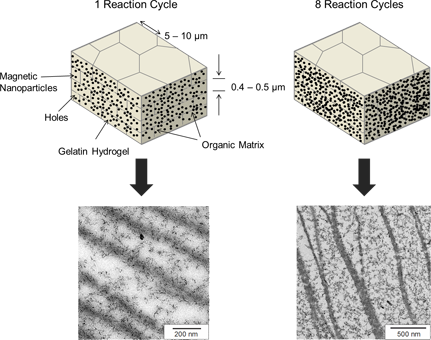
- mineralization, hierarchical structure and toughness enhancement [23][29]. Different techniques have been used to resolve the chemical and structural composition of the organic matrix. Small angle neutron scattering (SANS) is a non-destructive method to study the nacreous organic matrix without potential changes
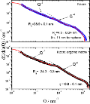
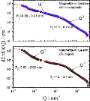
- found in the scattering curves. These measurements enable the determination of the hierarchical structures along the vertical direction of the lamellar platelets of the nacre and its organic matrix over a wide range of length scales from about 1 nm to 1 μm. The data in Figure 2 show several distinct Q
- varies from 15–65 wt % depending on the number of reaction cycles (see Figure S3, Supporting Information File 1). Scanning electron microscopy (SEM) examinations of the dried hybrid materials indicate a dense layered hierarchical structure (see Figure 4a), which is similar to natural nacre. The





Functionalization of α-synuclein fibrils
Beilstein J. Nanotechnol. 2015, 6, 124–133, doi:10.3762/bjnano.6.12
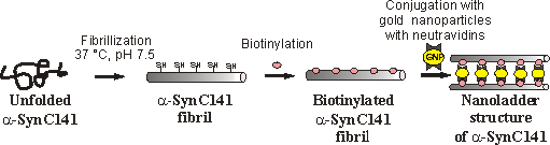
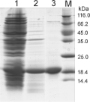
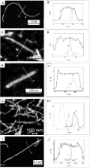
- [51]. After 5 days of incubation, long filaments were observed in the fibril sample. The height of α-SynC141 fibrils was 3.12 ± 0.55 nm. Khurana et al. proposed a model for the hierarchical assembly of α-synuclein into amyloid fibrils when the pairs of protofilaments wind together to form protofibrils


Chemoselective silicification of synthetic peptides and polyamines
Beilstein J. Nanotechnol. 2015, 6, 103–110, doi:10.3762/bjnano.6.10
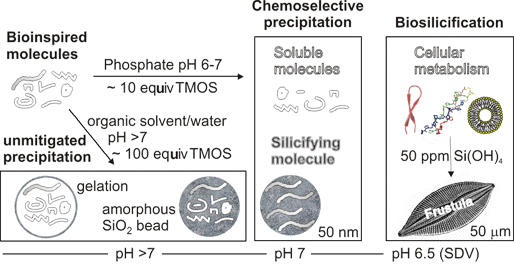
- petrifying gaze of Medusa, which turns the whole cell into stone. Step by step, biochemistry unveils the hierarchical interplay of an arsenal of low-molecular weight molecules, proteins, and the cytoskeletal architecture and it becomes clearer why the organisms invest much metabolic effort for an obviously




Poly(styrene)/oligo(fluorene)-intercalated fluoromica hybrids: synthesis, characterization and self-assembly
Beilstein J. Nanotechnol. 2014, 5, 2450–2458, doi:10.3762/bjnano.5.254
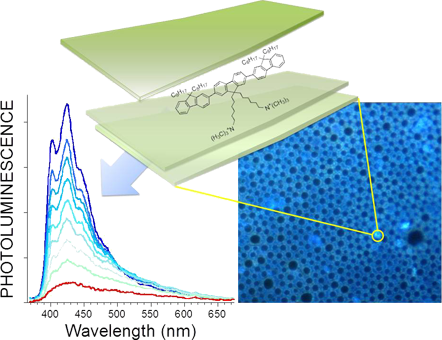
- hierarchical organization of this material by the BF approach is feasible. Photostability The intercalation of the oligo(fluorene) molecules within the lamellae interlayers of the inorganic scaffold has dramatically improved their photophysical stability, a critical issue for fluorene-based materials [35




Inorganic Janus particles for biomedical applications
Beilstein J. Nanotechnol. 2014, 5, 2346–2362, doi:10.3762/bjnano.5.244
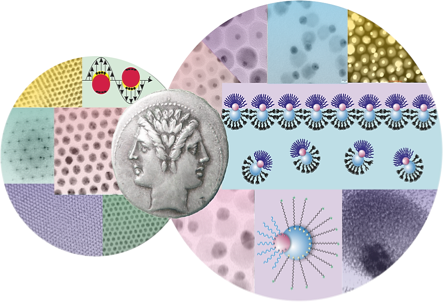
- potential for development. The self-assembly of colloidal Janus particles may lead to the formation of complex hierarchical structures that do not emerge spontaneously as thermodynamically stable assemblies when particles are mixed. Fundamental studies that can help understanding the principles of self






Liquid-phase exfoliated graphene: functionalization, characterization, and applications
Beilstein J. Nanotechnol. 2014, 5, 2328–2338, doi:10.3762/bjnano.5.242
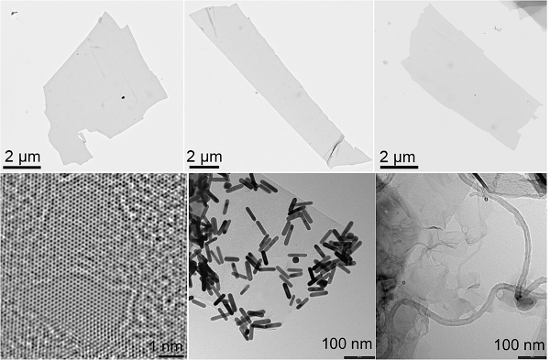
- also describe some of the chemical protocols that have provided insight into the vast organic chemistry of the single atomic plane of graphite. Controlled chemical reactions applied to graphene are expected to significantly improve the design of hierarchical, functional platforms, driving the inclusion




Biopolymer colloids for controlling and templating inorganic synthesis
Beilstein J. Nanotechnol. 2014, 5, 2129–2138, doi:10.3762/bjnano.5.222
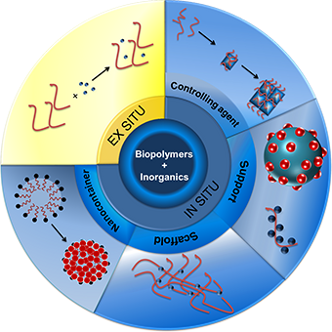
- . Furthermore, the high ability of biopolymers to form complex hierarchical structures is a major feature to be explored in the upcoming years. A better understanding of the interface between the biopolymeric component and the growing inorganic matter will continue to be the crucial issue in the design of novel


Equilibrium states and stability of pre-tensioned adhesive tapes
Beilstein J. Nanotechnol. 2014, 5, 1725–1731, doi:10.3762/bjnano.5.182
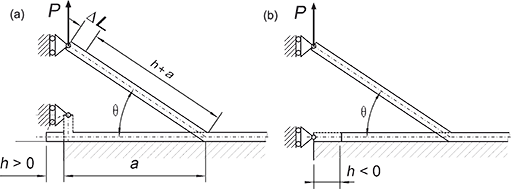
- reproducing such properties in artificial bio-mimetic adhesives [1][2][3]. In nature, many adhesive systems consist of arrays of hierarchical hairs or setae, enabling large contact areas and hence high adhesion owing to the van der Waals interaction forces [4]. This morphology enables many insects, spiders
- and numerical models. In nature, on the other side, geckos exhibit extremely high adhesive performance also on rough substrates. The secret of this amazing behavior is mainly related to the fibrillar hierarchical geometry of the adhesion pads that makes these structures very compliant, despite the
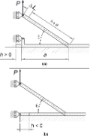

![[Graphic 5]](/bjnano/content/inline/2190-4286-5-182-i14.png?max-width=637&scale=1.18182) as a function of the peeling angle θeq at equilibrium (a); the tot...
as a function of the peeling angle θeq at equilibrium (a); the tot...


![[Graphic 11]](/bjnano/content/inline/2190-4286-5-182-i20.png?max-width=637&scale=1.18182) as a function of the peeling angle θeq at equilibrium, for differen...
as a function of the peeling angle θeq at equilibrium, for differen...
Growth and structural discrimination of cortical neurons on randomly oriented and vertically aligned dense carbon nanotube networks
Beilstein J. Nanotechnol. 2014, 5, 1575–1579, doi:10.3762/bjnano.5.169
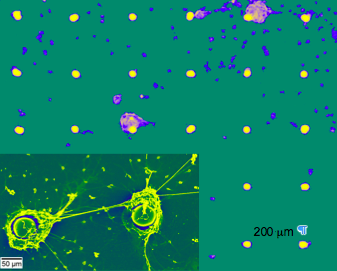
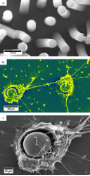
- chemistry viewpoint in future work. In conclusion, pristine randomly and vertically aligned CNTs architectures were studied with respect their use as substrates for neuron cell growth. Both CNT architectures are unique hierarchical structures to direct and control neural cell growth. To the best of our


Ionic liquid-assisted formation of cellulose/calcium phosphate hybrid materials
Beilstein J. Nanotechnol. 2014, 5, 1553–1568, doi:10.3762/bjnano.5.167
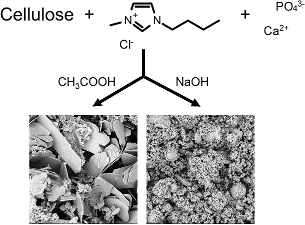
- templates and thus results in materials mostly exhibiting surface or near-surface mineral layers. The most straightforward strategy towards real, nanostructured and hierarchical carbohydrate/calcium phosphate composites would therefore be a synthesis protocol using a solvent that is able to dissolve


Insect attachment on crystalline bioinspired wax surfaces formed by alkanes of varying chain lengths
Beilstein J. Nanotechnol. 2014, 5, 1031–1041, doi:10.3762/bjnano.5.116
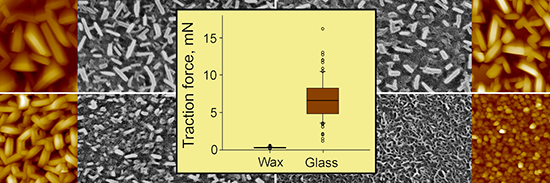
- corrections of the manuscript. This study was partly supported by the SPP 1420 of the German Science Foundation ‘Biomimetic Materials Research: Functionality by Hierarchical Structuring of Materials’ (project GO 995 ⁄ 9-2) to SG.


Functionalized nanostructures for enhanced photocatalytic performance under solar light
Beilstein J. Nanotechnol. 2014, 5, 994–1004, doi:10.3762/bjnano.5.113
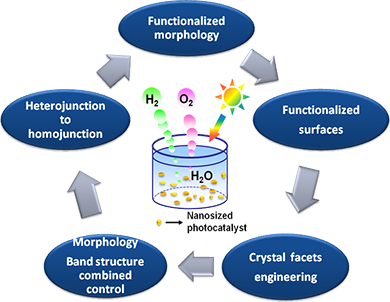
- located in ABO3 structures, and functionalized multicomponent ABO3 materials can thus be prepared by partial substitution of cations in A and B sites [46][47][48]. In this approach, we have successfully synthesized hexagonal single-crystal nanosheet-based NaSbO3 and AgSbO3 hierarchical cuboidal
- nanosheet-based hierarchical structure could be achieved over NaSbO3 and AgSbO3 photocatalysts. Meanwhile, the single-crystal nature can reduce the crystal defects leading to more efficient charge separation. The larger surface area provides more active sites for photocatalytic reaction. The exposed {001
- } facets as the reactive surfaces can accelerate the redox reactions. Therefore, nanosheet-based AgSbO3 photocatalysts showed a 1.8 times higher initial O2 evolution rate than AgSbO3 photocatalysts without the hierarchical structure under visible-light irradiation. Besides facet control, microstructure


Fibrillar adhesion with no clusterisation: Functional significance of material gradient along adhesive setae of insects
Beilstein J. Nanotechnol. 2014, 5, 837–845, doi:10.3762/bjnano.5.95
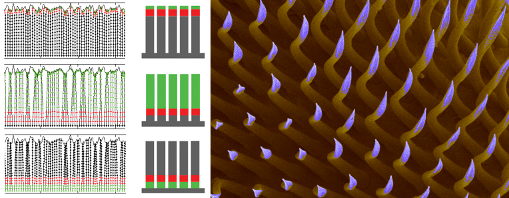
- contact may be increased due to the presence of specific micro- and nanostructures [1][2][3][4][5]. Crack trapping mechanisms in adhesive systems with multiple contacts provide advantages in attachment on rough substrates [6]. Also hierarchical organization of insect pad structures enables formation of


Measuring air layer volumes retained by submerged floating-ferns Salvinia and biomimetic superhydrophobic surfaces
Beilstein J. Nanotechnol. 2014, 5, 812–821, doi:10.3762/bjnano.5.93
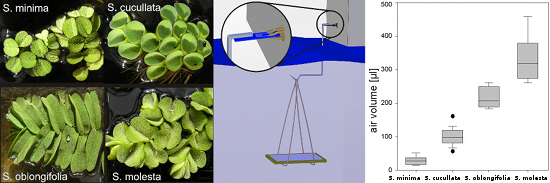
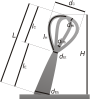
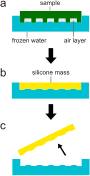
- possess a multiscale roughness on several hierarchical levels resulting in a stable Cassie wetting state [17]. In the floating fern genus Salvinia four different shapes of such hairs (trichomes) have been described [33]. In the simplest case these are individual multicellular, uniseriate trichomes. In the


The optimal shape of elastomer mushroom-like fibers for high and robust adhesion
Beilstein J. Nanotechnol. 2014, 5, 630–638, doi:10.3762/bjnano.5.74
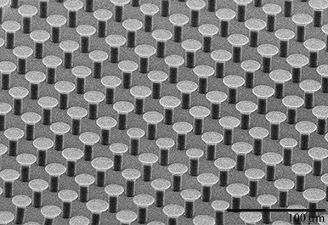
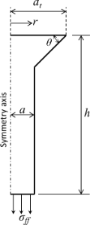
- that bears them [1]. Some insects, spiders, and anoles have fibers with effective diameters of the order of micrometers. Other animals such as the gecko lizard bear micro-scale stalks, which branch down to nano-scale fibers forming intricate hierarchical structures. The common aspect of fibrillar



The surface microstructure of cusps and leaflets in rabbit and mouse heart valves
Beilstein J. Nanotechnol. 2014, 5, 622–629, doi:10.3762/bjnano.5.73
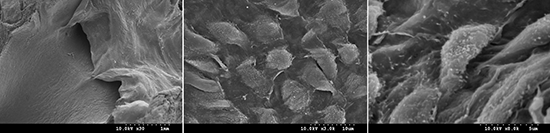
- smooth to the naked eye, they are actually comprised of a double hierarchical structure consisting of a cobblestone-like microstructure and nano-cilia along with mastoids with a directional arrangement. Such nanostructures could play a very important role in the hemocompatibility characteristics of heart
- decade due to advancements in nano- and biotechnologies. After millions of years of evolution and optimization, the surfaces of many organisms have formed a variety of special micro- and nanoscale hierarchical structures. These structures show many perfect characteristics such as superhydrophobicity, low
- the surface of the valve cusps and the bottom diameter of each “cobblestone” is approximately 5–9 μm. Figure 2b shows a high-resolution SEM image of the microstructure. In this image the hierarchical structure is formed of tenuous villi and “cobblestones”, and each villu has a diameter of 140–190 nm



Hairy suckers: the surface microstructure and its possible functional significance in the Octopus vulgaris sucker
Beilstein J. Nanotechnol. 2014, 5, 561–565, doi:10.3762/bjnano.5.66
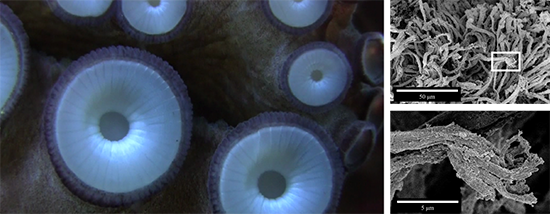
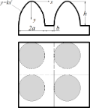
- this work is the presence of hairs on the acetabular protuberance. This is of particular interest because to the best of our knowledge, these microstructures are unknown in the literature. Moreover, the presence of such hierarchical hairs on the entire surface of the acetabular protuberance supports
- spatulate termini that are well known in the attachment pads of terrestrial animals [12][13]. In the case of the clingfish, it was hypothesised that the amazing tenacity observed for this fish could be related to the hierarchical structure of the hairs (“microvilli”) [3]. Moreover, the absence of spatulate
Magnesiothermic conversion of the silica-mineralizing golden algae Mallomonas caudata and Synura petersenii to elemental silicon with high geometric precision
Beilstein J. Nanotechnol. 2014, 5, 554–560, doi:10.3762/bjnano.5.65
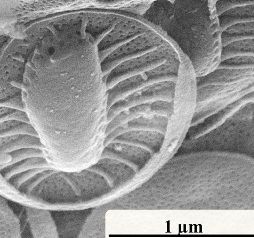
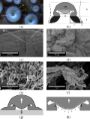
- and hierarchical forms [8][9][10][11][12]. These porous biominerals can serve as template for chemical conversion reactions, such as the calcium carbonate skeleton of sea urchins or the silica cases of diatoms [8][13]. In 2002, such a conversion reaction was first described in which biominerals were


Dynamic nanoindentation by instrumented nanoindentation and force microscopy: a comparative review
Beilstein J. Nanotechnol. 2013, 4, 815–833, doi:10.3762/bjnano.4.93
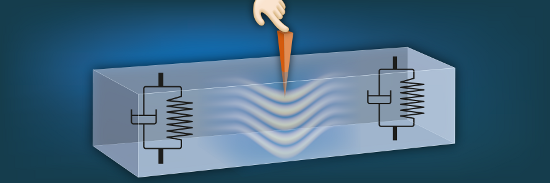
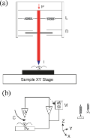
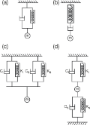
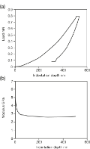
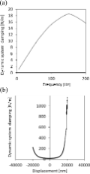
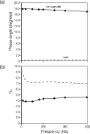
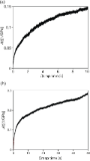
- require any knowledge of the contact area and it can be used to clearly identify phase transitions. At the micro-level, the thermodynamic state of the polymer can be related to a molecular motion at different hierarchical levels – from the cooperative motion of entire chains through short hops of




Controlled synthesis and tunable properties of ultrathin silica nanotubes through spontaneous polycondensation on polyamine fibrils
Beilstein J. Nanotechnol. 2013, 4, 793–804, doi:10.3762/bjnano.4.90
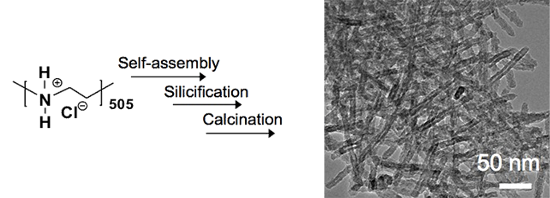
- precisely controlled nanopatterns, a hierarchical morphology and organic–inorganic hybrid structures [16][17][18]. It has been demonstrated that the long-chain polyamines (partially combined with proteins) in diatom shells and the silicateins in marine sponges play a vital role in templating the


Functionalization of vertically aligned carbon nanotubes
Beilstein J. Nanotechnol. 2013, 4, 129–152, doi:10.3762/bjnano.4.14
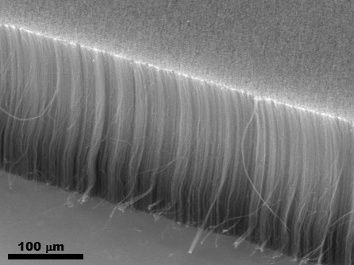








Controlled positioning of nanoparticles on a micrometer scale
Beilstein J. Nanotechnol. 2012, 3, 773–777, doi:10.3762/bjnano.3.86
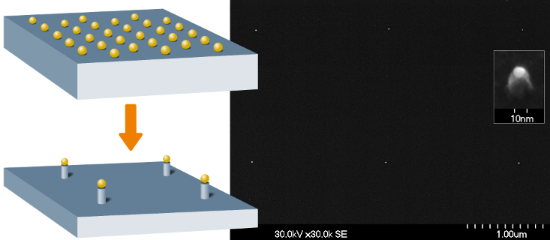
- least, with respect to interparticle distances, or even both. Restricting these distances to the nanoscale as well, some self-organization approaches exist that exploit hierarchical structure formation, allowing at least partial fulfillment of the above requirements [19][20][21][22]. For interparticle


The oriented and patterned growth of fluorescent metal–organic frameworks onto functionalized surfaces
Beilstein J. Nanotechnol. 2012, 3, 570–578, doi:10.3762/bjnano.3.66
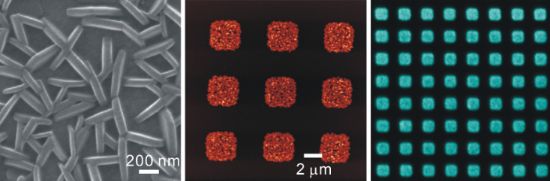
- [10][11], ultrasonic synthesis [12][13], microemulsions [14][15], or solvent-triggered precipitation [16][17]. Nanoscale MOFs with various morphologies, (e.g., nanospheres [16][18][19][20], nanocubes [21], nanorods [14][22], nanowheels [23], and hierarchical spheres [22]) have been synthesized [24