Search results
Search for "highly sensitive" in Full Text gives 169 result(s) in Beilstein Journal of Nanotechnology.
Measuring air layer volumes retained by submerged floating-ferns Salvinia and biomimetic superhydrophobic surfaces
Beilstein J. Nanotechnol. 2014, 5, 812–821, doi:10.3762/bjnano.5.93
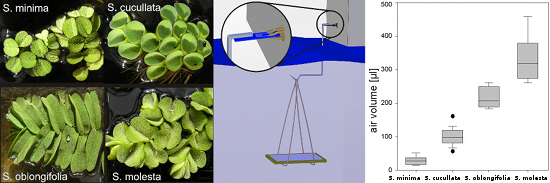
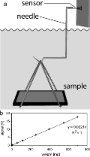
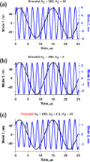
- biomimetic applications like drag reduction in ship coatings of up to 30%. Here we present a novel method for measuring air volumes and air loss under water. We recorded the buoyancy force of the air layer on leaf surfaces of four different Salvinia species and on one biomimetic surface using a highly
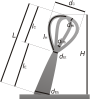
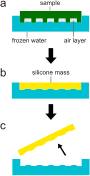
- sensitive custom made strain gauge force transducer setup. The volume of air held by a surface was quantified by comparing the buoyancy force of the specimen with and then without an air layer. Air volumes retained by the Salvinia-surfaces ranged between 0.15 and 1 L/m2 depending on differences in surface


Adsorption and oxidation of formaldehyde on a polycrystalline Pt film electrode: An in situ IR spectroscopy search for adsorbed reaction intermediates
Beilstein J. Nanotechnol. 2014, 5, 747–759, doi:10.3762/bjnano.5.87
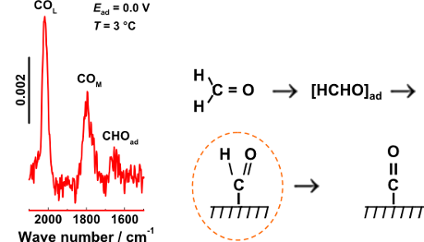
- , respectively. In later spectro-electrochemical studies, however, these features could not be reproduced, neither in an external reflection configuration (IRRAS), nor in highly sensitive surface enhanced IR spectroscopy measurements (SEIRAS) in an internal reflection configuration. Finally, the presence of
- adsorbed formyl species, equivalent to a lower steady-state coverage. Overall, it was only possible to detect this species by combination of highly sensitive spectroscopy (SEIRAS using p-polarized light) and use of reaction conditions which slow down the rate for C–H bond breaking and the coverage of


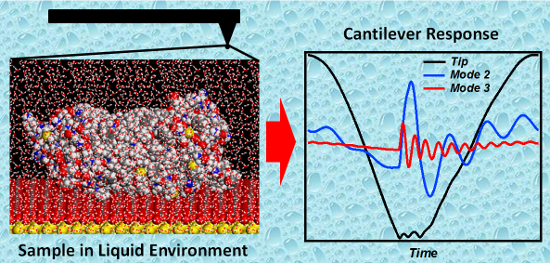
Challenges and complexities of multifrequency atomic force microscopy in liquid environments
Beilstein J. Nanotechnol. 2014, 5, 298–307, doi:10.3762/bjnano.5.33
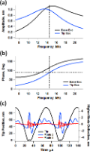
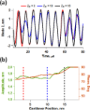
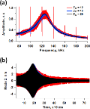
- surface, such that quantitative interpretations of the contrast across the entire sample may become meaningless. Furthermore, the level of cantilever perturbation is also highly sensitive to the amplitude setpoint, as illustrated in Figure 5 for three different cantilever positions above the sample
- able to obtain an image with open loop drive of the higher mode. However, the implementation of FM requires either a phase-locked loop (PLL) or time delay (phase shifting), both of which are more complex and highly sensitive to perturbations. The time delay version of FM is even more susceptible to




Oriented attachment explains cobalt ferrite nanoparticle growth in bioinspired syntheses
Beilstein J. Nanotechnol. 2014, 5, 210–218, doi:10.3762/bjnano.5.23
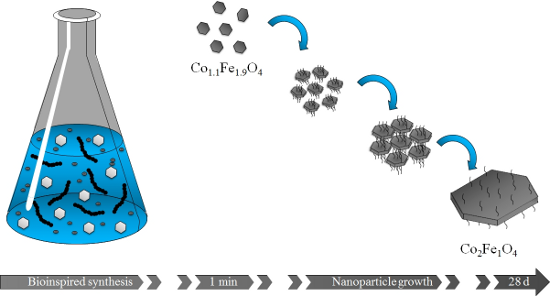
- microstructure, morphology and composition are essential for biomedical and magnetic recording applications [1][2]. These characteristics, which determine the physical properties such as the magnetic behavior, are highly sensitive to the crystal growth process. Understanding the growth mechanism is therefore


Atomic force microscopy recognition of protein A on Staphylococcus aureus cell surfaces by labelling with IgG–Au conjugates
Beilstein J. Nanotechnol. 2013, 4, 743–749, doi:10.3762/bjnano.4.84
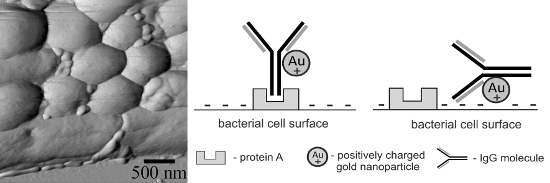
- operating conditions [4]. These benefits allow for the development of highly sensitive high-resolution methods for the detection of individual structures or labels on the surface of microorganisms. These, in turn, open wide prospects for the estimation of the exact quantity of bound markers, their topology


A highly pH-sensitive nanowire field-effect transistor based on silicon on insulator
Beilstein J. Nanotechnol. 2013, 4, 330–335, doi:10.3762/bjnano.4.38
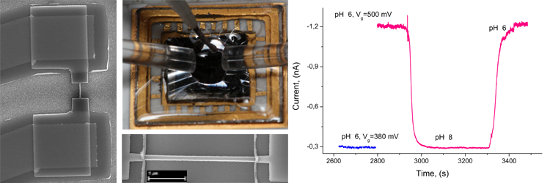
- of the fabrication of a highly sensitive pH sensor and charge sensor based on NW FET made from SOI using traditional semiconductor technology. The conducted analysis of the model allows us to estimate the value of the NW relative-conductivity modulation due to the variation of the charge density on


Towards atomic resolution in sodium titanate nanotubes using near-edge X-ray-absorption fine-structure spectromicroscopy combined with multichannel multiple-scattering calculations
Beilstein J. Nanotechnol. 2012, 3, 789–797, doi:10.3762/bjnano.3.88
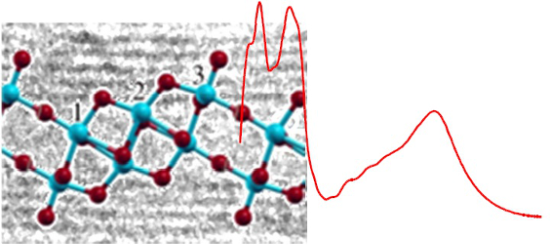
- with the eg orbitals that point directly towards the oxygen ligands and, therefore, the line-shape of the eg band is highly sensitive to the local symmetry around the metal cations [39]. In Figure 3a, the structure of the L3–eg transition seems to be characteristic of a tetragonal system [36][40][41
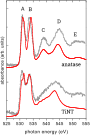
- hydroxyl atoms O5 and O7 have a distinctly different shape where peaks A, B are strongly decreased and the dip between B and C is gone. This shows that the O K-edge spectra are highly sensitive to the number of H and Ti bonds, and thereby to the connectivity of the octahedra. In particular, for the non



Growth behaviour and mechanical properties of PLL/HA multilayer films studied by AFM
Beilstein J. Nanotechnol. 2012, 3, 778–788, doi:10.3762/bjnano.3.87
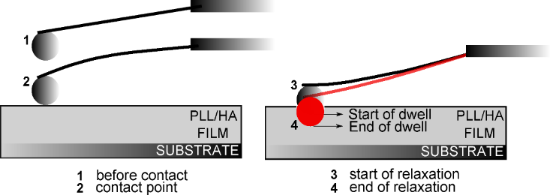
- , which is highly sensitive to the elasticity of the substrate, must be known and controlled for the development of contact lenses and antifouling materials [3][5][6]. Nevertheless, thin films have to be studied in the form in which they are available, making the use of macroscopic methods unsuitable


Polymer blend lithography: A versatile method to fabricate nanopatterned self-assembled monolayers
Beilstein J. Nanotechnol. 2012, 3, 620–628, doi:10.3762/bjnano.3.71
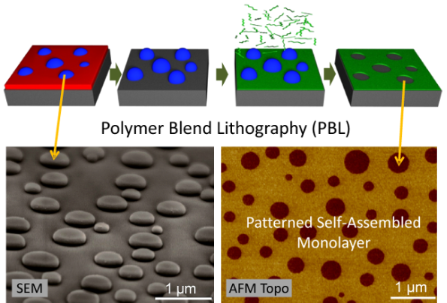
- potential for their application as templates for the subsequent self-assembly of inorganic materials, for cell-adhesion studies, for laterally controlled dewetting, or for constructive lithography. The extreme flatness (rms roughness below 0.5 nm) allows for a highly sensitive monitoring of growth processes


FTIR nanobiosensors for Escherichia coli detection
Beilstein J. Nanotechnol. 2012, 3, 485–492, doi:10.3762/bjnano.3.55
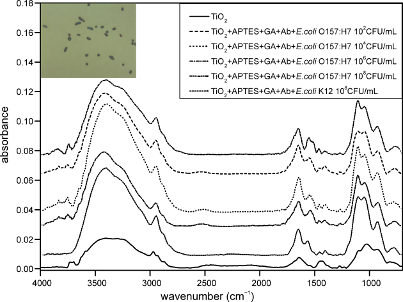
- comply with the safety regulations of the food and water supply chain. In addition, these methods are expensive, complicated, time-consuming, and require skilled personnel with expertise in molecular biology. To overcome these problems, devices that can be used in situ, and that are simple, highly
- sensitive, inexpensive and rapid are attractive because they can be used for rapid screening of different samples for timely detection of these pathogenic agents. In fact monitoring food quality and safety attributes, by using new detection methods that have the potential to be sensitive and rapid [13], is


Mapping mechanical properties of organic thin films by force-modulation microscopy in aqueous media
Beilstein J. Nanotechnol. 2012, 3, 464–474, doi:10.3762/bjnano.3.53
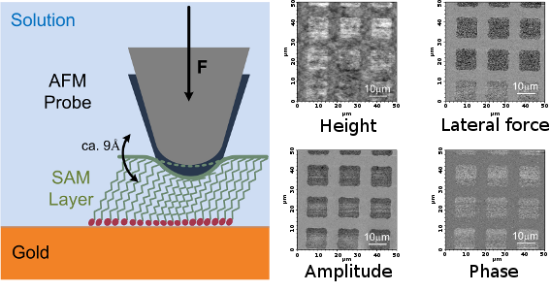
- end-grafted to gold substrates, and reflects the expected (see Equation 1) differences in contact-stiffness on the sample. Furthermore, FMM experiments on self-assembled thiol monolayers were highly sensitive to differences in the surface elastic properties arising from subtle differences in the



Surface functionalization of aluminosilicate nanotubes with organic molecules
Beilstein J. Nanotechnol. 2012, 3, 82–100, doi:10.3762/bjnano.3.10
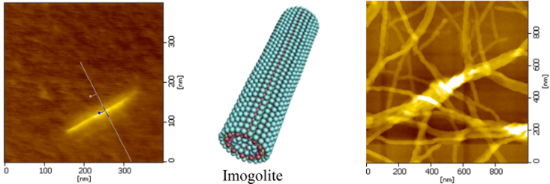
- -substituted polythiophene systems was reported [84]. Using a simple solution fabrication process, by dispersing carbon nanotubes in a polythiophene solution followed by spin coating of the solution onto a glass substrate, a highly sensitive and selective chemiresistor was successfully developed. Due to the


Impact of cell shape in hierarchically structured plant surfaces on the attachment of male Colorado potato beetles (Leptinotarsa decemlineata)
Beilstein J. Nanotechnol. 2012, 3, 57–64, doi:10.3762/bjnano.3.7
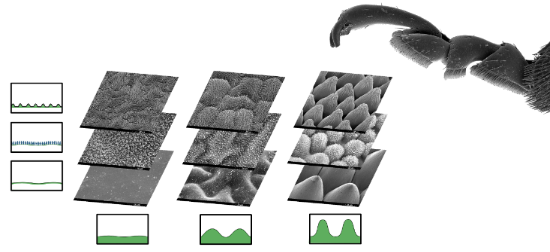
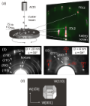
- individual beetles to a highly sensitive force transducer (Fort 25, World Precision Instruments Inc., Sarasota, USA), by using a human hair attached to the beetle’s elytra (Figure 4). The force was recorded during at least 2 min of active walking on the respective test substrate, and the measurement was
- . Terminology according to Voigt et al. [13]. Adapted from [8]. Experimental setup. Traction forces of a beetle (b) actively walking on a plant surface (p) were recorded by using a highly sensitive force transducer (f). The beetle was fixed to the force transducer by a piece of hair (h) and attracted by a small


Mechanical characterization of carbon nanomembranes from self-assembled monolayers
Beilstein J. Nanotechnol. 2011, 2, 826–833, doi:10.3762/bjnano.2.92
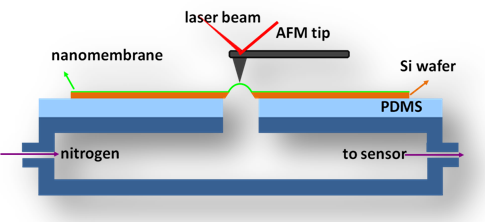
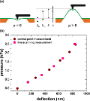
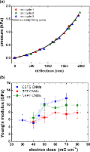
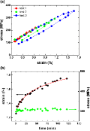
- ][2]. They can be made with molecular or atomic thickness and macroscopic size, constituting two-dimensional (2-D) objects of fundamental interest as well as being suitable for applications. To this end, the mechanical stability is crucial for the fabrication of miniature yet highly sensitive
- stability enables CNMs to work in a variety of applications, e.g., as ultrathin support films in electron microscopy, as filter membranes or as highly sensitive and mechanically stable miniature transducers. Experimental To prepare 4'-[(3-trimethoxysilyl)propoxy]-[1,1'-biphenyl]-4-carbonitrile (CBPS) SAMs

An MCBJ case study: The influence of π-conjugation on the single-molecule conductance at a solid/liquid interface
Beilstein J. Nanotechnol. 2011, 2, 699–713, doi:10.3762/bjnano.2.76
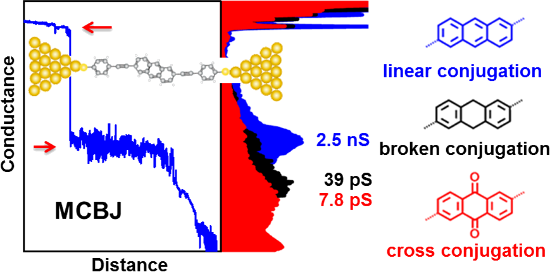
- molecular junctions. We describe in this paper the construction of a mechanically controlled break-junction setup (MCBJ) equipped with a highly sensitive log I–V converter in order to measure ultralow conductances of molecular rods trapped between two gold leads. The current resolution of the setup reaches
- large-area molecular junctions, is not directly accessible, thus preventing the downscaling to an “effective” single-molecule-junction response. Conclusion We described in this paper the construction of a mechanically controlled break-junction setup (MCBJ) equipped with a highly sensitive log I–V




Manipulation of gold colloidal nanoparticles with atomic force microscopy in dynamic mode: influence of particle–substrate chemistry and morphology, and of operating conditions
Beilstein J. Nanotechnol. 2011, 2, 85–98, doi:10.3762/bjnano.2.10
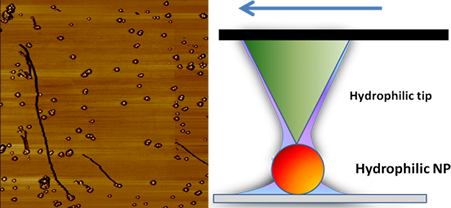
- produced in various well-controlled sizes and from various materials such as metals or semiconductors. Of particular interest has been the use of metal nanoparticles, which have been applied to the development of highly sensitive nanoparticle-based detection assays that utilize electrical or optical


Structure, morphology, and magnetic properties of Fe nanoparticles deposited onto single-crystalline surfaces
Beilstein J. Nanotechnol. 2011, 2, 47–56, doi:10.3762/bjnano.2.6
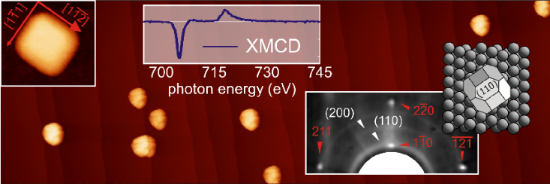
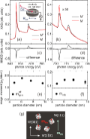
- enhancement of the orbital magnetic moments at bulk surfaces or, respectively, nanoparticle surfaces (e.g., [10] and references therein). Instead, the data suggest that the orbital moments are also altered in the particle volume. From the literature it is known that the magnetic moments in iron are highly
- sensitive to the actual lattice symmetry [54][55]. In [38], we therefore assumed that surface and interface related strain in the nanoparticles as, e.g., observed in [56] could be the origin of such enhanced orbital moments. Similarly, the reduced magnetic spin moments in Figure 2e could be due to, e.g

Magnetic nanoparticles for biomedical NMR-based diagnostics
Beilstein J. Nanotechnol. 2010, 1, 142–154, doi:10.3762/bjnano.1.17
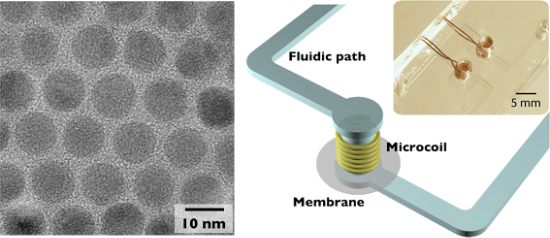
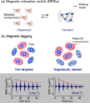
- magnetic nanoparticles (MNPs) have recently received considerable attention, since they offer unique advantages over traditional detection methods. Specifically, because biological samples exhibit negligible magnetic background, MNPs can be used to obtain highly sensitive measurements in turbid samples
- wide range of targets including DNA/mRNA, proteins, small molecules/drugs, bacteria, and tumor cells. More recently, the development of miniaturized, chip-based NMR detector systems has served to further enhance DMR technology [14][15][16]. Such detectors can perform highly sensitive measurements on


Preparation and characterization of supported magnetic nanoparticles prepared by reverse micelles
Beilstein J. Nanotechnol. 2010, 1, 24–47, doi:10.3762/bjnano.1.5
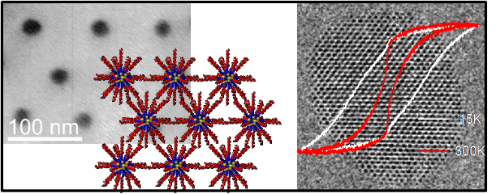
- the medical field [7], e.g., in hyperthermia [8], contrast enhancing in magnetic resonance imaging [9][10] or the use as cell markers [9] which in-turn can be read out by highly-sensitive devices like TMR-sensors [11]. Moreover, magnetic NPs are thought to improve a variety of catalytic reactions [12