


Search results
Search for "matrix" in Full Text gives 847 result(s) in Beilstein Journal of Nanotechnology. Showing first 200.
Mixed oxides with corundum-type structure obtained from recycling can seals as paint pigments: color stability
Beilstein J. Nanotechnol. 2023, 14, 467–477, doi:10.3762/bjnano.14.37
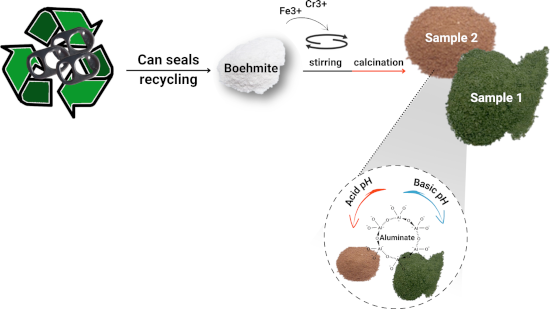
- interests to produce synthetic inorganic pigments [1] using metallic aluminium scrap as precursor to obtain a white matrix that can then be colored by chromophore ions as an approach within the circular economy of aluminium [1]. Aluminium production has one of the most significant energy consumption
- a color change with increasing particle size from brighter yellow-green to darker blue-green [14]. Usually, chromium oxide pigments are synthesized starting from dichromats with chromium in the oxidation state +6, which are toxic [15]. However, using boehmite as a host matrix, the opportunity arises
- and color can be adjusted by the calcination temperature or the combination with other metals as coloring ions [11]. In this context, applying both Cr and Fe ions as coloring ions in a white matrix such as aluminium oxide is interesting. We report on the synthesis of synthetic inorganic pigments using




Conjugated photothermal materials and structure design for solar steam generation
Beilstein J. Nanotechnol. 2023, 14, 454–466, doi:10.3762/bjnano.14.36
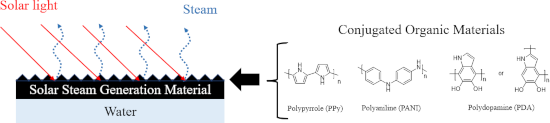
- possible to further improve the photothermal conversion efficiency of conjugated molecules by systematically studying structure–property relationships. Optimized structures will be value-added high-performance photothermal materials. Also, they need to be hybridized with mass-produced active matrix


Molecular nanoarchitectonics: unification of nanotechnology and molecular/materials science
Beilstein J. Nanotechnol. 2023, 14, 434–453, doi:10.3762/bjnano.14.35
- and Gong discuss the organization of gels [103]. Specifically, they outline a unique anisotropic hydrogel consisting of uniaxially aligned lamellar bilayers in an amorphous gel matrix. This gel organization exhibits a beautiful structural color that is sensitive to mechanical and chemical stimuli. The





Plasmonic nanotechnology for photothermal applications – an evaluation
Beilstein J. Nanotechnol. 2023, 14, 380–419, doi:10.3762/bjnano.14.33
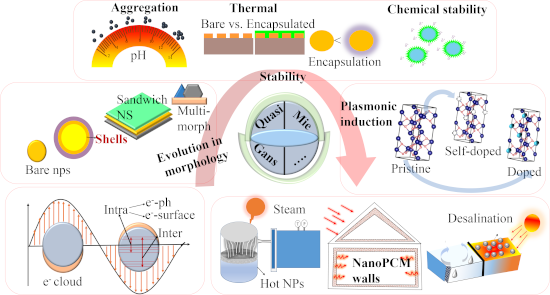
- engineering, doping, incorporation, and modification of suitable matrix materials. Plasmonic nanomaterials offer an alternative and attractive approach in this regard, through the flexibility in the excitation of surface plasmons. Specific advantages are the considerable improved bandwidth of the absorption
- constant of the surrounding medium and hence the LSPR frequency can be arrived at as [39]: Thus, for any morphology of a plasmonic nanoparticle, the LSPR frequency is intimately tied to the free electron density and the dielectric constant of the surrounding matrix. These factors thus decide the shape
- can be effective [86][87][88][89]. A few governing equations which allow to predict the different aspects of PPT energy conversion are discussed next. They can be of use to explicitly select a material/morphology/matrix based on the application it is being considered for. 3 Calculations in PT heating




Polymer nanoparticles from low-energy nanoemulsions for biomedical applications
Beilstein J. Nanotechnol. 2023, 14, 339–350, doi:10.3762/bjnano.14.29
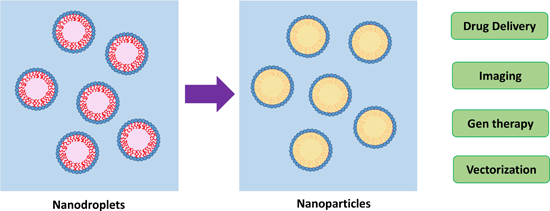
- , nanocarriers need to be engineered to add functionalities, both in their cores and at their surfaces. This includes therapeutic drugs and genes, targeting moieties, performance enhancers (e.g., for barrier penetration and to avoid opsonization), and imaging agents [2][3]. Core and matrix of the nanoparticles
- should be biocompatible, preferentially biodegradable, and with the capacity for proper encapsulation and release of the drug payload. It is also desired that the matrix surface contains reactive or charged groups that facilitate functionalization by covalent or electrostatic bonding. Herein, we review




Bismuth-based nanostructured photocatalysts for the remediation of antibiotics and organic dyes
Beilstein J. Nanotechnol. 2023, 14, 291–321, doi:10.3762/bjnano.14.26
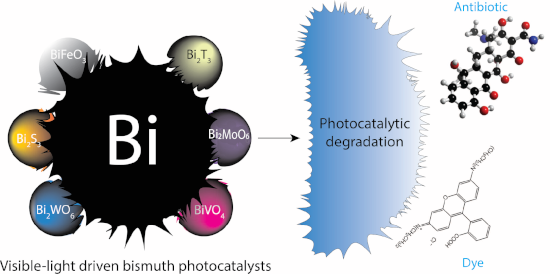
- allow for the integration of multiple functions derived from various types of nanocatalysts, such as semiconductor nanoparticles, plasmonic metals, and carbon-based and magnetic oxides, into the same host matrix. This enables effective tuning of the photocatalytic characteristics of the final


Nanotechnology – a robust tool for fighting the challenges of drug resistance in non-small cell lung cancer
Beilstein J. Nanotechnol. 2023, 14, 240–261, doi:10.3762/bjnano.14.23
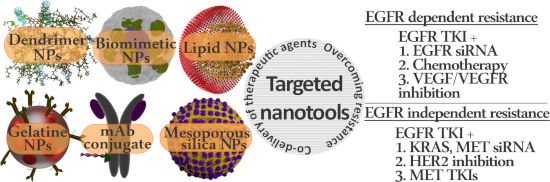
- targeting efficacy of nanomedicines. Various solutions have been proposed to improve mononuclear phagocytic system (MPS) evasion, extravasation at the tumor site, and diffusion through the dense collagen matrix of the solid tumors. Biomimetic, multifunctional, and multistage targeted nanoscale delivery


Spin dynamics in superconductor/ferromagnetic insulator hybrid structures with precessing magnetization
Beilstein J. Nanotechnol. 2023, 14, 233–239, doi:10.3762/bjnano.14.22
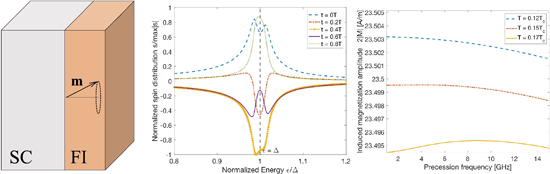
- superconducting condensate in the weak proximity effect regime can be described via the nonstationary Usadel equation [18][19][30]: where is the stationary BCS superconducting order parameter matrix [28], D is the diffusion constant, is the auxiliary matrix in Nambu–spin-Keldysh space, is the time convolution
- spin current takes the following form [29]: where K is the Keldysh component. Using the normalization condition, Keldysh Green’s function can be written through the distribution function : . In thermal equilibrium, the distribution matrix reduces to a function tanh(βℏω/2), β = 1/kT, which corresponds
- of spin current inside the superconducting layer completely agrees with the boundary condition of the zero matrix current at the interface between the free space and superconducting layer at z = 0. Now let us consider the Fourier coefficients for the induced magnetization. Earlier, we have shown that


Structural, optical, and bioimaging characterization of carbon quantum dots solvothermally synthesized from o-phenylenediamine
Beilstein J. Nanotechnol. 2023, 14, 165–174, doi:10.3762/bjnano.14.17
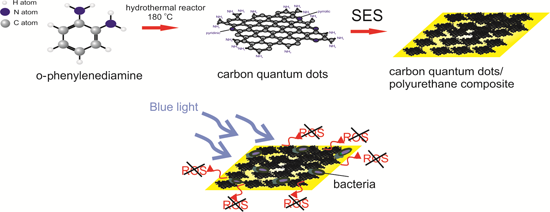
- as polymer-like nanoparticles of amorphous carbon with embedded partially sp2-hybridized atomic domains [8]. In this structure, electrons are partially delocalized over the domain area, but a strong coupling of the amorphous host matrix is maintained continuously. CQDs are well known as chemically
- surface states, precursors, preparation methods, and heteroatom doping [9]. Previous investigations showed that possible mechanisms of the CQD photoluminescence are radiative recombination of electron–hole pairs in the sp2 domains inside the sp3 matrix as well as the effect of zig-zag edges [6][18]. Apart
- n–π* transition of C=O whereas a very wide band at 585 nm stems from surface states of the CQDs. All of these peaks can be identified also in the UV–vis spectrum of pure CQDs as well, but when the CQDs are encapsulated inside the polymer matrix, these peaks are redshifted because of the crosslinking


Intermodal coupling spectroscopy of mechanical modes in microcantilevers
Beilstein J. Nanotechnol. 2023, 14, 123–132, doi:10.3762/bjnano.14.13
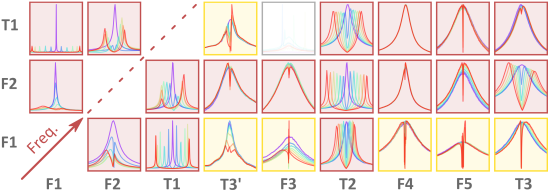
- on a finite number of eigenmodes due to our equipment limitations. The full Hamiltonian is given by If this coupling is a direct analogue to optomechanics, the coupling matrix should be symmetric, that is, . Expanding the experiment to multiple eigenmodes will elucidate if this symmetry is respected
- mode. The regime changes at this point as detailed before. Figure 5b presents the coupling matrix and a colormap containing the directional coupling strength between two modes normalised to pump amplitude in nanometers. The highest measured coupling rate between flexural modes is 5.15 × 10² Hz/nm
- –T3, which has a regime transition. Inset: Coupling rates determined from linewidth changes or eigenmode separation against half the linewidth of cavity mode T3. (b) Matrix showing the coupling rates of all mode combinations. Contoured squares represent combinations between flexural modes only. (c


Antimicrobial and mechanical properties of functionalized textile by nanoarchitectured photoinduced Ag@polymer coating
Beilstein J. Nanotechnol. 2023, 14, 95–109, doi:10.3762/bjnano.14.11
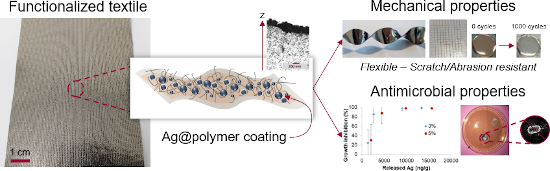
- , and textiles need to be cleaned on a daily basis. Silver nanoparticles (AgNPs) possess well-documented antimicrobial properties and by combining them with a physical matrix, they can be applied to various surfaces to limit microbial contamination. With this in mind, a rapid and easy way to implement a
- antimicrobial agents can be further explored by combining them with a physical matrix. Textiles are a prime breeding ground for bacteria and fungi, given the right temperature, nutrient-available and humidity conditions. With this in mind, antimicrobial nanoparticles-functionalized textiles are being actively
- nanocomposites are prepared via ex situ or in situ approaches, in which MNPs are either synthesized beforehand and subsequently added to a polymer matrix or directly generated inside the polymer film. Ex situ methods include grafting [34], electrostatic [35] or polyol processes [36], but remain relatively



Cooper pair splitting controlled by a temperature gradient
Beilstein J. Nanotechnol. 2023, 14, 61–67, doi:10.3762/bjnano.14.7
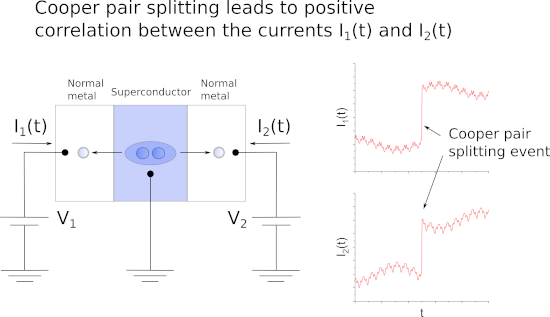
- with the aid of the path integral technique [22][25], which yields where is the Keldysh Green function of our system the 4 × 4 matrices represent the inverse Keldysh Green functions of isolated normal and superconducting leads and is the diagonal 4 × 4 matrix in the Nambu–Keldysh space describing


Gap-directed chemical lift-off lithographic nanoarchitectonics for arbitrary sub-micrometer patterning
Beilstein J. Nanotechnol. 2023, 14, 34–44, doi:10.3762/bjnano.14.4
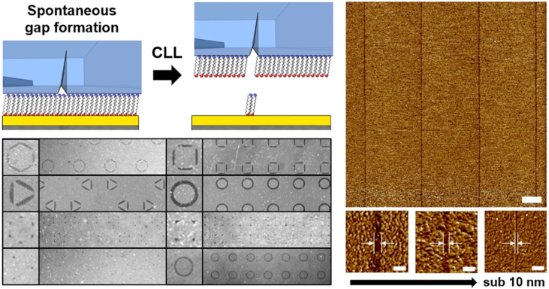
- . Increasing W or utilizing stamps with greater Young’s modulus (stiffer) while fixing other parameters would decrease the tendency for roof to collapse, thus increasing line width and decreasing gap size. In addition to acting as the matrix for biorecognition arrays, the molecular pattern created on a post


Two-step single-reactor synthesis of oleic acid- or undecylenic acid-stabilized magnetic nanoparticles by thermal decomposition
Beilstein J. Nanotechnol. 2023, 14, 11–22, doi:10.3762/bjnano.14.2
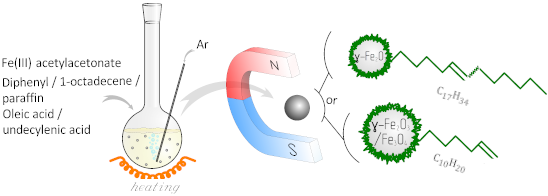
- investigated using a conventional transmission device with a Co source diffused into a Rh matrix. The hyperfine parameters were refined by using quadrupolar doublets and magnetic sextets with Lorentzian lines. The values of the isomer shift are quoted to that of α-Fe at room temperature (RT). Indeed, this


In search of cytotoxic selectivity on cancer cells with biogenically synthesized Ag/AgCl nanoparticles
Beilstein J. Nanotechnol. 2022, 13, 1505–1519, doi:10.3762/bjnano.13.124
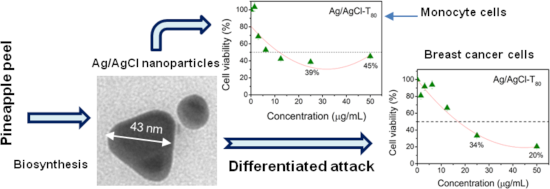
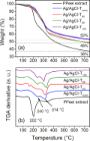
- indicated with asterisks. In an earlier work, the same combination of Ag and AgCl signals was obtained using extracts of Stevia rebaudiana [21]. In that report, the effect of the ratio between metallic AgNPs and AgClNPs on the morphology and dispersion in a thermoplastic starch matrix was demonstrated. At
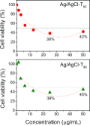
- % for AgNPs-T80. In other words, at concentrations close to 50 µg/mL, the cytotoxic action of the nanoparticles becomes selective. This result is possibly due to the fact that a higher content of nanoparticles prevents cell proliferation in neoplastic cells. MCF-7 cells are known to overexpress matrix





Hydroxyapatite–bioglass nanocomposites: Structural, mechanical, and biological aspects
Beilstein J. Nanotechnol. 2022, 13, 1490–1504, doi:10.3762/bjnano.13.123
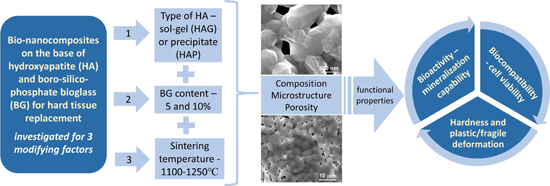
- fraction of the pores with respect to the dense matrix, the probability of pores falling into the indentation zone is reduced with decreasing load. Hence, less volume of pores and more volume of dense matrix is involved in the deformation process with decreasing load, resulting in the increase of hardness
Frequency-dependent nanomechanical profiling for medical diagnosis
Beilstein J. Nanotechnol. 2022, 13, 1483–1489, doi:10.3762/bjnano.13.122
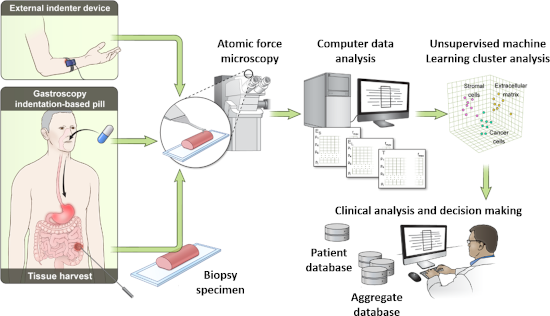
- diseases that are linked to mechanical changes in cells and/or the extracellular matrix. Existing micro-robotics technology could be harnessed to develop the specific types of sensors needed in each case. For example, in the case of gastrointestinal cancer screening, one could envision the integration of a


Rapid and sensitive detection of box turtles using an electrochemical DNA biosensor based on a gold/graphene nanocomposite
Beilstein J. Nanotechnol. 2022, 13, 1458–1472, doi:10.3762/bjnano.13.120
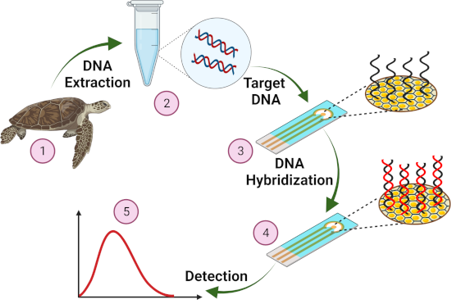
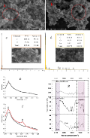
- composite. The weight and atomic contribution of each of these elements in the nanocomposite were given with their corresponding EDX spectrum. The use of AuNPs–Gr as a DNA immobilisation matrix enhances the active surface area of the modified SPCE, allowing for a stronger DNA hybridisation detection signal



Density of states in the presence of spin-dependent scattering in SF bilayers: a numerical and analytical approach
Beilstein J. Nanotechnol. 2022, 13, 1418–1431, doi:10.3762/bjnano.13.117
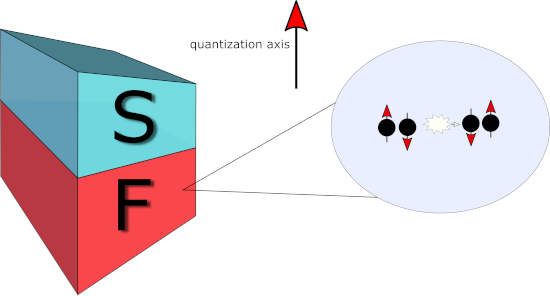
- -flip scattering via a symmetric matrix of scattering rates Depending on the symmetry of the problem, the number of parameters can be different (up to six), for example, in the most symmetric isotropic case, the spin-flip matrix is diagonal and described by one scattering time (τx = τy = τz). In the


Orally administered docetaxel-loaded chitosan-decorated cationic PLGA nanoparticles for intestinal tumors: formulation, comprehensive in vitro characterization, and release kinetics
Beilstein J. Nanotechnol. 2022, 13, 1393–1407, doi:10.3762/bjnano.13.115
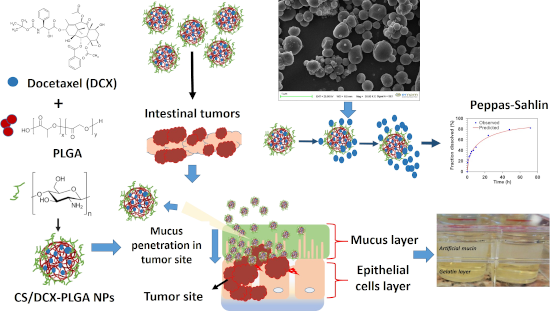
- matrix. A value of β ≤ 0.75 indicates Fickian diffusion, while 0.75 < β < 1 indicates a combination of Fickian diffusion and controlled release [59]. The β value for the Weibull model was calculated as 0.594 for the DCX-PLGA NPs. According to the literature, when these data are examined within the scope
- –Sahlin model is based on the combination of diffusion and erosion of the nanoparticle matrix. In order to further elucidate the kinetics model, a few more parameters were examined [62]. The diffusional exponent values (n or m) regarding the release kinetics from the nanoparticles were computed. The


Studies of probe tip materials by atomic force microscopy: a review
Beilstein J. Nanotechnol. 2022, 13, 1256–1267, doi:10.3762/bjnano.13.104
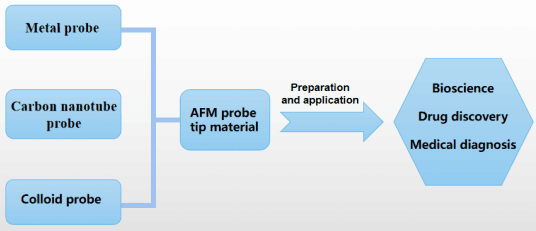
- . This direction has also developed concerning nanomaterials. Carbon nanotubes are compounded with related materials to produce probes, and the analytical performance of this type of probe is better than that of carbon nanotube probes alone. Nakabayashi et al. [44] proposed using amorphous carbon matrix
- -recognition probe ("sandwich" complex) and measured by matrix-assisted laser resolved ionization time-of-flight mass spectrometry (MALDI–TOF MS). Ultra-pure water (as a blank control), perfectly matched DNA, incompletely matched DNA, and two DNA fragments with only one base mismatch were added to the system
Design of surface nanostructures for chirality sensing based on quartz crystal microbalance
Beilstein J. Nanotechnol. 2022, 13, 1201–1219, doi:10.3762/bjnano.13.100
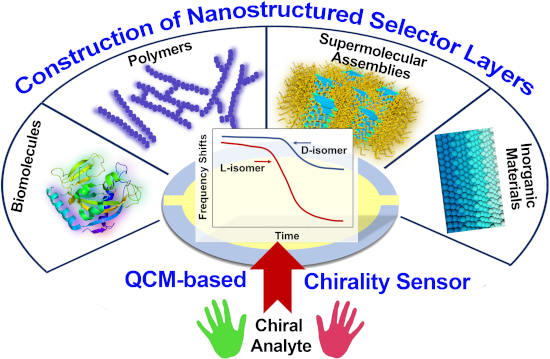
- been widely used as matrix layers to physically or chemically bind with recognition molecules for chiral detection [34][35]. Compared with SAMs, polymer-supported recognition molecules may strengthen chiral bindings and detection efficiency. Gao et al. studied the Val enantiomer-containing polymer


Microneedle-based ocular drug delivery systems – recent advances and challenges
Beilstein J. Nanotechnol. 2022, 13, 1167–1184, doi:10.3762/bjnano.13.98
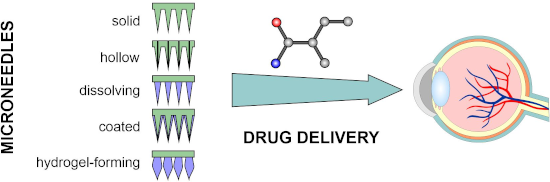
- the form of inserts. They are mostly solid or semi-solid forms with the appropriate size and shape, intended to be placed in the conjunctival sac. They consist of an active substance reservoir with a matrix structure or a film that regulates the rate of release of the API. Inserts are used less
- advantage of soluble inserts is that they do not have to be removed from the eye. The rate of drug release is influenced by dissolution or erosion of the polymer matrix. Ophthalmic therapeutic systems belong to the group of non-biodegradable inserts from which the drug substance is released by diffusion at
- swelling upon the contact with the fluid at the administration site. It is noteworthy that the polymer matrix does not dissolve under physiological conditions and can be removed after the drug is released [117][144]. As the microneedles absorb interstitial fluid from the surrounding tissue, they can be


Biomimetic chitosan with biocomposite nanomaterials for bone tissue repair and regeneration
Beilstein J. Nanotechnol. 2022, 13, 1051–1067, doi:10.3762/bjnano.13.92
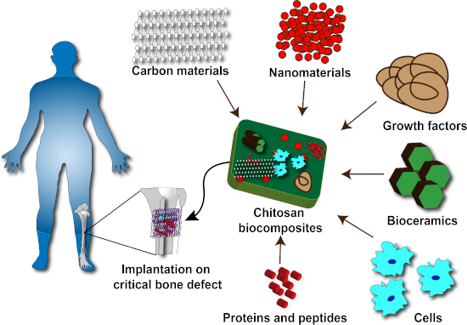
- complex and their asymmetric matrix is constituted of basic components hierarchically organized into distinct structural layers at macro- and nanoscale levels. Cortical (compact) and cancellous (trabecular) bones are two kinds of bone classification based on their macrostructure. A femur is a long bone
- matrix structure (cancellous interior) [30]. Also, the mechanical properties of cancellous bones are controlled by the structural organization of the matrix [31]. The bone microstructure mainly comprises collagen threads of lamellae coiled around layers to form a 200–250 µm diameter osteon which can vary
- inside the bone extracellular matrix is produced by bone-forming osteoblasts with a repeating amino acid sequence of [Gly(glycine)–X–Y]n, where X and Y may be proline and hydroxyproline. Collagen fibrils, composed of specific proteins, are usually responsible for mechanical strength. Furthermore
Analytical and numerical design of a hybrid Fabry–Perot plano-concave microcavity for hexagonal boron nitride
Beilstein J. Nanotechnol. 2022, 13, 1030–1037, doi:10.3762/bjnano.13.90
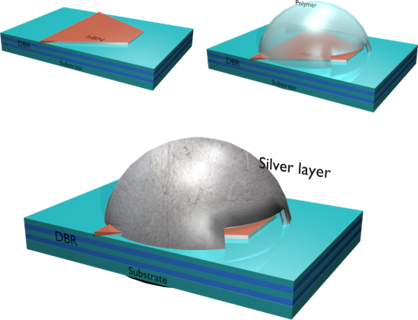
- -dimensional (2D) hexagonal boron nitride (hBN) while simultaneously limiting the NA of the emitter. Paraxial approximation and a transfer matrix model are used to find the spotsize of the fundamental Gaussian mode and the resonant modes of our microcavity, respectively. A Purcell enhancement of 6 is found for
- , followed by a transfer matrix model used to find the resonant modes of the microcavity, which are then corroborated by FDTD simulations. Results and Discussion Fabrication design Hybrid plano-concave microcavity By using a quarter-wavelength DBR with a multilayer 2D material on top (Figure 2a), we designed
- + DBR system a L(HL)15 dielectric stack. A transfer matrix model [24] was used to calculate the electric field distribution inside the hBN + DBR system (Figure 6). The full transfer matrix S of our microcavity is defined as: where L and I represent the transfer and interface matrix, respectively, of the





