


Search results
Search for "nanoparticles (NPs)" in Full Text gives 239 result(s) in Beilstein Journal of Nanotechnology. Showing first 200.
Material discrimination and mixture ratio estimation in nanocomposites via harmonic atomic force microscopy
Beilstein J. Nanotechnol. 2017, 8, 2771–2780, doi:10.3762/bjnano.8.276
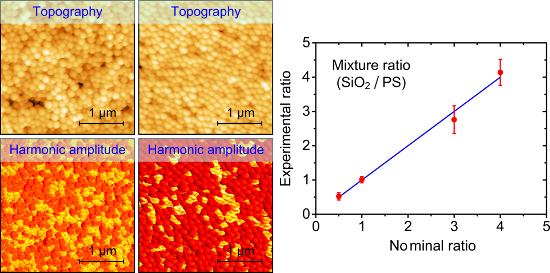
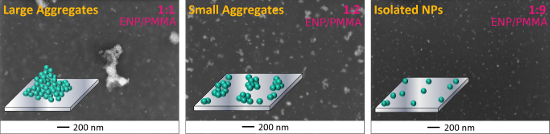
- ]. Nanocomposites are usually composed of a bulk matrix and some nanofillers. The fillers can be nanoparticles (NPs), nanotubes, nanorods, nanosheets and so on. The physical and chemical properties of nanocomposites will often differ from their component materials and show remarkable added functionalities [2]. The





The role of ligands in coinage-metal nanoparticles for electronics
Beilstein J. Nanotechnol. 2017, 8, 2625–2639, doi:10.3762/bjnano.8.263
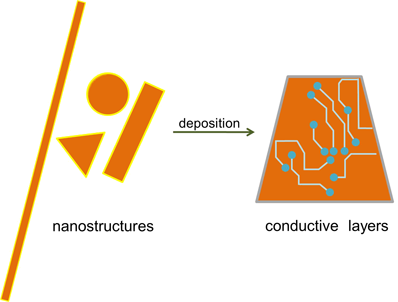
- ligands are employed during synthesis to determine geometry [2][8], to control colloidal stability [5][26][27][28], to expand the solubility range through end-functionalization [29], or to influence the electro-optical features [26][30] of the resulting nanoparticles (NPs). They can act as cross-linkers


Involvement of two uptake mechanisms of gold and iron oxide nanoparticles in a co-exposure scenario using mouse macrophages
Beilstein J. Nanotechnol. 2017, 8, 2396–2409, doi:10.3762/bjnano.8.239
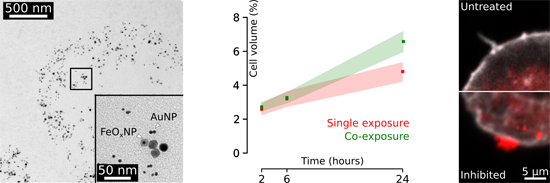
- comprehensive groundwork has been laid to assess the possible adverse effects of nanotechnology on human health. In particular, a full understanding of how such engineered nanoparticles (NPs), i.e., objects with all three spatial dimensions below 100 nm [3], interact with mammalian cells is paramount to develop




Ta2N3 nanocrystals grown in Al2O3 thin layers
Beilstein J. Nanotechnol. 2017, 8, 2162–2170, doi:10.3762/bjnano.8.215
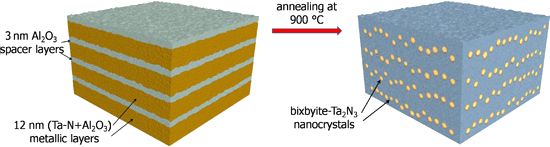
- -Sincrotrone Trieste, Strada Statale 14, km 163.5, I-34149 Basovizza (TS), Italy 10.3762/bjnano.8.215 Abstract Tantalum nitride nanoparticles (NPs) and cubic bixbyite-type Ta2N3 nanocrystals (NCs) were grown in (Ta–N+Al2O3)/Al2O3 periodic multilayers (MLs) after thermal treatment. The MLs were prepared by
- generic procedure to realize highly tunable and designable optical properties of thin films containing transition-metal nitride nanocrystals. Keywords: nanocomposites; multilayers; refractory plasmonics; self-assembly; Ta2N3 nanoparticles; Introduction Metallic nanoparticles (NPs) can confine visible



Synthesis and characterization of noble metal–titania core–shell nanostructures with tunable shell thickness
Beilstein J. Nanotechnol. 2017, 8, 2083–2093, doi:10.3762/bjnano.8.208
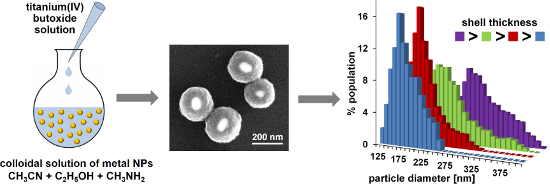
- use in many fields. For example, TiO2 nanomaterials have been investigated for their use in photocatalysis [12][13][14], photocatalytic fuel generation [15], photovoltaics and sensors [16][17]. The CSNs with noble metal (Au, Ag) nanoparticles (NPs) as a core and TiO2 shell, Au@TiO2 and Ag@TiO2, have


Advances and challenges in the field of plasma polymer nanoparticles
Beilstein J. Nanotechnol. 2017, 8, 2002–2014, doi:10.3762/bjnano.8.200
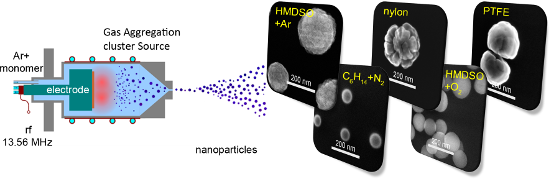
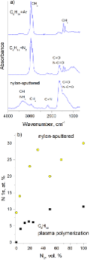
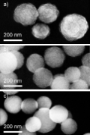
- to the investigation of the properties of plasma polymer particles themselves, regardless of the effects their presence produces on the plasma. It was recognized that polymeric nanoparticles (NPs) can be highly desired in various fields including photonics [37] and biomedical applications where they









Methionine-mediated synthesis of magnetic nanoparticles and functionalization with gold quantum dots for theranostic applications
Beilstein J. Nanotechnol. 2017, 8, 1734–1741, doi:10.3762/bjnano.8.174
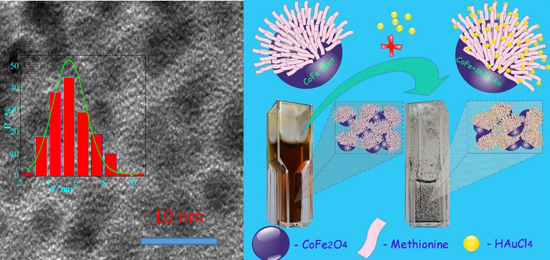
- Biocompatible superparamagnetic iron oxide nanoparticles (NPs) through smart chemical functionalization of their surface with fluorescent species, therapeutic proteins, antibiotics, and aptamers offer remarkable potential for diagnosis and therapy of disease sites at their initial stage of growth. Such NPs can


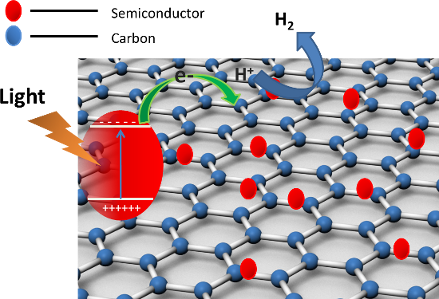
Two-dimensional carbon-based nanocomposites for photocatalytic energy generation and environmental remediation applications
Beilstein J. Nanotechnol. 2017, 8, 1571–1600, doi:10.3762/bjnano.8.159


Calcium fluoride based multifunctional nanoparticles for multimodal imaging
Beilstein J. Nanotechnol. 2017, 8, 1484–1493, doi:10.3762/bjnano.8.148
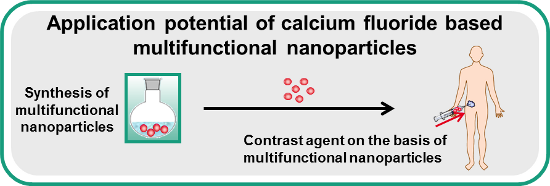
- , Germany Fraunhofer Application Center for Inorganic Phosphors, Branch Lab of Fraunhofer Institute for Microstructure of Materials and Systems IMWS, Luebecker Ring 2, 59494 Soest, Germany 10.3762/bjnano.8.148 Abstract New multifunctional nanoparticles (NPs) that can be used as contrast agents (CA) in
- patient. Therefore, it is desirable to develop a combined CA that is injected only once and then detected using different diagnostic methods with a higher comparability. The production of CAs on the basis of nanoparticles (NPs) shows promise, as already examined on the infected myocardium [1][2][3]. Each


Nano-engineered skin mesenchymal stem cells: potential vehicles for tumour-targeted quantum-dot delivery
Beilstein J. Nanotechnol. 2017, 8, 1218–1230, doi:10.3762/bjnano.8.123
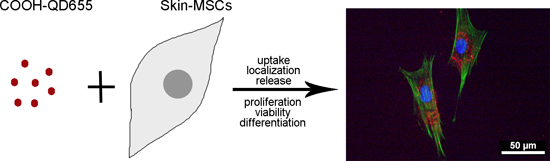
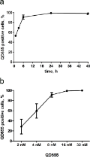
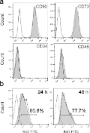
- death worldwide [1]. Nanoparticles (NPs) could be linked to various drugs, thereby making them suitable for tumour imaging and targeted therapy [2]. However, the fact that NPs are quickly recognised by immune cells and cleared from the blood stream by reticuloendothelial system limits their utility as






Optical response of heterogeneous polymer layers containing silver nanostructures
Beilstein J. Nanotechnol. 2017, 8, 1065–1072, doi:10.3762/bjnano.8.108
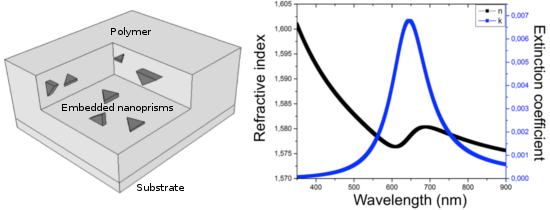
- ; Introduction Noble metal nanoparticles (NPs) are of considerable interest in various domains, ranging from chemistry to medicine and light filtering [1][2][3][4][5][6]. Silver NPs are especially challenging because of the possibility to control the phenomenon of light–matter interaction in the visible



Synthesis of graphene–transition metal oxide hybrid nanoparticles and their application in various fields
Beilstein J. Nanotechnol. 2017, 8, 688–714, doi:10.3762/bjnano.8.74
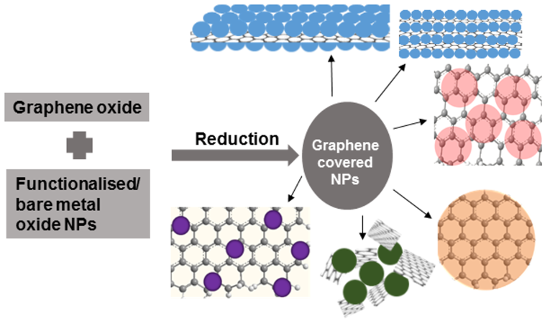
- unique two-dimensional structure, high conductivity, excellent electron mobility and high surface area. To explore the more prospective properties of graphene, graphene hybrids have been synthesised, where graphene has been integrated with other important nanoparticles (NPs). These graphene–NP hybrid








α-((4-Cyanobenzoyl)oxy)-ω-methyl poly(ethylene glycol): a new stabilizer for silver nanoparticles
Beilstein J. Nanotechnol. 2017, 8, 627–635, doi:10.3762/bjnano.8.67

- anchors. Keywords: cyano anchor group; poly(ethylene glycol); polymer coating; silver nanoparticles; Introduction Nanoparticles (NPs), especially metal NPs such as gold and silver NPs (SNPs), are currently among the most popular research subjects and many particles have been suggested for applications


Investigation of the photocatalytic efficiency of tantalum alkoxy carboxylate-derived Ta2O5 nanoparticles in rhodamine B removal
Beilstein J. Nanotechnol. 2017, 8, 604–613, doi:10.3762/bjnano.8.65

- removal, sedimentation and filtration are not very effective in removing organic dyes. Advanced oxidation processes (AOPs) receive a lot of interest in this regard, and photocatalysis by semiconductors is the most extensively investigated AOP. Metal oxide nanoparticles (NPs), for example TiO2, ZnO, SnO2


Gas sensing properties of MWCNT layers electrochemically decorated with Au and Pd nanoparticles
Beilstein J. Nanotechnol. 2017, 8, 592–603, doi:10.3762/bjnano.8.64

- (MWCNT)-based chemiresistors were electrochemically decorated with Au and Pd nanoparticles (NPs), resulting in an improvement in the detection of gaseous pollutants as compared to sensors based on pristine MWCNTs. Electrophoresis was used to decorate MWCNTs with preformed Au or Pd NPs, thus preserving
- desorption [15]. Beside these promising results, it is already well known that the modification of CNTs with selected materials can improve the sensitivity and selectivity of CNT-based sensors for several harmful gases [16]. The aim of decorating carbon nanotubes with metal nanoparticles (NPs) is to


Methods for preparing polymer-decorated single exchange-biased magnetic nanoparticles for application in flexible polymer-based films
Beilstein J. Nanotechnol. 2017, 8, 408–417, doi:10.3762/bjnano.8.43
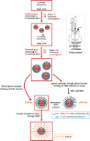
- Laurence Ourry Delphine Toulemon Souad Ammar Fayna Mammeri Université Paris Diderot, Sorbonne Paris Cité, CNRS UMR 7086 ITODYS, Case 7090, 5 rue Thomas Mann, Paris, France 10.3762/bjnano.8.43 Abstract Background: Magnetic nanoparticles (NPs) must not only be well-defined in composition, shape and
- Polymer-based hybrid materials are opening the way for engineering new, multifunctional, flexible materials exhibiting novel properties (e.g., mechanical, magnetic, electrical, optical) due to the synergy between the two components, polymer and inorganic nanoparticles (NPs) [1]. In the case of magnetic


Uptake of the proteins HTRA1 and HTRA2 by cells mediated by calcium phosphate nanoparticles
Beilstein J. Nanotechnol. 2017, 8, 381–393, doi:10.3762/bjnano.8.40

- nanoparticles, as well as nanoparticles alone, by HeLa and MG-63 cells. Cationic nanoparticles (NPs) without proteins consisted of calcium phosphate/polyethyleneimine (CaP/PEI). Anionic nanoparticles without proteins consisted of calcium phosphate/carboxymethylcellulose (CaP/CMC). +: strong take-up by cells; 0


Photocatalysis applications of some hybrid polymeric composites incorporating TiO2 nanoparticles and their combinations with SiO2/Fe2O3
Beilstein J. Nanotechnol. 2017, 8, 272–286, doi:10.3762/bjnano.8.30
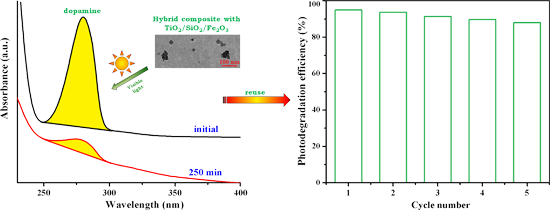
- , they are active only in UV light (<4% of sunlight) owing to their wide bandgap (3.2 eV), which absorbs photons with wavelengths shorter than 400 nm. Also, TiO2 nanoparticles (NPs) have a low adsorption capacity for hydrophobic molecules, and if they are used for water treatment, severe problems during


Colorimetric gas detection by the varying thickness of a thin film of ultrasmall PTSA-coated TiO2 nanoparticles on a Si substrate
Beilstein J. Nanotechnol. 2017, 8, 229–236, doi:10.3762/bjnano.8.25
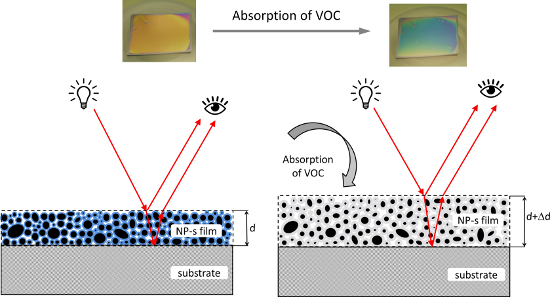
- Valdena 3/7, 1048 Riga, Latvia Institute of Solid State Physics, University of Latvia, Kengaraga 8, Riga LV-1063, Latvia 10.3762/bjnano.8.25 Abstract Colorimetric gas sensing is demonstrated by thin films based on ultrasmall TiO2 nanoparticles (NPs) on Si substrates. The NPs are bound into the film by p
- ultrasmall TiO2 nanoparticles (NPs) for a colorimetric gas sensor. The functional thin film is extremely simple, consisting of TiO2 NPs and the elastic binding agent p-toluenesulfonic acid (PTSA) on a Si substrate. It is not necessary to use particles with narrow size distributions of diameters in well


Performance of colloidal CdS sensitized solar cells with ZnO nanorods/nanoparticles
Beilstein J. Nanotechnol. 2017, 8, 210–221, doi:10.3762/bjnano.8.23
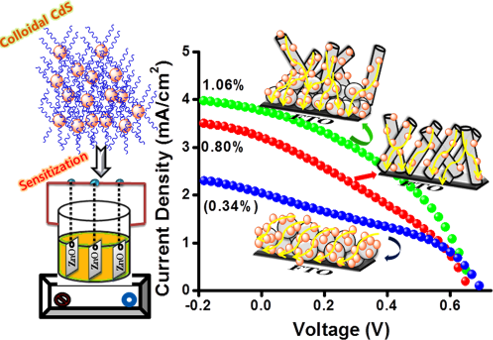
- Division, CSIR-National Chemical Laboratory, Pune 411 008, India 10.3762/bjnano.8.23 Abstract As an alternative photosensitizer in dye-sensitized solar cells, bovine serum albumin (BSA) (a nonhazardous protein) was used in the synthesis of colloidal CdS nanoparticles (NPs). This system has been employed
- colloidal CdS nanoparticles (NPs) by a sono-chemical synthesis using BSA as a biotemplate [24][25][26]. BSA can construct surface functionalized colloidal CdS QDs with modified optical properties as compared to its bulk form. This can further be employed to render stable dispersion of CdS NPs without


Sensitive detection of hydrocarbon gases using electrochemically Pd-modified ZnO chemiresistors
Beilstein J. Nanotechnol. 2017, 8, 82–90, doi:10.3762/bjnano.8.9
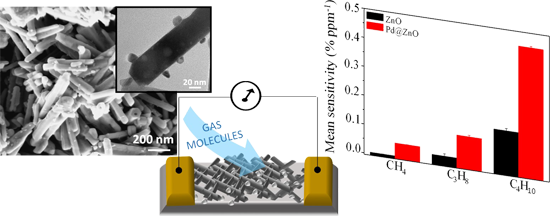
- nanorods (ZnO NRs) were proposed as active sensing layers in chemiresistive gas sensors for hydrocarbon (HC) gas detection (e.g., CH4, C3H8, C4H10). The presence of Pd nanoparticles (NPs) on the surface of ZnO NRs, obtained after the thermal treatment at 550 °C, was revealed by morphological and surface


Cubic chemically ordered FeRh and FeCo nanomagnets prepared by mass-selected low-energy cluster-beam deposition: a comparative study
Beilstein J. Nanotechnol. 2016, 7, 1850–1860, doi:10.3762/bjnano.7.177
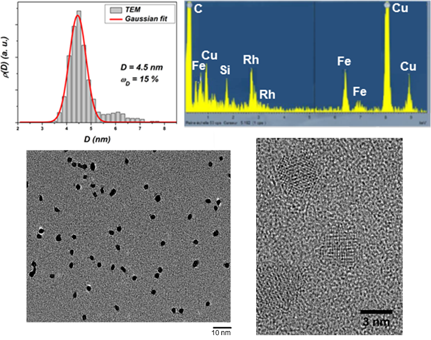
- drastically affects the intrinsic properties of this system by reducing the magnetization in comparison to the bulk. Keywords: bimetallic nanoparticles; magnetic moment and anisotropy; metamagnetic transition; Introduction Magnetic bimetallic nanoparticles (NPs) are very attractive systems not only from a


An efficient recyclable magnetic material for the selective removal of organic pollutants
Beilstein J. Nanotechnol. 2016, 7, 1447–1453, doi:10.3762/bjnano.7.136
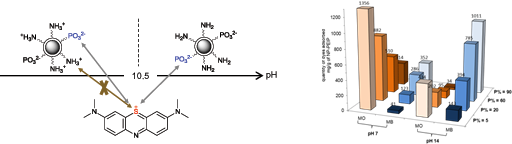
- studied [7][8]. At the same time, the emergence of nanotechnologies has led to a new generation of organic/inorganic nanocomposites with embedded magnetic nanoparticles (NPs) [9][10][11][12][13]. The application of a simple magnetic field is sufficient to collect them, which fosters the development of low


Photocurrent generation in carbon nanotube/cubic-phase HfO2 nanoparticle hybrid nanocomposites
Beilstein J. Nanotechnol. 2016, 7, 1075–1085, doi:10.3762/bjnano.7.101
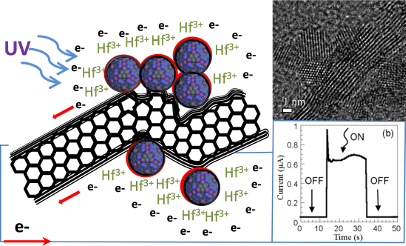
- , Puiestee 78, 51008 Tartu, Estonia, IMEP-LAHC, CNRS, Université de Grenoble-Alpes, Minatec campus, 38016 Grenoble, France 10.3762/bjnano.7.101 Abstract A hybrid material consisting of nonfunctionalized multiwall carbon nanotubes (MWCNTs) and cubic-phase HfO2 nanoparticles (NPs) with an average diameter of
- hybrid system can be used as a flexible nanodevice for light harvesting applications. Keywords: carbon nanotubes; HfO2; nanoparticles; photocurrent; Introduction Nanoparticles (NPs) have emerged as promising candidates for many applications due to their unique electronic, optical and magnetic


Sandwich-like layer-by-layer assembly of gold nanoparticles with tunable SERS properties
Beilstein J. Nanotechnol. 2016, 7, 1028–1032, doi:10.3762/bjnano.7.95
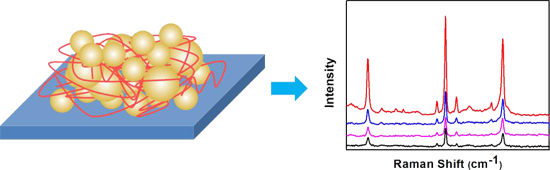
- mainly driven by electrostatic interaction. Especially, multilayer thin films consisting of polymers and metal nanoparticles (NPs) have been extensively explored, and show interesting optical and SERS properties [9][10][11][12][13][14]. Wang and Dong et al. reported that polyelectrolyte–gold nanorod





