Search results
Search for "nanosheets" in Full Text gives 161 result(s) in Beilstein Journal of Nanotechnology.
Synthesis and characterization of fluorescence-labelled silica core-shell and noble metal-decorated ceria nanoparticles
Beilstein J. Nanotechnol. 2014, 5, 2413–2423, doi:10.3762/bjnano.5.251
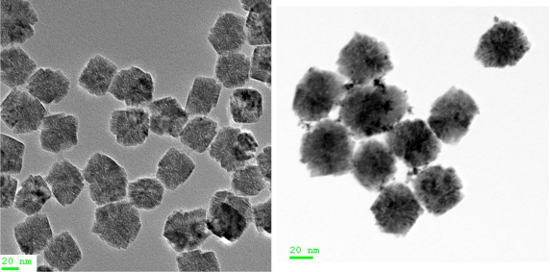
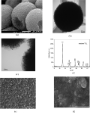
- is the formation of ceria nanosheets when cerium(III) nitrate was added to an aqueous reaction mixture over several hours, whereas NP were formed when the addition was rapid [59]. Although the platinum metal NP contained in the samples are seemingly unchanged although detached from ceria, they


Carbon-based smart nanomaterials in biomedicine and neuroengineering
Beilstein J. Nanotechnol. 2014, 5, 1849–1863, doi:10.3762/bjnano.5.196
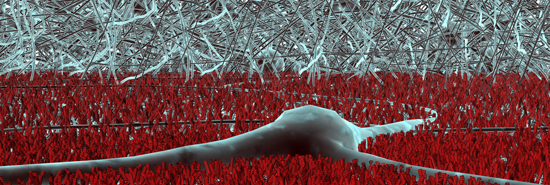
- suitable for a broad variety of applications. The biocompatibility of graphene is, however, still disputed, given that very few studies are available and because several graphene forms can be employed (i.e., single or few layer, nanosheets, GO, r-GO) each with different chemical and physical properties


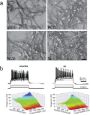
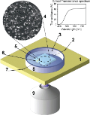
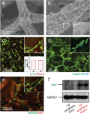
Fringe structures and tunable bandgap width of 2D boron nitride nanosheets
Beilstein J. Nanotechnol. 2014, 5, 1186–1192, doi:10.3762/bjnano.5.130
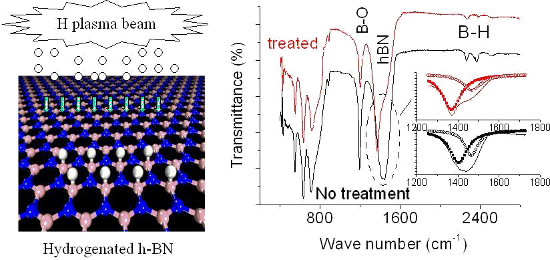
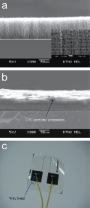
- bandgap width of atomic-thin boron nitride nanosheets (BNNSs). BNNSs are synthesized by using digitally controlled pulse deposition techniques. The nanoscale morphologies of BNNSs are characterized by using scanning electron microscope (SEM), and transmission electron microscopy (TEM). In general, the
- ]. Similar to the method used to produce graphene, BNNSs can be exfoliated from bulk BN crystals by simple mechanical cleavage techniques [3][4][5]. The problem is that the obtained hBN nanosheets are usually limited by too small size. Therefore, recently most work on synthesis of large BNNSs is based on
- either chemical-solution-derived method or a chemical vapor deposition (CVD) process. Many excellent results have been reported [6][7][8][9]. Systematic and comprehensive reviews of two-dimensional (2D) boron nitride nanostructures: nanosheets, nanoribbons, nanomeshes, and hybrids with graphene have been


Functionalized nanostructures for enhanced photocatalytic performance under solar light
Beilstein J. Nanotechnol. 2014, 5, 994–1004, doi:10.3762/bjnano.5.113
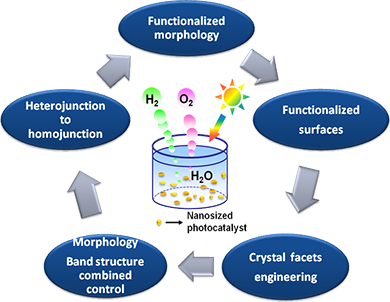
- microclusters with exposed {001} facets via a facile and surfactant-free hydrothermal reaction. The light absorption, charge separation and surface reaction were simultaneously optimized through the unique structure assembled from nanosheets, leading to the greatly enhanced photocatalytic activity [49]. Micro
- prepared flower like Ni-doped ZnIn2S4 with plenty of curved nanosheets using hydrothermal method, as shown in Figure 9. It was found that there existed an optimal Ni doping concentration, i.e., 0.3 wt %, for the highest hydrogen production efficiency. Only Ni ions occupying crystal lattice sites of ZnIn2S4
- nanosheets. Reprinted with permission from [61]. Copyright (2010), Springer. Illustration of twin-induced 1D long range ordered homojunctions over Cd0.5Zn0.5S with alternative zinc-blende (ZB) and wurtzite (WZ) segments. Acknowledgements The authors gratefully acknowledge the financial support from the


Optical modeling-assisted characterization of dye-sensitized solar cells using TiO2 nanotube arrays as photoanodes
Beilstein J. Nanotechnol. 2014, 5, 895–902, doi:10.3762/bjnano.5.102
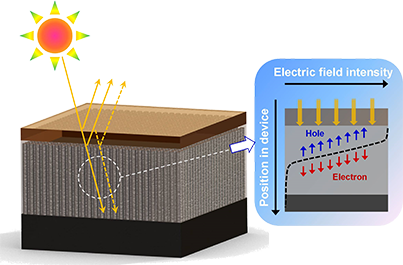
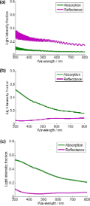
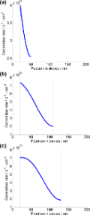
- structures and morphologies such as mesoporous TiO2, nanorods, nanotubes, nanosheets and hollow spheres have, therefore, been investigated to improve the performance of DSSCs by using various synthetic and modification methods [4][5][6][10][11]. Compared to the conventional DSSCs, which employ mesoporous


Biomolecule-assisted synthesis of carbon nitride and sulfur-doped carbon nitride heterojunction nanosheets: An efficient heterojunction photocatalyst for photoelectrochemical applications
Beilstein J. Nanotechnol. 2014, 5, 770–777, doi:10.3762/bjnano.5.89
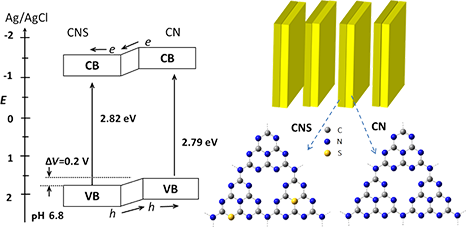
- -doped graphitic carbon nitride (CNS) nanosheets. During the synthesis, sulfur could be introduced as a dopant into the lattice of carbon nitride (CN). Sulfur doping changed the texture as well as relative band positions of CN. By growing CN on preformed sulfur-doped CN nanosheets, composite CN/CNS
- heterojunction nanosheets were constructed, which significantly enhanced the photoelectrochemical performance as compared with various control counterparts including CN, CNS and physically mixed CN and CNS (CN+CNS). The enhanced photoelectrochemical performance of CN/CNS heterojunction nanosheets could be
- ]. Herein, we employ a biomolecule-assisted (L-cysteine) pyrolysis method to synthesize sulfur-doped carbon nitride (CNS) nanosheets, which can serve as the framework to grow CN to form an all CN-based heterojunction composite. The formation of CN/CNS heterojunctions significantly improves the


Nanostructure sensitization of transition metal oxides for visible-light photocatalysis
Beilstein J. Nanotechnol. 2014, 5, 696–710, doi:10.3762/bjnano.5.82
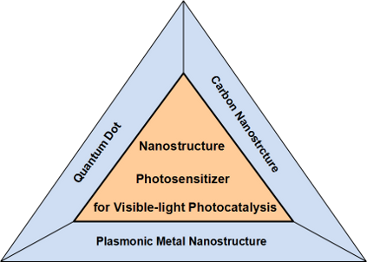
- tubular structure of TiO2 nanotubes and 2D layered titanate nanosheets were also used for the photosensitization. The CdS quantum dots photosensitized TiO2 nanotubes by covalent bonding [21] or a sonication-assisted sequential chemical bath deposition approach [31] led to a more efficient separation of
- . reported a layer-by-layer self-assembly between positively charged CdS quantum dots and negatively charged exfoliated titanate nanosheets to design noble-metal free photocatalysts. The resultant composites exhibited a much higher photocatalytic H2 production activity than pristine titanate and CdS quantum
- electron–hole pairs and further improve the photocatalytic ability [145]. The last feature is that an appreciable number of ion-exchangeable semiconductors can be exfoliated into single-layer two-dimensional (2D) nanosheets by the intercalation–exfoliation method, as shown in Figure 10. The thickness of




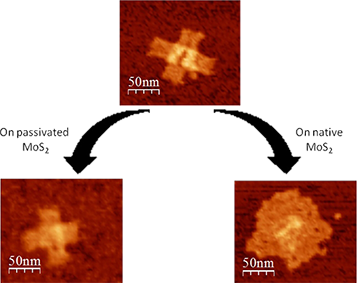
DNA origami deposition on native and passivated molybdenum disulfide substrates
Beilstein J. Nanotechnol. 2014, 5, 501–506, doi:10.3762/bjnano.5.58
- energy harvesting applications [17]. Compared to conventional semiconductor materials such as silicon, MoS2 is readily processed as a prototypical nanomaterial. MoS2 nanosheets, nanofibers, and nanorods have been prepared [15], which means the material could readily be used to construct electronic


Structural, optical and photocatalytic properties of flower-like ZnO nanostructures prepared by a facile wet chemical method
Beilstein J. Nanotechnol. 2013, 4, 763–770, doi:10.3762/bjnano.4.87
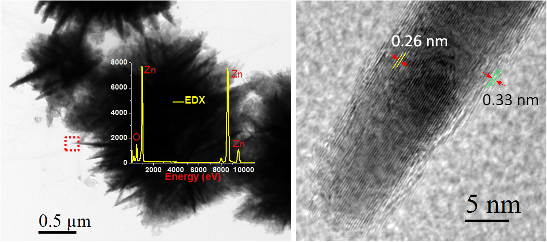
- UV–vis absorption spectroscopy. SEM and TEM studies revealed flower-like structures consisting of nanosheets, formed due to oriented attachment of ZnO nanoparticles. Flower-like ZnO structures showed enhanced photocatalytic activity towards sun-light driven photodegradation of methylene blue dye (MB
- efficiency to photocatalytically degrade of MB. Keywords: ageing; nanoparticles; nanosheets; photocatalysis; ZnO; Introduction Water contamination due to hazardous water soluble organic dyes and chemicals poses a severe threat to the environment. The excess azo dyes in effluents from textile and dyeing
- nanosheets. These nanosheets were found to consist of nanoparticles and display a porous morphology. In addition to these flower-like structures, a large number of nanoparticles can also be seen. Mechanism of formation of flower-like ZnO structures On the basis of the FESEM results and earlier works on the


A facile approach to nanoarchitectured three-dimensional graphene-based Li–Mn–O composite as high-power cathodes for Li-ion batteries
Beilstein J. Nanotechnol. 2012, 3, 513–523, doi:10.3762/bjnano.3.59
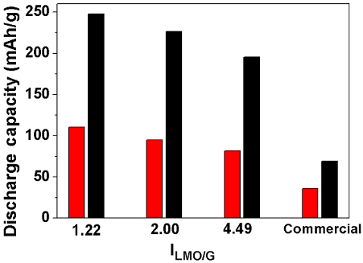
- as-prepared samples are shown in Figure 2. For the sample prepared with a MnSO4 molar concentration of 0.15 M, the SEM image (see Figure 2a) shows that the nanowalls are uniform and are attached onto the surface of the nanosheets. These nanowalls are mostly vertically aligned with respect to the
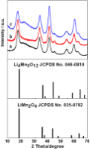
- surface of the nanosheets. The corresponding TEM image (see Figure 2b) reveals that these nanowalls are 3–5 nm in thickness and 25–30 nm in diameter. The high-resolution TEM (HRTEM) image (Figure 2c) and the selected-area electron diffraction pattern (Figure 2d) confirms the formation of the cubic Mn2O3




Reduced electron recombination of dye-sensitized solar cells based on TiO2 spheres consisting of ultrathin nanosheets with [001] facet exposed
Beilstein J. Nanotechnol. 2012, 3, 378–387, doi:10.3762/bjnano.3.44
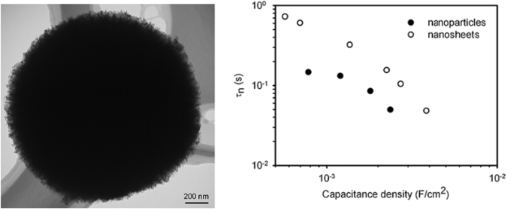
- consisting of ultrathin nanosheets with 100% of the [001] facet exposed was employed to fabricate dye-sensitized solar cells (DSCs). Investigation of the electron transport and back reaction of the DSCs by electrochemical impedance spectroscopy showed that the spheres had a threefold lower electron
- ; ultrathin nanosheets; Introduction In the past two decades, dye-sensitized solar cells (DSCs) have received substantial attention from both academic and industrial communities as one of the most promising low-cost, high-efficiency third-generation photovoltaic devices [1][2]. A typical DSC consists of a
- structure consisting of ultrathin nanosheets with 100% of the [001] facet exposed were synthesized and applied in dye-sensitized solar cells (DSCs). The photovoltaic performance of the DSCs with different concentrations of the hierarchically structured TiO2 spheres was evaluated. The kinetics of electron