


Search results
Search for "permeability" in Full Text gives 187 result(s) in Beilstein Journal of Nanotechnology.
The cleaner, the greener? Product sustainability assessment of the biomimetic façade paint Lotusan® in comparison to the conventional façade paint Jumbosil®
Beilstein J. Nanotechnol. 2016, 7, 2100–2115, doi:10.3762/bjnano.7.200

- or radiation. In this connection, the water vapour permeability of the paint is a very important physical property. The façade paints available on the market can essentially be divided into two main categories: First, those that focus on maximum gas exchange, which might positively influence the
- -repellency to build up a secure barrier against the penetration of moisture into deeper layers of the building. In this case sufficient gas permeability needs to be secured. Lotusan® was compared to a paint showing the same functional principle, providing a solid basis for the comparison of products. Because
- permeability to gases such as carbon dioxide and oxygen. Against the background of the above given description of functional utility, it can be stated that both paints are highly comparable. This also applies to the overall lifetime of the paints. According to information provided by the German Federal


Thickness-modulated tungsten–carbon superconducting nanostructures grown by focused ion beam induced deposition for vortex pinning up to high magnetic fields
Beilstein J. Nanotechnol. 2016, 7, 1698–1708, doi:10.3762/bjnano.7.162
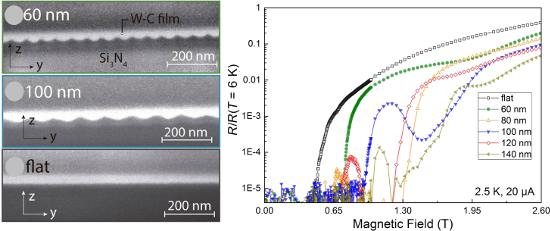
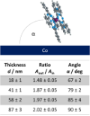
- Physical Properties Measurement System (PPMS) from Quantum Design. In the following, it is assumed that in our range of measurements the magnetic induction inside the sample, B, is equal to μ0H, with μ0 being the vacuum permeability and H being the external magnetic field. At the magnetic fields and


Photothermal effect of gold nanostar patterns inkjet-printed on coated paper substrates with different permeability
Beilstein J. Nanotechnol. 2016, 7, 1480–1485, doi:10.3762/bjnano.7.140
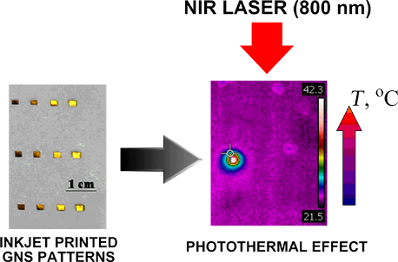
- requires the ability to maintain high efficiency and tunability of the NIR LSPR of the printed nanoparticles. In this study stable inks containing PEGylated gold nanostars (GNS) were fabricated and successfully inkjet-printed onto differently coated paper substrates with different porosity and permeability
- number of printed layers, and, critically, on the permeability of the coated paper substrates. These results will promote the development of GNS-based printed platforms for local photothermal therapy. Keywords: gold nanostars; inkjet printing; localized surface plasmon resonance (LSPR); photothermal
- the print density of GNS and the number of printed layers. We therefore reasoned that the physico-chemical nature of the coating of the paper substrates, e.g., paper permeability and the subsequent absorption of ink into to paper matrix may critically influence the obtained photothermal effect, and


On the pathway of cellular uptake: new insight into the interaction between the cell membrane and very small nanoparticles
Beilstein J. Nanotechnol. 2016, 7, 1296–1311, doi:10.3762/bjnano.7.121
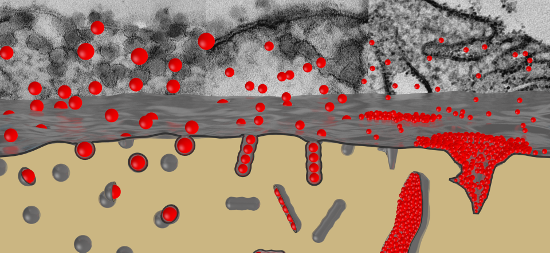
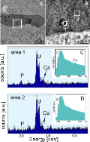
- increased membrane permeability are summed up under the term “oncosis” as a form of cell death in contrast to apoptosis [36]. Its mechanism is thought to be based on a malfunction of the ionic pumps of the plasma membrane that can be evoked by ischemia or toxic agents interfering with ATP generation or
- increasing the permeability of the plasma membrane. The accumulation of calcium taking the form of insoluble hydroxyapatite (Ca phosphate) inside mitochondria during a necrotic process is a well-known and documented phenomenon during this process [37][38]. A lot of data concerning cytotoxicity of




Tight junction between endothelial cells: the interaction between nanoparticles and blood vessels
Beilstein J. Nanotechnol. 2016, 7, 675–684, doi:10.3762/bjnano.7.60
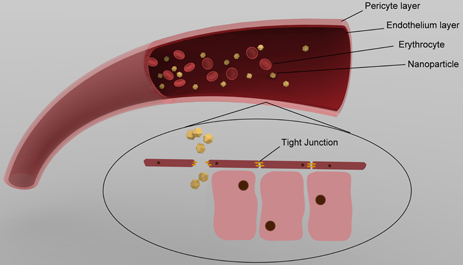
- could affect the structure of claudins and then influence its function in the tight junction. These factors are: (1) phosphorylation and (2) oxidative stress. Tyrosine phosphorylation of claudin-5 caused by the exposure of the endothelium to TGF-β1 is associated with a paracellular permeability of the
- claudin-4 and claudin-8 increased in the kidney [61]. The oxidative stress induced by H2O2 in gastric epithelial cells also shows some association with decreased amounts of claudin-4 and claudin-7, and an increased permeability of the tight junction for dextran [62]. Occludins Occludins are a family of
- junction barrier. The extracellular loops could regulate the permeability of the junction barrier. The expression of occludins has been found in arterial and venous endothelial cells [63]. The regulation of the barrier function based through occludins in endothelial cells can be divided into three parts

Fabrication and characterization of novel multilayered structures by stereocomplexion of poly(D-lactic acid)/poly(L-lactic acid) and self-assembly of polyelectrolytes
Beilstein J. Nanotechnol. 2016, 7, 81–90, doi:10.3762/bjnano.7.10
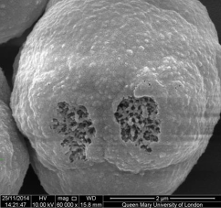
- promising drug delivery carriers for biomedical applications. The combination of the physical and mechanical properties of such materials could make it possible to modify characteristic features, such as surface morphology, in order to modulate important delivery factors, like permeability and release rate


Calculations of helium separation via uniform pores of stanene-based membranes
Beilstein J. Nanotechnol. 2015, 6, 2470–2476, doi:10.3762/bjnano.6.256
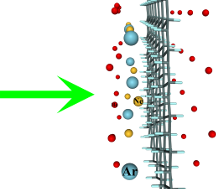
- density functional theory calculations. To increase the permeability of noble gases through pristine 2D Sn at room temperature (298 K), two practical strategies (i.e., the application of strain and functionalization) are proposed. With their high concentration of large pores, 2D Sn-based membrane
- membrane to separate helium is therefore highly desired. In recent years, various two-dimensional materials have been developed [5][6] and are widely used as membranes for gas separation [7][8][9][10]. The pore size is the main determinant of a membrane with high permeability and selectivity for helium
- , Ne and Ar passing through the 2D Sn are 0.75, 1.39 and 3.09 eV, respectively. Clearly, the selectivity is high, but the penetration barrier for He through pristine 2D Sn is quite high, indicating a low permeability at room temperature. Since the pore size is critical for gas penetration, a small


Ultrastructural changes in methicillin-resistant Staphylococcus aureus induced by positively charged silver nanoparticles
Beilstein J. Nanotechnol. 2015, 6, 2396–2405, doi:10.3762/bjnano.6.246
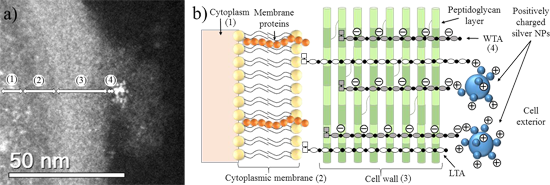
- polyanionic backbones of teichoic acids and the related cell wall glycopolymers of bacteria as a first target, consequently stressing the structure and permeability of the cell wall. This hypothesis provides a major mechanism to explain the antibacterial effects of silver nanoparticles on Staphylococcus
- permeability [38]. After penetrating the cell membrane, AgNPs can also alter sulfur-containing amino acids and phosphorus (a main constituent of DNA), inhibiting replication via attaching to the bacterial ribosome [39][40]. The proteomic signatures of AgNP-treated E. coli demonstrated an accumulation of
- , leading to structural strain in and permeability of the bacterial cell wall. This finding provides a major mechanism to explain the antibacterial properties of silver nanoparticles on Staphylococcus aureus. Results and Discussion Characterization of AgNPs TEM images of silver nanoparticles (Figure 1a


An adapted Coffey model for studying susceptibility losses in interacting magnetic nanoparticles
Beilstein J. Nanotechnol. 2015, 6, 2173–2182, doi:10.3762/bjnano.6.223
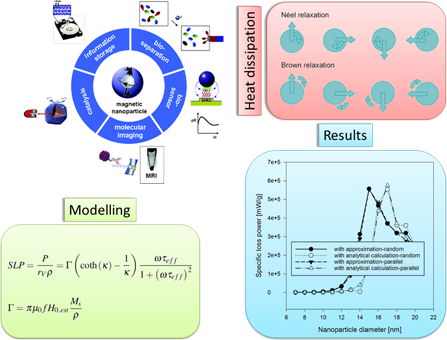
- magnitude of the applied field, respectively, μ0 is the magnetic permeability of free space, τeff is the average effective magnetic relaxation time of the nanoparticle system, and χ0 is the equilibrium average magnetic susceptibility of the nanoparticle assembly [3][9]: In Equation 2, rV is the volume
- vectors of the magnetic moments of the nanoparticles i and j, respectively, and μ0 is the magnetic permeability of vacuum. Due to clinical limitations on the amplitude of the external magnetic field Hext [4][6][10], the anisotropy axes of the spherical nanoparticles are not perfectly aligned to the


Selective porous gates made from colloidal silica nanoparticles
Beilstein J. Nanotechnol. 2015, 6, 2105–2112, doi:10.3762/bjnano.6.215
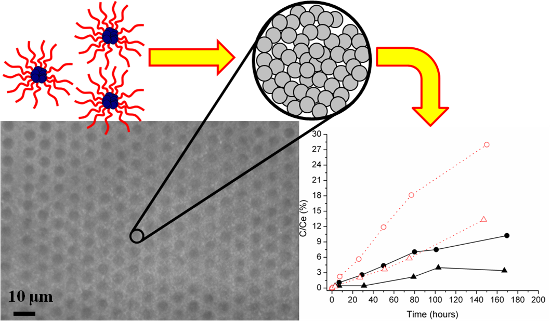
- characterized by a depth filter-like structure with internal porosity due to interparticle voids. Permeability and size-selectivity were studied by monitoring the diffusion of probe molecules under standard conditions and under the application of an external stimulus (i.e., electric field). Promising results
- commercial Si3N4 microsieves for membrane applications. Moreover, permeability and size-selectivity were studied by monitoring the diffusion of different probe molecules under standard conditions and under the application of an electric field as external stimulus. Selected probe molecules were the cationic
- separation processes and dosing of chemicals. In this study, the surface functionalization of silicon nitride commercial microsieves by means of colloidal silica nanoparticles has been proposed as a novel strategy to fabricate composite membranes for microfluidic devices. The permeability and size


Radiation losses in the microwave Ku band in magneto-electric nanocomposites
Beilstein J. Nanotechnol. 2015, 6, 1700–1707, doi:10.3762/bjnano.6.173
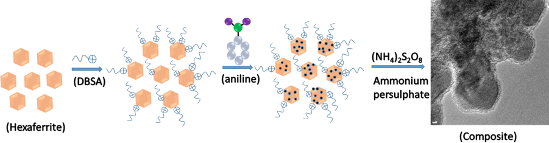
- initial permeability, line width, domain-wall displacement and coercive force. The new absorption mechanism arises from the reduced particle size in nanometre range. The natural resonance frequency of barium hexaferrite lies in the range of 50–60 GHz because of the large magneto-crystalline anisotropy and
- energy. Reflection loss calculation has been carried out by using the input impedance from the following relations in accordance with theory of absorbing wall [41]: where Z is the normalized input impedance, ε* is complex permittivity and µ* is the complex permeability, λ is the wavelength and tis the
- thickness of the sample pellet. It has been observed from XRD and VNA analysis that reflection loss depends on size of the crystallite size. Permittivity and permeability are calculated according to Nicholson–Ross–Weir method. Figure 7 is showing the real (µ′) and the imaginary part (µ″) of the complex


PLGA nanoparticles as a platform for vitamin D-based cancer therapy
Beilstein J. Nanotechnol. 2015, 6, 1306–1318, doi:10.3762/bjnano.6.135
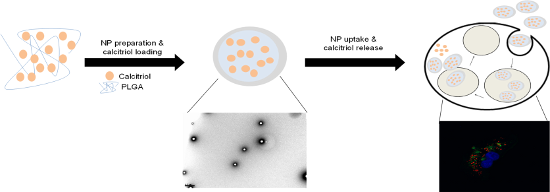
- internalized by targeted cells, increasing intracellular drug delivery [20], allowing a sustained and controlled drug release over time [19]. Moreover, PLGA NPs could offer selective drug delivery to tumor tissue either by passive targeting with the enhanced permeability and retention effect (EPR) [18] or by


Interaction of electromagnetic radiation in the 20–200 GHz frequency range with arrays of carbon nanotubes with ferromagnetic nanoparticles
Beilstein J. Nanotechnol. 2015, 6, 1056–1064, doi:10.3762/bjnano.6.106
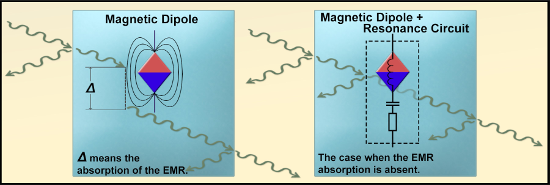
- form resonance resistive–inductive–capacitive circuits. It is shown that the influence of the resonant circuits leads to the emergence of specific resonances, namely peaks and valleys in the frequency dependence of the permeability of the nanocomposite, and in the frequency dependence of the reflection
- permeability and permittivity of the nanocomposite taking into account the possible resistive, capacitive and inductive coupling between the components of the sample. Indeed, in the frequency range of tens or hundreds of GHz, the microwave properties of the nanocomposite should strongly depend not only on the
- of the same size and all interfaces have the same capacitance. Under these assumptions, the RiLiCi circuit describing the nanocomposite properties is resonant, that is, it has its own resonance frequency. To model the permeability of such a nanostructured composite, we obtained the following modified


Graphene quantum interference photodetector
Beilstein J. Nanotechnol. 2015, 6, 726–735, doi:10.3762/bjnano.6.74
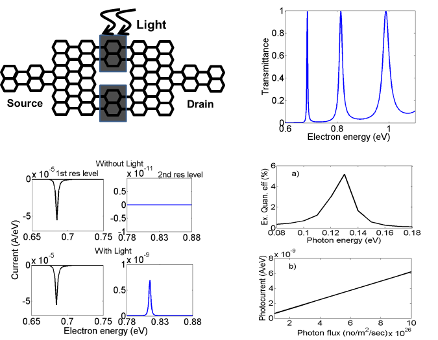
- volume of V, c is the speed of light, εr is the relative permittivity, μr is the relative permeability and ε is the absolute permittivity. The photon scattering functions, and , are calculated assuming monochromatic light and two energy levels for excitation. Both the acoustic phonon and optical phonon




Pulmonary surfactant augments cytotoxicity of silica nanoparticles: Studies on an in vitro air–blood barrier model
Beilstein J. Nanotechnol. 2015, 6, 517–528, doi:10.3762/bjnano.6.54
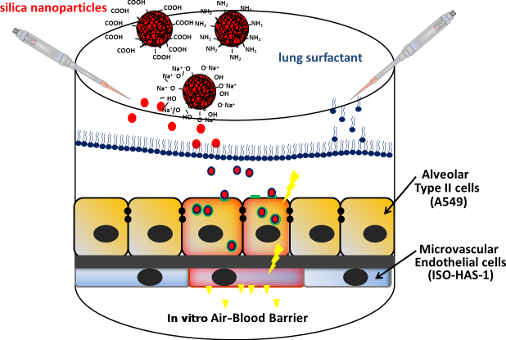
- its inter-head groups, which causes a higher mobility of the N(CH3)3+ group terminus of the phospholipids. Consequently, silica alters the membrane permeability and the fluidity of the bilayers is decreased, which finally leads to membrane perturbation and disruption [36]. The latter can be sensed by


Dynamic force microscopy simulator (dForce): A tool for planning and understanding tapping and bimodal AFM experiments
Beilstein J. Nanotechnol. 2015, 6, 369–379, doi:10.3762/bjnano.6.36
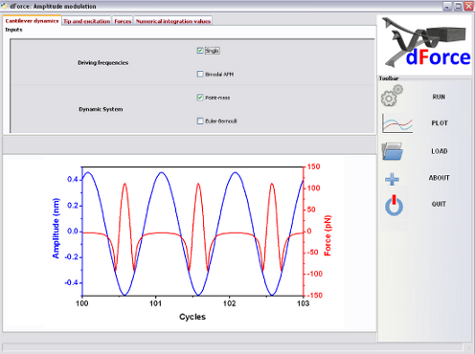
- –Verbey–Overbeek (DLVO) The DLVO force [46] describes interactions in liquid by including the contributions from the electrical double layer and the van der Waals interactions. The DLVO force is given by where λD is the Debye length, ε is the relative permeability, ε0 is the vacuum permeability, σt is the




The effect of surface charge on nonspecific uptake and cytotoxicity of CdSe/ZnS core/shell quantum dots
Beilstein J. Nanotechnol. 2015, 6, 281–292, doi:10.3762/bjnano.6.26
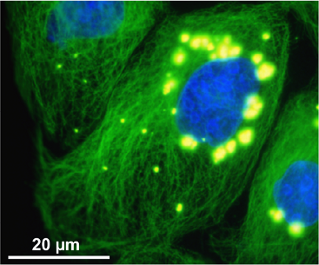
- membrane permeability assays. We demonstrate that these methods, however, can overlook other more subtle impacts on cell viability and metabolism caused by binding of QDs to cellular compartments, without release of Cd2+ ions. In the present study, we use a noninvasive and label-free impedance setup to



Boosting the local anodic oxidation of silicon through carbon nanofiber atomic force microscopy probes
Beilstein J. Nanotechnol. 2015, 6, 215–222, doi:10.3762/bjnano.6.20
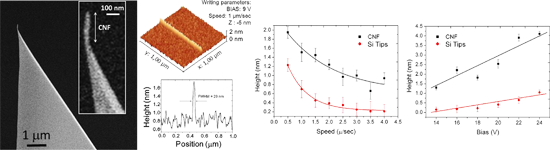
- thickness of grown SiOx is not only the decrease of the strength of the electric field as the SiOx becomes thicker, but also other self-limiting mechanism which decrease the permeability of the hydroxy anions at a given electric field, such as charge build-up in the oxide [21]. Furthermore, one concern when


Synthesis of boron nitride nanotubes and their applications
Beilstein J. Nanotechnol. 2015, 6, 84–102, doi:10.3762/bjnano.6.9
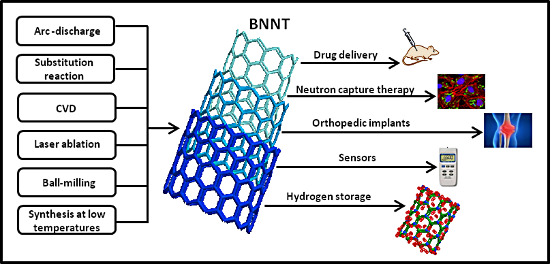
- showed that the BNNTs have potential to carry new drugs or radioisotopes [86]. Electroporation is used for increasing the cell permeability for introduction of molecules into cells. However, it requires a high voltage, which is one of the problems for drug delivery. The applicability of BNNTs in an




Intake of silica nanoparticles by giant lipid vesicles: influence of particle size and thermodynamic membrane state
Beilstein J. Nanotechnol. 2014, 5, 2468–2478, doi:10.3762/bjnano.5.256
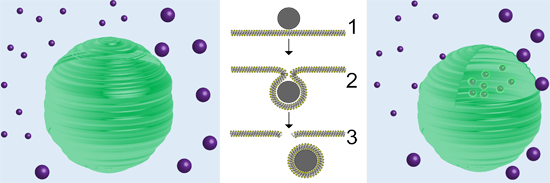
- constant surface area can certainly not explain the observed massive particle uptake for all sizes. If we now assume the simple case that each fission event induces a pore with characteristic size and opening time, the permeability of the vesicle will scale linearly with N. Hence, it seems very plausible
- interactions and possible thermodynamic changes of the lipid membrane, which can result in drastic alterations of its physical properties (e.g., bending stiffness, permeability and spontaneous curvature). Even though the model system that was investigated here is quite distinct from a real cell membrane we
- concentration Cs of particles: where P denotes an effective membrane “permeability”, i.e., its affinity to particle uptake. Hence, one would expect an exponential decay of the vesicle surface area with a decay constant τ−1 = PCs: Fitting this equation to the experimental A(t)-curves yields the decay constants


Functionalized polystyrene nanoparticles as a platform for studying bio–nano interactions
Beilstein J. Nanotechnol. 2014, 5, 2403–2412, doi:10.3762/bjnano.5.250
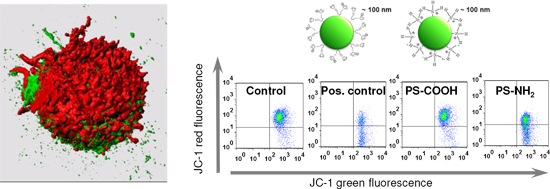
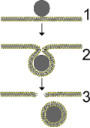
- lysosomes are capable of activating directly procaspases in vitro [61][62]. Another in vitro study showed that lysosomal enzymes can truncate Bid and activate Bax, the proapoptotic members of the Bcl2 family, which regulate the permeability of the mitochondrial membrane [63]. Lysosomal damage and activation


Nanoencapsulation of ultra-small superparamagnetic particles of iron oxide into human serum albumin nanoparticles
Beilstein J. Nanotechnol. 2014, 5, 2259–2266, doi:10.3762/bjnano.5.235
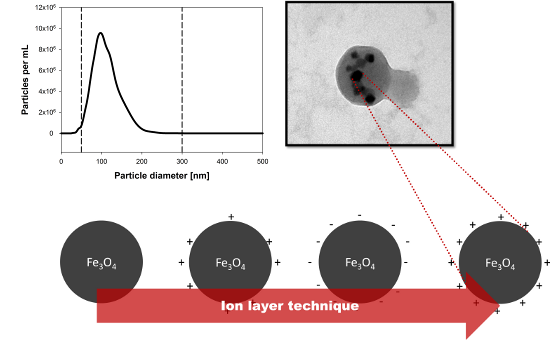
- tumors due to the enhanced permeability and retention effect [5]. While circulating through the blood stream, these colloids undergo an opsonization by the immune system followed by endocytosis into macrophages. Particles of greater diameters are rapidly cleared from the plasma and smaller colloidal


Optical properties and electrical transport of thin films of terbium(III) bis(phthalocyanine) on cobalt
Beilstein J. Nanotechnol. 2014, 5, 2070–2078, doi:10.3762/bjnano.5.215
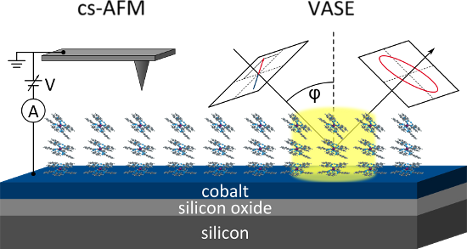
- the Q and B band, of phthalocyanines are highlighted in Figure 2. They correspond to ligand-related π–π* transitions [15]. For organic semiconductors we can consider the relative magnetic permeability to be µr ≈ 1. Thus, we can easily determine the optical constants from the diagonal elements εii of



Effect of silver nanoparticles on human mesenchymal stem cell differentiation
Beilstein J. Nanotechnol. 2014, 5, 2058–2069, doi:10.3762/bjnano.5.214
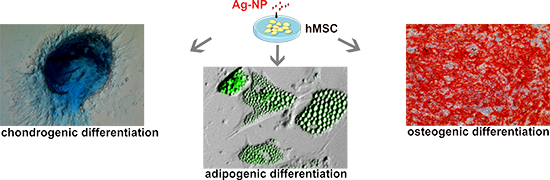
- rapidly to biomolecules, such as DNA [27], negatively charged cell-wall components and the sulfhydryl groups of metabolic enzymes [7][28][29], which results in the inhibition of DNA-replication, an increase in membrane permeability and the disturbance of different metabolic pathways [30]. In contrast to


Spin annihilations of and spin sifters for transverse electric and transverse magnetic waves in co- and counter-rotations
Beilstein J. Nanotechnol. 2014, 5, 1887–1898, doi:10.3762/bjnano.5.199

- limits |q| → 0 and |q| → ∞ refer, respectively, to the pure TM and pure TE modes. Besides, |q|2 ≡ q*·q, and ε is the permittivity, which is positive for dielectric media so that ε ≡ n2 with n being the refractive index. In addition, μ = 1 is the permeability for non-magnetic materials. Note that both ε


![[Graphic 44]](/bjnano/content/inline/2190-4286-5-199-i70.png?max-width=637&scale=1.18182) . (b) The scaled coefficient
. (b) The scaled coefficient ![[Graphic 45]](/bjnano/content/inline/2190-4286-5-199-i71.png?max-width=637&scale=1.18182) of the optical chirality C for the counter-rotatio...
of the optical chirality C for the counter-rotatio...


![[Graphic 104]](/bjnano/content/inline/2190-4286-5-199-i130.png?max-width=637&scale=1.18182) in the (kx,ky)-plane. (a) The co-rotational case. (b) The counter-rotational case ...
in the (kx,ky)-plane. (a) The co-rotational case. (b) The counter-rotational case ...


![[Graphic 125]](/bjnano/content/inline/2190-4286-5-199-i151.png?max-width=637&scale=1.18182) for the counter-rotational case plotted over 0 ≤ ρ ≡ kr ≤ 4 for m = 3, Rρ ≡ kR = 1...
for the counter-rotational case plotted over 0 ≤ ρ ≡ kr ≤ 4 for m = 3, Rρ ≡ kR = 1...




